Humanity is everyone but one’s self (From Paul Bowles’s novel The Sheltering Sky)

“Europe has destroyed the whole world,” said Port.

“Should I be thankful to it and sorry for it? I hope the whole place gets wiped off the map.” He wanted to cut short the discussion, to get Kit aside and talk with her privately. Their long, rambling, supremely personal conversations always made him feel better. But she hoped particularly to avoid just such a tete-a-tete.

“Why don’t you extend your good wishes to all humanity, while you’re at it?” she demanded.

“Humanity?” cried Port. “What’s that? Who is humanity? I’ll tell you. Humanity is everyone but one’s self. So of what interest can it possibly be to anybody?”

Tunner said slowly: “Wait a minute. Wait a minute. I’d like to take issue with you on that. I’d say humanity is you, and that’s just what makes it interesting.

“Good, Tunner!” cried Kit.

Port was annoyed. “What rot!” he snapped, ‘You’re never humanity; you’re only your own poor hopelessly isolated self.” Kit tried to interrupt. He raised his voice and went on.

“I don’t have to justify my existence by any such primitive means. The fact that I breathe is my Justification. If humanity doesn’t consider that a justification, it can do what it likes to me. I’m not going to carry a passport to existence around with me, to prove I have the right to be here! I’m here! I’m in the world! But my world’s not humanity’s world. It’s the world as I see it.”

“Don’t yell,” said Kit evenly. “If that’s the way you feel, it’s all right with me. But you ought to be bright enough to understand that not everybody feels the same way.”

From Paul Bowles’s 1949 novel The Sheltering Sky.

Portia Wounding Her Thigh — Elisabetta Sirani

Elisabetta_Sirani_-_Portia_wounding_her_thigh.jpg

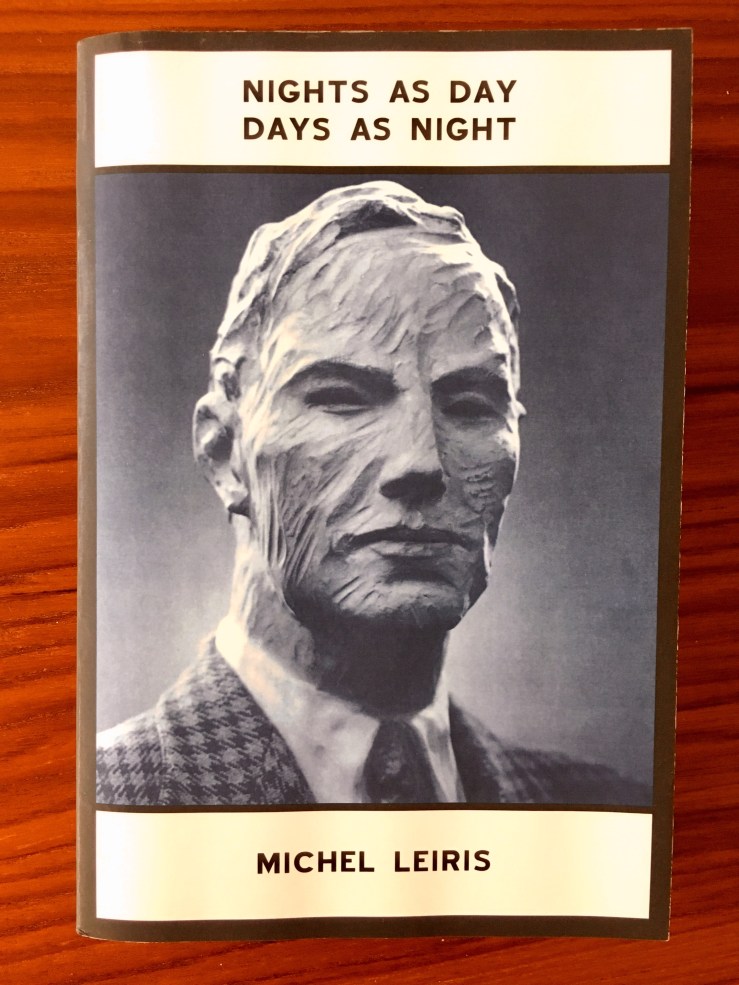
Michel Leiris’s Nights as Day, Days as Night (Book acquired, 27 Feb. 2017)

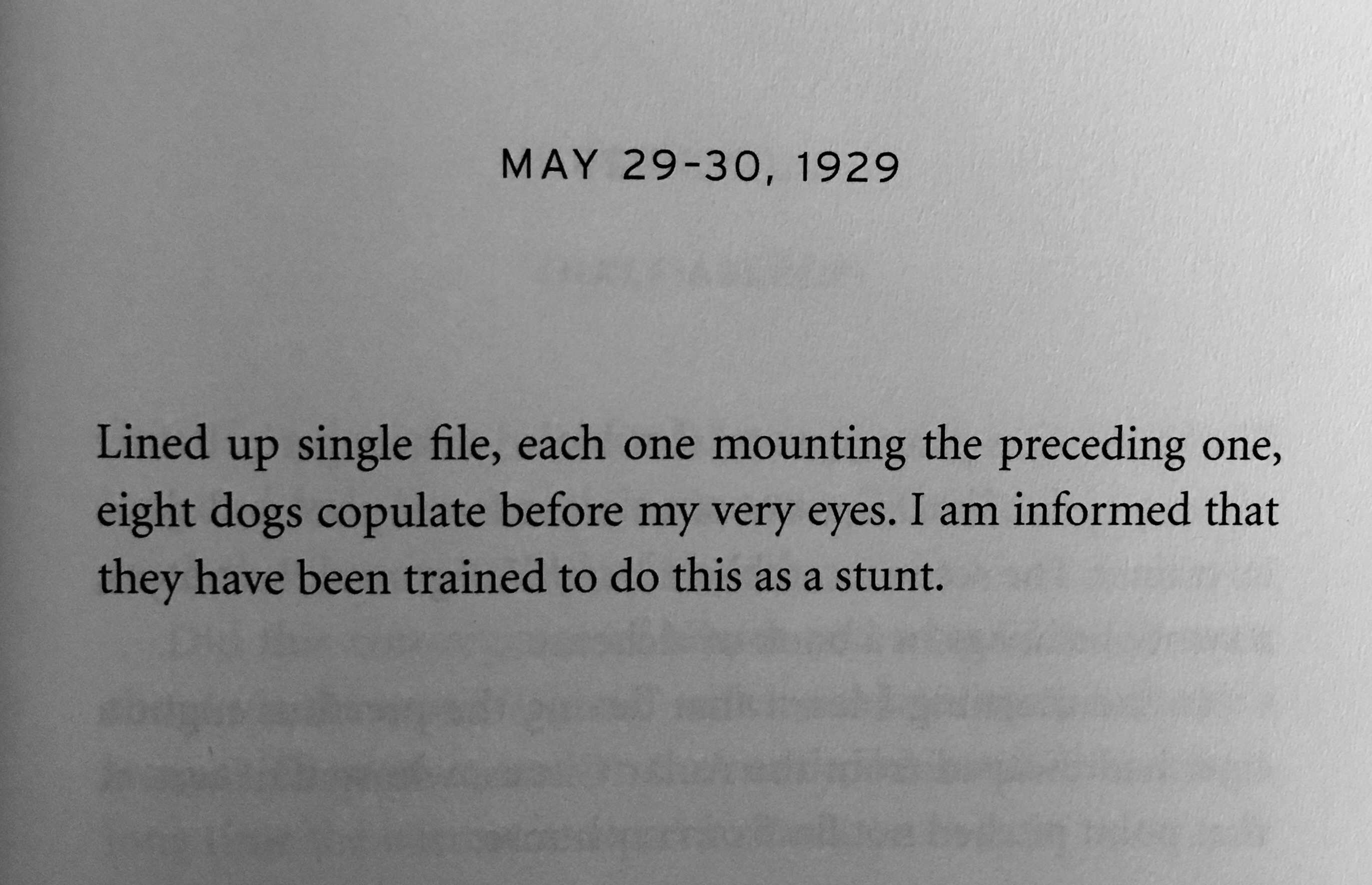
Michel Leiris’s book of dream fragments, Nights as Day, Days as Night is new from Spurl Editions. Their blurb:

Translated from French by Richard Sieburth, with a foreword by Maurice Blanchot. Hailed as an “important literary document and contemporary pleasure” by Lydia Davis, Nights as Day, Days as Night is a chronicle of Michel Leiris’s dreams. But it is also an exceptional autobiography, a distorted vision of twentieth-century France, a surrealist collage, a collection of prose poems. Leiris, author of the seminal autobiography Manhood, here disrupts the line between being asleep and awake, between being and non-being. He captures the profound strangeness of the dreamer’s identity: that anonymous creature who stirs awake at night to experience a warped version of waking life.

Whatever the setting (from circus shows to brothels, from the streets of Paris to Hollywood silent films), Leiris concentrates on estranging the familiar, on unsettling the commonplace. Beautifully translated by Richard Sieburth, these dream records often read like an outsider’s view of Leiris’s life and epoch. This outsider is the dreamer, Leiris’s nocturnal double, whose incisors grow as large as a street, who describes the terror he feels at being executed by the Nazis, and who can say in all seriousness, “I am dead.” It is an alternate life, with its own logic, its own paradoxes, and its own horrors, which becomes alienating and intimate at once. With hints of Kafka, Pirandello, and Nerval, Nights as Day, Days as Night is one of Leiris’s finest works of self-portraiture.

Michel Leiris (1901–1990) was an author, ethnographer, art critic, and former surrealist who pioneered a unique form of autobiographical writing. Praised by Susan Sontag, Maurice Blanchot, and Claude Lévi-Strauss, he made powerful contributions to modern French literature. His autobiographical works include Manhood, The Rules of the Game, and Nights as Day, Days as Night.

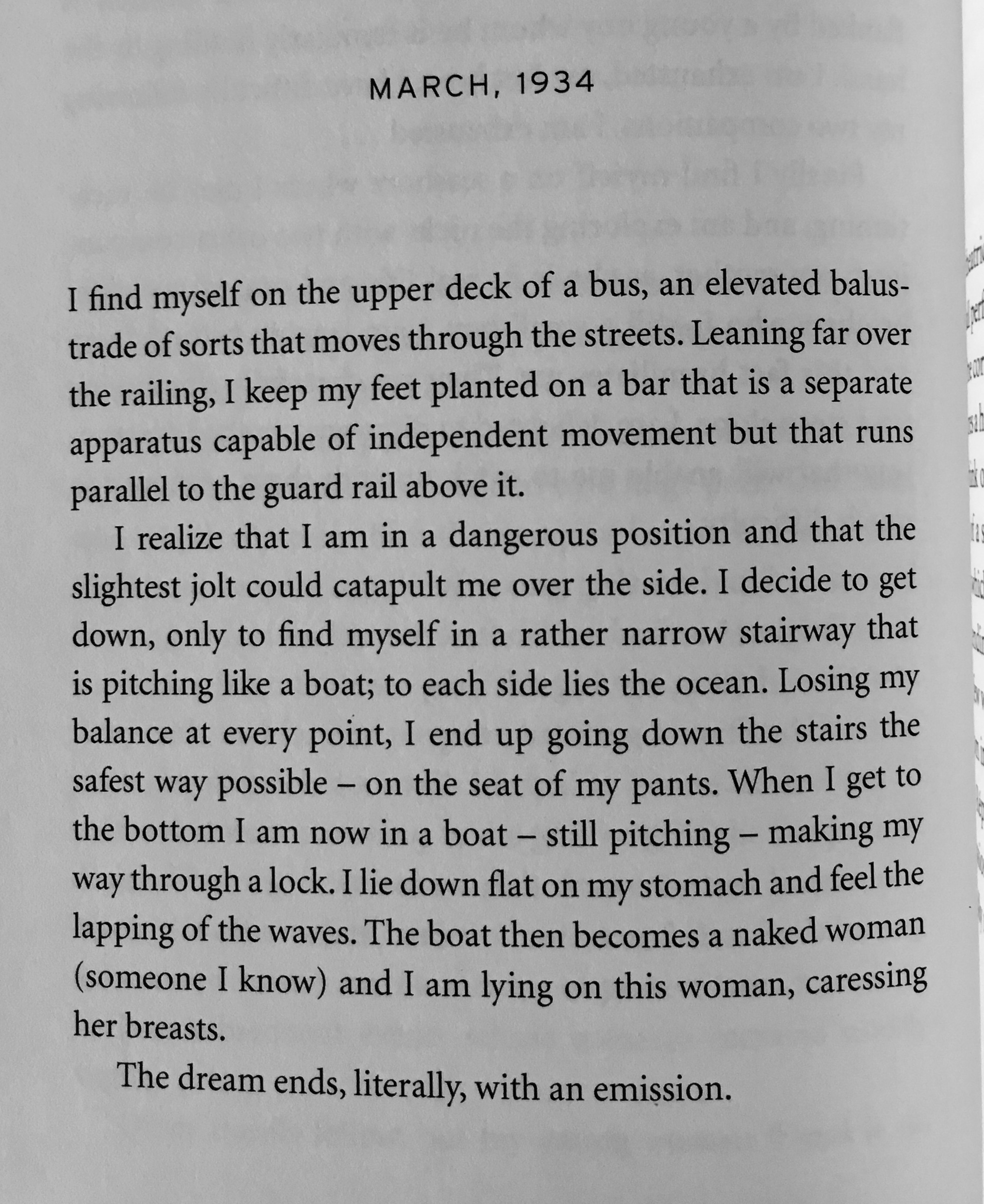
I’ve nibbled a little bit—something like microfictions, or unfinished fables, Leiris’ fragments are often funny and often unsettling.
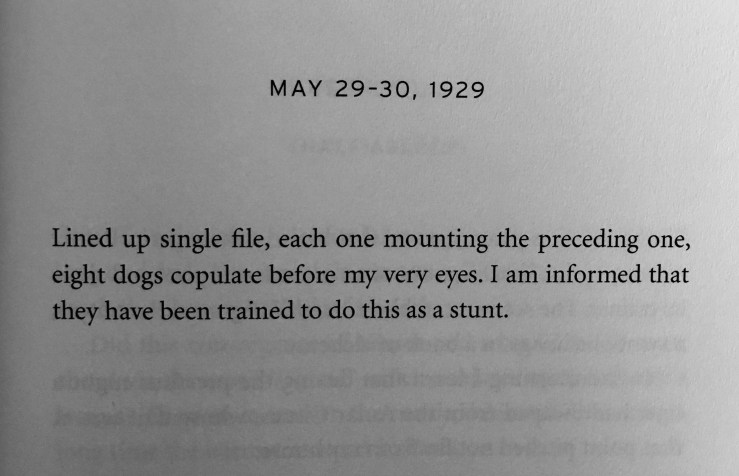
An erotic(ish) one:

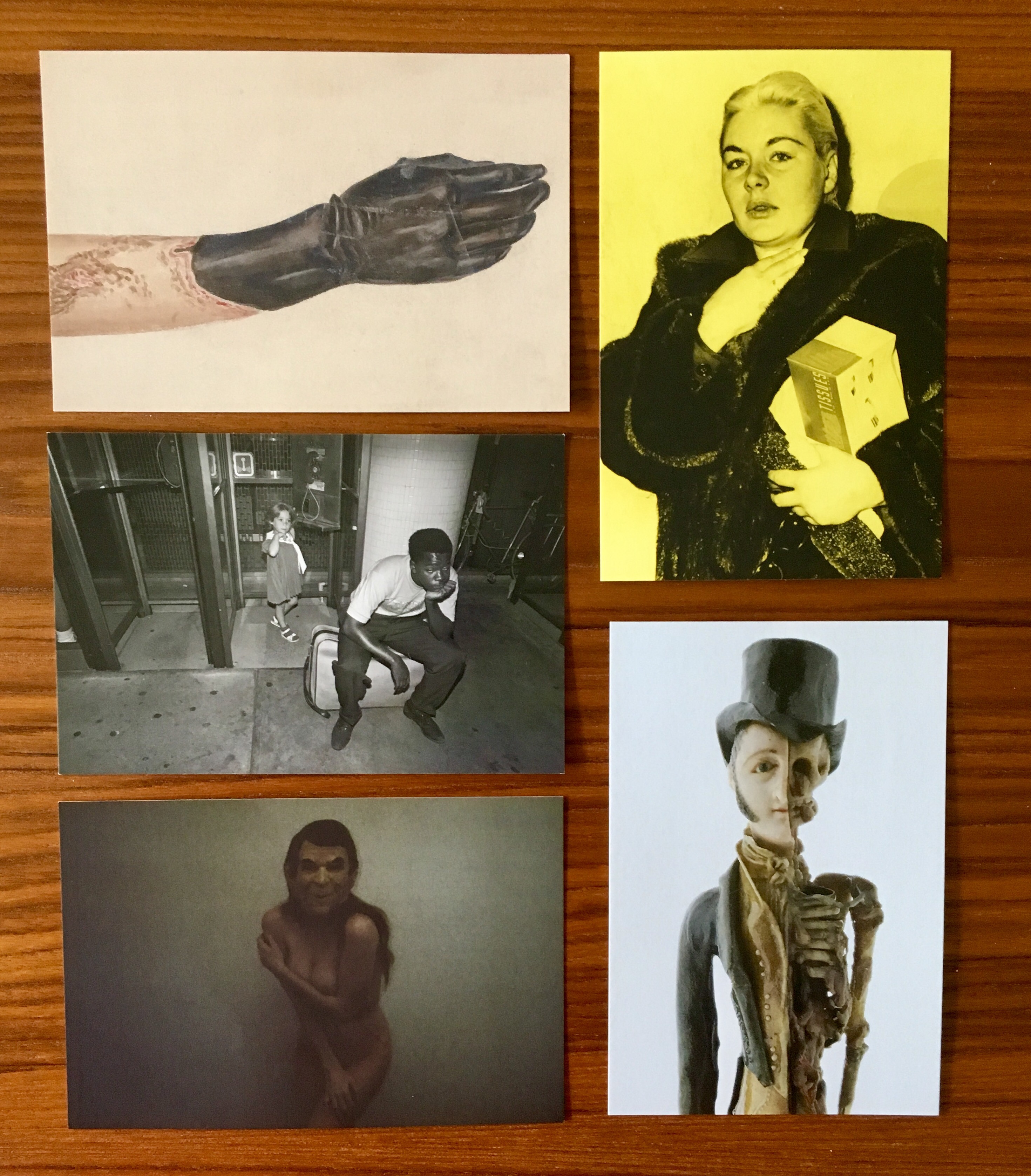
Spurl also enclosed some nice postcards.

I like postcards.

They make lovely bookmarks.

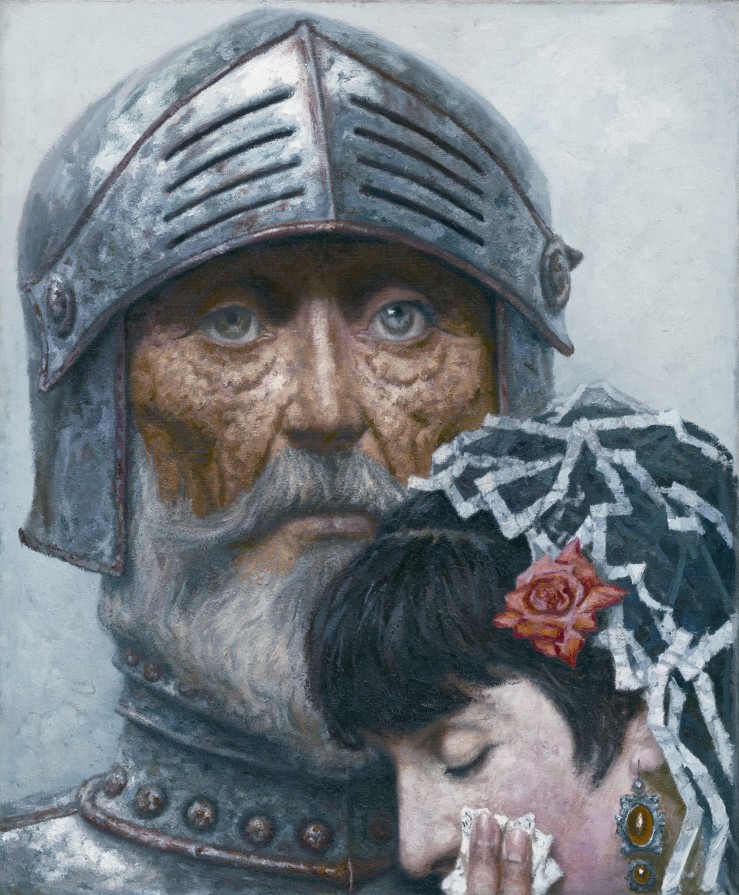
Don Quixote with a Lady — Gely Korzhev

8551lpr_7ccfbbc85d7262a

March — Alex Colville

march-1979.jpg!Large.jpg

The Three Graces — Rafael Zabaleta

the-three-graces.jpg

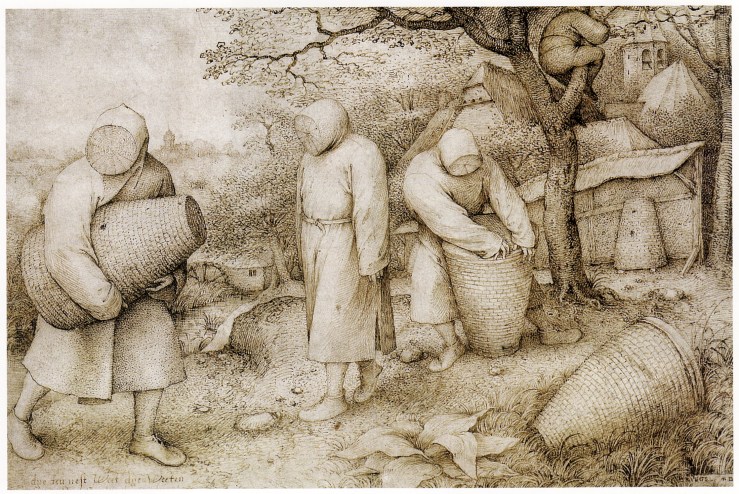
The Beekeepers — Pieter Bruegel the Elder

Die_Bienenzüchter_(Bruegel).jpg

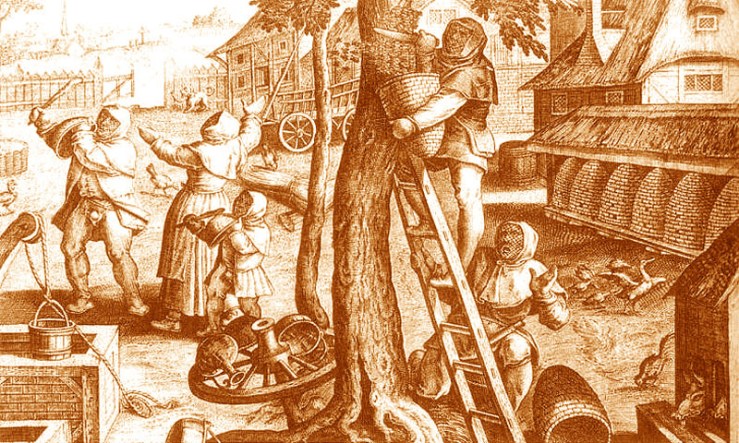
Beekeepers — Jan van der Straet

2fof2

“Nullo” — Jean Toomer

capture

The Survivor — Rene Magritte

the-survivor-1950(1).jpg!Large.jpg

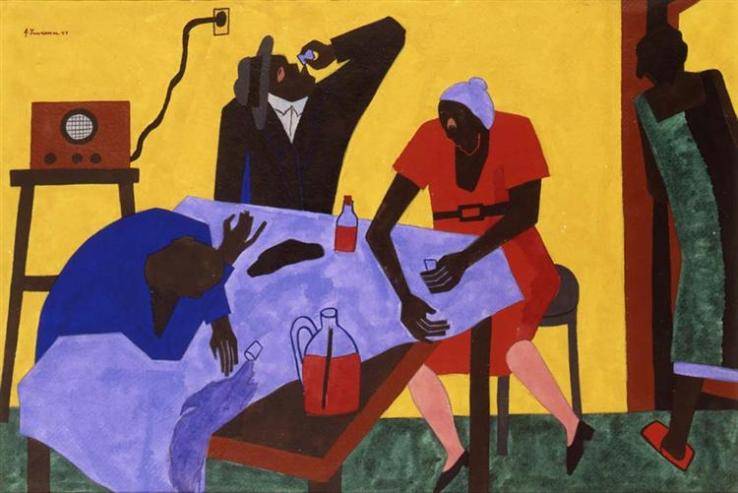
Bootleg Whiskey — Jacob Lawrence

bootleg-whiskey-you-can-buy-bootleg-whiskey-for-twenty-five-cents-a-quart-from-the-series-1943-jpglarge

“Teacher” — Langston Hughes

teacher

In the Cinema — Malcolm Drummond

598_10

Their faces are masks (From Paul Bowles’ novel The Sheltering Sky)

He walked through the streets, unthinkingly seeking the darker ones, glad to be alone and to feel the night air against his face. The streets were crowded. People pushed against him as they passed, stared from doorways and windows, made comments openly to each other about him-whether with sympathy or not he was unable to tell from their faces-and they sometimes ceased to walk merely in order to watch him.

“How friendly are they? Their faces are masks. They all look a thousand years old. What little energy they have is only the blind, mass desire to live, since no one of them eats enough to give him his own personal force. But what do they think of me? Probably nothing. Would one of them help me if I were to have an accident? Or would I lie here in the street until the police found me? What motive could any one of them have for helping me? They have no religion left. Are they Moslems or Christians? They don’t know. They know money, and when they get it, all they want is to eat. But what’s wrong with that? Why do I feel this way about them? Guilt at being well fed and healthy among them? But suffering is equally divided among all men; each has the same amount to undergo Emotionally he felt that this last idea was untrue, but at the moment it was a necessary belief. it is not always easy to support the stares of hungry people. Thinking that way he could walk on through the streets. It was as if either he or they did not exist. Both suppositions were possible. The Spanish maid at the hotel had said to him that noon: “La vida es pena.”

“Of course,” he had replied, feeling false even as he spoke, asking himself if any American can truthfully accept a definition of life which makes it synonymous with suffering. But at the moment he had approved her sentiment because she was old, withered, so clearly of the people. For years it had been one of his superstitions that reality and true perception were to be found in the conversation of the laboring classes. Even though now he saw clearly that their formulas of thought and speech are as strict and as patterned, and thus as far removed from any profound expression of truth as those of any other class, often he found himself still in the act of waiting, with the unreasoning belief that gems of wisdom might yet issue from their mouths.

From Paul Bowles’ 1949 novel The Sheltering Sky. The protagonist Port’s thoughts here remind me of Jarvis Cocker’s line in Pulp’s song “Common People”: “Everybody hates a tourist.”


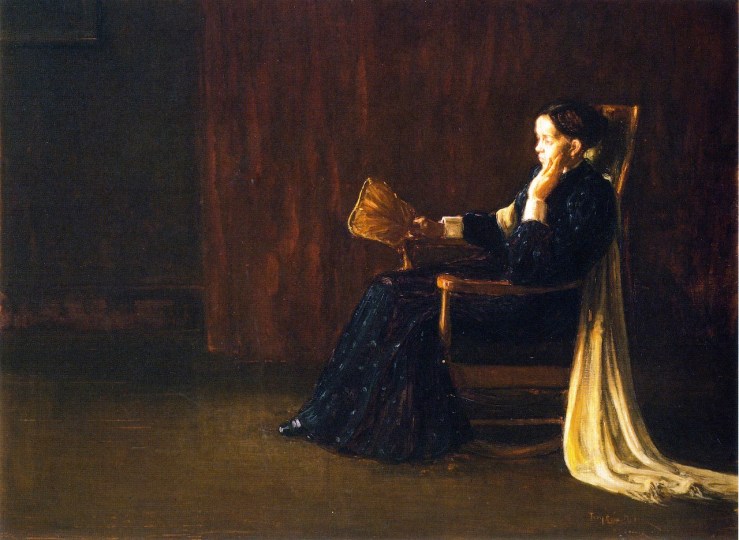
Portrait of the Artist’s Mother — Henry Ossawa Tanner

portrait-of-the-artist-s-mother-1897