What did Nabokov do to prepare himself for the ordeals of life?

IMG_8335

From a slim profile based on Nabokov published in The New York Times Book Review in 1972. You can read the whole thing here—however, the NYTBR’s edit is different from the text above, which comes from Strong Opinions. In his brief preface to the Strong Opinions version of the interview, Nabokov notes that the questions’ presentation in the NYTBR’s “version would have been perfect had they not been interspersed with unnecessary embellishment (chitchat about living writers, for instance).

Unicorn — Arnold Böcklin

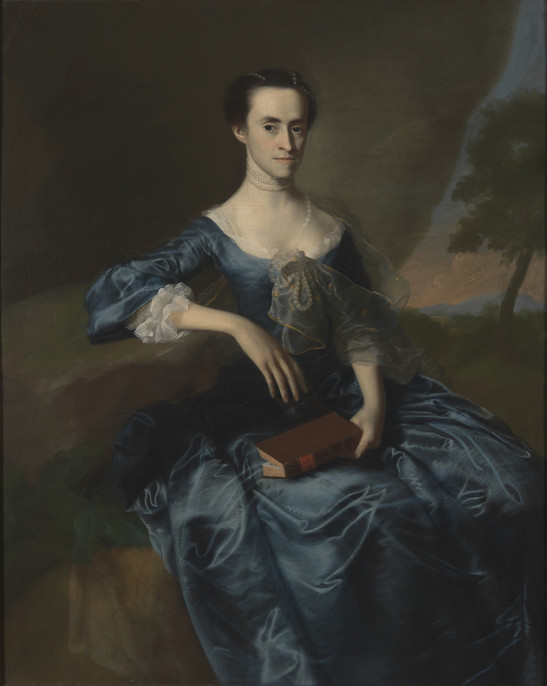
Portrait of Sarah Prince Gill — John Singleton Copley

267571

Read Shirley Jackson’s short story “Charles”

“Charles”

by

Shirley Jackson


The day my son Laurie started kindergarten he renounced corduroy overalls with bibs and began wearing blue jeans with a belt; I watched him go off the first morning with the older girl next door, seeing clearly that an era of my life was ended, my sweet-voiced nursery-school tot replaced by a long-trousered, swaggering character who forgot to stop at the corner and wave good-bye to me.

He came home the same way, the front door slamming open, his cap on the floor, and the voice suddenly become raucous shouting, “Isn’t anybody here?”

At lunch he spoke insolently to his father, spilled his baby sister’s milk, and remarked that his teacher said we were not to take the name of the Lord in vain.

“How was school today?” I asked, elaborately casual.

“All right,” he said.

“Did you learn anything?” his father asked.

Laurie regarded his father coldly. “I didn’t learn nothing,” he said.

“Anything,” I said.

“Didn’t learn anything”

“The teacher spanked a boy, though,” Laurie said, addressing his bread and butter. “For being fresh,” he added, with his mouth full.

“What did he do?” I asked. “Who was it?”

Laurie thought. “It was Charles,” he said. “He was fresh. The teacher spanked him and made him stand in a corner. He was awfully fresh.”

“What did he do?” I asked again, but Laurie slid off his chair, took a cookie, and left, while his father was still saying, “See here, young man.”

The next day Laurie remarked at lunch, as soon as he sat down, “Well, Charles was bad again today.” He grinned enormously and said, “Today Charles hit the teacher.”

“Good heavens,” I said, mindful of the Lord’s name, “I suppose he got spanked again?”

“He sure did,” Laurie said. “Look up,” he said to his father. “What?” his father said, looking up.

“Look down,” Laurie said. “Look at my thumb. Gee, you’re dumb.” He began to laugh insanely.

“Why did Charles hit the teacher?” I asked quickly.

“Because she tried to make him color with red crayons,” Laurie said. “Charles wanted to color with green crayons so he hit the teacher and she spanked him and said nobody play with Charles but everybody did.”

The third day—it was Wednesday of the first week—Charles bounced a see-saw on to the head of a little girl and made her bleed, and the teacher made him stay inside all during recess. Thursday Charles had to stand in a corner during storytime because he kept pounding his feet on the floor. Friday Charles was deprived of blackboard privileges because he threw chalk.

Read the rest of Shirley Jackson’s short story “Charles.”

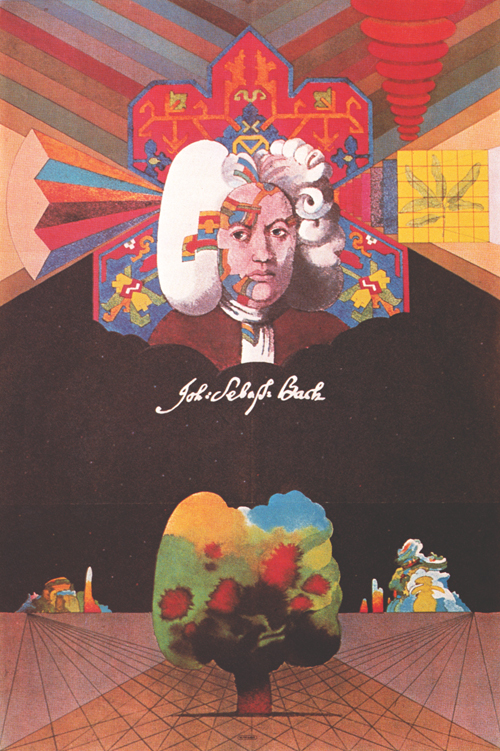
Bach — Milton Glaser

bach

Dew-Drenched Furze — John Everett Millais

Geryon — Gustave Dore

What is an adjective? (Anne Carson)

What is an adjective? Nouns name the world. Verbs activate the names. Adjectives come from somewhere else. The word adjective (epitheton in Greek) is itself an adjective meaning “placed on top,” “added,” “appended,” “imported,” “foreign.” Adjectives seem fairly innocent additions but look again. These small imported mechanisms are in charge of attaching everything in the world to its place in particularity. They are latches of being.

This is the second paragraph of Anne Carson’s poem-novel-romance-history-etc. Autobiography of Red, a book I got in the mail yesterday from BLCKDGRD (which: thank you man!) and feel a totally electric feeling about. The passage above I mentally highlighted, for classroom purposes, I suppose, and otherwise, and the twists in dives and dips in this book-thing are, I don’t know, what hyperbole should I grab? 

“The reticent volcano keeps” — Emily Dickinson

image

This Dickinson poem is a sort of epigraph to Anne Carson’s novel-poem-poem-novel Autobiography of Red. I had never read either, before today, somehow, but oh my electric!

Self Portrait with Cock Fight — Julie Heffernan

f0a7370c9111afe0-SPw_CockFight20x242014

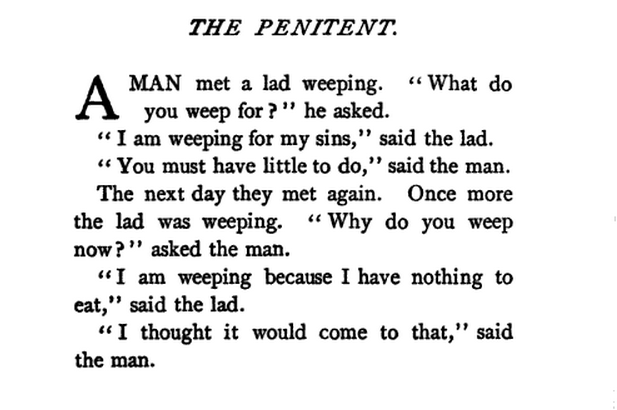
“The Penitent,” a short fable from Robert Louis Stevenson

Screenshot 2015-07-29 at 9.52.48 AM

Lear and Cordelia — John Everett Millais

He dreamed (Cormac McCarthy’s Suttree)

He dreamed of a race at the poles who rode on sleds of walrus hide and rucked up horn and ivory all drawn by dogs and bristling with lances and harpoon spears, the hunters shrouded in fur, slow caravans against the late noon winter sunset, against the rim of the world, whispering over the blue snow with their sledloads of piled meat and skins and viscera. Small bloodstained hunters drifting like spores above the frozen chlorine void, from flower to flower of bright vermilion gore across the vast boreal plain.

A feverdream from late in Cormac McCarthy’s novel Suttree. Finished the book again this afternoon, via an Michael Kramer’s audiobook—and lots of rereading. I’ve read the last 20 or so pages three times now, and have some thoughts that may coalesce into a riff around the book’s ending (Does Suttree die?).

Last time I wrote at length about Suttree, I focused on how McCarthy synthesizes so much of literature—particularly American lit—in this novel. The passage above is just one minute but shining detail in a baroque masterpiece bristling with such moments. And while it taps into a sort of primeval American past, it also seems to point outward—maybe to McCarthy’s next novel, Blood Meridian, but also to, I don’t know, William Vollmann’s novel The Rifles.

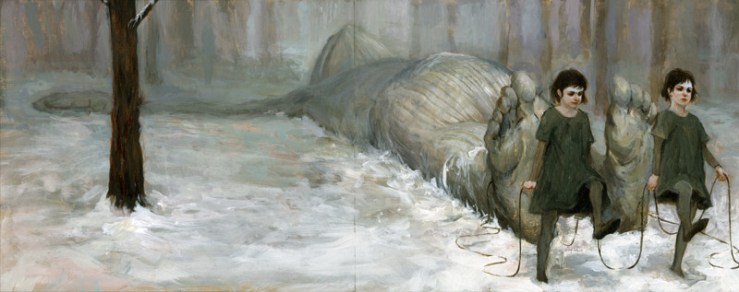
The Whalers — Vincent Hui

whaler1

A last desperate attempt to convince us of the innocence of violence, the good clean fun of horror

The enemy of society on the run toward “freedom” is also the pariah in flight from his guilt, the guilt of that very flight; and new phantoms arise to haunt him at every step. American literature likes to pretend, of course, that its bugaboos are all finally jokes: the headless horseman a hoax, every manifestation of the supernatural capable of rational explanation on the last page—but we are never quite convinced. Huckleberry Finn, that euphoric boys’ book, begins with its protagonist holding off at gun point his father driven half mad by the D.T.’s and ends (after a lynching, a disinterment, and a series of violent deaths relieved by such humorous incidents as soaking a dog in kerosene and setting him on fire) with the revelation of that father’s sordid death. Nothing is spared; Pap, horrible enough in life, is found murdered brutally, abandoned to float down the river in a decaying house scrawled with obscenities. But it is all “humor,” of course, a last desperate attempt to convince us of the innocence of violence, the good clean fun of horror. Our literature as a whole at times seems a chamber of horrors disguised as an amusement park “fun house,” where we pay to play at terror, and are confronted in the innermost chamber with a series of inter-reflecting mirrors which present us with a thousand versions of our own face.

From the introduction to Leslie Fiedler’s Love and Death in the American Novel (1960).

Virgin and Child with a Monkey — Albrecht Dürer

RISDM 49-001

Leisure Hours – John Everett Millais