Our Lady of the Dry Tree – Petrus Christus

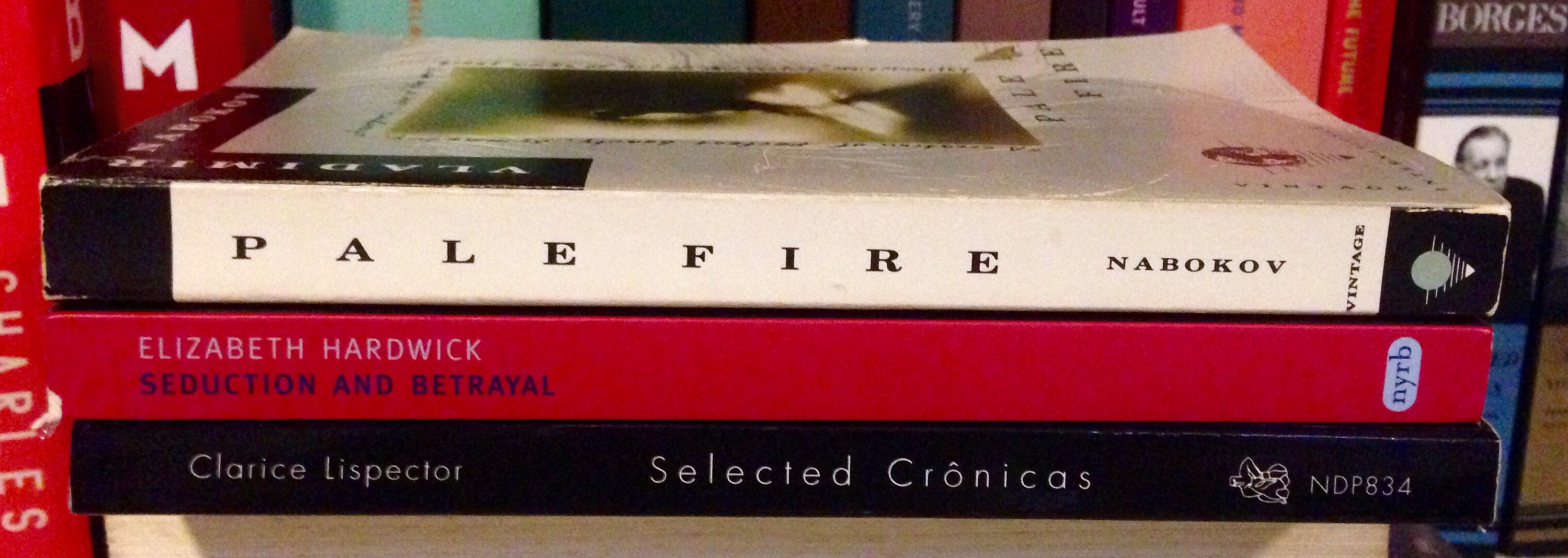
Nabokov/Hardwick/Lispector (Books acquired, 7.21.2015)

I picked up Vladimir Nabokov’s novel Pale Fire on a weird whim. I mean, I quite literally passed by it in the bookshop I frequent; it was misshelved, or unshelved, really. Someone had left it in sci-fi, near the “Bs” (B-for-Ballard, if you must know). Pale Fire, eh? I thought. Can’t remember this one. Because I had never read it, somehow. An amazing novel, one I dove into after sampling a bit of Clarice Lispector’s Selected Cronicas (still sampling—this is one of those books that’s lovely to dip gently into between selections) and after failing to get through the first essay in Elizabeth Hardwick’s Seduction and Betrayal. Not sure if I can (should?) muster a “review” of Pale Fire, but it’s one of the better prepostmodern-postmodernist novels I’ve ever read—very very funny and a beautiful mindfuck.

Undine Giving the Ring to Massaniello, Fisherman of Naples — William Turner

The Gift — Man Ray

Some violence is done when I rejoice or grieve at a gift (Ralph Waldo Emerson)

He is a good man, who can receive a gift well. We are either glad or sorry at a gift, and both emotions are unbecoming. Some violence, I think, is done, some degradation borne, when I rejoice or grieve at a gift. I am sorry when my independence is invaded, or when a gift comes from such as do not know my spirit, and so the act is not supported; and if the gift pleases me overmuch, then I should be ashamed that the donor should read my heart, and see that I love his commodity, and not him. The gift, to be true, must be the flowing of the giver unto me, correspondent to my flowing unto him. When the waters are at level, then my goods pass to him, and his to me. All his are mine, all mine his. I say to him, How can you give me this pot of oil, or this flagon of wine, when all your oil and wine is mine, which belief of mine this gift seems to deny? Hence the fitness of beautiful, not useful things for gifts. This giving is flat usurpation, and therefore when the beneficiary is ungrateful, as all beneficiaries hate all Timons,not at all considering the value of the gift, but looking back to the greater store it was taken from, I rather sympathize with the beneficiary, than with the anger of my lord, Timon. For, the expectation of gratitude is mean, and is continually punished by the total insensibility of the obliged person. It is a great happiness to get off without injury and heart-burning, from one who has had the ill luck to be served by you. It is a very onerous business,this of being served, and the debtor naturally wishes to give you a slap. A golden text for these gentlemen is that which I admire in the Buddhist, who never thanks, and who says, “Do not flatter your benefactors.”

From Ralph Waldo Emerson’s essay “Manners.”

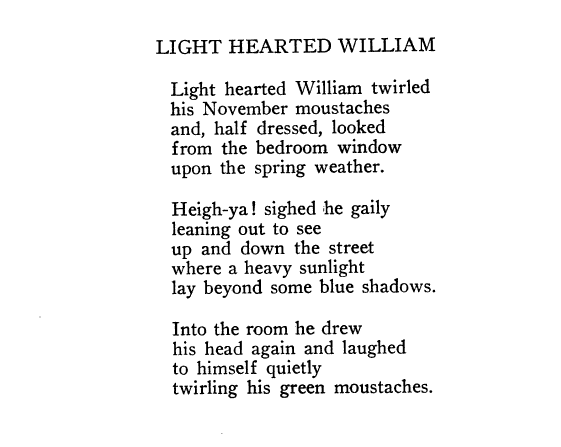
“Light Hearted William” — William Carlos Williams

Screenshot 2015-08-04 at 4.47.31 PM

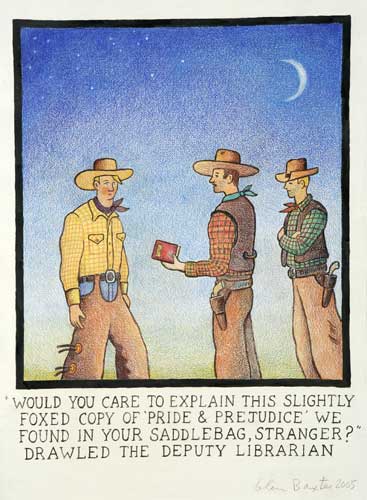
Drawled the librarian (Glen Baxter)

librarian

Maid Reading in the Library — Edouard John Mentha

“The Adventure of the Three Robbers” by Apuleius

“The Adventure of the Three Robbers” by Apuleius

An episode from The Golden Ass, reproduced here from The Lock and Key Library’s Classic Detective and Mystery Stories of All Nations series, edited by Julian Hawthorne. The translator is likely Frederick Taber Cooper.


As Telephron reached the point of his story, his fellow revelers, befuddled with their wine, renewed the boisterous uproar. And while the old topers were clamoring for the customary libation to laughter, Byrrhæna explained to me that the morrow was a day religiously observed by her city from its cradle up; a day on which they alone among mortals propitiated that most sacred god, Laughter, with hilarious and joyful rites. “The fact that you are here,” she added, “will make it all the merrier. And I do wish that you would contribute something amusing out of your own cleverness, in honor of the god, to help us duly worship such an important divinity.”

“Surely,” said I, “what you ask shall be done. And, by Jove! I hope I shall hit upon something good enough to make this mighty god of yours reveal his presence.”

Hereupon, my slave reminding me what hour of night it was, I speedily got upon my feet, although none too steadily after my potations, and, having duly taken leave of Byrrhæna, guided my zigzag steps upon the homeward way. But at the very first corner we turned, a sudden gust of wind blew out the solitary torch on which we depended, and left us, plunged in the unforeseen blackness of night, to stumble wearily and painfully to our abode, bruising our feet on every stone in the road. Continue reading ““The Adventure of the Three Robbers” by Apuleius”

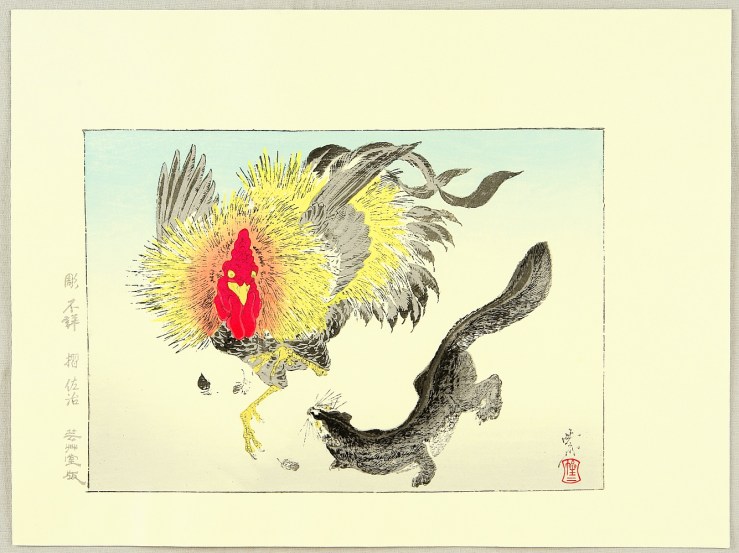
Weasel and Rooster — Kawanabe Kyōsai

48914g1

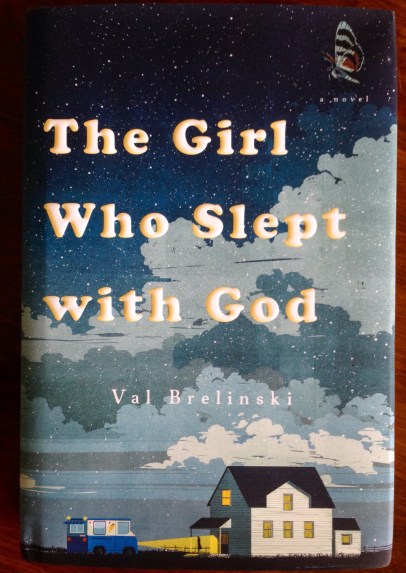
The Girl Who Slept with God (Book acquired, 7.24.2015)

IMG_7842

Val Brelinski’s novel The Girl Who Slept with God is new in hardback this week from Penguin Random House. Their blurb:

Set in Arco, Idaho, in 1970, Val Brelinski’s powerfully affecting first novel tells the story of three sisters: young Frances, gregarious and strong-willed Jory, and moral-minded Grace. Their father, Oren, is a respected member of the community and science professor at the local college. Yet their mother’s depression and Grace’s religious fervor threaten the seemingly perfect family, whose world is upended when Grace returns from a missionary trip to Mexico and discovers she’s pregnant with—she believes—the child of God.

Distraught, Oren sends Jory and Grace to an isolated home at the edge of the town. There, they prepare for the much-awaited arrival of the baby while building a makeshift family that includes an elderly eccentric neighbor and a tattooed social outcast who drives an ice cream truck.

What if we awake one day, all of us, and find ourselves utterly unable to read? (Nabokov’s Pale Fire)

We are absurdly accustomed to the miracle of a few written signs being able to contain immortal imagery, involutions of thought, new worlds with live people, speaking, weeping, laughing. We take it for granted so simply that in a sense, by the very act of brutish routine acceptance, we undo the work of the ages, the history of the gradual elaboration of poetical description and construction, from the treeman to Browning, from the caveman to Keats. What if we awake one day, all of us, and find ourselves utterly unable to read? I wish you to gasp not only at what you read but at the miracle of its being readable (so I used to tell my students). Although I am capable, through long dabbling in blue magic, of imitating any prose in the world (but singularly enough not verse – I am a miserable rhymester), I do not consider myself a true artist, save in one matter: I can do what only a true artist can do – pounce upon the forgotten butterfly of revelation, wean myself abruptly from the habit of things, see the web of the world, and the warp and the weft of that web.

From Vladimir Nabokov’s novel Pale Fire.

Corner of Studio Sink — Richard Diebenkorn

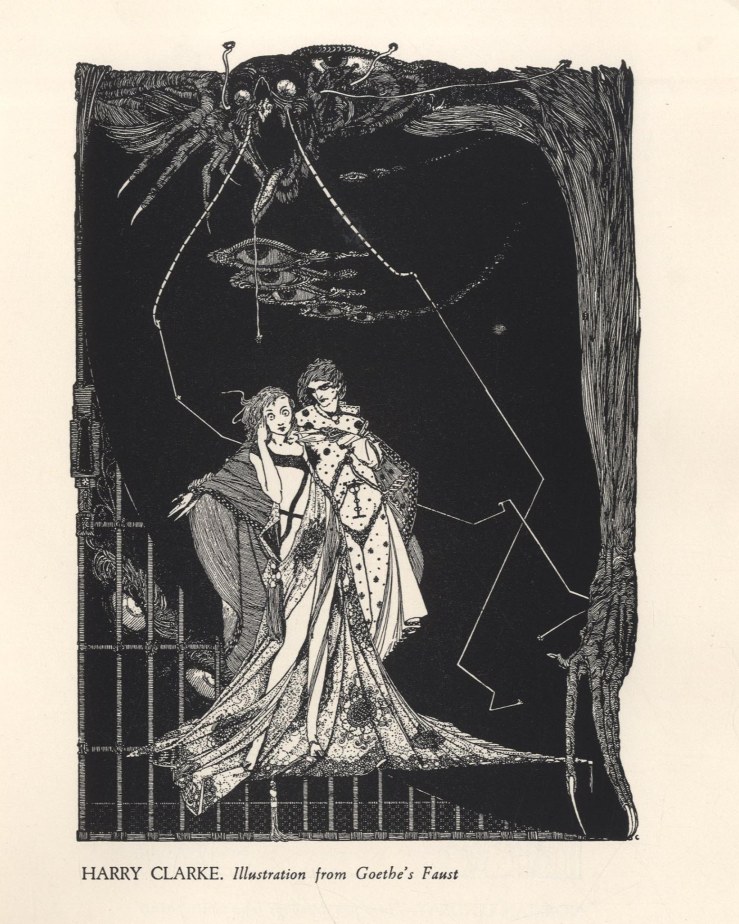
Illustration from Goethe’s Faust — Harry Clarke

4

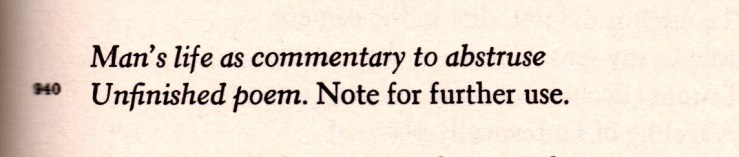
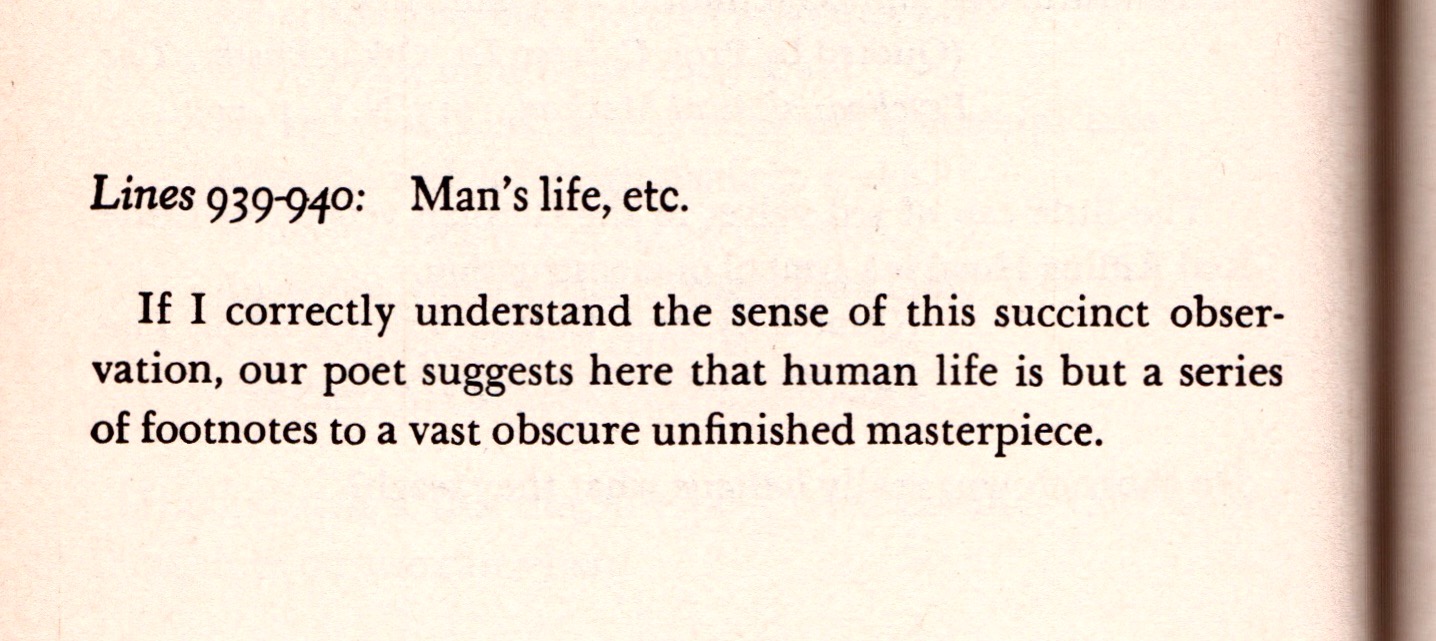
Man’s life, etc. (Nabokov’s Pale Fire)


From Vladimir’s novel Pale Fire.

The House of Nazareth — Francisco de Zurbaran