Red White and Blue Velvet

IMG_0272

A still from the opening of David Lynch’s film Blue Velvet. Frederick Elmes was the film’s cinematographer.

“…the amazing, world-reversing night of Fourth of July Eve 1899″ (Pynchon’s Against the Day)

For years after, there were tales told in Colorado of the amazing, world-reversing night of Fourth of July Eve 1899. Next day’d be full of rodeos, marching bands, and dynamite explosions—but that night there was man-made lightning, horses gone crazy for miles out into the prairie, electricity flooding up through the iron of their shoes, shoes that when they finally came off and got saved to use for cowboy quoits, including important picnic tourneys from Fruita to Cheyenne Wells, why they would fly directly and stick on to the spike in the ground, or to anything else nearby made of iron or steel, that’s when they weren’t collecting souvenirs on their way through the air—gunmen’s guns came right up out of their holsters and buck knives out from under pants legs, keys to traveling ladies’ hotel rooms and office safes, miners’ tags, fencenails, hairpins, all seeking the magnetic memory of that long-ago visit. Veterans of the Rebellion fixing to march in parades were unable to get to sleep, metallic elements had so got to humming through their bloodmaps. Children who drank the milk from the dairy cows who grazed nearby were found leaning against telegraph poles listening to the traffic speeding by through the wires above their heads, or going off to work in stockbrokers’ offices where, unsymmetrically intimate with the daily flow of prices, they were able to amass fortunes before anyone noticed. .

A passage from Thomas Pynchon’s novel Against the Day.

July — Fairfield Porter

“Sky” — Tom Clark

sky

Dreaming of Pomegranates — Felice Casorati

Felice Casorati

Artist and Chimera — Jacek Malczewski

A–Z of linguistics in rhyming couplets

Stan Carey's avatarSentence first

Here’s a self-explanatory bit of silliness from Twitter yesterday. There were requests to assemble it somewhere, for convenience and posterity, so I figured I’d reproduce it on Sentence first.

I’ve replaced the quotation marks I used on Twitter with italics; other than that it’s identical. The tweets are all linked, so you can also read them by clicking on the date of this introductory one:

*

*

A is for ARBITRARY: a sound’s tie to meaning.
B is for BACK-FORMED, like dry-clean from dry-cleaning.

View original post 225 more words

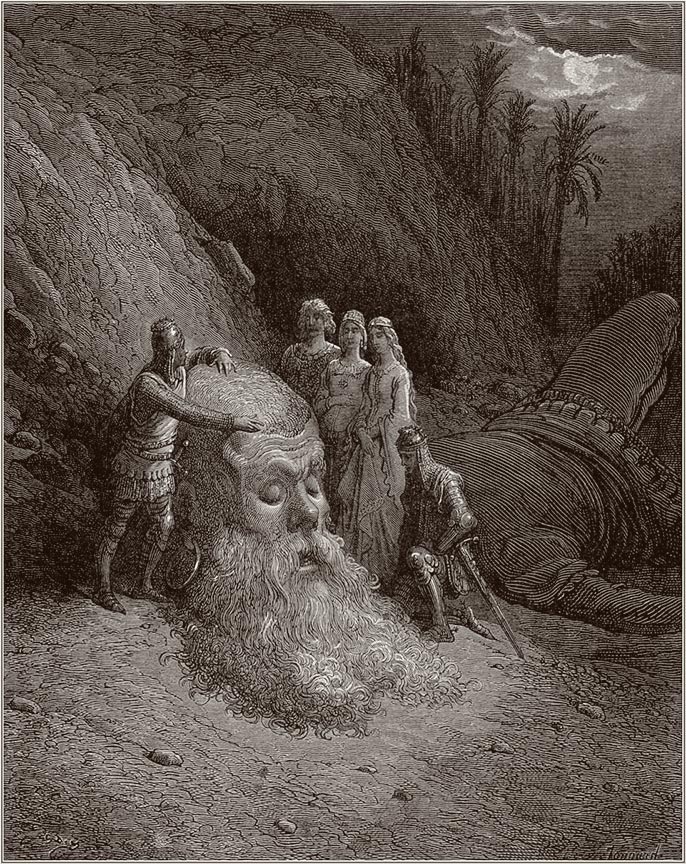
The Council of Rats — Gustave Dore

tumblr_ly1wo5oUy91qb8f0mo1_1280

“Masculine Literature” — Charlotte Perkins Gilman

“Masculine Literature”

by

Charlotte Perkins Gilman

(from Our Androcentric Culutre; or, The Man Made World)


When we are offered a “woman’s” paper, page, or column, we find it filled with matter supposed to appeal to women as a sex or class; the writer mainly dwelling upon the Kaiser’s four K’s—Kuchen, Kinder, Kirche, Kleider. They iterate and reiterate endlessly the discussion of cookery, old and new; of the care of children; of the overwhelming subject of clothing; and of moral instruction. All this is recognized as “feminine” literature, and it must have some appeal else the women would not read it. What parallel have we in “masculine” literature?

“None!” is the proud reply. “Men are people! Women, being ‘the sex,’ have their limited feminine interests, their feminine point of view, which must be provided for. Men, however, are not restricted—to them belongs the world’s literature!”

Yes, it has belonged to them—ever since there was any. They have written it and they have read it. It is only lately that women, generally speaking, have been taught to read; still more lately that they have been allowed to write. It is but a little while since Harriet Martineau concealed her writing beneath her sewing when visitors came in—writing was “masculine”—sewing “feminine.” Continue reading ““Masculine Literature” — Charlotte Perkins Gilman”

Thomas Jefferson Writing the Declaration of Independence — Howard Pyle

Christ Tempted by Satan to Turn the Stones to Bread — William Blake

O Terceiro Polícia — Flann O’Brien

FlannLisbon

From Bertrand Bookstore in Lisbon, the longest continuously operating bookstore in the world (it opened in 1732).

“Men and Art” — Charlotte Perkins Gilman

“Men and Art”

by

Charlotte Perkins Gilman

(from Our Androcentric Culutre; or, The Man Made World)


Among the many counts in which women have been proven inferior to men in human development is the oft-heard charge that there are no great women artists. Where one or two are proudly exhibited in evidence, they are either pooh-poohed as not very great, or held to be the trifling exceptions which do but prove the rule.

Defenders of women generally make the mistake of over-estimating their performances, instead of accepting, and explaining, the visible facts. What are the facts as to the relation of men and women to art? And what, in especial, has been the effect upon art of a solely masculine expression?

When we look for the beginnings of art, we find ourselves in a period of crude decoration of the person and of personal belongings. Tattooing, for instance, is an early form of decorative art, still in practice among certain classes, even in advanced people. Most boys, if they are in contact with this early art, admire it, and wish to adorn themselves therewith; some do so—to later mortification. Early personal decoration consisted largely in direct mutilation of the body, and the hanging upon it, or fastening to it, of decorative objects. This we see among savages still, in its gross and primitive forms monopolized by men, then shared by women, and, in our time, left almost wholly to them. In personal decoration today, women are still near the savage. The “artists” developed in this field of art are the tonsorial, the sartorial, and all those specialized adorners of the body commonly known as “beauty doctors.” Continue reading ““Men and Art” — Charlotte Perkins Gilman”

Operation Wednesday — Leonora Carrington

Battle of the Gods That Have Been Transformed — Ernst Fuchs

Bob Rafelson and Jack Nicholson on the diner scene in Five Easy Pieces