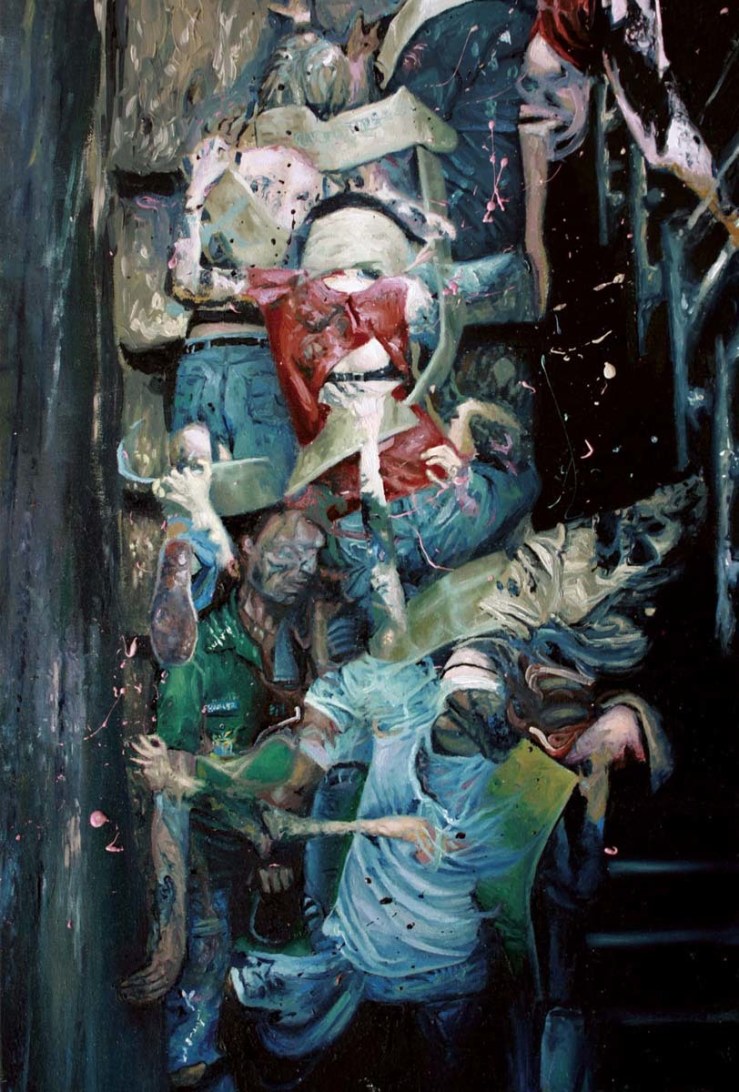
The Bus — Paul Kirchner

Im2bjG1

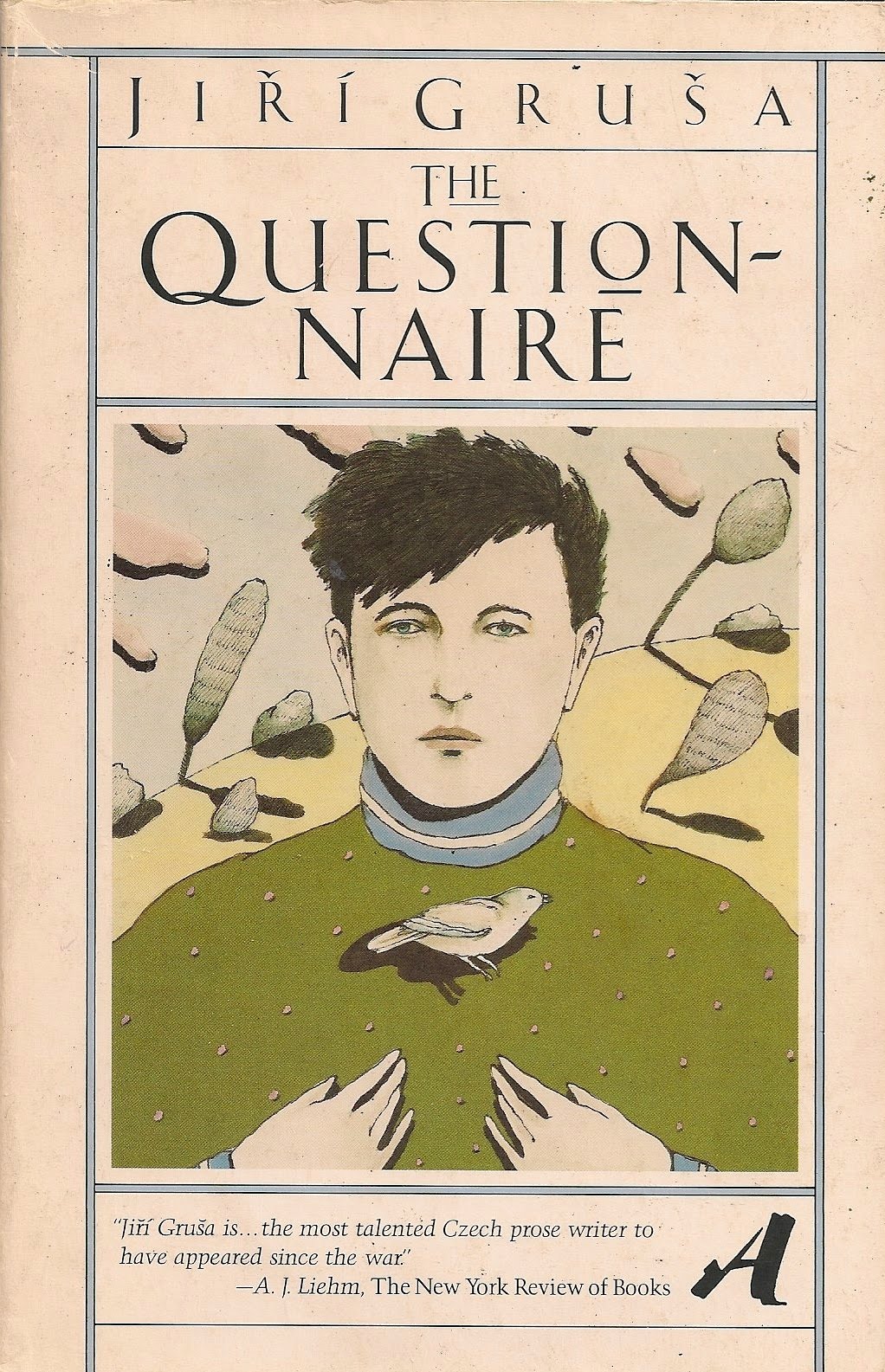
Jiří Gruša’s The Questionnaire

Questionnaire - Jiri Grusa

Designed by Keith Sheridan. This is the 1978 edition, from Aventura: the Vintage Library of Contemporary World Literature.

Mr. Icky, a one-act play by F. Scott Fitzgerald

Mr. Icky

The Quintessence of Quaintness in One Act

by F.Scott Fitzgerald

The Scene is the Exterior of a Cottage in West Issacshire on a desperately Arcadian afternoon in August. MR. ICKY, quaintly dressed in the costume of an Elizabethan peasant, is pottering and doddering among the pots and dods. He is an old man, well past the prime of life, no longer young, From the fact that there is a burr in his speech and that he has absent-mindedly put on his coat wrongside out, we surmise that he is either above or below the ordinary superficialities of life.

_Near him on the grass lies PETER, a little boy. PETER, of course, has his chin on his palm like the pictures of the young Sir Walter Raleigh. He has a complete set of features, including serious, sombre, even funereal, gray eyes—and radiates that alluring air of never having eaten food. This air can best be radiated during the afterglow of a beef dinner. Be is looking at MR. ICKY, fascinated._

Silence. . . . The song of birds.

PETER: Often at night I sit at my window and regard the stars. Sometimes I think they’re my stars…. (Gravely) I think I shall be a star some day….

ME. ICKY: (Whimsically) Yes, yes … yes….

PETER: I know them all: Venus, Mars, Neptune, Gloria Swanson.

MR. ICKY: I don’t take no stock in astronomy…. I’ve been thinking o’ Lunnon, laddie. And calling to mind my daughter, who has gone for to be a typewriter…. (He sighs.)

PETER: I liked Ulsa, Mr. Icky; she was so plump, so round, so buxom. Continue reading “Mr. Icky, a one-act play by F. Scott Fitzgerald”

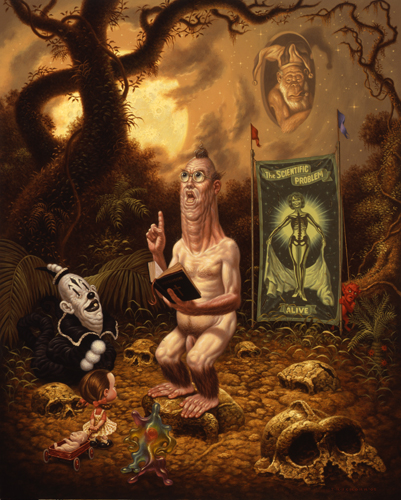
The Monkey’s Uncle — Todd Schorr

L_tschorr_themonkeysuncle

“Dreams” — Robert Herrick

dreams

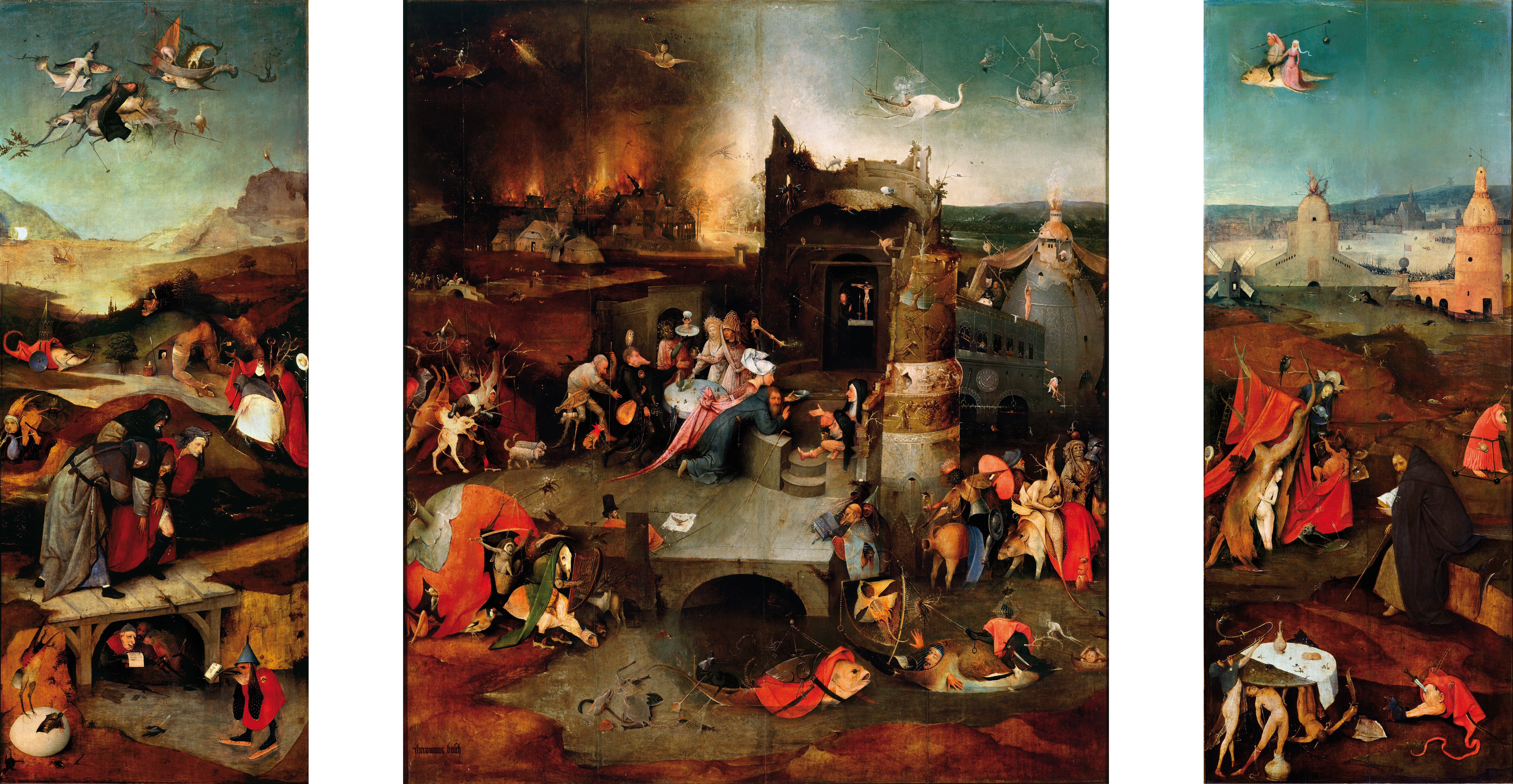
The Temptation of St. Anthony (Detail) — Hieronymus Bosch

16

Posted in Art

Smart Pipe (Adult Swim Infomercial)

The Trolls — J.R.R. Tolkien

the-trolls

Exercises on the Moods

(From An English Grammar, Baskervill & Sewell, 1895):

Exercises on the Moods.

(a) Tell the mood of each verb in these sentences, and what special use it is of that mood:—

1. Wherever the standard of freedom and independence has been or shall be unfurled, there will her heart and her prayers be.

2. Mark thou this difference, child of earth! / While each performs his part, / Not all the lip can speak is worth / The silence of the heart.

3. Oh, that I might be admitted to thy presence! that mine were the supreme delight of knowing thy will!

4. ‘Twere worth ten years of peaceful life,One glance at their array!

5. Whatever inconvenience ensue, nothing is to be preferred before justice.

6.The vigorous sun would catch it up at eve / And use it for an anvil till he had filled / The shelves of heaven with burning thunderbolts.

7.Meet is it changes should control / Our being, lest we rust in ease.

8.Quoth she, / “The Devil take the goose, / And God forget the stranger!”

9. Think not that I speak for your sakes.

10. “Now tread we a measure!” said young Lochinvar.

11. Were that a just return? Were that Roman magnanimity?

12. Well; how he may do his work, whether he do it right or wrong, or do it at all, is a point which no man in the world has taken the pains to think of.

13. He is, let him live where else he like, in what pomps and prosperities he like, no literary man.

14. Could we one day complete the immense figure which these flagrant points compose! Continue reading “Exercises on the Moods”

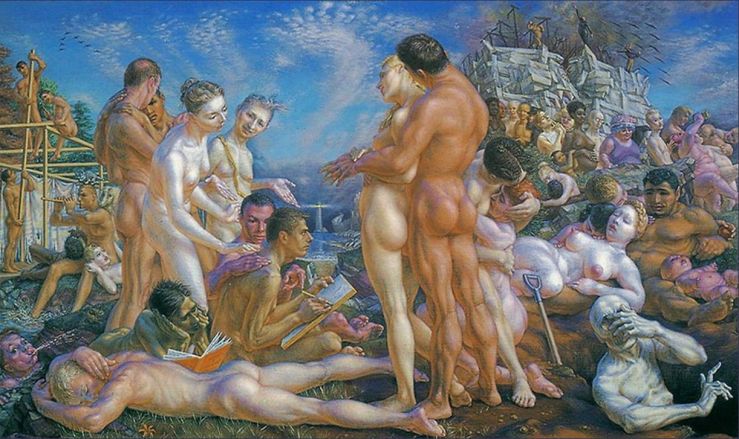
What I Believe — Paul Cadmus

PaulCadmus17_What I Believe_1947

When you are dead you will lie forever unremembered and no one will miss you (Sappho)

sappho

Good intentions reading list for early 2015

IMG_4791

The Creation of Fish and Birds — Gustave Doré

The Temptation of St. Anthony (Detail) — Hieronymus Bosch

15

Five Ideas from Nathaniel Hawthorne’s Note-Books

  1. For the virtuoso’s collection,–the pen with which Faust signed away his salvation, with a drop of blood dried in it.
  2. An article on newspaper advertisements,–a country newspaper, methinks, rather than a city one.
  3. An eating-house, where all the dishes served out, even to the bread and salt, shall be poisoned with the adulterations that are said to be practised. Perhaps Death himself might be the cook.
  4. Personify the century,–talk of its present middle age, of its youth, and its adventures and prospects.
  5. An uneducated countryman, supposing he had a live frog in his stomach, applied himself to the study of medicine in order to find a cure for this disease; and he became a profound physician. Thus misfortune, physical or moral, may be the means of educating and elevating us.

From Nathaniel Hawthorne’s American Note-Books.