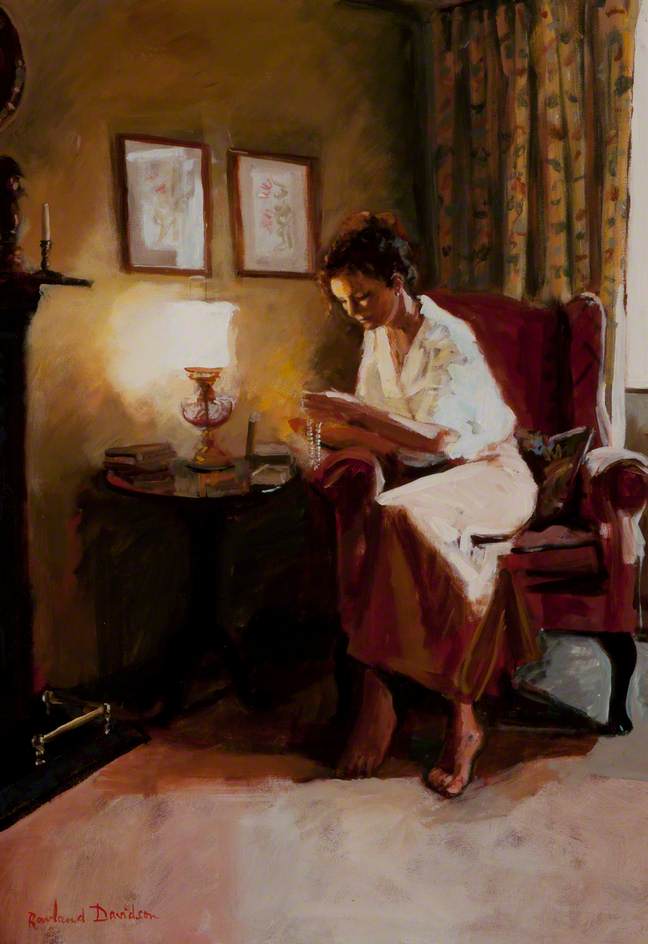
Lady Reading a Book by Lamplight — Rowland Davidson

(c) Rowland Davidson; Supplied by The Public Catalogue Foundation

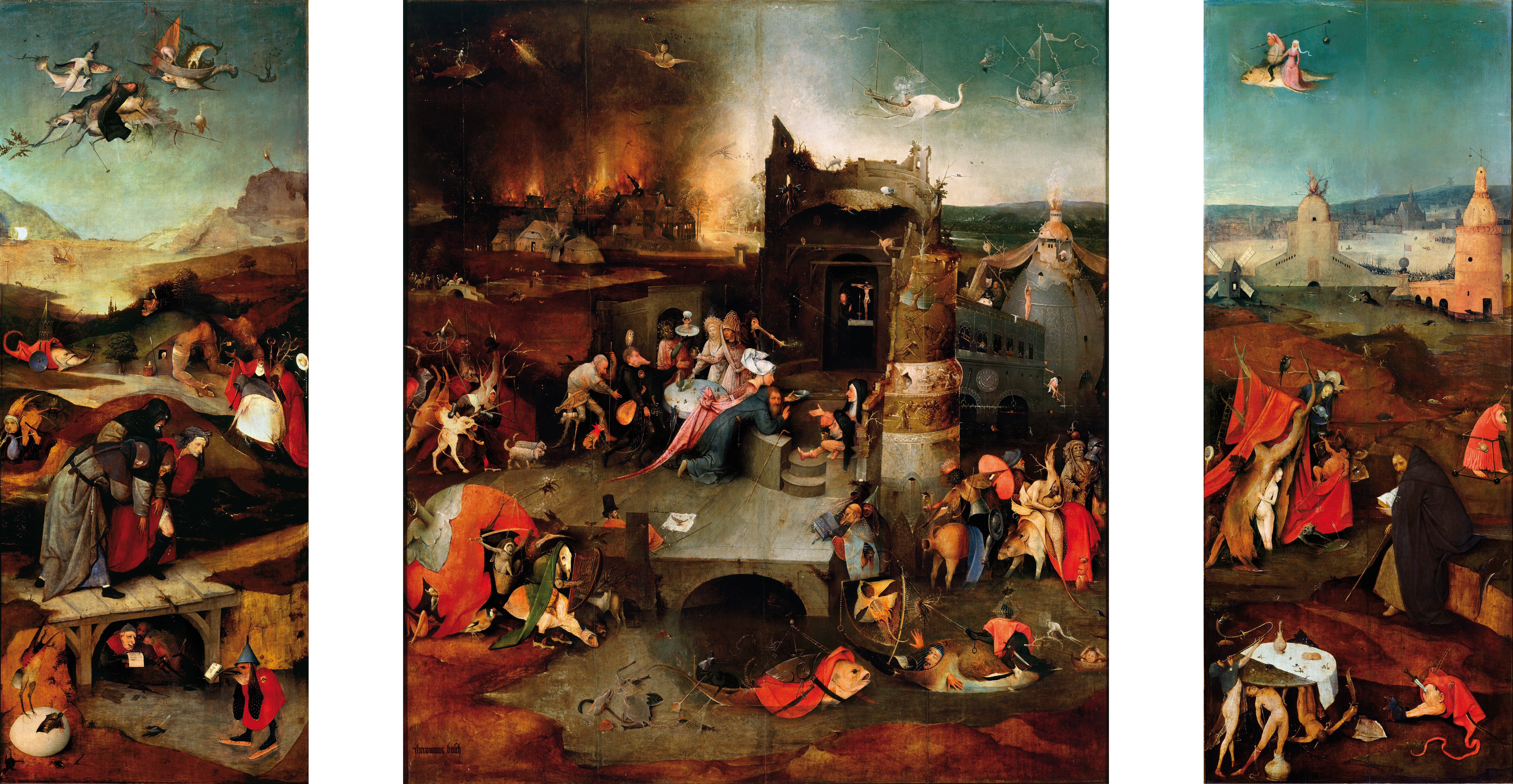
The Temptation of St. Anthony (Detail) — Hieronymus Bosch

12

There are a Mason and Dixon in Hell (Thomas Pynchon)

DePugh recalls a Sermon he once heard at a church-ful of German Mysticks. “It might have been a lecture in Mathematics. Hell, beneath our feet, bounded,— Heaven, above our pates, unbounded. Hell a collapsing Sphere, Heaven an expanding one. The enclosure of Punishment, the release of Salvation. Sin leading us as naturally to Hell and Compression, as doth Grace to Heaven, and Rarefaction. Thus— ”

Murmurs of,” ‘Thus’?”

“— may each point of Heaven be mapp’d, or projected, upon each point of Hell, and vice versa. And what intercepts the Projection, about mid-way (reckon’d logarithmickally) between? why, this very Earth, and our lives here upon it. We only think we occupy a solid, Brick-and-Timber City,— in Reality, we live upon a Map. Perhaps even our Lives are but representations of Truer Lives, pursued above and below, as to Philadelphia correspond both a vast Heavenly City, and a crowded niche of Hell, each element of one faithfully mirror’d in the others.”

“There are a Mason and Dixon in Hell, you mean?” inquires Ethelmer, “attempting eternally to draw a perfect Arc of Considerably Lesser Circle?”

“Impossible,” ventures the Revd. “For is Hell, by this Scheme, not a Point, without Dimension?”

“Indeed. Yet, suppose Hell to be almost a Point,” argues the doughty DePugh, already Wrangler material, “— they would then be inscribing their Line eternal, upon the inner surface of the smallest possible Spheroid that can be imagin’d, and then some.”

“More of these . . . ,” Ethelmer pretending to struggle for a Modifier that will not offend the Company, “curious Infinitesimals, Cousin.— The Masters at my Purgatory are bewitch’d by the confounded things. Epsilons, usually. Miserable little,”— Squiggling in the air, “sort of things. Eh?”

“See them often,” sighs DePugh, “this Session more than ever.”

“What puzzles me, DeP., is that if the volume of Hell may be taken as small as you like, yet the Souls therein must be ever smaller, mustn’t they,— there being, by now, easily millions”“there?”

“Aye, assuming one of the terms of Damnation be to keep just enough of one’s size and weight to feel oppressively crowded,— taking as a model the old Black Hole of Calcutta, if you like,— the Soul’s Volume must be an Epsilon one degree smaller,— a Sub-epsilon.”

“ ‘The Epsilonicks of Damnation.’ Well, well. There’s my next Sermon,” remarks Uncle Wicks.

“I observe,” Tenebræ transform’d by the pale taper-light to some beautiful Needlewoman in an old Painting, “of both of you, that your fascination with Hell is match’d only by your disregard of Heaven. Why should the Surveyors not be found there Above,”— gesturing with her Needle, a Curve-Ensemble of Embroidery Floss, of a nearly invisible gray, trailing after, in the currents rais’d by Talking, Pacing, Fanning, Approaching, Withdrawing, and whatever else there be to indoor Life,— “drifting about, chaining the endless airy Leagues, themselves approaching a condition of pure Geometry?”

“Tho’ for symmetry’s sake,” interposes DePugh, “we ought to say, ‘almost endless.’ ”

“Why,” whispers Brae, “whoever said anything had to be symmetrickal?” The Lads, puzzl’d, exchange a quick Look.”

From Ch. 49 of Thomas Pynchon’s novel Mason & Dixon.

The passage steps outside of the story that Reverend Cherrycoke is telling—a representation of Mason and Dixon—and into the “real” time of the narrative. Map and territory, spirit and substance. This particular passage echoes a complaint in Ch. 42 that “too much out here [i.e., the “New World”] fails to “mark the Boundaries between Reality and Representation.” Pynchon’s novel, I think, strives to measure (and break) the boundaries between reality and representation.

A thousand Christmas trees (Robert Frost)

trees

The Bus — Paul Kirchner

er8RTFV

Inseparables — Florence Fuller

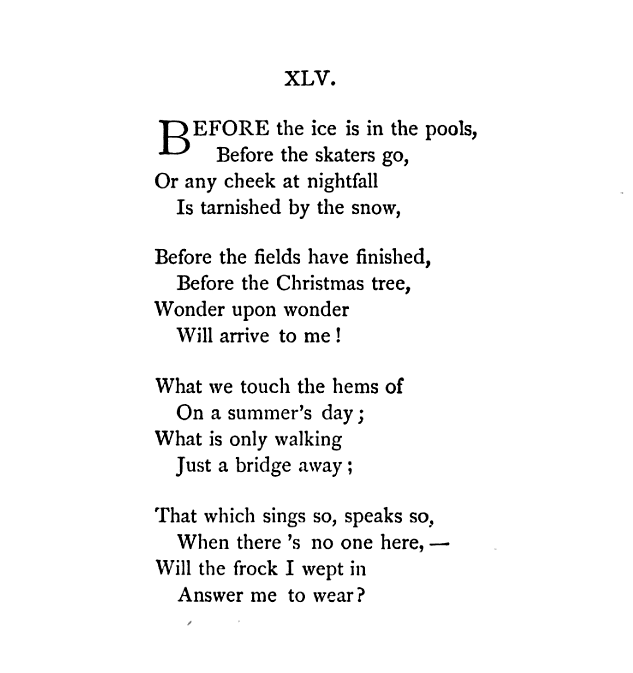
“Before the ice is in the pools” — Emily Dickinson

ed

Dynamism of a Dog on a Leash — Giacomo Balla

“The Midwinter Fires” — Sir James George Frazer

“The Midwinter Fires”

by

Sir James George Frazer

from The Golden Bough

If the heathen of ancient Europe celebrated, as we have good reason to believe, the season of Midsummer with a great festival of fire, of which the traces have survived in many places down to our own time, it is natural to suppose that they should have observed with similar rites the corresponding season of Midwinter; for Midsummer and Midwinter, or, in more technical language, the summer solstice and the winter solstice, are the two great turningpoints in the sun’s apparent course through the sky, and from the standpoint of primitive man nothing might seem more appropriate than to kindle fires on earth at the two moments when the fire and heat of the great luminary in heaven begin to wane or to wax.

In modern Christendom the ancient fire-festival of the winter solstice appears to survive, or to have survived down to recent years, in the old custom of the Yule log, clog, or block, as it was variously called in England. The custom was widespread in Europe, but seems to have flourished especially in England, France, and among the South Slavs; at least the fullest accounts of the custom come from these quarters. That the Yule log was only the winter counterpart of the midsummer bonfire, kindled within doors instead of in the open air on account of the cold and inclement weather of the season, was pointed out long ago by our English antiquary John Brand; and the view is supported by the many quaint superstitions attaching to the Yule log, superstitions which have no apparent connexion with Christianity but carry their heathen origin plainly stamped upon them. But while the two solstitial celebrations were both festivals of fire, the necessity or desirability of holding the winter celebration within doors lent it the character of a private or domestic festivity, which contrasts strongly with the publicity of the summer celebration, at which the people gathered on some open space or conspicuous height, kindled a huge bonfire in common, and danced and made merry round it together. Continue reading ““The Midwinter Fires” — Sir James George Frazer”

This is just to say

2008-05-23-410plums

Woman Reading — Peter Vilhelm Ilsted

Farm Garden with Crucifix — Gustav Klimt

klimt-farm-garden-with-crucifix

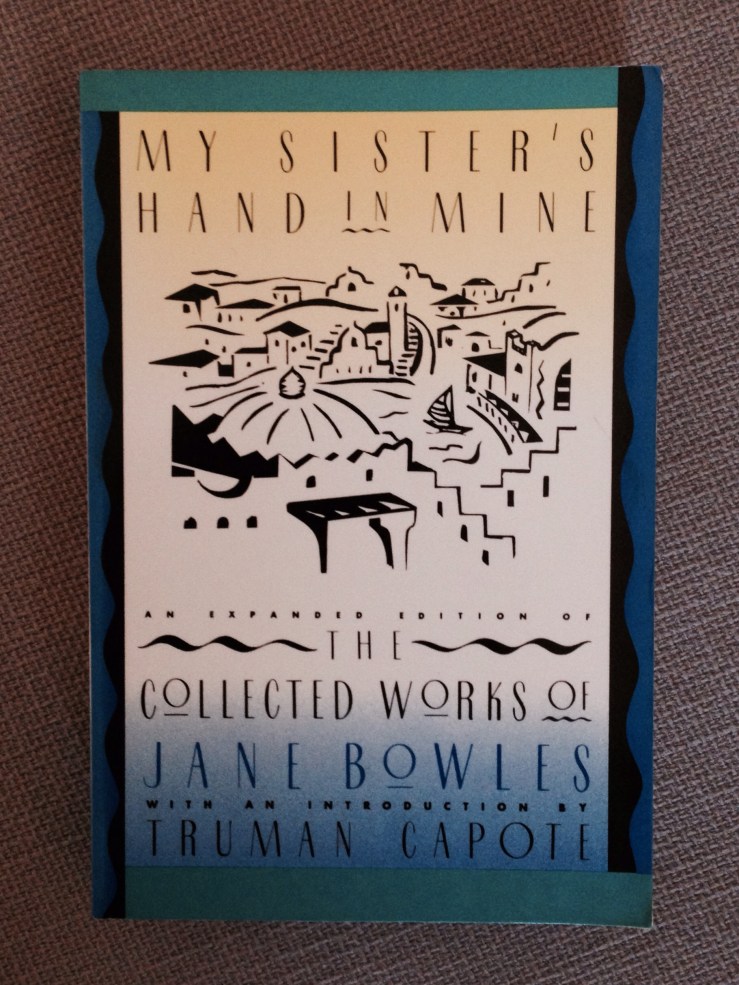
The Collected Works of Jane Bowles (Book Acquired, 12.19.2014)

IMG_4412

I picked up My Sister’s Hand in Mine: The Collected Works of Jane Bowles mostly because I couldn’t find a stand-alone version of the novel Two Serious Ladies. I guess it doesn’t hurt to have, y’know, all of her stuff (or really most of her stuff), but I’m not really a fan of omnibus editions. My interest in Two Serious Ladies was piqued by Ben Marcus, whom I interviewed by phone earlier this month (still transcribing that one; hope to run it in January). He spoke highly of the book and includes it on his writing syllabus.

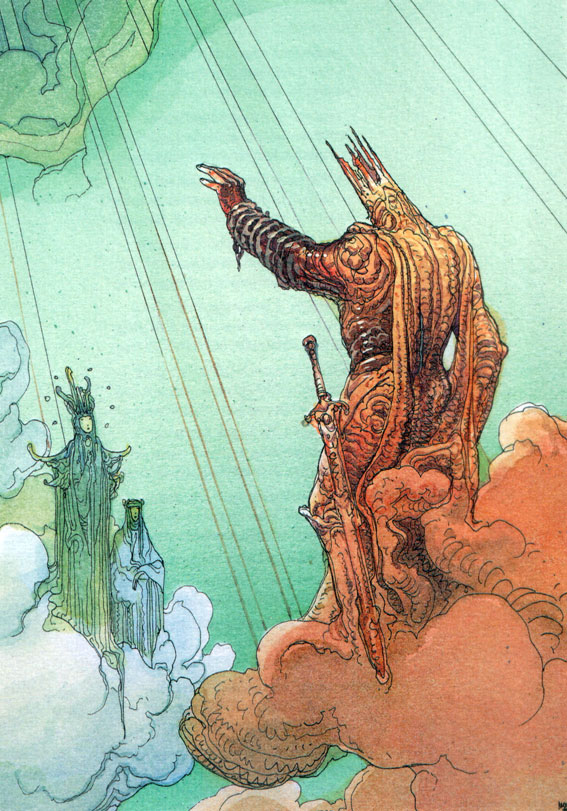
Moebius’s Divine Comedy

moebius

(More/via).

Santa Claus — Kurt Schwitters

Reading Abandoned — Felix Vallotton

3077617603_1_9_zqLtjbS7