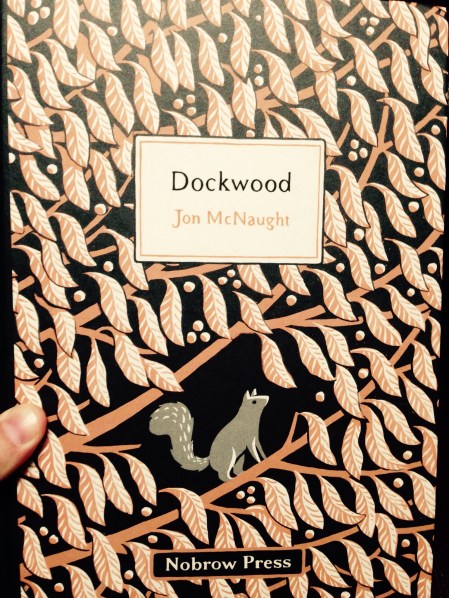
Jon McNaught’s Dockwood. From Nobrow. It’s beautiful. Full review forthcoming.

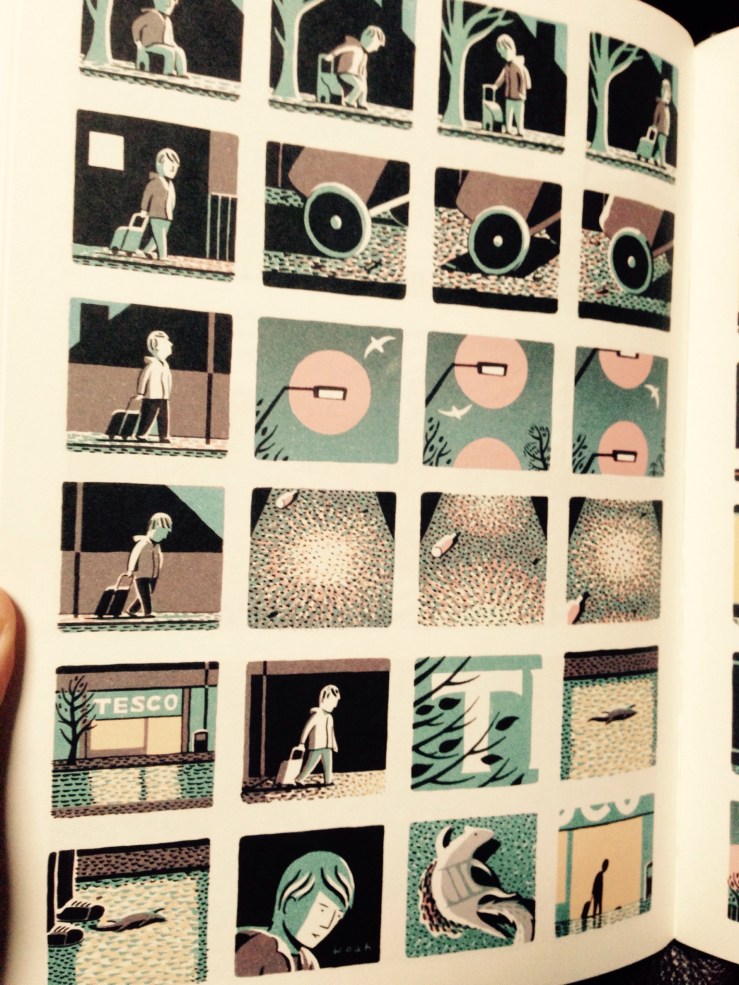
“Two Thanksgiving Day Gentlemen”
by
O. Henry
There is one day that is ours. There is one day when all we Americans who are not self-made go back to the old home to eat saleratus biscuits and marvel how much nearer to the porch the old pump looks than it used to. Bless the day. President Roosevelt gives it to us. We hear some talk of the Puritans, but don’t just remember who they were. Bet we can lick ’em, anyhow, if they try to land again. Plymouth Rocks? Well, that sounds more familiar. Lots of us have had to come down to hens since the Turkey Trust got its work in. But somebody in Washington is leaking out advance information to ’em about these Thanksgiving proclamations.
The big city east of the cranberry bogs has made Thanksgiving Day an institution. The last Thursday in November is the only day in the year on which it recognizes the part of America lying across the ferries. It is the one day that is purely American. Yes, a day of celebration, exclusively American.
And now for the story which is to prove to you that we have traditions on this side of the ocean that are becoming older at a much rapider rate than those of England are—thanks to our git-up and enterprise.
Stuffy Pete took his seat on the third bench to the right as you enter Union Square from the east, at the walk opposite the fountain. Every Thanksgiving Day for nine years he had taken his seat there promptly at 1 o’clock. For every time he had done so things had happened to him—Charles Dickensy things that swelled his waistcoat above his heart, and equally on the other side. Continue reading ““Two Thanksgiving Day Gentlemen” — O. Henry”


Pap got up a good hour before daylight and caught the mule and rid down to Killegrews’ to borrow the froe and maul. He ought to been back with it in forty minutes. But the sun had rose and I had done milked and fed and was eating my breakfast when he got back, with the mule not only in a lather but right on the edge of the thumps too.
“Fox hunting,” he said. “Fox hunting. A seventy-year-old man, with both feet and one knee, too, already in the grave, squatting all night on a hill and calling himself listening to a fox race that he couldn’t even hear unless they had come up onto the same log he was setting on and bayed into his ear trumpet. Give me my breakfast,” he told maw. “Whitfield is standing there right this minute, straddle of that board tree with his watch in his hand.”
And he was. We rid on past the church, and there was not only Solon Quick’s school-bus truck but Reverend Whitfield’s old mare too. We tied the mule to a sapling and hung our dinner bucket on a limb, and with pap toting Killegrew’s froe and maul and the wedges and me toting our ax, we went on to the board tree where Solon and Homer Bookwright, with their froes and mauls and axes and wedges, was setting on two upended cuts, and Whitfield was standing jest like pap said, in his boiled shirt and his black hat and pants and necktie, holding his watch in his hand. It was gold and in the morning sunlight it looked big as a full-growed squash.
“You’re late,” he said.
So pap told him again about how Old Man Killegrew had been off fox hunting all night, and nobody at home to lend him the froe but Mrs. Killegrew and the cook. And naturally, the cook wasn’t going to lend none of Killegrew’s tools out, and Mrs. Killegrew was worser than deaf than even Killegrew. If you was to run in and tell her the house was afire, she would jest keep on rocking and say she thought so, too,[audience laughter] unless she began to holler back to the cook to turn the dogs loose before you could even open your mouth.


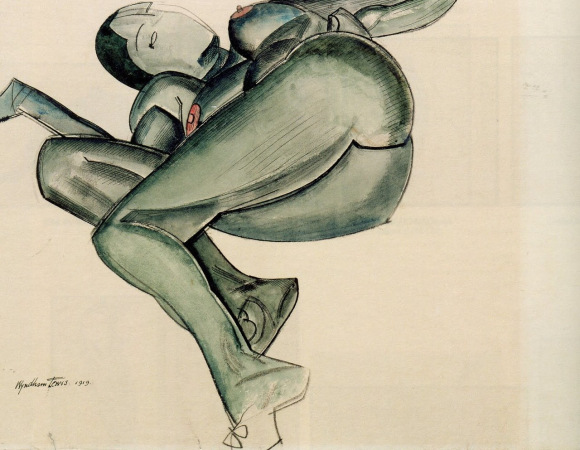



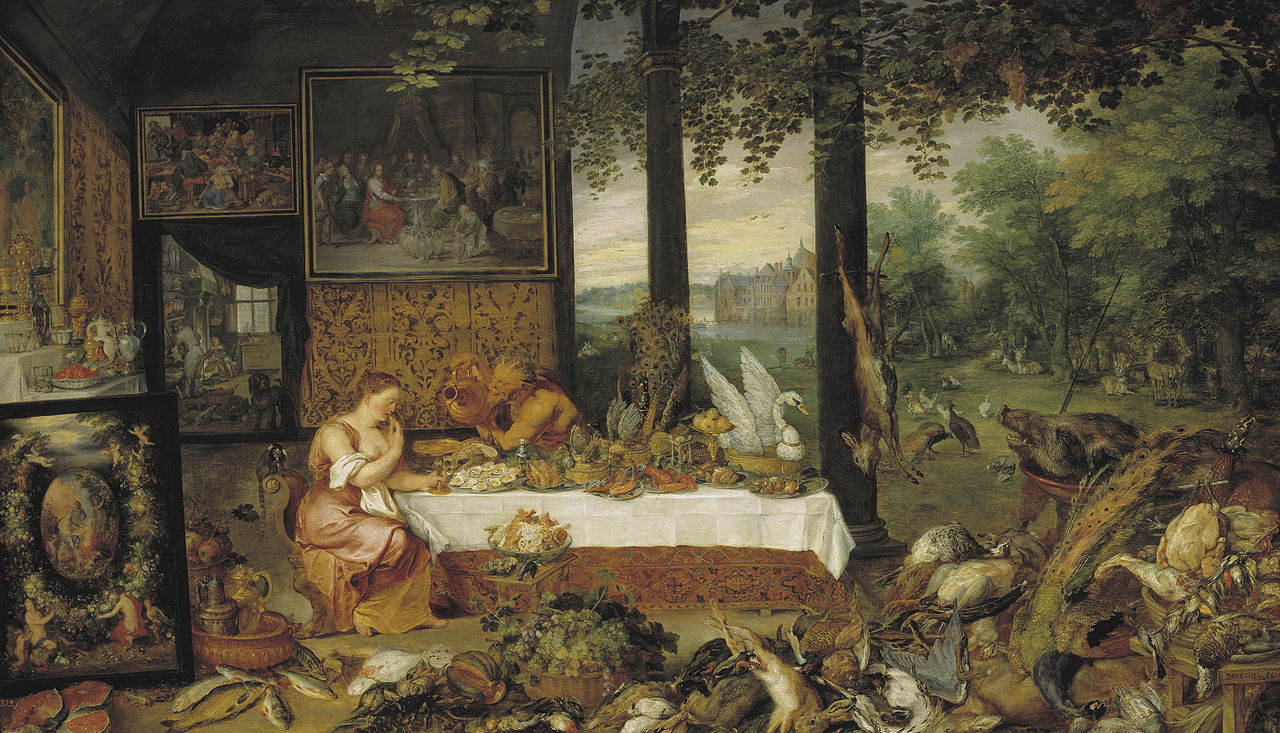
André Holland (of The Knick, which I dug) reads from David Foster Wallace’s The Pale King. (Via Matt Bucher).


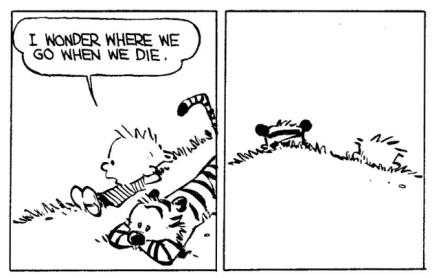
 From “Crusoe in England” by Elizabeth Bishop.
 Biblioklept