
Literature has a unique power to echo not just from the past into the future, but also backwards through time—later works can somehow cast shadows on earlier ones, and later details of a writer’s biography sometimes seep into fiction that the writer produced earlier. Take for example Edgar Allan Poe. He published his long poem “The Raven,” about a man mourning his lost love, two years before the death of his wife, yet the autobiographical detail nevertheless freights the work with deeper emotional weight. Poe was a hero to Roberto Bolaño (“The honest truth is that with Edgar Allan Poe we would all have more than enough good material to read”), whose own early death seems to haunt the writing that came before it. In turn, the late opus 2666 seems to cast a huge shadow over the rest of Bolaño’s fiction, which of course preceded it. I’ve argued before that 2666 is the labyrinthine culmination of the Bolañoverse, a mirror-world of dread and paranoia and violence and literary criticism and strange beauty. The Third Reich, one of Bolaño’s earliest novels, now in its second part of a four-part serialization from The Paris Review, continues to show Bolaño gesturing toward the beast that would become 2666.
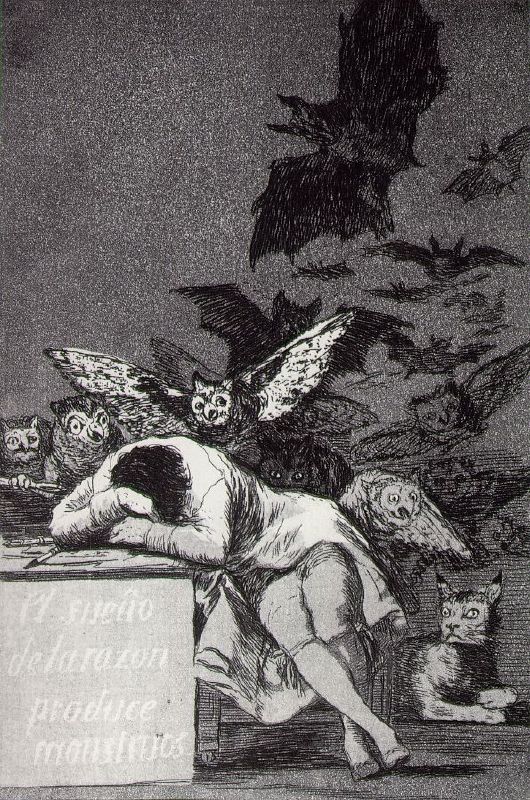
If 2666 impossibly haunts The Third Reich from the future, then paranoid Poe haunts it from the past. Last time we checked in, Udo Berger and his beautiful girlfriend Ingeborg had made tentative friends with another German couple while spending the summer at a seaside resort in Spain. Through this pair, they meet up with two nefarious locals, the Wolf and the Lamb; Udo also begins obsessing over a man named El Quemado, a burn victim who rents paddle boats to tourists. For Udo, the holiday is meant to be a working vacation—he’s a wargame enthusiast, and he plans to write a defining strategy for a new game called “The Third Reich” (implicitly, he plays the Nazi’s side). In the meantime, he’s also taken with the hotel’s owner, Frau Else, a German transplant who mysteriously disappears to take care of an ill husband who no one seems to see.
The first part of The Third Reich (published in the Spring ’11 issue) set the stage for dread, mystery, and extreme paranoia—all while on a sunny seaside holiday. The set-up recalls the seemingly innocuous first section of 2666, “The Part About the Critics,” where four European literature professors spend a vacation of sorts in sunny Mexico while ostensibly searching for a mysterious author. The Third Reich showcases the same sinister tension, describing—but never explaining—the stress between differing cultures, the radical alterity of “being on holiday,” of “vacating,” of being in a different place for a different purpose than what is usual, normal.
The second part of The Third Reich (in the new Summer ’11 issue) increases the dread and paranoia, all with a strange, mordant humor. The novel’s conceit is that the writing is Udo’s holiday’s journal; as such, he controls not only perspective and tone, but what details we learn—or don’t learn. It’s what Udo leaves out that becomes increasingly distressing and fascinating. Indeed, at a crucial point in the novel, Udo fails to explain to us why he remains in Spain after his holiday should be over, even as Ingeborg returns to Germany. There is an ostensible explanation—Charly has disappeared and Udo perhaps wants an answer to the mystery (I will withhold further details for fear of spoiling the plot). It seems more likely that Udo remains to work out his strategy for “The Third Reich”; he finds an unlikely gaming partner in El Quemado. Indeed, the wargame begins to define Udo’s perspective at all times—
When I saw from the balcony that the bathers were beating a mass retreat toward the hotels and campgrounds, I went down to the beach. It’s a sad time of day, and the bathers are sad: tired, sated with sun, they turn their gazes toward the line of buildings like soldier s already sure of defeat; with tired steps they cross the beach and the Paseo Maritimo, prudent but with a hint of scorn, of arrogance in the face of remote danger, their peculiar way of turning down side streets where they immediately seek out the shade leading them directly—they’re a tributue—toward the void.
German nihilism on holiday! Still, Udo finds perverse joy in his gaming sessions with El Quemado; in these episodes, his tone escalates to a manic pitch, reminiscent of some of Poe’s crazies (the narrator of “The Tell-Tale Heart” comes to mind in particular), as well as the mounting insanity of Oscar Amalfitano in 2666. And, just as in the early parts of 2666, The Third Reich begins to buzz with rumors of rape. Udo hints at these rumors, but is unwilling to explore them. Also mysterious is the identity of Frau Else’s husband, a pointedly Gothic conceit, of course, that nonetheless may be the beating heart of horror at the center of the story. He haunts Udo’s sleep—
I dreamed that someone was knocking at the door. It was nighttime and when I opened the door I saw someone slipping down the hall. I followed. Unexpectedly we came to a huge dark room filled with the outlines of heavy old furniture. The smell of mildew and dampness was strong. On a bed a shadowy figure was twisting and turning. At first I thought it was an animal. Then I recognized Frau Else’s husband. At last!
I’ve done my best to omit some of the sharp twists in this section of The Third Reich for fear of spoiling the book, but I will add that Part II ends with something of a subtle cliffhanger (as I write the term “subtle cliffhanger” I realize that it is pure oxymoron; mea culpa). In any case, I’m enjoying the serialization very much and look forward to reading Part III.


 Thanks to Biblioklept reader Jescie for sending in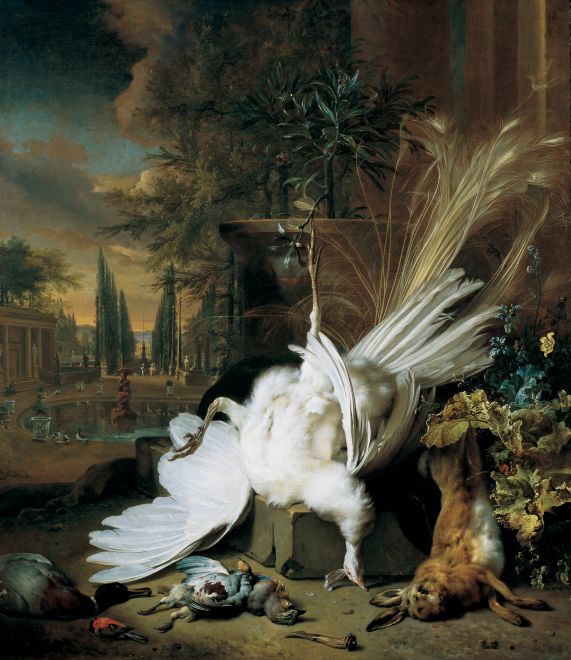

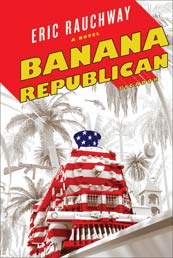 Banana Republican is the first novel by historian Eric Rauchway. The book is a send up of American Imperialism in the 1920s, satirizing the naked greed, corrupt capitalism, and ugly jingoism that infused the rise of the global economy. Fortunately, all of these ills have left American foreign policy forever, right? Satire! Seriously though, Banana Republican looks to the past to reveal that our current foreign debacles are merely an extension of policies that have been around for decades. The protagonist is Tom Buchanan (yes, that Tom Buchanan, the racist football-playing, mistress-slapping lout of The Great Gatsby). Rauchway sends Buchanan into the fiasco of American intervention in Nicaragua in the early 20th century. In an interview with
  Evgenia Citkowitz’s Ether collects seven short stories and a novella, all united by psychological and emotional complexity. Citkowitz’s characters explore moral dilemmas as they quest for identity, and if that sounds like the stock of contemporary fiction (which it is), the prose, terse, often chilly, and darkly funny, is what set these apart. Here’s Ligaya Mishan, reviewing the hardback edition last year in
  In his promo vid (below) for The Oregon Experiment, author Keith Scribner suggests that, “It’s a novel that explores the ways in which the political, the social, the personal, the domestic are inseparable.” Those are some pretty grand claims, so here are the details: The Oregon Experiment recounts the story of Scanlon and Naomi Pratt, a couple who move from the East Coast to Oregon, where Scanlon begins his first tenure-track job as a professor who studies radical action mass movements. Naomi was once a “genius nose” who worked for perfume companies, but she’s lost her sense of smell; she’s also pregnant with the couple’s first child. Scanlon quickly becomes enamored of Oregon, and becomes particularly intrigued by local separatists and anarchists; Naomi’s nose returns, but she isn’t quite as thrilled as Scanlon about the new scene (particularly Scanlon’s enchantment with Sequoia, leader of the secessionists), although she does connect with Scanlon’s young subject Clay, an anarchist. Scribner propels his novel with ideas rendered in crisp, realistic dialogue. The Oregon Experiment is new from
 Biblioklept