New novels from Cormac McCarthy in the fall of 2022

Cormac McCarthy has two novels coming out later this year: The Passenger and Stella Maris. Speculation about The Passenger has percolated for years, with increased interest after McCarthy read excerpts at the Santa Fe Institute in August of 2015. The reading was captured on video and disseminated on the internet and subsequently transcribed (stirring protest from the Cormac McCarthy Society).

A story in The New York Times reports that The Passenger and Stella Maris “represent a major stylistic and thematic departure for McCarthy” and that his “longtime publisher, Alfred A. Knopf, will release” the novels a month apart this fall.

As of now, Knopf’s website doesn’t include any info about the novels, but the NYT story does include what appears to be cover art:

McCarthy’s UK publisher, Pan Macmillan, does have some info on their website about the books, which will apparently be released in a “box set” edition in the UK.

Pan Macmillan also offers some descriptions of the books:

The Passenger

1980, PASS CHRISTIAN, MISSISSIPPI: It is three in the morning when Bobby Western zips the jacket of his wetsuit and plunges from the boat deck into darkness. His divelight illuminates the sunken jet, nine bodies still buckled in their seats, hair floating, eyes devoid of speculation. Missing from the crash site are the pilot’s flightbag, the plane’s black box, and the tenth passenger. But how? A collateral witness to machinations that can only bring him harm, Western is shadowed in body and spirit – by men with badges; by the ghost of his father, inventor of the bomb that melted glass and flesh in Hiroshima; and by his sister, the love and ruin of his soul. Traversing the American South, from the garrulous bar rooms of New Orleans to an abandoned oil rig off the Florida coast, The Passenger is a breathtaking novel of morality and science, the legacy of sin, and the madness that is human consciousness.

Stella Maris

1972, BLACK RIVER FALLS, WISCONSIN: Alicia Western, twenty years old, with forty thousand dollars in a plastic bag, admits herself to the hospital. A doctoral candidate in mathematics at the University of Chicago, Alicia has been diagnosed with paranoid schizophrenia, and she does not want to talk about her brother, Bobby. Instead, she contemplates the nature of madness, the human insistence on one common experience of the world; she recalls a childhood where, by the age of seven, her own grandmother feared for her; she surveys the intersection of physics and philosophy; and she introduces her cohorts, her chimeras, the hallucinations that only she can see. All the while, she grieves for Bobby, not quite dead, not quite hers. Told entirely through the transcripts of Alicia’s psychiatric sessions, Stella Maris is a searching, rigorous, intellectually challenging coda to The Passenger, a philosophical inquiry that questions our notions of God, truth, and existence.

McCarthy is now 88. His last novel, The Road, came out sixteen years ago. He also wrote the screenplay for The Counselor (2013, dir. Ridley Scott), and some nonfiction stuff. My guess is that these two novels are likely the last we’ll get from him. But I hope not.

Here are two photographs of Cormac McCarthy playing pool in El Paso, Texas, in 1998:


“Fore!” — William S. Burroughs

“Fore!”

from

Cities of the Red Night

by

William S. Burroughs


The liberal principles embodied in the French and American revolutions and later in the liberal revolutions of 1848 had already been codified and put into practice by pirate communes a hundred years earlier. Here is a quote from Under the Black Flag by Don C. Seitz:

Captain Mission was one of the forbears of the French Revolution. He was one hundred years in advance of his time, for his career was based upon an initial desire to better adjust the affairs of mankind, which ended as is quite usual in the more liberal adjustment of his own fortunes. It is related how Captain Mission, having led his ship to victory against an English man-of-war, called a meeting of the crew. Those who wished to follow him he would welcome and treat as brothers; those who did not would be safely set ashore. One and all embraced the New Freedom. Some were for hoisting the Black Flag at once but Mission demurred, saying that they were not pirates but liberty lovers, fighting for equal rights against all nations subject to the tyranny of government, and bespoke a white flag as the more fitting emblem. The ship’s money was put in a chest to be used as common property. Clothes were now distributed to all in need and the republic of the sea was in full operation.

Mission bespoke them to live in strict harmony among themselves; that a misplaced society would adjudge them still as pirates. Self-preservation, therefore, and not a cruel disposition, compelled them to declare war on all nations who should close their ports to them. “I declare such war and at the same time recommend to you a humane and generous behavior towards your prisoners, which will appear by so much more the effects of a noble soul as we are satisfied we should not meet the same treatment should our ill fortune or want of courage give us up to their mercy.…” The Nieustadt of Amsterdam was made prize, giving up two thousand pounds and gold dust and seventeen slaves. The slaves were added to the crew and clothed in the Dutchman’s spare garments; Mission made an address denouncing slavery, holding that men who sold others like beasts proved their religion to be no more than a grimace as no man had power of liberty over another.…

Mission explored the Madagascar coast and found a bay ten leagues north of Diégo-Suarez. It was resolved to establish here the shore quarters of the Republic—erect a town, build docks, and have a place they might call their own. The colony was called Libertatia and was placed under Articles drawn up by Captain Mission. The Articles state, among other things: all decisions with regard to the colony to be submitted to vote by the colonists; the abolition of slavery for any reason including debt; the abolition of the death penalty; and freedom to follow any religious beliefs or practices without sanction or molestation. Continue reading ““Fore!” — William S. Burroughs”

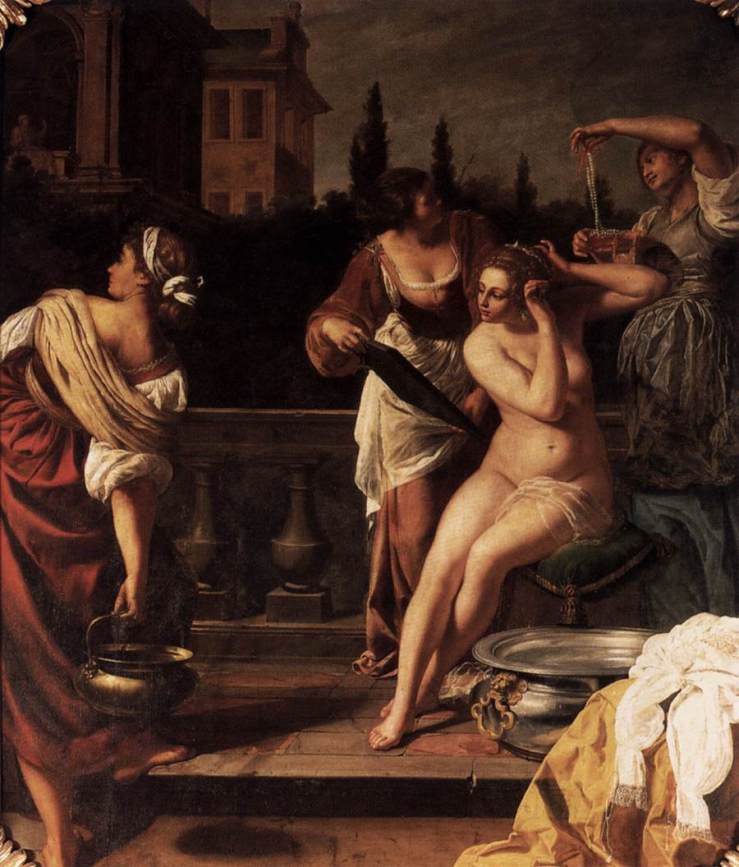
Bathsheba — Artemisia Gentileschi

Bathsheba, c. 1645–1650 by Artemisia Gentileschi (1593-1653)

“Fox” — Rita Dove

“Fox”

by

Rita Dove


She knew what
she was and so
was capable
of anything
anyone
could imagine.
She loved what
she was, there
for the taking,
imagine.

She imagined
nothing.
She loved
nothing more
than what she had,
which was enough
for her,
which was more
than any man
could handle.

Photographic portrait of Donald Barthelme at his drum kit, taken by his father Donald Barthelme, Sr.

db

Donkey — Eckhart Hahn

Donkey, 2019 by Eckhart Hahn (b. 1971)

Hero’s Journey — Susannah Martin

Hero’s Journey, 2021 by Susannah Martin (b. 1964)

See the girl | A report from Marlon James’s novel Moon Witch, Spider King

One night I was in the dream jungle. It was not a dream, but a memory that jump up in my sleep to usurp it. And in the dream memory is a girl. See the girl.

These four sentences open Marlon James’s novel Moon Witch, Spider King, the not-exactly sequel to 2019’s Black Leopard, Red WolfThat novel centered on Tracker and his quest to recover a missing child of enormous importance. Black Leopard, Red Wolf is a bizarre beast, a post-postmodern fantasy that queered its genre conventions and consistently contested the very notion that a story could ever be told straight. In it, Tracker segues between ever-shifting fellowships and nebulous nemeses–including the Moon Witch Sogolon, the protagonist of Moon Witch, Spider King.

Moon Witch, Spider King takes Sogolon as its viewpoint character, and the first seven chapters of this long, long novel (about a quarter of its 600ish pages) read far more straightforward than its predecessor. The narrative gambit of Black Leopard, Red Wolf is that Tracker, captured, is telling his story to an inquisitor—and that telling is a repeated deferral, teleporting through time and space (much like the “Ten and Nine Doors” that Tracker’s fellowship uses to teleport between city-states). Tracker does all he can do to tell any truth aslant. So far, James’s new novel follows a less demanding trajectory. The repeated invocation to “See the girl” follows our hero as her circumstances rise—although Sogolon experiences her rise in a picaresque, out-of-the-frying-pan-into-the-fire spirit.

We first find her an orphan of sort, a neglected witch-child more-or-less imprisoned in a termite hill by three cruel brothers, who blame her for killing their mother, who died birthing her. Sogolon even has to name herself. She escapes only to find herself in new peril, the house of Miss Azora. It’s a whorehouse, but Sogolon mixes potions to protect herself from its patrons–excepting one. The motif of male predation repeats in Moon Witch, as well as Sogolon’s resistance against those who would take her and take from her. In time, Sogolon finds herself into the house of a fallen aristocrat. Master Komwono may hold the title, but its Mistress Komwono who runs the show. Sogolon continues to spy and absorb, to play dumb, to use how others perceive her apparent weakness as an actual strength.

After Master Komwono dies under mysterious circumstances (take a guess!), Mistress Komwono is summoned back to the kingdom of Fasisi, from which she had previously been banished. A soldier named Keme is part of the caravan to bring the Komwono household to the capital, and Sogolon finds herself taken with the man. When they arrive at the palace, things take an even more sinister turn: the King is dying and his sister has disappeared (or been disapperead).

Here is where the plot machinations of Moon Witch truly kick in, shifting into a novel of political court intrigue. Mistress Komwono gives poor Sogolon to the princess of Fasisi, and she is drawn into all sorts of machinations. We begin to see the plotting of the Aesi (another of Tracker’s antagonists), whose Machiavellian moves are yet oblique to the young girl. In the meantime, witches are being burned, and Keme meets with his own fellowship (of griots and warriors and sentient lions) in a floating city. There’s a lot going on.

There’s a lot going on, but it’s a fun going on. See the girl, the narrator repeatedly intones, and James’s prose is marvelously vivid, setting strange scene after strange scene. And while the narrative voice, focused on Sogolon, is a removed third-person, I can’t help but now notice that the book opens with an I: “One night I was in the dream jungle”…who is this I, who so quickly disappears after a few sentences, replaced by the dream-memory incantation: See the girl.

(Parenthetically—while there are no Blood Meridian vibes so far to Moon Witch, Spider King, that incantation See the girl nevertheless seems to echo that McCarthy’s novel’s opening line, See the child (itself perhaps an echo of Melville’s Call me Ishmael.))

Anyway–I’m digging Moon Witch thus far. I’ve been auditing the audiobook (narrated by Bahni Turpin) and then rereading bits for clarification. So far, I think that anyone interested in what Marlon James is doing with this so-called Dark Star trilogy would be absolutely fine starting with this one. The line is straighter than Black Leopard, the thread is easier to follow, and it’s not necessary to know the contours or details of the plot of that “first” novel. But it still points to the wonderful queer weirdness of that novel. More to come.

Read Edna St. Vincent Millay’s one-act play, Two Slatterns and a King

Two Slatterns and a King

A Moral Interlude

by

Edna St. Vincent Millay


PERSONS

The King
Chance the Vice
Tidy the false Slattern
Slut the true Slattern

The Prologue and the Epilogue Spoken by Chance


Two Slatterns and a King

PROLOGUE

I am that cunning infidel
By men called CHANCE,—you know me well.
It is through me you met your wives;
Through me your harvest blights or thrives;
And one and all, through me, to-day
Hither you came to see the play,
Which if your favor still you lend,
As now, so on until the end,
You shall be taught what way a King
Though a sublime and awful thing
And even wise, may come to be
A laughing-stock,—and all through me!
(Exit)
(enter King)
King:
I am the King of all this land:
I hold a sceptre in my hand;
Upon my head I wear a crown;
Everybody stands when I sit down. (Sits)
Chance (Appearing to audience; he is invisible
throughout the play to the other players in it.
):
Excepting me,—please bear in mind
I sit whenever I feel inclined. (Sits)
King:
Although my lands are wide and long,
My walls right thick, my armies strong,
I am not wholly satisfied.
Chance:
That is because you have no bride.
King:
Who speaks?—Come forth and, if you dare,
Say once again what causes my care!
Why I am discontent with life!
Chance:
It is because you have no wife.
King:
A woman in my royal house!
A woman! A wife! A bride! A spouse!
Bold stranger, this is not the cure,
For a woman I could never endure!
Chance:
Per-CHANCE to-morrow you will find
You have altered your imperial mind.
(Exeunt King and Chance severally)
(Enter Tidy)
Tidy:
I am TIDY, I have been
All my life both neat and clean.
From my outside to my in
Clean am I unto my skin.
Every day into a bucket
My hands I dip, my head I duck it;
And if the water plenty be
I sometimes wet some more of me.
This is my kitchen, where you will find
All things pleasant and to your mind;
Against the wall in orderly pairs—
One, two,—one, two,—observe my chairs
In the middle of the room my table stands:
I would not move it for many lands.
My basins and bowls are all in their places;
The bottoms of my pots are as clean as your faces.
My kettle boils so cheerily,
It is like a friendly voice to me;
About my work I merrily sing,
And I brush my hearth with a white duck’s wing.
Oh, full is every cupboard, sharp is every knife!—
My bright, sunny kitchen is the pride of my life!
(Exit Tidy)
(Enter Slut)
Slut:
I am SLUT; I am a slattern,
You must not take me for your pattern.
I spend my days in slovenly ease;
I sleep when I like and I wake when I please.
My manners, they are indolent;
In clutter and filth I am quite content.
Here is my kitchen, where I stir up my messes,
And wear out my old shoes and soiled silk dresses.
My table sags beneath the weight
Of stale food and unwashed plate;
The cat has tipped the pitcher o’er,—
The greasy stream drips onto the floor;
Under the table is a broken cup—
I am too tired to pick it up.
(Exit Slut)
(Enter King)

Continue reading “Read Edna St. Vincent Millay’s one-act play, Two Slatterns and a King”

Posted in Art

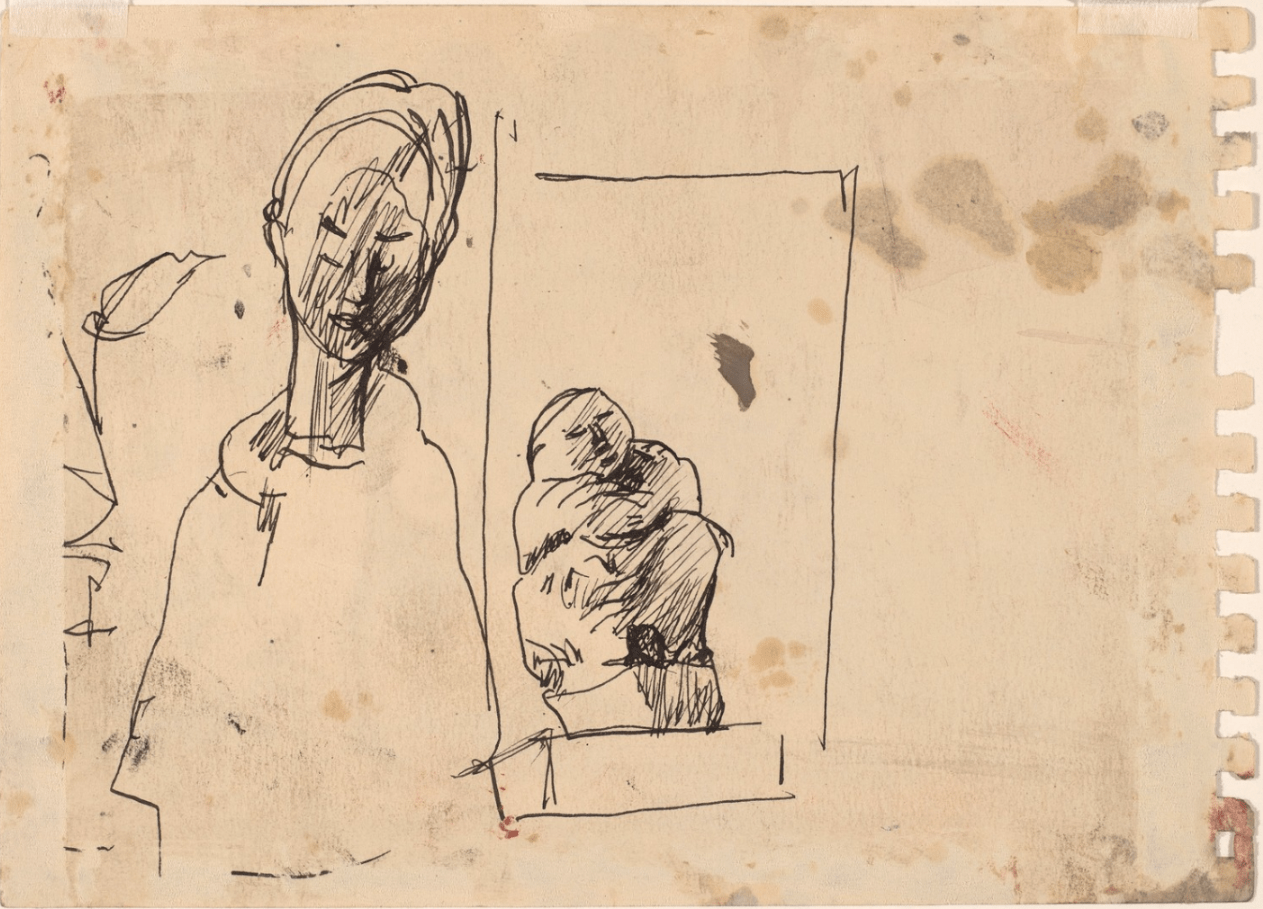
Untitled — Mark Rothko

Untitled [Verso], c. 1940 by Mark Rothko (1903-1970)

“The Unexplorer” — Edna St. Vincent Millay

esvm

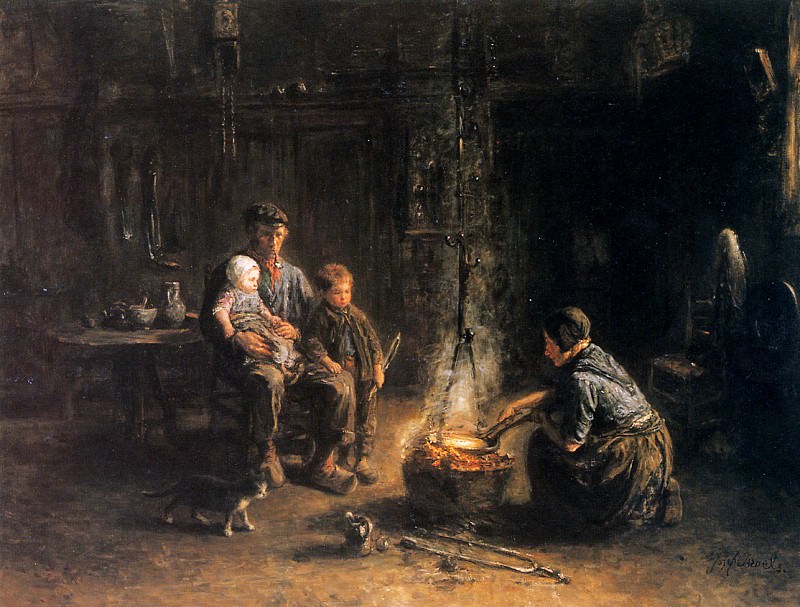
Pancake Day — Jozef Israëls

Pancake Day, c. 1885 by Jozef Israëls (1824-1911)

Home in Bed — Shannon Cartier Lucy 

Home in Bed, 2018 by Shannon Cartier Lucy (b. 1977)

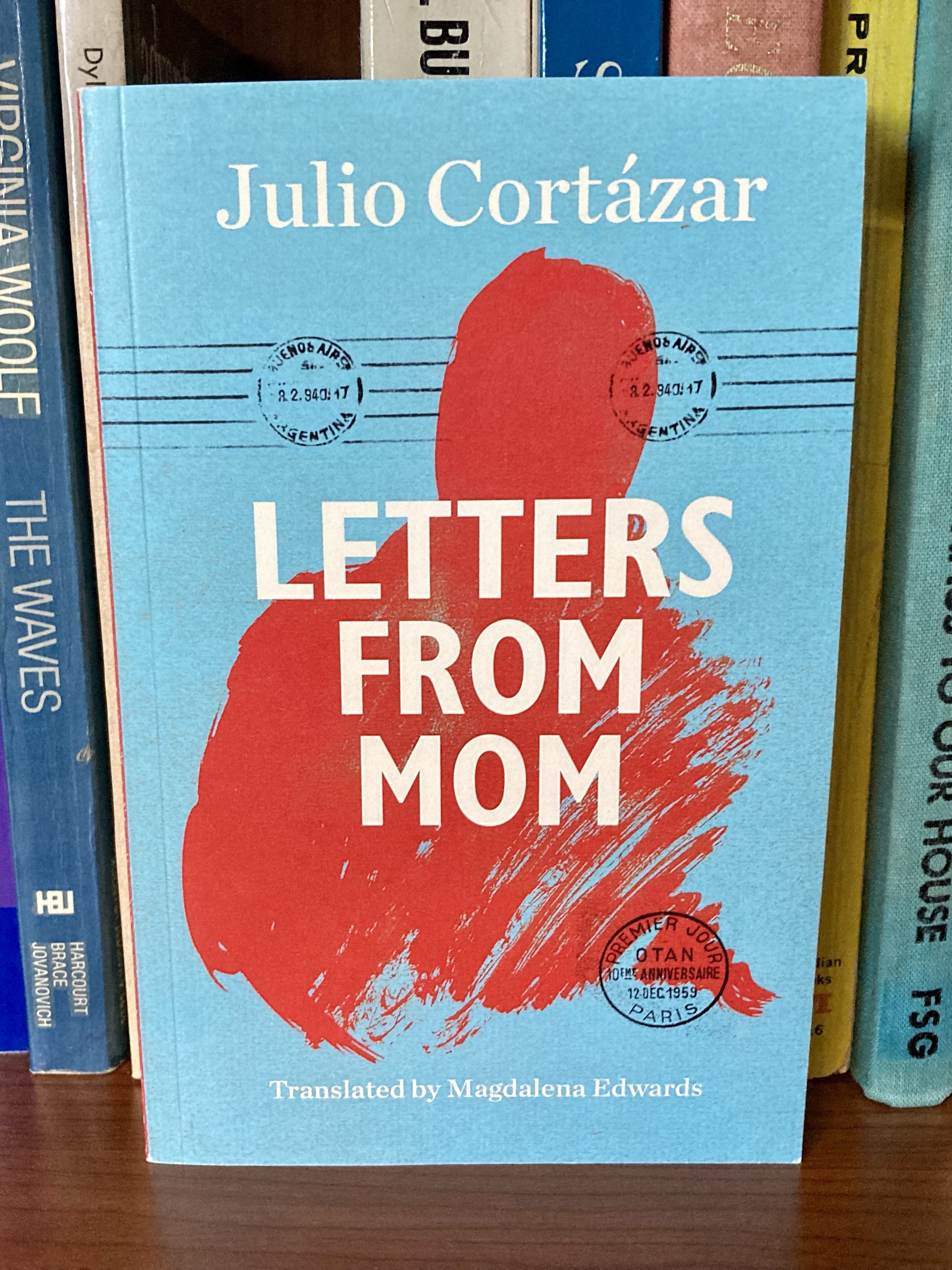
Between parentheses | On Julio Cortázar’s “Letters from Mom”

Julio Cortázar’s story “Letters from Mom” is available in English for the first time thanks to translator Magdalena Edwards and the good folks at Sublunary Editions. First published in Cortázar’s 1959 collection Las armas secretas, “Letters from Mom” centers on Luis and his wife Laura, Argentinian expatriates living in Paris, where Luis works as a designer for an advertising agency.

The story begins with Luis receiving a letter from his mother. The event underscores one of Cortázar’s main themes: writing itself. Luis’s mother’s letters arrive from Buenos Aires as “an alteration of time, a harmless little scandal within the order of things that Luis had wanted and designed and achieved” for himself. Luis’s designed “order” is a self-exile which relies on his and Laura’s refusal to speak a certain name. His mother’s latest letter evokes the name, stirring emotions that Luis has sought to repress.

Indeed, Luis’s entire life is rooted in repression. His time in Paris is “a heap of probation, the ridicule of living like a word between parentheses, divorced from the main sentence which nevertheless always supports and explains.” The simile “like a word between parentheses” (which appears in the very first paragraph of the story) teaches us to read the tale that unfolds. It’s between parentheses that we learn the emotional and psychological truth at the root of Luis’s repression. And as the story reaches its climax, Cortázar’s free indirect style paradoxically finds its freest expression within parenthetical boundaries.

Like so many self-exiles, Luis wants to escape the past. His desires again invoke similes of writing: “If the past could be torn up and thrown away like the draft of a letter or a book. But it’s always there, staining the clean copy, and I think that’s the real future.” The stain arrives again and again through his mother’s letters, which repeatedly invoke — and look, I don’t want to spoil the story, so maybe stop reading this now, hey — Continue reading “Between parentheses | On Julio Cortázar’s “Letters from Mom””

Untitled — Kerry James Marshall

Untitled, 2003 by Kerry James Marshall (b. 1955)

Posted in Art

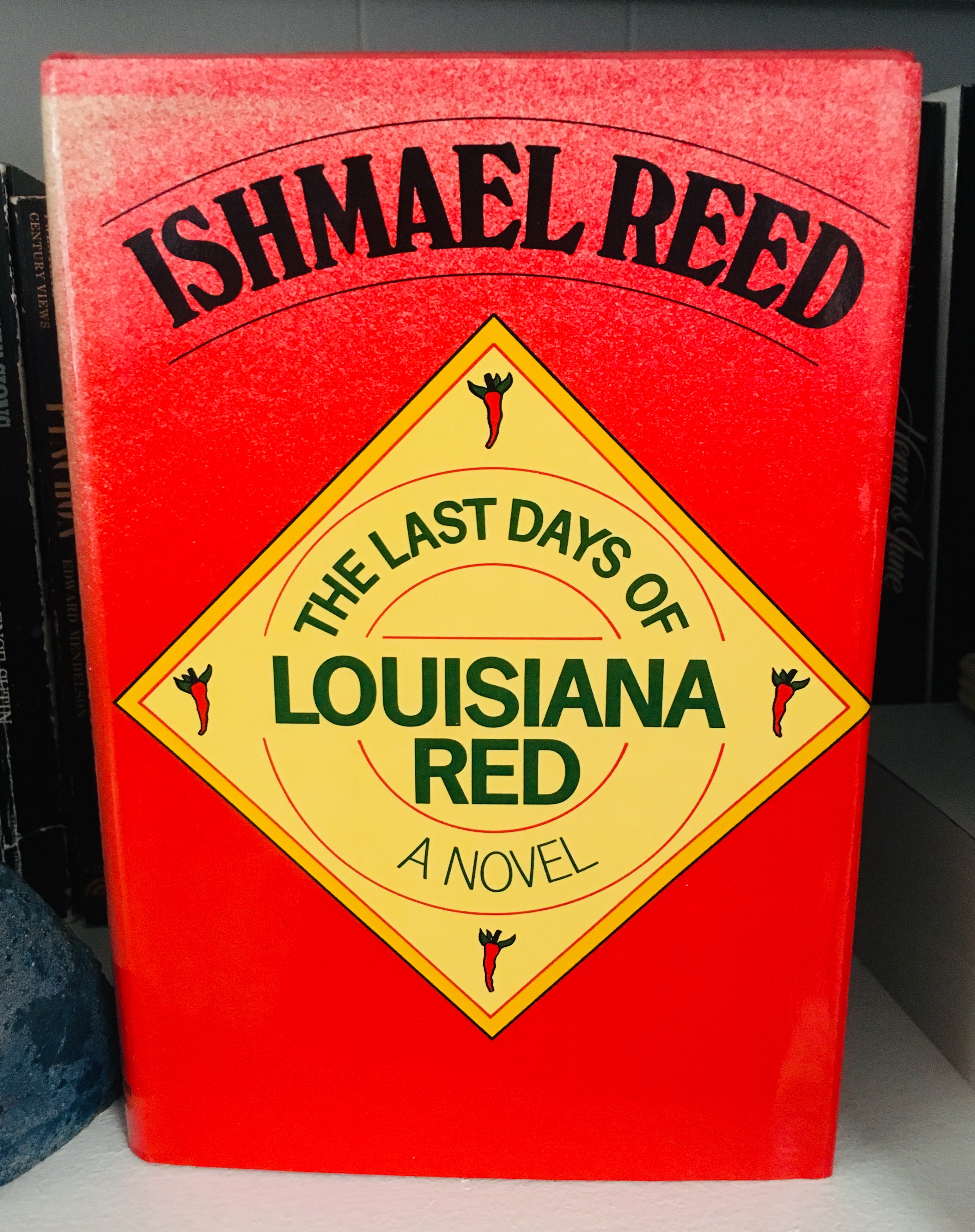
A review of Ishmael Reed’s sharp satire The Last Days of Louisiana Red

img_2323

Ishmael Reed’s 1974 novel The Last Days of Louisiana Red is a sharp, zany satire of US culture at the end of the twentieth century. The novel, Reed’s fourth, is a sequel of sorts to Mumbo Jumbo (1972), and features that earlier novel’s protagonist, the Neo-HooDoo ghost detective Papa LaBas.

In Mumbo Jumbo, Reed gave us the story of an uptight secret society, the Wallflower Order, and their attempt to root out and eradicate “Jes’ Grew,” a psychic virus that spreads freedom and takes its form in arts like jazz and the jitterbug. The Last Days of Louisiana Red also employs a psychic virus to drive its plot, although this transmission is far deadlier. “Louisiana Red” is a poisonous mental disease that afflicts black people in the Americas, causing them to fall into a neo-slave mentality in which they act like “Crabs in the Barrel…Each crab trying to keep the other from reaching the top.”

The Last Days of Louisiana Red begins with Ed Yellings, “an american negro itinerant who popped into Berkeley during the age of Nat King Cole. People looked around one day and there he was.” Yellings is the West Coast counterpart to New-York-based Papa LeBas, a fellow Worker of Neo-HooDoo who fights against the secret forces of psychic slavery.

Sliding into the mythological motif that ripple through Louisiana Red, Reed writes,

When Osiris entered Egypt, cannibalism was in vogue. He stopped men from eating men. Thousands of years later when Ed Yellings entered Berkeley, there was a plague too, but not as savage. After centuries of learning how to be subtle, the scheming beast that is man had acquired the ability to cover up.

Yellings’ mission is to destroy the psychic cannibalism that afflicts his people. He gets to it, and earns “a reputation for being not only a Worker [of the voodoo arts] but a worker too.” Yellings’ working class bona fides helps solidify his sympathies and his mission:

Since he worked with workers, he gained a knowledge of the workers’ lot. He knew that their lives were bitter. He experienced their surliness, their downtroddenness, their spitefulness and the hatred they had for one another and for their wives and their kids. He saw them repeatedly go against their own best interests as they were swayed and bedazzled by modern subliminal techniques, manipulated by politicians and corporate tycoons, who posed as their friends while sapping their energy. Whose political campaigns amounted to: “Get the Nigger.”

As always, Reed’s diagnosis of late 20th-century American culture seems to belong, unfortunately, just as much to our own time, giving his novels a perhaps-unintended sheen of prescience. Reed’s work points to dystopia, even as his heroes work for freedom and justice. And yet Reed gives equal air time to the forces that oppress freedom and justice, forces that find expression in “Louisiana Red”:

Louisiana Red was the way they related to one another, oppressed one another, maimed and murdered one another., carving one another while above their heads, fifty thousand feet, billionaires few in custom-made jet planes equipped with saunas tennis courts swimming pools discotheques and meeting rooms decorated like a Merv Griffin Show set….

The miserable workers were anti-negro, anti-chicano, anti-puerto rican, anti-asian, anti-native american, had forgotten their guild oaths, disrespected craftsmanship; produced badly made cars and appliances and were stimulated by gangster-controlled entertainment; turned out worms in the tuna fish, spiders in the soup, inflamatory toys, tumorous chickens, d.d.t. in fish and the brand new condominium built on quicksand.

As a means to fight the culture of erosion, decay, and entropy, Yellings founds the Solid Gumbo Works. Here, he manufactures a gumbo—a spell, really—to combat “Louisiana Red.” In the process he manages to cure cancer, which pisses off a lot of big corporations, and pretty soon Yellings is murdered. Papa LeBas is sent in from New York to solve the case.

Papa LeBas runs into trouble pretty quickly, mostly by way of Yellings’ adult children: Wolf, Street, Sister, and the provocative and gifted Minnie, who leads a group of militants called the Moochers. Each of the children seem to embody an allegorical parallel to some aspect of the American counterculture of the late sixties and seventies, allowing Reed to mash up genres and skewer ideologies. There are a lot flavors in this gumbo: voodoo lore and California history bubble in the same pot as riffs on astrology and Cab Calloway’s hit “Minnie the Moocher.” Reed frequently compares and contrasts East with West, New York with California, underscoring the latter’s anxieties of influence about being the New World of the New World. Throughout the novel, we get routines on Amos & Andy, slapstick pastiches straight out of George Herriman’s Krazy Kat comix, hysterical nods to Kafka. Reed plays off early blaxploitation films like Sweet Sweetback’s Baadasssss Song and Superfly (not to mention Putney Swope), and synthesizes these tropes with kung fu imagery and neo-Nazi nostalgia garb. He turns Aunt Jemima into a loa at one point.

Reed’s prose ping-pongs between genres, skittering from pulp fiction noir to surrealist frenzies, from bizarre sex to raucous action, from political essaying to postmodernist mythologizing. Through these stylistic shifts, Reed satirizes a host of ideologies that feed into “Louisiana Red.” Aspects of the Berkeley youth movement, radical feminism, free love, and intellectual hucksterism all get skewered, but through an allegorical lens—Reed dares us, often explicitly (by way of a character named Chorus) to read Louisiana Red as an allegorical retelling of Sophocles’ Antigone.

This retelling is both tragic and comic though, premodern and postmodern, a carnival of varied voices. The chapters are short, the sentences sting, and the plot shuttles along, pivoting from episode to episode with manic picaresque glee. Reed’s narrator is always way out there in front of both the reader and the novel’s characters, hollering at us to keep up.

Ultimately, The Last Days of Louisiana Red is a bit of a shaggy dog. It’s not that it doesn’t have a climax—it does, it has lots of climaxes, some quite literal. And it’s not that the novel doesn’t have a point—it very much does. Rather, it’s that Reed employs his detective story as a frame for the larger argument he wants to make about American culture. Sure, Papa LaBas gets to the bottom of Yellings’ murder, but that’s not ultimately what the narrative is about.

When we get to the final chapter, we find LaBas, sitting alone “on a plain box” in the empty offices of the Solid Gumbo Works reflecting on the case in a way that, in short, sums up what The Last Days of Louisiana Red is about:

He thought of the eaters and the eaten of this parable on Gumbo…all ‘oppressed people’ who often, like Tod Browning ‘Freaks,’ have their own boot on their own neck. They exist to give the LaBases, Wolfs and Sisters of these groups the business, so as to prevent them from taking care of Business, Occupation, Work. They are the moochers who cooperate with their ‘oppression,’ for they have the mentality of the prey who thinks his destruction at the fangs of the killer is the natural order of things and colludes with his own death. The Workers exist to tell the ‘prey’ that they were meant to bring down killers three times their size, using the old morality as their guide: Voodoo, Confucianism, the ancient Egyptian inner duties, using the technique of camouflage, independent camouflages like the leopard shark, ruler of the seas for five million years. Doc John, ‘the black Cagliostro,’ rises again over the American scene. The Workers conjure and command the spirit of Doc John to walk the land.

So here, near the end of The Last Days of Louisiana Red, Papa LeBas—and Ishmael Reed, of course—conjures up the spirit of Doctor John, the voodoo healer who escaped slavery and brought knowledge of the hoodoo arts to his people. There’s a promise of hope and optimism here at the novel’s end, despite its many bitter flavors. But the passage cited above is not the final moments of Louisiana Red—no, the novel, ends, despite what I wrote about its being a shaggy dog story, with a marvelous punchline.

Ishmael Reed remains an underappreciated novelist whose early work seems as vital as ever. The Last Days of Louisiana Red is probably not the best starting place for him, but it’s a great novel to read right after Mumbo Jumbo, which is a great starting place to read Reed. In any case: Read Reed. Highly recommended.

[Ed. note–Biblioklept first published this review in March, 2019.]