Matt Kish Illustrates Moby-Dick, One Page at a Time

So, I’m on my fourth trip through Herman Melville’s masterpiece, Moby-Dick, courtesy of an excellent unabridged audio version read with aplomb, gusto, humor, and great pathos by the late character-actor William Hootkins. I’ll’ go out on a limb and suggest that Hootkins’s reading is so nuanced and attuned to Ishmael’s voice and Melville’s purpose that it would make a great starting point for anyone (unnecessarily) daunted by Melville’s big book.

I’ve been enjoying the book more than ever this time, in part because, knowing its themes, plot, and tone, I can relax a bit more and enjoy its nuance and humor, its weird little nooks and crannies. I’m also really digging Matt Kish’s mixed-media illustrations for the book. Kish is illustrating each page of his 552 page Signet Classics Edition–the same edition I used for a graduate seminar years ago. Kish’s art is fresh, fun, and invigorating; it’s also quite thoughtful in its interpretation of Melville’s text, and never fussy. You can check out an easy-to-use visual index here, or visit his blog here.

Page 046 : "...and from the shuddering cold and blackness of the sea, the whale came breeching up

“All That” — Another Excerpt from DFW’s The Pale King

The New Yorker recently published another excerpt from David Foster Wallace’s forthcoming posthumous novel, The Pale King. Their editors (?) are calling it “All That.” Here’s the first two paragraphs, although, if you’re a DFW fan you’ve probably already gone to the full excerpt:

Once when I was a little boy I received as a gift a toy cement mixer. It was made of wood except for its wheels—axles—which, as I remember, were thin metal rods. I’m ninety per cent sure it was a Christmas gift. I liked it the same way a boy that age likes toy dump trucks, ambulances, tractor-trailers, and whatnot. There are little boys who like trains and little boys who like vehicles—I liked the latter.

It was (“it” meaning the cement mixer) the same overlarge miniature as many other toy vehicles—about the size of a breadbox. It weighed three or four pounds. It was a simple toy—no batteries. It had a colored rope, with a yellow handle, and you held the handle and walked pulling the cement mixer behind you—rather like a wagon, although it was nowhere near the size of a wagon. For Christmas, I’m positive it was. It was when I was the age where you can, as they say, “hear voices” without worrying that something is wrong with you. I “heard voices” all the time as a small child. I was either five or six, I believe. (I’m not very good with numbers.)

The New Yorker published another excerpt from The Pale King they called “Wiggle Room” back in March, and a piece called “Good People” back in 2007. Harper’s ran another excerpt called “The Compliance Branch” last year, but you have to subscribe to read it.

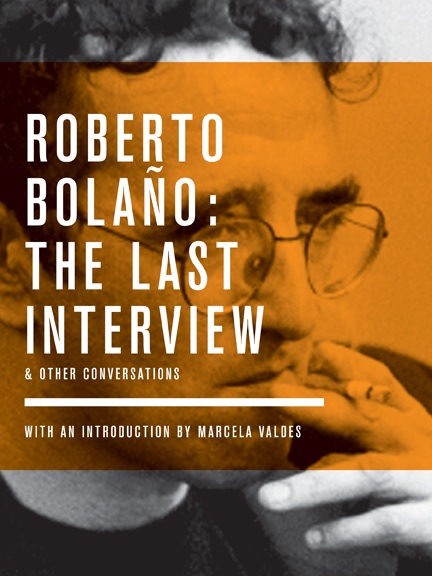
Roberto Bolaño: The Last Interview

I hate reviews that hem and haw too much over context, but I feel that a proper review of Roberto Bolaño: The Last Interview has to begin with some background information. But because I love you, gentle reader, as much as I hate context-driven reviews, here’s the quick version: if you, like me, have found yourself compelled to read everything by Bolaño that you could get your hands on in the the past year or two, then you should buy and read The Last Interview because you will enjoy it. Now for the context:

When Bolaño died at age 50 in 2003, he was only just rising to prominence as a fiction writer, with most of that prominence still restricted to the Spanish-speaking world. Bolaño’s tremendous success has been mostly posthumous and there really aren’t that many interviews with the man. Roberto Bolaño: The Last Interview collects four of them, scattered between 1999 and 2003. Up until now, not all of these interviews were available in English (unless you took the time to put them in a translator program like Babel Fish. Which I did. Quick note: Sybil Perez’s translations here are better than the syntax soup I got via Babel Fish). The book gets its name from Bolaño’s last interview, conducted by Mónica Maristain in a 2003 issue of the Mexican edition of Playboy; that longish interview makes up the bulk of this book. There’s also an essay entitled “Alone Among the Ghosts” by Marcela Valdes, previously published in a 2008 issue of The Nation.

“Alone Among the Ghosts” works as a sort of preface for the interviews, providing a brief overview of Bolaño’s oeuvre and shedding light on his working methods. In particular, “Ghosts” details how Bolaño researched the gruesome crimes at the heart of 2666. The interviews that follow range in tone from flighty (Maristain’s Playboy interview) to intimate (Carmen Boullosa’s inteview in Bomb), but all share one common trait: each interviewer attempts to get Roberto Bolaño to name his place in the canons of Spanish and world literature. The interviews, much like Bolaño’s at-times-esoteric (at least to this English speaker) novel The Savage Detectives, are chock full of literary references to Spanish-language writers, poets, and critics, and each interviewer seems to delight in pushing Bolaño into saying something provocative about other writers. Tom McCartan’s annotations, located in the margins of this extra-wide book, help to enlighten those of us who are unfamiliar with the greater (and lesser) fights and scandals of Latin American literature. In his books, Bolaño often satirized the petty in-fighting between various literary groups, at the same time revealing the paradoxically serious nature of these conflicts. One of the best examples comes from The Savage Detectives–Bolaño’s stand-in Arturo Belano fights a duel with a critic on a beach in an episode that’s both hilarious, pathetic, and slightly horrifying. In the interviews, you get the sense that Bolaño is both provoking literary battles and, at the same time, downplaying them. He’s serious about his aesthetic values but knows that most of the world is not–he knows that most of the world is concerned with more immediate and perhaps weightier concerns like family, sex, and death. It’s on these subjects that Bolaño the interviewee is more poignant and candid–and fun.

There is a sense of creation in these interviews, of Bolaño creating a public self through his answers. It’s at these times that you can almost sense Bolaño writing. On the one hand, it’s a treat to see his voice so fresh and immediate, but on the other hand, in the context of an interview, it lends credence to the notion that he’s resisting presenting an authentic “self” (please put aside all postmodern arguments about authenticity, identity, and textuality for a few moments). Consider his response to his “enemies”:

Every time I read that someone has spoken badly of me I begin to cry, I drag myself across the floor, I scratch myself, I stop writing indefinitely, I lose my appetite, I smoke less, I engage in sport, I go for walks on the edge of the sea, which by the way is less than 30 meters from my house, and I ask the seagulls, whose ancestors ate the fish who ate Ulysses: Why me? Why? I’ve done you no harm.

A lovely passage. Apparent sincerity gives way to hyperbole gives way to healthy habits gives way to literary allusion–and perhaps hints of bathos. I get the sense that Bolaño is pulling a collective leg here, yet, there must be a kernel of truth to the notion that his critics affect him. In any case, the response, in its compelling rhythm and pathetic humor, might fit neatly into one of Bolaño’s books, where the author has often blurred the lines between fact and fiction.

These interviews will no doubt be pored over as “Bolaño Studies” hits academia hard, and would-be Bolaño scholars try to parse out their own narratives against the myriad gaps in Bolaño’s record. For more on the many inconsistencies in Bolaño’s life, check out this story from the The New York Times, which interviews family, friends, and literary associates to tease truth out of some of Bolaño’s grander embellishments. Of course, Bolaño was not solely responsible for all exaggerations. From the interview first published in Turia:

“It’s the typical Latin American tango. In the first book edited for me in Germany, they give me one month in prison; in the second book–seeing that the first one hadn’t sold so well–they raise it to three months; in the third book I’m up to four months, in the fourth it’s five. The way it’s going, I should still be a prisoner now.”

The New York Times article questions whether Bolaño even spent the eight days in a Chilean prison that he claims he did. Whether or not that ruins the authenticity of Bolaño’s short story “Dance Card,” collected in Last Evenings on Earth, is totally up to you of course, dear reader, but I think that self-invention has always been the privilege of the writer. If the interviews collected in The Last Interview reveal a myth-maker creating a self, they are also transparent and humorous in these creations. Highly recommended.

Roberto Bolaño: The Last Interview is now available from Melville House. For a detailed account of the authors mentioned in the interviews, read Tom McCartan’s fantastic series “What Bolaño Read.”

Let’s Not Be Pretentious

Mónica Maristain interviewing Roberto Bolaño, collected in Roberto Bolaño: The Last Interview:

MM: John Lennon, Lady Di, or Elvis Presley?

RB: The Pogues. Or Suicide. Or Bob Dylan. Well, but let’s not be pretentious: Elvis forever. Elvis and his golden voice, with a sheriff’s badge, driving a Mustang and stuffing himself with pills.

There Is No Quality in This World that Is Not What It Is Merely by Contrast

I was thinking about this passage when I awoke very cold this morning. Here’s one of our favorite narrators ever, Ishmael, in Herman Melville’s Moby-Dick, explaining why you have to be just a little bit cold to appreciate the snug warmth of a bed on a frozen morning:

We felt very nice and snug, the more so since it was so chilly out of doors; indeed out of bed-clothes too, seeing that there was no fire in the room. The more so, I say, because truly to enjoy bodily warmth, some small part of you must be cold, for there is no quality in this world that is not what it is merely by contrast. Nothing exists in itself. If you flatter yourself that you are all over comfortable, and have been so a long time, then you cannot be said to be comfortable any more. But if, like Queequeg and me in the bed, the tip of your nose or the crown of your head be slightly chilled, why then, indeed, in the general consciousness you feel most delightfully and unmistakably warm. For this reason a sleeping apartment should never be furnished with a fire, which is one of the luxurious discomforts of the rich. For the height of this sort of deliciousness is to have nothing but the blanket between you and your snugness and the cold of the outer air. Then there you lie like the one warm spark in the heart of an arctic crystal.

“The Son Never Asked to Be Born” — Roberto Bolaño’s Parenting Advice

Roberto Bolaño, from an interview with Eliseo Álvarez, republished this month in Melville House’s Roberto Bolaño: The Last Interview:

I suppose that within his brutality and his courage–he is a very courageous man–my father loved me as I love my son. In the end, one could talk for hours about the relationship between a father and a son. The only clear thing is that a father has to be willing to be spat upon by his son as many times as the son wishes to do it. Even still the father will not have paid a tenth of what he owes because the son never asked to be born. If you brought him into this world, the least you can do is put up with whatever insult he wants to offer.

Okay, so sons didn’t ask to be born, but what about daughters? How did Bolaño feel about his daughter?

I won’t say anymore. I’ll start to cry. The only explanation I could give would be to cry. It’s beyond the beyond.

Reading these quotes, I thought about two of my favorite depictions of fathers and children in Bolaño’s work. First, there’s Bolaño as the son, “B,” in the title track from the collection Last Evenings on Earth. The story is a strange mix of sinister and funny, with the (perhaps overly literary) son fearing for his dad, a boxer who, at least in the son-narrator’s view, doesn’t seem to be paying attention to just how bad things seem to be turning on the pair’s vacation to Acapulco. Then there’s (possibly) Bolaño as parent, this time in the form of Oscar Amalfitano in 2666. If Bolaño would cry for his daughter’s safety, for anxiety and wariness of a cruel world, then Amalfitano becomes a literary center for those fears. And, if you’ve read that book, you know his paranoia is justified. In any case, it’s clear that Bolaño loved his children deeply. In another of the the book’s interviews–literally, “The Last Interview,” Bolaño, the exile who lived everywhere said, “my only country is my two children.” He even asked that his masterpiece 2666 be divvied up into five parts in the hopes that it would provide steady income for his son and daughter.

For more about Bolaño, check out Tom McCartan’s fantastic limited-run series, “What Bolaño Read.” We’ll do our best to get a full review out before McCartan (who annotated The Last Interview, by the way) addresses everything in the book.

Hamilton Leithauser’s 2009 Reading List

Hamilton Leithauser, vocalist/lyricist for one of our favorite bands, The Walkmen, shared what he enjoyed reading this past year at The Millions, part of their year-end “A Year in Reading 2009” series (we dig plenty of the literati who contribute to the list, particularly Stephen Elliott, whose essays we’ve long admired, and who says Bolaño’s 2666 is his favorite book this year–but we’ll take the nonliterary route this time, and go with a (semi-)rock star). Leithauser speaks highly of Dave Eggers and Kingley Amis, and cites W.H. Auden as a favorite poet. We think that The Walkmen’s last record You & Me is about as literary as you can get in a rock record–it plays like a collection of interconnected short stories, full of the disillusionment and joy of getting older. We gave You & Me pride of place on last year’s list best-of music list. Here’s “In The New Year,” a song that builds fantasy only to puncture it thoroughly. Great stuff.

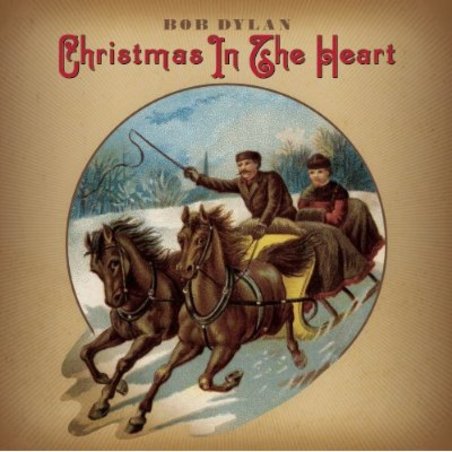
Christmas in the Heart — Bob Dylan

When Bob Dylan’s Christmas in the Heart came out a few months ago, most critics obsessed over the ironic possibilities of a Bob Dylan Christmas album, especially one called Christmas in the Heart, especially one with that cover. Had these critics forgotten that Dylan has always held his cards tight to his chest? That he’s been producing his albums for years now under the kinda-Christmasy pseudonym Jack Frost? That he only does what he really wants to do? For many of these critics, the fact that all proceeds of the album go to Feeding America functioned almost as an excuse for (more) weird behavior from Dylan. All one has to do, of course, is simply listen to the music to find that Christmas in the Heart is a minor masterpiece in the Christmas music genre and a wonderful, strange fit in the Dylan canon.

Dylan tackles fifteen carols and classics in a consistent, old-timey style evocative of Les Paul and Mary Ford and other hybrid Country & Western of the immediate post-WWII era. Dylan’s production is warm and simple, showcasing the talent of his players and backup singers. Opener “Here Comes Santa Claus” sets a lively pace that slows down over the course of the album’s first side, through a lush “Do You Hear What I Hear?” to a version of “I’ll Be Home for Christmas” that wrangles just the right mix of bitter and sweet. Dylan’s version of “Little Drummer Boy” is downright ethereal. The album picks up again with its only barnburner, a fired-up version of Lawrence Welk’s polka, “Must Be Christmas.” Do yourself a favor and enrich your life by watching the marvelous video (seriously watch it, if for nothing else than for Dylan’s surreal wig):

The energy and strange, chaotic madness of “Must Be Christmas” makes for the lively climax of the album, and the video clearly represents Dylan’s vision of Christmas as carnival. Not that it’s all ritual madness, of course. The commercial/spiritual paradox of Christmas comes out in the end, as the record winds down with the secular melancholy of “The Christmas Song” followed by the stirring hymn “O’ Little Town of Bethlehem.” If there’s any concern that Dylan is somehow not entirely earnest in his Christmas music–or too earnest in his irony, perhaps–one simply has to listen to the spirit in his gravelly, aging voice. Christmas in the Heart may be ironic, but that shouldn’t diminish its pleasures at all: it’s a self-conscious, loving irony, far from sneering, and certainly not a trick on the listener. It’s a gift of music, really (as corny as that sounds), one that asks the reader to laugh along with it, but also to feel genuine sentiment in the beauty here. Highly recommended–especially on 180 gram vinyl (the vinyl addition includes the album on CD and a 7″ single of “Must Be Christmas” and a B-side of Bob reading “‘Twas the Night Before Christmas” with backing music by John Fahey).

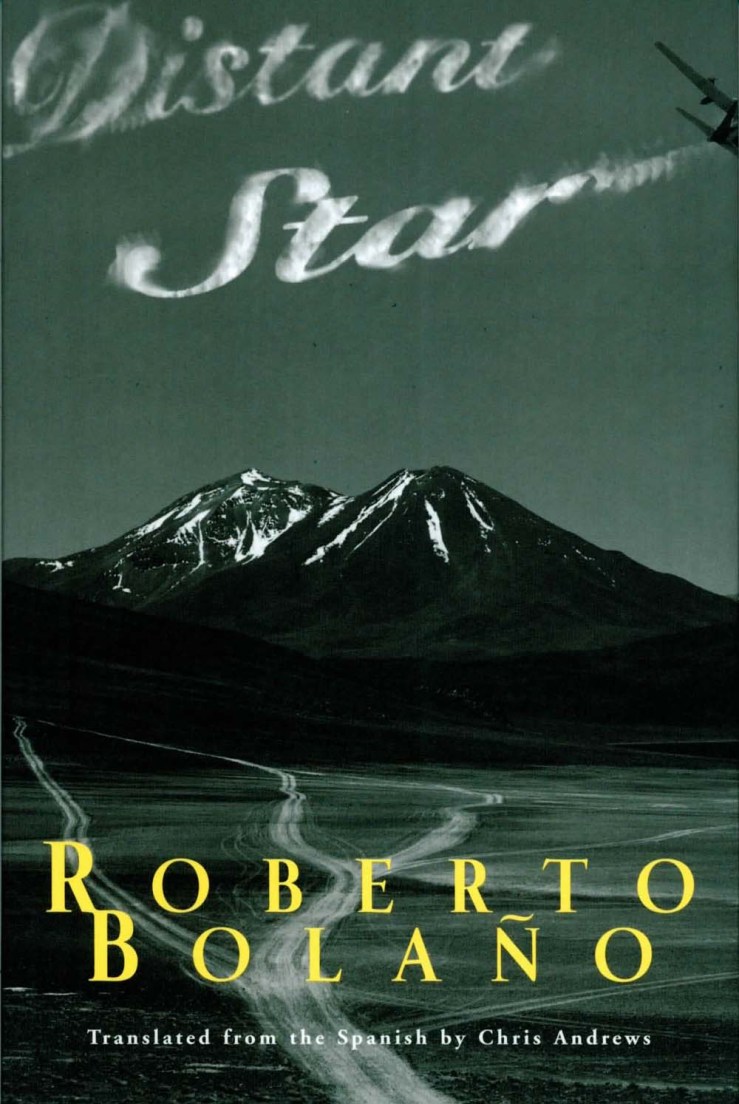
Distant Star — Roberto Bolaño

Roberto Bolaño’s slim novel Distant Star begins a few months prior to Pinochet’s bloody 1973 coup and continues into the mid-nineties, crossing through several countries in the process. The unnamed narrator (presumably the “Arturo B.” mentioned in a brief preface, surely Arturo Belano, Bolaño’s alter-ego) is so busy with the future of Chilean poetry that the violence of the coup–in which scores of students are arrested, killed, or disappeared–takes him by total surprise. He’s obsessed with a quiet and intense poet close to his age named Alberto Ruiz-Tagle, who seems to be, according to all sources prior to the coup, a harbinger of a new age in Chilean writing. Ruiz-Tagle, it turns out, is actually an Air Force officer named Carlos Wieder, who writes his death-obsessed poetry in a WWII Messerschmitt airplane. Wieder’s sky-written poems cause a sensation (however illegible some are), but not one nearly as great as his magnum opus–a multimedia installation cataloging and detailing Wieder’s sadistic, ritualistic murders of students and other dissidents. His art is beyond the pale of even the new military regime, and he’s forced out of the Air Force to live a life under pseudonyms in other countries, much like the other Chilean exiles who populate this book. Bolaño’s narrator, a savage detective, takes great pains to reconstruct the lives of these escaped artists, but as time passes the truth becomes ever-murkier. He writes at one point that “the melancholy folklore of exile” is “made up of stories that, as often as not, are fabrications or pale copies of what really happened.” The narrator’s detective work, aided by old friends, attempts to reconstruct the whereabouts (or fates) of Chile’s exiles, but more often than not the trails lead to a perplexing pastiche of possibilities–not dead ends, but inconclusive answers. The story builds to a tense, sinister, and perhaps incomplete (yet satisfying) climax as a “real” detective–a former cop turned PI–enlists the narrator to track down a man who may or may not be Wieder. And I won’t spoil what happens after that.

I read most of Distant Star over the course of one afternoon, and then re-read most of it again earlier this week. It seems to me that the book is something of a trial-run for Bolaño’s opus, 2666, and when I say that, I don’t mean to diminish Distant Star at all, only to note that, more so than The Savage Detectives or By Night in Chile, this book is markedly horrific and at times profoundly violent. It is, of course, something of a companion piece for By Night in Chile (both, by the way, translated by Chris Andrews). That book is a confession from a critic-priest who had flourished under the right-wing regime; Distant Star gives us the other side of the story. Distant Star is also an investigation (by way of digression, to be sure) into the relationship between power and art and evil, and there’s a coldness at its core that almost hurts. It is both painful and beautiful. This is not the best starting place for Bolaño. I’ll continue to contend that 2666 is a fine and dandy place to jump in, or Last Evenings on Earth, if 900 pages is too much for you, but if you read those and dig them, you’ll want to read Distant Star, and its evil twin By Night in Chile. In some sense, all of Bolaño’s work (at least what I’ve read so far) composes a grand and (in)complete and sweeping collective body, like Faulkner, who provides Distant Star its epigraph: “What star falls unseen?” Highly recommended.

Art Is The Proper Task of Life

Portrait of Nietzsche by Damon Soule

Literature Is Not Made From Words Alone

Roberto Bolaño, in a 2002 interview, tells us that

. . . literature is not made from words alone. Borges says that there are untranslatable writers. I think he uses Quevedo as an example. We could add García Lorca and others. Notwithstanding that, a work like Don Quijote can resist even the worst translator. As a matter of fact, it can resist mutilation, the loss of numerous pages and even a shit storm. Thus, with everything against it–bad translation, incomplete and ruined–any version of Quijote would still have very much to say to a Chinese or an African reader. And that is literature.

The interview, conducted by Carmen Boullosa, was originally published in Bomb. It’s now collected along with three other interviews, all meticulously annotated (there’s also a fabulous introductory essay by Marcela Valdes) in a collection called Roberto Bolaño: The Last Interview, new from Melville House. While you’re browsing Melville House, I highly, highly recommend Tom McCartan’s column “What Bolaño Read,which will be ongoing through next week. Great stuff. Biblioklept will run a proper review of The Last Interview later this week (no big surprise for regular ‘klept readers: I love it. Get it. Read it. Give it to the Bolaño fanatic in your life), but in the meantime, back to the quote.

I’ve written so much about Bolaño over the past year yet I’ve never really reflected on his English translators, Chris Andrews (the shorter works) and Natasha Wimmer (the long books), probably because I wouldn’t know how to begin. Reading interviews with Andrews and Wimmer (links above) is enlightening. Andrews attests that he tries to avoid “a translation that is unduly distracting,” and remarks on Bolaño’s epic syntax. Wimmer says she simply tried “to follow Bolaño’s lead,” but admits to her reviewer that she might have missed some puns (“Missing things like that is the translator’s great dread, but it’s probably inevitable occasionally, especially with Bolaño”). In both of the interviews, Bolaño’s translators come off as critical readers whose love of their source material is clearly at the forefront of their project. I have to believe–and have to is the operative term here–that their translations are faithful to Bolaño’s text (and spirit), that they are not, to use the man’s term, a “shit storm” on his oeuvre. But, given Bolaño’s own definition of “literature,” I’d also aver that his masterpiece 2666 could weather any shit storm (hell, the thing was, I suppose, technically incomplete at his death). In any case, I find Bolaño point reassuring, not just in light of his own work, but also within the context of a greater canon of world literature. His suggestion that real literature speaks beyond “words alone,” that storytelling is more than mere verbal tricks and schemes, should be an affirmation to anyone who’s ever been unsure that he’s properly “got” Kafka or Haruki Murakami or Dostoevsky or whomever. And I like that idea quite a bit.

Pessimus Populus: The Worst People of 2009

Ah, January of 2009 . . . those were simpler times. We were so gripped in hope and change and whatnot that the future seemed a bastion of illimitable glowing possibilities illuminated by an infinity of suns. Doing another “Worst People” list seemed antithetical to what we hoped would be a new zeitgeist. That lasted about five metaphorical minutes. So here we go:

10. Joe “You lie!” Wilson

What a dick.

9. Mark Sanford

We don’t really care that South Carolina Governor Mark Sanford is the kind of dick who cheats on his wife. That’s dickish, sure, but not of heroically-dickish enough proportions to land him on this list. And his priggish refusal to accept federal monies to ensure that SC schools didn’t tank was pretty awful too. We don’t even care that he left his post and went AWOL to hook up with his mistress (lying to his staff, his family, and his constituency in the process). We just hate his hypocrisy. Here’s Sanford in ’98 blasting Clinton. Sanford, a bastion of family values, also was a strong proponent of SC’s hateful anti-gay “Defense of Marriage” Act. What a prick–yet another in a long line of right wing politicians who love to tell others how to live their lives yet fail to live up to their own standards.

8. Glenn Beck

Glenn Beck is a fatty-jowled pussy of the worst order, a crying little bitch who offers up conjecture and speculation–and no real information–to a dimwitted audience. His pandering to racist, xenophobic attitudes has made him millions of course. Oh, remember when he called Obama a racist?

7. Orly Taitz and the “Birthers”

Speaking of racist, xenophobic attitudes . . . Watch Orly Taitz. Her lunacy set an example for way too many Americans overeager to reclaim “their” country from a Harvard-educated, arugula-eatin’, biracial liberal (who occasionally smokes). Jeez.

6. Teabaggers, et al.

Have you seen this video?

Kind of sums up the insanity of the summer of ’09 (fueled in part by some of the assholes on this list). It’s marvelous to watch how quickly these people melt under the simplest questions or prompts to respond with specific information. God bless America!

5. Kanye West

Asshole.

4. Pitchfork

We’ve been reading the music review site Pitchfork since the late ’90s, when it was a simple html affair with pretty bad writing. It still had a letters page, and even if the reviews were amateurish, there was also a sense of fun. In the past decade, the site has become bloated and self-serious; it’s also arguable that Pitchfork’s expansion into festival promotion is at ethical odds with its ability to criticize fairly. We’ve quibbled with Pitchfork before, but they were especially egregious in 2009. Like a giddy teenager, Pitchfork shot its load prematurely, running its “Best of the 00s” series of reviews in the summer. They also devoted two entire weeks to revisionist criticism, reviewing Radiohead albums that have been out for years and Beatles albums that have been out for decades. Telling us Abbey Road is a 10.0 is like shooting retarded fish in a barrel. It’s also bad form for a site that pretends to be forward-thinking and trendsetting. Perhaps as a reaction to the hype-backlash cycle that infested indie rock and blogdom in the late ’00s, Pitchfork devoted much of its review space to reissues and greatest hits collections and consistently began lowballing albums by new artists. Oh, and for a site that aspires to professional criticisms, theirs is full of typos and bad writing.

3. Fox News

The worst part about Fox News is that many of their viewers honestly believe that the network is “fair and balanced.” It looks like we’re gonna forget to squeeze Dick “Dick” Cheney into this list, so we’ll do so now, noting that Fox has repeatedly given that grizzled draft-dodger airtime whenever he’s elected to emerge from his cave, wipe the blood from his lips, and try to scare Americans into thinking that they are unsafe and should relinquish more freedoms.

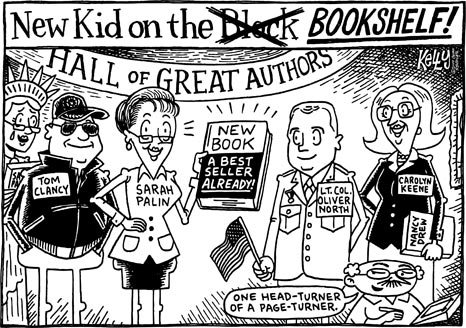
2. Sarah Palin

Sarah!’s book tour showed us that the only major city in “real America” is Dallas, Texas (Texas is, of course, so “real” that they might secede).

1. George Bush

Sure. Bush didn’t do much in 2009, ‘ceptin maybe clearin’ some brush (and lots and lots of biking). So why does he rank #1? Well, maybe it’s just for old time’s sake, or maybe it’s just a way to recognize all the evil he perpetrated in the aughties. Call it a victory lap. Thanks for the giant shit sandwich!

Best Books of 2009

Here are our favorite books published in 2009 (the ones that we read–we can’t read every book, you know). The list includes books new in print after a long time as well as first editions of trade paperbacks. All links are to Biblioklept reviews. The list is more or less chronological, beginning in January of 2009.

The Book of Dead Philosophers — Simon Critchley

Sum — David Eagleman

Chicken with Plums (trade paperback) — Marjane Satrapi

The 2009 PEN/O. Henry Prize Short Stories

Che’s Afterlife: The Legacy of an Image — Michael Casey

Bodies — Susie Orbach

Inherent Vice — Thomas Pynchon

A Better Angel (trade paperback) — Chris Adrian

The City & The City — China Miéville

2666 (trade paperback (yes, yes, putting it on the 2009 list is away of amending the fact that we didn’t finish it until January 2009 and thus didn’t get it on last year’s best of lists)) — Roberto Bolaño

Bicycle Diaries — David Byrne

Asterios Polyp — David Mazzucchelli

The Paris Review Interviews, Vol. IV

Lucinella — Lore Segal

Every Man Dies Alone — Hans Fallada


“Midnight in Dostoevsky” — New Short Fiction from Don DeLillo

Want to read to read the latest from Don DeLillo? Of course you do. Check out “Midnight in Dostoevsky,” via The New Yorker. Still not intrigued? Here’s the first paragraph:

We were two sombre boys hunched in our coats, grim winter settling in. The college was at the edge of a small town way upstate, barely a town, maybe a hamlet, we said, or just a whistle stop, and we took walks all the time, getting out, going nowhere, low skies and bare trees, hardly a soul to be seen. This was how we spoke of the local people: they were souls, they were transient spirits, a face in the window of a passing car, runny with reflected light, or a long street with a shovel jutting from a snowbank, no one in sight.


Cormac McCarthy’s Issues of Life and Death, Hans Fallada’s Complex Resistance, and Jonathan Lethem’s Bloodless Prose

In a 1992 interview with The New York Times, Cormac McCarthy famously said that he only cares for writers who  “deal with issues of life and death.” He disses Proust and Henry James, saying “I don’t understand them . . . that’s not literature. A lot of writers who are considered good I consider strange.” Because he has granted so few interviews–and come off so guarded in those he has done–McCarthy’s dictum on “good writers” has perhaps become a bit inflated, elevated from one man’s opinion to a grand litmus test of literary worth. Still, I often find myself putting the books I read under the McCarthy stress-test: do they narrativize the Darwinian drama of life and death? Or are they simply bloodless spectacles of rhetoric, ephemeral social critiques, or faddish forays into solipsism? McCarthy’s targets, Proust and James, arguably do address life and death issues in their works, but when compared to McCarthy’s heroes–Melville, Faulkner, Dostoevsky–the social fictions of Proust and James seem wan, or at least too subtle and overly-coded. The two novels I’m currently working through, Jonathan Lethem’s Chronic City and Hans Fallada’s Every Man Dies Alone, illustrate not just the poles of McCarthy’s dichotomy, but also why many readers (myself included) tend to prefer that their novels address matters of life and death.
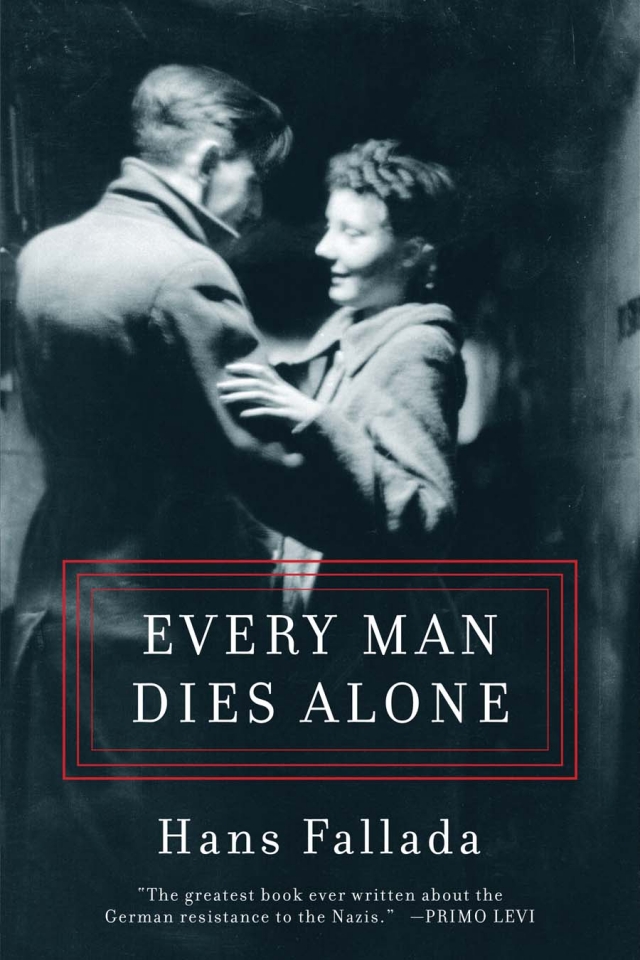
Every Man Dies Alone, first published in German in 1947, is available for the first time ever in English, thanks to translator Michael Hoffman (if you’ve read Kafka in English, you’ve probably read Hoffman’s work) and the good folks at Melville House. Fallada’s novel tells the story of German resistance to the Nazi regime, not at an aristocratic or militaristic level (this isn’t Valkyrie), or even a literary or philosophical level, but at the level of every day, ordinary existence. After the death of their son in battle, Otto and Anna Quangel initiate a campaign of resistance to the Nazi party, one that is of course doomed from the outset. The Quangels soon involve Eva Kluge, among others, in their covert resistance cell. Kluge is a letter-carrier who becomes disgusted with the moral implications of the regime; she’s also deeply embittered by the way Nazi rule has systemically destroyed her family. Kluge’s peripatetic job helps to enact Fallada’s major rhetorical gesture, a sweeping busyness that vividly recreates the life of ordinary Germans during the rule of the Third Reich. We might begin in Kluge’s mind as she embarks to deliver a letter, only to find ourselves awash in the thoughts of its recipient a few pages later. Fallada’s omniscient third-person narrator moves freely from one character’s consciousness to another’s, shifting fluidly from the immediacy of present tense to the solidity of past tense. It’s modernism (whatever that means)–Tolstoy without the rich and famous, Joyce without the mythos and erudition, but deeply engaging in its scope. WWII has produced a seemingly endless myriad of narratives, yet Fallada’s tome is the first that I’ve experienced of its kind. Perhaps its subject matter–the lives of ordinary Germans and their unsuccessful attempts to resist the mundane evil all around them–is simply not the stuff that we want from our war stories, and perhaps this is why the book has been absent so long from an English translation. It’s evocative of a world that I had never really considered before: after all, the narrative of WWII is far easier to comprehend if you retain the simplicity of the good guys (the Allies), the bad guys (the Nazis), and the victims (the Jewish population of Europe). Ordinary Germans have only one place in this uncomplicated system, which is why the story of the Quangels and their cohort is so profound (oh, the Quangels are based on the real-life Nazi resisters Otto and Elise Hampel, if you must know). Driven in part by despair, they seek to forge meaning in their lives, even if its at the cost of death, or the horrors of a concentration camp. To return to McCarthy’s caveat, Fallada’s novel is a work that dramatizes life and death against a decidedly unheroic backdrop, a novel that makes its reader repeatedly ask himself whether or not he would be, to use another McCarthyism (from The Road) one of the “good guys.” Great stuff, and so far one of the better novels we’ve read this year. Go get it.
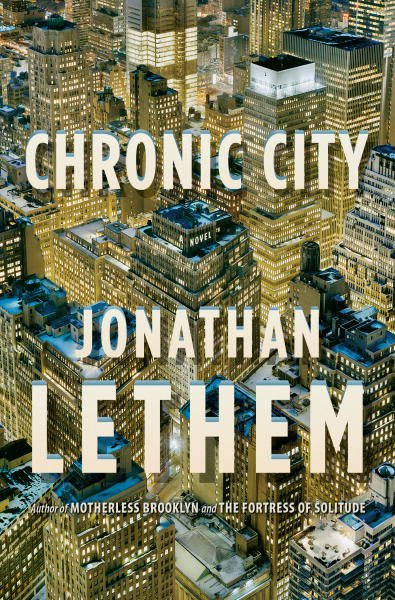
It’s perhaps unfair to lump Lethem’s latest in a review with Fallada, given the historical complexity of Every Man Dies Alone‘s milieu. Still, I’ve been reading my review copies of both novels over this long weekend, trying to catch up, and I find that I would almost always rather pick up Fallada’s book. It compels me, whereas, half way through Chronic City, I still find nothing to care about, no risk, no cost, no guts. No matters of life and death. The novel centers around former-child actor Chase Insteadman, whose directionless existence seems to thematically underpin the book. Chase moves from party to party in a fictitious Manhattan, charming various socialites and keeping boredom (marginally) at bay. He soon hooks up with Perkus Tooth, a marijuana-addicted pop culture critic, whose characteristics will be familiar to pretty much anyone who earned a liberal arts degree in college. Tooth seems to function largely as a mouthpiece for Lethem to espouse various opinions on movies and books and art. It’s a clumsy device as it doesn’t shade the character–it’s simply Lethem couching his cultural criticism in the comfort of a work of fiction. In a particularly telling scene, Perkus picks up a copy of The New York Times and thinks that it feels too light. He looks up at the right-hand corner: “WAR FREE EDITION. Ah yes, he’d heard about this. You could opt out now.” Perkus seems to deliver the line as a criticism, but it’s Lethem who’s opting out. He drops hints of destruction and annihilation and disintegration in the novel–there’s a giant tiger on the loose somewhere in Manhattan; Chase’s fiancée floats estranged in space, stranded on the International Space Station; a crooked mayor is up to dastardly shenanigans–but Lethem protects his characters from it all in an insulating cocoon of marijuana smoke and pop trivia. Their forays into the darkness of Manhattan’s mysteries are meant to play both humorously but also with enough danger to fully invest a reader’s attention (think of Lethem’s more successful sci-noir Gun, with Occasional Music, or his detective thriller Motherless Brooklyn). Instead, the adventures fall flat, collapsing back into Perkus’s apartment, a vortex of (ultimately meaningless) pop culture. While the novel is by no means terrible–it’s well-written, of course–there is simply a tremendous lack of the “life and death” stuff that McCarthy–and other readers–require. In short–and in contrast with Fallada’s Every Man Dies Alone–it does not compel itself to be read. Which is a shame of course. I still think Lethem’s The Fortress of Solitude was one of the finest books of the decade, and I was deeply disappointed in his last novel, You Don’t Love Me Yet. Chronic City is a much finer book than that silly train wreck, but it lacks the urgency of Lethem’s finest works, Fortress and Motherless Brooklyn, which temper a love of popular culture with genuine characters and an affecting plot.

I’ll conclude by returning to Cormac McCarthy, this time to his latest interview (in The Wall Street Journal). He says, on writing novels: “Anything that doesn’t take years of your life and drive you to suicide hardly seems worth doing.” And later: “Creative work is often driven by pain. It may be that if you don’t have something in the back of your head driving you nuts, you may not do anything.” For McCarthy, literature, in its final product–the reader reading the book–is the direct communication of the pain of creation, the awkward and incomplete translation of ideas exchanged from author to audience. Perhaps the pain was too much for Fallada, who died in 1947 of a morphine overdose, but that pain–that spirit–exists in the book. A similar spirit exists in Lethem’s earlier works; I’d love to see him tap into it again in his next venture.

Every Man Dies Alone is now available in hardback from Melville House.

Chronic City is now available in hardback from Double Day.

Bored Booksellers and Nauseated Novelists

Bored? Check out new(ish) WordPress blog Bored Bookseller Musings. Good writing on books, bookstores, rude customers, and other literary(ish) matters. In a recent(ish) post, the Bored Bookseller pointed our direction to a new(ish) essay by Zadie Smith, where the White Teeth author discusses “novel-nausea.” (Smith’s essay is really just a ploy to promote her new book of essays, Changing My Mind).

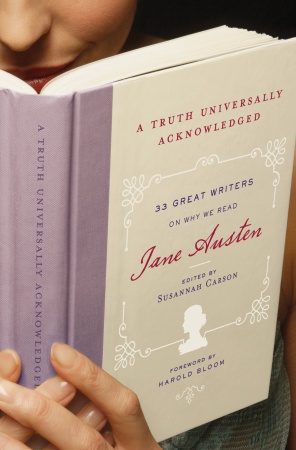
A Truth Universally Acknowledged — 33 Great Writers on Why We Read Jane Austen

In A Truth Universally Acknowledged, editor Susannah Carson collects thirty-three short essays on Jane Austen. In her introduction, Carson notes that each “of these essayists has taken a shot at defining and explaining Austen’s place both in the literary canon and in the cultural imagination.” And while there’s no mention of Austen’s recent tangles with zombies and sea monsters, the collection does cover quite a route of the cultural imagination that Carson promises. How could it not? There are short (and longish) essays from E.M. Forster, W. Somerset Maugham, Martin Amis, and C.S. Lewis, all proffering different reasons why Austen rules. Contemporary writer Susanna Clarke scolds those of us who might mistake film and TV adaptations as authentic representations of the lady’s work: “Austen wasn’t a visual writer,” Clarke writes, ” Her landscapes are emotional and moral–what we would call psychological.” Harold Bloom goes as far as to suggest that, “Like Shakespeare, Austen invented us.” Bloom’s usual Oedipal anxiety manifests itself in a more palatable line: “Because we are Austen’s children, we behold and confront our own anguish and our own fantasies in her novels.” (Never fear, Bloom gets some axe-grinding in as well: “Those who read Austen ‘politically’ now are not reading her at all.” Thank you again, oh great master critic, for telling us how to read our books). Benjamin Nugent gets pragmatic, seeing Pride and Prejudice as something of a self-help book: “Young nerds should read Austen because she’ll force them to hear dissonant notes in their own speech they might otherwise miss, and open their eyes to defeats and victories they otherwise wouldn’t even have noticed.” One of our favorite writers, Eudora Welty, writes a loving appreciation of the marvel of just how Austen constructed the complex ironies of her works: “Each novel is a formidable engine of strategy.” Rebecca Mead’s “Six Reasons to Read Jane Austen” is both funny and convincing. Reason four: “Because we are made to in school.” Mead’s little essay would be a worthy primer for any high school senior dreading wading into Pride and Prejudice. The great American critic Lionel Trilling points out, as those high schoolers know, that Pride and Prejudice “is the one novel in the canon that ‘everybody’ reads.” He wants you to know that of “Jane Austen’s six great novels, Emma is surely the one that is most fully representative of its author.” He makes a good case for this argument as well, comparing it to the “difficult” books of Proust, Joyce, and Kafka–company that we don’t always associate with Austen. Indeed, many of the essays here focus on Austen’s lesser-read volumes–Mansfield Park, Northanger Abbey, Emma–and to a positive end: these essayists will make you want to read these books. And isn’t that what real literary criticism should aim to do anyway–make the reader read the book herself, think critically about it herself? While Austen is hardly in need of a revival, A Truth Universally Acknowledged does a lovely job of balancing academic criticism with a popular appeal. Like Austen’s own work, it tempers social critique with sharp humor. A Truth will, of course, appeal mostly to Austen fans (many of whom will surely find it indispensable), but it’s also the sort of volume that will find a place in the hearts of those who simply love to read great writers writing about great writers. Recommended.

A Truth Universally Acknowledged is new in hardback this month from Random House.