Springtime (Bunny Boy) — Norman Rockwell

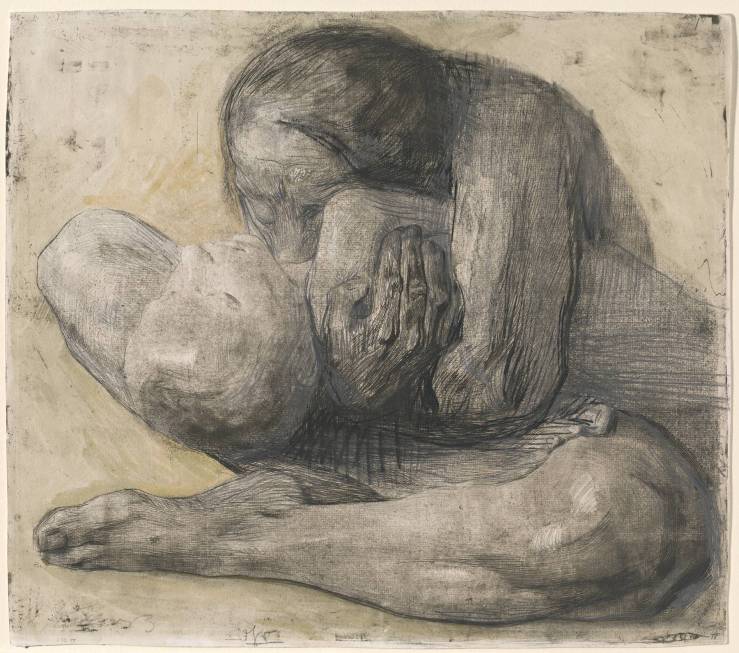
Käthe Kollwitz kept painting poor people (Kollwitz/Vollmann)

kathe-kollwitz4

She worked without reference to the fiery proto-Cubism of those years, the representational, classical past as dead as the Second Reich itself, dead, dead!—as dead as the Tsarist officers who’d now sunk beneath their own weedy mucky parade grounds so that the Party of Lenin and Stalin could march across their moldering faces. Since 1912 she had kept a room on Siegmund-shof for her plastic arts. That was where she would create the mourning woman out of stone. Mostly she carved, etched, and painted in that flat on Weissenbürgerstrasse. Those were the years when the figures in other people’s paintings began to go ever flatter, more garish, more distorted, the colors hurtful to her although she liked some of the galloping calligraphic riders in Kandinsky. Grosz’s desperately angry caricatures, the X-ray bitterness of Otto Dix, not to mention abstract constructivism; she didn’t swim with that tide. Käthe Kollwitz kept painting poor people, starving people (white figures in dark fields, dark chalk on brown Ingres paper), raped women, mothers with dying children, mothers with dead children. In the end she depicted mainly herself, her stricken, simian face thinking and grieving. She too was a mother with a dead child.

From William Vollmann’s Europe Central.
How to Spell the Alphabet — Tauba Auerbach

HowtoSpelltheAlphabet

Reading Man (Self-Portrait) — Forrest Bess

The Annunciation — Henry Ossawa Tanner

Violin Player — Gerrit Dou

Night Market — Jolene Lai

NightMarket

“It’s not just a stream of gibberish” |On Illustrating Finnegans Wake

Wake_in_Progress_31-740x0.jpg

At The Honest Ulsterman, Darran Anderson talks with Stephen Crowe about illustrating James Joyce’s Finnegans Wake in his project Wake in Progress. From the interview:

DA: Do you approach the book as a puzzle or a palette? Do you try to make your artwork close to what Joyce might have meant or do you embrace the possibilities of your own interpretations? Is it possible or even desirable to try to work out what Joyce meant?

SC: Clearly Joyce meant to say something – it’s not just a stream of gibberish. So as an illustrator I think I owe it to the text to try to understand as much of it as I can. I try to figure out at least a couple of different ways to interpret every passage, but I certainly don’t exhaust every avenue. There’s a limit to how much information I can cram into the illustrations anyway. On the other hand, I do think that there are portions of the book where it’s not really important to understand it on a semantic level. Joyce was deeply influenced by music in his writing, and I think it’s fine to appreciate some of the book quite passively, as if it were music. I would agree that there’s no such thing as “understanding” the book entirely. Partial incomprehensibility is part of its design.

A Heap of Language — Robert Smithson

Why Not — Kenton Nelson

Nelson_Competition

Zombie Jamboree — Keith Morrison

Mystic Allegory or Tea — Maurice Denis

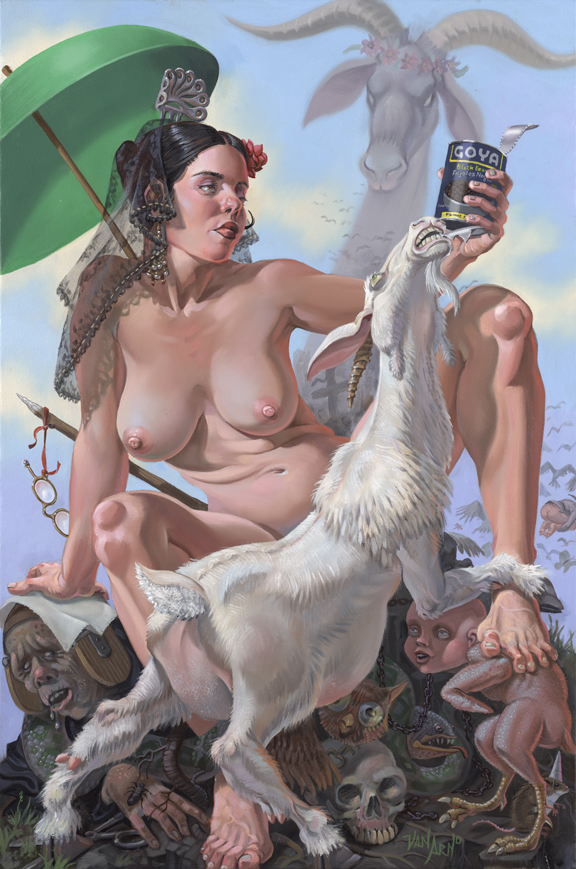
The Pop Art of Goya — Van Arno

GoyaSM

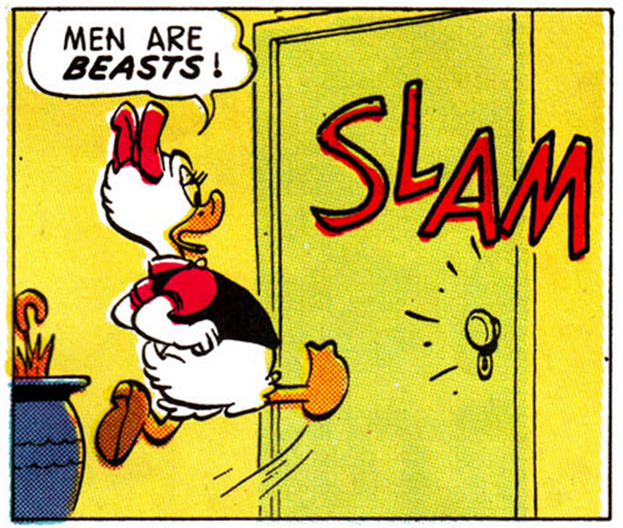
Men are beasts!

beasts

A Comet’s Journey — J.J. Grandville

a-comets-journey-by-j-j-grandville-793x1024

Portrait of a Young Lady — Alfred Stevens

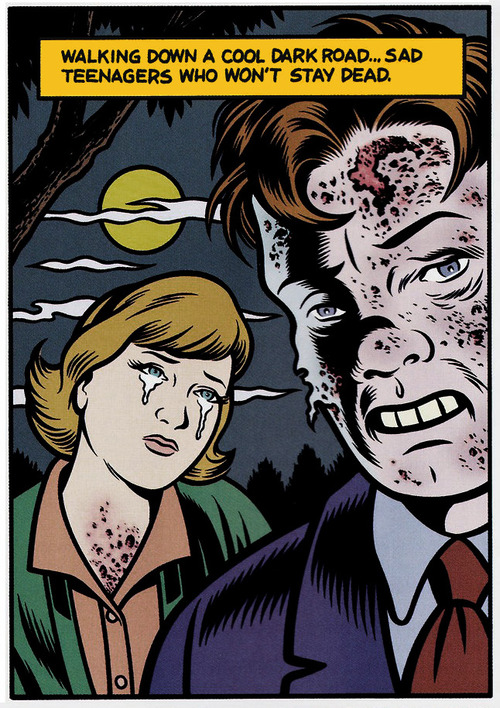
Sad Teenagers Who Won’t Stay Dead (Charles Burns)

burnny