Reading The Tree of Life

I saw The Tree of Life four times in the theater this year. Few things made me happier than those experiences of sitting and soaking up that movie. Conversely, few things this year were as frustrating and draining as all the conversations I inevitably found myself in after the movie, where some asshole put me on the spot, demanding that, since I loved it, I was supposed to explain it to him or even somehow make him not hate it, or at least justify myself, as though I am a paid museum tour guide who must explain the importance of the Mona Lisa at the drop of a hat. But because I’m a sucker, and easily convinced to talk, I almost always took the bait and would stand there, in whatever bar or party and spend far longer than said asshole had really intended, earnestly trying to convey my personal enjoyment of this movie. It was all pretty useless in retrospect. I guess I can’t always know everyone’s intentions, but I’ll guess nine of ten times it was more like a worthless political discussion, as though someone walked up to me and said “I’ve voted Democrat for ten years, convince me to vote Republican in the next ten minutes.”

I’m winding up to something here.

So basically I saw the movie four times and talked about it for god knows how long, thought about it for at least twice that length, and I honestly do think I have come across a few things: call them “ideas” or “perspectives” that I actually think can help make the movie more enjoyable, or possibly more coherent, or something.

At the risk of sounds incredibly defensive (can you tell I’ve been in yelling matches about this already?) I will preface all of this by saying that obviously it is only my opinion. Terrence Malick has done us all a huge favor by completely staying out of the conversation about this or any of his films. I think this is a favor because it allows me to have my opinions without there being any definitive source out there to contradict it. The movie is only what is up there on screen and all my thoughts about it are basically derived only by the amount of time spent actually watching it. So I do not intend to speak for Terry or presume to know what he would say if I could ask him to verify all of my ideas or whatever. You get the point.

And there will be spoilers . . . I guess. Can you actually spoil this movie? Does anyone give a shit at this point? There are dinosaurs—oops! Sorry. Spoiled that Big Surprise. Anyhow, yeah I will be talking about key details from the plot, so be prepared for that.

The quickest, easiest thing I can tell you I learned about The Tree of Life by watching as many times as I did is that there is a simpler more coherent synopsis one could give the film that would sort of situate the story in a different way for most viewers. Just as a reference this is the official synopsis (from Apple trailers):

From Terrence Malick, the acclaimed director of such classic films as Badlands, Days of Heaven and The Thin Red Line, The Tree of Life is the impressionistic story of a Midwestern family in the 1950’s. The film follows the life journey of the eldest son, Jack, through the innocence of childhood to his disillusioned adult years as he tries to reconcile a complicated relationship with his father (Brad Pitt). Jack (played as an adult by Sean Penn) finds himself a lost soul in the modern world, seeking answers to the origins and meaning of life while questioning the existence of faith. Through Malick’s signature imagery, we see how both brute nature and spiritual grace shape not only our lives as individuals and families, but all life.

This sounds fine and all, if a little intimidating. If you saw the movie I imagine you saw all of that stuff in there. It was certainly “impressionistic” enough and I agree that Brad Pitt played the father. But in terms of setting up the viewer for the “story” I’m not sure this is as fast as it could be and it’s certainly not going to fend off any accusations of “pretension.”

Instead, try this one out:

“On the anniversary of his brother’s tragic death a man goes about his day flooded with memories of his childhood and thoughts about mortality and the afterlife.”

The images and characters in The Tree of Life exist simultaneously as both literal and symbolic elements in a complex narrative, and I’m not saying that the movie should be boiled down to something as simple as my one-sentence summary above—only that it can be. And that for all the people that so excessively badgered me about this movie “Not having a story,” here it is:
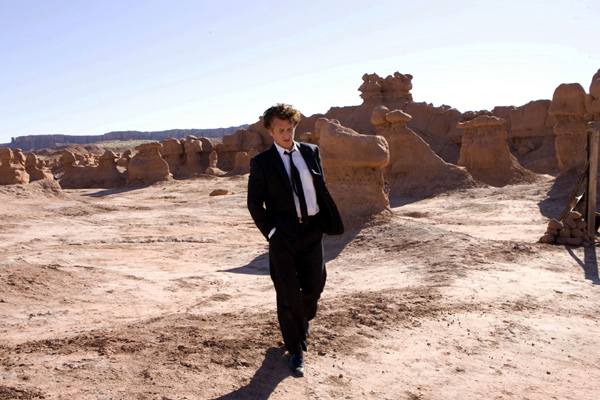
Jack (Sean Penn) wakes up. It’s a shitty day, the shittiest day of his whole year, every year: it’s the day his brother died (substitute this for: the day they found out he died, or for his brother’s birthday. The movie is obviously unclear and any of them could work). It’s been nearly twenty years since that tragic death but it hasn’t gotten any easier. His wife knows what day it is too and even though they’ve been having their problems recently, she can tell she should back off today and give him his space. So they spend that morning sort of avoiding each other, neither sure what to say and eventually Jack sits down to do the only overtly emotional action he ever brings himself to do on this day: he lights a candle in memory.

So he heads to work that morning with the weight of all this on his mind; it’s his own personal 9/11, the biggest single event that helped shaped his life. He loved his brother but their relationship was complicated. And Jack has a good memory. As the oldest of three boys Jack can remember what it was like to be the the sole recipient of his mother’s love. He experiences flashes of the conflicting happiness and subsequent jealousy after the birth of his first brother, and now,  as an adult man with his own life and his own problems and his own job, that memory makes him feel like an asshole.

He’s an architect at a major firm in Dallas and they just landed a big city contract to redesign the public transportation system or something and Jack is in charge of the whole thing. In fact, he’s got a lot of important meetings coming up and plenty to think about that doesn’t involve reliving the past. Because who wants to be dealing with fifty years of history when you’ve got work to do? Never mind your coworkers rattling on about their problems and the general chaos of the office, with so much going on it’s a wonder he can get anything done.

A little while later he’s about to head into an important meeting when his phone rings. If all the rest of it weren’t enough now here’s this: The Call. The one he gets every year on this day, the Low Point: His Father. The guy is pushing 80 at this point, living in that huge house there on the coast with plenty of money from the patents he eventually sold, eating at the country club with the rest of his pompous old friends but on this one day you’d think he was a monk wearing burlap and whipping himself. What does he get out of this? Every year he calls and every he says the same line,

“Do you know what day this is?”
“Yeah dad I know what day this is.”
“He was a good boy.”
“Yeah dad he was great.”
“Playing Bach on the guitar when he was eight years old, don’t see that everyday.”
“No I guess not.”

And on and on and on . . . why can’t he just focus on the good things he’s had in life? The guy has had a long career, a beautiful loving wife, and hell, it’s like he doesn’t have two sons still living! Christ, look at me? Am I not good enough? Look at everything I’ve done in life, everything I’ve accomplished, and yet if I had died at 19 would he mourn this much for me?

But in the meantime he has a meeting with the senior partners. He’s trying to be polite with his dad, and sensitive to the man’s pain but business is business. So he cuts him a little short.

“Dad I really want to talk to you but I really have to go.”
“Oh I see this isn’t important to you.”
“No dad it is, but I’ve got to go in a meeting right now.”

The secretary walks up to him and tells him that they are all waiting for him inside.

“Listen dad I gotta go.”

And there, he hangs up on him and goes into the meeting. Of course his mind is elsewhere. Like usual, talking to his dad has brought out all the worst thoughts in him. Even though in his daily life Jack tends to affect a calm, peaceful demeanor, talking to his father brings up some of the darker thoughts in his mind. He remembers all the pain and confusion of his childhood, the soaring emotions and chaos and frustration, the simultaneous guilt and innocence that everybody must feel at that age, right? I’m not alone right? I’m not the only one who thought about killing his father, I’m not the only one who hurt his brother on purpose, I’m not the only one who said horrible things to his mother, or who stole, or who lied . . .

So Jack sleepwalks through the rest of the day. He’s on autopilot, but for the most part his coworkers can’t even tell. Jack’s good at this; he’s had practice being a human. He’s learned to control the volatile emotions of his youth, the reactionary side of him; the side he associates with his father has been muted in his adulthood and he chooses every day to try to be more like his mother, to keep things to himself and attempt to be kind to people. Which is why for all his anger and frustration, as much as he doesn’t want to go there again, he calls his dad back and apologizes for his earlier behavior. He sucks it all up and takes a little more of the old man’s trademark passive-aggressive bullshit. “This guy never changes” Jack thinks to himself. But despite everything Jack loves his father and knows that in his own stubborn way his father loves him. So they say this to one another over the phone, they reconcile for now, as they’ve done so many times before, son forgiving father, father forgiving son.

And with what’s left of his day Jack thinks about all of this: about forgiveness, about redemption, about pain and suffering. About how he isn’t even unique in any of this, how he can spend his entire day completely consumed in himself and his own pain—but isn’t he just one person? Doesn’t everybody have this same experience every day in some way? Sure, this may be the anniversary of his brother’s death, but what significant day is it to any one of the other six billion people on this earth?

The entire planet had to be formed and every living organism had to evolve and change and grow over millions and millions of years to create the perfect set of circumstances that would put Jack in this very moment—but that’s true of everybody, any body. And somewhere in all of this there’s hope.

And just like that, it’s six o’clock. Where did all the time go? Jack steps out into the world again, in the middle the swirling chaos of life and is amazed by everything that can happen in a day, even if it’s all internal—and is there really any difference between the internal world and the external one anyway?

*    *    *

Wow, what a non-story that was. I can’t believe those characters were so one-dimensional. Sean Penn’s inclusion in the movie really was pointless, wasn’t it? Wouldn’t you rather have had his role cut out entirely? None of those images really fit together in any meaningful way did they? I mean each taken on its own may be pretty and all, but I for one would prefer it if the film coalesced into something more grounded and specific. Like I said before, I like stories in my movies, I don’t want just a random sequence of images.

Okay, obviously I am being a sarcastic asshole in that paragraph. But if you happened to be one of the people who said one of those sentences to me I hope that looking at the film through the perspective I outlined might aid you in getting over some of your issues.

Of course that is assuming you even want to get over your issues. Maybe you would rather persist in using this beautiful film as a punching bag for the rest of your life. I guess I can’t stop you there. But if you want to argue with me and tell me that my version of the movie is not what was up on-screen when you saw it, I will tell you that I didn’t see this version of the The Tree of Life the first time I saw it either. I didn’t quite see my version of it the second time, but by the time I finished it for the fourth time I swear to goodness that the “story” I told you above is exactly the “story” I saw and still do see in this film. And unlike some bullshit Christopher Nolan DVD special feature that “unlocks all the secrets of the film” I have no “objective” source to tell me I’m right or wrong—mine is only an interpretation, but I think it’s one that the film can support and certainly one that answers a lot of the criticism.

As a film-goer, I am more than happy to watch a random sequence of beautiful images (seeing Baraka projected in 70mm remains a favorite viewing experience for me). When I saw The Tree of Life the first time I was absolutely ecstatic with my experience and needed nothing more from the movie than what I got. It is no exaggeration to say that I could have watched a two-hour version of the creation of the universe section, with no dialogue or characters and still have been happy and moved. I don’t give two shits if there is a “story” in The Tree of Life. Which is partly why my early arguments about the film were so fruitless, imagine this conversation over and over:

Them: Why did you love the movie?
Me: Because it was beautiful.
Them: But it had no story.
Me: Maybe you’e right but I didn’t need one.
Them: But if it doesn’t have a story, then it must be a bad movie.
Me: I disagree with you. I thought it was great.
Them: Well I disagree with you because I hated it.

And because of these arguments, I was more surprised than anybody when I found my version of the “story.” It was something that occurred naturally, and I guess I want to stress again that I still think the movie supports layers of meaning, but when I think about the movie now it is almost entirely in these terms. The film doesn’t even seem abstract to me at this point. It’s kind of like Mulholland Dr. in that way, (although I think David Lynch did that film specifically as a mystery to be solved) where, once I figured out how the film works, I never quite see it as the random, crazy, seemingly unconnected series of scenes it appeared to be upon first viewing, (even though in the case of Mulholland Dr. as well, I was totally fine with that).

In some way I kind of resent that it all comes together so easily. I kind of like an endless montage of beautiful images with no story, (although hell even Koyannisqatsi and Baraka seem to each have a thesis; it’s not like the director grabbed clips with his eyes closed). There is a larger, more complex discussion to be had here about the human brain and pattern recognition and our basic, innate desire for Order instead of Chaos and how our brains will basically create order, even where there seems to be none, just basically so that we don’t go crazy.

Which when you think about it is sort of what my version of The Tree of Life is all about anyway. It’s just a day in the life of this one guy, and his desperately trying to come to terms with the chaos of his mind, to give it a structure and an emotional arc, some kind of resolution, if only to just get through it all.

And I do think we all do this. I think every day of our lives is more like The Tree of Life than it is to The Dark Knight. When your life appears to you as a fragmented mess of images and memories and music and sadness and glory and guilt and love, you just deal with it—what the hell else are you going to do? Like Jack, you get through your day and move on. But when you are confronted with that same chaos in the form of a movie, you have the freedom to just throw it away, toss it out of hand and never think twice about it. But allow me to suggest in all humility that there is  more to enjoy in The Tree of Life in subsequent viewings. Maybe you can find a different story than I did. Maybe even a better one.

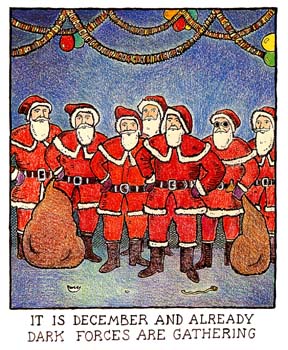
Santa’s Mugshot

Image by Brad Holland

(Thanks to Bblklpt reader JESCIE for the link).

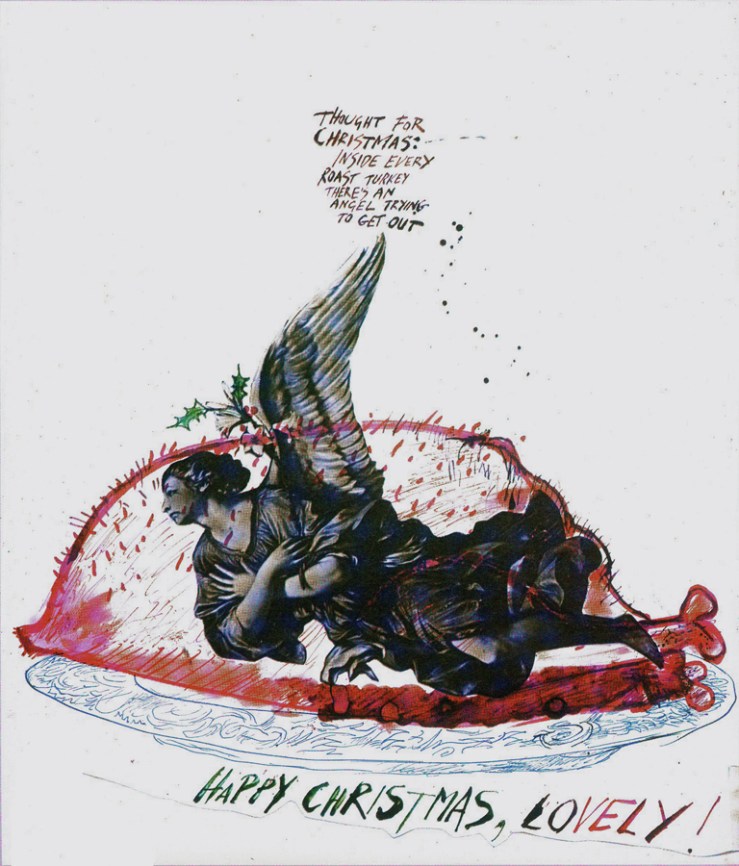
“Happy Christmas, Lovely!” — A Christmas Card from Ralph Steadman

(Thanks to Bblklpt reader JESCIE for the link).

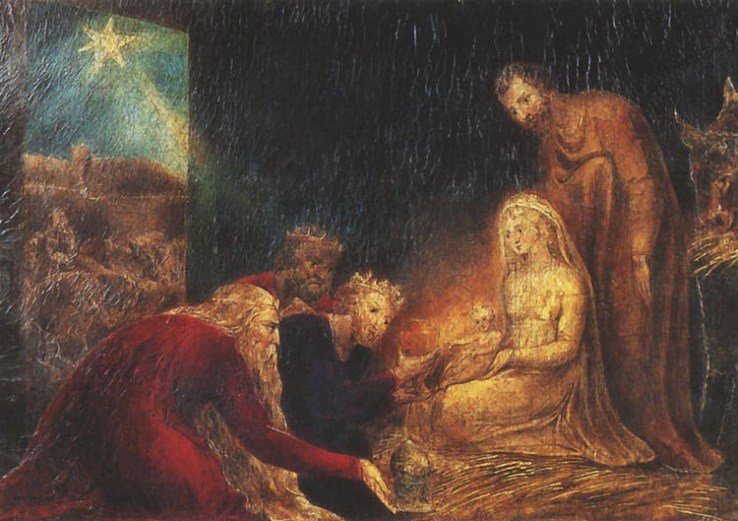
Adoration of the Magi — William Blake

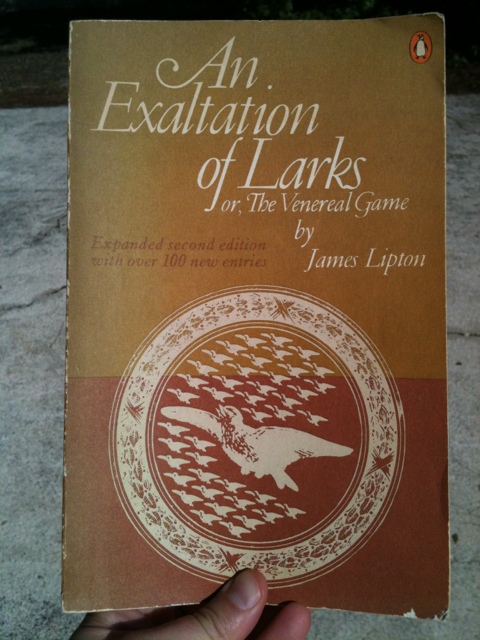
Book Acquired, Some Time Last Week: An Exaltation of Larks (The Venereal Game)

20111219-131203.jpg

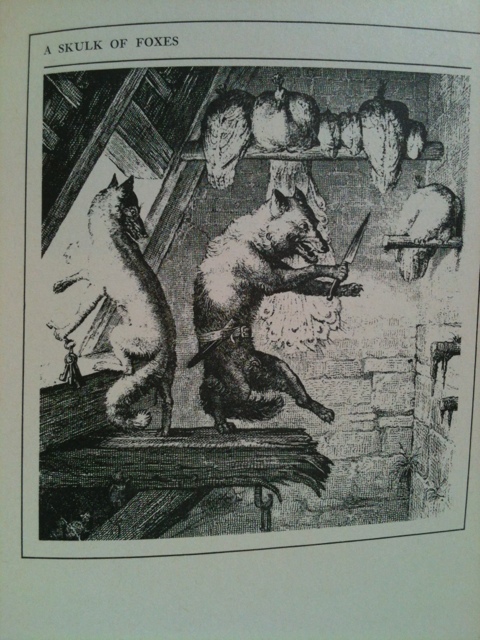
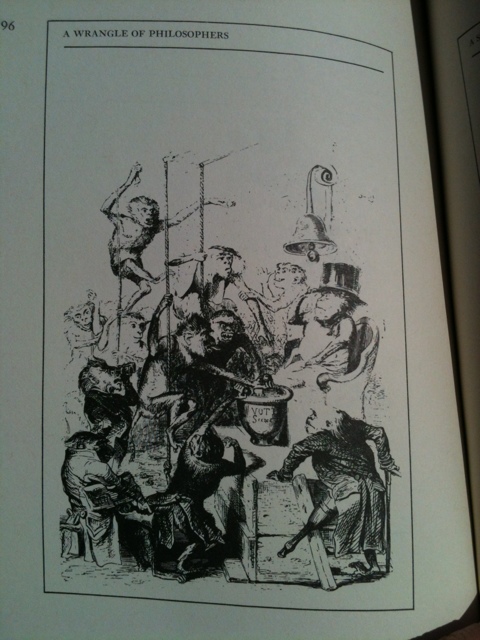
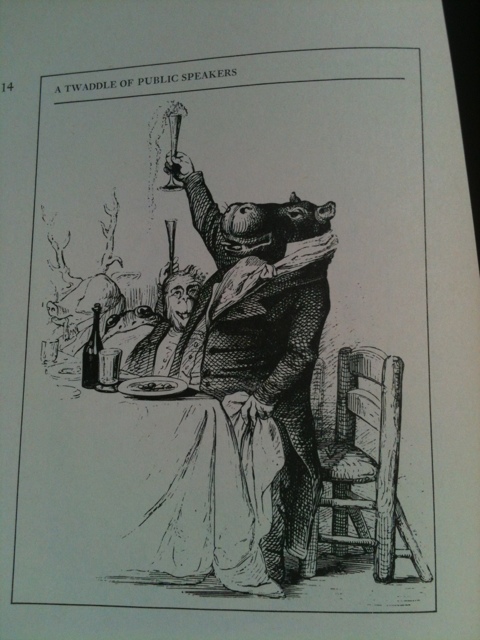
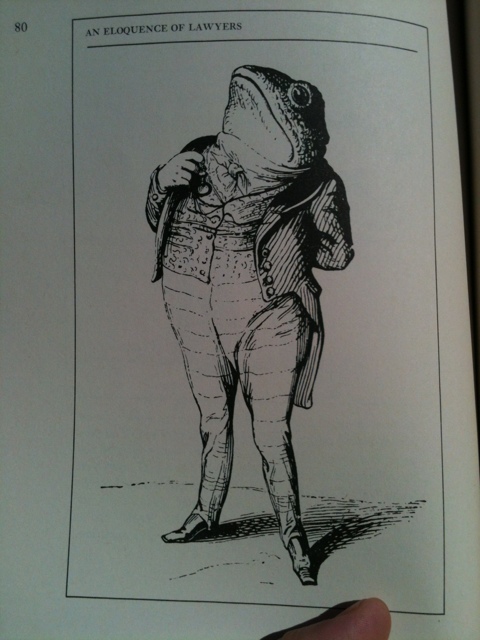
I had never heard of James Lipton’s dictionary of terms of venery, An Exaltation of Larks, or The Venereal Game before I found it wedged between some old etymological dictionaries I was browsing in my favorite book store, but when I picked it up I knew I was going to buy it almost immediately. Part dictionary, part etymology, and part linguistic game, An Exaltation explores those strange collective noncount nouns of English that anglophiles (like me) find so charming and weird. The first part of the book deals with some of the more common terms of venery, like “pride of lions,” or “skulk of foxes”:

20111219-131213.jpg

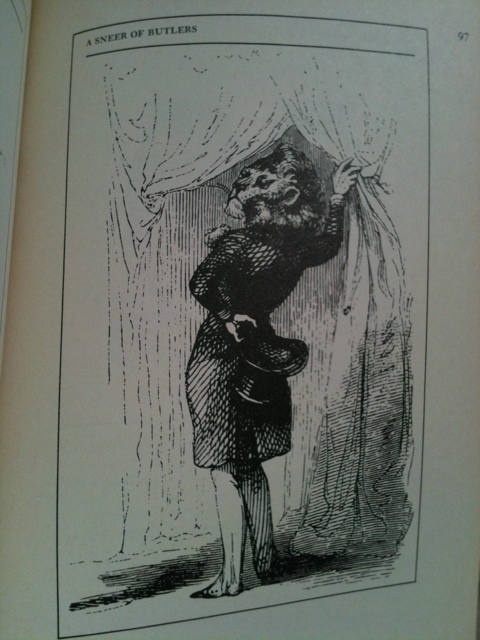
But Lipton soon gives over to more esoteric terms, and then eventually plays with outright invention. The book’s illustrations recall Max Ernst’s surrealist graphic novel Une Semaine de Bonté; they also remind me of the recapitations of recent Biblioklept interviewee Click Mort. Anyway, a very cool book, likely a cult favorite, and lots and lots of fun.

20111219-131224.jpg

20111219-131243.jpg

20111219-131301.jpg

20111219-131308.jpg

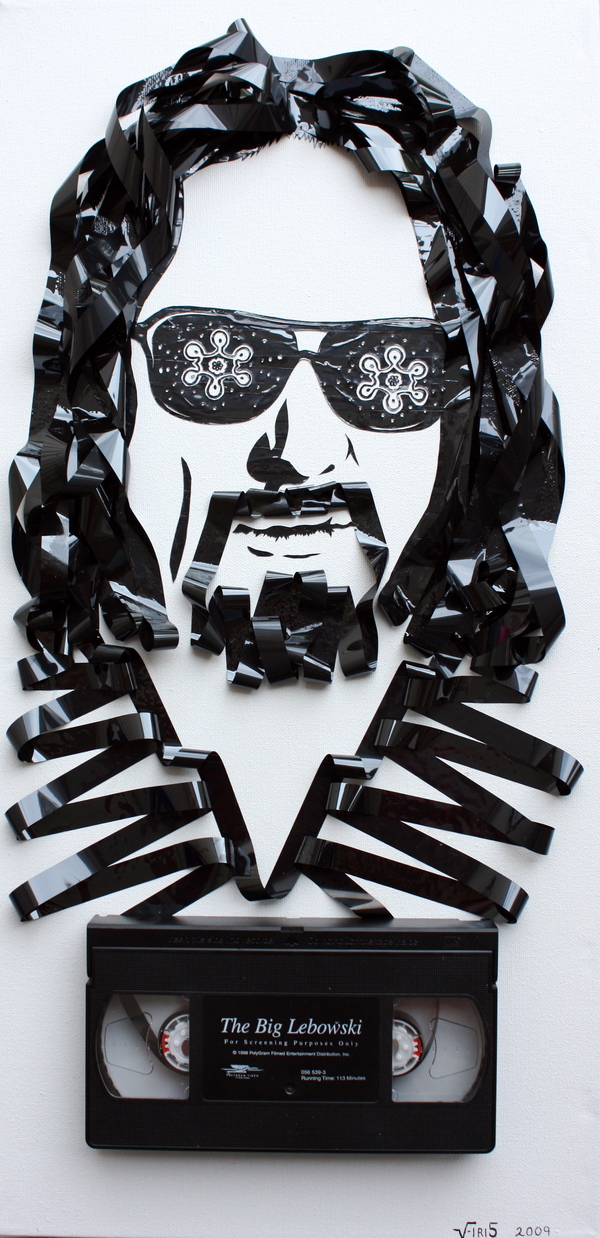
Analog Lebowski

The Dude Abides -- Erika Iris Simmons

(I know we all saw this a few years ago, but damn, I just love it).

The Best and Worst Film Titles of 2011

The Best Film Titles of 2011

The Tree of Life: Solid, evocative, stately.
Melancholia: Simple and meaningful, but also easy to remember.

Star Watching Dog: I have no idea what this movie is, but I love this as an idea or as an image, or as a plot for a film. It makes me want to find out which of those three it actually is. If I’m lucky it will be all three.

We Need to Talk About Kevin: This has the right kind of loaded evocation to it. It’s great as a long-but-not-too-long title.

Tyrannosaur: Awesome. One word with a huge amount of weight, probably the best title of the year except for the obvious problem that it probably confused people into thinking the film was about dinosaurs. But other than that it doesn’t get better than this.

Your Sister’s Sister: I don’t really know what this means. Is it wordplay? Is there plot relevance? It makes me want to know though.

Another Earth: A brilliant combination of two words that manages in three syllables to open up hours upon hours of thoughts and possibilities.

Outside Satan: I would compare to the previous entry. A great two words that sounds good and suggests a lot of weird things, many of which I can’t quite put my finger on. Definitely makes me want to see what happens in the movie.

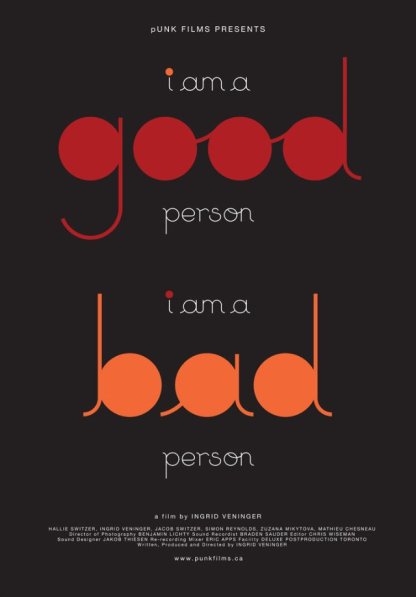
I Am A Good Person/I Am A Bad Person: Maybe it’s too long. And maybe it’s totally confusing. But I would watch something called this for sure.
The Rabbi’s Cat: Well it sounds like I know upfront two things I can expect to see. And I like both of these things.

The Catechism Cataclysm: Alliteration sucks. Here’s an exception that proves the rule.

Blackthorn: I would buy a cut of meat called Blackthorn, I would buy a bottle of wine called Blackthorn, I would vacation in a mountain city called Blackthorn, I would buy an album from a doom metal band called Blackthorn. Blackthorn would be a good word for many things. This time it is a movie.

Gingerdead Man 3: Saturday Night Cleaver: Double puns! Really? Okay fine, sure. It’s better than all the Air Bud titles combined.

Red State: Two evocative words, a sort of double-entendre but still easy to remember.

The Future: I would eat a burger called The Future, I would name my car The Future, I would name my dog The Future, I would love for my friends to give me the nickname The Future. So yeah I would watch a movie called The Future.

I Melt With You: Memorable and emotional, it tells me nothing about the film in any literal way, but it gives me some kind of sense of expectation.

Hobo With a Shotgun: Perfect. Truth in advertising; we’re all on the same page here.

***

The Worst Film Titles of 2011

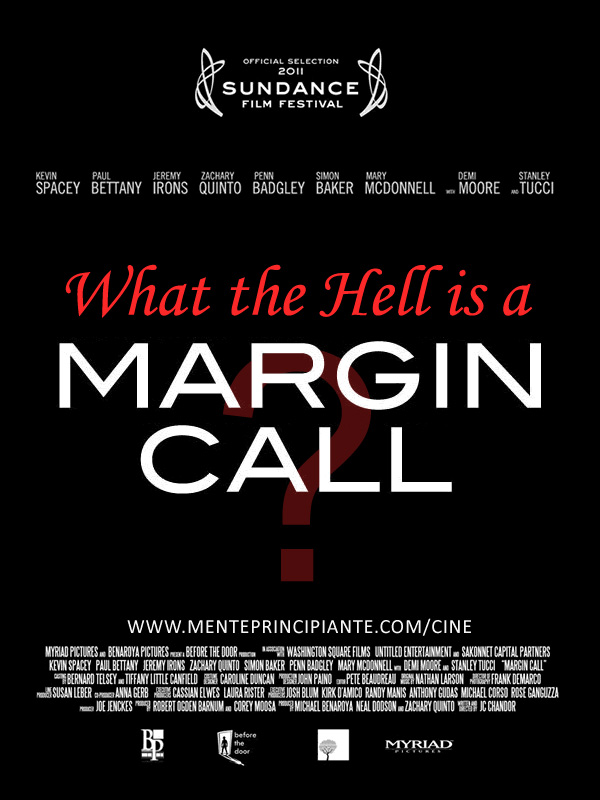
Margin Call: What the hell is a Margin Call? Why would I voluntarily pay for anything called Margin Call. It sounds like something your accountant would suggest, but that’s why you hire that guy: to deal with boring stuff like Margin Calls. I would rather be watching a good movie than worrying about a Margin Call. If there are two things, and one is called Tyrannosaur and the other is Margin Call, which do you think I will be buying?

Hugo: Hugo is a stupid little word and I don’t like saying it or hearing it.  The only thing worse is the original title, The Invention of Hugo Cabret. Gross. Cabret is far too close to Cabaret and Cabaret is least appealing noun I can think of.

Weekend: Wow, title your indie movie the same thing as a famous art film. Always a good idea when your only potential audience is the miniscule slice of people who know this. Watch for the director’s next small festival hit, sure to be called The 400 Blows.

The Brooklyn Brothers Beat The Best: Alliteration is the worst.

A Beautiful Belly: Further proof of the above sentiment, only this one is also gross sounding. The only way I can even imagine saying this out loud is if it was the humorous name of a menu item at the best BBQ joint in Atlanta or something.

The Skin I Live In: I blame the second-language aspect here, but something about this sentence is annoying.

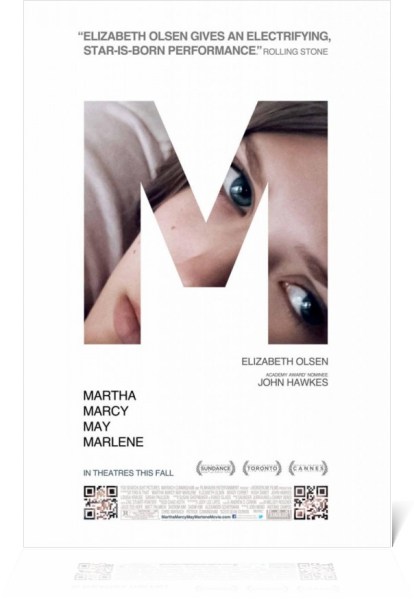
Martha Marcy May Marlene: AKA Marble-Mouthed Nonsense. I will concede that this one may be actually brilliant, as everyone who sees the film seems to universally love the title after the face. Still, there is definitely something idiotic about giving yr film a title no one can remember.
Crazy, Stupid, Love.: I hate seeing this written down, I hated typing it, I hate hearing it out loud and I can’t imagine speaking it. There is a weird kind of perfection here. Three words that are just fine on their own, but somehow in this order they make me want to die.

Take This Waltz: And shove it.

No One Killed Jessica: Oh well that’s a relief, you had me worried for a second there. I guess I can skip watching the movie altogether and go eat some lunch or something.

Water for Elephants: This sounds like part of some little piece of wisdom like “pearls before swine” or something, except that you think about it for five seconds and realize that it isn’t and that it’s just dumb sounding.

Twixt: This is one of those words that maybe girls under the age of 16 could get away with saying. Or like the name of new line of sexy dolls, like the new Bratz or something.

Soul Surfer: Soul Surfer sounds like the shittiest tattoo idea possible.

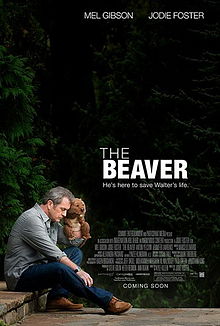
The Beaver: This immediately undercuts the notion that it can be at all serious by virtue of the obvious vulgar connotations. Unless of course the writer only chose the word “Beaver” because he thought it would be such a riot to see it written everywhere and to have serious actors say it a million times for two hours. So either way what we have here is totally ignorant or absurdly immature. Count me out either way.
Our Idiot Brother: If I wanted to watch a shitty ’90s sitcom I would have stayed home.

This Is Not A Movie: Yes it is.

Benjamin Sniddlegrass and the Cauldron of Penguins: This is so stupid that maybe it belongs on the “Best” list. Nah, maybe not.

Cowboys & Aliens: This and Hobo With a Shotgun are two sides of the same coin. This side is the shitty one that loses all the time.

I Am Number Four: The only way this could be worse is if it was I Am Number Two.

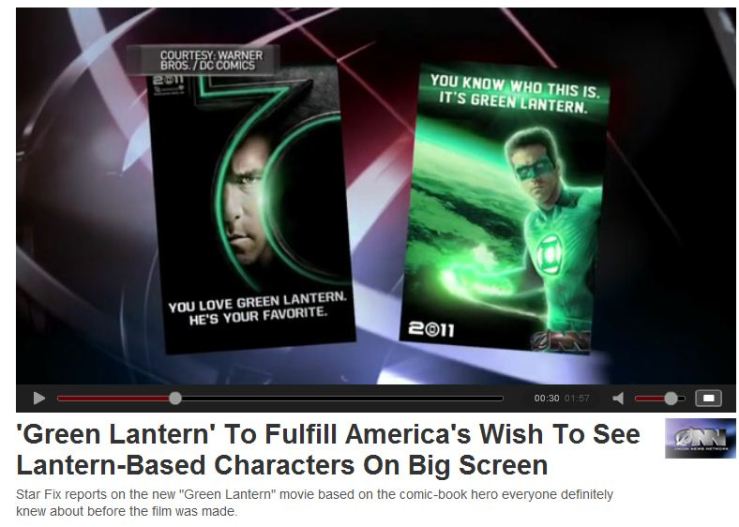
Green Lantern: The discussion surrounding this movie’s failure brought up a lot of valuable points: 1) Ryan Reynolds is The Worst, 2) The movie was a piece of shit and 3) Martin Campbell is not an auteur. But the big point I think everyone missed is that The Green Lantern is also just a stupid combination of three English words. I don’t care how long he’s been a comic book hero, please compare the title of this movie to the other famous DC tentpole franchises: Batman and Superman. And please analyze the various connotations involved in three titles: One is a man who is also a bat, alright cool. The other is a man who is super, yeah alright I bet he’s pretty tough. This is a lantern that is somehow green… is this meant to surprise or excite me? “No shit!? All my lanterns are blue, this guy must be AMAZING!” Even The Green Hornet is a better title because it has the word Hornet in it and everyone knows that Hornet is basically the coolest word in all of entomology, with the obvious exception of “Scorpion.” No movie with the word Lantern in the title will ever gross 500 million dollars, unless preceded by the words “Harry Potter” or “Twilight.” Lanterns suck and somehow this fact is known deep in the hearts of all Americans.


A Good Old Fashioned Orgy: The obvious sarcasm just tells me right away that this is insincere bullshit.

Straw Dogs: As the title for some weird VHS tape you find at the video store and rent on a lark only to be blown away by how gnarly and intense movies were allowed to be in the ’70s: Yes Straw Dogs is a great title, and it’s implacable weirdness somehow fully encapsulates everything strange an unnerving about that movie. But as the title for a contemporary product on the market for people who have no built-in context I can’t imagine anything worse. It might as well have been called Marble Lanterns, it would have done just as well.

Another Happy Day: Either the movie is actually about a succession of days that are happy, or it is very obviously the exact opposite. Both options annoy me and put me off for different reasons. They could have called it Are We Having Fun Yet? and it might have been a bigger hit, but that is equally stupid and probably taken already.

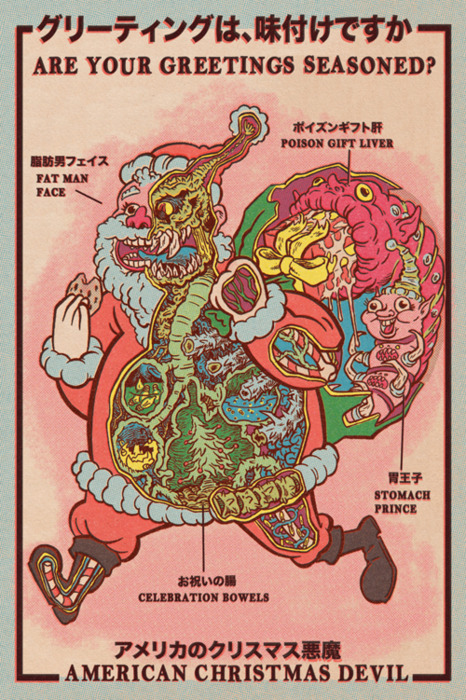
American Christmas Devil: Celebration Bowels, Fat Man Face, Poison Gift Liver, and Stomach Prince

“It Might Be a Week or a Year for the Right Head to Show Up” — Biblioklept Talks to Click Mort About His Wonderful, Surreal Sculptures


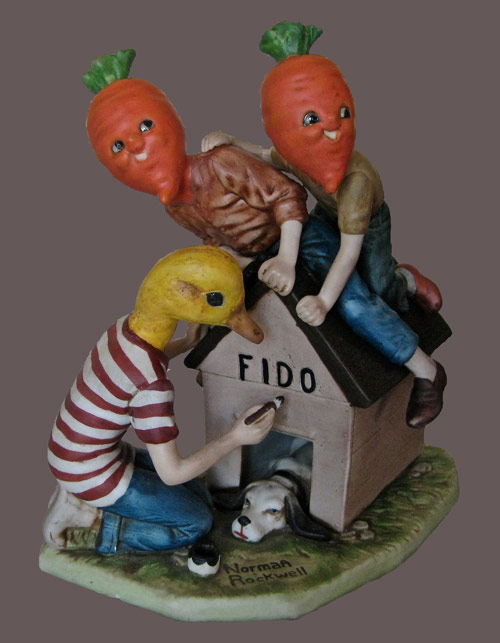
Duck and Carrots Putting the Final Touches on a Doghouse -- Click Mort

Click Mort makes surreal, charming, disarming sculptures that synthesize pre-existing figures into strange new forms. Largely self-taught, Click works out of his home in his native L.A., where he lovingly decapitates and recapitates antique statuettes.  Click’s sculptures were featured in a solo exhibit earlier this year in L.A.’s La Luz de Jesus gallery and are currently on display at the Webb Gallery in Waxahachie, Texas. Click was kind enough to talk to me in detail about his work over a series of emails around Thanksgiving. Check out Click’s website to see more of his fantastical stuff.

Biblioklept: I love your sculptures. They’re disconcerting and surreal but also charming. They’re bizarre and clever, but not whimsical. Can you tell us about how you make them?

Click Mort: Thanks. I’m especially happy to hear them described as “not whimsical.”  As for how they’re made, I should probably backtrack a bit since the porcelain pieces I’m doing now weren’t the actual starting point. The first things I tried recapitating were resin figurines from the 99 Cent Store: cute kid couples strolling hand-in-hand, adorable angel-tots, etc.. They were pleasantly awful on their own merits, but when I saw some particularly crappy plastic barnyard animals in the toy section that were roughly the same scale, the gears started turning. Those first head-swaps were pretty crude: I’d just hack off both heads mid-neck with a jeweler’s saw, attach the non-native head with some sculpting resin, and paint over the seam. Voila … Angel-tot with a pig’s head (or angel-pig with a tot’s body, depending on how you look at things).

After a few years of working with cheap resin figures, I kind of burnt out on them. My technique had developed to the point where the swaps were reasonably undetectable, but the available subject matter  —  tots, tots, and … tots  —  had gotten monotonous. Also, the figures gave off a really horrible smell when sawed; I strongly suspected they were made of something creepy like melamine. At that point, I decided to try doing the same thing with porcelain figures.

Right … so now I can answer your actual question. Once a suitable head and body match have been found (and describing that process would add a few more paragraphs to an already inhumanely long and dull answer) the first job is to remove all the unwanted material. A jeweler’s saw  — or any cutting implement whose description doesn’t include the words “diamond-edged”  —   won’t even mar the finish on porcelain. I use a high-speed Dremel with some sort of diamond-dust edged cutting tool attachment. Assuming we’re talking about a human body getting an animal head, everything from the collar up has to go on the body figure. This includes hair, headgear, ribbons, or whatever connecting the head and body. If any of these drape over a collar or lapel, those parts have to go too. For the heads, the amount that gets hacked off depends on the animal. On a quadruped, because of the different angle the spine intersects the skull relative to a biped, almost everything behind the ears and under the jawline has to be removed and then re-sculpted after the head has been attached to the body.

This slideshow requires JavaScript.

In order to get a really good bond between the head and body, I fill the upper torso with sculpting resin and sink an aluminum rod into it. A length of rod is left protruding up, and the head—which also gets stuffed with resin—is then positioned on it. After that, all the missing areas have to be sculpted back on. Finally, whatever painting is needed to cover the recreated areas and blend them into the original parts gets done.

And however tedious that was to read, the actual process is several thousand times more so.

Biblioklept: I liked reading about the process, but I suppose when we do something all the time, it seems tedious to us. Your process fascinates me, because the images of your figures don’t show any “seams” — your figures look like little mass produced statues from an alternate dimension. There’s a surreal synthesis at play in your work, not just in the actual combination of, say, a dog’s head on human body, but also in the tone of the work. Your pieces strike me as both creepy and tender at the same time. I’m curious how you know if a piece “works” — when are you satisfied with your figures?

CM: That mass-produced quality is something I really try not to lose when putting together the figures. There’s something inherently familiar and low-key about mass-produced objects, and I like the idea of art that doesn’t scream for attention but just sort of sits there mumbling to itself. The down side to this is it sometimes works against the figures getting noticed at all. In the few gallery shows they’ve been in, it seemed a lot of people never looked at them from closer than a few feet away. Maybe they thought someone had just lined up a bunch of old lady tschotske crap as some sort of conceptual piece.

As for the figures working as much on a tonal as objective level, yeah, that’s becoming more and more the case. Or at least my intention. On the early pieces, I was getting figures that I thought were awful to begin with and simply trying to change the nature of their awfulness. Over the course of hundreds of hours on eBay looking for working materials, I started noticing how great some of these cheap figurines were in their own right, particularly the stuff made in Japan in the fifties and sixties. At that point, I really started paying less attention to what kind of head would seem funniest on a piece and focusing more on how the shape and expression of the new head would fit into what was already a wonderful figure. It became more about trying to maintain the geometry of the whole thing while shifting the mood.

“Creepy and tender” is as good a description as I’ve heard. I guess the tenderness is a product of my real affection for the original figures showing through. And while I don’t consider the finished pieces particularly creepy, a lot of people have described them that way. As near as I can figure, it’s because the heads I like to use almost always have sort of neutral expressions, and that lack of expression is unsettling to us on some fundamental level.

And to a great degree, when a piece “works” is determined almost as soon as I have the original figure in hand. The only finished pieces I’ve been unhappy with are ones where as soon as I unpackaged a figure bought online, I hated it but followed through with a head-swap anyway rather than just eat the cost of the figure. Usually though, if I like the original piece, I’m going to be happy with the finished figure. It might be a week or a year for the right head to show up, but I’ll know when it does. And from there, it’s only a matter of taking the time (and typically, this is something like ten to twenty hours) to bring the two together.

Clock Headed Harpy -- Click Mort

Biblioklept: There’s a clear appreciation or even adoration of kitsch in your work, but there’s also this level to it where you’re literally grafting two tchotchkes to each other in a way that transcends kitsch (I don’t know if that description is clear or valid). What I like about your work is that it doesn’t rely solely on an ironic aesthetic shared by both artist and audience, but that’s nevertheless part of the experience. What is it about the awful that attracts us?

CM: I wouldn’t describe my composite pieces as transcending their components, but that’s probably an extension of my regard for the original, unaltered figures. I mean, obviously I don’t think they’re sacrosanct or whatever or I wouldn’t be doing what I’m doing. Still, if there were only one  —  rather than thousands  — of a given figure, I’d absolutely leave it alone. The same holds true for figures I think are already so wonderfully bizarre that anything I could possibly do to them would only diminish their oddity.

I guess I consider what I do as just condensing what I like about these things: taking the most expressive elements of each and putting that all in one figure in a way that enhances (but doesn’t necessarily transcend) what was already going on to some degree in the original.

It’s really hard to say what perceptions I share with whatever audience my work has. Originally, the only place that would carry them was a little boutique retail store, and now the figures have gotten into a couple of gallery group shows. In both instances, I almost never know who’s bought them, so there’s no opportunity for any sort of dialogue. For me, there’s no irony whatsoever at work in these things, but I’m pretty much literal to the point of dullness and don’t really see them as operating on any level other than the apparent. All I’m trying to do is get objectively incongruent elements and make them visually and aesthetically congruent.

But that’s just my take on them. I can be a didactic goon about a lot of stuff, but it would really be pointless to try and dictate what anyone else is or isn’t seeing in these pieces. And while there’s a definite attraction to awfulness, I don’t perceive these figures as awful. Alien, yeah. Absolutely. Which is pretty funny, given that they were originally produced as innocuous home garni and now something like a Norman Rockwell figurine is about as familiar as one of those lumpy Paleolithic Venus figures.

Biblioklept: A few of your pieces reference authors (DidionHemingway), but it’s not necessarily a recurring theme. How did these authors find their way into your titles? What do you enjoy reading?

CM: Titling the pieces is probably my least favorite part of the process. Usually, I just slap on whatever gibberish pops into my head and that’s that. The two figures you’ve posted are the only ones with literary references and, oddly enough, refer to one author who knocks me out and one I think is flat-out terrible (and I don’t think Didion is terrible).

As for what I read, it’s sort of a weird grab bag of stuff. Rather than trying to categorize my likes, I just grabbed the pile currently on the nightstand. Here’s what was there:

Wicked Bugs: The Louse That Conquered Napoleon’s Army & Other Diabolical Insects

Dada and Surrealism: A Very Short Introduction

Zippy Goes to School (The titular Zippy is a chimp, not the better-known pinhead.)

Guns, Germs, and Steel: The Fates of Human Societies (Keep trying to read this but invariably drop it in favor of something like Zippy Goes to School)

Tank Warfare: A History of Tanks in Battle

Monsters Are Attacking Tokyo: The Incredible World of Japanese Fantasy Films

And there’s other stuff I like and have been reading and rereading for decades: Saki and Flannery O’Connor are two particular faves.

Portrait of the Artist with the Easter Bunny, 2011

Biblioklept: You’ve mentioned that you don’t have an art school background. I’ll concede up front that this is one of those questions that interviewers aren’t supposed to ask, but I’d really like to know—what artists move you?

CM: Not to flip the interview, but why aren’t you supposed to ask stuff like that? It seems like a reasonable question.

Besides lacking an art school background, I’ve got a pretty skimpy art foreground. I’ve just never paid all that much attention to visual art. There are a few artists who for whatever reason caught my attention like Mark Ryden, Basil Wolverton, and Norman Saunders, but that’s about it. Oh, and Norman Rockwell, whose paintings are as wonderful as the figures inspired by them aren’t.  And oddly enough, I seem much more moved by sounds than sights. It’s probably just a matter of how my neuro-wiring is laid out.

Biblioklept: I don’t know where I got the idea that you weren’t supposed to ask the interviewee questions like “What artists do you like?” or “What books do you read?” — maybe my high school journalism teacher? Not sure. I guess it just seems lazy on my part. But the questions are asked in good faith, I think.

You bring up music—I know you played guitar for The Cramps in the early eighties—do you have any musical projects underway now?

CM: Nope. While I still spend a fair amount of time banging on guitars, the interest and/or enthusiasm for any sort of group effort just isn’t there. I mean, I guess I could go the digital recording route, but rock and roll  —  and that’s all I really care about  —  has always been a real immediate, physical kind of thing to me. Anything other than playing with a clutch of similarly-minded goofballs just seems kinda clinical.

Biblioklept: What are you working on now? What projects do you have on the horizon?

CM: I’ve attached pictures of the figures currently in progress. This seemed kinder than subjecting your readers to the equivalent two thousand words.

As for events outside the “studio” (which is my apartment’s kitchen and breakfast nook), about a dozen pieces will be in a show opening December 4 at the Webb Gallery in Waxahachie, Texas. Also, La Luz de Jesus here in L.A. will have a clutch of them on hand through December. And my website will have an ongoing influx  —  and hopefully, outflux  —  of new figures.

Biblioklept: Have you ever stolen a book?

CM: Not recently, but yeah, I’ve lifted a volume or two. For a big stretch of my adult life I was a junky, and like most junkies had a terrifically flexible  —  and convenient  —  sense of morality. I used to steal books from used bookstores under the theory they were already used, so if I read them and then took them back, no one was really out anything.

And I usually did return them, but as often as not it was to sell the store their own book.

When I finally cleaned up, I felt like a crumb for having done this. All the same, I wasn’t about to risk some hothead filing charges if I told them I was sorry about what I’d done and wanted to settle up. Instead, I just went back to the various stores involved and, over time, bought all the books I’d sold them and those just read and returned. To me that seemed to square things, but this could be just more convenient moral reckoning. Beats me.

“A Book of Utopias” (Prospero’s Books)

It Is December and Already Dark Forces Are Gathering — Glen Baxter

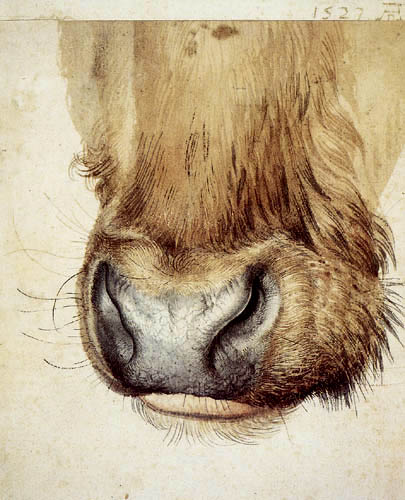
The Mouth of an Ox — Albrecht Dürer

“Spider” — Carson Mell

Anteater — Erica il Cane

(More).

James Joyce’s Burnt Kidney Breakfast

Another entry in our ongoing series of literary recipes to celebrate Thanksgiving.

Leopold Bloom, hero of James Joyce’s Ulysses likes kidneys for breakfast. In fact–

Mr Leopold Bloom ate with relish the inner organs of beasts and fowls. He liked thick giblet soup, nutty gizzards, a stuffed roast heart, liverslices fried with crustcrumbs, fried hencods’ roes. Most of all he liked grilled mutton kidneys which gave to his palate a fine tang of faintly scented urine.

Okay, so there’s not much to this recipe. First, you’ve gotta buy the kidney–

A kidney oozed bloodgouts on the willowpatterned dish: the last. He stood by the nextdoor girl at the counter. Would she buy it too, calling the items from a slip in her hand? Chapped: washingsoda. And a pound and a half of Denny’s sausages.

Then you cook it with some butter in a frying pan (don’t forget to share with the cat, and don’t forget the pepper)–

While he unwrapped the kidney the cat mewed hungrily against him. Give her too much meat she won’t mouse. Say they won’t eat pork. Kosher. Here. He let the bloodsmeared paper fall to her and dropped the kidney amid the sizzling butter sauce. Pepper. He sprinkled it through his fingers ringwise from the chipped eggcup.

Then take your lazy adulterous wife her breakfast that you’ve lovingly prepared for her (she’ll need her strength for later). Oh, and don’t forget about the kidney that’s still cooking for you (unless you’re making some kind of subconscious symbolic burnt offering or something)–

—There’s a smell of burn, she said. Did you leave anything on the fire?

—The kidney! he cried suddenly.

He fitted the book roughly into his inner pocket and, stubbing his toes against the broken commode, hurried out towards the smell, stepping hastily down the stairs with a flurried stork’s legs. Pungent smoke shot up in an angry jet from a side of the pan. By prodding a prong of the fork under the kidney he detached it and turned it turtle on its back. Only a little burnt. He tossed it off the pan on to a plate and let the scanty brown gravy trickle over it.

Enjoy with gravy, toast, and a cup of tea–

Cup of tea now. He sat down, cut and buttered a slice of the loaf. He shore away the burnt flesh and flung it to the cat. Then he put a forkful into his mouth, chewing with discernment the toothsome pliant meat. Done to a turn. A mouthful of tea. Then he cut away dies of bread, sopped one in the gravy and put it in his mouth. What was that about some young student and a picnic? He creased out the letter at his side, reading it slowly as he chewed, sopping another die of bread in the gravy and raising it to his mouth.

He sopped other dies of bread in the gravy and ate piece after piece of kidney.

Tim Burton — Bill Sienkiewicz

Dachshund Marveling at Joan Didion’s Mastery of the One-Word Sentence — Click Mort

(More and more).