Dave Cooper’s Mudbite (Book acquired, 28 March 2018)


img_9439

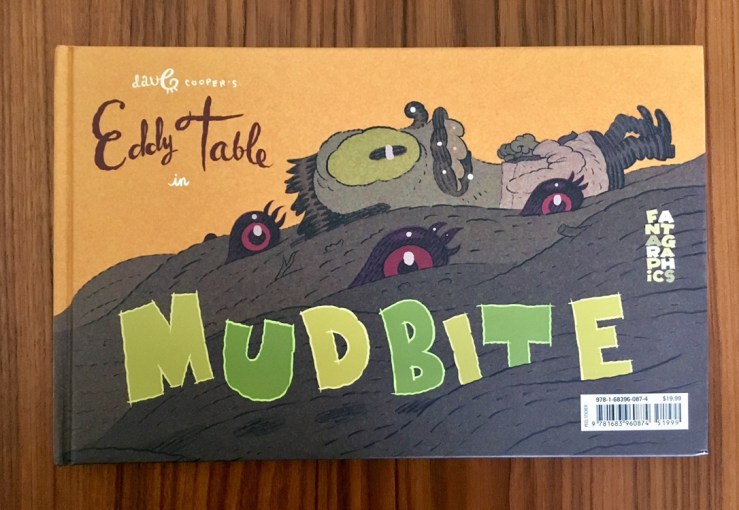
Dave Cooper’s Mudbite is new in glorious full-color hardback from Fantagraphics. Here is the front cover:

img_9437

And here is the other front cover (Mudbite is a tête-bêche):

img_9438

I hope to post a review of Mudbite at The Comics Journal soon, but for now, here’s Fantagraphics’ blurb:

Eddy Table, the star of Mudbite, first appeared the early ’90s in Cooper’s award-winning underground comics series, Weasel. His stories were based on baffling dreams and reveled in a unique sort of logical nonsense. Mudbitecompiles two all-new Eddy Table stories, “Mud River” and “Bug Bite,” in which Eddy returns to his roots, acting as Dave’s alter ego in these dreamlike narratives.

In “Mud River,” Eddy makes a foolish mistake, causing a sweet, innocent Amazon to bonk her head, turning her into a very impressionable automaton. Of course, Eddy can’t resist taking advantage of this unexpected development, even as a river of mud approaches. In “Bug Bite,” Eddy has brought his family on a vacation to Europe, but he’s soon distracted by a series of manifestations of his own obsessions  — voluptuous women, mysterious and collectible “microdevices,”  and a strange, impromptu jam session. When he loses his family entirely, he’s led into a dark, slimy corridor inhabited by shiny black eels. What is their connection to the microdevices? And how will all this impact his family?

Mudbite marks the first new graphic novel by fan favorite Dave Cooper in more than 15 years, marking a welcome return to the medium that he made his name in before focusing on fine art and television, where he has focused most of his creative energy since.

Calvary (Crucifixion) — Ilya Repin

calvary-crucifixion-study-1869

Calvary (Crucifixion), 1869 by Ilya Repin (1844-1930)

Illustration for Frankenstein — Bernie Wrightson

596de571d9ea5a0f6fcb1cc0d4562bea

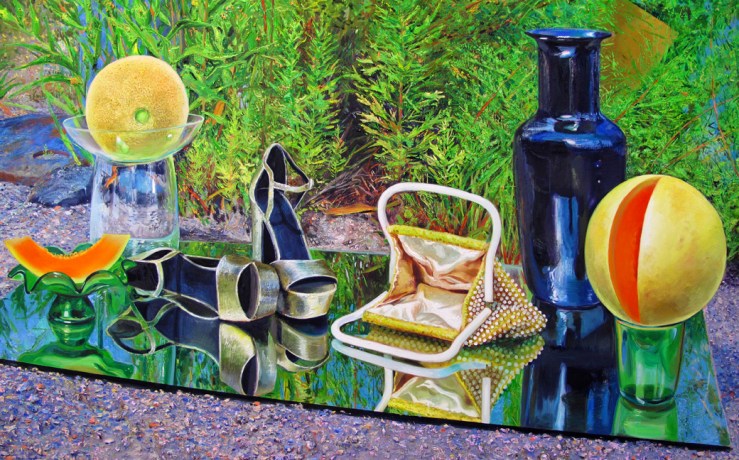
Yard Sale — Robin F. Williams

2015YardSale

Yard Sale, 2015 by Robin F. Williams (b. 1984)

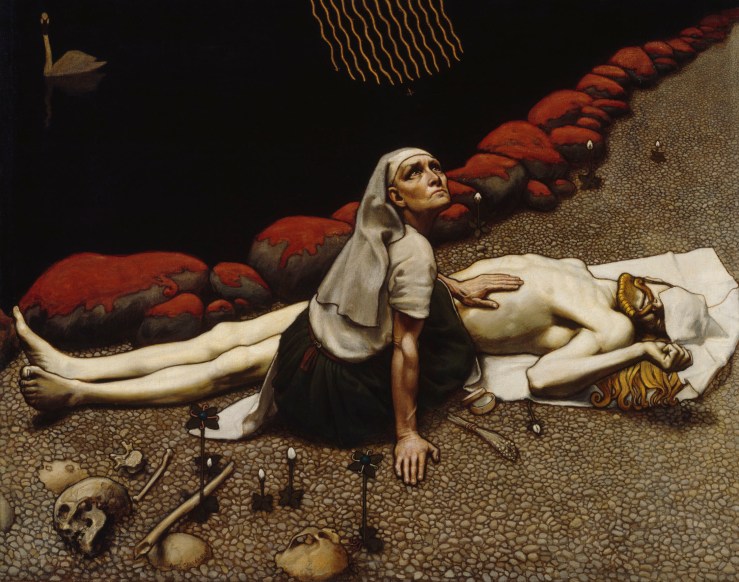
Lemminkäinen’s Mother — Akseli Gallen-Kallela

gallen_kallela_lemminkainens_mother

Lemminkäinen’s Mother, 1897 by Akseli Gallen-Kallela (1865-1931)


“Lemminkainen’s Restoration”

Rune XV of The Kalevala

in English translation by

John Martin Crawford


Lemminkainen’s aged mother
Anxious roams about the islands,
Anxious wonders in her chambers,
What the fate of Lemminkainen,
Why her son so long has tarried;
Thinks that something ill has happened
To her hero in Pohyola. Continue reading “Lemminkäinen’s Mother — Akseli Gallen-Kallela”

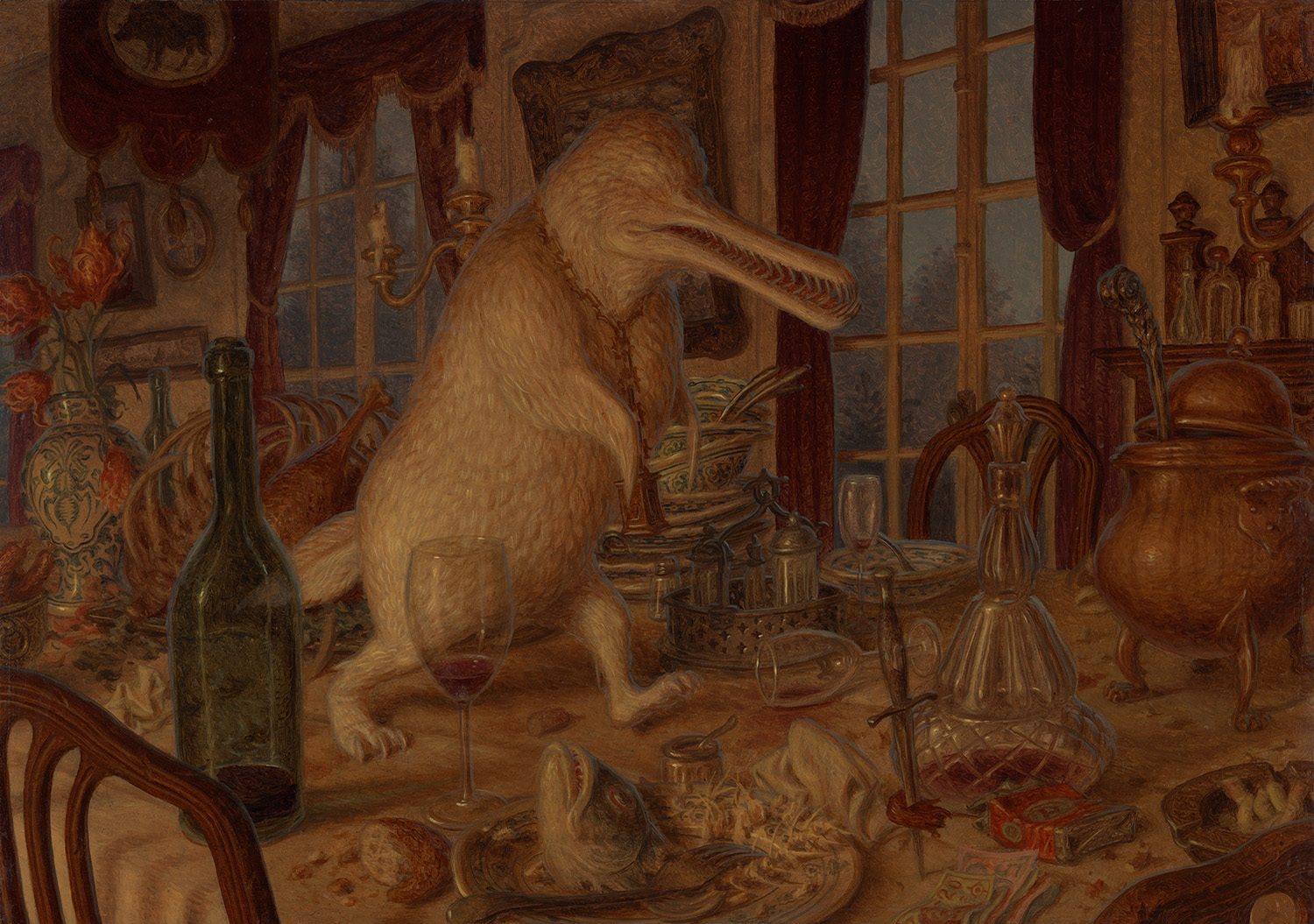
Thieves’ Reckoning — Peter Ferguson

thieves-reckoning-final-lo

Thieves’ Reckoning by Peter Ferguson (b. 1968)

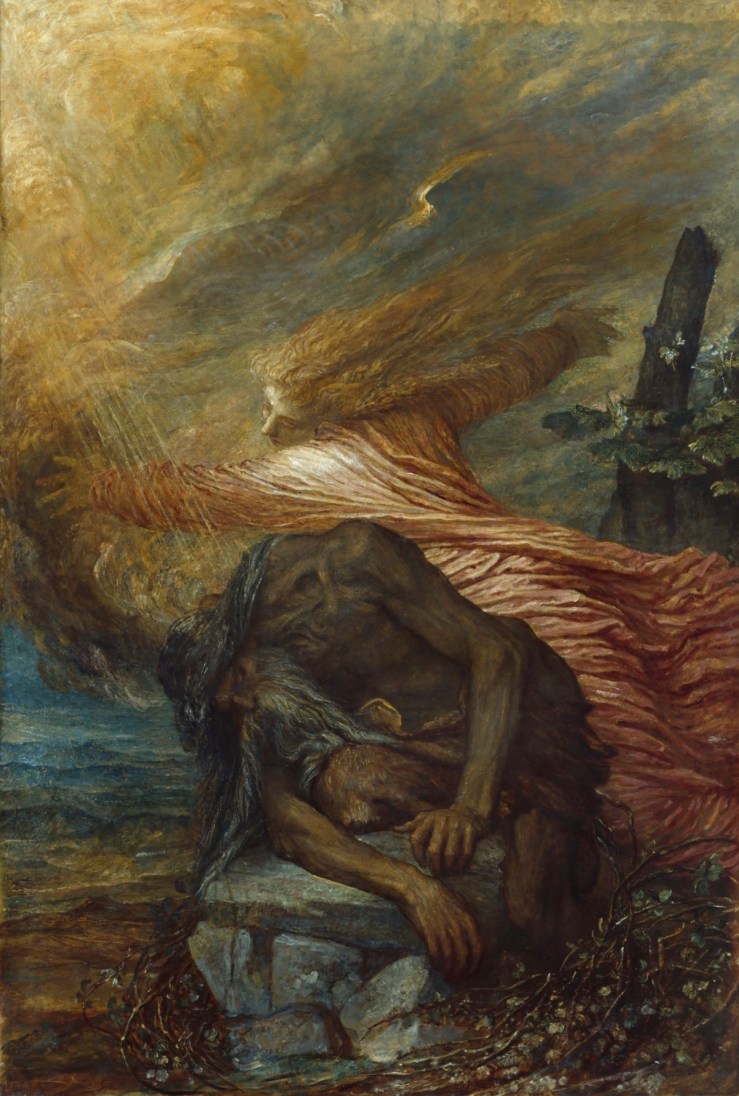
The Death of Cain — George Frederick Watts

mgajwrisi0bkvzidmwha

The Death of Cain, c. 1872 by George Frederick Watts (1817-1904)

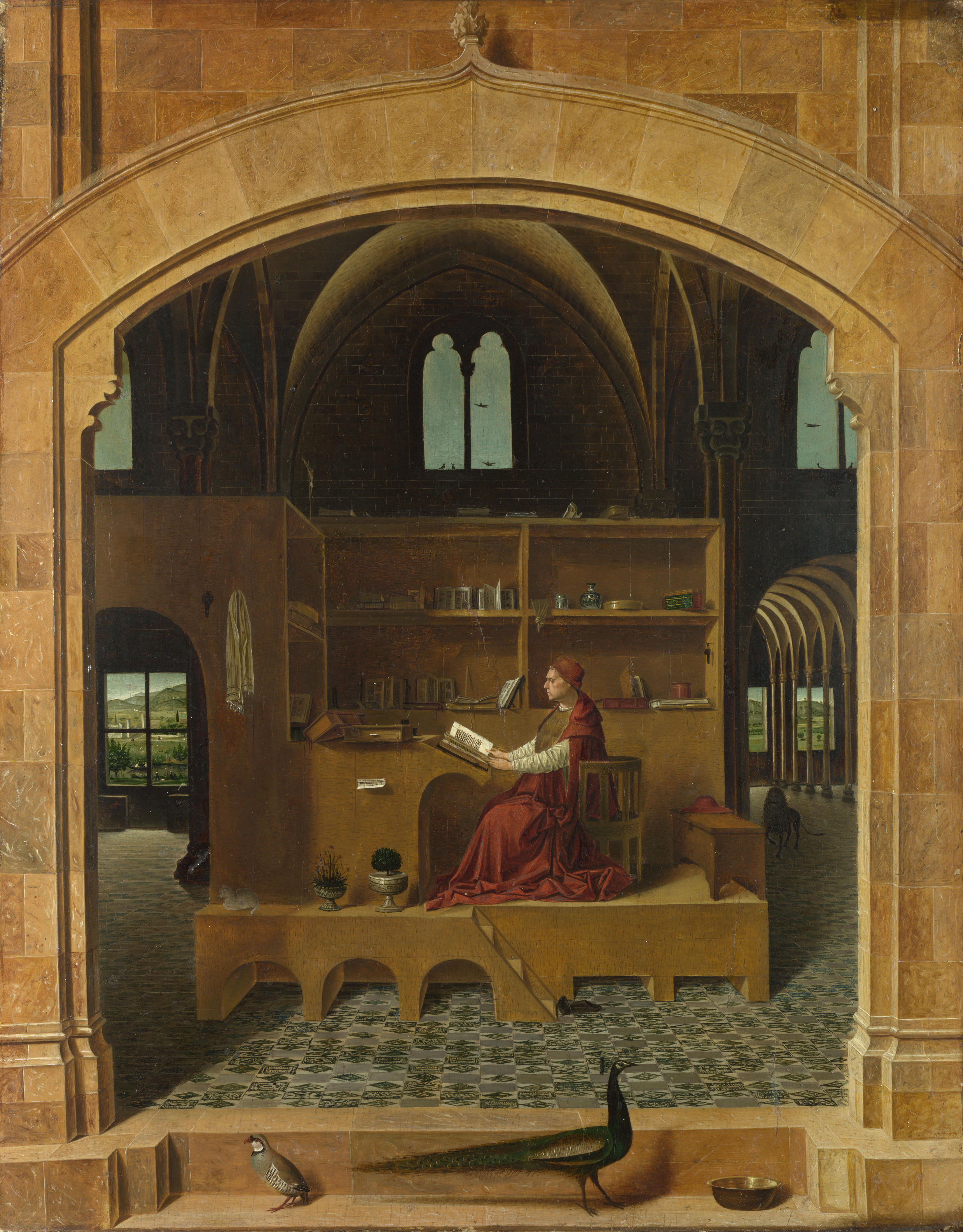
St. Jerome in His Study — Antonello da Messina

about 1475

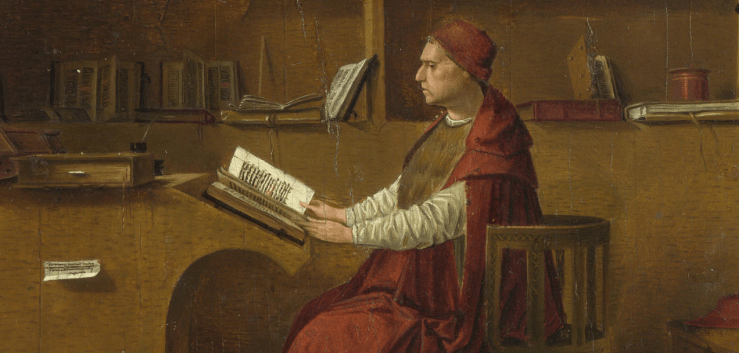
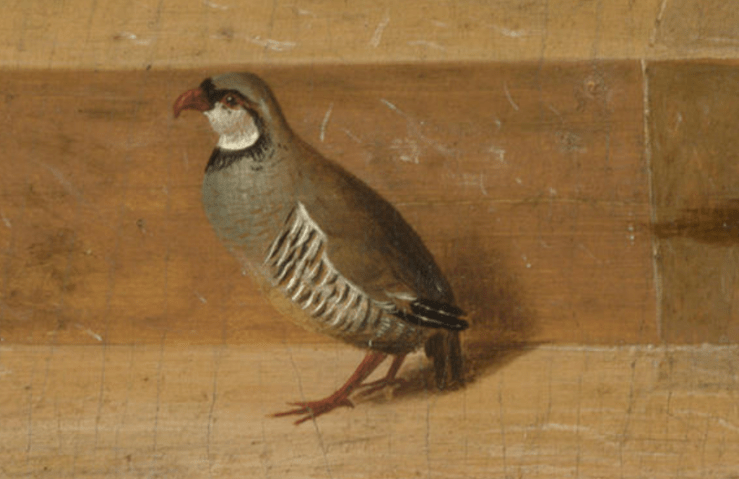
Screenshot 2018-03-26 at 1.38.47 PMScreenshot 2018-03-26 at 1.39.30 PMScreenshot 2018-03-26 at 1.38.21 PMScreenshot 2018-03-26 at 1.39.56 PMScreenshot 2018-03-26 at 1.39.08 PMScreenshot 2018-03-26 at 1.40.59 PM

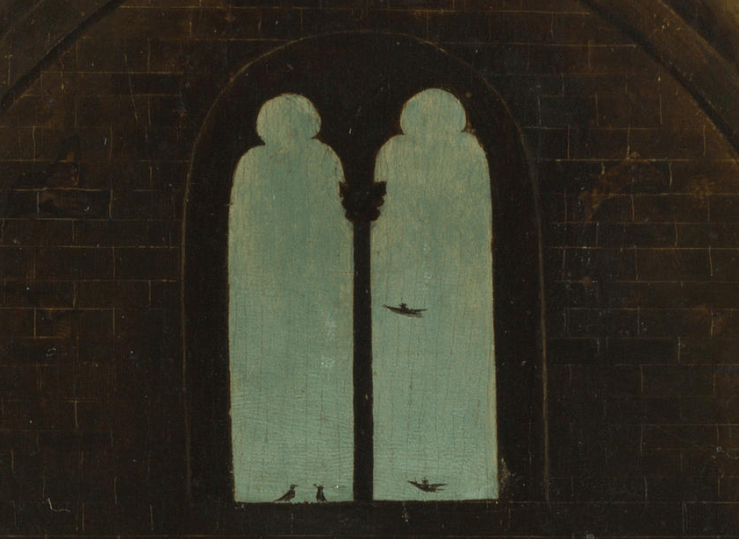
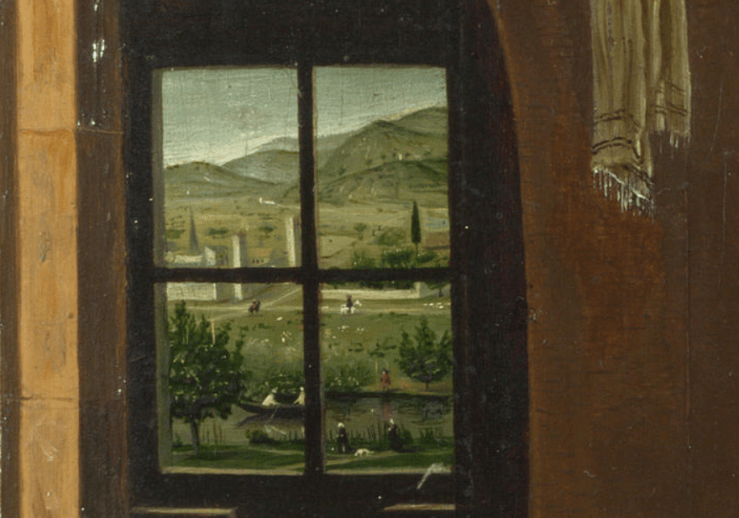
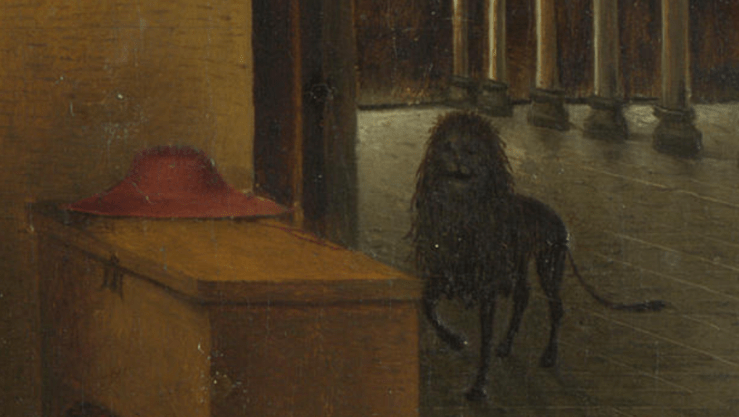
St. Jerome in His Study, c. 1475 by Antonello da Messina (c.1430 – 1479)

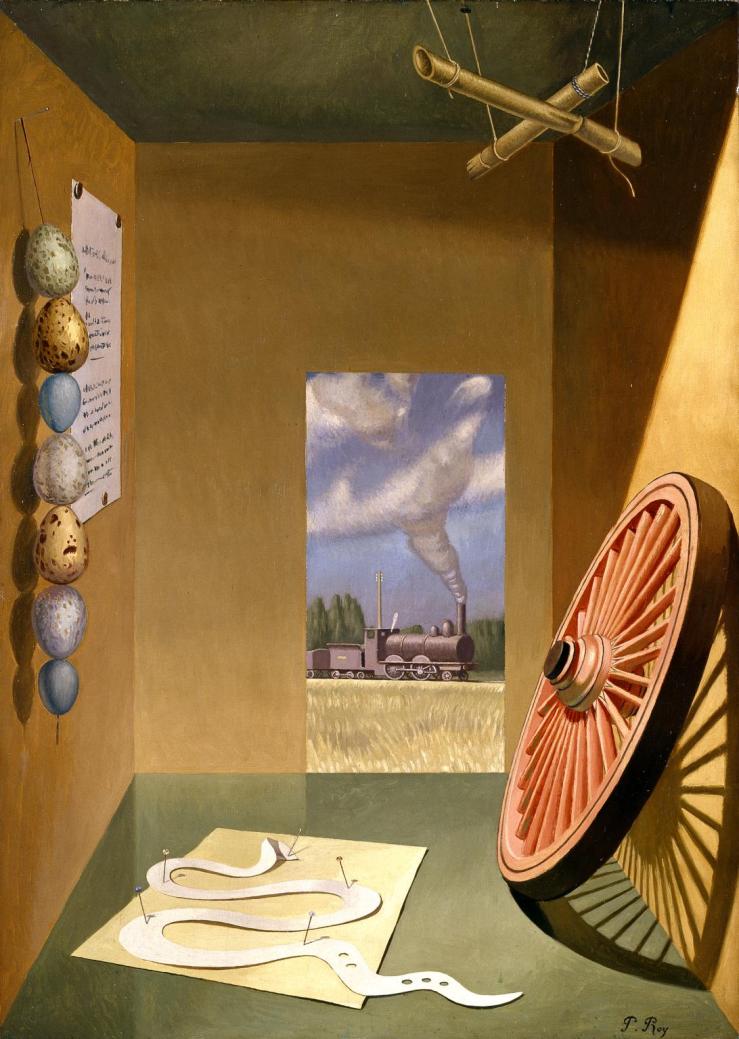
A Naturalist’s Study — Pierre Roy

A Naturalist's Study 1928 by Pierre Roy 1880-1950

A Naturalist’s Study, 1928 by Pierre Roy (1880–1950)

St. Genevieve — Élisabeth Vigée Le Brun

stgenevieve

St. Genevieve, 1793 by Élisabeth Vigée Le Brun (1755—1842)

Like trying to read a hundred poems at once | Nathaniel Hawthorne’s journal entry for March 24th, 1856

We first went into Wolsey’s great Hall, up a most spacious staircase, the walls and ceiling of which were covered with an allegorical fresco by Verrio, wonderfully bright and well preserved; and without caring about the design or execution, I greatly liked the brilliancy of the colors. The great Hall is a most noble and beautiful room, above a hundred feet long and sixty high and broad. Most of the windows are of stained or painted glass, with elaborate designs, whether modern or ancient I know not, but certainly brilliant in effect. The walls, from the floor to perhaps half their height, are covered with antique tapestry, which, though a good deal faded, still retains color enough to be a very effective adornment, and to give an idea of how rich a mode of decking a noble apartment this must have been. The subjects represented were from Scripture, and the figures seemed colossal. On looking closely at this tapestry, you could see that it was thickly interwoven with threads of gold, still glistening. The windows, except one or two that are long, do not descend below the top of this tapestry, and are therefore twenty or thirty feet above the floor; and this manner of lighting a great room seems to add much to the impressiveness of the enclosed space. The roof is very magnificent, of carved oak, intricately and elaborately arched, and still as perfect to all appearance as when it was first made. There are banners, so fresh in their hues, and so untattered, that I think they must be modern, suspended along beneath the cornice of the hall, and exhibiting Wolsey’s arms and badges. On the whole, this is a perfect sight in its way.

Next to the hall there is a withdrawing-room, more than seventy feet long, and twenty-five feet high. The walls of this apartment, too, are covered with ancient tapestry, of allegorical design, but more faded than that of the hall. There is also a stained-glass window; and a marble statue of Venus on a couch, very lean and not very beautiful; and some cartoons of Carlo Cignani, which have left no impression on my memory; likewise, a large model of a splendid palace of some East Indian nabob.

I am not sure, after all, that Verrio’s frescoed grand staircase was not in another part of the palace; for I remember that we went from it through an immensely long suite of apartments, beginning with the Guard-chamber. All these rooms are wainscoted with oak, which looks new, being, I believe, of the date of King William’s reign. Over many of the doorways, or around the panels, there are carvings in wood by Gibbons, representing wreaths of flowers, fruit, and foliage, the most perfectly beautiful that can be conceived; and the wood being of a light hue (lime-wood, I believe), it has a fine effect on the dark oak panelling. The apartments open one beyond another, in long, long, long succession,–rooms of state, and kings’ and queens’ bedchambers, and royal closets bigger than ordinary drawing-rooms, so that the whole suite must be half a mile, or it may be a mile, in extent. From the windows you get views of the palace-grounds, broad and stately walks, and groves of trees, and lawns, and fountains, and the Thames and adjacent country beyond. The walls of all these rooms are absolutely covered with pictures, including works of all the great masters, which would require long study before a new eye could enjoy them; and, seeing so many of them at once, and having such a nothing of time to look at them all, I did not even try to see any merit in them. Vandyke’s picture of Charles I., on a white horse beneath an arched gateway, made more impression on me than any other, and as I recall it now, it seems as if I could see the king’s noble, melancholy face, and armed form, remembered not in picture, but in reality. All Sir Peter Lely’s lewd women, and Kneller’s too, were in these rooms; and the jolly old stupidity of George III. and his family, many times repeated; and pictures by Titian, Rubens, and other famous hands, intermixed with many by West, which provokingly drew the eye away from their betters. It seems to me that a picture, of all other things, should be by itself; whereas people always congregate them in galleries. To endeavor really to see them, so arranged, is like trying to read a hundred poems at once,–a most absurd attempt. Of all these pictures, I hardly recollect any so well as a ridiculous old travesty of the Resurrection and Last Judgment, where the dead people are represented as coming to life at the sound of the trumpet,–the flesh reëstablishing itself on the bones,–one man picking up his skull, and putting it on his shoulders,–and all appearing greatly startled, only half awake, and at a loss what to do next. Some devils are dragging away the damned by the heels and on sledges, and above sits the Redeemer and some angelic and sainted people, looking complacently down upon the scene!

From Nathaniel Hawthorne’s journal entry for March 24th, 1856. From Passages from the English Note-Books.

The boldface emphasis on the sentences in the last paragraph is mine.

The Chintz Couch — Ethel Sands

The Chintz Couch c.1910-11 by Ethel Sands 1873-1962

The Chintz Couch, 1911 by Ethel Sands (1873–1962)

Here was something which her consciousness could not wretchedly devour | From Iris Murdoch’s novel The Bell

the-painter-s-daughters-chasing-a-butterfly-1759
The Painter’s Daughters Chasing a Butterfly, c. 1756, Thomas Gainsborough

Dora had been in the National Gallery a thousand times and the pictures were almost as familiar to her as her own face. Passing between them now, as through a well-loved grove, she felt a calm descending on her. She wandered a little, watching with compassion the poor visitors armed with guide books who were peering anxiously at the masterpieces. Dora did not need to peer. She could look, as one can at last when one knows a great thing very well, confronting it with a dignity which it has itself conferred. She felt that the pictures belonged to her, and reflected ruefully that they were about the only thing that did. Vaguely, consoled by the presence of something welcoming and responding in the place, her footsteps took her to various shrines at which she had worshipped so often before: the great light spaces of Italian pictures, more vast and southern than any real South, the angels of Botticelli, radiant as birds, delighted as gods, and curling like the tendrils of a vine, the glorious carnal presence of Susanna Fourment, the tragic presence of Margarethe Trip, the solemn world of Piero della Francesca with its early-morning colours, the enclosed and gilded world of Crivelli. Dora stopped at last in front of Gainsborough’s picture of his two daughters. These children step through a wood hand in hand, their garments shimmering, their eyes serious and dark, their two pale heads, round full buds, like yet unlike.

Dora was always moved by the pictures. Today she was moved, but in a new way. She marvelled, with a kind of gratitude, that they were all still here, and her heart was filled with love for the pictures, their authority, their marvellous generosity, their splendour. It occurred to her that here at last was something real and something perfect. Who had said that, about perfection and reality being in the same place? Here was something which her consciousness could not wretchedly devour, and by making it part of her fantasy make it worthless. Even Paul, she thought, only existed now as someone she dreamt about; or else as a vague external menace never really encountered and understood. But the pictures were something real outside herself, which spoke to her kindly and yet in sovereign tones, something superior and good whose presence destroyed the dreary trance-like solipsism of her earlier mood. When the world had seemed to be subjective it had seemed to be without interest or value. But now there was something else in it after all.

These thoughts, not clearly articulated, flitted through Dora’s mind. She had never thought about the pictures in this way before; nor did she draw now any very explicit moral. Yet she felt that she had had a revelation. She looked at the radiant, sombre, tender, powerful canvas of Gainsborough and felt a sudden desire to go down on her knees before it, embracing it, shedding tears.

From Iris Murdoch’s novel The Bell.

Art Appreciation Society (Glen Baxter)

img_9409

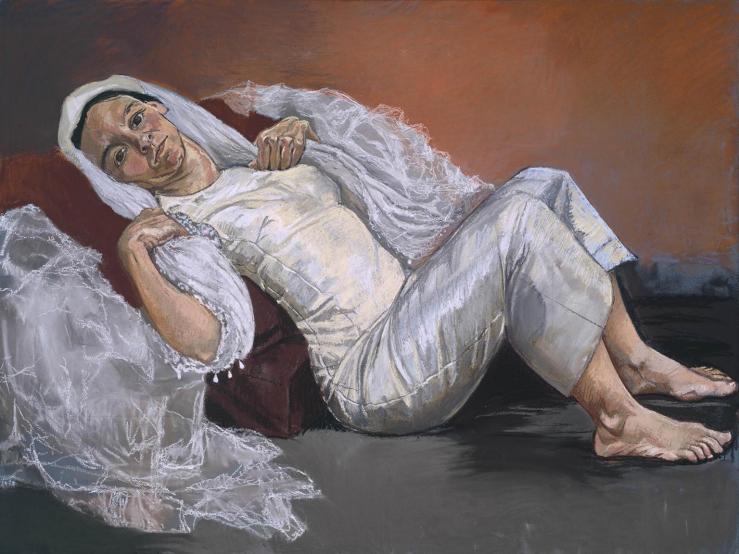
Bride — Paula Rego

Bride 1994 by Paula Rego born 1935

Bride, 1994 by Paul Rego (b. 1935)

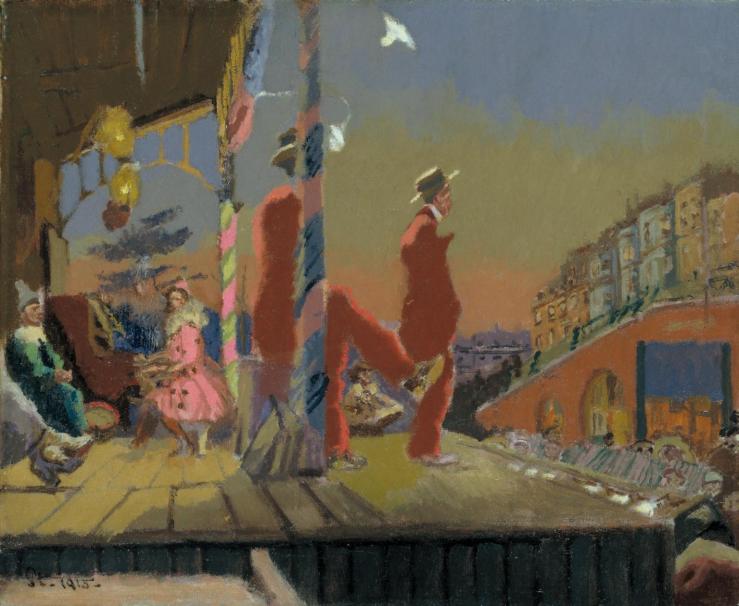
Brighton Pierrots — Walter Richard Sickert

Brighton Pierrots 1915 by Walter Richard Sickert 1860-1942

Brighton Pierrots, 1915 by Walter Richard Sickert (1860–1942)

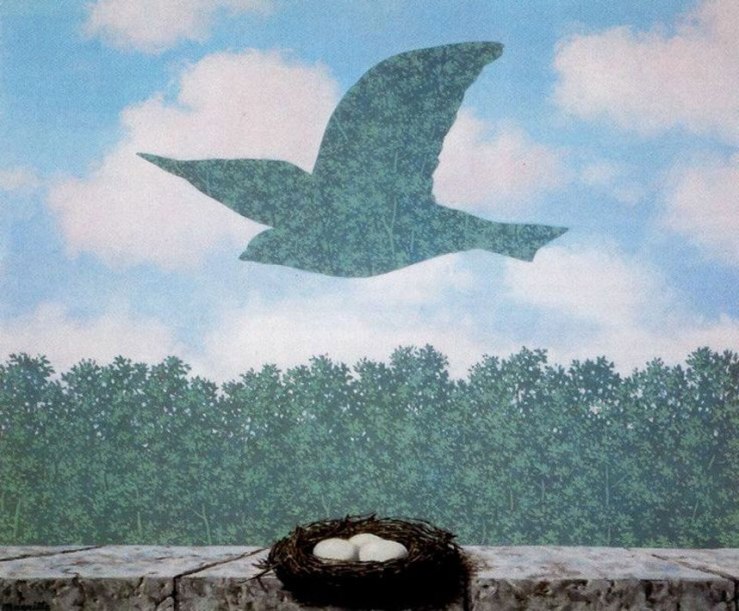
Spring — Rene Magritte

8slur6j

Spring, 1965 by Rene Magritte