“In Football Season” — John Updike

“In Football Season” by John Updike

            Do you remember a fragrance girls acquire in autumn? As you walk beside them after school, they tighten their arms about their books bend their heads forward to give a more flattering attention to you words, and in the little intimate area thus formed, carved into the clear; by an implicit crescent, there is a complex fragrance woven of tobacco, powder, lipstick, rinsed hair, and that perhaps imaginary and certainly elusive scent that wool, whether in the lapels of a jacket or the nap of a j sweater, seems to yield when the cloudless fall sky like the blue bell of I a vacuum lifts toward itself the glad exhalations of all things. This fra­grance, so faint and flirtatious on those afternoon walks through the dry leaves, would be banked a thousand-fold on the dark slope of the stadium when, Friday nights, we played football in the city.

“We”—we the school. A suburban school, we rented for some of our home games the stadium of a college in the city of Alton three miles away. My father, a teacher, was active in the Olinger High athletic department, and I, waiting for him beside half-open doors of varnished wood and frosted glass, overheard arguments and felt the wind of the worries that accompanied this bold and at that time unprecedented deci­sion. Later, many of the other county high schools followed our lead; for the decision was vindicated. The stadium each Friday night when we played was filled. Not only students and parents came but spectators unconnected with either school, and the money left over when the sta­dium rent was paid supported our entire athletic program. I remember the smell of the grass crushed by footsteps behind the end zones. The smell was more vivid than that of a meadow, and in the blue electric glare the green vibrated as if excited, like a child, by being allowed up late. I remember my father taking tickets at the far corner of the wall, wedged into a tiny wooden booth that made him seem somewhat magical, like a troll.

And of course I remember the way we, the students, with all of our jealousies and antipathies and deformities, would be—beauty and boob, sexpot and grind—crushed together like flowers pressed to yield to the black sky a concentrated homage, an incense, of cosmetics, cigarette smoke, warmed wool, hot dogs, and the tang, both animal and metallic, of clean hair. In a hoarse olfactory shout, these odors ascended. A dense haze gathered along the ceiling of brightness at the upper limit of the arc lights, whose glare blotted out the stars and made the sky seem romanti­cally void and intimately near, like the death that now and then stooped and plucked one of us out of a crumpled automobile. If we went to the back row and stood on the bench there, we could look over the stone lip of the stadium down into the houses of the city, and feel the cold Novem­ber air like the black presence of the ocean beyond the rail of a ship; and when we left after the game and from the hushed residential streets of this part of the city saw behind us a great vessel steaming with light, the arches of the colonnades blazing like portholes, the stadium seemed a great ship sinking and we the survivors of a celebrated disaster. Continue reading ““In Football Season” — John Updike”
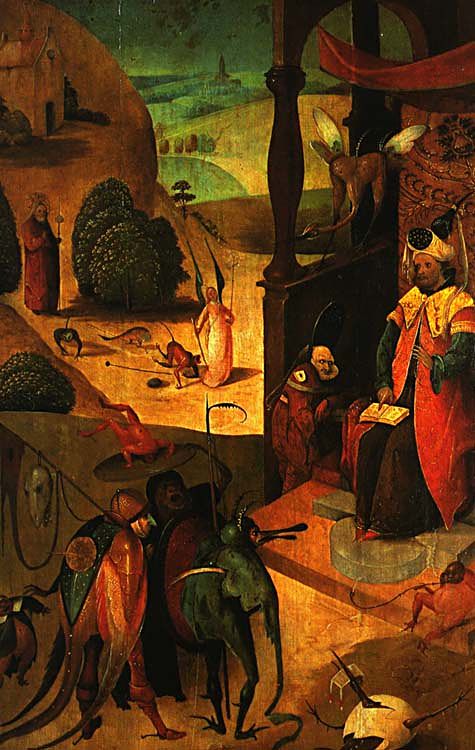
St. Jacob and The Magician — Hieronymous Bosch

st-jacob-and-the-magician

Selections from One-Star Amazon Reviews of Joyce’s Ulysses

[Ed. note: The following citations come from one-star Amazon reviews of James Joyce’s Ulysses. To be very clear, I think Ulysses is a marvelous, rewarding read (more on that here). Today, February 2nd, is Joyce’s birthday—let’s celebrate by enjoying the observations of some readers who were unimpressed by his masterpiece. While one or two of the reviews are tongue-in-cheek, most one-star reviews of the book are from very, very angry readers who feel duped]

I can sum this book up in two words: “Ass Beating”.

What an awful book this is?

I bought this having been a huge fan of the cartoon series, but Mr Joyce has taken a winning formula and produced a prize turkey. After 20 pages not only had Ulysses failed to even board his spaceship, but I had no idea at all what on earth was going on. Verdict: Rubbish.

When an English/American writer try to explain his/her ideas about life(I mention ideas about meaning,purpose and philosophy of life)and when he/she try to do this with complicated ideas and long sentences(or like very short ones especially in this particular book);what his/her work become to is:A tremendous nonsense!!!

Thi’ got to be the worst, I- I – I mean the worst ever written book ever. Know why? ‘Cause he’ such a showoff, know what I MEAN? He’s ingenious I’ll giv’ ’em that, but ingenuity my friends tire and enervate. Get to the point and stick to it ‘s my motto.

This is one of those books that “smart” people like to “read.”

The grammar is so disjointed as to make it nearly impossible to read.

Ulysses is basically an unbridled attack on the very ideas of heroism, romantic love and sexual fulfillment, and objective literary expression.

What’s with all the foreign languages?

It has no real meaning.

It is a blasphemy that it ever was published.

Anyone who tells you they’ve read this so-called book all the way through is probably lying through their teeth.It is impossible to endure this torture.

A babbling, senseless tome upheld by “literary luminaries” who fear being cast into the tasteless bourgeois darkness for dissent? Yes, that’s the gist.

I discovered that the novel was not what I though it would be.

Joyce is an aesthetic bother of Marcel Duchamp (known for The Fountain, a urinal, now a museum piece) and John Cage (the composer of pieces for prepared piano, where the piano’s strings are mangled with trash.

Two positive things I can say about James Joyce is that he has a great sounding name and he gives wonderful titles to his works.

Ask yourself – are you going to enjoy a book that neccesitates your literature teacher lie next to you and explain its ‘sophistication’ to you ?

It’s the worst book which has ever been written.

Unless you really hate yourself, do not attempt to read this book.

The truth is this book stinks. For one thing it is vulgar, which, I hate to disappoint anyone, requires no talent at all. This is a talent any six year-old boy possesses.

The book is not so good, it is boring, it is a colection of words and a continuous experimentation of styles that, unhappily, do not mean anything to the meaning of the story; that is, the book’s language is snobbish and useless. Those who say that “love” such a writing are to be thought about as non-readers or as victims of a literary abnormality.

…the single most destructive piece of Literature ever written…

I’m all for challenging reads, but not for gibberish which academics persist in labeling erudition.

This book is extremely dull!!! My book club decided to read this book after one of the members visited the James Joyce tower in Ireland, which the author supposedly wrote part of the book in.

Ulysses is a failed novel because Joyce was a bad writer (shown by his other works).

In conclusion, Don’t read the book. Burn it hard. Do not let your children read the book—it will mutilate their brain cells.

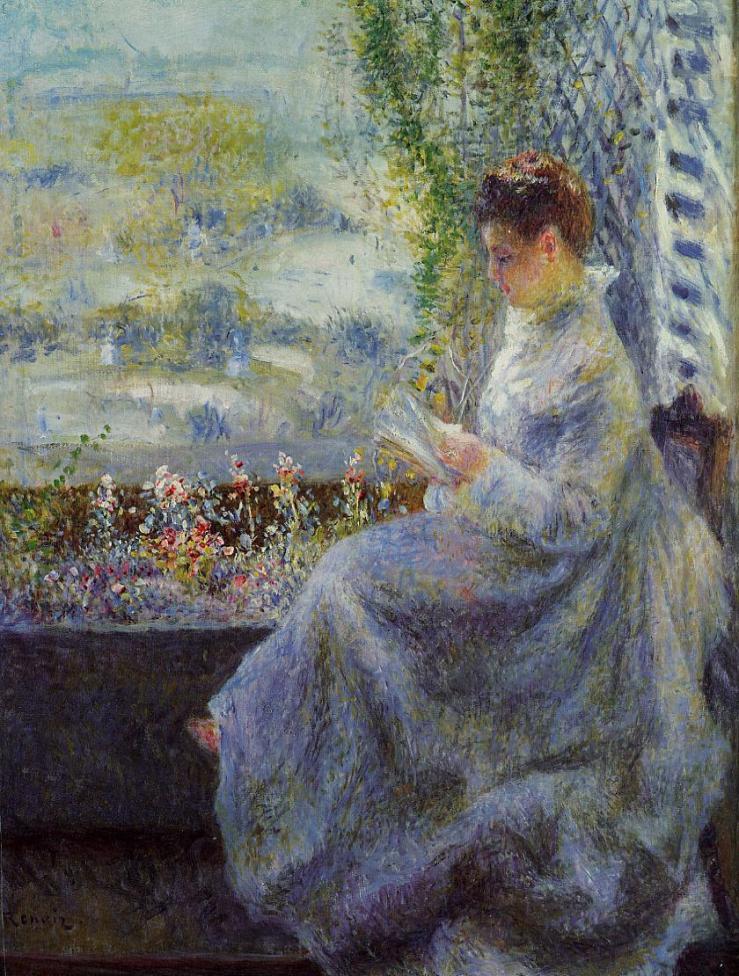
Madame Chocquet Reading — Pierre-Auguste Renoir

madame-chocquet-reading-1876

Average Blurb / Excellent Blurb

20130201-173414.jpg

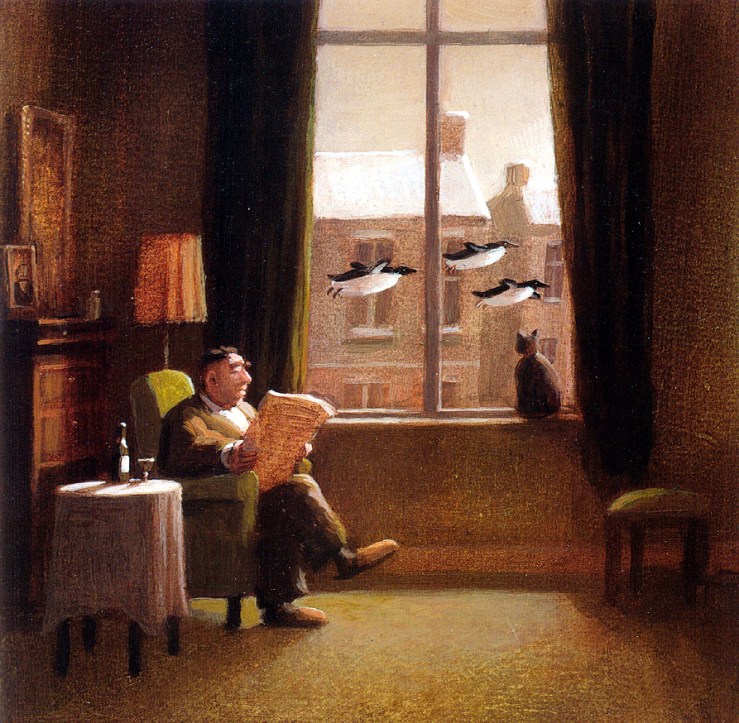
February — Michael Sowa

february

Portrait of Rodo Reading — Camille Pissarro

portrait-of-rodo-reading-1893

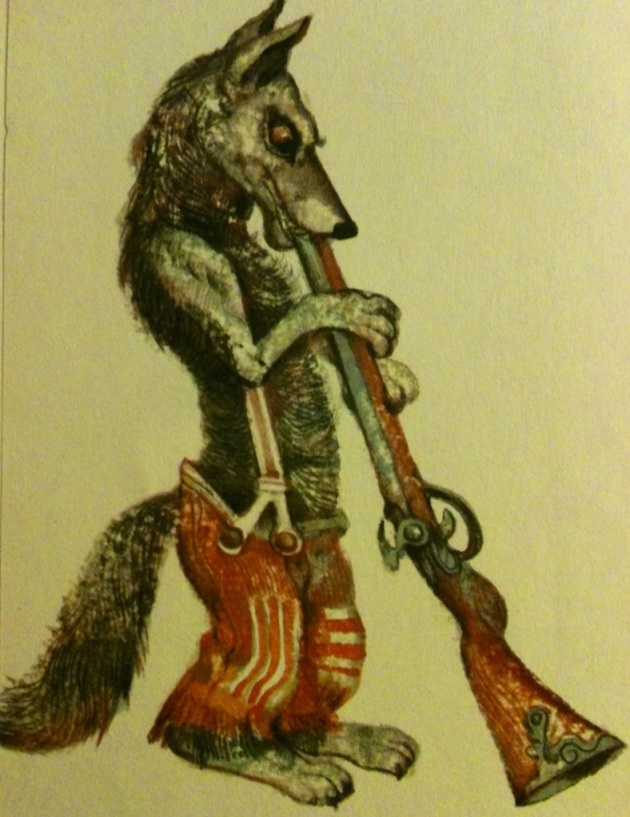
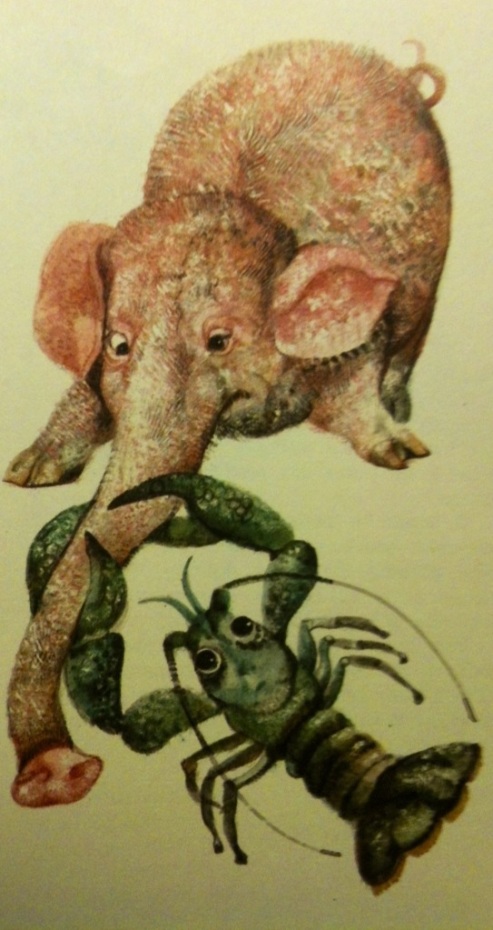
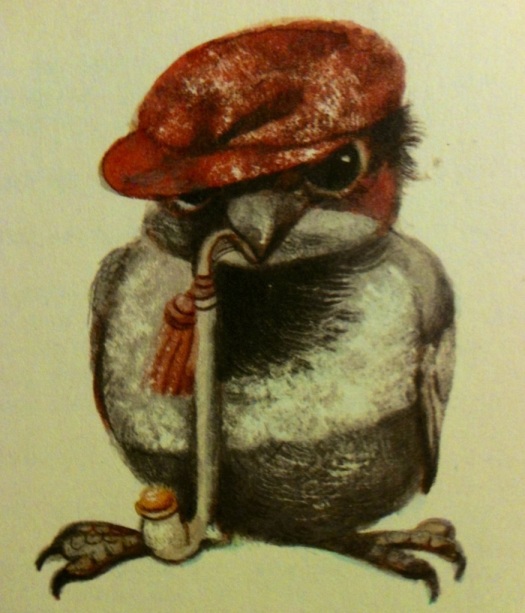
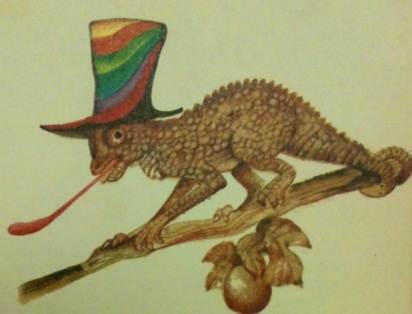
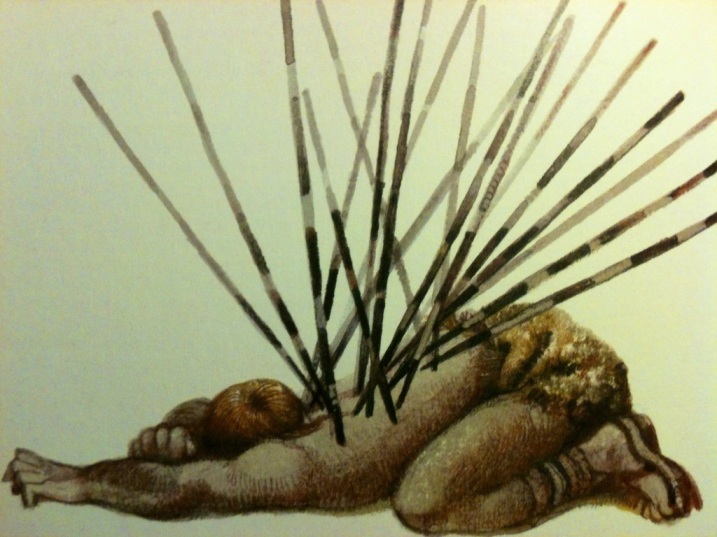
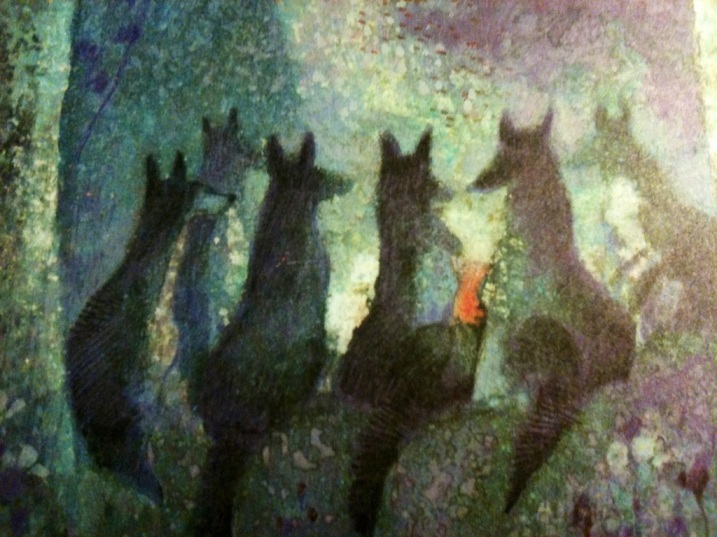
Karel Franta’s Marvelous Fairy Tale Illustrations

20130129-204614.jpg

My mother dropped off several boxes of books, comics, and papers I hadn’t delved into in probably 20 years—stuff I’d left at my parents’ house, intending to retrieve at some point. One book I reacquired was a Czechoslovakian folk and fairy tale collection with the nondescript name Animal Fairy Stories (retold by Alena Benesova and translated into English by Ruth Shepherd), a volume collecting over a hundred stories from all over the globe.

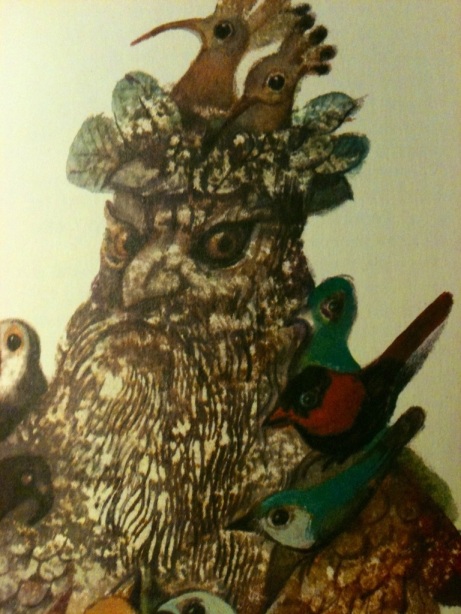
These stories had a tremendous impact on me as a child. Most describe a time “when the world was still young and everything was very different,” an amorphous, shifting world full of tricksters and their dupes, kings always precariously poised to fall and fail, interspecies cohabitation, and lots and lots of death. As important as these stories were in forming my reading habits and taste, the book’s illustrations by Czech artist Karel Franta had an even more profound and unsettling impact on my imagination. His strange, marvelous paintings somehow imprinted on my psyche, mixing in with the horror and joy and fascination that all those early stories entailed. Reading over a dozen animal tales with my own children last night, I was taken aback at how precisely each of Franta’s illustrations was etched into my brain, and how each image burned with its own special humor or terror or confusion or weird delight.

Below are a few of his paintings; I’ve tried to share a sampling that showcases his mix of strange pathos, unsettling humor, and dreamworld evocation.

20130129-204505.jpg

20130129-204450.jpg

20130129-204457.jpg

20130129-204512.jpg

20130129-204520.jpg

20130129-204529.jpg

20130129-204536.jpg

20130129-204544.jpg

20130129-204552.jpg

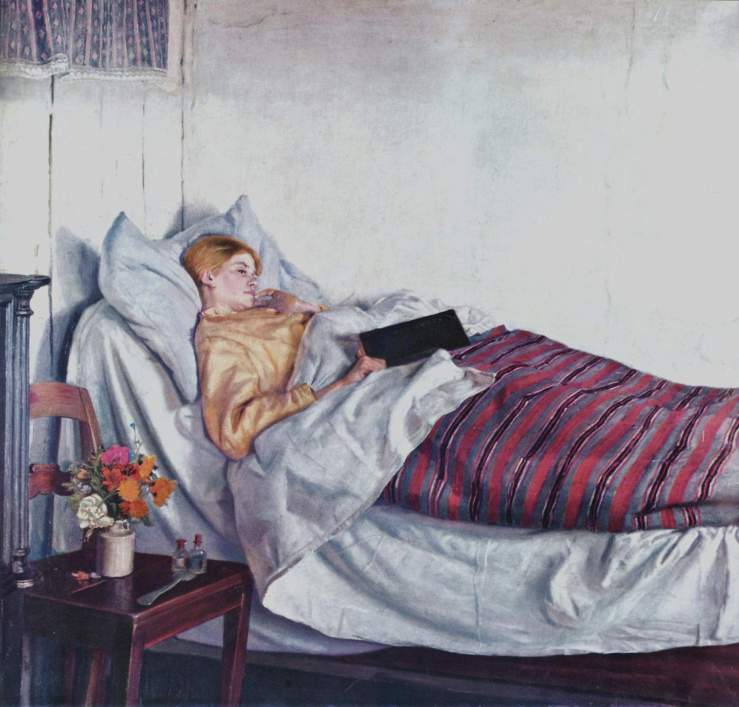
The Sick Girl — Michael Ancher

Michael_Ancher_001

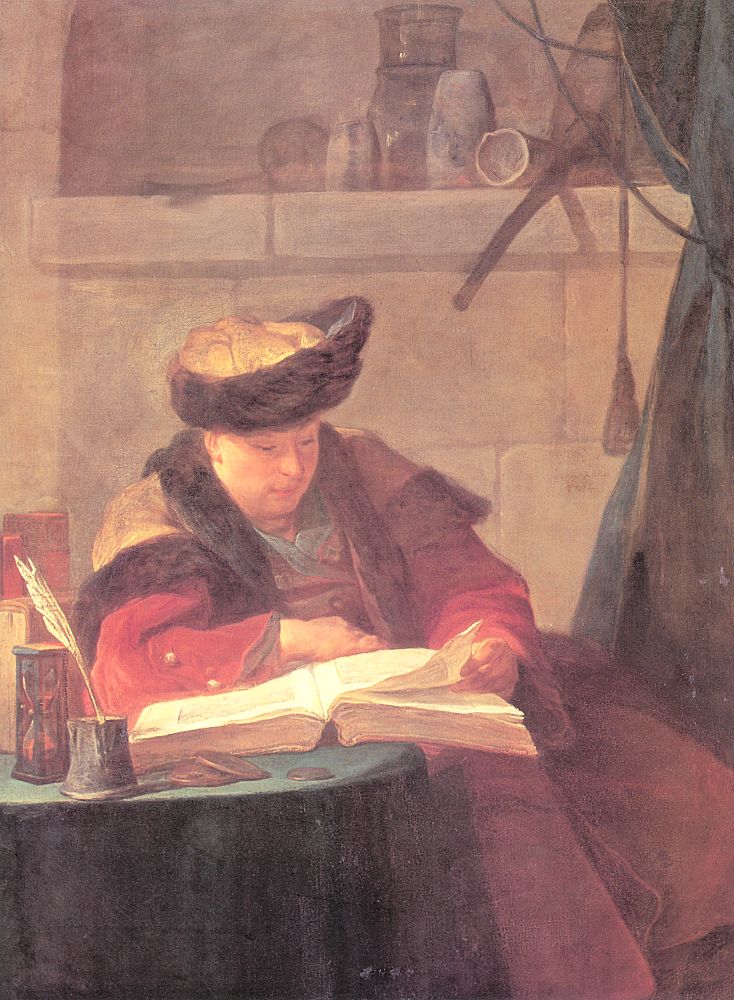
A Philosopher Giving a Lecture — Jean-Baptiste-Simeon Chardin

a-chemist-in-his-laboratory-a-philosopher-giving-a-lecture-1734

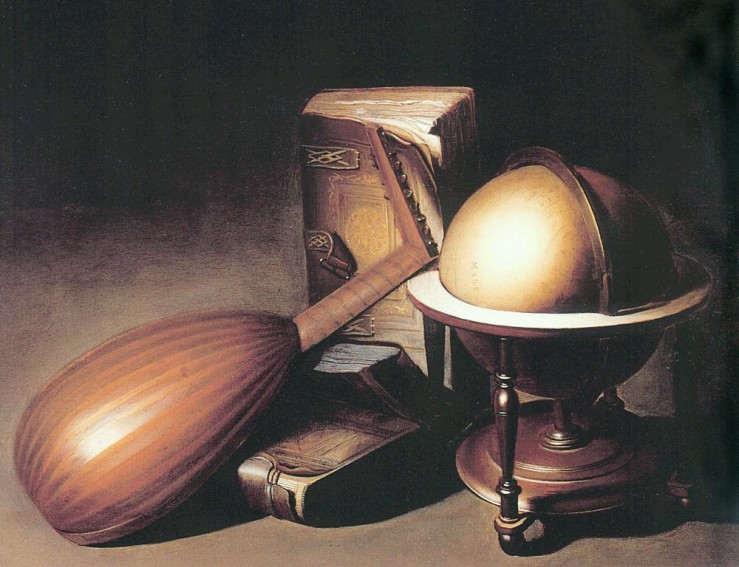
Still Life with Globe, Lute, and Books — Gerrit Dou

still-life-with-globe-lute-and-books

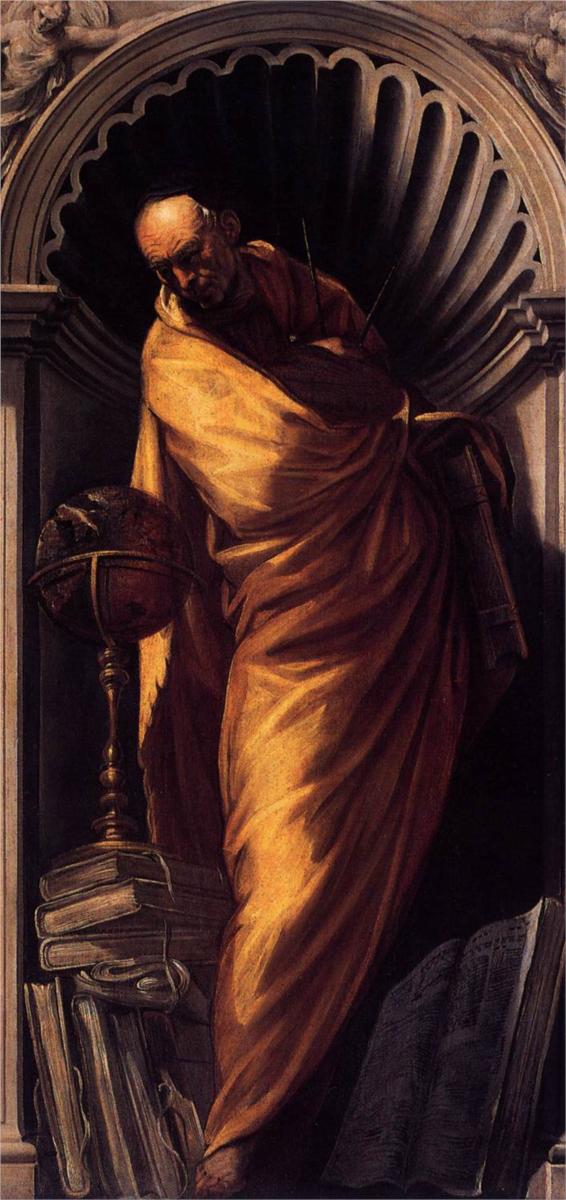
A Philosopher — Tintoretto

a-philosopher-1570.jpg!HD

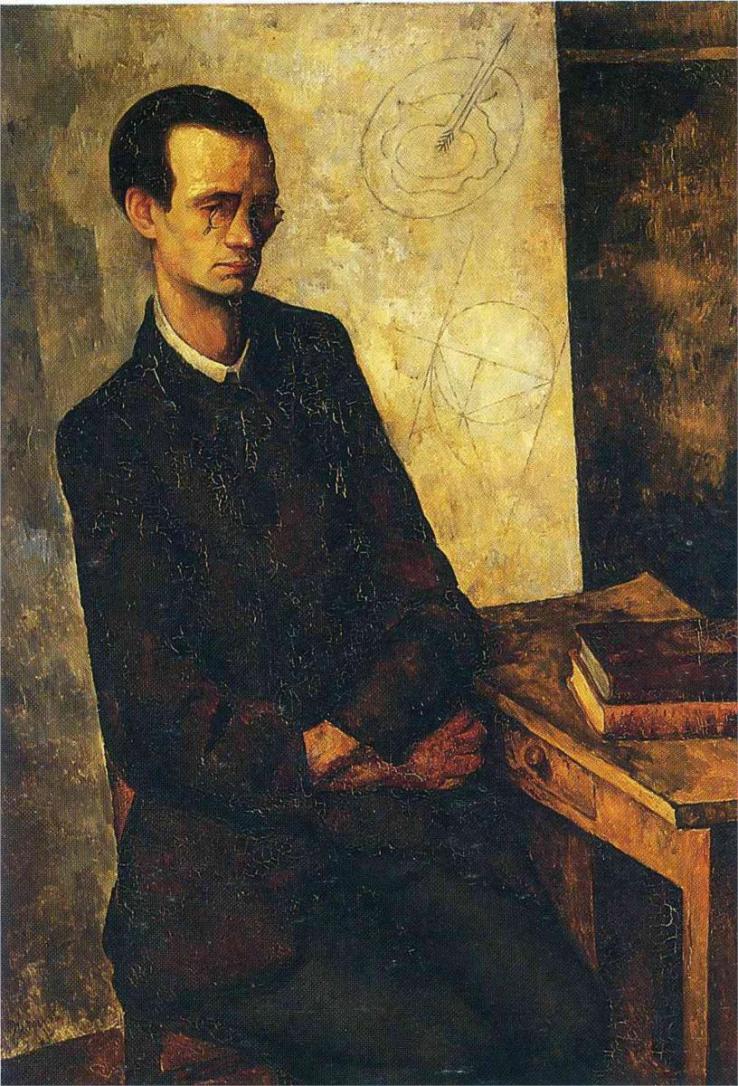
The Mathematician — Diego Rivera

the-mathematician-1918.jpg!HD

“The Stranger” — Katherine Mansfield

“The Stranger” by Katherine Mansfield

It seemed to the little crowd on the wharf that she was never going to move again. There she lay, immense, motionless on the grey crinkled water, a loop of smoke above her, an immense flock of gulls screaming and diving after the galley droppings at the stern. You could just see little couples parading—little flies walking up and down the dish on the grey crinkled tablecloth. Other flies clustered and swarmed at the edge. Now there was a gleam of white on the lower deck—the cook’s apron or the stewardess perhaps. Now a tiny black spider raced up the ladder on to the bridge.

In the front of the crowd a strong-looking, middle-aged man, dressed very well, very snugly in a grey overcoat, grey silk scarf, thick gloves and dark felt hat, marched up and down, twirling his folded umbrella. He seemed to be the leader of the little crowd on the wharf and at the same time to keep them together. He was something between the sheep-dog and the shepherd.

But what a fool—what a fool he had been not to bring any glasses! There wasn’t a pair of glasses between the whole lot of them.

“Curious thing, Mr. Scott, that none of us thought of glasses. We might have been able to stir ’em up a bit. We might have managed a little signalling. ‘Don’t hesitate to land. Natives harmless.’ Or: ‘A welcome awaits you. All is forgiven.’ What? Eh?”

Mr. Hammond’s quick, eager glance, so nervous and yet so friendly and confiding, took in everybody on the wharf, roped in even those old chaps lounging against the gangways. They knew, every man-jack of them, that Mrs. Hammond was on that boat, and that he was so tremendously excited it never entered his head not to believe that this marvellous fact meant something to them too. It warmed his heart towards them. They were, he decided, as decent a crowd of people—Those old chaps over by the gangways, too—fine, solid old chaps. What chests—by Jove! And he squared his own, plunged his thick-gloved hands into his pockets, rocked from heel to toe. Continue reading ““The Stranger” — Katherine Mansfield”

Woman Reading (Sketch) — Federico Zandomeneghi

woman-on-an-armchair

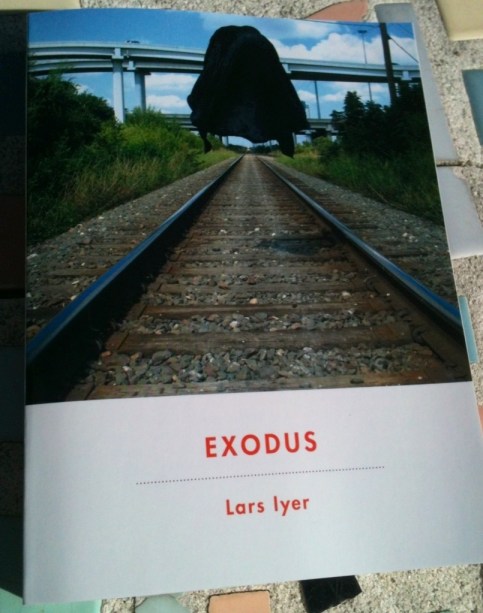
Lars Iyer’s Exodus (Book Acquired, 1.15.2013)

20130120-173952.jpg

Lars Iyer’s latest, Exodus presumably concludes the trilogy that began with Spurious and DogmaExodus picks up the adventures/failures of our tragicomic (anti)heroes Lars and W. Here’s publisher Melville House’s description:

With philosophy professors being moved to badminton departments and gin in short supply — although not short enough—the two hapless intellectuals embark on a relentless mission. Well, several relentless missions. For one, they must help gear a guerrilla philosophy movement — conducted outside the academy, perhaps under bridges — that will save the study of philosophy after the long intellectual desert known as the early 21st-century.

For another, they must save themselves, perhaps by learning to play badminton after all. Gin isn’t free, you know.

Exodus is on deck in my reading stack.  I talked to Lars a few years ago about Spurious (and other stuff), and he brought up the idea of “exodus” (as in the concept, not the book) early on:

As someone who had made some progress as an academic – a journey which implies valuable training as well as compromise and despair – I thought a kind of exodus was necessary, from existing forms of published writing. Leave it all behind!, I told myself. Leave the Egypt of introductory books and academic journals and edited collections behind. Leave the slave-drivers behind, and the sense you have of being a slave. Leave capitalism and capitalist relations behind. Leave behind any sense of the importance of career and advancement. Leave behind those relationships that are modeled on investment and return.

I love the cover on this one.


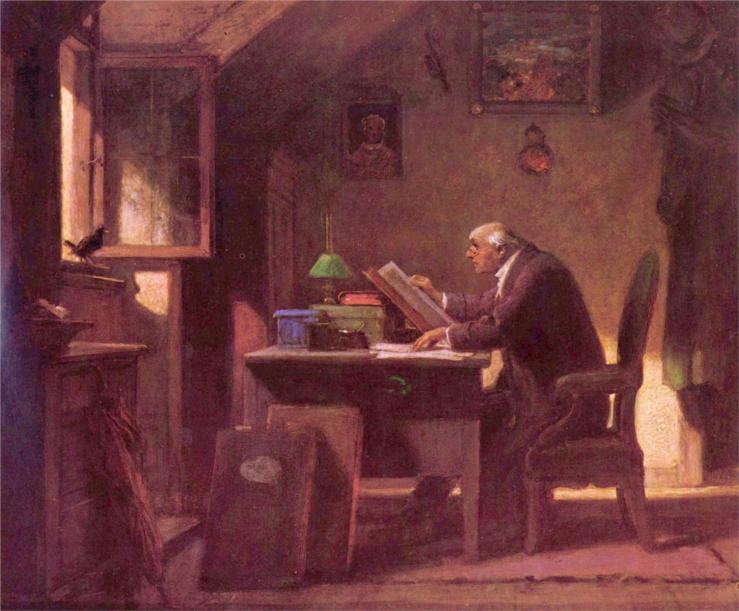
A Visit — Carl Spitzweg

a-visit.jpg!HD