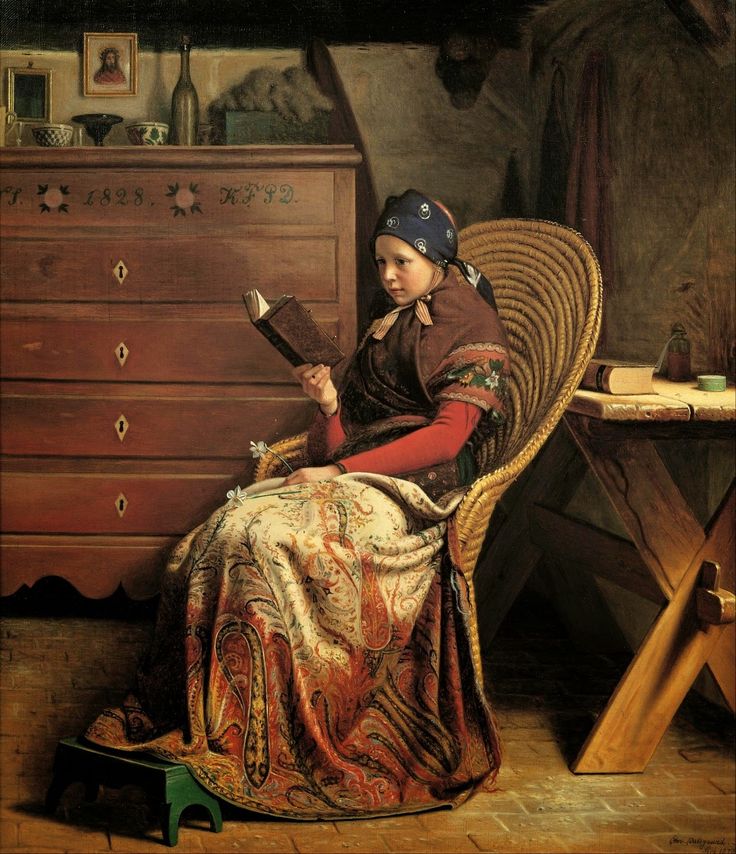
Waiting for a Loved One — Charles Joseph Grips

Selections from One-Star Amazon Reviews of Chinua Achebe’s Things Fall Apart

[Ed. note: The following citations come from one-star Amazon reviews of Chinua Achebe’s novel Things Fall Apart. (See also: Mary Shelley’s Frankenstein, Thomas Pynchon’s Gravity’s RainbowGeorge Orwell’s 1984, Herman Melville’s Moby-Dick, James Joyce’s Ulysses and David Markson’s Wittgenstein’s Mistress). I’ve preserved the reviewers’ own styles of punctuation and spelling].

There were too many details

no plot, lousy tales, and distant characters.

Gnerally, I am extremely open-minded about other cultures,

Don’t buy this unless you need it for some reason out of your control.

DOES THIS GUY EVEN KNOW WHAT THE FUDGE HE IS TALKING ABOUT!

I read two chapters and quit It was horrible, and I say BAH!!!!!!!!!BAH!!!!!!!and a BOOOOOOOO!!!!!

This is one of those “politically correct” books they force you to read in school, in hope of “broadening our horizons” and “opening our minds.”

The main character had a lot of mental problems, including violence, chauvinism, and overambition to become the ‘model citizen’ of his tribe. I had no sympathy for him, neither should you.

Throught the book the auther keeps bringing in new charecters that have almost the identicle spelling of another and it gets very confusing

While Chinua Achebe claims to be an African freedom activist, her(? I can never figure out these new-fangled names) style of writing is stereotypical of the reactionary Brench and their quest to retain Africa.

The author seems to have some sort of infatuation with yams, because the entire book revolves around idiotic descriptions of yams and characters struggling with their declining yam output.

I found this story went no where, there were no real accomplishments done by the main character, his could have check in to an asylum for a year, dealt with his tribal issues, what he missed out on as a kid, came back to his tribe and really made a difference with his people. Instead, we just see some ones life that just gets worse.

This story could have been told in about 20 pages, but streches out into a full book that finally makes a point in the very last pages. Achebe’s work needs some fine tuning.

Why coudln’t they just at least change the names you could at least pronoucne it, ne ways if you plan on reading it, your want lots of time, so u can understand it.

“THINGS FALL APART” IS LIKE ABOUT A GUY WHO GROWS YAMS AND BEATS HIS FAMILY, AND IT JUST TALKS ABOUT THAT THE WHOLE TIME ITS A TERRIBLE HORRIBLE BOOK!

Almost nothing happens for the first 100 pages except we find out that he has three wives and he beats his kids. GREAT, That took 100 pages to say!!

If your looking for a good novel about African people by an African writer, it’s not here. Try Toni Morrison.

Anyone with sense would be rooting for the imperialists by the end of this book.

the writer is only famous because he is a minority.

the story have no point at all.

It draged on and on.

It was like reading a quick obituary.

the names are way too hard to pronounce.

All you never wanted to know about yams… and other such things

This book is way too confusing for the average reader (I am an honors student) and even the more advanced reader would find difficulty reading this book.

Better by far to have young atudents enjoy ayn rand tom woods and john allison milton friedman and peter schiff adn be poastive free neterpirse and successful.

the only thing you’ll enjoy is saying Okwonko over and over again

This makes Africa look worse, not better….

No one cared about Okonkwo’s yams!

How DARE we let children read this book.

it just SUXED

In retrospect, the story lived up to it’s name.

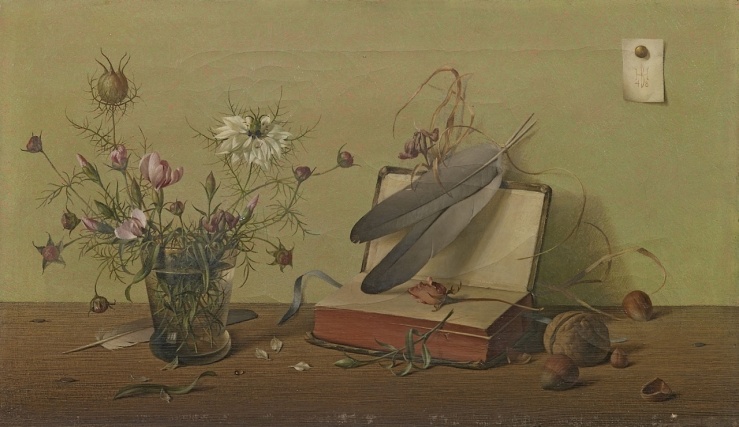
Still Life with Flowers, Book, Nuts and Feathers — Herbert Böttger

tumblr_nf3d7fgU9u1rwu8obo1_1280

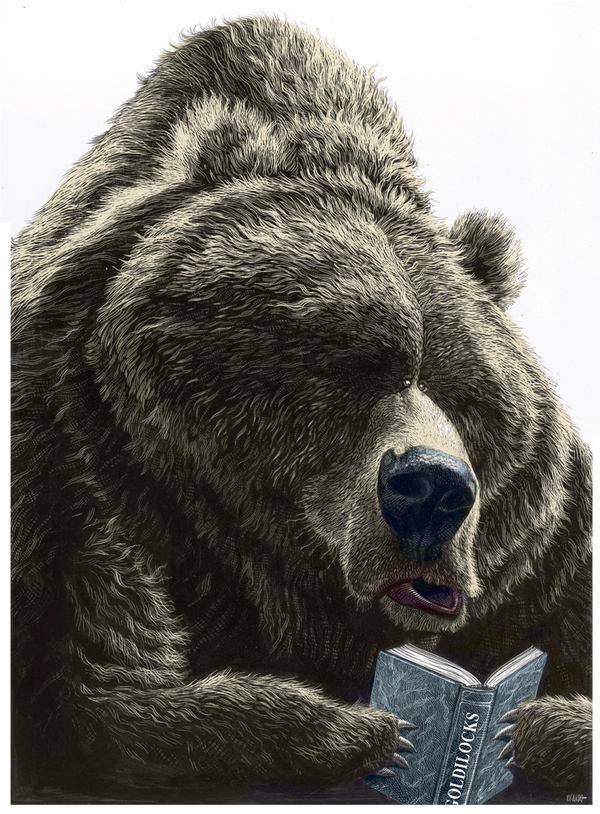
Goldilocks — Ricardo Martinez

419c70eccd30c17f71836912aea2a650

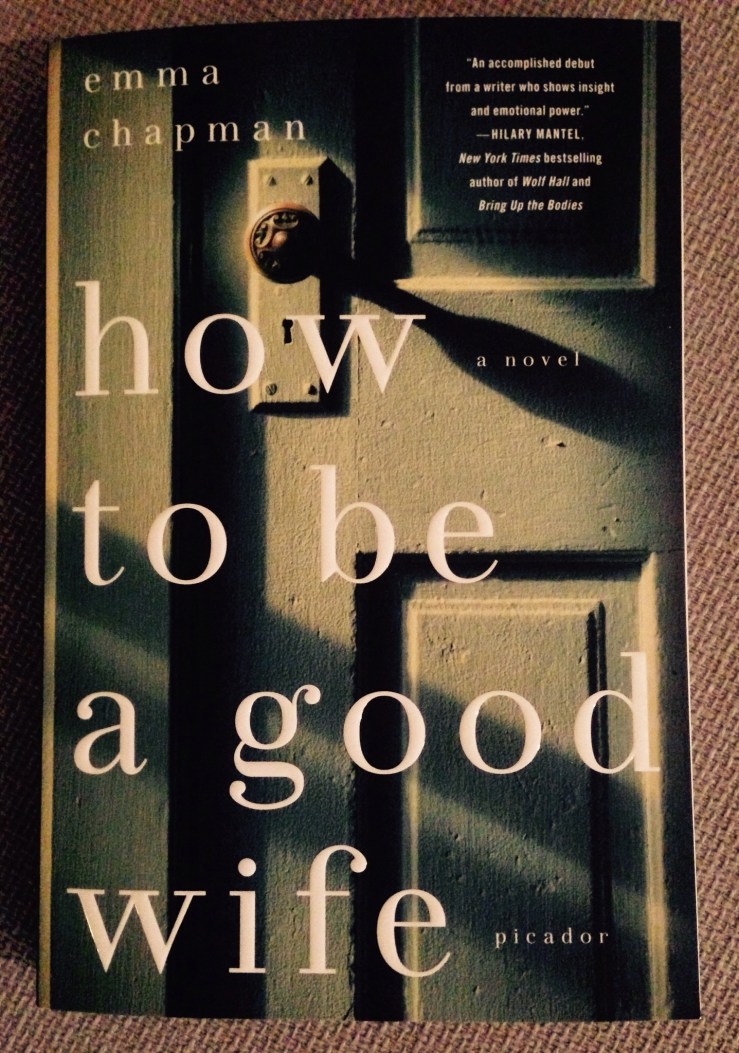
How to Be a Good Wife (Book Acquired, Some Time in October, 2014)


IMG_3591.JPG

Emma Chapman’s novel How to Be a Good Wife is new in trade paperback from Picador. Their blurb:

Marta and Hector have been married for a long time. Through the good and bad; through raising a son and sending him off to life after college. So long, in fact, that Marta finds it difficult to remember her life before Hector. He has always taken care of her, and she has always done everything she can to be a good wife—as advised by a dog-eared manual given to her by Hector’s aloof mother on their wedding day.

But now, something is changing. Small things seem off. A flash of movement in the corner of her eye, elapsed moments that she can’t recall. Visions of a blonde girl in the darkness that only Marta can see. Perhaps she is starting to remember—or perhaps her mind is playing tricks on her. As Marta’s visions persist and her reality grows more disjointed, it’s unclear if the danger lies in the world around her, or in Marta herself. The girl is growing more real every day, and she wants something.

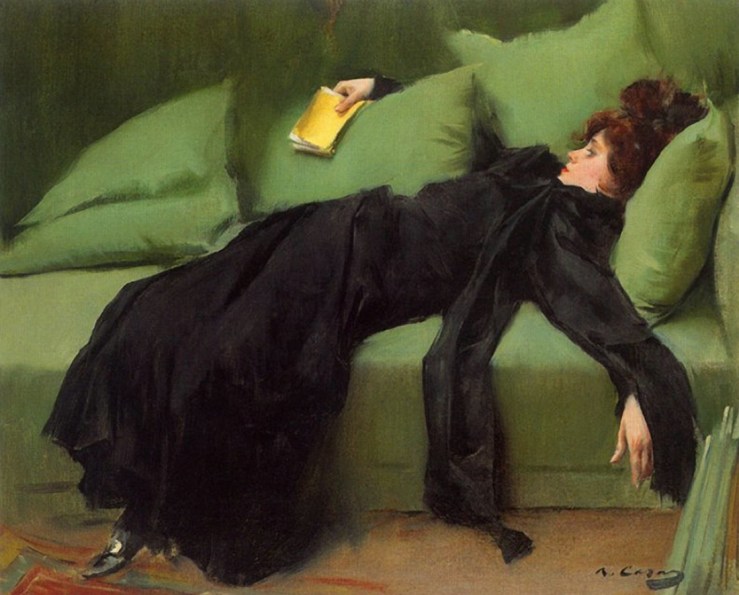
Young Decadent — Ramón Casas

ramon-casas-tumblr_mu5wrrws0w1rrnekqo1_1280

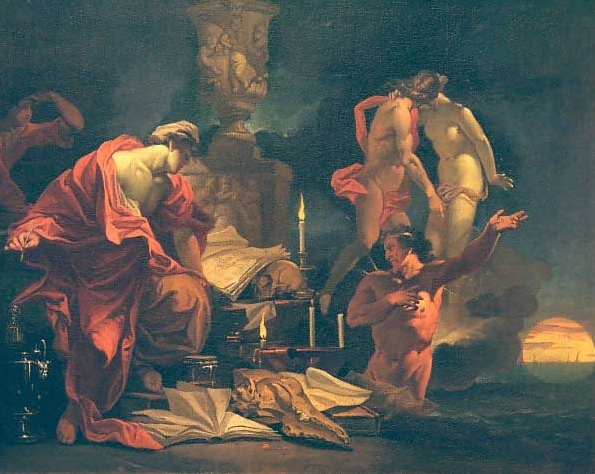
Astrologer — Domenicus van Wijnen

photo_wiki-wijnen_dominicus_van_-_astrologer_observing_the_equinox_-_c-_1680

Reading by the Lamp (Schoolgirl) — Nikolay Bogdanov-Belsky

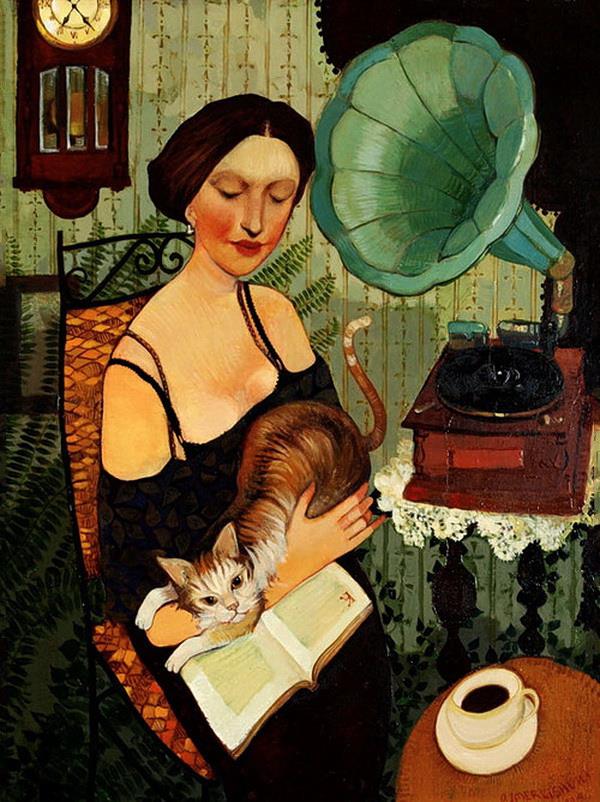
The Girl with the Book — Otar Imerlishvili

0_c3132_38486612_orig

The Blue Room — Suzanne Valadon

Yellow Spectrum — Frantisek Kupka

Blossom (Detail) — Rustam Qbic

qbic-2

Stephen Collins’s Allegorical Fable The Gigantic Beard That Was Evil Reviewed

IMG_3543

Stephen Collins’s début graphic novel The Gigantic Beard That Was Evil tells the story of Dave, an especially average (forgive the oxymoron) guy in the neat-and-tidy island of Here, a place where conformity rules and difference is unthinkable. Dave fits like a cog into his tidy world until a beard erupts from his face, severing him from society.

IMG_3865.JPG

Despite its neat and tidy contours, an omnipresent dread of otherness gestates in the egg-shaped isle of Here. That dread manifests in the fabled land of There. Dave’s psyche is haunted by There; its very existence threatens both body and mind. Collins renders this anxiety in a remarkable series of panels that concretize Dave’s nightmare of otherness:

IMG_3873

Dave’s nightmare highlights his subconscious realization that there cannot be a Here without a There. The realization leaves him abject, torn, and destabilized, even before his beard appears. When the first hairs do arrive, Dave’s interior existential crisis spills outward, his messy difference oozing out to disrupt and upset the tidy normalcy of Here.

IMG_3867.JPG

Poor Dave.

IMG_3871.JPG

The beard quickly becomes a national emergency requiring enormous resources. Police, military, the media, and eventually the entire society become entangled in the crisis. United against a common foe, the citizens of Here are nevertheless distracted, letting their grooming habits slip. Things become less tidy. In their battle against the beard, they overlook the greater war on weird.

IMG_3868.JPG

The Gigantic Beard That Was Evil is an allegorical fable. Collins attacks conformity and fear of otherness, but also depicts just how complex and horrifying otherness can be. While the island of Here is clearly a stand-in for England, Collins’s satire of xenophobia and the dangers of groupthink will resonate pretty much everywhere. All kinds of 21st-century anxieties writhe under the text: fear of immigration, the collapse of cultural homogeneity, ecological devastation—the end of a particular way of life. The angry mob castigating poor Dave call him a terrorist, but they are the authors of their own terror.

IMG_3874

In an unexpected and rewarding fourth act, Collins examines the aftermath of what comes to be known as “The Beard Event.” The Untidiness that happened while the citizens of Here were distracted dealing with Dave becomes the new normal. Fits of nonconformity inevitably become trends, then commodities.

IMG_3869.JPG

The Beard Event eventually becomes “A story many times retold and resold,” complete with its own museum (enter through the gift shop). Collins offers a clear depiction of difference—how it’s first feared, then resisted and attacked, and eventually absorbed and recycled.

I’ve tried to offer enough of Collin’s words and art to convey a sense of his simple but refined style. His lines are often gentle and always precise, his subtle shading all the color this tale needs. The Gigantic Beard That Was Evil succeeds visually on the strength of Collins’s pacing and panel design. Collins seamlessly integrates his prose into the panels, moving the story along in a lilt of rhymes and non-rhymes evocative of Edward Gorey or Roald Dahl. Collins nimbly avoids the potential pitfalls of preachiness or meaningless absurdity here, leading to a confident and convincing début. I look forward to more. Great stuff.

The Gigantic Beard That Was Evil is now available in the United States in hardback and ebook from Picador.

Portrait of Zacharie Astruc — Edouard Manet

Cynthia — William Strang

Witches Ready to Fly — Francisco Goya

Dream of Reason — Fritz Eichenberg

dream of reason