Alexeieff’s “Usher” Aquatints, Lovecraft’s Dagonic Covers, and Henson’s Monster Maker

Halloween fun time:

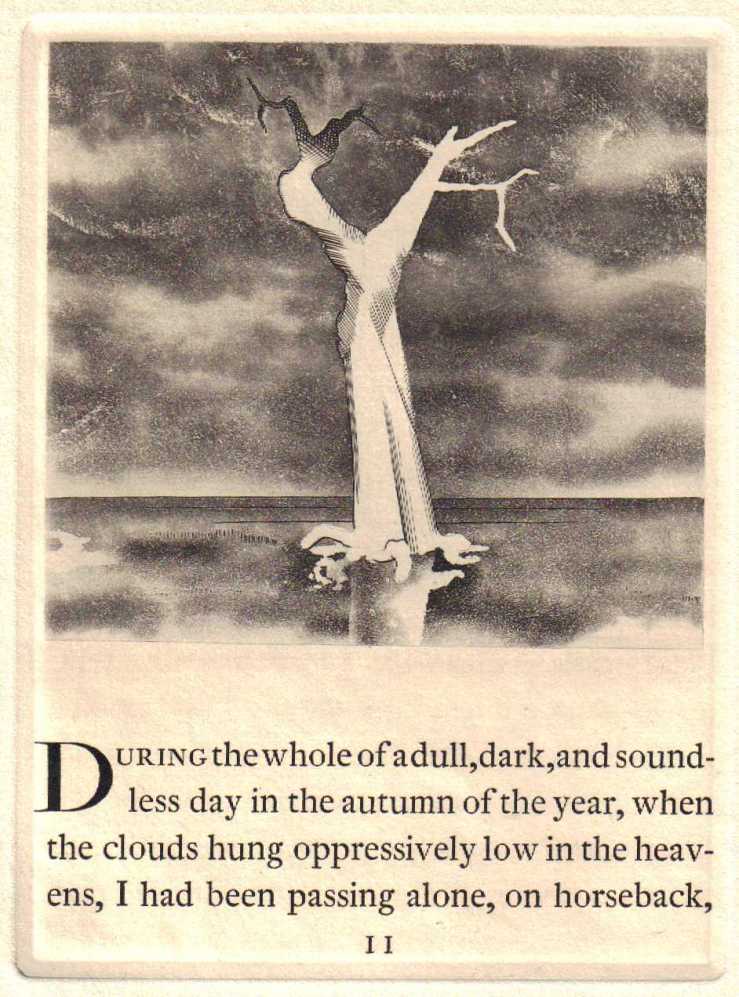
Excellent gallery of Alexander Alexeiff’s aquatint illustrations for Edgar Allan Poe’s short story, “The Fall of the House of Usher” via A Journey Round My Skull (what a fantastic site).

poe

Alexeieff’s moody tints and stark designs beautifully match Poe’s gloomy tale. (We just love the lyrical and melancholy opening paragraph–all those thudding ds, low, somber o’s, and lilting ls). His rendering of Usher’s maniac composition is particularly ethereal:

poe2

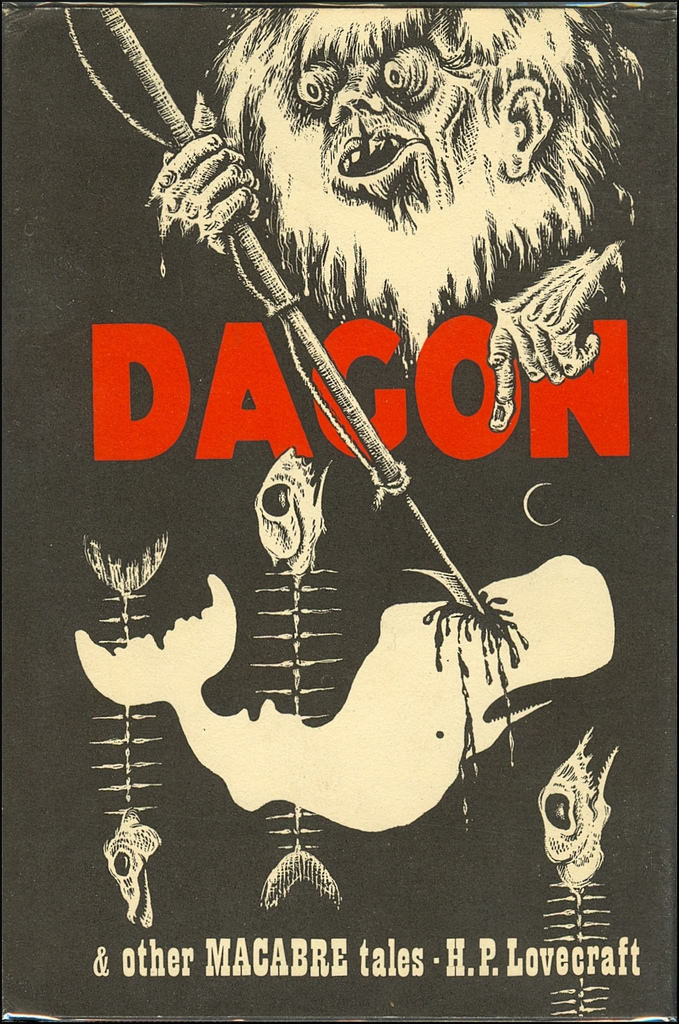
For more Halloween fun, check out this gallery of HP Lovecraft covers via Fantasy Ink. Spooky (and, alternately goofy) designs. We like this jam:

dagon

If you like your pictures moving and with sound yet still highly-stylized, check out Jim Henson’s “The Monster Maker,” from Henson’s short-lived but well-beloved series The Jim Henson Hour.

Seven Horror Novels Masquerading In Other Genres

We often identify genre simply by its conventions and tropes, and, when October rolls round and we want scary stories, we look for vampires and haunted houses and psycho killers and such. And while there’s plenty of great stuff that adheres to the standard conventions of horror (Lovecraft and Poe come immediately to mind) let’s not overlook novels that offer horror just as keen as any genre exercise. We offer seven horror novels masquerading in other genres:

cormac5.jpg_jpeg_300x1000_q85

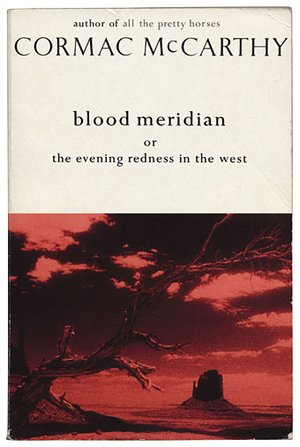
Blood Meridian — Cormac McCarthy

In our review (link above) we called Blood Meridian “a blood-soaked, bloodthirsty bastard of a book.” The story of the Glanton gang’s insane rampage across Mexico and the American Southwest in the 1850s is pure horror. Rape, scalping, dead mules, etc. And Judge Holden. . . [shivers].

Rushing to Paradise — J.G. Ballard

On the surface, Ballard’s 1994 novel Rushing to Paradise seems to be a parable about the hubris of ecological extremism that would eliminate humanity from any natural equation. Dr. Barbara and her band of misfit environmentalists try to “save” the island of St. Esprit from France’s nuclear tests. The group eventually begin living in a cult-like society with Dr. Barbara as its psycho-shaman center. As Dr. Barbara’s anti-humanism comes to outweigh any other value, the island devolves into Lord of the Flies insanity. Wait, should Lord of the Flies be on this list? 

2666 — Roberto Bolaño

Okay. We know. This book ends up on every list we write. What can we do?

While there’s humor and pathos and love and redemption in Bolaño’s masterwork, the longest section of the book, “The Part about the Crimes,” is an unrelenting catalog of vile rapes, murders, and mutilations that remain unresolved. The sinister foreboding of 2666‘s narrative heart overlaps into all of its sections (as well as other Bolaño books); part of the tension in the book–and what makes Bolaño such a gifted writer–is the visceral tension we experience when reading even the simplest  incidents. In the world of 2666, a banal episode like checking into a motel or checking the answering machine becomes loaded with Lynchian dread. Great horrific stuff.

King Lear — William Shakespeare

Macbeth gets all the propers as Shakespeare’s great work of terror (and surely it deserves them). But Lear doesn’t need to dip into the stock and store of the supernatural to achieve its horror. Instead, Shakespeare crafts his terror at the familial level. What would you do if your ungrateful kids humiliated you and left you homeless on the heath? Go a little crazy, perhaps? And while Lear’s daughters Goneril and Regan are pure mean evil, few characters in Shakespeare’s oeuvre are as crafty and conniving as Edmund, the bastard son of Glouscester. And, lest we forget to mention, Lear features shit-eating, self-mutilation, a grisly tableaux of corpses, and an eye-gouging accompanied by one of the Bard’s most enduring lines: “Out vile jelly!Peter Brook chooses to elide the gore in his staging of that infamous scene:

The Trial — Franz Kafka

Kafka captured the essential alienation of the modern world so well that we not only awarded him his own adjective, we also tend to forget how scary his stories are in light, perhaps, of their absurd familiarity. For our money, none surpasses his unfinished novel The Trial, the story of hapless Josef K., a bank clerk arrested by unknown agents for an unspecified crime. While much of K.’s attempt to figure out just who is charging him for what is hilarious in its absurdity, its also deeply dark and really creepy. K. attempts to find some measure of agency in his life, but is ultimately thwarted by forces he can’t comprehend–or even see for that matter. Nowhere is this best expressed than in the famous “Before the Law” episode. If you’re too lazy to read it, check out his animation with narration by the incomparable Orson Welles:

Sanctuary — William Faulkner

In our original review of Sanctuary (link above), we noted that “if you’re into elliptical and confusing depictions of violence, drunken debauchery, creepy voyeurism, and post-lynching sodomy, Sanctuary just might be the book for you.” There’s also a corn-cob rape scene. The novel is about the kidnapping and debauching of Southern belle Temple Drake by the creepy gangster Popeye–and her (maybe) loving every minute of it. The book is totally gross. We got off to a slow start with Faulkner. If you take the time to read our full review above (in which we make some unkind claims) please check out our retraction. In retrospect, Sanctuary is a proto-Lynchian creepfest, and one of the few books we’ve read that has conveyed a total (and nihilistic) sense of ickyness.

n14559

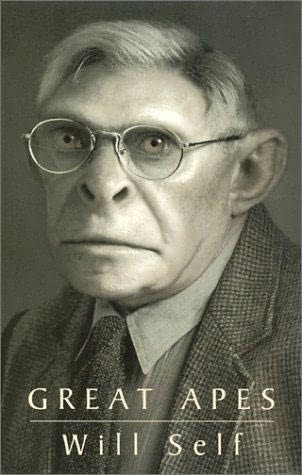
Great Apes — Will Self

Speaking of ickiness…Self’s 1997 novel Great Apes made me totally sick. Nothing repulses me more than images of chimpanzees dressed as humans and Great Apes is the literary equivalent (just look at that cover). After a night of binging on coke and ecstasy, artist Simon Dykes wakes up to find himself in a world where humans and apes have switched roles. Psychoanalysis ensues. While the novel is in part a lovely satire of emerging 21st-century mores, its humor doesn’t outweigh its nightmare grotesquerie. Great Apes so deeply affected us that we haven’t read any of Self’s work since.

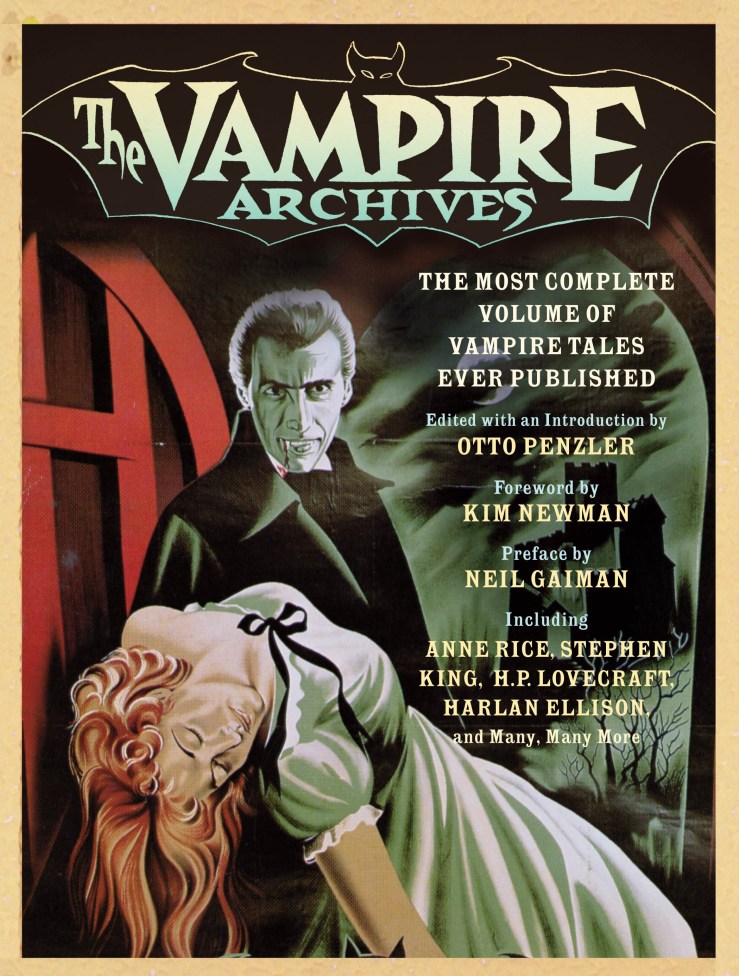
The Vampire Archives

Vampire Archive 4

In his short foreword to Vintage’s massive, new, decidedly unshort The Vampire Archives, Neil Gaiman dryly observes, “And then, one day, they were everywhere. You couldn’t move for vampires. There were paranormal vampire romances and junior paranormal vampire romances . . . Everywhere vampires, stripped down like a simple metaphor for genitalia-free relationships.” We know that vampires are ubiquitous in the late oughties, whether its the turgid teen abstinence vampire theatrics of Twilight,  HBO’s addictive interpretation of Charlaine Harris’s Sookie Stackhouse series, True Blood, the CW’s latest attempt to cash in, The Vampire Diaries or last year’s fantastic film Let The Right One In. Gamian’s theory for the thriving popularity of vampires (he agrees with Stephen King by-way-of Erica Jong that “Vampires . . . were the ultimate zipless fuck”) is as good as any, we suppose, but The Vampire Archives editor Otto Penzler is a bit more historical in his introduction to the volume, pointing beyond the traditionally-accepted notion that Stoker’s Dracula is the first vampire story. Penzler brings up Lilith, the children of Hecate, Lamia, the Chinese monster Kian-si, brain-suckers of American Indian lore, the Scottish Glaistag, and the Brazilian jararaca–just to name a few. He also briefly discusses the lurid histories of Countess Elizabeth Bathory, who believed the blood of virgins would sustain her life, die-hard mad prophet Rasputin, and Vlad the Impaler, the historical basis of Count Dracula. Penzler’s eclectic overture here tellingly highlights the diversity of the 85-plus tales collected in the book.

There are “Pre-Dracula” stories here, like Edgar Allan Poe’s gloomy “Ligeia” and M.E. Braddon’s “Good Lady Ducayne,” as well as classic standards like Bram Stoker’s “Dracula’s Guest” and Jan Neruda’s “The Vampire.” Heavy-hitters like D.H. Lawrence and Guy de Maupassant are represented along with the pop fictions of Stephen King and Clive Barker. Especially welcome are Harlan Ellison’s insightful piece “Lonely Women Are the Vessels of Time” and Richard Matheson’s taut tale “Drink My Red Blood.” Writers often identified readily with genres other than horror, like Ray Bradbury, Tanith Lee, and Sir Arthur Conan Doyle also appear, along with a couple of Romantic poems by Goethe, Byron, and John Keats (while the inclusion of “La Belle Dame sans Merci” is great, it’s weird that The Vampire Archives doesn’t have just a little more room for Keats’s excellent “Lamia.” They could’ve also included Coleridge’s “Christabel,” but hey, we can hardly dispute their claim that the book is “The Most Complete Volume of Vampire Tales Ever Published”). Anne Rice pops up, naturally, with “The Master of Rampling Gate,which wasn’t too emo for our icy blood. We also enjoyed H.P. Lovecraft’s creepy and sinuous story “The Hound.” Grave-robbers, weird amulets, ghoulish killers–great stuff.

If you can’t find enough to feed your need for vampire tales in The Vampire Archives, they’ve been kind enough to include what has to be, at 120 pages, one of the most extensive vampire bibliographies ever–although they note that their list does not include “comics, games, movies, plays, television, or radio programs.” While not every story here is gold, more than most of The Vampire Archives is great gothic fun, whether you dig pulp fiction or psychological realism in your horror. If you’re ready to take the next step past Twilight–you’re not a poseur, are you?–The Vampire Archives is an apt starting place.

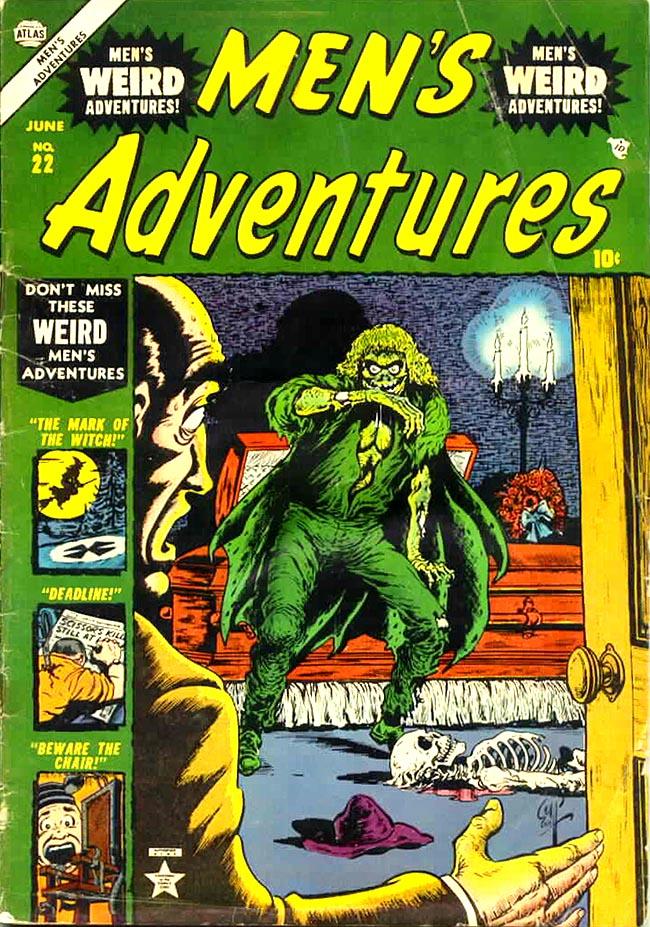
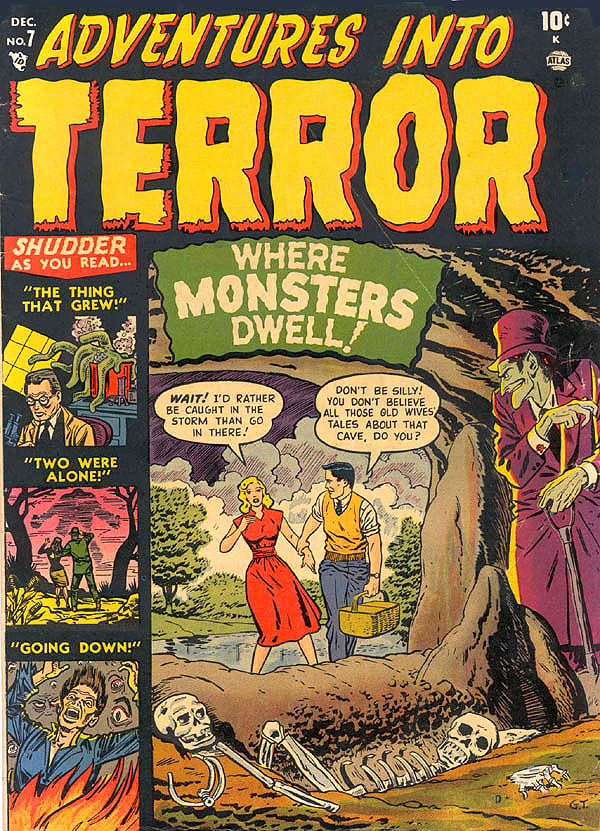
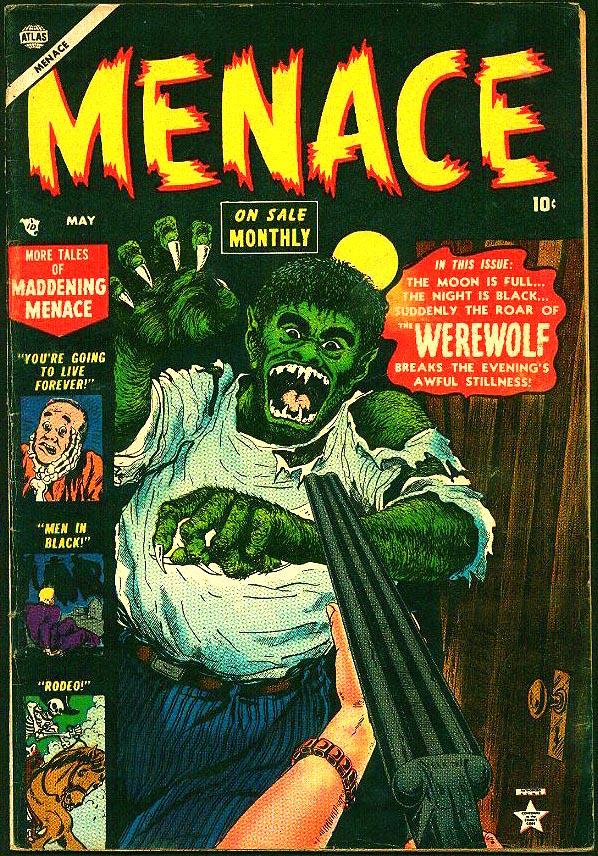
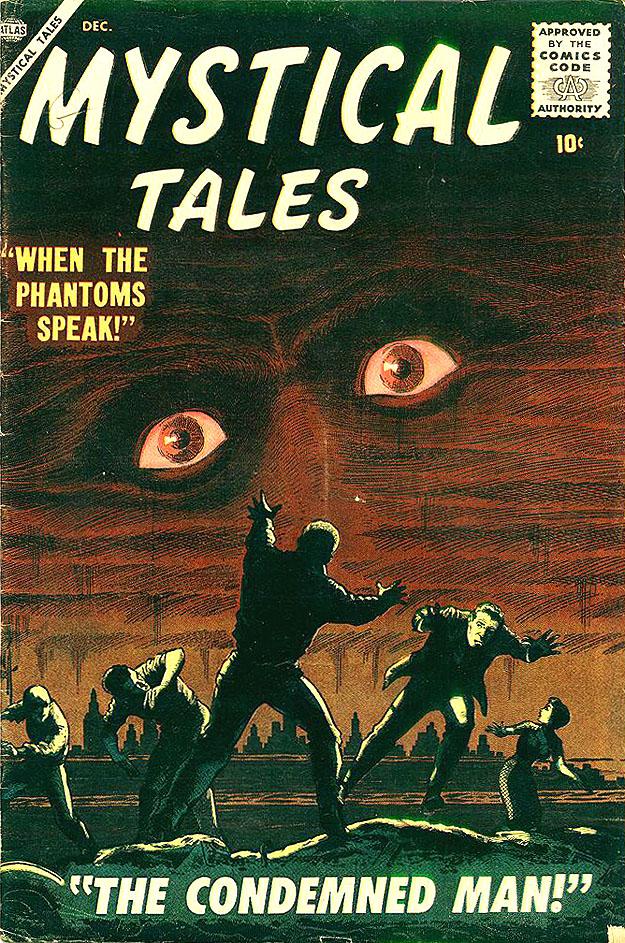
Strange Tales of the Unusual, Men’s Weird Adventures, and All Sorts of Marvelous Horror

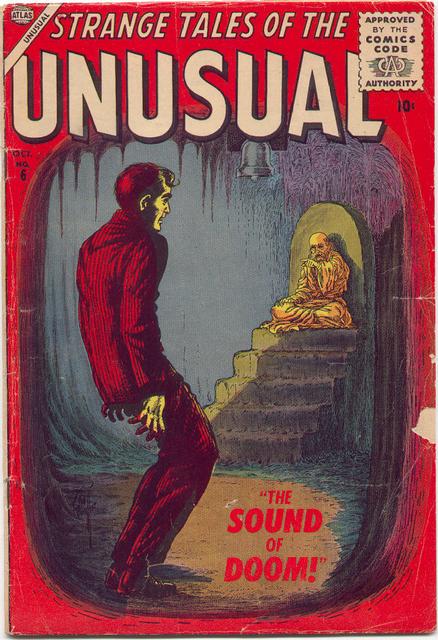
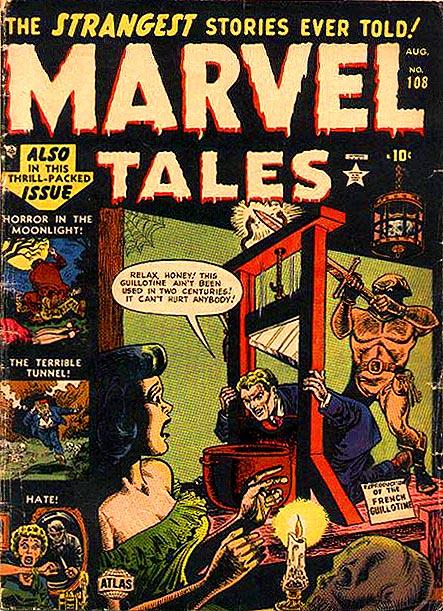
Let’s kick off Halloween week right by analyzing some old horror comic book covers from the 1950s.

I love this one: the jagged posture, the bloody reds, the weird mystic guy. And what can beat a title as redundant as Strange Tales of the Unusual?

Of course, all of these titles are strange, except when they’re weird or uncanny or unusual. Or mystical. But honestly, what’s so strange about putting your head in an old guillotine? I mean, seriously, relax. Who hasn’t put their neck on the chopping block like this. Literally, that is. (I love the bottom corner panel that just says “HATE!” incidentally).

Let me be clear on this: I am a man. Further, I am a manly man. Therefore, I require–no, demand–only men’s adventures. Further, I require my adventures to be weird. And not just slightly weird. I need creepy-green-gay-zombie weird. I need mark-of-the-witch weird. Newspaper-oriented-murder weird. Chair weird!

This comic is a clear forerunner of all those eighties slasher films that warned against teenage sex. Look at all the sexual anxiety here: “THE THING THAT GREW!”? “TWO WERE ALONE!”? “GOING DOWN!”? Jeez! Or, alternately, I am a pervert who sees sex everywhere. But seriously, don’t go into caves, kids.

My grandpa always taught me that the only thing more maddeningly menacing than a werewolf is a green werewolf.

Nothing snarky to say about this one: it’s beautiful. But really, I love them all.

All images from the Timely-Atlas Cover Gallery of old horror comics covers. Great stuff.

AFI’s Stupid Lists: No Love for Horror

The wankers at the American Film Institute just released their lists of top ten films by “genre” (full lists after the jump). Everyone loves to quibble with lists, and there’s plenty weird with theirs. First off, “Animation” is a medium, not a genre. That’s like calling comic books a genre, or TV a genre. But whatever. Also, Shrek on anyone’s top ten is always a bad sign–still, they give Blue Velvet its due and give Groundhog Day some props). What I thought was really odd was that AFI finds room to recognize a “Sports” genre (and on that end, are Raging Bull and Caddyshack really sports movies?), and even a “Courtroom Drama” genre, but doesn’t make a list of the great horror films. Why?

Here’s our list of the great American horror films. We’re sure we’re forgetting a bunch. This blog has been a slapdash affair lately.

1. Night of the Living Dead (the original)

2. Psycho (clearly, not Van Sant’s remake)

3. Alien

4. The Shining

5. Dawn of the Dead (the original)

6. Rosemary’s Baby

7. Re-animator

8. The Thing (John Carpenter)

9. Evil Dead 2

10. Texas Chainsaw Massacre (the original)

Continue reading “AFI’s Stupid Lists: No Love for Horror”

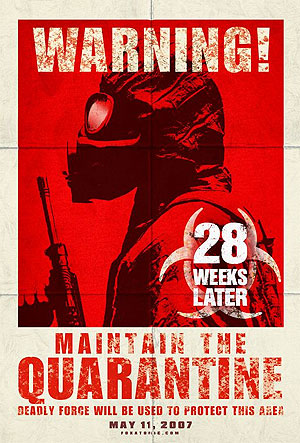
Mom and Pop are Zombies!–The Infanticidal Structure of 28 Weeks Later

As that most sacred of holidays, Halloween, draws closer, Biblioklept begins our annual celebration with a review of 28 Weeks Later, the sequel to future cult classic 28 Days Later. Look forward to all kinds of horror for the rest of the month!
28wks.jpg

At Sam Kimball’s talk at UNF last week, he put forth several ideas that would not be wholly unfamiliar to students and former students of his, or to anyone who’s read his book, The Infanticidal Logic of Evolution and Culture. Just a few of these ideas: cultural and biological evolution rests on an encoded infanticidal threat that no one wants to own up to, existence costs, and the ability of humans to smile represents a Darwinian miracle. The first two of these ideas provide an excellent lens from which to examine 28 Weeks Later; however, I’m not going to strain myself looking for smiles or hope in this awfully bleak, absolutely horrific movie.

It’s instructive to begin with a paraphrase of the infanticidal logic Kimball suggests underpins social order, and I think that can be done best by using Kimball’s own re-reading of the Oedipus story. The story of Oedipus, who outwits the Sphinx, kills his father, marries his mother, brings a plague to his city, and then stabs out his eyes, is–and here comes an understatement–a story foundational to psychoanalysis. In most readings, Oedipus is the tragically flawed hero who brings shame, disease, sin, and death to an entire society through his multiple transgressions. Kimball points out that most readings of this story focus on Oedipus’ relationship with his mother and father (sex and death), and that little attention is paid to the very beginning of the story. Recall now that the infant Oedipus is cast by his royal parents (metonymy for all parents), feet bound, into the wilderness to die, for fear that he will bring about chaos and death. The story is thus initiated in an infanticidal gesture, the willingness to kill a child for the good of the family, the tribe, the kingdom (see: Abraham and Isaac, Saturn gobbling his kids, Noah and flood, the crucifixion of Christ, etc. etc. etc.). Kimball sees structural infanticide as the blame for sin and corruption and death being put on the child; Oedipus is not the sinner in this reading, but the one who has been wronged from the beginning. Let’s see if we can’t apply some of this to a zombie flick. And, uh, a SPOILER WARNING is in order, I suppose (although I don’t think anything I’ll write can really spoil this film).

saturngoya450w20q.jpg

28 Weeks Later opens up with a last supper, the communion of a childless, makeshift family who’ve managed to avoid the infected zombies that plague Britain, spreading murder and chaos wherever they go. The communion is interrupted by a child who bangs on the door. After some indecision, he’s admitted by the wary adults, who ask him, of course, “What happened?” “My parents…they tried to kill me,” he answers. Within minutes of his arrival, the zombies are at the door, ready to spread their infection, annihilating the dinner party: the child, on the run from his infanticidal parents, brings disease and death to the community. Only Don (Robert Carlyle) escapes, and he does so by abandoning his wife, who clings to the newly arrived child.

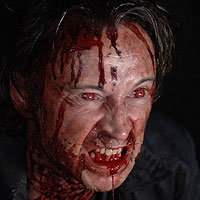
Twenty-eight weeks later, the US military has quarantined part of London, and begun the repatriation of British citizens, including Don’s son and daughter, Andy and Tammy (played by the improbably named Mackintosh Muggle and Imogen Poots). Chief medical officer, Major Ross is deeply upset when she sees the children disembark the plane, declaring that the Green Zone the US military has established is not equipped for kids. Furthermore, she points out that they know little about the disease, and that kids might actually facilitate spreading it. Sure enough, Andy and Tammy run away from the Green Zone, heading back to their apartment, where they find Mom, who’s gone feral. Their Mom has some kind of genetic resistance to the effects of the disease (figured in her mismatched brown and blue eyes, a trait shared by Andy); she exhibits mild symptoms and is a carrier. This is discovered by Major Ross when the trio are forcibly returned to the Green Zone. Don, swamped in guilt, sneaks in to see his wife. He kisses her, immediately gets the disease, then goes on a murderous rampage. The US military, in a moment of shining brilliance, move all the non-military personnel to a locked basement. Don gets in nonetheless, the infection spreads like a dirty rumor, and the army begins killing everyone indiscriminately. Again, the children bring the infection to the community, and the entire society must pay with wholesale apocalyptic genocide, ultimately figured in the firebombing of the city.

28-wks-2.jpg

Andy and Tammy escape this fate when Major Ross and Sergeant Doyle, a kindly sniper, escort them out of the city. Ross and Doyle symbolize a set of “good parents,” in direct opposition to Don, a rampaging zombie who somehow singles out his children in particular. Just like the child at the beginning, the two are on the run from not just the patriarchal US army “protectorate,” now annihilating everything that moves, but also their own biological father. In the course of aiding the children’s escape, both Ross and Doyle meet grisly yet heroic ends. Believing that the children may carry a genetic clue to a vaccine for the virus, the “good parents” give their own lives to save the children. Still, the children are the cause of their death. Don eventually catches up with his kids and bites Andy, before he’s shot to death by Tammy. Andy, like his mom, doesn’t go nuts when he gets infected, but he’s still a carrier. Doyle’s buddy, helicopter pilot Flynn, transports the kids across the English Channel (that is, after making the tough decision not to just kill them). The movie ends with shots of rampaging zombies near the Eiffel Tower: a child has again carried infection, disease, and death to a once-pure, contained area, continental Europe.
28_3.jpg

Upon its theatrical release earlier this year, most critics focused on 28 Weeks Later as an allegory of US military involvement gone awry, a thinly-disguised critique of the Iraq invasion. And while many arguments could be made for this analysis, I think its important to realize that the actions of the US military in the film are not ultimately the cause of the apocalyptic genocide at its center; rather, the military responds appropriately to contain the very real threat of contagion, the risk of total death figured in the disease the zombies carry. The cost of continued existence here is the realization that everyone in the Green Zone must die. The movie invites us to see both the military and the zombies as the bad guys, but ultimately the movie blames the children for the downfall of mankind: the army is just trying save the rest of the world, making a calculated cost analysis (albeit, one measured in human lives); the zombies are, well, uh, mindless rampaging zombies–animals, running ids with teeth, but not really evil. No, it’s the kids here who bring about sin and shame, death and disease. The infanticidal structure of the film argues for the execution of children, those dirty little harbingers of contagion. Paradoxically, the film hides this gesture under the heroic self-sacrifice of the “good parents,” Ross and Doyle, who give up their lives to save the kids. The audience is invited to empathize and identify with Ross and Doyle, who reject both the patriarchal authoritarianism of the US military (despite the fact that they are both military officers) as well as the mindless entropy of zombism. In the end though, their self-sacrifice is pointless–Andy spreads disease into another “pure” area, putting the entire world at risk. Flynn should have executed the children, like he was supposed to. The movie thus acts as a warning against the dangers of sin and infection that are presented in the children, and in turn, 28 Weeks Later upholds patriarchal, sacrificial, infanticidal values.

In my ranting and raving and raging and rampaging, I forgot to point out that I enjoyed the movie very much: it was truly terribly awfully bloodily unceasingly horrific.