Memories of the Future (Book Acquired, 8.11.2012)


20120818-174253.jpg

I saw Sigizmund Krzhizhanovsky’s at the bookstore last week, read the first few pages of the first story, and had to have it. (Although the NYRB logo is always enticement enough). From Liesl Schillinger’s review in the NYT:

Krzhizhanovsky’s stories are more like dream diaries than fiction. Quite intentionally, he blurs the line between sleep and waking, real and unreal, life and death. While his translators admirably convey the whirligigging quality of his narratives, Krzhizhanovsky’s peregrinations demand unstinting focus and frequent compass checks. His characters often seem half, or wholly, asleep. Sometimes, as in “The Thirteenth Category of Reason,” they are dead — which doesn’t stop them from boarding city trams and chatting with commuters. “Alive or dead, they didn’t care.” Their only concern is whether such conduct is “decrimiligaturitized” — that is, legal. “In “Quadraturin,” the man with the proliferspansion ointment never exits a state of benumbed grogginess. Lying on his bed, “unable to part eyelids stitched together with exhaustion,” he tries to sleep through the night, “mechanically, meekly, lifelessly.” When inspectors from the Remeasuring Commission drop by to make sure he hasn’t exceeded his allotted 86 square feet of space, he hovers, terror-stricken, at the door, hoping they won’t spot his infraction. It’s an archetypal nightmare, reminiscent of Kafka.


Three Strong Women (Book Acquired, 7.24.2012)


20120724-194511.jpg

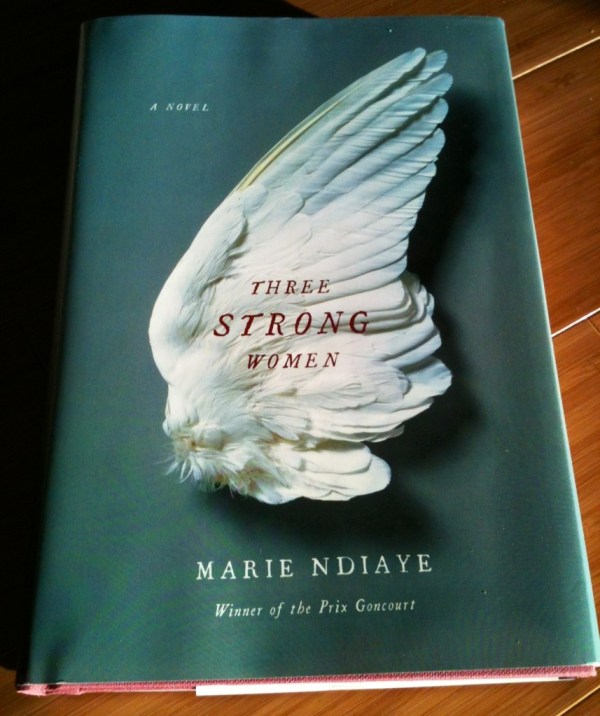
Marie NDiaye’s novel Three Strong Women won the Prix Goncourt in 2009 and is now published in English translation (John Fletcher) from Random House. Their blurb:

In this new novel, the first by a black woman ever to win the coveted Prix Goncourt, Marie NDiaye creates a luminous narrative triptych as harrowing as it is beautiful.

This is the story of three women who say no: Norah, a French-born lawyer who finds herself in Senegal, summoned by her estranged, tyrannical father to save another victim of his paternity; Fanta, who leaves a modest but contented life as a teacher in Dakar to follow her white boyfriend back to France, where his delusional depression and sense of failure poison everything; and Khady, a penniless widow put out by her husband’s family with nothing but the name of a distant cousin (the aforementioned Fanta) who lives in France, a place Khady can scarcely conceive of but toward which she must now take desperate flight.

With lyrical intensity, Marie NDiaye masterfully evokes the relentless denial of dignity, to say nothing of happiness, in these lives caught between Africa and Europe. We see with stunning emotional exactitude how ordinary women discover unimagined reserves of strength, even as their humanity is chipped away. Three Strong Women admits us to an immigrant experience rarely if ever examined in fiction, but even more into the depths of the suffering heart.


Books Acquired, 6.25.2012—Or, Here’s What’s New from Picador This Month

20120711-100508.jpg

A nice stack from the good folks at Picador this month, including two new entries in their ongoing Nadine Gordimer reissues. I like the design on the series:

20120711-100530.jpg

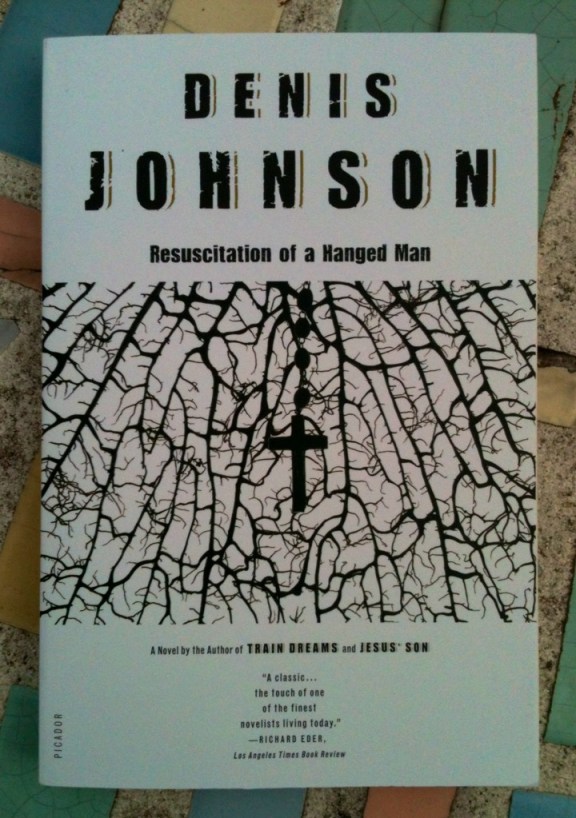
There’s also a reissue of Denis Johnson’s 1991 novel Resuscitation of a Hanged Man, which I haven’t read, but will read soon, because Johnson is just one of those writers I’ll end up reading everything by eventually. From a 1991 NYT review of the novel:

There has never been any doubt about Denis Johnson’s ability to write a gorgeous sentence. The author of “Angels,” “Fiskadoro” and “The Stars at Noon” has become increasingly musical in his prose, and his latest novel, “Resuscitation of a Hanged Man,” depends on such sentences as the primary unit of narrative motion. The novel seems, like a poem, to be written line to line. It is very much a book about one man, one sensibility.

At the outset of the novel, Leonard English, driving to the tip of Cape Cod in the off season, stops for a drink, then spins out of control, running his car onto a traffic island. He ends up taking a taxi to his destination, which is Provincetown. He has attempted suicide before the book’s beginning; now he is moving to the Cape to work for Ray Sands, a private investigator who also owns a small radio station. When we can see him most clearly, English seems very similar to the narrator of the short story — drifting, guilty, in a world of strangers, striving to connect with another person and with his God.

20120711-100537.jpg

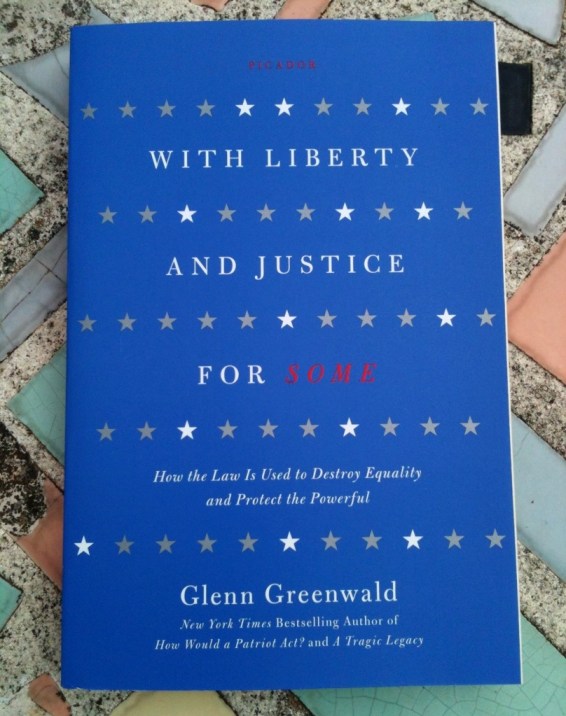
Last year’s With Liberty and Justice for Some is out now in trade paperback. If you are even slightly familiar Glenn Greenwald’s columns at Salon, you’ll likely know what to expect. For those of us predisposed to agree with his analyses, With Liberty and Justice for Some is likely to inspire outrage and a certain kind of fatigue.

20120711-100545.jpg

Here’s an excerpt from an interview between Harper’s Scott Horton and Greenwald:

American history is suffused with violations of equality before the law. The country was steeped in such violations at its founding. But even when this principle was being violated, its supremacy was also being affirmed: resoundingly and unanimously in the case of the founders. That the rule of law—not the rule of men—would reign supreme was one of the few real points of agreement among all the founders. Arguably it was the primary one.

There’s an obvious element of hypocrisy in this fact; espousing a principle that one simultaneously breaches in action is hypocrisy’s defining attribute. But there’s also a more positive side: the country’s vigorous embrace of the principle of equality before law enshrined it as aspiration. It became the guiding precept for how “progress” was understood, for how the union would be perfected.

And the most significant episodes of progress over the next two centuries—the emancipation of slaves, the ending of Jim Crow, the enfranchisement and liberation of women, vastly improved treatment for Native Americans and gay Americans—were animated by this ideal. That happened because “blind justice”—equality before law—was orthodoxy in American political culture. The principle was sacrosanct even when it was imperfectly applied.

The Ford pardon of Nixon changed that, radically and permanently. When President Ford went on national television to explain to an angry, skeptical citizenry why the most powerful political actor would be fully immunized for the felonies he got caught committing, Ford expressly rejected the rule of law. He paid lip service to its core principle—the “law is no respecter of persons”—but then tacked on a newly concocted amendment designed to gut that principle: “but the law is a respecter of reality.”

In other words, if—in the judgment of political leaders—it’s sufficiently disruptive, divisive, or distracting to hold powerful political officials accountable under the law on equal terms with ordinary Americans, then they should be exempt and the rule of law suspended, all in the name of political harmony, of “moving on.” But of course, it willalways be divisive and distracting, by definition, to prosecute the most powerful political leaders, so Ford’s rationale, predictably, created a template for elite immunity.

The rationale for Ford’s pardon of Nixon was subsequently legitimized, and it created a precedent for shielding the most powerful elites from the consequences of their lawbreaking. The arguments Ford offered are the same ones now hauled out over and over whenever it is time to argue why the most powerful among us should not be held accountable: It’s not just for the good of the immunized criminal, but in the common good, to Look Forward, Not Backward. This direct assault on the rule of law was pioneered by the pardon of Richard Nixon.

20120711-100609.jpg

Steve Sem-Sandberg’s The Emperor of Lies is a Swedish novel in English Translation by Sarah Death. Look, I’m generally dismissive of Holocaust fiction because 1) the sheer number of books that come in to Biblioklept World Headquarters that use the Holocaust as a milieu and 2) the tacky and generally lazy way that such books often attempt to manipulate their audiences. Still, The Emperor of Lies seems like it’s probably a sight better than most such books, and it’s gotten generally good reviews, including this one from The Independent (UK), which apparently thinks that a book review of five sentences is fine:

Any writer – let alone one from neutral Sweden – who sets out to place another brick in the vast wall of Holocaust fiction must be deluded or inspired. Astonishing to report: Sem-Sandberg belongs in the tiny second band.

Utterly involving, morally scrupulous, written with a verve and pace that belie its dreadful setting, The Emperor of Lies – in Sarah Death’s masterly translation – really does renew the genre.

Its portrait of resistance and survival in the ghetto of Lodz between 1940 and 1944 focuses on the monstrous enigma of Chaim Rumkowski, despotic overlord of his fellow-Jews. Sem-Sandberg catches his capricious charisma. Other characters, who record their fate or fight it, also shine, while their tragic destiny moves on at mesmerising speed.

“May Your Loins Be Girt” (Book Acquired, 2.09.2012)

20120211-111518.jpg

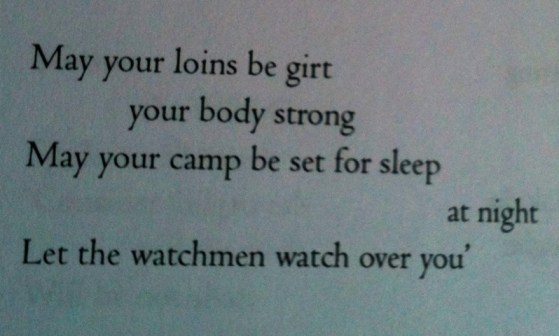
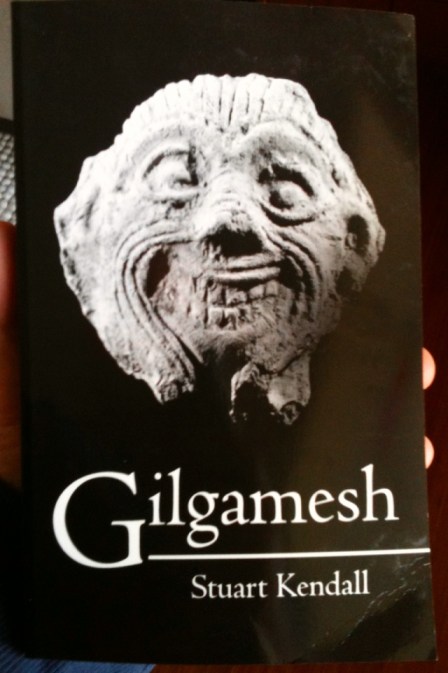
A few lines from Stuart Kendall’s new translation of Gilgamesh. Review and interview forthcoming. Read more here.

20120211-111512.jpg

Book Acquired, 2.09.2012 — In Which I Finally Get My Mitts on Something by César Aira

20120209-150157.jpg

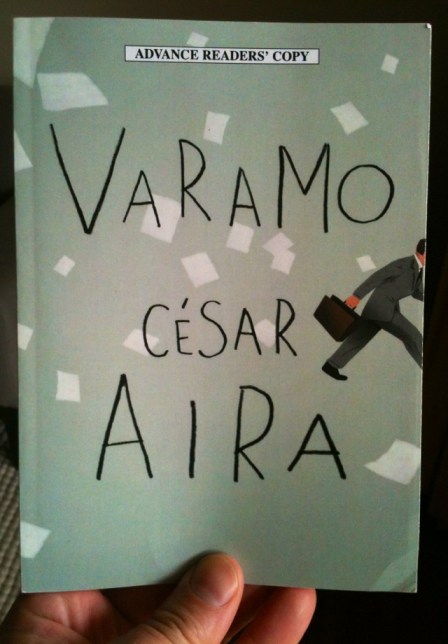
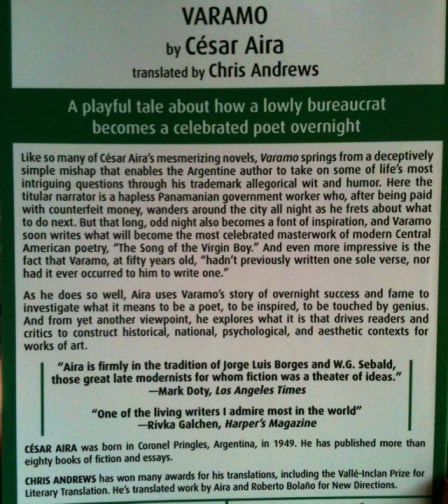
Varamo by César Aira (translated by Chris Andrews, whose work you should be familiar with). Forthcoming from the good people at New Directions.

I’ve been wanting to read some Aira since some readers suggested him (in the comments for this post where I bashed on Chad Harbach’s novel).

Anyway, details:


20120209-150205.jpg

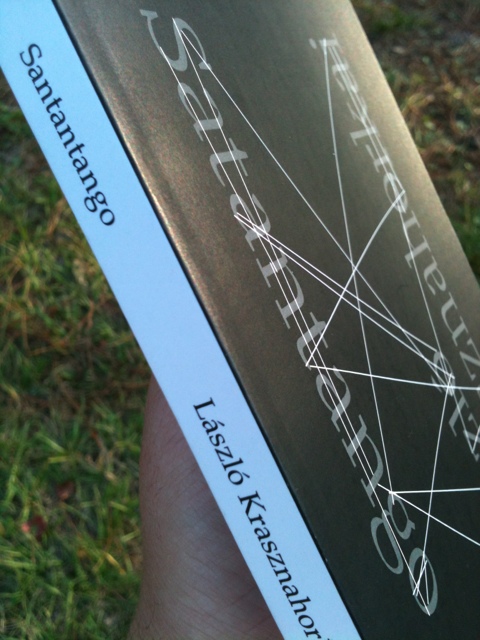
Book Acquired, 12.06.2011 — Or, I Photograph My Reader’s Copy of Satantango in the Cheap Showiness of Nature

20111208-172836.jpg

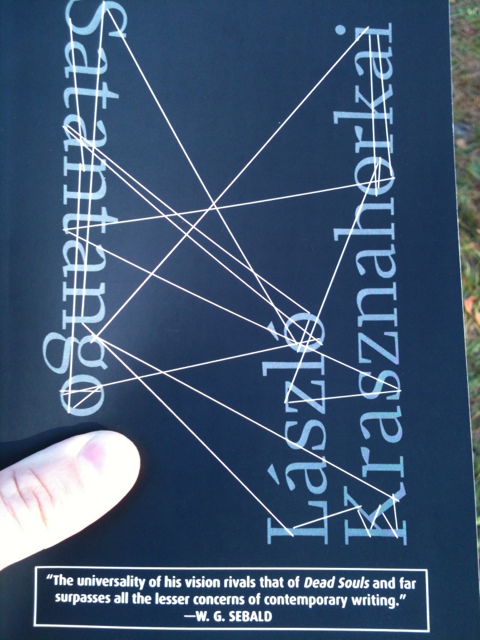
Damn. Check this out. László Krasznahorkai’s novel Satantango, the title of which does not apparently include diacritical marks in its new (first published!) English translation.

Publisher New Direction’s description:

Already famous as the inspiration for the filmmaker Béla Tarr’s six-hour masterpiece, Satantango is proof, as the spellbinding, bleak, and hauntingly beautiful book has it, that “the devil has all the good times.” The story of Satantango, spread over a couple of days of endless rain, focuses on the dozen remaining inhabitants of an unnamed isolated hamlet: failures stuck in the middle of nowhere. Schemes, crimes, infidelities, hopes of escape, and above all trust and its constant betrayal are Krasznahorkai’s meat. “At the center of Satantango,” George Szirtes has said, “is the eponymous drunken dance, referred to here sometimes as a tango and sometimes as a csardas. It takes place at the local inn where everyone is drunk. . . . Their world is rough and ready, lost somewhere between the comic and tragic, in one small insignificant corner of the cosmos. Theirs is the dance of death.” “You know,” Mrs. Schmidt, a pivotal character, tipsily confides, “dance is my one weakness.”

New Directions has a fantastic record when it comes to lit in translation, and Satantango has been long anticipated by English-reading audiences, due in large part to Béla Tarr’s movie (which is more like seven and a half hours, which I meant to watch this summer but couldn’t because I want to watch it with no interruptions, but I have kids and a wife, so, hey).

I got into it a bit last night, and, I don’t know if it’s just the advance reader copy I got or what, but there are no paragraph breaks, which is a grueling rhetorical technique, a big dare to readers, really (see also: W.G. Sebald’s Austerlitz (note: Sebald blurbs Satantango)). The advance reader copy also has a delightful typo on the spine, one that makes the book sound like, I dunno, if Santana made a tango record. Or maybe Santa n’ Tango for ever (Cash will no doubt be jealous). More to come.

20111208-172845.jpg

Good Offices — Evelio Rosero

In Poetics, that ancient didact Aristotle informs us that admirable drama adheres to unities of action, place, and time. There must be no extraneous subplots, just one central action confined to a specific and defined place and time—no more than 24 hours, in fact.

I was reminded of these (oft-broken) rules when reading Evelio Rosero’s Good Offices, a sharp, gleaming novel that illustrates just how effective these classical unities might be in the hands of a gifted author. Rosero’s tale snakes out over the course of only a few hours and takes place entirely in a Catholic church in Bogotá, Colombia. The action—more on that in a moment—is indivisible from the time and place.

Good Offices centers on Tancredo, a hunchback afflicted with “a terrible fear of being an animal.” Tancredo is basically an indentured servant of the church, strung along by Father Almida’s promises of a college education that never seems to surface. His great “cross to bear” is the program of Community Meals that Father Almida mandates (yet never helps execute) each night—charity meals for children, old people, blind people, whores, and families (all segregated by day of the week, naturally). In particular, Tancredo hates the nights for the old people, indigents who complain about the free food and then pretend to be dead so they don’t have to go back to the dark streets of Bogotá. Sometimes they do die though, and it’s Tancredo who must discover their abject corpses.

Aiding Tancredo in the family meal labor are Sabina Cruz, and the Lilias, three ancient widows of the same name who bear more than a passing resemblance to the Moirae. It is the Lilia’s lot to cook these massive meals, making something from nothing, essentially, a job made all the harder by their arthritic joints. They pester Tancredo mercilessly. Sabina doesn’t so much pester Tancredo as haunt him, imploring repeatedly that they run away together. She’s the sexton’s god-daughter, and like Tancredo she is more or less church property. What our cast shares in common is a suppressed humanity, that vital spark now ground down to a dim nub.

This feeling of endless, indefinite weariness hangs over our heroes at the beginning of the novel, as we see here, when the sexton and priest begin an interrogation of sorts of Tancredo—

. . . he felt worn out, exhausted: after the old people crawling around the hall, over and under the table, bathed in soup, stepped in filth and saliva, like a Roman orgy or a witches’s Sabbath, to have a to face the sacristan’s inquisition infuriated him. Once again he experienced the dreadful fear of becoming an animal, or the desire to be one, which was worse. He imagined himself dashing that table against the ceiling; kicking over the chairs of the Church’s two representatives; tipping out their occupants, pissing on their sacred heads; pursuing Sabina, pulling up her heavy lay sister’s skirt, ripping into the apparent innocence of her blouse, buttoned up to the neck, pawing her breasts, pinching her belly button, her thighs, her backside. Truly, he thought, aghast, he needed to confess to the Father about his dreadful fear of being an animal, and the sooner the better.

Rosero’s remarkable prose here twists through the writhing subsurface urges the Catholic Church has worked for hundreds of years to suppress. The writing is violent, funny, sexy, and passionate, culminating in a devastating punchline. The passage is indicative of the book’s strange blending of tones, a sardonic but also sensual crash course in the seven sins.

Almida is too busy to take the time to fully listen to Tancredo’s confession though—he and the sexton must rush to meet a rich benefactor (a gangster, of course). For the first time ever, Almida will miss the mass, necessitating a substitute: Father Matamoros.

To Tancredo’s horror, part of Matamoros’ preparation involves getting drunk; however, he sings the mass in a beautiful voice that entrances the congregants—including Tancredo and the Lilias, who are so enthralled they set to work preparing a feast. Matamoros insists they drink with him, and in time, our principals are all quite drunk, not just on the fine wine that Almida and the sexton secret away for themselves, but also on the Lilia’s rich feast and Matamoros’ splendid singing. These visceral pleasures inject a humanity (and real purpose for living) that has been missing in the church for far too long, and as the night creeps into the morning, the rapture caused by the stranger’s presence overwhelms our cast.

Having lost faith in Almida (and perhaps Catholicism and even God), Tancredo confesses to Matomoros. Before I offer another passage of Rosero’s sensual, intense writing, let me commend the work of translators Anne McLean and Anna Milsom. From Tancredo’s second confession—

Without knowing how, Tancredo resumed the conversation, as if he really had been holding that non-existent conversation with the Father, or did it exist?  Whatever the case, he said, or kept on saying, as if it were the most natural thing in the world, that he had dreamt, Father, that he had an Indian slave-girl, tied up in with a chain like an animal, and that he took her for a walk through a sunlit meadow, the sun, the smell of the sunshine, “everything full of the most terrible lustfulness, Father, hanging over our heads, it was impossible not to take her in my arms, the soft moss offered itself, the leafy oak gave its shade, she stretched out wearily on the grass, it wrapped itself around her like a sheet, offering her rest, and, with the same chain I used for leading her about, she drew me toward her, as if I were an animal and not her, and she spread her legs and all her Hell burned me, Father.”

Matamoros offers Tancredo comfort, if not wisdom, but in treating the young man like a human and not an animal in bondage, he underscores the simple but strong theme of the book.

I won’t spoil more of Good Offices, which I think you should read. It’s a compact, vigorous treat, often blue, sharp as a scimitar, and saturated in suspense. Like any good Aristotelian drama, Rosero’s novel offers catharsis for its audience, but its greater impact comes from what it withholds, from what is left implicit, lingering under the details that ball together toward an end that is funny, horrific, and quite moving. Highly recommended.

Good Offices is new from New Directions this month.

You Do Understand — Andrej Blatnik

There’s a central irony that emanates throughout Slovenian author Andrej Blatnik’s new collection, You Do Understand–namely, this is a book about misunderstanding. Take the first piece, “Few Words,” for example. Here it is in full–

“Do you believe in a tomorrow together?”

“First I’d like to believe that tonight really happened.”

Or, even more to the point (if that’s possible), here’s “Misunderstanding” (again, in full)–

“You’re even more beautiful when you come,” he said.

How would you know, she thought.

These two stories are probably the shortest of the fifty or so pieces in the collection, but even the longest selections barely pass four pages, creating a terse, clipped rhythm that lends You Do Understand a poetic immediacy. This rhythmic consistency, along with the book’s central theme, give it the feel of a novel-in-vignettes as opposed to a collection of unrelated stories.

You Do Understand begins with a series of miserable young single people shambling from failed romantic encounter to dismal hookup to ugly awkward sex. Take the (non)couple in “Do It Quickly, She Said” who both just want to get the sex over with so that one of them can leave, or the pair in “Melting Point” who trip over their own expectations. The narrator of “Say That” defers his drunken confusion and guilt by speaking his story in the second person. “Say that you’re kissing a strange girl,” he begins. As the microstory unfolds, it turns out that “your” dilemma is twofold–it’s not just that “you” are approaching cheating on “your” wife (if “you” haven’t already crossed a line), but also that this “strange girl” just might be a guy.

Blatnik never names his characters, but by drawing them in spare, concrete details, he makes them real nonetheless. The effect is uncanny–these are aliens you probably know in your own life, only, y’know, not. Stories like “Words Matter,” where a man fails to order a hooker for his hotel room, or “I Write These Words,” where another hotel-dweller finds his writing interrupted by paramedics fetching a dead body, express a core loneliness intrinsic to modern, transient existence.

There are other travelers in You Do Understand–although none of them seem to have a clear destination in mind. In “Other Paths,” a stranger arrives in a village in what might be a Third World country, perhaps with a romanticized notion of getting away from civilization. His illusion dissipates when he realizes that the villagers cannot even spare a bowl of rice for him to eat. In “Stains,” an expedition picks up a man in the middle of the desert, robbed and dehydrated. As he drinks their precious water, they nervously wonder if he’ll ask for the help that they don’t want to give him. It’s a cruel world, and at times You Do Understand is a cruel book, although it’s also quite funny–but never at the expense of the humanity of its cast, whom Blatnik measures with a distant compassion and a deep cynicism, as if human beings were programmed to fail, but also programmed to try again. Tamara Soban’s nimble English translation highlights Blatnik’s telegraphic style in these brisk but heavy stories, which call for rereading. Recommended.

You Do Understand is available September 7th, 2010 from Dalkey Archive Press.