Mass-market Monday | Leslie A. Fiedler’s Waiting for the End

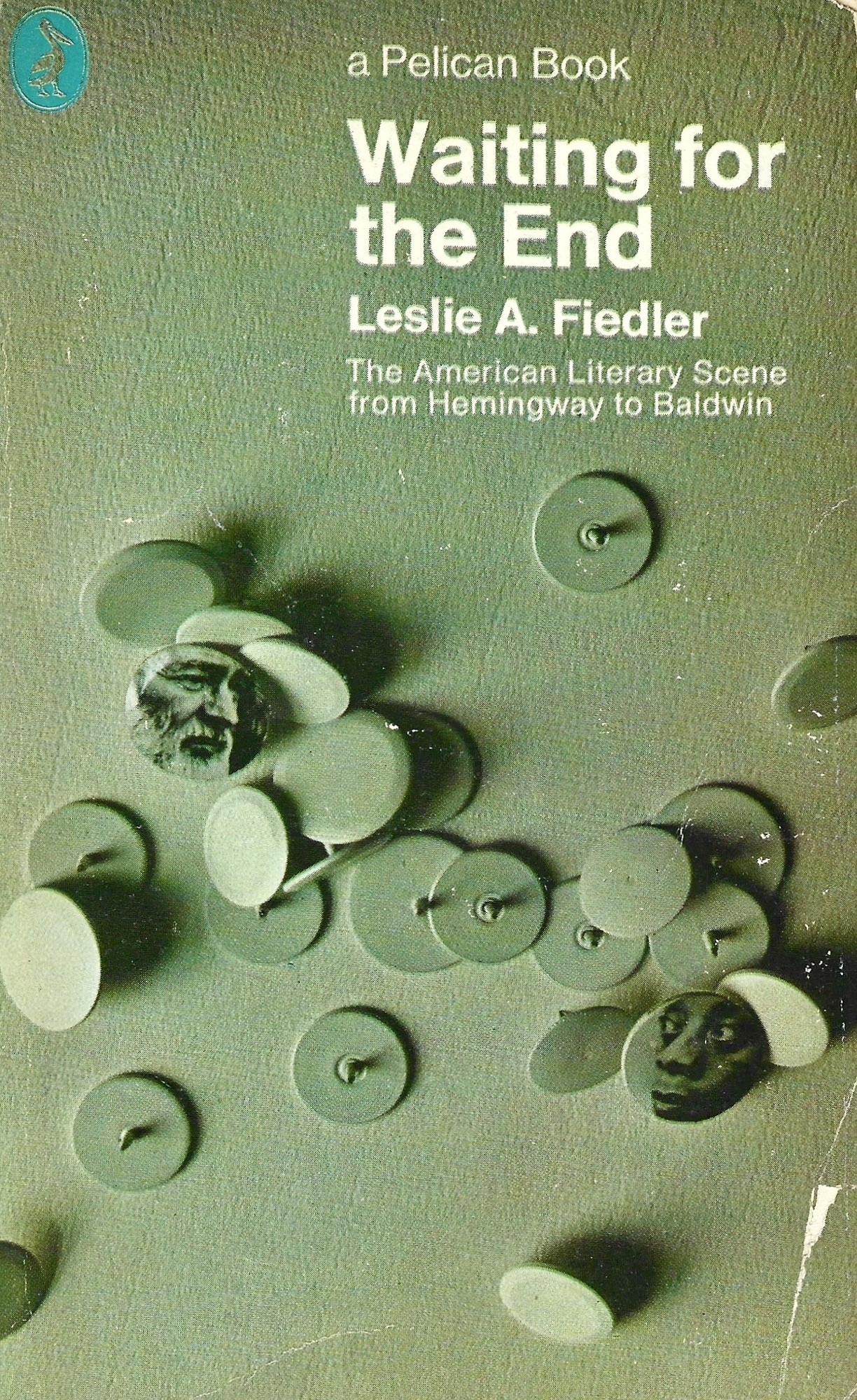
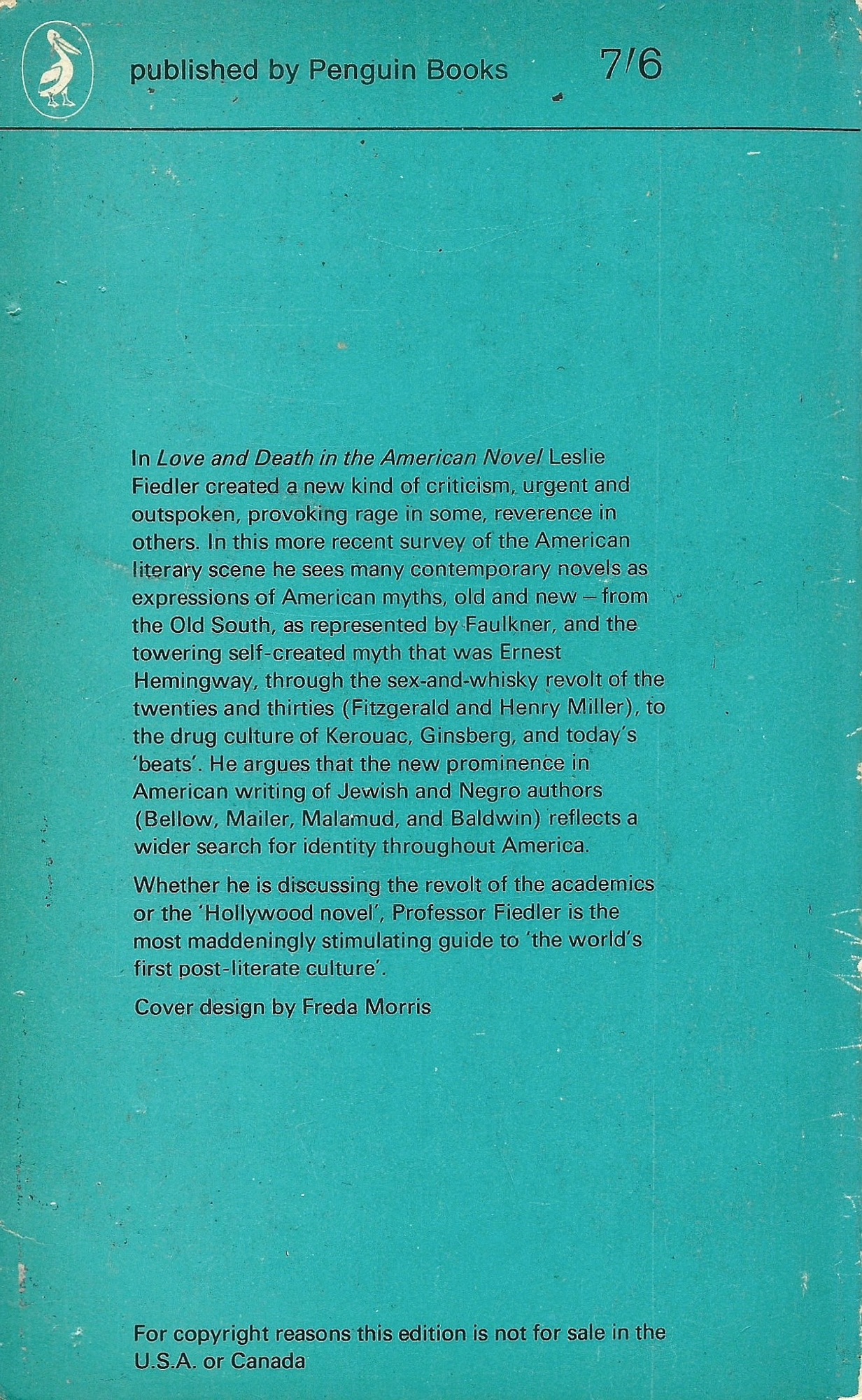
Waiting for the End, Leslie A. Fiedler. Penguin Books, Pelican imprint (1967). Cover design by Freda Morris. 274 pages.

From a riff a few years back:

Fiedler begins with the (then-recent) deaths of Hemingway and Faulkner. Fiedler uses the deaths of these “old men” to riff on the end of Modernism, although he never evokes the term. Neither does he use the term “postmodernism” in his book, although he edges towards it in his critiques of kitsch and middlebrow culture, and especially in his essay “The End of the Novel.” In parts of the book, he gets close to describing, or nearing a description of, an emergent postmodernist literature (John Barth and John Hawkes are favorite examples for Fiedler), but ultimately seems more resigned to writing an elegy for the avant garde. Other aspects of Waiting for the End, while well-intentioned, might strike contemporary ears as problematic, as the kids say, but Fiedler’s sharp and loose style are welcome over stodgy scholarship. Ultimately, I find the book compelling because of its middle position in its take on American literature. It’s the work of a critic seeing the beginnings of something that hasn’t quite emerged yet—but his eye is trained more closely on what’s disappearing into the past.

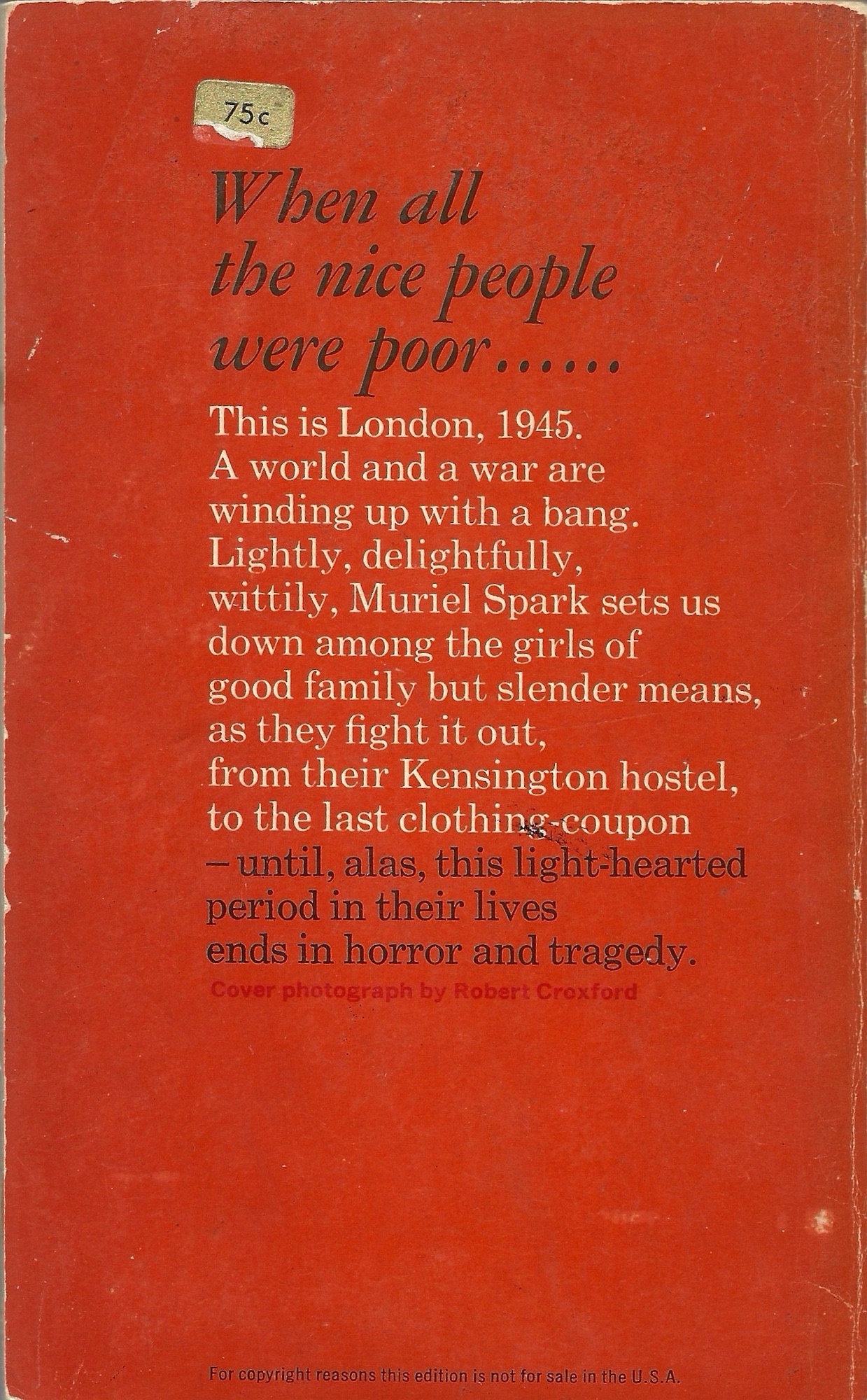
Mass-market Monday | Ignácio de Loyola Brandão’s Zero

Zero, Ignácio de Loyola Brandão. Translated by Ellen Watson. Avon Bard (1983). No cover artist or designer credited. 317 pages.

A very strange fragmentary hallucinatory novel. A few pages:

Mass-market Monday | Lawrence Durrell’s Nunquam

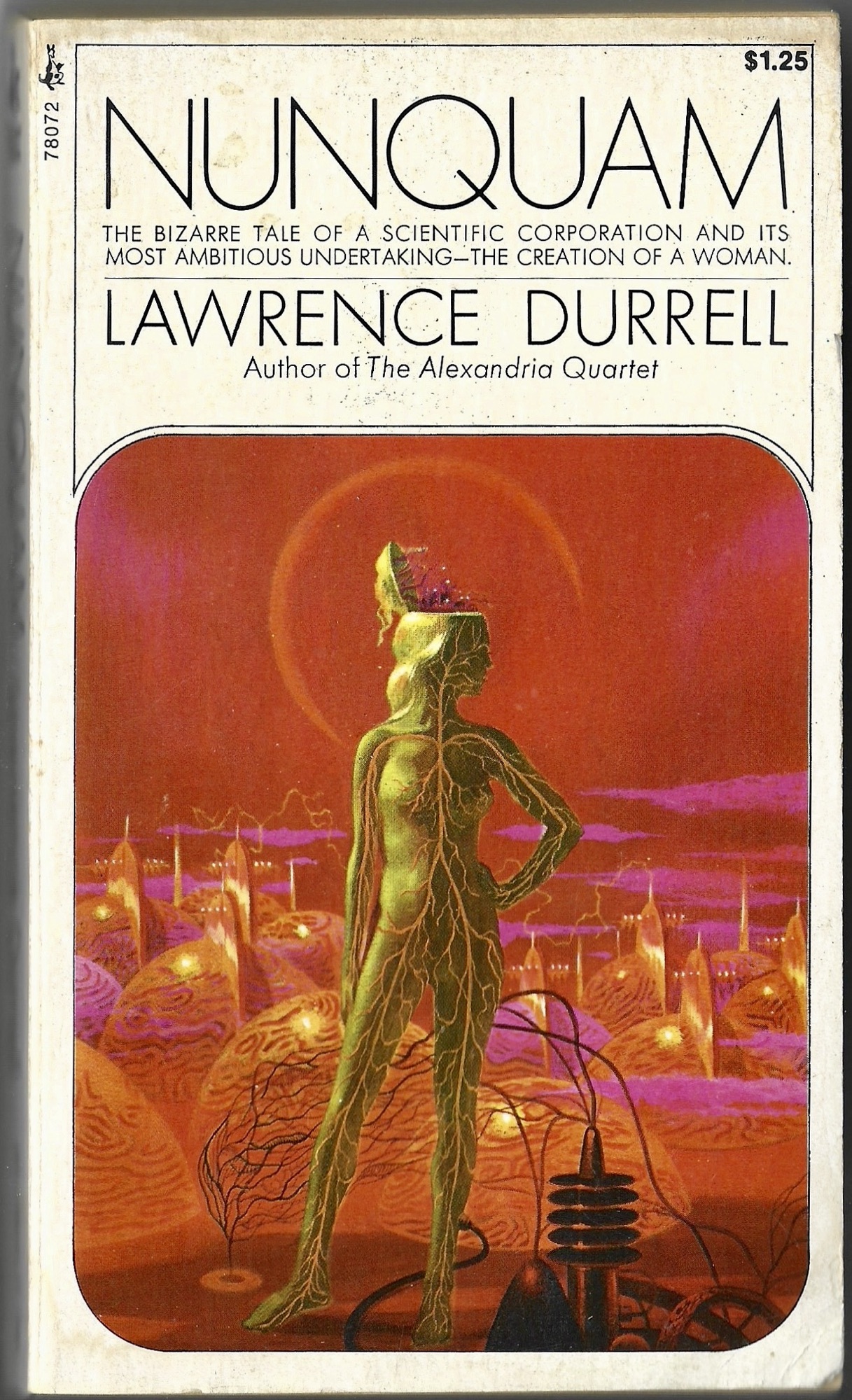
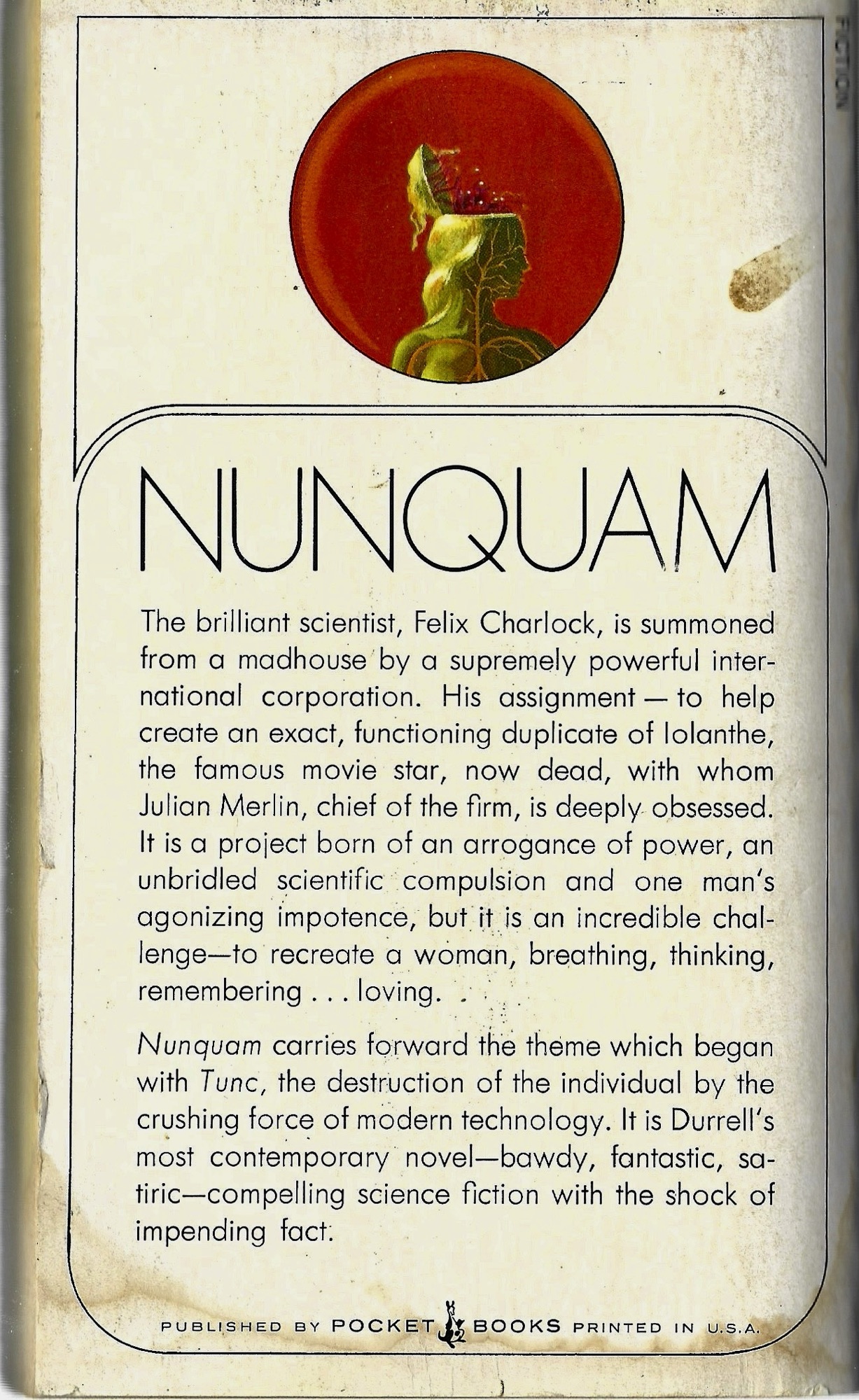
Nunquam, Lawrence Durrell. Pocket Books (1971). No cover artist or designer credited. 258 pages.

Mass-market Monday | Philip K. Dick’s Martian Time-Slip

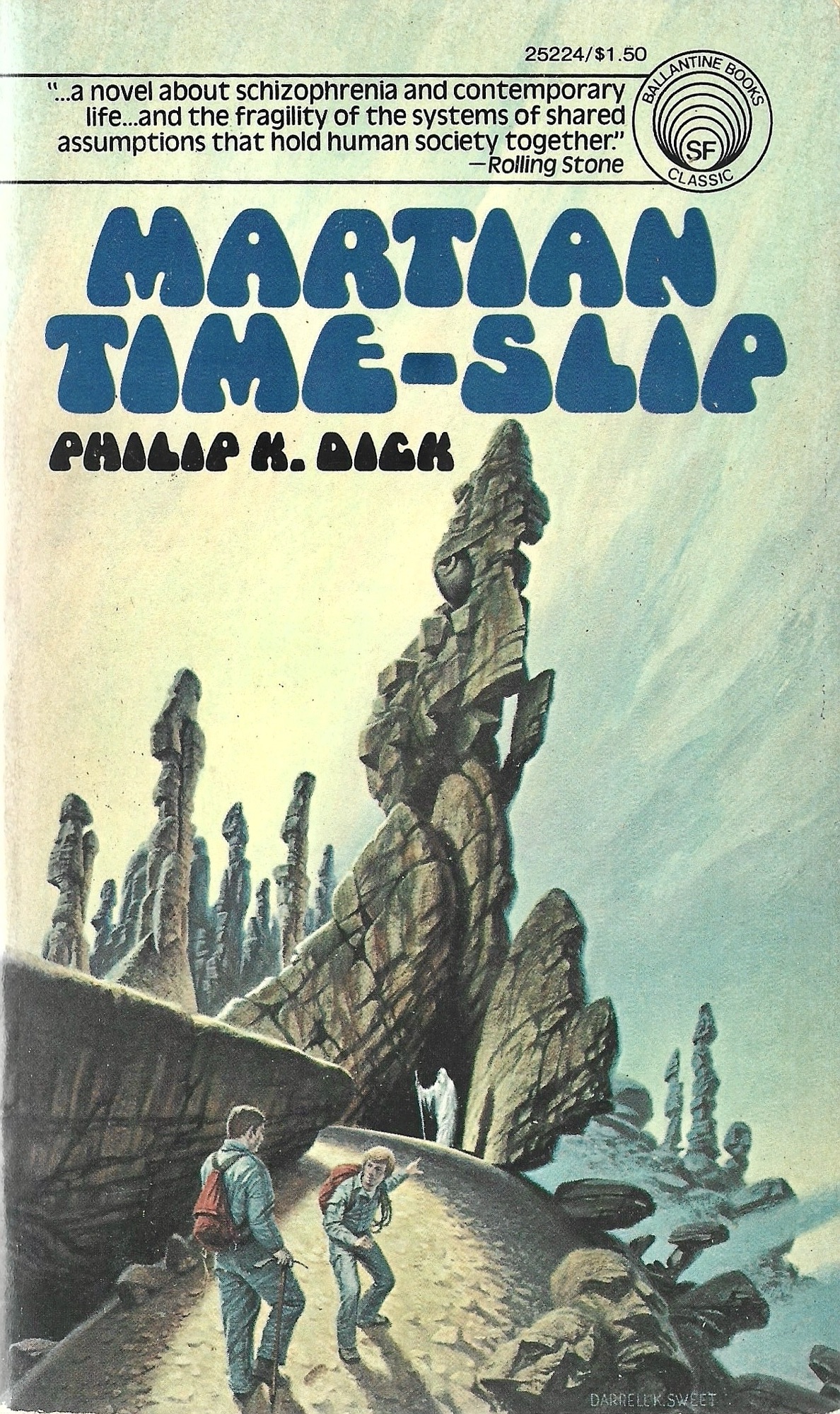
Martian Time-Slip, Philip K. Dick. Ballantine Books, second printing (1976). Cover art by Darrell K. Sweet. 220 pages.

I riffed on the novel a decade ago, writing,

Time-Slip rockets into rhetorical reverberation, cycling its final chapters into a strange decay. The timeslips jar the reader’s narrative perception—Hey wait, didn’t I already read this?—unsettling expectations, and ultimately suggesting that this Martian Time-Slip is just one version of Martian Time-Slip. That there are other timelines, distorted, slipped.


Mass-market Monday | Robert Coover’s The Origin of the Brunists

The Origin of the Brunists, Robert Coover. Banatm Books Edition (1978). No cover designer credited. 534 pages.

This Bantam reprint of Coover’s first novel coincided with their mass-market paperback publication of The Public Burning.

I wrote a bit on The Origin of the Brunists a few years back. From that riff:

Coover’s metafiction always points back at its own origin, its own creation, a move that can at times take on a winking tone, a nudging elbow to the reader’s metaphorical ribs—Hey bub, see what I’m doing here? Coover’s metafictional techniques often lead him and his reader into cartoon landscapes, where postmodernly-plastic characters bounce manically off realistic contours. The best of Coover’s metafictions (like “The Babysitter,” 1969) tease their postmodern plastic into a synthesis of character, plot, and theme. However, in  large doses Coover’s metafictions can tax the reader’s patience and will—the simplest example that comes to mind is “The Hat Act” (from Pricksongs & Descants, 1969), a seemingly-interminable  Möbius loop that riffs on performance, trickery, and imagination. (And horniness).

I’m dwelling on Coover’s metafictional myth-making because I think of it as his calling card. And yet Origin of the Brunists bears only the faintest traces of Coover’s trademark metafictionalist moves (mostly, so far anyway, by way of its erstwhile hero, the journalist Tiger Miller). Coover’s debut reads rather as a work of highly-detailed, highly-descriptive realism, a realism that pushes its satirical edges up against the absurdity of modern American life. It reminds me very much of William Gass’s first novel Omensetter’s Luck (1966) and John Barth’s first two novels, The Floating Opera (1956) and The End of the Road (1958). (Barth heavily revised both of the novels in 1967). There’s a post-Faulknerian style here, something that can’t rightly be described as modern or postmodern. These novels distort reality without rupturing it in the way that the authors’ later works do. Later works like Barth’s Chimera (1973), Gass’s The Tunnel (1995), and Coover’s The Public Burning (1977) dismantle genre structures and tropes and rebuild them in new forms.

Mass-market Monday | Angela Carter’s Heroes and Villains

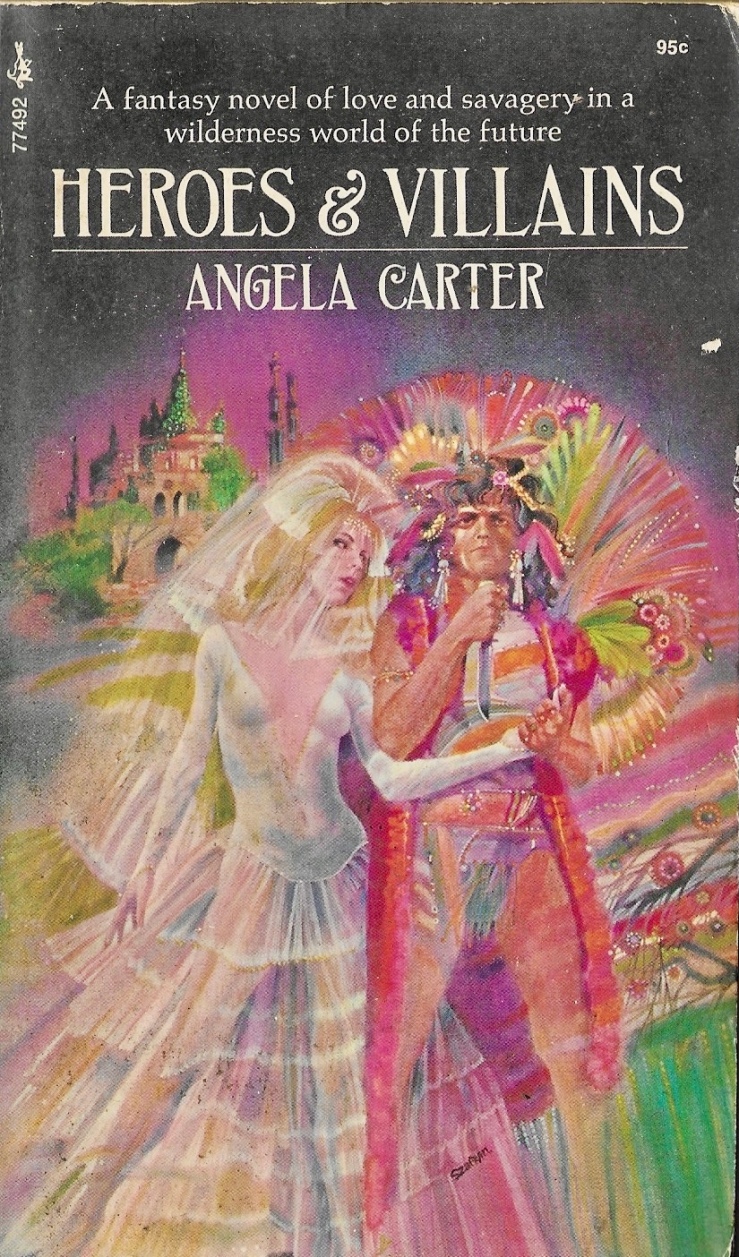
Heroes and Villains, Angela Carver. Pocket Books Edition (1972). No cover artist credited. 176 pages.

While no cover designer or artist for this edition of Angela Carter’s 1969 novel Heroes and Villains, I’m pretty certain that the work is by Gene Szafran.

I wrote briefly on the novel in 2020:

One of Carter’s earlier novels, Heroes and Villains takes place in a post-apocalyptic world where caste lines divide the Professors, the Barbarians, and the mutant Out People. After her Professor stronghold is raided, Marianne is…willingly abducted?…by the barbarian Jewel. Marianne goes to live with the Barbarians, and ends up in a weird toxic relationship with Jewel, marked by rape and violence. Heroes and Villains throws a lot in its pot—what is consent? what is civilization? what is language?—but it’s a muddled, psychedelic mess in the end.

Mass-market Monday | Robert Coover’s The Public Burning

The Public Burning, Robert Coover. Banatm Books Edition (1978). No cover designer credited. 661 pages.

A 1977 Book Ends column in The New York Times offers a fairly succinct blurb for The Public Burning:

The Public Burning is a blend of fact and fantasy, using dozens of real and fictional names. Among the real persons named in this “metafiction” are President Eisenhower, Senator Joseph McCarthy, J. Edgar Hoover, Billy Graham, Norman Vincent Peale, Edward Teller, Walt Disney, Cecil B. DeMille, former prosecuting attorney Irving Saypol and Judge Irving Kaufman. About one‐half of the novel narrated by Vice President Richard M. Nixon…

The Book Ends piece, which appeared a few months before the book’s publication (and notes the difficulties the book found securing a publisher brave enough to put it out), includes a brief interview with Coover about The Public Burning:

“I had the idea for the book 11 years ago. I thought it would be a novella and not a book of over 500 pages. I felt that the event was something that had been repressed. If you mentioned the Rosenberg case, people were turned off or young persons didn’t know what it had been all about.

“Their execution — plus the prevalence of old‐fashioned American hoopla—gave me the central metaphor for the book. In 1968, I was looking for a narrator. After Nixon was elected President, he served that purpose. He had been a participant in the background of the Rosenberg case. As President, he was powerful, pious and pompous. I needed a clown act to intersperse with the circus act. And so Nixon became the clown. Clowns are sympathetic when you get to know them.”

The Public Burning was the first book I read by Coover, and I read it when I was too young to fully appreciate it; I think I simply wasn’t soaked enough in its history. Revisiting it, even in brief today, reminded me that it’s likely as relevant as ever, and that its diagnoses of the first half of America’s twentieth century is up there with Gravity’s Rainbow or J. R.

Mass-market Monday | Billy Budd, Sailor and Other Stories by Herman Melville

Billy Budd, Sailor and Other Stories by Herman Melville, Herman Melville. No collection editor credited. Bantam Books (1989). No cover designer credited. Cover is a detail of Ships and an Approaching Storm Off Owl’s Head, Maine, 1860 by Fitz Hugh Lane. 278 pages.

I read Bartleby in 10th grade and took up I prefer not to as a mantra that I’d throw at poor dear Ms. Hall any time she asked me to do something I didn’t want to do, which was often. I never returned the book at the end of the year. I’m not sure if there is another book in the household, apart from old children’s books, I suppose, that I have read so many times.

I wrote about Bartleby here.

I wrote about Benito Cereno here.

Here is Billy Budd, but just the punctuation:

, , – , – – ‘ – . , , – , . ” ” . , – , . . , , – ‘ ( ) , . . ; , . ; , , . , , . . – – , , – – . . , – – , , , , , , – . , . . . ; ; . – – , , – – , ” , ” ” ” , . , , . . , , , , . , , , , – , , , – , . ‘ , – – – , . . . ; , , . , ‘ – . . , – , , . ‘ , ‘ , . , , . , , . , – – ” . ” – – – – , – , . , , , , , – – , . , . , , . , , . . , ‘ , , ‘ , , , – , . – . ; , , , . ‘ . , – . , , , , , , . , ; : ” , , ‘ . ” ” , , ” , ; ” , . . ” ” , ‘ , . . , – . , , . . ; . ; , . ; , – . , , , ‘ , ‘ , – , . – – , , – – . , – , – – – – . . , . , . , , . , , – – , . . ‘ , ; . ; ‘ . , , – – . , , – – , , . , , ‘ ; ! ” . ” , ” , ; ” , , ! – – – – – , ” ‘ . ” ! ‘ , . , . ; ; , , , , . – – ‘ ? , ” ‘ , ” ; , – – – – ! – – , ” , ” ‘ – . – . , . , – – ‘ . ” . , , – – . – ‘ ; ‘ . – ‘ . ‘ , , , , , , , . , ‘ , – – , – – ; , , – . , , ” – , – – . ” ” , ! ” , , . , ‘ . ; . ‘ , , . , , , , , ‘ , , , . . . , . , , , , . , , , . – – – . , – – . : ‘ ; , – , . , ; , , , , , , . – , ‘ , . ; , , , , , , . , – ; . , , , , . , ‘ – . . – . – . . , , . . , , , , – ‘ , – ; , , , , ; . – – – , , . , , , , , ” , , ‘ . ” ” ‘ ? – – ? ” ” , . ” , , ” ? ” ” , . ‘ . ” ” ? , ” ; ” , . ‘ , ; . ” , , – , , , . . , , , , . ; , , . – , ‘ . , , , – , , ” ‘ – , ” . , ” ‘ – , ” ? ; , , , ; . , , . ‘ , , , , , ‘ . – , , , . , , , – ‘ , , , : – – ” , , , , ? ” ; , ‘ , . , , ; , . , – , , , , , . , , . , , – – . , . ‘ . . – , ‘ , , , . , . . . , , . . – . ; – – – – – , – – – , , ; , ‘ . , . – – – – – , , : ” , ‘ ‘ ! ” ‘ ; ( . . . ) ” . ” , . . , , . , . – , . , , – – – – , ; , , – – – – . , , ; . , . , – – , , , – – , . , , : , , , , . , , – . – . . , . – . – , , , , , . , , ‘ , , , , , , , , . , , , , ‘ , , , , , . , – , . , , , , ; , . , ‘ – , ‘ , , , . , , ; ; ; , , , , , . , , . – – . , , , – – , – – . ; , , , . , . , ‘ ” . ” , , , . , ; , , , , . , . . , , , , , , , , . , , , , . , , – , , , ; , . , . , . : , , – , , ; : , ; , , , , , . – . . . , , , . – , . , . , , , . , . , , , ; , , . – ‘ , – . , , , , . , . , , , , ‘ , ‘ – , . , , . ‘ , , , . – – , , . ; . – – . , , : , , – , ; ‘ , , , , , , , ” ‘ , . ” , ‘ , , , ” , ; , ! ” , ‘ , , , . , . – , . ‘ , , . . , , . , , – , . , ; – – , , , , , . – – , , , . . , , , , . , , . , , , , , . , : ” , . , ” ( ) ” . , ‘ ‘ ? , ‘ – ? ” ; ‘ , . , , . ‘ . , – . ‘ , – . – , . , . , – – . – . , , – ‘ , . , – – , ; – – – , . , , . . ; ; , ‘ , . . , . . ; , , – . , , , ‘ , . , , . . ; , . – – – – ‘ ‘ . , , . , , – – . ‘ , , , , ; , , ; . ‘ – – – , – , , – , . , – . , . , ‘ – , , . , , , , , , ; , ; , , . : – , , . . , ‘ , . , . , , ‘ , . . ‘ , . – , – – . , , , ; . ‘ – – ‘ ‘ . – , , – – – , – – . , , , , , , , – – ‘ , , . , , , ; – – . ‘ – , , , ; , , . ‘ , ‘ , , , – . – . , , , , ‘ , , . ‘ . , . . – . , , – , . , , , ; , . ‘ , ; ‘ , . . , ‘ – , . , ? , . . ” , ? ” . ” , , , ‘ . ” , . – , . , , . , – – , – . ; , , , , , ‘ . – , ‘ . , – , ‘ ” – – – – . ” – , . , , , – ‘ , ? , ‘ ; , , , – – , , ; . , . . . ‘ , , , , , , , . , , – ; , ‘ , , . . , , , – , – , . , . , ‘ . , , ” , , . ” , , , ” , ” ( – – – ) ” . ” ” ! ” , ; ” ? , . ” ” ? ” ; , ” , , . ” ” , . . . ” ” ‘ ‘ , . ” , , . ; – , , , . , – , . ‘ – – . , , , , , – . , – – , , , . , , , . . , , , , , , ” , ! ! ” . , , , , ‘ . . , ” , ” ; , , , ; , ” , ! ” ” , ? ” . , , – – – – , – – . , , , , ; – . , , , ” ! ” – – ? , , , , , ? – ‘ , ‘ ” ” ? , , ‘ , ? , , , , , . , , , ‘ – – – , , . . , , , , . , , , ? – . , . ‘ . ? , . ” . ” . , , , ” , – – – – ‘ . . , , – – – , , ” ” – – , . ” ” , ” , ” – – – , , , , . ” ” , , . , , , . , , , . . . . ‘ . . ? . ” . . , , , . , . , , : ” : . ” ‘ , ‘ . . . , , , . , , . . . . . . . , . . : ‘ , , . : , . , , , ; , – , , , , – – – – . , , , , ” . ” , , , ? , ? ? ? , , ; ; , , . , . , . ? ” ” ? , , – . – – . , , , . ‘ , , , , . , . ; ‘ , , , , . – . , – – , , , , , . , , . ? , , ? . , . , . ‘ . , , ‘ . ‘ . , , , , . , , , , , . , – – . , , – – . ! , – – , , . , ‘ ; , ; ‘ , , . , , . , , . , , . , – – – ‘ – ‘ . – – , – – , – – , ‘ . , , , , . ‘ . – , , , , , . ‘ – – – – – – – , , , , . – – , , – – , – – , – – ; ( ) . , ‘ . , . , ; , , . ; ? ‘ ? , , ” , ” . ‘ , , , , , , ; , . . . , – – ‘ ; – ; , , . , , . , . ; , , , . – , , – ‘ , , . , – ; , . – , , , , , ” , ; . ‘ . , ” ; . – – ; , , , , . . , . , , . , , , , , , – – ; , – , ‘ ; , , , , – , . . ; – . ‘ . , , , . ” ! , ” ; ” , ‘ ? , ! ” ; , . , , . : ” , . ‘ . – – – ‘ – – – – ? ” ” ? ” , . ” , ! ” , ” ” ; ; ” , , , ‘ – – ” , : ” – – – , ‘ – – , , – – ! ” , , ; , , ” – ‘ ‘ – – – ! ” – . ” , ‘ ? ” – ‘ . ; ” , , ? , – – . ” ” , ” , ; ” . ” ” , ? ” , – , ; ” ‘ ! ” . , ‘ , ‘ , , – , , , , , – , . . ; . , , , . ? , ? ? . , – , . ‘ , , . , . . , – , , . , , . – – – , ; , , . , . , , , , . ‘ , , , , , . , , – , , , , . . , . , – . , , , , – , . . , , ; , , , . , . ‘ , ; , , ” ‘ , ? ” ” ? ” . ” , . ” ” , ” , ” ? ” ” , . ‘ – , ‘ – ! ” , , , , , ‘ , ‘ , , , . . , ‘ – – , , ‘ , ” . ” . . , . , – . ‘ , . , , , . ; ‘ . , , , , . ? – , – – – , , , ‘ , . , . , ; , ; , , . , , . . ‘ . , , , , , . , , ; ; – – – , – – , . , – , , , – – – , ; . . , , , , , . , . ‘ – , ; – , . . , , . , , , , . , , , , . . , , . ‘ , . . – – . . , ” – . ” , , . , . . – – , , ; , . , ‘ , , ‘ – , , , , – – , . ‘ , – , , , . , ‘ , , ‘ – , . ‘ , , , . ( ) , , , . , – . , , ‘ . , . , , ‘ . , – – – – , – ; , . . – – – – – . ( – – ) , , . , , , , , , . , , , – . . ‘ , , . – , . , , – – , , – , – – , . – – – . – – ; , , , . , , ‘ , . ‘ – ‘ , , , – – . , . , , , . , , , , ” ? , – – ? ” , , , , , . , , , , , , , , ‘ . : ” , ; . ” , . ( ) , . , . , , , , , . , , . , ‘ ‘ . , . , , : ” , , ‘ – – ” ” ! ” , , , . . , – , . , – , . . , , . , – , , , , ‘ . , , , , , , , . . , ‘ – , , , , . : ” . . ” ” . , – ” ” , ” ; ” – – – – , ‘ , ‘ ? ” ” , ; , . , . ‘ , ‘ ‘ ? – . . – – . ” , , ‘ . ‘ , , . ‘ – – , , , , ‘ , ; , . ‘ , , ‘ , , ‘ – , , , . – – , , , . , ” ‘ , ” , ‘ . ‘ ” – , ” ‘ , : ” , – – , ? , . , ” , ” . , , – – – – . ” ” , ! ” , . , – – – – – , , , . , , . ‘ , ; . , – – – ‘ – – , – – , – . , – , – ‘ , , . – – – – . . , , , ‘ . , – – . , ; . , – . – , , ‘ – ; ‘ ; ‘ , ‘ ; ; , ‘ . , . , ” – – , ‘ ? ” ” , . ” , ” . ! ” , ” . ” ‘ – , – . . ” ? ” ” , . ” ” . . . . . , . . . – – – – , , , . ” , , , . . , ‘ . ‘ : , , , . ‘ . . – – . ” , , ” ; ” , . – – , – – – , ; ” . – , , , . . , – . . ‘ , , . , . ; – . ” , ! ” , ‘ , ” ! . ” ; ; , , , , – ; , , . ‘ , , ‘ . , , , ” , . , . ” , , ‘ , – – , . , , , . ‘ , , – – – ; , . , . ” , ” , ” ! , . ” . , . . . . , ? ; . , , . – ( ) , . . – – , , ” . ” . ” , ” , ” . . ” – – – , – – , , ‘ , , ” , , ” . , – , . ‘ , . ‘ . ” ? ” . ” . . ” ‘ , , . , , . , ‘ , , – – ” ! ! ” ‘ , , , . . , – – ” ! ! ” , , . , . ” ; , ” , ” ” ( ) ” , ” . , , . ” , ” – – ” . – . , . , ” , ” . ” . , , ? – , , . , , , , . . ? , . ? , , . . . ; ‘ . . . ? , ? . . , , ‘ . . , , , . . , , – – – . . , , . ; , , . . , , – . ‘ , , . , ; , , , , . . , , – , , , . . , , – ; . ‘ , . . – . , , , , . ‘ , ‘ . , , . , , , , . – – , , , , . – , . , , . , , , , , ‘ . , , , . . , ‘ , . , , – ; – , , ‘ . – . , , , , , , , ‘ – , – . , ‘ . , . , , , ” . ? ” . : ” . , – – . ‘ . ” ” , , ” , . ” , ! ” , . – , , ” , . – – . . . . , , , ! ” – , , ‘ – – ‘ , ” , . ” ( , ‘ ) ‘ . . . ; ‘ – . ‘ – – – – – , , ; , , , . . ” , ” . ” – – . , , ? ” ‘ , , , , . , , . , . ” . ? ? , ” . ” . , ‘ , , . – – , , ‘ , ‘ . ” , , , . , . , ‘ . . ; : ” – – ‘ , – – , , . ” ” , ” ; ” . , ; , , ‘ , ‘ . ? – – – – – , ” . ” ‘ , – – . ” , , , . , , , . , ” , ” , , ” , , . ” ; , , , , ” , . ” – – – – – , – – , , . , ‘ , . , . , , , – . ‘ , , . , – – ; , ‘ ; . . , – , . . , , . , , , ‘ . : ” , ; , , , , – – – – , , , – – – . , ? , . , , . , . , , . ” : ? . . : ? , , – – ‘ , ? ‘ ? – , ? – – ? . , , . . ? , . , , ‘ , ‘ ? , – . ? . , . . . . ? , . : , . ” . . . ? , ‘ , . ” , ; . ” , , . , , ? ” , . , ; , . ” , . – – – – – ‘ – , . , , , . – ” ” , , ” , ” . . ” ” , . , . . ? . – – . ‘ – – – – . , . ‘ – , , ? . . ‘ , , . , . , ‘ , . ‘ – . ” , , – – – – . ; – – . ” ” ? ” , , . ” , , . , ” ( ‘ ) ” – ; ; ? – – – – , . , ‘ , , . , . . ? . . ? . – – – . . , – – . , . , , , . , , . . , . ” , – , . ‘ . , , , , , , . , – , , – – ‘ – ‘ . . . – – , – , , – . . . , . , . , – , . , ” – . . , . , ‘ . – . ” , – , . , , . – , – – – – – . ; . . – , – – – – . – – , . ‘ . ‘ . , . . . ‘ . , , . , , , ‘ . , , , , . . , , , ‘ , . ‘ . , , . , ; , . ‘ – – ; , ; – – . – , , , . ; , , – – . – , ; – , . . ; – – ; ; . . , . ‘ ‘ . , , . . , , , . ‘ – . , , , – – . , . , , ‘ , , – – – ‘ – , . , , . ‘ – – – . , . ; ‘ . . . – – . ; , – , ‘ , . ‘ , , , . . – . , – – – , , ; , , . ‘ , , , ‘ . . , , – . – ( , , ) , ‘ . , – , – . . – , . . – . – , ‘ . , , ‘ , ‘ – – . . , . , – , . ‘ , . , , , , , , ‘ , . . , , , , , . , . , ; , . . , , – . , , ; , , , , . , , , , ( – ) , , , , , ” ” ( ) ” ? ? ” ‘ , , – . , , – ; . , ; – – . – – – ‘ . , . . ‘ . . , ; , ; , . , – , , ; . ‘ ( ) . , , . , – – . , . ? ; . , – , , – – – . , , . , . . , . ‘ . . , , – – , – – . – , – , . , , . – – , – – – . – . , – . , – . – , . , . , . ‘ , . . , , , – – ” ! ” – – – ‘ ; – , , ‘ . , ‘ , – – ” ! ” , . , , ‘ – , – ‘ . , , , . , ‘ , , , ; , , . , – , , ‘ , . , , , , ” – , ” – – , , , , ” , . . – – ‘ – – , . – – – – . ” ” , ? ” ” , . . ” ” , , ? ” ” . , . – , . , , . ‘ , , – – , – – , ? ” ” . ” ” , . , . ” ” , , ” , ” ‘ , ? ” ” , . , – : – – – . , – – , . , ” , ” – . , . ” . , ‘ , . – , ; , . – , ‘ . , , ‘ ‘ . , . ” , , . ” – , ; , . , – – – . – , ‘ . , ‘ , , – , – ‘ , . . . , , – , , . , – . , – , . , – – ‘ – ; – , ‘ , . , . . , , . . – , . , , ‘ . , – , ; , . , , . , , . ” , ” , ” , ; – . ” . , . – . ‘ . , , , , . . – , . – ‘ . . ; . . ‘ , . . – , . – – . , , , ‘ , , , – ; , ( ) – . – , . ; , , – – ‘ . – . . , . , . , . . , , . , , – – ” , . ” , ‘ , – , , ‘ , . , , , , . , ‘ , , , . : – – ” . . . . , ‘ – – , ‘ , ; , , – . ” , ‘ , . ” , , – , , – , , , ‘ . , & , . , , , . , . ” . . . . . . ” , , . . . , – . – – , – . . ‘ , , . , . , . , , , , , , ; , . ‘ . – ‘ , . – – : – ! ‘ ; ‘ ‘ . – ‘ – , – – – – – , ‘ , ‘ . , , , ; , . , , . ‘ – – ‘ . , ; , , ! . – – ‘ ? ‘ ; . ? ? , ? ; ‘ . – – ! ‘ , . . . ‘ , . , , ‘ . . , ? , , , .

Mass-market Monday | Olaf Stapledon’s Star Maker

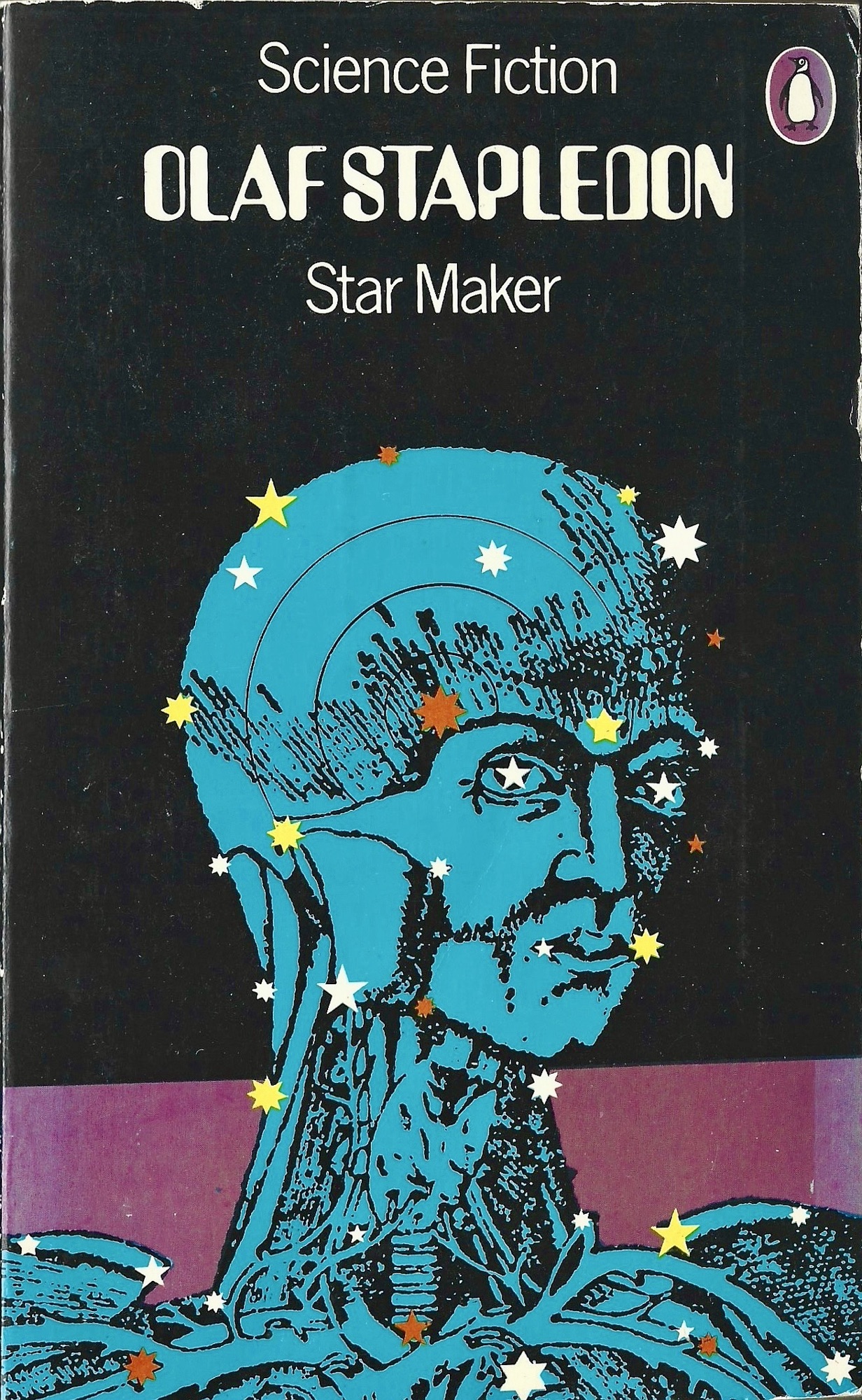
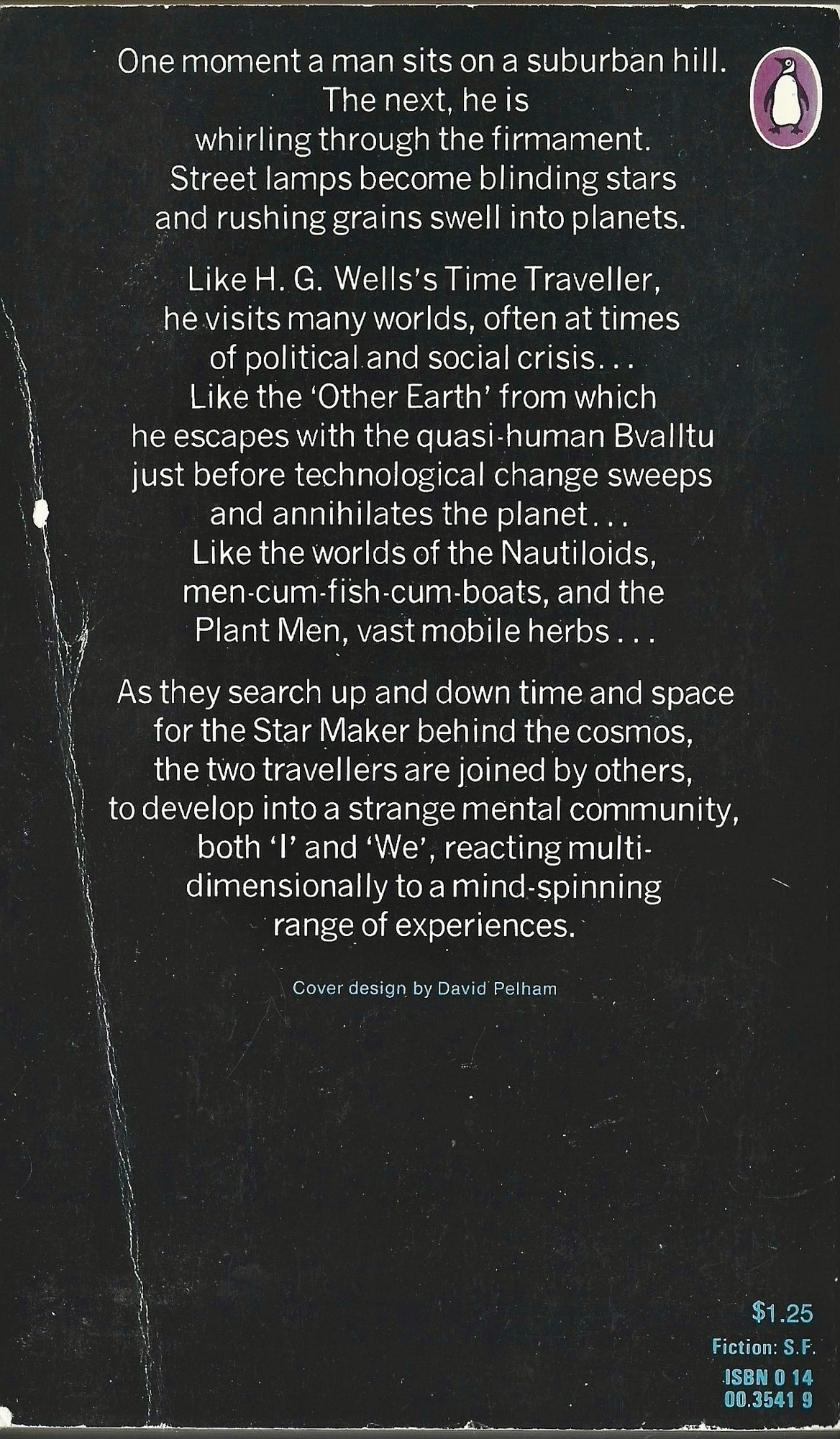
Star Maker, Olaf Stapledon. Penguin Books (1973). Cover design by David Pelham. 268 pages.

Here is the first paragraph of Star Maker:

ONE night when I had tasted bitterness I went out on to the hill. Dark heather checked my feet. Below marched the suburban lamps. Windows, their curtains drawn, were shut eyes, inwardly watching the lives of dreams. Beyond the sea’s level darkness a lighthouse pulsed. Overhead, obscurity. I distinguished our own house, our islet in the tumultuous and bitter currents of the world. There, for a decade and a half, we two, so different in quality, had grown in and in to one another, for mutual support and nourishment, in intricate symbiosis. There daily we planned our several undertakings, and recounted the day’s oddities and vexations. There letters piled up to be answered, socks to be darned. There the children were born, those sudden new lives. There, under that roof, our own two lives, recalcitrant sometimes to one another, were all the while thankfully one, one larger, more conscious life than either alone.

More David Pelham covers here.

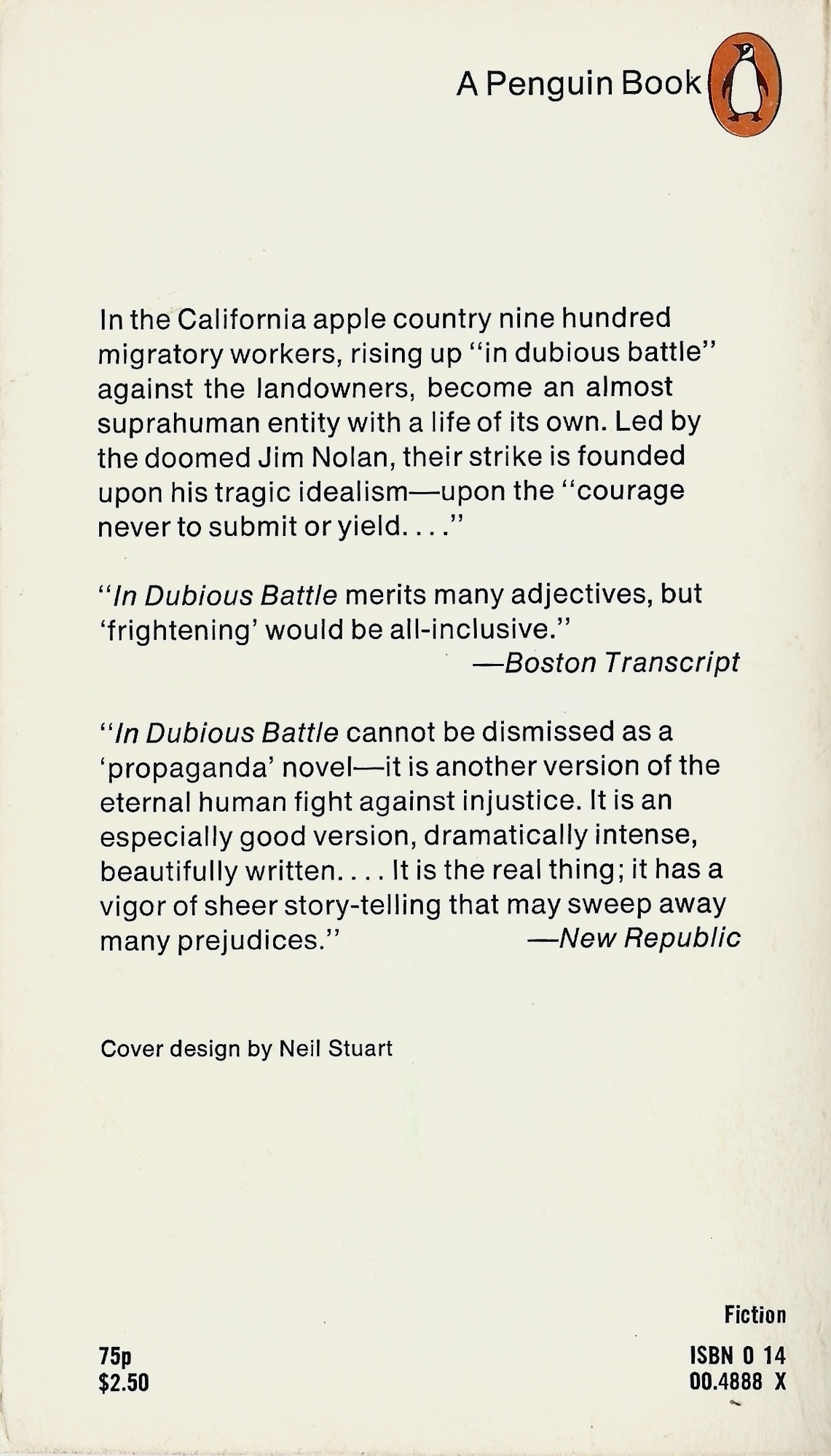
Mass-market Monday | John Steinbeck’s In Dubious Battle

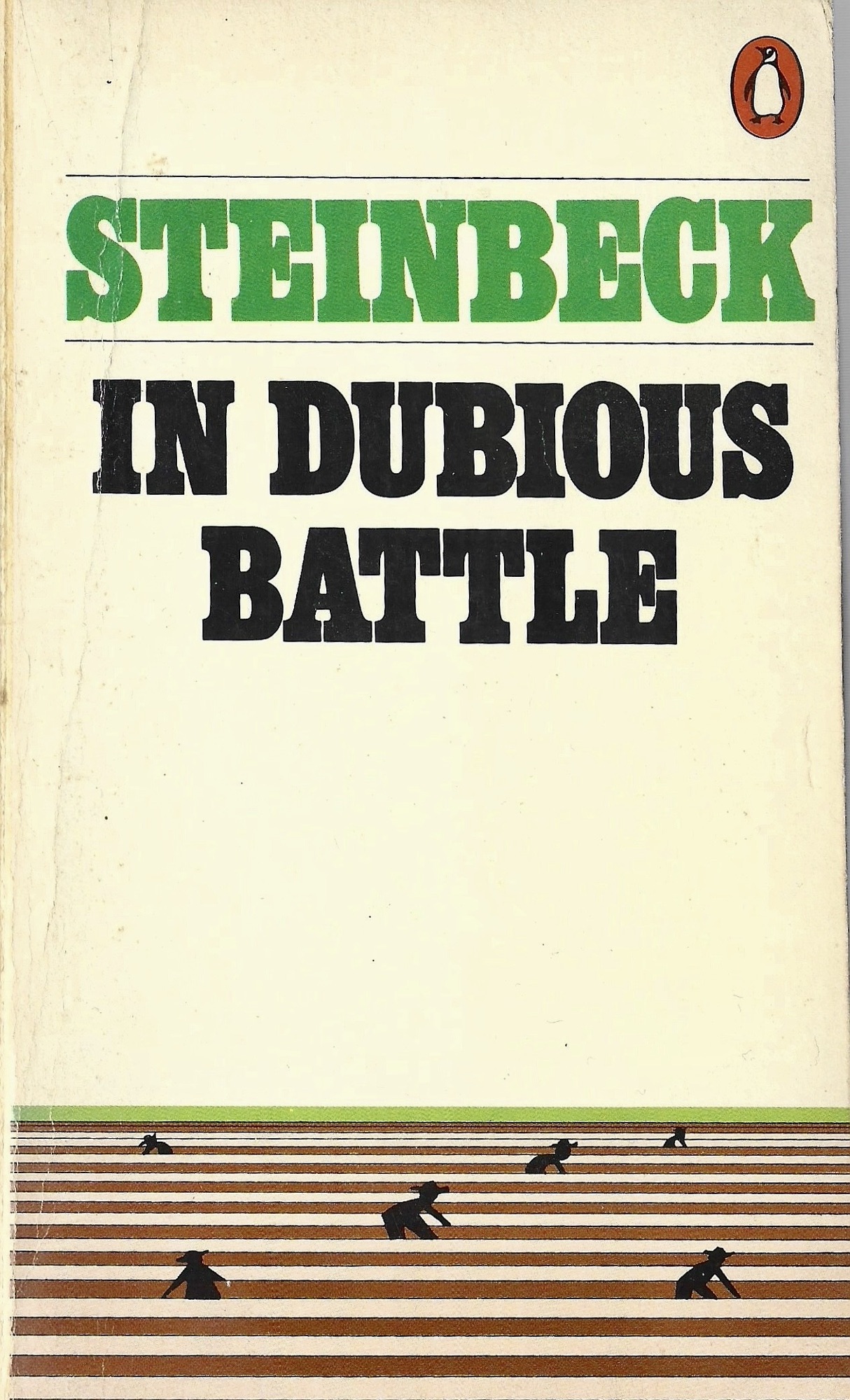
In Dubious Battle, John Steinbeck. Penguin Books (1979). Cover design by Neil Stuart. 313 pages.

John Steinbeck’s underrated and under-read novel In Dubious Battle seems like a good Labor Day mass-market pick. Perhaps Steinbeck’s most radical novel, In Dubious Battle details the fight for better working conditions during the Great Depression in California’s fruit orchards. The hero is young Jim Nolan who joins a labor strike organized by the Communist Party (one of the Party’s officials is named Harry Nilson). Jim is taken under the wing of the veteran organizer Mac McLeod; the pair drive a plot that focuses on the sometimes violent conflict between the workers and the landowners, who use the police and hired thugs to attempt to break the strike. Steinbeck, as is often the case with his serious novels, caps In Dubious Battle with a devastating conclusion, the final line a howl that does not end, its dash carrying the battle into the future, our own future: “Comrades! He didn’t want nothing for himself—“

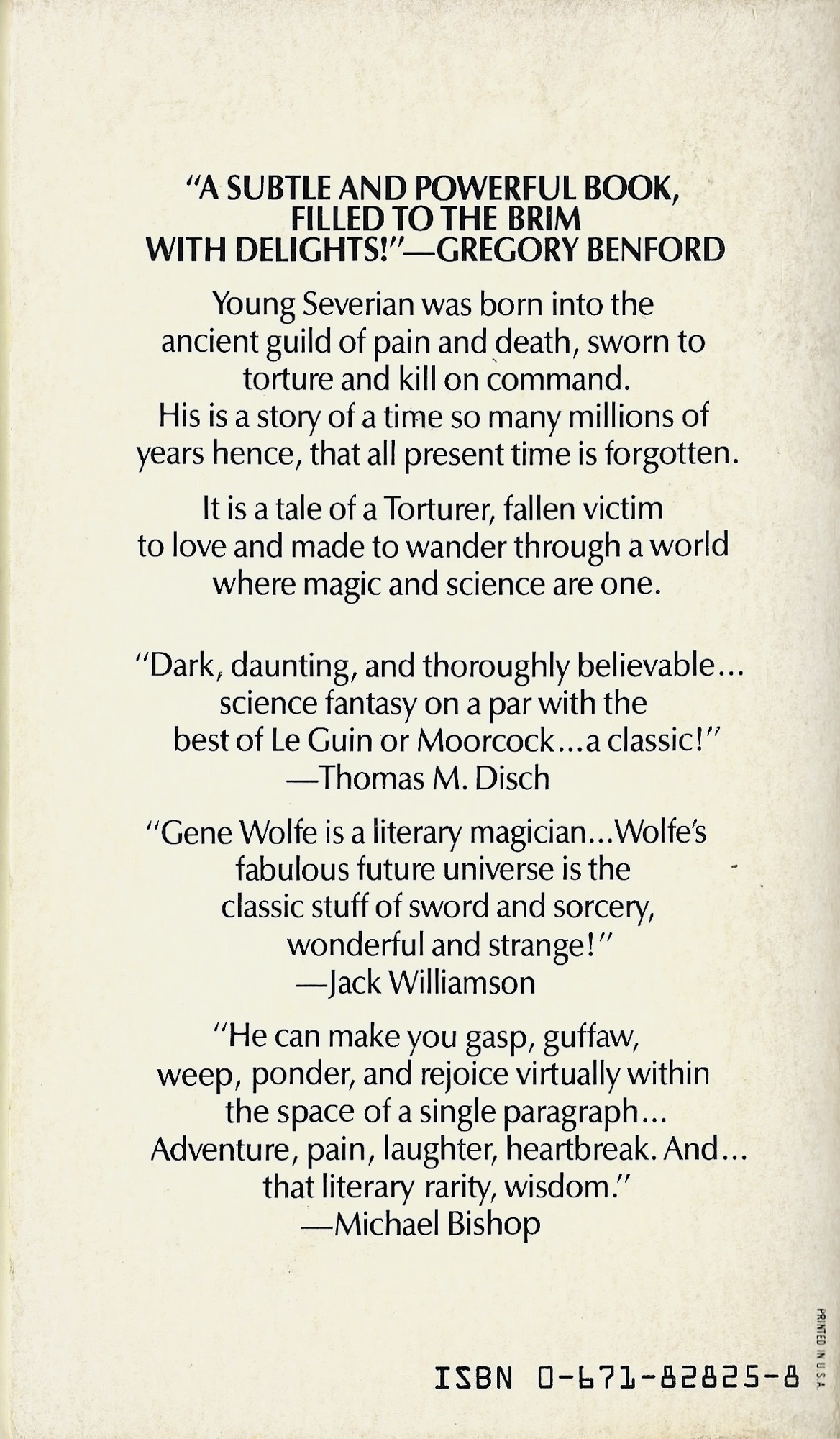
Mass-market Monday | Gene Wolfe’s The Shadow of the Torturer

The Shadow of the Torturer, Gene Wolfe. Timescape/Pocket Books (1981). No cover designer or artist credited. 262 pages.

While no cover artist is credited, Don Maitz is the artist for this edition of The Shadow of the Torturer, as well as for the other three books in Wolfe’s Book of the New Sun tetralogy. Maitz is credited on the dust jackets of the original hardback first editions (Simon & Schuster) of the series.

The Book of the New Sun is absolutely astounding.

From Peter Bebergal’s 2015 New Yorker profile on Wolfe, “Sci-Fi’s Difficult Genius”:

For science-fiction readers, “The Book of the New Sun” is roughly what “Ulysses” is to fans of the modern novel: far more people own a copy than have read it all the way through. A surreal bildungsroman, the book centers on a character named Severian. Trained as a torturer on the planet Urth, where torturers are a feared and powerful guild, Severian betrays his order by showing mercy, allowing a prisoner to kill herself rather than be subjected to his terrible ministrations. He then wanders the land encountering giants, anarchists, and members of religious cults. He eventually meets and supplants the ruler of Urth, the Autarch.

The four books that make up the series are sometimes vexing. A wise reader will keep a dictionary nearby, but it won’t always prove useful. Though Wolfe relies merely on the strangeness of English—rather than creating a new language, like Elven or Klingon—he nonetheless dredges up some truly obscure words: cataphract, fuligin, metamynodon, cacogens. The setting appears medieval, but slowly we tease out that what is ancient to these characters was once our own possible future. A desert’s sands are the glass of a great city, and the creaking steel walls that make up Severian’s cell in the guild dormitory is likely an ancient spaceship. Reading “The Book of the New Sun” is dizzying; at times, you become convinced that you have cracked a riddle, and yet the answer fails to illuminate the rest of the story. Wolfe doesn’t reveal the truth behind any of the central mysteries explicitly, but lets them carry the narrative along. At first, one hopes that they will eventually be resolved. Ultimately, they become less important than Severian’s quest for his own truth.

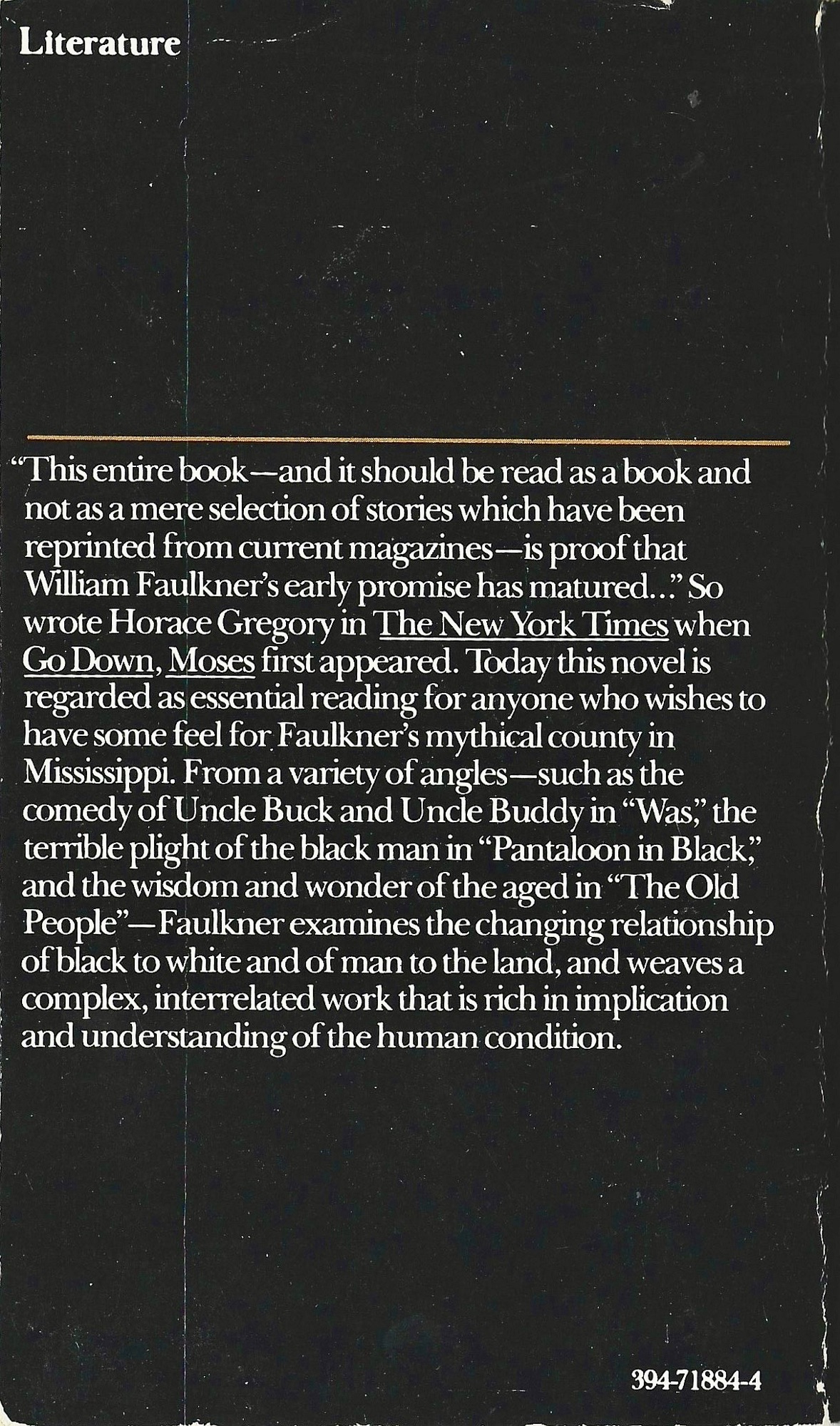
Mass-market Monday | William Faulkner’s Go Down, Moses

Go Down, Moses, William Faulkner. Vintage Books Edition (1971). Cover photo by Robert Wenkham. 383 pages.

Go Down, Moses is my favorite William Faulkner text (some say it’s a collection of stories, but I think it’s a novel). “The Bear” might be the best thing he wrote. Read the opener, “Was.” 

From “Was”:


Isaac McCaslin, ‘Uncle Ike’, past seventy and nearer eighty than he ever corroborated any more, a widower now and uncle to half a county and father to no one

this was not something participated in or even seen by himself, but by his elder cousin, McCaslin Edmonds, grandson of Isaac’s father’s sister and so descended by the distaff, yet notwithstanding the inheritor, and in his time the bequestor, of that which some had thought then and some still thought should have been Isaac’s, since his was the name in which the title to the land had first been granted from the Indian patent and which some of the descendants of his father’s slaves still bore in the land. But Isaac was not one of these:-a widower these twenty years, who in all his life had owned but one object more than he could wear and carry in his pockets and his hands at one time, and this was the narrow iron cot and the stained lean mattress which he used camping in the woods for deer and bear or for fishing or simply because he loved the woods; who owned no property and never desired te since the earth was no man’s but all men’s, as light and air and weather were; who lived still in the cheap frame bungalow in Jefferson which his wife’s father gave them on their marriage and which his wife had willed to him at her death and which he had pretended to accept, acquiesce to, to humor her, ease her going but which was not his, will or not, chancery dying wishes mortmain possession or whatever, himself merely holding it for his wife’s sister and her children who had lived in it with him since his wife’s death, holding himself welcome to live in one room of it as he had during his wife’s time or she during her time or the sister-in-law and her children during the rest of his and after not something he had participated in or even remembered except from the hearing, the listening, come to him through and from his cousin McCaslin born in 1850 and sixteen years his senior and hence, his own father being near seventy when Isaac, an only child, was born. rather his brother than cousin and rather his father than either, out of the old time, the old days.

When he and Uncle Buck ran back to the house from discovering that Tomey’s Turl had run again, they heard Uncle Buddy cursing and bellowing in the kitchen, then the fox and the dogs came out of the kitchen and crossed the hall into the dogs’ room and they heard them run through the dogs’ room into his and Uncle Buck’s room then they saw them cross the hall again into Uncle Buddy’s room and heard them run through Uncle Buddy’s room into the kitchen. Where Uncle Buddy was picking the breakfast up out of the ashes and wiping it off with his apron. “What in damn’s hell do you mean,” he said “turning that damn fox out with the dogs all loose in the house?”

“Damn the fox” Uncle Buck said. “Tomey’s Turl has broke out again. Give me and Cass some breakfast quick we might just barely catch him before he gets there.”

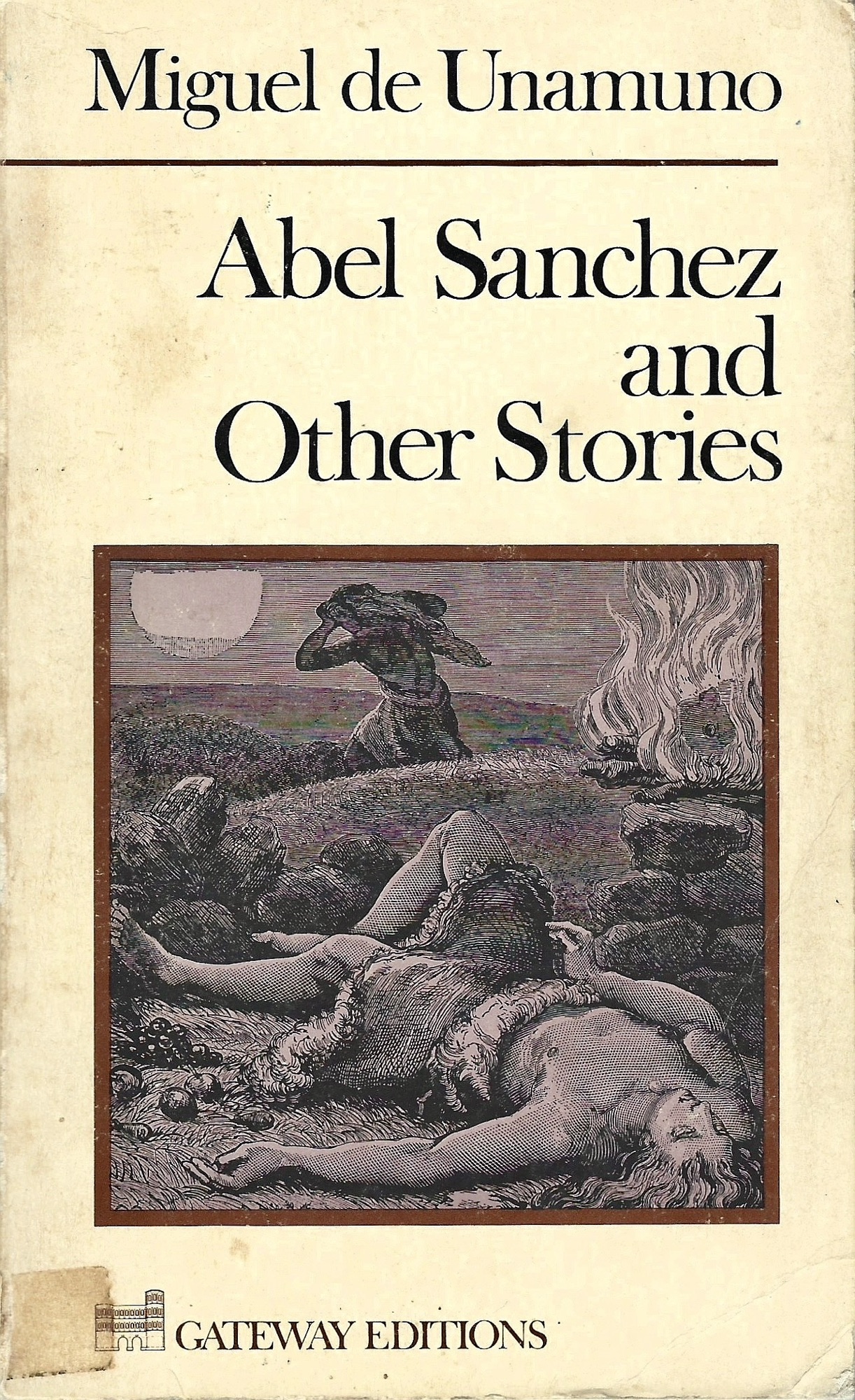
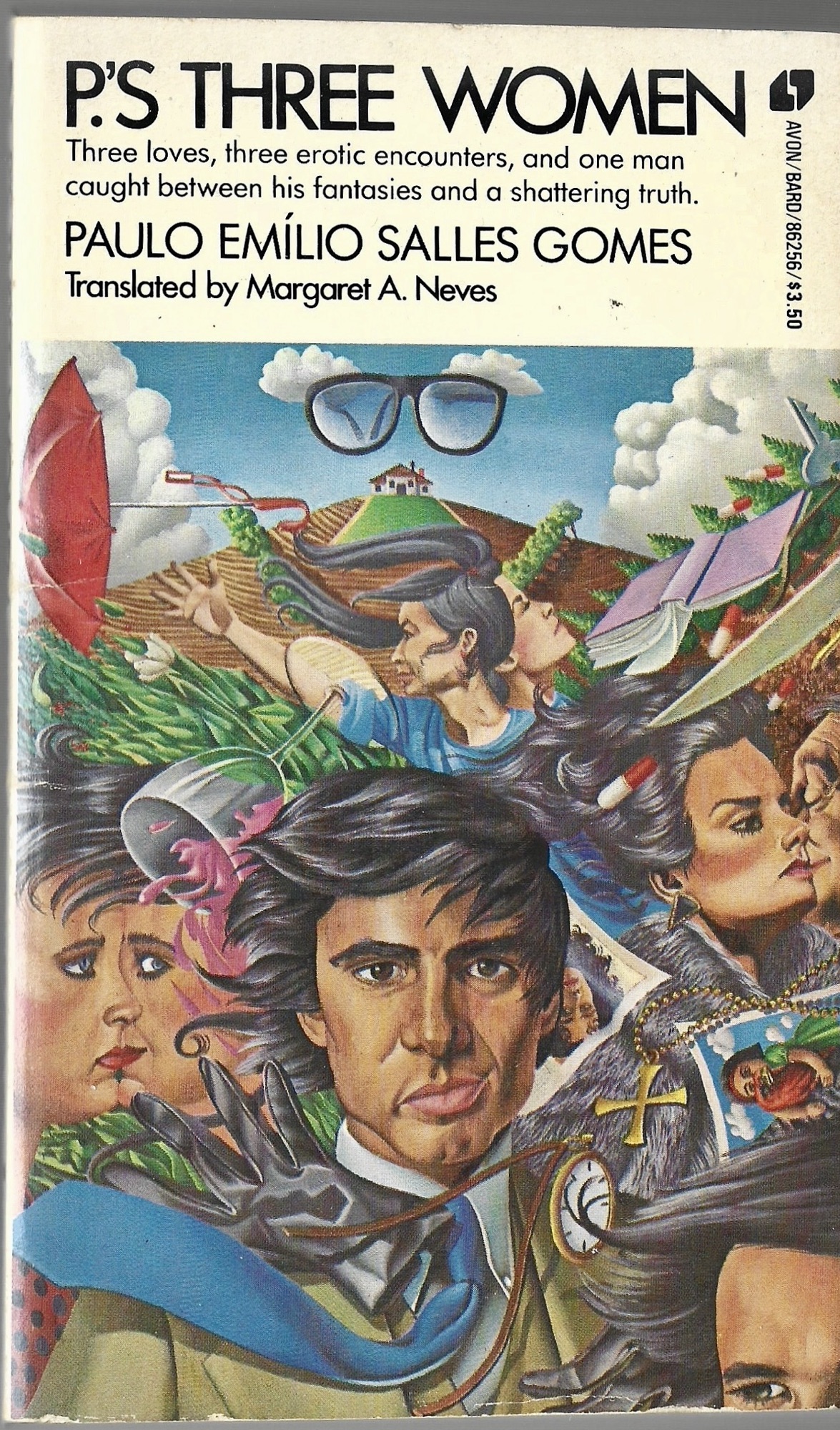
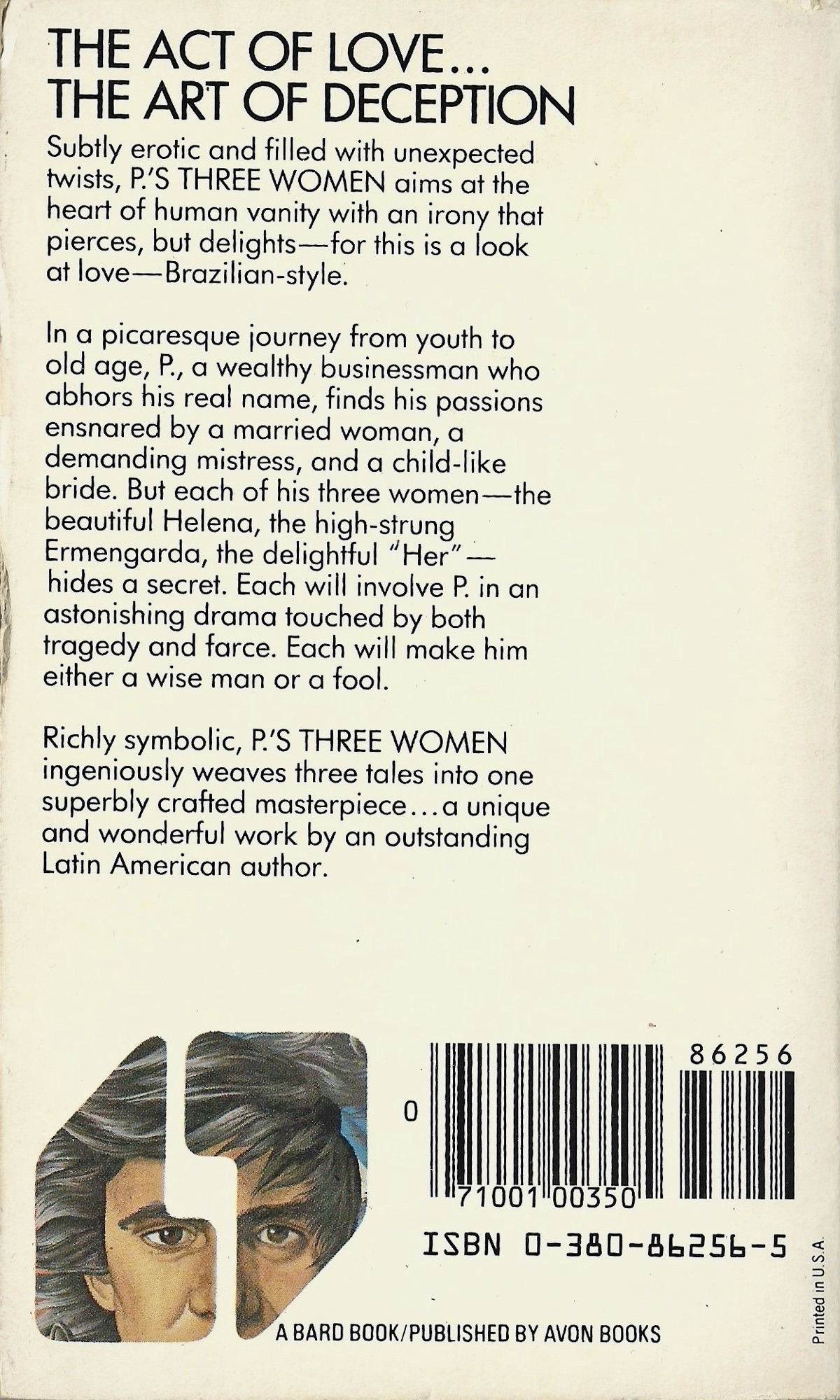
Mass-market Monday | Paulo Emílio Sales Gomes’s P’s Three Women

P’s Three Women, Paulo Emílio Sales Gomes. Translation by Margaret A. Neves. Avon Bard (1984). No cover artist credited. 136 pages.

Gomes’s only novel got a reprint from Dalkey Archive back in 2012 with a new introduction by translator Margaret Neves, who notes that in “Portuguese, the title of this book is Trés Mulheres de trés PPPés. The expression “p-p-p” means chitchat, bla-bla-bla. Hence, three women and their chitchats. In addition to echoing the narrator’s first initial, the term is lightly condescending to the women, just like P himself.”

Mass-market Monday | Stanley Elkin’s The Living End

The Living End, Stanley Elkin. First Warner Books printing (1980). Cover art by Don Ivan Punchatz; cover design by Gene Light; cover type by Richard Nebiola. 141 pages.

An excerpt from The Living End:

God gave a gala, a levee at the Lord’s.

All Heaven turned out.

“Gimme,” He said, that old time religion.” His audience beamed. They cheered, they ate it up. They nudged each other in Paradise.

“What did I tell you?” He demanded over their enthusiasm.

“It’s terrific, isn’t it? I told you it would be terrific. All you ever had to do was play nice. Are you disappointed? Is this Heaven? Is this God’s country? In your wildest dreams-let Me hear it. Good-in your wildest dreams, did you dream such a Treasury, this museum Paradise? Did you dream My thrones and dominions, My angels in fly-over? My seraphim disporting like dolphins, tumbling God’s sky in high Heaven’s high acrobacy? Did you imagine the miracles casual as card tricks, or ever suspect free lunch could taste so good? They should see you now, eh? They should see you now, trembling in rapture like neurological rut. Delicious, correct? Piety a la mode! That’s it, that’s right. Sing hallelujah! Sing Hizzoner’s hosannas, Jehovah’s gee whiz! Well,” God said, .1 that’s enough, that will do.” He looked toward the Holy Family, studying them for a moment.

“Not like the creche, eh?” He said.

“Well is it? Is it?” He demanded of Jesus.

“No,” Christ said softly.

“No,” God said, “not like the creche. just look
at this place- the dancing waters and indirect lighting. I could put gambling in here, off-track betting. Oh, oh, My costume jewelry ways, My game show vision.

Well, it’s the public. You’ve got to give it what it wants. Yes, Jesus?”

“Yes,” Jesus said.

“It just doesn’t look lived in, is that what you think

“Call on someone else,” Christ said.

“Sure,” God said.

“I’m Hero of Heaven. I call on Myself.”

That was when He began His explanations. He revealed the secrets of books, of pictures and music, telling them all manner of things-why marches were more selfish than anthems, lieder less stirring than scat, why landscapes were to be preferred over portraits, how statues of women were superior to statues of men but less impressive than engravings on postage. He explained why dentistry was a purer science than astronomy, biography a higher form than dance. He told them how to choose wines and why solos were more acceptable to Him than duets. He told them the secret causes of inflation-“It’s the markup,” He said-and which was the best color and how many angels could dance on the head of a pin. He explained why English was the first language at Miss Universe pageants and recited highlights from the eighteen-minute gap.

Mary, wondering if she showed yet, was glad Joseph was seated next to her. Determined to look proud, she deliberately took her husband’s hand. So rough, she thought, such stubby fingers. He explained why children suffered and showed them how to do the latest disco steps. He showed them how to square the circle, cautioning afterwards that it would be wrong.

He revealed the name of Kennedy’s assassin and told how to shop for used cars.

Mass-market Monday | Philip K. Dick’s A Maze of Death

A Maze of Death, Philip K. Dick. Dawn Books, first Daw printing (1983). Cover art by Bob Pepper. 191 pages.

In my review of Philip K. Dick’s 1970 novel, I wrote that A Maze of Death is

…a mishmash of metaphysical mumbo jumbo, filtered through touches of space opera and good old fashioned haunted housery. A Maze of Death is a messy space horror that threatens to leave its readers unsatisfied right up until the final moments wherein it rings its sad coda, a reverberation that nullifies all its previous twists and turns in a soothing wash of emptiness. Not the best starting place for PKD, but I’m very glad I read it.

Mass-market Monday | Harry Crews’ A Feast of Snakes

A Feast of Snakes, Harry Crews. Ballantine Books, first edition, first printing (1978). No cover artist credited. 165 pages.

While the cover designer and artist aren’t credited, there is a signature on the back which I believe is “Gentile.” If anyone has a guess as to the artist’s full name I’d be happy to hear it.

From the novel: not quite a recipe for snakes:

When they got to his purple double-wide, Joe Lon skinned snakes in a frenzy. He picked up the snakes by the tails as he dipped them out of the metal drums and swung them around and around his head and then popped them like a cowwhip, which caused their heads to explode. Then he nailed them up on a board in the pen and skinned them out with a pair of wire pliers. Elfie was standing in the door of the trailer behind them with a baby on her hip. Full of beer and fascinated with what Joe Lon could feel—or thought he could—the weight of her gaze on his back while he popped and skinned the snakes. He finally turned and looked at her, pulling his lips back from his teeth in a smile that only shamed him.

He called across the yard to her. “Thought we’d cook up some snake and stuff, darlin, have ourselves a feast.”

Her face brightened in the door and she said: “Course we can, Joe Lon, honey.”

Elfie brought him a pan and Joe Lon cut the snakes into half-inch steaks. Duffy turned to Elfie and said: “My name is Duffy Deeter and this is something fine. Want to tell me how you cook up snakes?”

Elfie smiled, trying not to show her teeth. “It’s lots of ways. Way I do mostly is I soak’m in vinegar about ten minutes, drain’m off good, and sprinkle me a little Looseanner redhot on’m, roll’m in flour, and fry’m is the way I mostly do.”

Mass-market Monday | Ursula K. Le Guin’s The Left Hand of Darkness

The Left Hand of Darkness, Ursula K. Le Guin. Ace Books, first edition (1969). Cover art by Leo & Diane Dillon. 286 pages.

I read all of Le Guin’s Hainish novels eight years ago, and wrote this about The Left Hand of Darkness:

—The Left Hand of Darkness is amazing. Perfect in its strange imperfections and crammed with fables and myths and misunderstandings, it is the apotheosis of Le Guin’s synthesis of adventure with philosophy. Darkness is about shadows and weight. About pulling weight—literally, figuratively. It’s also the story of an ice planet. (A stranger comes to the ice planet!). It’s a political thriller. It’s a sexual thriller. But the impression that lingers strongest: The Left Hand of Darkness is one of the better literary evocations of friendship (its precarious awful strange wonderful tenuous strength) that I’ve ever read.