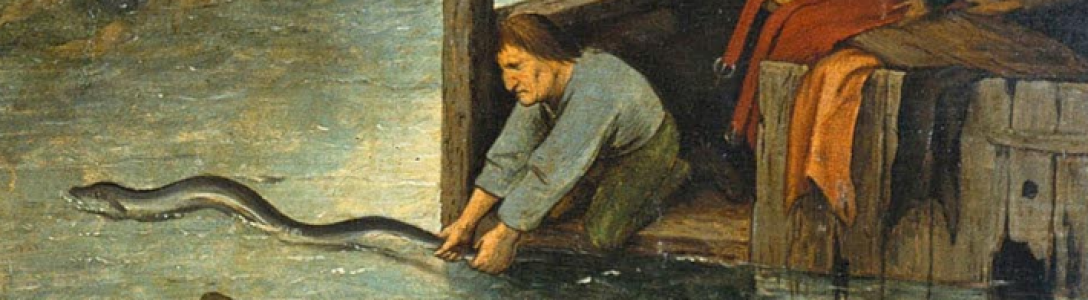
“Prometheus” — Kafka

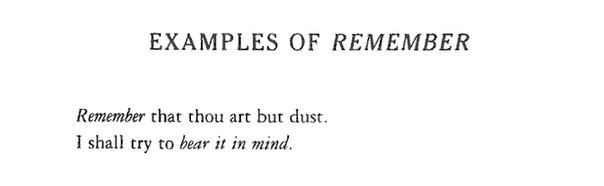
“Examples of Remember” — Lydia Davis

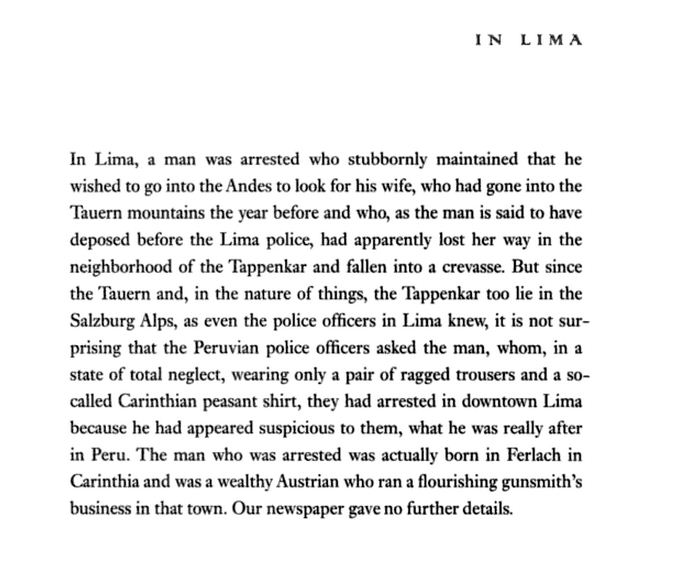
“In Lima” — Thomas Bernhard

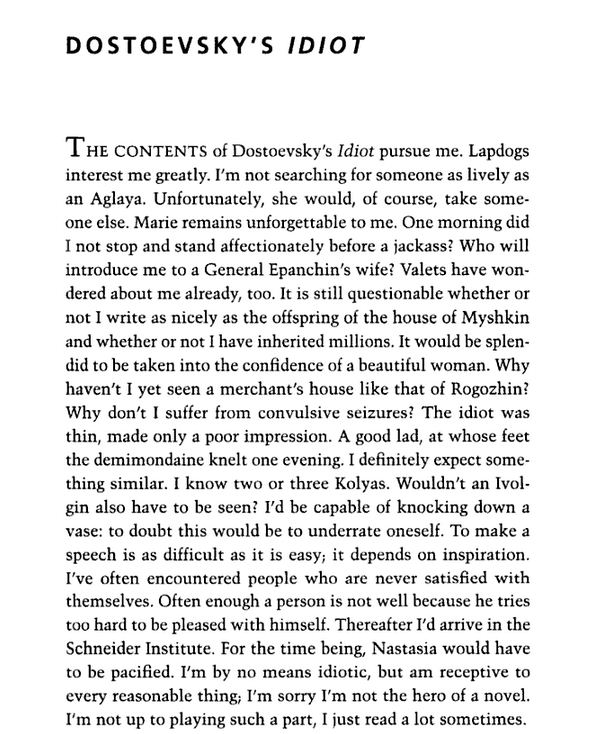
“Dostoevsky’s Idiot” — Robert Walser

“The Image of the Lost Soul” — Saki


“The Image of the Lost Soul” by Saki—

There were a number of carved stone figures placed at intervals along the parapets of the old Cathedral; some of them represented angels, others kings and bishops, and nearly all were in attitudes of pious exaltation and composure. But one figure, low down on the cold north side of the building, had neither crown, mitre, not nimbus, and its face was hard and bitter and downcast; it must be a demon, declared the fat blue pigeons that roosted and sunned themselves all day on the ledges of the parapet; but the old belfry jackdaw, who was an authority on ecclesiastical architecture, said it was a lost soul. And there the matter rested.

One autumn day there fluttered on to the Cathedral roof a slender, sweet-voiced bird that had wandered away from the bare fields and thinning hedgerows in search of a winter roosting-place. It tried to rest its tired feet under the shade of a great angel-wing or to nestle in the sculptured folds of a kingly robe, but the fat pigeons hustled it away from wherever it settled, and the noisy sparrow-folk drove it off the ledges. No respectable bird sang with so much feeling, they cheeped one to another, and the wanderer had to move on.

Only the effigy of the Lost Soul offered a place of refuge. The pigeons did not consider it safe to perch on a projection that leaned so much out of the perpendicular, and was, besides, too much in the shadow. The figure did not cross its hands in the pious attitude of the other graven dignitaries, but its arms were folded as in defiance and their angle made a snug resting-place for the little bird. Every evening it crept trustfully into its corner against the stone breast of the image, and the darkling eyes seemed to keep watch over its slumbers. The lonely bird grew to love its lonely protector, and during the day it would sit from time to time on some rainshoot or other abutment and trill forth its sweetest music in grateful thanks for its nightly shelter. And, it may have been the work of wind and weather, or some other influence, but the wild drawn face seemed gradually to lose some of its hardness and unhappiness. Every day, through the long monotonous hours, the song of his little guest would come up in snatches to the lonely watcher, and at evening, when the vesper-bell was ringing and the great grey bats slid out of their hiding-places in the belfry roof, the brighteyed bird would return, twitter a few sleepy notes, and nestle into the arms that were waiting for him. Those were happy days for the Dark Image. Only the great bell of the Cathedral rang out daily its mocking message, “After joy . . . sorrow.”

The folk in the verger’s lodge noticed a little brown bird flitting about the Cathedral precincts, and admired its beautiful singing. “But it is a pity,” said they, “that all that warbling should be lost and wasted far out of hearing up on the parapet.” They were poor, but they understood the principles of political economy. So they caught the bird and put it in a little wicker cage outside the lodge door.

     That night the little songster was missing from its accustomed haunt, and the Dark Image knew more than ever the bitterness of loneliness. Perhaps his little friend had been killed by a prowling cat or hurt by a stone. Perhaps . . . perhaps he had flown elsewhere. But when morning came there floated up to him, through the noise and bustle of the Cathedral world, a faint heart-aching message from the prisoner in the wicker cage far below. And every day, at high noon, when the fat pigeons were stupefied into silence after their midday meal and the sparrows were washing themselves in the street-puddles, the song of the little bird came up to the parapets — a song of hunger and longing and hopelessness, a cry that could never be answered. The pigeons remarked, between mealtimes, that the figure leaned forward more than ever out of the perpendicular.

One day no song came up from the little wicker cage. It was the coldest day of the winter, and the pigeons and sparrows on the Cathedral roof looked anxiously on all sides for the scraps of food which they were dependent on in hard weather.

“Have the lodge-folk thrown out anything on to the dust-heap?” inquired one pigeon of another which was peering over the edge of the north parapet.

“Only a little dead bird,” was the answer.

There was a crackling sound in the night on the Cathedral roof and a noise as of falling masonry. The belfry jackdaw said the frost was affecting the fabric, and as he had experienced many frosts it must have been so. In the morning it was seen that the Figure of the Lost Soul had toppled from its cornice and lay now in a broken mass on the dustheap outside the verger’s lodge.

     “It is just as well,” cooed the fat pigeons, after they had peered at the matter for some minutes; “now we shall have a nice angel put up there. Certainly they will put an angel there.”

“After joy . . . sorrow,” rang out the great bell.


“Cowshed” — Robert Walser

“Cowshed,” a short story by Robert Walser—

I went to see Bonn. I beheld him in his famous checked Sherlock Holmes suit. The sight of his tawny leather spats devastated me. But it is far from my intention to make so bold as to speak of Bonn, whom I also learned to admire as Edmund Kean in the play by Dumas. Today, with the kind reader’s permission, I wish to speak of the Cowshed, an artistic singsong and jinglejangle establishment that lies in the northern reaches of our beloved city, Berlin. At the Cowshed, among other things, I met and learned to revere beyond all measure a Swiss girl who figured as a waitress there. There are figures galore at the Cowshed. I myself am a not unpopular, at times even celebrated regular. When I set foot on the premises, which are redolent of an aging, half-dead elegance, the publican gets up from his seat where he is keeping watch and greets me with great amicability by making a thoroughly courteous, suave bow, the significance of which is that I should buy a round of cognac. Oh, the conduct I display here at the Cowshed. It resembles the conduct of a Prince Dolgoroucki, a Count Osten-Sacken, a Prince Poniatowski. I always treat the artistes assembled upon the small triangular stage, which is stuck in a corner as if lost in indeterminacy and incertitude, to a boot. The significance of the term boot in localities such as the Cowshed is no doubt unfamiliar to most ladies and gentlemen of a literary bent. A boot of this sort is quite simply a tankard of beer shaped like a lady’s boot, made of glass and holding nearly two liters. The music made at the Cowshed is often ear-rending; nonetheless I do adore it and dream of divinely beautiful things whenever it creeps into my ear to ensnare me with melodies. Invariably I have some refreshment placed upon the fortepiano of the bushy-haired, gasconading lout of a band leader. This amenity, which he loses no time in appreciating and, as for the rest, most artfully guzzling, ah pardon, I mean drinking, consists in nothing other than various glasses of beer. Yes, I do have to say that quite a lot of money exits my pockets at the Cowshed. Excellent interest accrues on the capital thus invested, and this interest takes the form of merriments that give me no end of pleasure. For the most part I am a most cleverly respectable fellow, but at times, at times when the mood happens to strike.

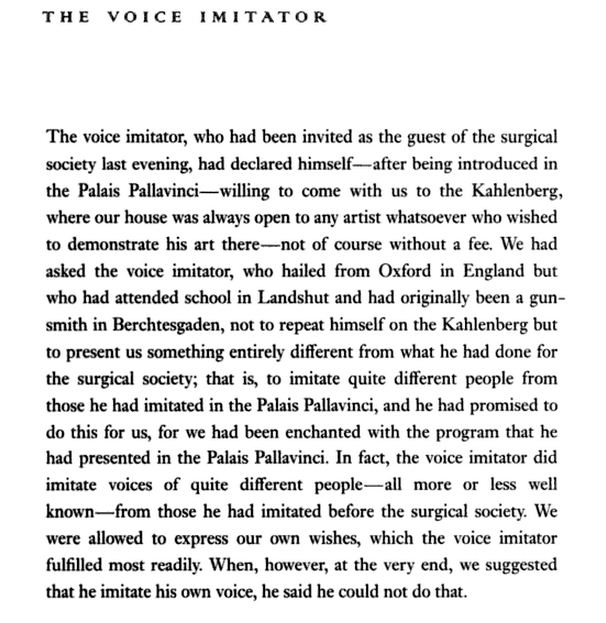
“The Voice Imitator” — Thomas Bernhard

“Descent of Species” — David Eagleman

“New Continent” — Georges Perec

“In the Bedroom” — Gilbert Sorrentino

“In the Bedroom” by Gilbert Sorrentino. From A Strange Commonplace.

“The Yellow Paint” — Robert Louis Stevenson


“The Yellow Paint,” a short fable by Robert Louis Stevenson—

In a certain city there lived a physician who sold yellow paint. This was of so singular a virtue that whoso was bedaubed with it from head to heel was set free from the dangers of life, and the bondage of sin, and the fear of death for ever. So the physician said in his prospectus; and so said all the citizens in the city; and there was nothing more urgent in men’s hearts than to be properly painted themselves, and nothing they took more delight in than to see others painted. There was in the same city a young man of a very good family but of a somewhat reckless life, who had reached the age of manhood, and would have nothing to say to the paint: “Tomorrow was soon enough,” said he; and when the morrow came he would still put it off. She might have continued to do until his death; only, he had a friend of about his own age and much of his own manners; and this youth, taking a walk in the public street, with not one fleck of paint upon his body, was suddenly run down by a water-cart and cut off in the heyday of his nakedness. This shook the other to the soul; so that I never beheld a man more earnest to be painted; and on the very same evening, in the presence of all his family, to appropriate music, and himself weeping aloud, he received three complete coats and a touch of varnish on the top. The physician (who was himself affected even to tears) protested he had never done a job so thorough.

Some two months afterwards, the young man was carried on a stretcher to the physician’s house.

“What is the meaning of this?” he cried, as soon as the door was opened. “I was to be set free from all the dangers of life; and here have I been run down by that self-same water-cart, and my leg is broken.”

“Dear me!” said the physician. “This is very sad. But I perceive I must explain to you the action of my paint. A broken bone is a mighty small affair at the worst of it; and it belongs to a class of accident to which my paint is quite inapplicable. Sin, my dear young friend, sin is the sole calamity that a wise man should apprehend; it is against sin that I have fitted you out; and when you come to be tempted, you will give me news of my paint.”

     “Oh!” said the young man, “I did not understand that, and it seems rather disappointing. But I have no doubt all is for the best; and in the meanwhile, I shall be obliged to you if you will set my leg.”

“That is none of my business,” said the physician; “but if your bearers will carry you round the corner to the surgeon’s, I feel sure he will afford relief.”

Some three years later, the young man came running to the physician’s house in a great perturbation. “What is the meaning of this?” he cried. “Here was I to be set free from the bondage of sin; and I have just committed forgery, arson and murder.”

“Dear me,” said the physician. “This is very serious. Off with your clothes at once.” And as soon as the young man had stripped, he examined him from head to foot. “No,” he cried with great relief, “there is not a flake broken. Cheer up, my young friend, your paint is as good as new.”

“Good God!” cried the young man, “and what then can be the use of it?”

“Why,” said the physician, “I perceive I must explain to you the nature of the action of my paint. It does not exactly prevent sin; it extenuates instead the painful consequences. It is not so much for this world, as for the next; it is not against life; in short, it is against death that I have fitted you out. And when you come to die, you will give me news of my paint.”

“Oh!” cried the young man, “I had not understood that, and it seems a little disappointing. But there is no doubt all is for the best: and in the meanwhile, I shall be obliged if you will help me to undo the evil I have brought on innocent persons.”

     “That is none of my business,” said the physician; “but if you will go round the corner to the police office, I feel sure it will afford you relief to give yourself up.”

Six weeks later, the physician was called to the town gaol.

“What is the meaning of this?” cried the young man. “Here am I literally crusted with your paint; and I have broken my leg, and committed all the crimes in the calendar, and must be hanged tomorrow; and am in the meanwhile in a fear so extreme that I lack words to picture it.”

“Dear me,” said the physician. “This is really amazing. Well, well; perhaps, if you had not been painted, you would have been more frightened still.”


“Absent-minded Window-gazing” — Franz Kafka


Absent-minded Window-gazing

What are we to do with these spring days that are now fast coming on? Early this morning the sky was gray, but if you go to the window now you are surprised and lean your cheek against the latch of the casement.

The sun is already setting, but down below you see it lighting up the face of the little girl who strolls along looking about her, and at the same time you see her eclipsed by the shadow of the man behind overtaking her.

And then the man has passed by and the little girl’s face is quite bright

“Absent-minded Window-gazing” by Franz Kafka.


“The Five Boons of Life” — Mark Twain


“The Five Boons of Life,” a short fable from Mark Twain:

CHAPTER I

In the morning of life came a good fairy with her basket, and said:”Here are gifts. Take one, leave the others. And be wary, chose wisely; oh, choose wisely! for only one of them is valuable.”The gifts were five: Fame, Love, Riches, Pleasure, Death. The youth said, eagerly:”There is no need to consider”; and he chose Pleasure.He went out into the world and sought out the pleasures that youth delights in. But each in its turn was short-lived and disappointing, vain and empty; and each, departing, mocked him. In the end he said: “These years I have wasted. If I could but choose again, I would choose wisely.

CHAPTER II

The fairy appeared, and said:”Four of the gifts remain. Choose once more; and oh, remember-time is flying, and only one of them is precious.”The man considered long, then chose Love; and did not mark the tears that rose in the fairy’s eyes.After many, many years the man sat by a coffin, in an empty home. And he communed with himself, saying: “One by one they have gone away and left me; and now she lies here, the dearest and the last. Desolation after desolation has swept over me; for each hour of happiness the treacherous trader, Love, as sold me I have paid a thousand hours of grief. Out of my heart of hearts I curse him.”

CHAPTER III

“Choose again.” It was the fairy speaking.”The years have taught you wisdom — surely it must be so. Three gifts remain. Only one of them has any worth — remember it, and choose warily.”

The man reflected long, then chose Fame; and the fairy, sighing, went her way.Years went by and she came again, and stood behind the man where he sat solitary in the fading day, thinking. And she knew his thought:”My name filled the world, and its praises were on every tongue, and it seemed well with me for a little while. How little a while it was! Then came envy; then detraction; then calumny; then hate; then persecution. Then derision, which is the beginning of the end. And last of all came pity, which is the funeral of fame. Oh, the bitterness and misery of renown! target for mud in its prime, for contempt and compassion in its decay.”


CHAPTER IV

“Choose yet again.” It was the fairy’s voice.”Two gifts remain. And do not despair. In the beginning there was but one that was precious, and it is still here.””Wealth — which is power! How blind I was!” said the man. “Now, at last, life will be worth the living. I will spend, squander, dazzle. These mockers and despisers will crawl in the dirt before me, and I will feed my hungry heart with their envy. I will have all luxuries, all joys, all enchantments of the spirit, all contentments of the body that man holds dear. I will buy, buy, buy! deference, respect, esteem, worship — every pinchbeck grace of life the market of a trivial world can furnish forth. I have lost much time, and chosen badly heretofore, but let that pass; I was ignorant then, and could but take for best what seemed so.”Three short years went by, and a day came when the man sat shivering in a mean garret; and he was gaunt and wan and hollow-eyed, and clothed in rags; and he was gnawing a dry crust and mumbling:”Curse all the world’s gifts, for mockeries and gilded lies! And miscalled, every one. They are not gifts, but merely lendings. Pleasure, Love, Fame, Riches: they are but temporary disguises for lasting realities — Pain, Grief, Shame, Poverty. The fairy said true; in all her store there was but one gift which was precious, only one that was not valueless. How poor and cheap and mean I know those others now to be, compared with that inestimable one, that dear and sweet and kindly one, that steeps in dreamless and enduring sleep the pains that persecute the body, and the shames and griefs that eat the mind and heart. Bring it! I am weary, I would rest.”

CHAPTER V

The fairy came, bringing again four of the gifts, but Death was wanting. She said:     “I gave it to a mother’s pet, a little child. It was ignorant, but trusted me, asking me to choose for it. You did not ask me to choose.””Oh, miserable me! What is left for me?””What not even you have deserved: the wanton insult of Old Age.”


Dante Legend, as Reported by David Markson

“John Mortonson’s Funeral” — Ambrose Bierce

“John Mortonson’s Funeral,” a very short story by Ambrose Bierce

John Mortonson was dead: his lines in ‘the tragedy “Man”‘ had all been spoken and he had left the stage.

The body rested in a fine mahogany coffin fitted with a plate of glass. All arrangements for the funeral had been so well attended to that had the deceased known he would doubtless have approved. The face, as it showed under the glass, was not disagreeable to look upon: it bore a faint smile, and as the death had been painless, had not been distorted beyond the repairing power of the undertaker. At two o’clock of the afternoon the friends were to assemble to pay their last tribute of respect to one who had no further need of friends and respect. The surviving members of the family came severally every few minutes to the casket and wept above the placid features beneath the glass. This did them no good; it did no good to John Mortonson; but in the presence of death reason and philosophy are silent.

As the hour of two approached the friends began to arrive and after offering such consolation to the stricken relatives as the proprieties of the occasion required, solemnly seated themselves about the room with an augmented consciousness of their importance in the scheme funereal. Then the minister came, and in that overshadowing presence the lesser lights went into eclipse. His entrance was followed by that of the widow, whose lamentations filled the room. She approached the casket and after leaning her face against the cold glass for a moment was gently led to a seat near her daughter. Mournfully and low the man of God began his eulogy of the dead, and his doleful voice, mingled with the sobbing which it was its purpose to stimulate and sustain, rose and fell, seemed to come and go, like the sound of a sullen sea. The gloomy day grew darker as he spoke; a curtain of cloud underspread the sky and a few drops of rain fell audibly. It seemed as if all nature were weeping for John Mortonson.

When the minister had finished his eulogy with prayer a hymn was sung and the pall-bearers took their places beside the bier. As the last notes of the hymn died away the widow ran to the coffin, cast herself upon it and sobbed hysterically. Gradually, however, she yielded to dissuasion, becoming more composed; and as the minister was in the act of leading her away her eyes sought the face of the dead beneath the glass. She threw up her arms and with a shriek fell backward insensible.

     The mourners sprang forward to the coffin, the friends followed, and as the clock on the mantel solemnly struck three all were staring down upon the face of John Mortonson, deceased.

They turned away, sick and faint. One man, trying in his terror to escape the awful sight, stumbled against the coffin so heavily as to knock away one of its frail supports. The coffin fell to the floor, the glass was shattered to bits by the concussion.

From the opening crawled John Mortonson’s cat, which lazily leapt to the floor, sat up, tranquilly wiped its crimson muzzle with a forepaw, then walked with dignity from the room.


“The Maid” — Robert Walser

“Enlightened” — Lydia Davis