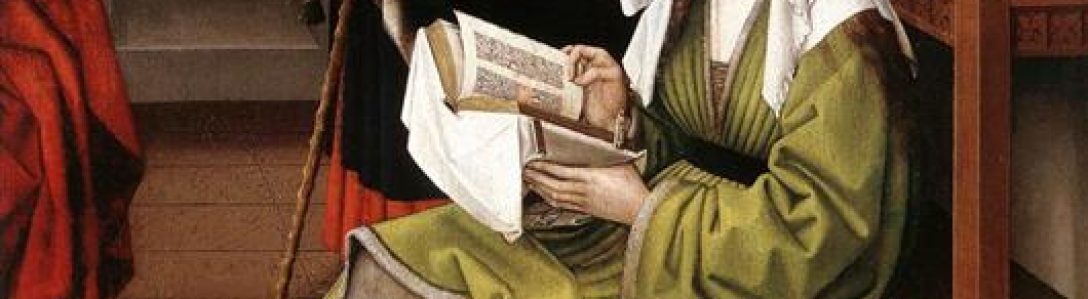
Grave of a Suicide Victim — Wilhelm Kotarbinski

“Montparnasse” — Ernest Hemingway

Suicide as a National Folk Art (Thomas Bernhard’s Correction)

Suicide, Luc Tymans

In this passage from Thomas Bernhard’s Correction we can see the strange, bleak, black humor that characterizes the novel:

It’s a folk art of sorts, I said to Hoeller, always longing to kill oneself but being kept by one’s watchful intelligence from killing oneself, so that the condition is stabilized in the form of lifelong controlled suffering, it’s an art possessed only by this people and those belonging to it. We’re a nation of suicides, I said, but only a small percentage actually kill themselves, even though ours is the highest percentage of suicides in the world, even though we in this country hold the world’s record for suicide, I said. What mainly goes on in this country and among these people is thinking about suicide, everywhere, in the big cities, in the towns, in the country, a basic trait of this country’s population is the constant thought of suicide, they might be said to take pleasure in thinking constantly, steadily, without allowing anything to distract them, about how to do away with themselves at any time. It is their way of keeping their balance, I said, to think constantly about killing themselves without actually killing themselves. But of course the rest of the world doesn’t understand, and so whatever they think about us and regardless of what they say about us and of how they always and invariably treat us, every single one of us, they are all wrong. It’s a simple fact, I said, that our country is misunderstood, no matter how well intentioned the rest of the world may appear, what it sees when it looks at Austria and its people is total madness as a stable state of mind, a constant.

(For those interested: Austria currently ranks 24th in the world in suicide per capita)


Chris Ware on DFW’s Novel The Pale King

Crippled Robot painting by Chris Ware

Cartoonist/graphic novelist/chronicler of shame and despair Chris Ware wrote about his favorite books for Foyles bookstore. The list includes UlyssesMoby-Dick, and works by cartoonists like Lynda Barry and Ivan Brunetti. Here’s what Ware wrote about David Foster Wallace’s posthumous novel The Pale King:

The first great novel of the 21st century uses the sinister beauty of the American Tax Code as a springboard from which to launch into a genuinely serious discussion of the origins and importance of civic responsibility amidst the hazy, blurred stupidity of a country in quick decline. Contrary to many reviews, I don’t think it’s about boredom, and it’s certainly not boring. Another posthumous editor-to-manuscript resuscitation, the book hangs heavy with the clotted spectre of Wallace’s suicide, which makes the writing glow all the more painfully through it.

Anne Sexton Reads “Wanting to Die”

“A Nice, Modest, Ethical Suicide” — Slavoj Žižek

Ernest Hemingway’s Suicide Gun

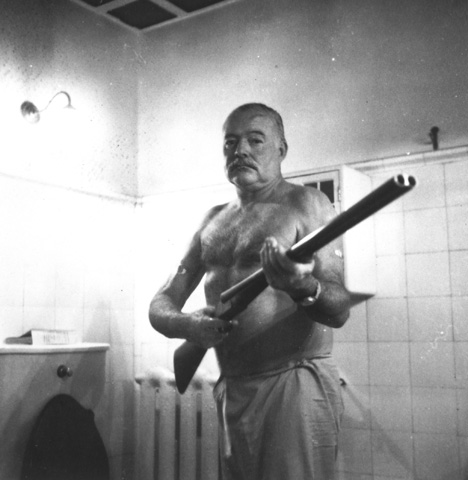
Garden & Gun ran a short piece on Ernest Hemingway’s guns last year, and linked to a slideshow of the famous author (who killed himself 50 years ago today) with his guns. From the article—

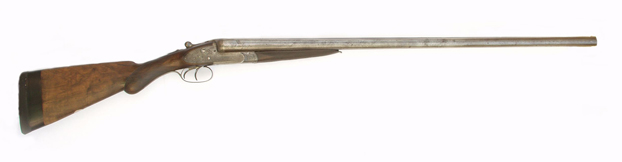
When Ernest Hemingway took his own life on July 2, 1961, it was reported in Life magazine that he had done so with a “double-barreled shotgun.” Further reports specified the gun was a Boss that he had purchased from Abercrombie & Fitch, and for years this has been widely accepted as fact. But a fascinating new book, Hemingway’s Guns, by Silvio Calabi, Steve Helsley, and Roger Sanger (Shooting Sportsman Books), makes the case that Hemingway never owned a Boss, and that the suicide gun was actually made by W. & C. Scott & Son. It was Hemingway’s pigeon gun, a long-barreled side-by-side that traveled with him from shooting competitions in Cuba to duck hunts in Italy to a safari in East Africa. By all accounts it was a favorite.

Not long after that tragic day in Ketchum, Idaho, the gun was given to a local welder to be destroyed. “The stock was smashed and the steel parts cut up with a torch,” the authors write. “The mangled remnants were then buried in a field.” Roger Sanger visited the welding shop, which is still in business and being run by the grandson of the original proprietor. Amazingly, the welder still had a few pieces of the gun in a matchbox, and Sanger’s immediate reaction to the evidence was, “This is no Boss.” After showing pictures to a number of experts and collectors, he confirmed that it was most likely Hemingway’s beloved W. & C. Scott that had been the suicide gun.

A W. & C. Scott & Son Monte Carlo B—Serial No. 60293, c. 1898

For DFW

This post will be full of typos and rhetorical slips and just generally bad writing. I’m just gonna write and post and I won’t bother editing. Sorry.

This morning, after BLTs with wife and child I checked my email. My buddy Damon sent me this article from the New York Times. Damon’s subject line, “David Foster Wallace dead at 46 (suicide)” kinda blew my mind. I didn’t get past the first lines of the Times report before tears started coming out of my eyes.

I’ve read all of DFW’s books, and, as corny as it sounds, the majority of them spoke so directly to me, so intimately, that I feel as if I’ve lost someone I knew. I’m sure that this isn’t the case at all, because he’s a writer and I’m his audience. He’s not friends or family. But reading him doesn’t feel that way. I would describe his style as a really, really good friend sitting on the couch with you, telling you stories that were both painfully funny and painfully sad. Infinite Jest provided a world of escape–a world I became addicted to–when I felt lonely in a foreign country I’d moved to. Girl with Curious Hair changed forever the way I thought about writing and reading–it opened me up to a whole new bank of authors and styles. But it’s probably DFW’s essays that hit me most directly.

Anyone who’s read the title essay from A Supposedly Fun Thing I’ll Never Do Again, or “Getting Away from Already Being Pretty Much Away from It All” from that same collection knows just how funny and insightful and analytical Wallace could be–all without any of the caustic meanness a lesser writer might employ. DFW’s essays–and fiction–are always negotiating the razor line between earnest emotion and ironic detachment. He hated the latter but understood it was part of a cultural mode, part of the counter-tradition of post- or meta- fiction that he was continuing and responding to with his own writing. The two essays that probably best exemplify this are a Fun Thing‘s “E Unibus Pluram: Television and U.S. Fiction” (this should be required reading for every thinking person) and “Authority and  American Usage,” DFW’s take on who-decides-what-is-proper-grammar-and-diction (collected in Consider the Lobster). I was re-reading the essay last Thursday and last night, with the intention to finish it today, with the intention to use it as part of something else I had planned to write. It will be impossible to finish it with the same reading schema in mind.

Just last week I listened to DFW reading from some as-yet-unpublished stuff; one section, on an overachieving boy that everyone hates is hilarious. The crowd is sometimes laughing too hard for DFW to maintain his rhythm and he has to slow down. In the interview that follows the reading, DFW seems like a really sweet, honest guy.

I remember distinctly my cousin calling me, well over a decade ago now, to tell me that Kurt Cobain had shot himself. I felt nothing then–it seemed perfectly logical. I was a huge Nirvana fan; they were my first concert and a big musical/cultural determiner in my young life. But his suicide seemed normal, natural even to me. I remember thinking “Of course.” When Hunter S. Thompson committed suicide, it seemed strange to me that he’d taken so long to do it. And when one of my favorite writers of all time, Kurt Vonnegut, passed away last year, I felt sad, but not so sad. So it goes.

This, this devastates me though. How could he hang himself? Why? I feel selfish and sad. Will we get another novel? Is it wrong to feel this way? I’m pretty sure that it’s wrong. I think about his body, hanged, and it makes me sick. I honestly felt close to this person. Unlike DeLillo or Pynchon or Barth, there was no veil or mediation in Wallace’s greatest work, no distance between his voice, or his speakers’ voices and my own burning internal ear. I have no pithy statement or philosophical wax for this piece, I have no way of summing up here. I feel sick.