Reminder: The Lost Books of the Odyssey Giveaway Ends This Friday

The kind folks at Picador are offering you, dear reader, a chance to win one of two copies of Zachary Mason’sThe Lost Books of the Odyssey, a dazzling re-imagining of Homer’s epic tale. And you’ll want to read this book, folks. Here’s a snippet from our review–

In his preface to The Lost Books of the Odyssey, author Zachary Mason tells us that before the story we now know as the Odyssey was organized by the poet Homer, the “material was formless, fluid, its elements shuffled into new narratives like cards in a deck.” Mason’s goal in The Lost Books is to echo these older versions of the story of Odysseus, omitting “stock epic formulae in favor of honing a single trope or image down to extreme clarity.” He succeeds admirably — Lost Books is an engaging and perplexing work that challenges our assumptions about one of the most foundational stories of Western literature. Mason’s “novel” (it is not really a novel, of course) strikes a wonderfully resonant and deeply upsetting chord, disrupting our sense of narrative satisfaction, breaking us away from the outcomes we thought we knew.

So, how do you get your grubby little hands on a copy? First, you need to have a U.S. mailing address. Second, you need to email us at biblioklept.ed@gmail.com, responding to this simple prompt: Who is your favorite character in The Odyssey, and why? Our esteemed judges will choose the winners from the best responses and post them as an announcement this Friday Saturday. Good luck!

“It Sounds Like the Title of a David Lynch Film” — A Passage from Roberto Bolaño’s 2666

A passage from Roberto Bolaño’s opus 2666

The card for the Santa Teresa cybercafe was a deep red, so red that it was hard to read what was printed on it. On the back, in a lighter red, was a map that showed exactly where the cafe was located. He asked the receptionist to translate the name of the place. The clerk laughed and said it was called Fire, Walk With Me.

“It sounds like the title of a David Lynch film,” said Fate.

The clerk shrugged and said that all of Mexico was a collage of diverse and wide-ranging homages.

“Every single thing in this country is an homage to everything in the world, even the things that haven’t happened yet,” he said.

After he told Fate how to get to the cybercafe, they talked for a while about Lynch’s films. The clerk had seen all of them. Fate had seen only three or four. According to the clerk, Lynch’s greatest achievement was the TV series Twin Peaks. Fate liked The Elephant Man best, maybe because he’d often felt like the elephant man himself, wanting to be like other people but at the same time knowing he was different. When the clerk asked him whether he’d heard that Michael Jackson had bought or tried to buy the skeleton of the elephant man, Fate shrugged and said that Michael Jackson was sick. I don’t think so, said the clerk, watching something presumably important that was happening on TV just then.

“In my opinion,” he said with his eyes fixed on the TV Fate couldn’t see, “Michael knows things the rest of us don’t.”

“We all know things we think nobody else knows,” said Fate.

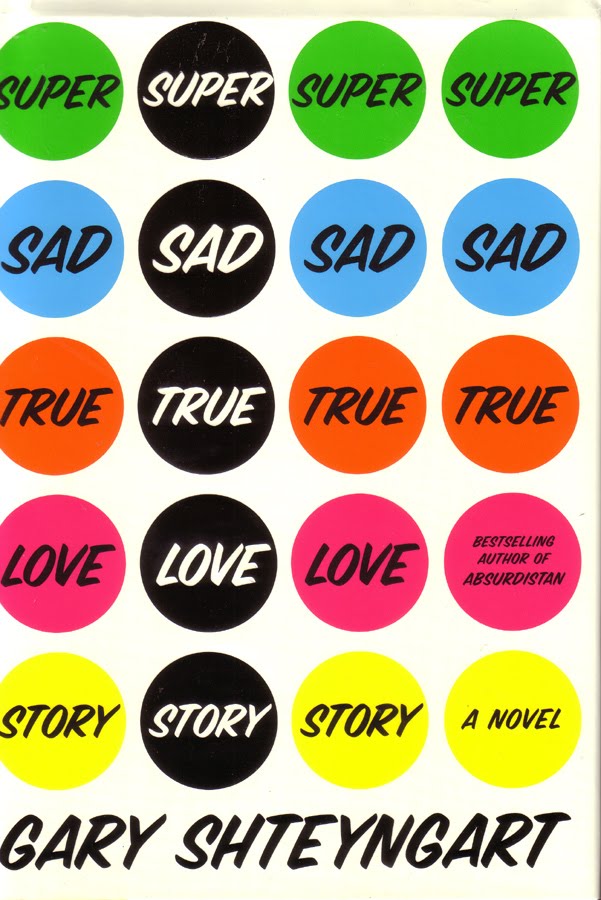
I Super Hated Gary Shteyngart’s Super Sad True Love Story

At a certain point, I was inclined to write a thoughtful review of Gary Shteyngart’s much-lauded, truly awful novel Super Sad True Love Story, the kind of review that might try to weigh Shteyngart’s choked May-December romance against its dystopian background. That was a few chapters in, a point at which I’d gotten past the realization that Shteyngart was going to do nothing new with the dystopian genre I so love, yet still early enough for me to think that he might have something to say about American culture and politics in the early 21st century. There’s nothing there, though — Super Sad True Love Story subscribes to the normal dystopian program of synthesizing 1984 and Brave New World through a contemporary lens, yet what we’re left with is Shteyngart’s observation that people might not like to read as much as they used to.

Obligatory plot summary: it’s America a few decades down the line–not enough to account for the change that Shteyngart proposes–an America under Bipartisan rule, a country without an elected President, at war with Venezuela, heavily indebted to China, and essentially ruled by a corporatocracy. People no longer read, they only scan data from their ever-present “äppäräti,” screen media devices they are addicted to through which they shamelessly broadcast every last piece of personal data. Sound familiar? Sure. (Those damn kids with their Facebooks!)

Shteyngart’s hero is Lenny Abramov, son of immigrant Russian Jews. Lenny works for Post-Human Services, a company that aims to extend human life indefinitely– as long as you’re very, very rich. This is Lenny’s obsession. For some reason, never fully explained (although painfully and boringly explored) Lenny wants to live forever. I suppose Shteyngart is trying to parody America’s obsession with youthfulness, only the parody is not funny and never insightful. Lenny meets a Korean-American girl named Eunice Park while spending some Bohemian time in Italy. Eunice is twenty years his junior, yet Lenny falls madly for her right away, for no good reason, at least not for any reason that we, the readers, are given to understand. It’s real old-white-boy-meets-young-Asian-girl-territory, which Shteyngart seems to understand yet seems too embarrassed (rightfully) to properly remark upon.

The backdrop of this romance is an American dystopia that Shteyngart wishes was as affecting as Alfonso Cuaron’s Children of Men. Hey, you know what? Watch Children of Men again instead of reading Shteyngart’s super boring book. And I think I won’t waste anymore time detailing Shteyngart’s super boring plot, a plot that seems to have no idea where its going, yet is, at all turns, overwhelmingly self-satisfied (and derivative). Shteyngart wants to write an end-of-America epic, yet nothing he says is worth re-remarking upon — yes, it seems like people are increasingly facile; yes, young people seem increasingly willing to forsake traditional ideas of privacy; yes, we owe the Chinese government some money. Sam Lipsyte does it all way better in The Ask, a book that doesn’t have to borrow its plot from every dystopian that came before it.

That Shteyngart has written a poor dystopian novel offends me at a literary-type level, but I’m also offended by his myopic regionalism, which, as I just mentioned, he tries to pass off as Americanism. For Shteyngart, New York City is America, and the (relatively) newly immigrated populations he places in his fictionalized NYC are far-more American than anyone else, particularly the dumb-ass-hick-redneck-Southerners he throws into the city as transplanted bad guys. Shteyngart’s Southern grotesques are mere props, barely thought out stereotypes that offend me as both a reader and a Southerner — and yet, they are just as facile as his leads.

Speaking of offensive and facile, there’s a moment at the end of the book when a critic takes the time to reflect on the publication of Lenny’s diaries and Eunice’s emails (not called “emails,” but Jesus Christ I’m not going to waste more time explaining the book’s silly recoding of contemporary culture) — it’s surreal in its tackiness, an overt act of literary criticism upon the rest of the book, one which attempts to focus a specific viewpoint upon the narrative proper. Like the rest of the book it fails miserably, and yet is indicative of Shteyngart’s needy, whiny program.

But why end negatively? There are plenty of great dystopian novels out there — Margaret Atwood’s Oryx and Crake and The Year of the Flood, almost anything by William Burroughs, Disch’s Camp Concentration, Aldous Huxley’s sorely under-read Ape and Essence, Cormac McCarthy’s Blood Meridian, which understands that it’s always the end of the world, more or less all of Philip K. Dick, Riddley Walker, Cloud Atlas, shit, even Roberto Bolaño. Just don’t waste your time with Shteyngart’s super sorry book.

Terrence Malick in Badlands

Here’s director Terrence Malick in his uncredited role in Badlands

Story behind the appearance, from this 2009 interview

Malick also tells us that “Badlands” features his one and only appearance as an actor. “This actor was supposed to show up at 9:30 in the morning for a small scene. We waited, the hours passed, and he didn’t show up. In the end we couldn’t afford to keep waiting, so I put on the cowboy’s hat and performed the part myself.”

“I prefer working behind the camera,” he added with a smile.

The Instructions — Adam Levin

Adam Levin’s début novel The Instructions is long. It’s very long. It’s too long.

Or, more to the point, it’s too long to be so mediocre.

This is not a fair criticism, especially considering that I have only read about 35.5% of the book. 8 chapters. 366 pages. I have no conclusive evidence that the next 664 pages won’t be the kind of mind-blowing read that can justify taking up over a thousand pages. Significantly though, there’s nothing in the first 366 pages that especially compels me to continue reading. I give up. I abandon it. Although reading is hardly a quantitative experience — reading and digesting a page of Melville requires more sustained concentration and energy than a page of, say, Bukowski — it stands to reason that I can read two or three novels in the time it would take finish The Instructions. And if I spend my (limited, I am a human and am going to die at some point) reading time reading three novels instead of finishing Levin’s book, it’s likely that at least one of them might be good, even great, while I’m pretty sure that The Instructions is going to continue its middling trajectory.

So what’s it about? It must have had an interesting premise for me to read 366 pages, right?

Gurion ben-Judah Maccabee is a 10 year-old seventh grader (he’s been promoted, sort of) who is forced to attend a special program called “The Cage” after being expelled from his first three schools for various violent acts. Gurion is a hyper-intelligent, budding rabbinical scholar with serious Torah-interpreting skills. He’s also pretty much the toughest kid at Aptakisic Junior High, where, despite being only ten, he kicks ass left and right (his mom is a former Israeli commando). The novel takes place over four days in 2006, as Gurion declares his love for June Watermark, meets a new friend, and begins to rally the behavioral disorder kids against The Cage’s totalitarianism.

The opening scene of the novel is an engaging piece — Gurion and two friends take turns simulating water boarding on each other during a gym class held in a pool. Then, in the locker room, a fight. Gurion loves to fight, despite his inkling — or, at least the inkling of others — that he may be the potential messiah. This obsession with Jewish (“Israelite,” Gurion would correct me) identity seems to be the main thrust of the novel. Gurion, who is the “author” of the novel (which he refers to as “scripture”) speaks authoritatively and eruditely about Torah and religious philosophy. In fact, he speaks like a fully matured scholar who has taught and studied religious philosophy for decades. One can allow this conceit of the novel: sure, Gurion is special, he can fight, he’s a genius, sure, that’s what drives the plot–but Levin wants to extend this genius, or at least rhetorical flair, to almost every other character.

The effect is by turns grating and numbing, as we are subjected to page after page of dialog that is meant to sound witty or empathetic or just plain flavorful but is more often silly or inauthentic or, at worst, too fucking precious for words. The cartoonish dialog, rife with fake slang that no middle school kids ever used, wouldn’t be so bad on its own; in fact, it seems to go hand in hand with Levin’s goal, which appears to be slapstick of some kind. Only he (or Gurion) repeatedly calls attention to the slapstick, commenting on it, even pointing out how the reader should appreciate it.

This meta-textual attention is at work at all times. In particular, it’s there in the long (oh my god are they long) descriptions of each and every action that takes place in the prose. Gurion feels the need to analyze every last little detail, to load it with preternatural significance; these lengthy passages scream for an editor. The arrangement of the text is of course meta-textual as well: it purports to be a work of Gurion’s authorship, and includes a variety of texts from his “personal file” including emails, detention records, essay assignments, and, in one glaring case of squandered potential, a psychological report. And yet in all these documents, there does not seem to be any perspective outside of Gurion’s; when Gurion’s therapist comments on his behavior we learn nothing new, nothing different — we only see a confirmation of Gurion’s highly perceptive intelligence. It is grand solipsism on the largest of scales.

Which brings me to the David Foster Wallace comparisons, which are probably what got me interested in The Instructions in the first place. Granted, The Instructions may have facile similarities to Infinite Jest, but the books differ tremendously in how the reader must engage them. IJ is pluralistic and heteroglossic; The Instructions is essentially a monologue. IJ invites the reader to play, to pursue mystery; The Instructions, despite its volume, seems to contain just one mind. And maybe that’s the problem. Reviewers have compared Gurion to Hal Incandenza — and it’s true, both are bright, troubled young men — but The Instructions seems to be lacking a Don Gately.

Looking over my comments, they seem harsher than I perhaps intended. I believe that Levin has great talent and is surely a keen intellect with stories worth sharing. More to the point, I think that there might be a good novel somewhere inside of The Instructions — only I’m pretty sure it’s much, much shorter.

The Instructions is new in hardback from McSweeney’s.
David Milch’s Idea of Fun: A Shotgun, Some Pantyhose, and a Dose of LSD

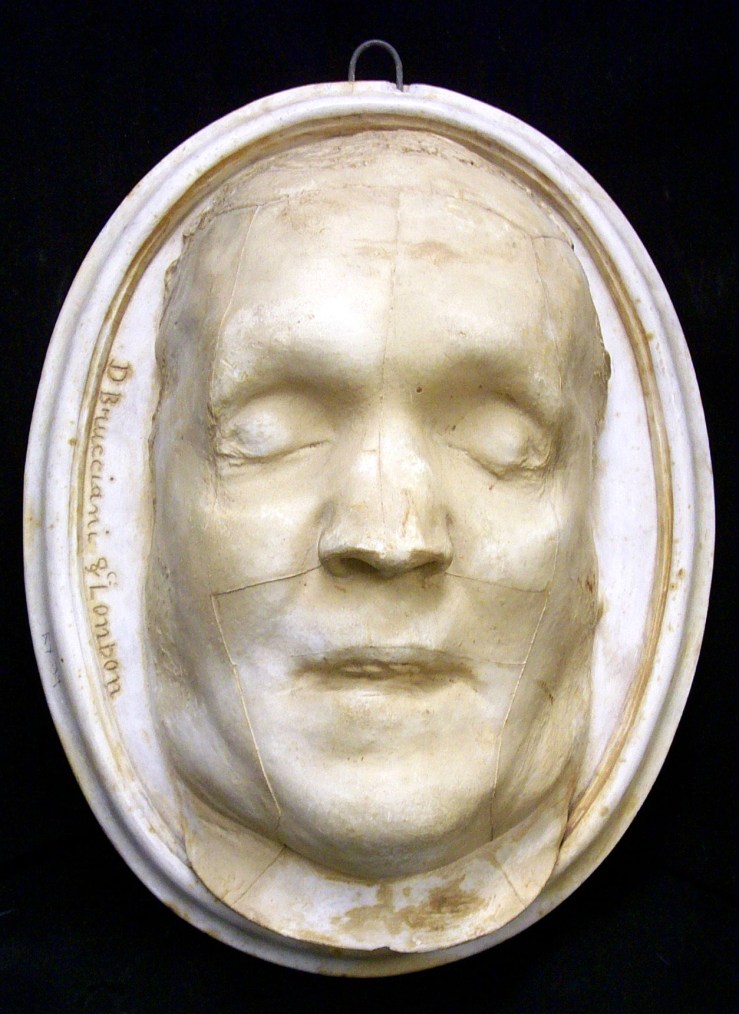
William Makepeace Thackeray’s Death Mask

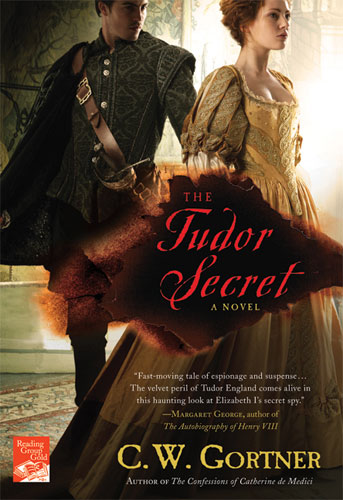
Two Tales of the Tudors: The Tudor Secret by C.W. Gortner and Death and the Virgin Queen by Chris Skidmore

It’s been nearly half a millennium since a Tudor held the British throne, yet narratives of Tudor exploits seem to proliferate at an exponential rate. The primary reason may be that these monarchs — Henry VIII and Elizabeth I in particular — were such strong characters, people whose fascinating qualities extended beyond their world-changing edicts. And it’s not just the monarchs, of course, who draw our attention, but the characters around them — the Boelyns and the Cromwells, Thomas More and William Shakespeare (the latter was tangential and late, to be sure, but hardly an insignificant figure of the Elizabethan era). We identify in the Tudors a certain sexiness (one milked shamelessly by Showtime’s silly series), as well as its corollary intrigue: personal scandal for these royals was politicized; what happened in the bedroom affected the public sphere. There is something strikingly modern about this fact, which perhaps also makes us turn our attention to the Tudors again and again.
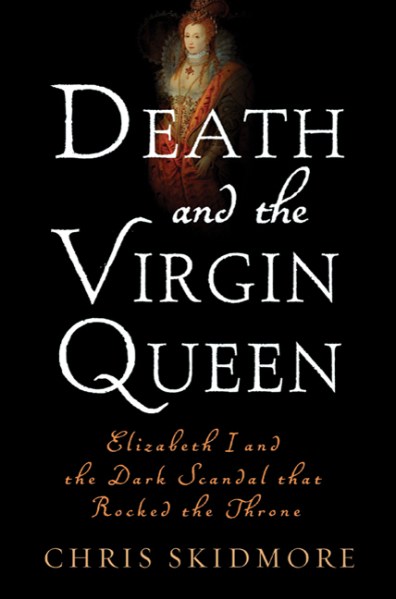
C.W. Gortner delves into the conflict between the political and the private in his historical novel The Tudor Secret. He plants his fictional hero Brendan Prescott into Dudley Castle, where the young man grows up bullied by Lord Robert Dudley –who will later become an “intimate familiar” of Queen Elizabeth. In the summer of 1553, however, Elizabeth is still Princess; her brother Edward VI is king. Around the same time Brendan is brought to court to squire for Robert Dudley, Edward falls gravely ill and then disappears. Princess Elizabeth soon enlists Brendan’s aid as a spy, a situation that quickly becomes more complicated when he finds himself having to serve as a double agent for William Cecil, Elizabeth’s adviser, an employee of the Duke of Northumberland who meanwhile plots to raise Jane Grey to the throne (a move that would cut Elizabeth out of succession). The Tudor Secret is a tightly-plotted, quick-paced read, stuffed with animated historical characters buzzing around in a world of espionage and intrigue. Setting the stage for the ascendancy of a crafty Elizabeth I, the book is the first in a planned series called the Elizabethan Spymaster Chronicles.
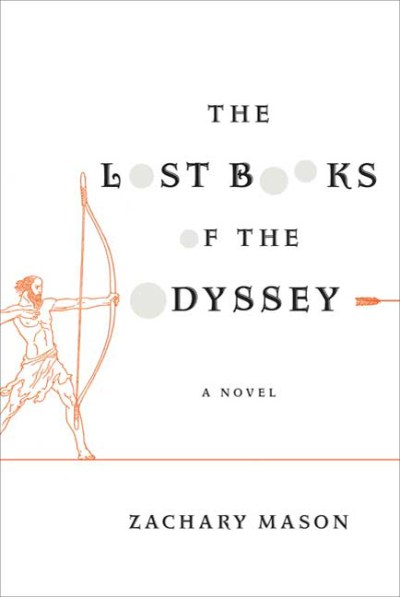
Chris Skidmore’s Death and the Virgin Queen will also be of great interest to those fascinated by the darker side of the Tudors. Skidmore’s book is essentially a forensic analysis of the events of September 8, 1560, when the body of Amy Robsart was found dead in Cumnor Place, her neck broken after an apparent fall down the stairs. The problem: Rosbart was the wife of one Lord Robert Dudley (hey, remember him from before?); with Rosbart out of the way, Elizabeth might be free to marry the man she was scandalously close to. Even after the death was ruled an accident, a cloud of suspicion and rumor about the issue hung over Elizabeth’s reign. Skidmore digs into the issue, outlining the motives of possible parties and detailing likely suspects. Skidmore also explores why, even with Rosbart out of the picture, Elizabeth’s advisers would never allow a marriage to Dudley — and how Dudley worked to prevent the queen from marrying another. Death and the Virgin Queen is a nice parallel to The Tudor Secret; both are written in a popular style for a general audience, both are clearly well-researched, and both should satisfy those thirsting for more details about the still-bewildering world of the Tudors.

Death and the Virgin Queen is new this month in hardback from St. Martin’s Press. The Tudor Secret is new in trade paperback February 1st from St. Martins’ Griffin.

“55 Miles to the Gas Pump” — Annie Proulx

“55 Miles to the Gas Pump” is a very short story by Annie Proulx.

Rancher Croom in handmade boots and filthy hat, that walleyed cattleman, stray hairs like the curling fiddle string ends, that warm-handed, quick-foot dancer on splintery boards or down the cellar stairs to a rack of bottles of his own strange beer, yeasty, cloudy, bursting out in garlands of foam, Rancher Coom at night galloping drunk over the dark plain, turning off at a place he knows to arrive at a canyon brink where he dismounts and looks down on tumbled rock, waits, then steps out, parting the air with his last roar, sleeves surging up, windmill arms, jeans riding over boot tops, but before he hits he rises again to the top of the cliff like a cork in a bucket of milk.

Mrs. Croom on the roof with a saw cutting a hole into the attic where she has not been for twelve years thanks to old Croom’s padlocks and warnings, whets to her desire, and the sweat flies as she exchanges the saw for a chisel and hammer until a ragged slab peak is free and she can see inside: just as she thought: the corpses of Mr. Croom’s paramours – she recognizes them from their photographs in the paper: MISSING WOMAN – some desiccated as jerky and much the same color, some moldy from lying beneath roof leaks, and, all of them used hard, covered with tarry handprints, the marks of boot heels, some bright blue with remnants of paint used on the shutters years ago, one wrapped in newspaper nipple to knee.

When you live a long way out you make your own fun.

F. Scott Fitzgerald Falls off the Wagon

Just finished reading this great 1982 Paris Review interview with famed poet, journalist, and tastemaker Malcolm Cowley; he talks Faulkner, Hemingway, Stein, drinking, sanity, poetry, publishing and more. Here, he shares an anecdote about F. Scott Fitzgerald

INTERVIEWERS

Do you see a relationship between unhappiness and poetic creativity?

COWLEY

To the extent that poems may be born from a straining of one’s senses and imagination to a degree to which they couldn’t be strained in ordinary life. I was reading F. Scott Fitzgerald’s correspondence the other day. Scott and Zelda’s difficulties were ones that I never had to face; I never had to drive myself to drink in order to get my imagination working. Actually, I found my imagination worked best on fatigue. That’s another form of intoxication . . . to set yourself writing, and keep on writing until after two or three hours the subconscious takes over. It’s certainly safer than alcohol. The trouble with alcohol is that you can’t keep it up.

I went to visit the Fitzgeralds when they were living outside of Baltimore—a place called “La Paix.” Scott said to me, “I’m on the wagon, but I got you a pint of whiskey from my bootlegger; I’m on water.” So we talked, or mostly he talked, and every once in a while he’d go out to the kitchen to get another glass of water. His talk became more belligerent, sometimes incoherent, until finally he said, “You know, that water I’ve been drinking all evening—it’s half grain alcohol.” I said to myself, “Oh . . . surprise!”


Win a Copy of Zachary Mason’s Novel The Lost Books of the Odyssey

The kind folks at Picador are offering you, dear reader, a chance to win one of two copies of Zachary Mason’s The Lost Books of the Odyssey, a dazzling re-imagining of Homer’s epic tale. And you’ll want to read this book, folks. Here’s a snippet from our review–

In his preface to The Lost Books of the Odyssey, author Zachary Mason tells us that before the story we now know as the Odyssey was organized by the poet Homer, the “material was formless, fluid, its elements shuffled into new narratives like cards in a deck.” Mason’s goal in The Lost Books is to echo these older versions of the story of Odysseus, omitting “stock epic formulae in favor of honing a single trope or image down to extreme clarity.” He succeeds admirably — Lost Books is an engaging and perplexing work that challenges our assumptions about one of the most foundational stories of Western literature. Mason’s “novel” (it is not really a novel, of course) strikes a wonderfully resonant and deeply upsetting chord, disrupting our sense of narrative satisfaction, breaking us away from the outcomes we thought we knew.

So, how do you get your grubby little hands on a copy? First, you need to have a U.S. mailing address. Second, you need to email us at biblioklept.ed@gmail.com, responding to this simple prompt: Who is your favorite character in The Odyssey, and why? Our esteemed judges will choose the winners from the best responses and post them as an announcement next Friday. Good luck!

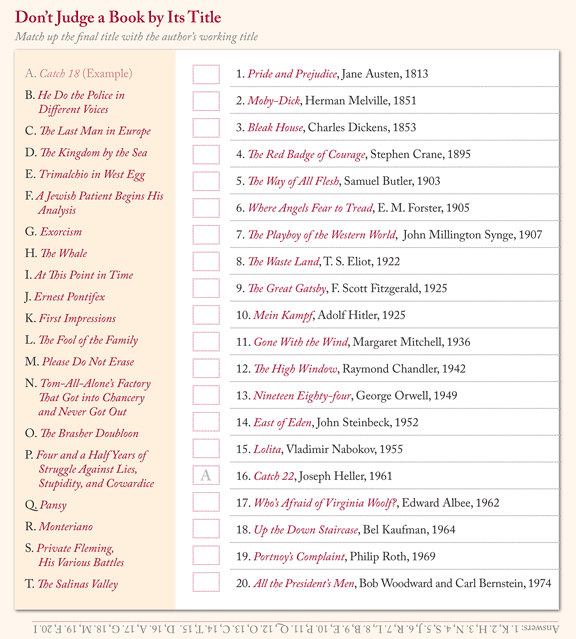
Don’t Judge a Book by Its Title

From Lapham’s Quarterly, via.

Wesley Stace and Rosanne Cash Discuss Bob Dylan’s Chronicles

Wesley Stace (aka John Wesley Harding), author of Charles Jessold, Considered as a Murderer (which I’m reading and enjoying) talks to Rosanne Cash about Bob Dylan’s Chronicles Volume One–

“An Account of Sharing an Ambien with a Girl I Met One Week Prior at a Party” — Tao Lin

“An Account of Sharing an Ambien with a Girl I Met One Week Prior at a Party” is a short short story (?) by Tao Lin published this week at Thought Catalog. An excerpt–

We went into her room ~6:55PM. She asked if I wanted wine and I said no. She asked again and I said no. I said “I brought the Ambien.” She said something about Tiger Woods and I felt confused and said “we should see if it’s okay with alcohol.” She typed “ambient” into Google. I said “no, that’s the music, delete the t, ambient music.” She laughed and typed “ambien and alcohol and klonopin and” and grinned and said “just kidding.” She deleted all but “ambien and alcohol.” The first result said not to combine Ambien and alcohol. Every result seemed to say that. She clicked the first result. It said not to combine Ambien and alcohol. She said she drank a lot so it was okay.

Melville House Introduces The Neversink Library

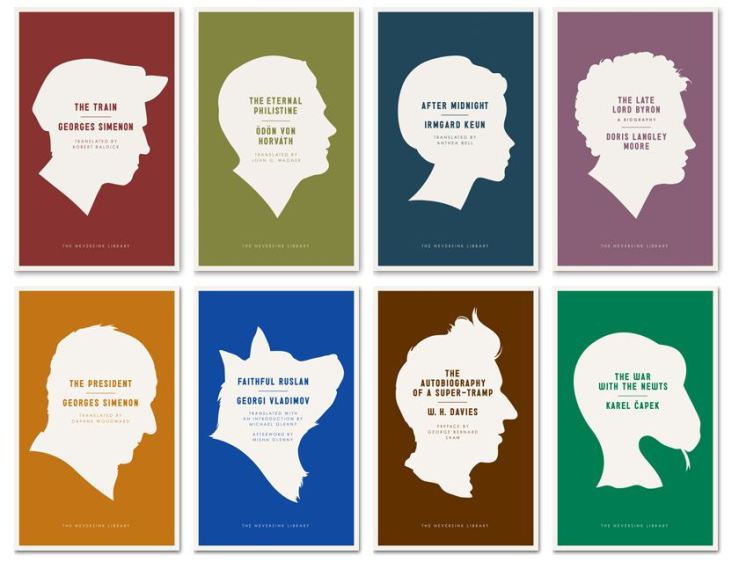
The bibliophiles over at one of our favorite indies, Melville House, are introducing The Neversink Library, a line of international titles that have been overlooked, neglected, and under-appreciated, many languishing out of print for years. The line debuts this summer; the graphic below gives us a good idea of what titles to expect and shows off Neversink’s beautiful design–

I haven’t heard of most of these authors, but Melville House has a great record of bringing neglected and cult authors back to print; their Contemporary Novella series in particular stands out, and Neversink seems to follow this mode in some respects. Even better, you can suggest titles for the series. Looks promising.

Bob Dylan Plans Six New Books

According to AV Club, Bob Dylan has inked a deal with Simon & Schuster to write six books, including the long-awaited follow ups to Chronicles, Volume One (easily one of our favorite memoirs or music books or Dylan books or whatever you want to call it). Also connected: MobyLives reports that literary agent/villain-in-an-alternate-universe-where-everyone-actually-cares-about-publishing Andrew “The Jackal” Wylie may be the guy responsible for the delay of Chronicles Volume 2.

Here’s Dylan haranguing a journalist in one of my favorite scenes from Don’t Look Back

“Nobody can be more clownish, more clumsy and sententiously in bad taste, than Herman Melville” — D.H. Lawrence on Moby-Dick

From D.H. Lawrence’s Studies in Classic American Literature, Chapter XI, “Herman Melville’s Moby-Dick“–

A hunt. The last great hunt.

For what ?

For Moby Dick, the huge white sperm whale: who is old, hoary, monstrous, and swims alone; who is unspeakably terrible in his wrath, having so often been attacked; and snow- white.

Of course he is a symbol.

Of what ?

I doubt if even Melville knew exactly. That’s the best of it.

He is warm-blooded, he is lovable. He is lonely Leviathan, not a Hobbes sort. Or is he ?

But he is warm-blooded and lovable. The South Sea Islanders, and Polynesians, and Malays, who worship shark, or crocodile, or weave endless frigate-bird distortions, why did they never worship the whale? So big!

Because the whale is not wicked. He doesn’t bite. And their gods had to bite.

He’s not a dragon. He is Leviathan. He never coils like the Chinese dragon of the sun. He’s not a serpent of the waters. He is warm-blooded, a mammal. And hunted, hunted down.

It is a great book.

At first you are put off by the style. It reads like journalism. It seems spurious. You feel Melville is trying to put something over you. It won’t do.

And Melville really is a bit sententious: aware of himself, self-conscious, putting something over even himself. But then it’s not easy to get into the swing of a piece of deep mysticism when you just set out with a story.

Nobody can be more clownish, more clumsy and sententiously in bad taste, than Herman Melville, even in a great book like Moby Dick. He preaches and holds forth because he’s not sure of himself And he holds forth, often, so amateurishly.

The artist was so much greater than the man. The man is rather a tiresome New Englander of the ethical mystical- transcendentalist sort: Emerson, Longfellow, Hawthorne, etc. So unrelieved, the solemn ass even in humour. So hopelessly au grand serieux, you feel like saying: Good God, what does it matter? If life is a tragedy, or a farce, or a disaster, or any- thing else, what do I care! Let life be what it likes. Give me a drink, that’s what I want just now.

For my part, life is so many things I don’t care what it is. It’s not my affair to sum it up. Just now it’s a cup of tea. This morning it was wormwood and gall. Hand me the sugar.

One wearies of the grand serieux. There’s something false about it. And that’s Melville. Oh dear, when the solemn ass brays! brays! brays!

But he was a deep, great artist, even if he was rather a sententious man. He was a real American in that he always felt his audience in front of him. But when he ceases to be American, when he forgets all audience, and gives us his sheer apprehension of the world, then he is wonderful, his book commands a stillness in the soul, an awe.