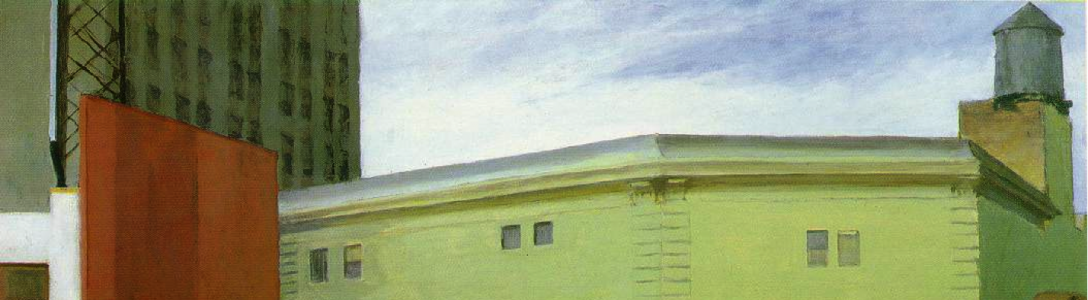
The Garden of Eden — Ernest Hemingway

In general, I dislike reviews that frontload context—get to the book, right? So here’s a short review of Ernest Hemingway’s The Garden of Eden: it is stranger than most of what Hemingway wrote, by turns pleasant, uncomfortable, bewildering, and beautiful. And readable. It’s very, very readable. Young people (or older folks; let’s not be prejudiced) working their way through Hemingway shouldn’t put The Garden of Eden on the back-burner in favor of his more famous works, and anyone who might have written off Hemingway as unreflective macho bravado should take a look at some of the strange gender games this novel has to offer. So, that’s a recommendation, okay?

Now on to that context, which I think is important here. See, The Garden of Eden is one of those unfinished novels that get published posthumously, put together by editors and publishers and other book folk, who play a larger role than we like to admit in the finished books we get from living authors anyway. For various reasons, cultural, historical, etc., we seem to favor the idea of the Singular Artistic Genius who sculpts beauty and truth out of raw Platonic forms that only he or she can access (poor tortured soul). The reality of how our books get to us is a much messier affair, and editors and publishers and even literary studies departments in universities have a large hand in this process, one we tend to ignore in favor of the charms of a Singular Artistic Genius. There’s a fascinating process there, but also a troubling one. Editing issues complicate our ideals of (quite literally) stable authority—is this what the author intended?, we ask (New Critics be damned!). David Foster Wallace and Michael Pietsch, Raymond Carver and Gordon Lish, Franz Kafka and Max Brod, Mary Shelley and Percy Shelley . . .  not to mention Shakespeare, Chaucer, Beowulf, The Bible, Homer, etc. etc. etc. But you’re here to read about The Garden of Eden, right gentle reader? Mea culpa. I’ve been blathering away. Let me turn the reins over to the estimable talents of E.L. Doctorow, who offers the following context in his 1986 review of the book in The New York Times

Since Hemingway’s death in 1961, his estate and his publishers, Charles Scribner’s Sons, have been catching up to him, issuing the work which, for one reason or another, he did not publish during his lifetime. He held back ”A Moveable Feast” out of concern for the feelings of the people in it who might still be alive. But for the novel ”Islands in the Stream” he seems to have had editorial misgivings. Even more deeply in this category is ”The Garden of Eden,” which he began in 1946 and worked on intermittently in the last 15 years of his life and left unfinished. It is a highly readable story, if not possibly the book he envisioned. As published it is composed of 30 short chapters running to about 70,000 words. A publisher’s note advises that ”some cuts” have been made in the manuscript, but according to Mr. Baker’s biography, at one point a revised manuscript of the work ran to 48 chapters and 200,000 words, so the publisher’s note is disingenuous. In an interview with The New York Times last December, a Scribners editor admitted to taking out a subplot in rough draft that he felt had not been integrated into the ”main body” of the text, but this cut reduced the book’s length by two-thirds.

So, yeah. The version we have of The Garden of Eden is heavily cut, and also likely heavily arranged. But that’s what editors do, and this is the book we have (for now, anyway—it seems like on the year of its 25th anniversary of publication, and the 50th anniversary of Hemingway’s death that Scribner should work toward putting out an unedited scholarly edition) — so I’ll talk about that book a bit.

The Garden of Eden tells the story of a few months in the lives of a young newlywed couple, David Bourne, an emerging novelist, and his wife Catherine, a trust fund baby flitting about Europe. The novel is set primarily on the French Riviera, in the thin sliver of high years between the two big wars. David and Catherine spend most of their days in this Edenic setting eating fine food and making love and swimming and riding bikes and fishing. And drinking. Lots and lots of drinking. Lots of drinking. It all sounds quite beautiful—h0w about a taste?

On this morning there was brioche and red raspberry preserve and the eggs were boiled and there was a pat of butter that melted as they stirred them and salted them lightly and ground pepper over them in the cups. They were big eggs and fresh and the girl’s were not cooked quite as long as the young man’s. He remembered that easily and he he was happy with his which he diced up with the spoon and ate with only the flow of the butter to moisten them and the fresh early morning texture and the bite of the coarsely ground pepper grains and the hot coffee and the chickory-fragrant bowl of café au lait.

Hemingway’s technique throughout the novel is to present the phenomenological contours of a heady world. It’s lovely to ride along with David and Catherine, rich and free and beautiful.

Their new life together is hardly charmed, however. See, Catherine gets a haircut—

Her hair was cropped as short as a boy’s. It was cut with no compromises. It was brushed back, heavy as always, but the sides were cut short and the ears that grew close to her head were clear and the tawny line of her hair was cropped close to her head and smooth and sweeping back. She turned her head and lifted her breasts and said, “Kiss me please.”  . . .

“You see, she said. “That’s the surprise. I’m a girl. But now I’m a boy too and I can do anything and anything and anything.”

“Sit here by me,” he said. “What do you want, brother.”

David’s playful response—calling his wife “brother”—covers up some of his shock and fear, but it also points to his underlying curiosity and gender confusion. And indeed, Catherine’s new haircut licenses her to “do anything and anything and anything” — beginning with some strange bed games that night—

He had shut his eyes and he could feel the long light weight of her on him and her breasts pressing against him and her lips on his. He lay there and felt something and then her hand holding him and searching lower and he helped with his hands and then lay back in the dark and did not think at all and only felt the weight and the strangeness inside and she said, “Now you can’t tell who is who can you?”

“No.”

“You are changing,” she said. “Oh you are. You are. Yes you are and you’re my girl Catherine. Will you change and be my girl and let me take you?”

“You’re Catherine.”

“No. I’m Peter. You’re my wonderful Catherine. You’re my beautiful, lovely Catherine. You were so good to change. Oh thank you, Catherine, so much. Please understand. Please know and understand. I’m going to make love to you forever.”

David, partial stand-in for Hemingway, transforms into a girl who feels “something” during sex with Catherine (or, ahem, Peter)—note that that “something” has no clear referent. As their gender inverting games continue (much to David’s horror), Hemingway’s usually concrete language retreats to vague proforms without referents, “it”s without antecedents; his usually precise diction dissolves in these scenes, much as the Bournes’ marriage dissolves each time Catherine escalates the gender inversion. David gives her the nickname “Devil,” as if she were both Eve and Serpent in their Garden. Catherine’s transformations continue as she cuts her hair back even more, and sunbathes all the time so that she can be as dark as possible. She dyes her hair a silver blonde and makes David get his hair cut and dyed the same.

The bizarre behavior (shades of Scott and Zelda?) culminates in Catherine introducing another woman into the marriage. Marita falls in love with both David and Catherine, but her lesbian sex with Catherine only accelerates the latter’s encroaching insanity. David is initially radically ambivalent to the ménage à trois proposed by his wife; he has the good sense to see that a three-way marriage is ultimately untenable and that his wife is going crazy. He vacillates between hostility and love for the two women, but eventually finds a support system in Marita as it becomes increasingly apparent (to all three) that Catherine is depressed and mentally unstable, enraged that David has ceased to write about the pair’s honeymoon adventures on the Riviera. Catherine has been bankrolling David; jealous of good reviews from his last novel, she insists that he write only their story, but David would rather write “the hardest story” he knows—the story of his childhood in East Africa with his father, a big game hunter.

In some of the most extraordinary passages of The Garden of Eden, David writes himself into his boyhood existence, trailing a bull elephant with his father through a jungle trek. David has spotted the elephant by moonlight, prompting his father and his father’s fellow tracker and gun bearer Juma to hunt the old beast. As they trail the animal, David begins to realize how horrible the hunt is, how cruel it is to kill the animal for sport. The passages are somewhat perplexing given Hemingway’s reputation as a hunter. Indeed, this is one of the major features of The Garden of Eden: it repeatedly confounds or complicates our ideas about Hemingway the man’s man, Hemingway the writer, Hemingway the hunter. David describes the wounded, dying elephant—

They found him anchored, in such suffering and despair that he could no longer move. He had crashed through the heavy cover where he had been feeding and crossed a path of open forest and David and his father had run along the heavily splashed blood trail. Then the elephant had gone on into thick forest and David had seen him ahead standing gray and huge against the trunk of a tree. David could only see his stern and then his father moved ahead of him and he followed and they came alongside the elephant as though he was a ship and David saw the blood coming from his flanks and running down his sides and then his father raised his rifle and fired and the elephant turned his head with the great tusks moving heavy and slow and looked at them and when his father fired the second barrel the elephant seemed to sway like a felled tree and came smashing down toward them. But he was not dead. He had been anchored and now he was down with his shoulder broken. He did not move but his eye was alive and looked at David. He had very long eyelashes and his eye was the most alive thing David had ever seen.

David succeeds in writing this “hard” story, and the passages are remarkable in their authenticity—David’s story is a good story, the highlight of the book perhaps; it’s not just Hemingway telling us that David wrote a great story, we actually get to experience the story itself as well as the grueling process by which it was made. Hemingway and his surrogate David show us—make us experience—how difficult writing really is, and then share the fruit of that labor with us. These scenes raise the stakes of The Garden of Eden, revealing how serious David is when he remarks (repeatedly) that the writing is the most important thing—that it outweighs love, it surpasses his marriage. These realizations freight the climax of the novel all the more heavily, but I will avoid anymore spoilers.

The Garden of Eden has some obvious flaws. Marita is underdeveloped at best for such an important character, and her love for David and Catherine remains unexplored, and in fact barely remarked upon. The biggest problem with the book is its conclusion, which feels too pat, too obvious for such a strange, amorphous book. It is here that the presence of an editorial hand seems clearest, to the extent that I wonder if the short little chapter that concludes the novel wasn’t cobbled together from a few stray sentences throughout the manuscript. But The Garden of Eden, despite some shortcomings, is a book well worth reading. The novel complicates not just Hemingway’s reputation, but also our sense of Hemingway’s sense of himself. Recommended.
Martin Scorsese on Story Vs. Plot

“Corporations Are Getting Better and Better at Seducing Us into Thinking the Way They Think” — David Foster Wallace

From  §19 of David Foster Wallace’s The Pale King:

‘I have no idea what we do. As citizens we cede more and more of our autonomy, but if we the government take away citizens’ freedom to cede their autonomy we’re now taking away their autonomy. It’s a paradox. Citizens are constitutionally empowered to choose to default and leave the decisions to corporations and a government we expect to control them. Corporations are getting better and better at seducing us into thinking the way they think—of profits as the telos and responsibility as something to be enshrined in symbol and evaded in reality. Cleverness as opposed to wisdom. Wanting and having instead of thinking and making. We cannot stop it. I suspect what’ll happen is that there will be some sort of disaster—depression, hyperinflation—and then it’ll be showtime: We’ll either wake up and retake our freedom or we’ll fall apart utterly. Like Rome—conqueror of its own people.’

(This is the second paragraph; read the first here (or, like, buy the book)).

I want to write about this chapter against the backdrop of America’s current political/social/cultural climate—the so-called “debate” about government’s role, individual responsibility, our corporate welfare state, etc. What I want to write I am having a hard time writing. For one, the issue seems so big, so slippery, so oily, so recent, so indigestible. For another, I feel like Wallace’s chapter is so smart and engaging on its own that I shouldn’t be messing with it when I really don’t have anything smart or engaging to say about it.

I guess what I really want is for people to read it, or at least parts of it, so I’ll be posting bits of it over the next week or two, with occasional comments.

If I can’t be analytic about  §19 of The Pale King, perhaps I can at least offer a rough description:

The chapter is one of the longer ones in the novel at 20 pages, although it’s hardly the longest.

The chapter is probably set in early 1980 (or possible late 1979).

The chapter is probably set in a stuck elevator, probably as the result of a power failure, as the lights seem to be off.

The chapter is written entirely as a dialogue, mainly (solely?) between three IRS agents: Glendenning, DeWitt, and someone referred to as ‘X.’

The chapter references The Excorist, which might have been intended to be (or maybe is?) a motif in The Pale King.

The chapter discusses the cultural upheaval of the 1960s and early ’70s, and links this upheaval to the dawning conservatism of the Reagan years (which obviously have not yet happened in terms of the chapter’s timeline, but which one of the interlocutors nevertheless perspicaciously anticipates).

The dialogue (Socratic, if I’m feeling analytic) traces the tension between individual freedom, individual liberty, and the role of the government as an arbiter of civic life.

I’ll end with the somewhat generic definition of “civics” the chapter offers—

‘Civics is the branch of political science that quote concerns itself with citizenship and the rights and duties of US citizens.’

And there we go—that conflict between rights and duties.

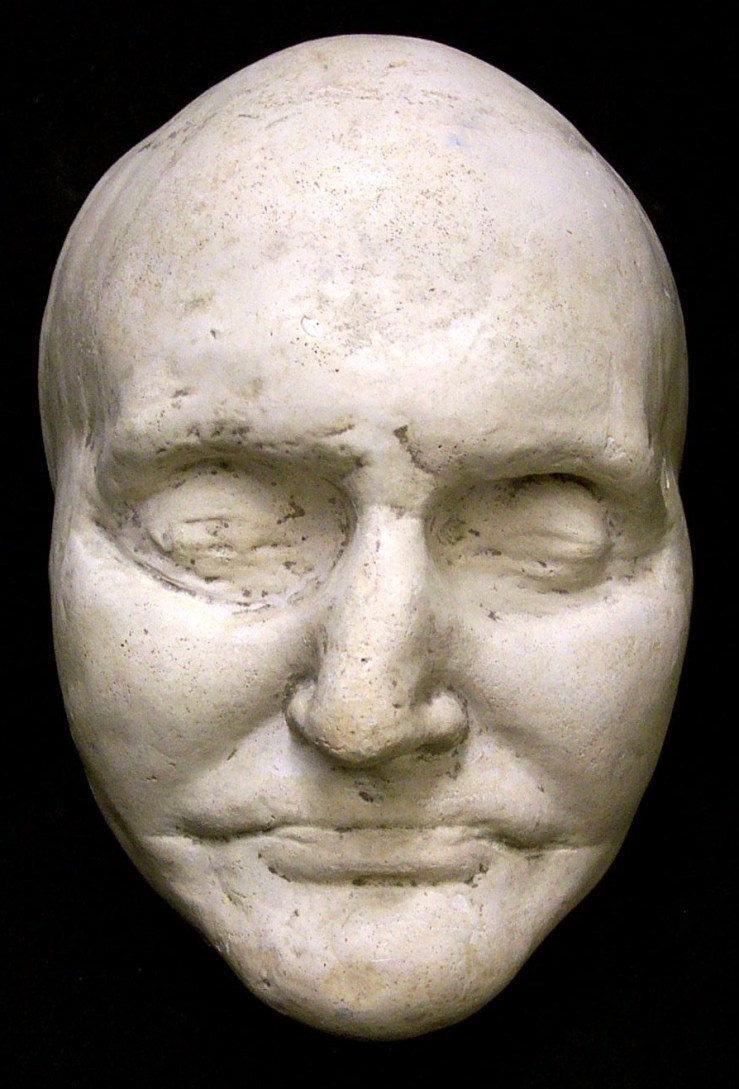
Aaron Burr’s Death Mask

“The Sport Roadster” — F. Scott Fitzgerald

“The Sport Roadster,” a short short story/scene/memory (?) from F. Scott Fitzgerald’s Notebooks

The Sport Roadster
When I was a boy I dreamed that I sat always at the wheel of a magnificent Stutz—in those days the Stutz was the stamp of the romantic life—a Stutz as low as a snake and as red as an Indiana barn. But in point of fact, the best I could manage was the intermittent use of the family car. If I were willing to endure the most unaristocratic groanings and vibrations I could torture it up to fifty miles an hour.
But no matter how passionately I slouched down in the seat, I couldn’t make it look like a Stutz. One day I lowered the top and opened the windshield, and with the car thus pathetically jazzed up, took my mother and another lady down town shopping.
It was a scorching day. The sun blazed down upon us, the molten air blew like the breath of a furnace into our faces—through the open windshield. I could literally feel the sunburn deepening on me, block by block. It was appalling.
The two ladies fanned themselves uneasily. I don’t believe either of them quite realized what the trouble was. But I, even with the perspiration pouring into my eyes, found sight to envy the owner of a peagreen cut-down flivver which oozed by us through the heat.
My passengers visited a series of stores. I waited in the sun, still slouched down, and with that sort of half-sneer on my face which I had noted was peculiar to drivers of racing cars. The heat continued to be terrific.
Finally my mother’s friend came out of the store and I helped her into the car. She sank down into the seat—then sank quickly up again.
“Ah!” she said wildly.
She had burned herself.
When we reached home I offered—most unusually—to take them both for a long ride—anywhere they wished to go. They said politely that they were going for a little walk to cool off!

“Ideology Is a Wall Between Communication and People” — Alfonso Cuarón

Alfred Hitchcock Distinguishes Mystery from Suspense

“Americans Are in a Way Crazy” — David Foster Wallace

Chapter 19 David Foster Wallace’s The Pale King (or, §19, if you prefer the book’s conceit) begins with this paragraph—

‘There’s something very interesting about civics and selfishness, and we get to ride the crest of it. Here in the US, we expect government and law to be our conscience. Our superego, you could say. It has something to do with liberal individualism, and something to do with capitalism, but I don’t understand much of the theoretical aspect—what I see is what I live in. Americans are in a way crazy. We infantilize ourselves. We don’t think of ourselves as citizens—parts of something larger to which we have profound responsibilities. We think of ourselves as citizens when it comes to our rights and privileges, but not our responsibilities. We abdicate our civic responsibilities to the government and expect the government, in effect, to legislate morality. I’m talking mostly about economics and business, because that’s my area.’

‘What do we do to stop the decline?’

I plan to write more about this later — Tea Party, Real America, all that slang — but I’m tapped out right now. Back to school, syllabi to stick in the toaster oven, too much red tonight, all that jazz.

Kakutani, Limn Addict

There’s a piece today in Salon about Michiko Kakutani taking up her favorite verb “limn” again. Thrilling stuff, I know, but it recalled to me this list compiled in Harper’s eight years ago by Christian Lorentzen of Kakutani’s use of “limn” (the Harper’s bit is not mentioned in the Salon article) —

Limn an entire life in a couple of pages

Limn the trajectory of an entire life in a handful of pages

Limn the suffocating atmosphere of small-town life and the alienation experienced by those who defy its provincial mores

Limn the last days of an alcoholic frontierswoman living in a small western town

Limn a man’s sudden apprehension of vulnerability and loss–all brought on by his discovery of a dead rat on his kitchen floor

Limn his inner life or probe the sources of his equipoise

Limn the inner life of people, surprised by the deceptions of time

Limn, with tenderness, wisdom, and humor, a vast array of human relationships, both straight and gay

Limn the rituals of hunting, trapping, planting, and canning with a wry mixture of amusement and respect

Limn the daily minutiae of life

Limn the human condition

Limn the complicated emotional geometry

Limn the delicate geometry of emotions

Limn a marriage of enduring passion and shared ideals

Limn Willy’s fears of losing Biff’s love and his own longings for immortality

Limn the brutal, perilous, and harrowing art of killing a forty-ton creature with a hand-thrown weapon

Limn some of its burgeoning manifestations

Limn the social and geopolitical fallout

Limn the surrealness of contemporary life

Limn the rhythms of the universe and an artist’s inner state of mind

Limn a future in which Pop Art gives way to Poll Art

Limn the nervous, almost flirtatious banter

Limn a hero’s efforts to achieve self-understanding

Limn girls’ secret struggle for womanhood in the post-sexual-revolution world

Limn the dangers posed by emerging diseases

Limn the spiritual yearnings and dislocations of an entire nation as it lurched from the certainties of the World War II years toward the confusions of the 1970s

Limn the irrationalities of history

Limn the impermanence–and emotional chaos–that threatens to overwhelm ordinary people

Limn the fabulous

Limn the ordinary with seeming nonchalance

Limn this deeply felt, if somewhat limited, theme with clarity and moral vigor

Alice Coltrane Harp Solo

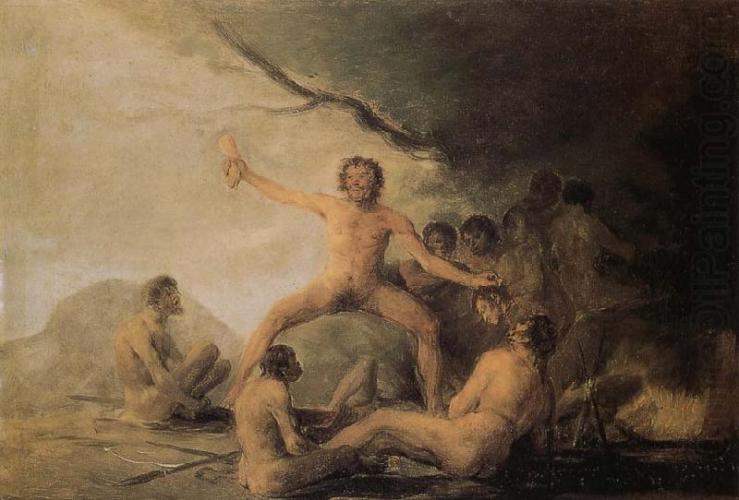
Cannibals Gazing at Their Victims — Goya

John Hodgman Riffs on Bookstores on The Daily Show

Vodpod videos no longer available.

Parc Monceau — Alfonso Cuarón

http://vimeo.com/4469267

Parc Monceau, another rich, beautiful, continuous shot from Alfonso Cuarón, from the compilation film Paris Je T’Aime.


“No Bookkeeper Is as False and Fraudulent as Collective Memory” — Jerzy Kosinski

Jerzy Kosinski talks to The Paris Review (1972). Read our review of his weird novel Steps. From the interview—

INTERVIEWER

You say that literature demands more involvement and more effort from the reader than the visual media. Is this why your last two novels have been so spare?

KOSINSKI

Yes. I do trust the reader. I think he is perfectly capable of filling in the blank spaces, of supplying what I purposefully withdrew. Steps attempts to involve the reader through nonuse of the clear and discernible plot. From the first sentence of the book, “I was traveling further south,” when the reader starts traveling down the page, he is promised nothing, since there is no obvious plot to seduce him. He has to make the same decisions my protagonist is making: Will he continue? Is he interested in the next incident?

INTERVIEWER

Your intent, then, is subversive. You want to involve, to implicate the reader via his own imagination.

KOSINSKI

I guess I do. Once he is implicated he is an accomplice, he is provoked, he is involved, he is purged. That’s why my novels don’t provide easy moral guidelines. Does life? The reader must ask himself questions about what is good or what is evil about my characters. Was it his curiosity that dragged him into the midst of my story? Was it recognition of his complicity? For me this is the ultimate purpose of literature.

INTERVIEWER

Do you want to be remembered as . . .

KOSINSKI

No bookkeeper is as false and fraudulent as collective memory. It’s best to be forgotten.

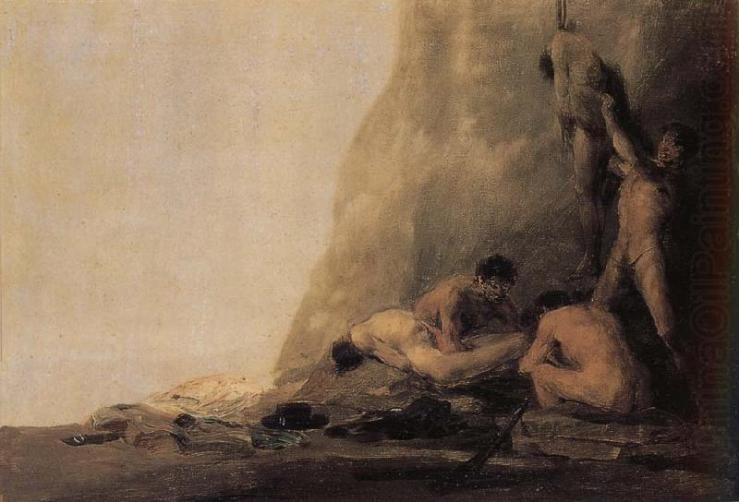
Cannibals Preparing Their Victims — Goya

Guillermo Del Toro Talks About Alfonso Cuarón’s New Film Gravity

Vodpod videos no longer available.

“Florida” — Elizabeth Bishop

“Florida” by Elizabeth Bishop

The state with the prettiest name,
the state that floats in brackish water,
held together by mangrave roots
that bear while living oysters in clusters,
and when dead strew white swamps with skeletons,
dotted as if bombarded, with green hummocks
like ancient cannon-balls sprouting grass.
The state full of long S-shaped birds, blue and white,
and unseen hysterical birds who rush up the scale
every time in a tantrum.
Tanagers embarrassed by their flashiness,
and pelicans whose delight it is to clown;
who coast for fun on the strong tidal currents
in and out among the mangrove islands
and stand on the sand-bars drying their damp gold wings
on sun-lit evenings.
Enormous turtles, helpless and mild,
die and leave their barnacled shells on the beaches,
and their large white skulls with round eye-sockets
twice the size of a man’s.
The palm trees clatter in the stiff breeze
like the bills of the pelicans. The tropical rain comes down
to freshen the tide-looped strings of fading shells:
Job’s Tear, the Chinese Alphabet, the scarce Junonia,
parti-colored pectins and Ladies’ Ears,
arranged as on a gray rag of rotted calico,
the buried Indian Princess’s skirt;
with these the monotonous, endless, sagging coast-line
is delicately ornamented.

Thirty or more buzzards are drifting down, down, down,
over something they have spotted in the swamp,
in circles like stirred-up flakes of sediment
sinking through water.
Smoke from woods-fires filters fine blue solvents.
On stumps and dead trees the charring is like black velvet.
The mosquitoes
go hunting to the tune of their ferocious obbligatos.
After dark, the fireflies map the heavens in the marsh
until the moon rises.
Cold white, not bright, the moonlight is coarse-meshed,
and the careless, corrupt state is all black specks
too far apart, and ugly whites; the poorest
post-card of itself.
After dark, the pools seem to have slipped away.
The alligator, who has five distinct calls:
friendliness, love, mating, war, and a warning–
whimpers and speaks in the throat
of the Indian Princess.