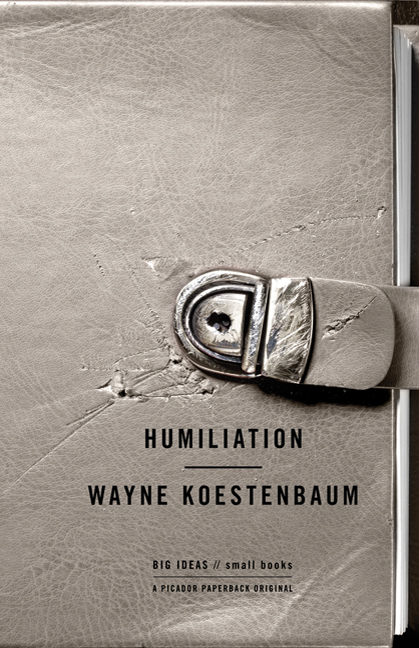
Humiliation — Wayne Koestenbaum

Wayne Koestenbaum’s Humiliation explores the ways that having a body (among other bodies, among a social body) might leave us humiliated or otherwise abject. To perform this exploration, Koestenbaum surveys a discursive range of subjects, including the humiliation of public figures, the sordid “private” lives of celebrities, the work of philosophers and cultural theorists, and the art, music, films, and writing of various artists and performers. The book’s central subject though is Koestenbaum himself, who shares his own humiliations in a way that surpasses ironic self-deprecation. The results are surprisingly moving, intelligent, and very funny. I’ll let Koestenbaum explain his project—

Not merely because I am tired, but because this subject, humiliation, is monstrous, and because it erodes the voice that tries to lay siege to its complexities, I will resign myself, in the fugues that follow, to set forth an open-ended series of paradoxes and juxtapositions. (I call these excursions “fugues” not only because I want the rhetorical license offered by invoking counterpoint but because a “fugue state” is a mentally unbalanced condition of dissociated wandering away from one’s own identity.) Some of my fugal juxtapositions are literal and logical, while others are figurative, meant merely to suggest the presence of undercurrents, sympathies, resonances shared between essentially unlike experiences. If there is any reward to be found in this exercise of juxtaposing contraries to detect the occasional gleam of likeness, that dividend lies in the apprehension of a singular prey: the detection of a whimpering beast inside each of us, a beast whose cries are micropitches, too faint for regular notation.

Koestenbaum composes these fugues, these thematized chapters of his book, in small blocks of text, numbered entries that range from single sentences to several pages. These are aphorisms, anecdotes, japes, jokes, riffs, prose poems, howls. The style recalls Nietzsche’s aphoristic work or Barthes’s short essays in Mythologies, although these comparisons seem inappropriately pretentious. In any case, Koestenbaum sets these short pieces against each other to achieve the fugue state he describes above, a willful wandering from topic to topic—all within the kingdom of humiliation.

So what is humiliation? Or, rather, how does Koestenbaum define humiliation? While the entire book addresses the subject, our author gives us a fairly succinct definition upfront—

Humiliation involves a triangle: (1) the victim, (2) the abuser, and (3) the witness. The humiliated person may also behold her own degradation, or may imagine someone else, in the future, watching it or hearing about it. The scene’s horror—its energy, its electricity—involves the presence of three. An infernal waltz.

Koestenbaum takes turns playing all three roles, both through personal, historical, and cultural memory, as well as through a profound imaginative capacity. It is worth remarking upon, or at least listing, some of his examples here: Joan of Arc, King Lear, Liza Minelli, Bill Clinton, Antonin Artaud, Jean Genet, Jean-Michael Basquiat, Larry Craig, American Idol, The Swan, Anita Bryant, Harriet Jacobs, Richard M. Nixon, various creeps trolling Craigslist for weird sex, the Marquis de Sade, Abu Ghraib, lynching postcards, Michael Jackson—and always Koestenbaum himself (as well as his family, his friends, his colleagues, his students . . . ).  Koestenbaum shuffles through his subjects, looking at the various ways that they might fall into his triangle of humiliation, and even when he tries on the hat of the abuser, he modulates this position by keeping his subject’s agency within his critical purview. Indeed, one of the great warnings that Koestenbaum has to offer concerns what he labels “the Jim Crow gaze” — the propensity and capacity that each person holds within himself at all times to look at another human without recognition that that person is a human being, an agent of his or her own desires, emotions, and intellect. Koestenbaum readily admits his own failings, times he has turned the Jim Crow gaze on others, a look that goes past “othering” to actually desubjectify the gaze’s object. Koestenbaum’s project pays great dividends here; by moving discursively from a range of subjects (including himself), he reveals the limitations of first-person consciousness when coming into contact with the social, the cultural, the political, the historical. Put another way, Humiliation is one of the few works of cultural studies I’ve ever read to actively show why cultural studies matters. Here’s Koestenbaum again—

The humiliation of a derided performer on American Idol is immeasurably different from the humiliation of a Palestinian under Israeli occupation. One plight is chosen, the other is not. But isn’t there present, in both situations, an underlying coldheartedness, a rock-bottom refusal to believe the worthiness of the person whose reputation (or house, or land, or ego, or self-esteem) is stolen, trashed, occupied, razed? Isn’t there present, in both situations, an underlying will to deracinate and desubjectify this other person? And, most insidiously—isn’t there an insistence on considering this process of desubjectification (with my laughter I take away your humanity) an entertaining process, even a cathartic exercise, therapeutic and energizing, like calisthenics?

This willingness to connect American Idol to the Israeli-Palestinian conflict dramatically highlights the underlying psychological conditions lurking under the phenomenological apparatuses we see (or choose not to see) on a daily basis. And just as ridicule or schadenfreude may be posited as cathartic for the victimizer, Koestenbaum also finds that “the aftermath of humiliation can be paradoxically relaxing. Tranquilizing to have undergone humiliation and then emerge on the other side.” Perhaps it is toward some sense of release or tranquility then that Koestenbaum shares so much of his own humiliation with us—snubbings, embarrassments, accusations, disavowals, and, of course, his penis (he even apologizes for the “phallic” nature of the book).

Koestenbaum is willing to consider other penises too. Humiliation is very much a study of bodies in general: what it means to have a body, what it means for others to look at your body, how what your body looks like (its shape, its color, its gender, its parts, its excess, its lack) matters to others. Working from Julia Kristeva’s theory of the abject (see: Powers of Horror), Koestenbaum writes—

Humiliation involves physical process: fluids , solids, organs, cavities, orifices, outpouring, ingestions, excrescences, spillages. Humiliation demands a soiling. Even if the ordeal is merely mental, the body itself gets dragged into the mess.

Our most abject moments then are when we realize that our body is not the impermeable fortress of self that we might imagine, but rather a dripping mess with ill-defined borders. We are constantly leaking. Private shame always lurks, is always susceptible to public scrutiny. Koestenbaum again—

An object that should be private and unseen is suddenly visible . . . My unseen experience has been forcibly ejected—thrust outside. The judge hears my secrets. My inner rottenness lies exposed. My skin has been turned inside out. This fold (the self become a seam) is the structure of revulsion.

Yet going through these trials is part of forming an individual, subjective identity. “Humiliation, an educating experience,  breeds identity,” writes Koestenbaum. Of course, this idea goes back to our oldest stories, yet it often remains unremarked (curiously, Koestenbaum does not write about Adam and Eve in Eden, that primal scene of triangular humiliation). And while Koestenbaum posits the educational (and even possibly therapeutic) dimensions of humiliation, he’s very clear about the deep pain repetitive, institutionalized humiliation can cause—

 I presume that as moral individuals we should work toward minimizing humiliation, toward not inflicting it. We should practice an ethics of abstention. Vow: I abstain from deliberately humiliating others. When I find myself involved in this abhorrent practice, I will immediately desist and try to reverse the process and remedy the crime. And yet is a world without humiliation possible.? It’s disenchanting to write about a horrible situation. About this subject, I can’t rhapsodize.

I’m happy to rhapsodize about Humiliation more, but I fear that this review teeters on becoming overlong any word now. I’ve yet to remark on Humiliation’s humor, which is abundant, weird, occasionally dark, but always warm and deeply human. In the interest of time, perhaps you’ll trust the director John Waters, who provides the following blurb for the book: “This literary ‘topping from the bottom’ is the funniest, smartest, most heartbreaking yet powerful book I’ve read in a long time.” I agree completely with Waters, and  looking over my review, I fear that I may have portrayed a very accessible, humorous, and loving book in terms that are too academic. Humiliation may be a work of philosophical inquiry, but it also functions as a sort of cultural memoir, and if it’s a narrative of pain and abjection, it also repeatedly offers solutions to this pain when it can, and consolation and sympathy when it cannot. Very highly recommended.

Humiliation, part of the BIG IDEAS // small books series, is new this month from Picador.
Andy Warhol on Jasper Johns

This is kind of hilarious.


William Gaddis — A 1986 Filmed Interview

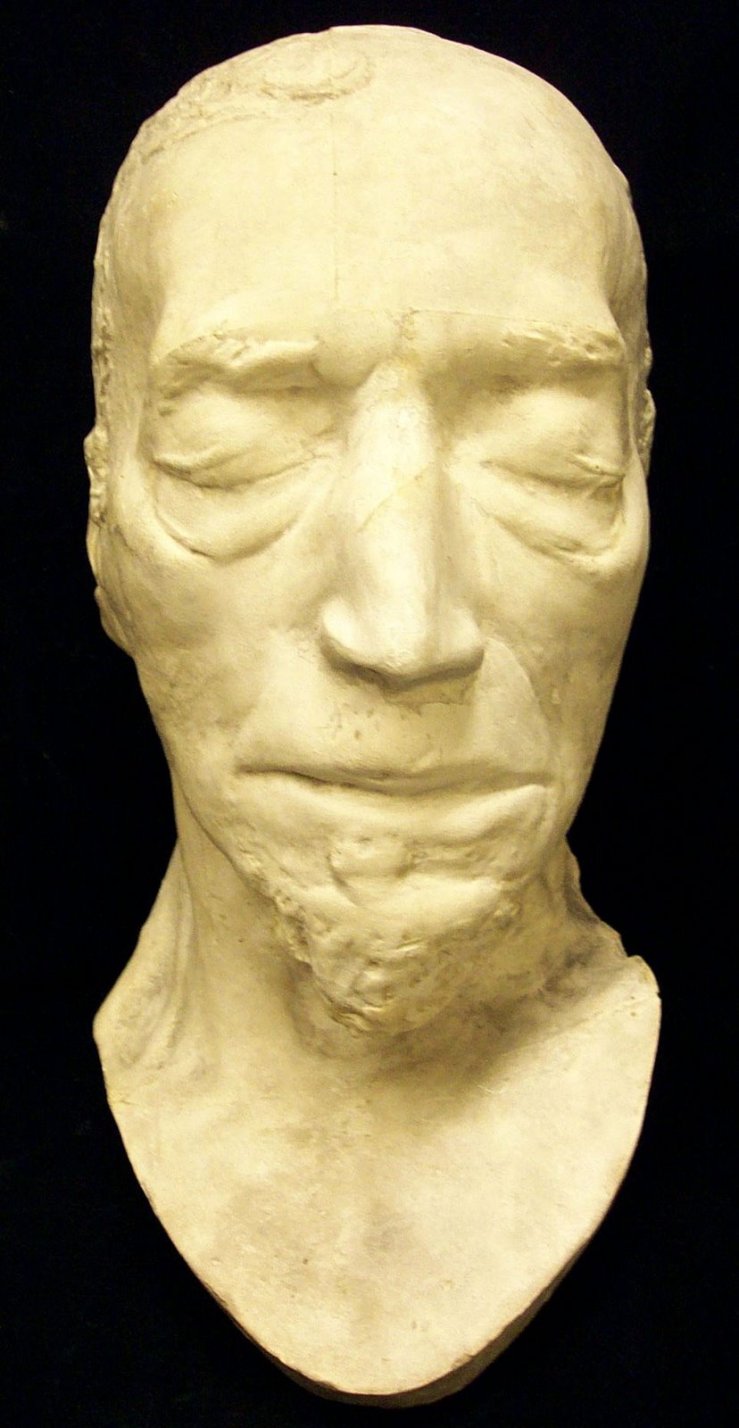
Disraeli’s Death Mask

“God Makes Mistakes” — J.R.R. Tolkien Rambles About Elves


Nathaniel Hawthorne’s Book Burning

In his strange story “Earth’s Holocaust,” Nathaniel Hawthorne describes how “this wide world had become so overburdened with an accumulation of worn-out trumpery, that the inhabitants determined to rid themselves of it by a general bonfire.” What ensues is a horrific satire that seems more relevant than ever; the people burn liquor, money, guns, laws, and other sundry items before eventually turning on books—

The truth was, that the human race had now reached a stage of progress so far beyond what the wisest and wittiest men of former ages had ever dreamed of, that it would have been a manifest absurdity to allow the earth to be any longer encumbered with their poor achievements in the literary line. Accordingly a thorough and searching investigation had swept the booksellers’ shops, hawkers’ stands, public and private libraries, and even the little book-shelf by the country fireside, and had brought the world’s entire mass of printed paper, bound or in sheets, to swell the already mountain bulk of our illustrious bonfire. Thick, heavy folios, containing the labors of lexicographers, commentators, and encyclopedists, were flung in, and, falling among the embers with a leaden thump, smouldered away to ashes like rotten wood. The small, richly gilt French tomes of the last age, with the hundred volumes of Voltaire among them, went off in a brilliant shower of sparkles and little jets of flame; while the current literature of the same nation burned red and blue, and threw an infernal light over the visages of the spectators, converting them all to the aspect of party-colored fiends. A collection of German stories emitted a scent of brimstone. The English standard authors made excellent fuel, generally exhibiting the properties of sound oak logs. Milton’s works, in particular, sent up a powerful blaze, gradually reddening into a coal, which promised to endure longer than almost any other material of the pile. From Shakespeare there gushed a flame of such marvellous splendor that men shaded their eyes as against the sun’s meridian glory; nor even when the works of his own elucidators were flung upon him did he cease to flash forth a dazzling radiance from beneath the ponderous heap. It is my belief that he is still blazing as fervidly as ever.

Destino, Salvador Dali’s Disney Film

“The Routine Things Around the House” — Stephen Dunn

“The Routine Things Around the House,” a poem by Stephen Dunn

When Mother died
I thought: now I’ll have a death poem.
That was unforgivable

yet I’ve since forgiven myself
as sons are able to do
who’ve been loved by their mothers.

I stared into the coffin
knowing how long she’d live,
how many lifetimes there are

in the sweet revisions of memory.
It’s hard to know exactly
how we ease ourselves back from sadness,

but I remembered when I was twelve,
1951, before the world
unbuttoned its blouse.

I had asked my mother (I was trembling)
if I could see her breasts
and she took me into her room

without embarrassment or coyness
and I stared at them,
afraid to ask for more.

Now, years later, someone tells me
Cancers who’ve never had mother love
are doomed and I, a Cancer,

feel blessed again. What luck
to have had a mother
who showed me her breasts

when girls my age were developing
their separate countries,
what luck

she didn’t doom me
with too much or too little.
Had I asked to touch,

perhaps to suck them,
what would she have done?
Mother, dead woman

who I think permits me
to love women easily,
this poem

is dedicated to where
we stopped, to the incompleteness
that was sufficient

and to how you buttoned up,
began doing the routine things
around the house.

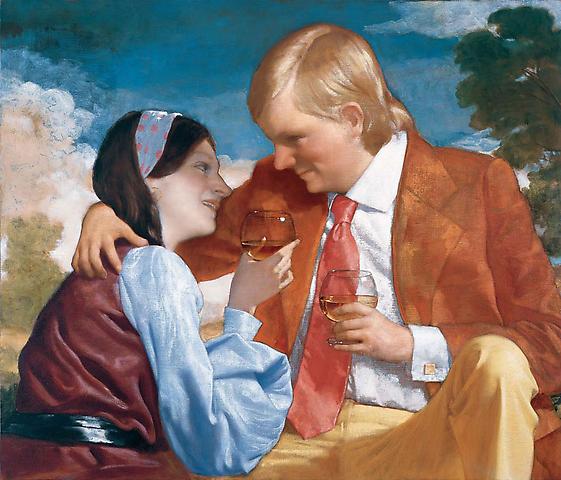
Rippowam — John Currin

Melville House Wants to Duel with You

The good folks at Melville House want to duel with you. They’re publishing five novellas, all called The Duel, and they want you to make a trailer for the books. You can win books and “underground fame,” which I’m sure won’t be fleeting (in any case, winning all 42 titles in their Art of the Novella series is nothing to sneeze at). Full details at Moby Lives.

Some other duels we like:

A duel from Barry Lyndon

Jean-Léon Gérôme’s Duel After the Masked Ball—

“Duel” by Swervedriver—

The Universe Sequence from Terrence Malick’s Film The Tree of Life

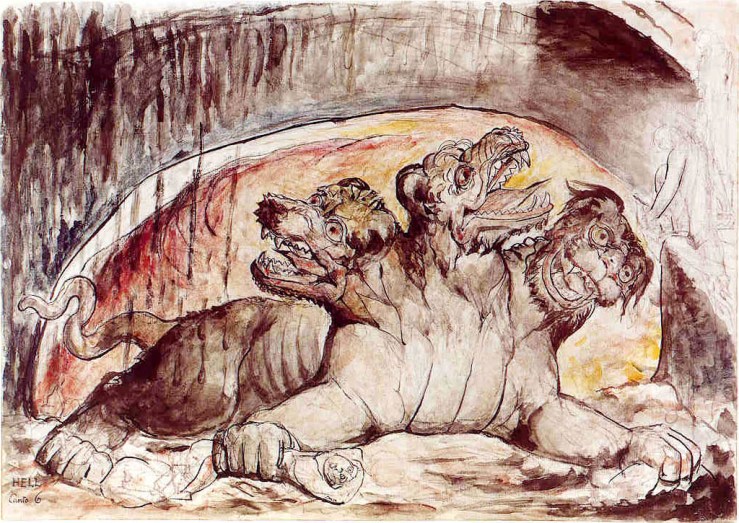
Cerberus — William Blake

Slavoj Žižek Explains How The Sound of Music Addresses Our Secret Fascist Dreams

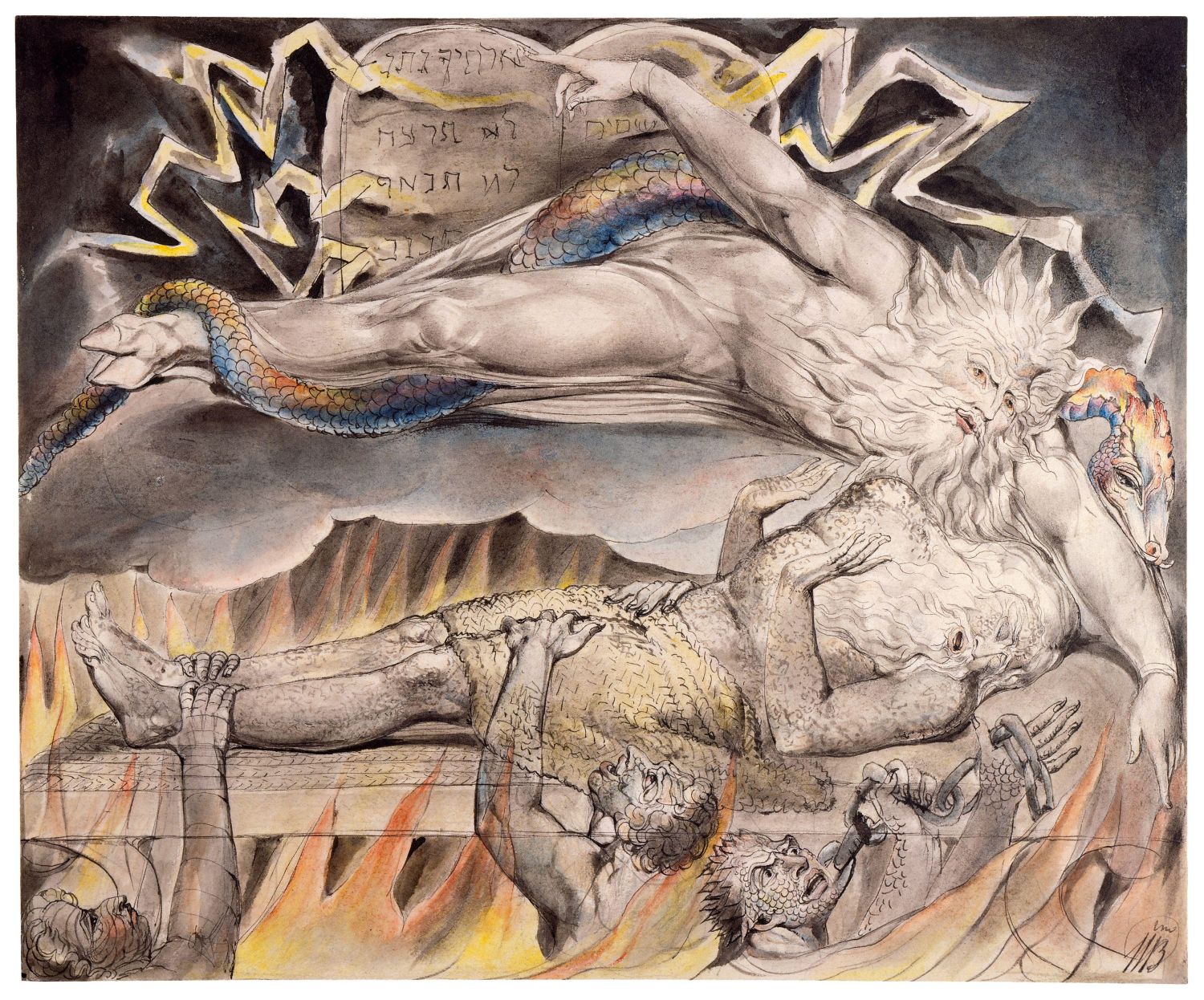
Job’s Evil Dreams — William Blake

I Have Writer’s Block (but I’ll Share a Vomit Story Anyway)

I have the writer’s block somethin’ terrible.

Everything was going so well, too—I seemed able to blather and drivel at will for a few weeks, dribbling out my noisome little posts on books or films or TV shows or what have you.

But now, nothing, which is terrible, because I have been reading up a storm—putting away half a Hemingway in a day (The Garden of Eden), flying through Donald Harrington’s epic comic masterpiece Architecture of the Arkansas Ozarks (still not finished), trudging through Breece D’J Pancake’s stories when I think I can take the sadness, and polishing off Wayne Koestenbaum’s Humiliation in three short sessions.

I kind of blame Koestenbaum’s book for the writer’s block. It’s always hard to write about a book that you love, that you think others should read too, but even harder when the book is about subjects and figures that most people would rather not think about, like abjection or vomit or gloryholes or the terrible pain of Liza Minelli or Antonin Artaud’s electroshock therapy or Jean Genet’s prison sex or lynching photographs or  Michael Jackson’s penis. Plus, Koestenbaum repeatedly points out that the act of writing itself, particularly writing for publication, writing for others to read is an abject, humiliating process. Here’s Koestenbaum—

Writing is a process of turning myself inside out: a regurgitation. I extrude my vulnerable inner lining. I purge. And then I examine the contents—my expulsed interior—and begin the bloody interrogation. I ask whether it is filthy or clean, valuable or deplorable.

Koestenbaum goes beyond metaphorical vomiting to consider the literal act of regurgitation in his book. There’s a lot of vomit in Humiliation—other bodily expulsions too, but Koestenbaum singles vomiting as a primary site of abjection (this seems a little less intense or mordant than theorist Julia Kristeva—whose work Koestenbaum is surely working from—who finds the corpse the ultimate abject object).

Maybe I’ll try to work through my writer’s block by telling a vomit story. The story is made more germane (to what, though?), perhaps, in light of the fact that I had just read some of Koestenbaum’s vomit theory (or vomit prose, if you prefer) the night previous.

Here is the setting: it is a pediatrician’s waiting room. I am waiting with my son, who is 13 months old, who is to receive shots on this visit to protect him from disease. The waiting room is packed and the progress is unusually slow. The woman across from me makes idle chit chat with me and with her own son who is maybe 13 or 14 years old; he’s in marching band; he needs new shoes for marching band; jazz band will be discontinued due to budget cuts, but the teacher (a man who shares my last name, I hear by eavesdropping although how can it be eavesdropping when their conversation is so public and the room so small) will teach jazz band after school. These details are unimportant to the vomiting story, although they perhaps signal the teenager’s mother’s caring, involved nature in her son’s life.

Here is the climax of the story: to my right, another man is at the doctor’s with his son, waiting; the son is perhaps 3 or 4 years old. He doesn’t look well—he looks queasy. In fact, when I look at him (not directly of course, but glancingly, the way that people might in a waiting room or other such place where direct eye contact is unspokenly shunned), when I look at him, I internally remark his queasiness, his ill gills, his distraught angle; I also internally remark his father’s concern, the way his father slowly strokes the son’s back in impotent consolation. And at the same moment I remark on these details, it occurs to me that this queasy looking boy is in the wrong section, that there is a clearly marked, smaller room (not so much a room but an alcove or adjoined large cubby—no door separates the two) for “sick” patients, for patients who are not attending a regular “well” visit (like my own son). My reaction though was not fear or disgust or anger, but more mild annoyance that the father was either flouting a convention of the office (one that I didn’t really care about, knowing that, hey, really, is that smaller room really going to protect my health or my child’s? Because, no it’s not), or that the father simply failed to read a clear sign (I feel a similar annoyance when people at the grocery store where I shop treat the clearly-marked entrance as an exit and vice-versa).

Anyway, I promised a climax, and failed to deliver. How humiliating. So here is the climax: the man’s son up and vomited all over the floor, all over the man’s leg. It was not the tidy vomit that we might sometimes manage—the short, projectile aimed mass that usually conforms to a strict element, mostly solid or mostly liquid. No, this was a messy, mucusy, ill affair, the kind of vomit that hangs from the vomiter’s mouth and sticks to the floor (for me, the most abject, threatening detail). It was foul. And yet I felt no abject horror or humiliation for the man or his child—in short, none of the vomit-horror that Koestenbaum describes in his book (a description I know I have not described for you, dear reader). Instead, I felt immediate empathy and compassion for the man. The mother of the teenager responded even more demonstrably. She immediately located a garbage bin for the boy to continue vomiting in, alerted the staff, went to the bathroom for paper towels, and helped the man while speaking consolingly to the son. She did what I wished that I had did. She behaved like a good human.

The point of this vomit story is to try to address what Koestenbaum does not address in his fantastic book. This is not meant to be a slight or an attack or even a criticism. A book should never be attacked for what it doesn’t aim to do. But what Koestenbaum, in his wonderful analyses of vomit, of expulsion, of all the ways our bodies, the material facts of our bodies humiliate us, make us abject, what Koestenbaum doesn’t consider is that the loving parent’s relation to a helpless child’s body’s expulsions bears the possibility (the strong possibility) of not being abject, but instead a site of abjection’s flipside: grace, love, empathy and all that jazz. In short, no one in the waiting room where the child vomited shrank in disgust or showed any visible sign of shared humiliation—quite the opposite. The child’s demonstrable illness became a moment not of horror but of empathy, of understanding the child’s illness and the father’s worry and care and love for his ill child, a love that transcends humiliation’s gaze.

So there’s my vomit story, or one of my vomit stories. But I still don’t know how to review the book right now.

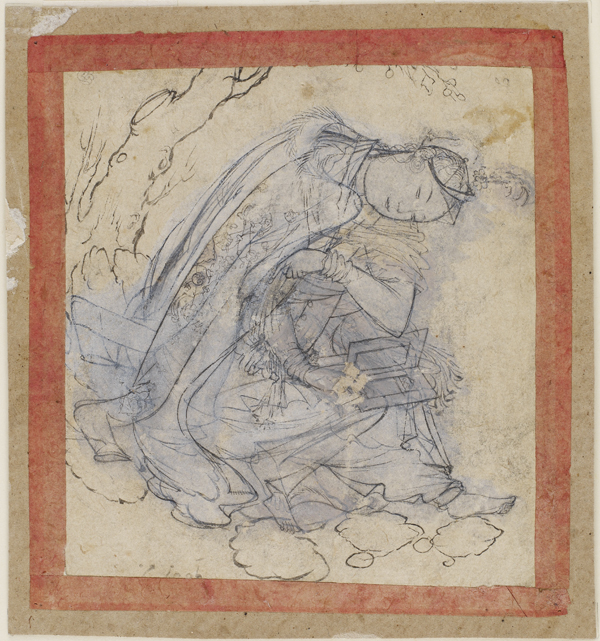
Youth Reading — Riza Abassi

Youth Reading -- Riza Abassi (ca. 1600)

Virginia Woolf’s Bust (and Other Author Gravesites)

Great post today at Page Pulp featuring author gravesites. Check it out — Edmund Spenser, Shakespeare, Keats, Woolf (above), and more.