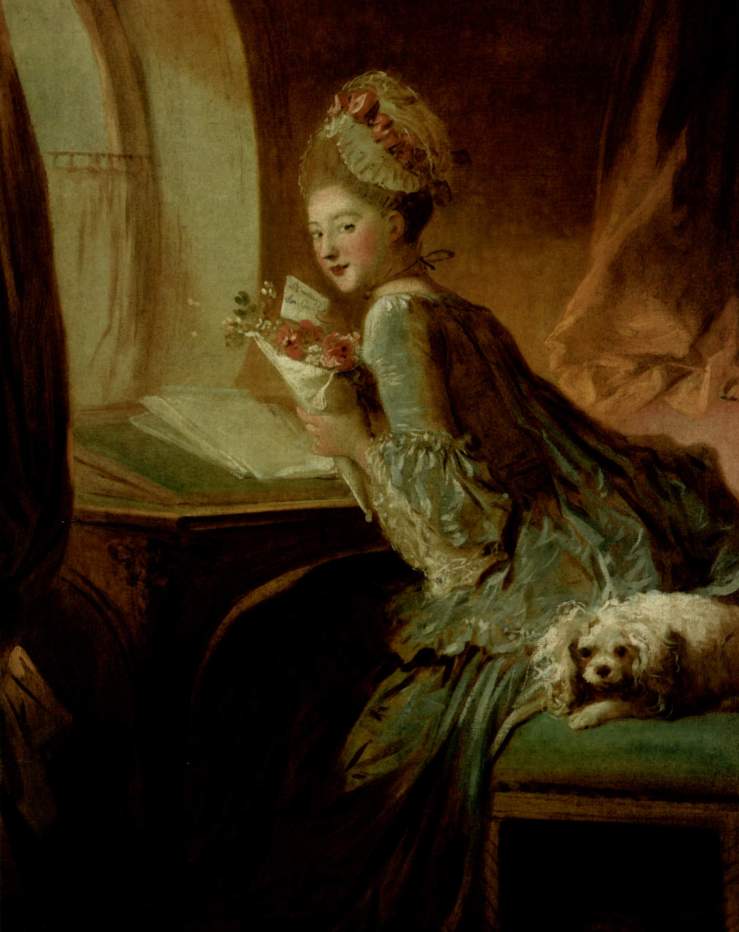
The Love Letter — Jean-Honore Fragonard

the-love-letter

The Follow — Wong Kar Wai (Short Film)

“Moral Effects of Tea-Tasting” (From Flann O’Brien’s At Swim-Two-Birds)

Moral Effects of Tea-Tasting.

The long-continued use of tea has a distinct effect upon the character. This has been too often noticed and remarked to be questioned. There are tea-sots in every great charitable institution – particularly those for the maintenance of the aged. Their symptoms are generally mental irritability, muscular tremors, and sleeplessness. The following is an account of one of the cases observed. The immediate effects upon him are as follows: In about ten minutes the face becomes flushed, the whole body feels warm and heated and a sort of intellectual intoxication comes on, much the same in character, it would seem, as that which occurs in the rarefied air of a mountain. He feels elated, exhilarated, troubles and cares vanish, everything seems bright and cheerful, his body feels light and elastic, his mind clear, his ideas abundant, vivid, and flowing fluently into words. At the end of an hour’s tasting a slight reaction begins to set in; some headache comes on, the face feels wrinkled and shrivelled, particularly about the eyes, which also get dark under the lids. At the end of two hours this reaction becomes firmly established, the flushed warm feeling has passed off, the hands and feet are cold, a nervous tremor comes on, accompanied with great mental depression. And he is now so excitable that every noise startles him; he is in a state of complete unrest; he can neither walk nor sit down, owing to his mental condition, and he settles into complete gloom. Copious and frequent urinations are always present, as also certain dyspeptic symptoms, such as eructations of wind, sour taste, and others. His mental condition is peculiar. He lives in a state of dread that some accident may happen to him; in the omnibus fears a collision; crossing the street, fears that he will be crushed by passing teams; walking on the sidewalks, fears that a sign may fall, or watches the eaves of houses, thinking that a brick may fall down and kill him; under the apprehension that every dog he meets is going to bite the calves of his legs, he carries an umbrella in all weathers as a defence against such an attack.

Conclusion of the foregoing.

From Flann O’Brien’s novel At Swim-Two-Birds.


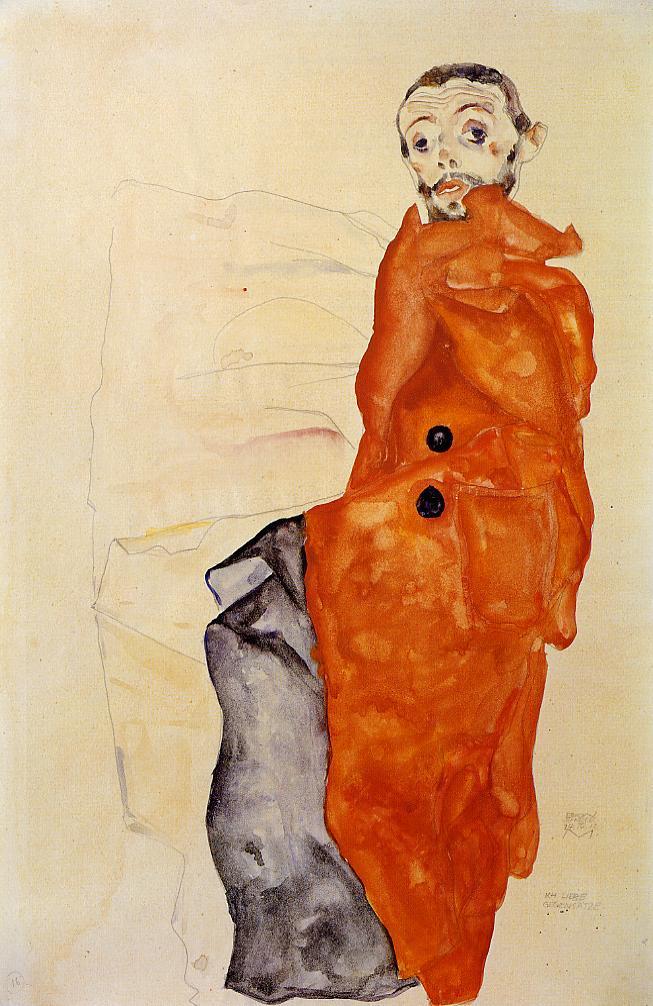
I Love Antitheses — Egon Schiele

i-love-antitheses-1912

“Man Carrying Thing” — Wallace Stevens

“Man Carrying Thing” by Wallace Stevens:

The poem must resist the intelligence
Almost successfully. Illustration:

A brune figure in winter evening resists
Identity. The thing he carries resists

The most necessitous sense. Accept them, then,
As secondary (parts not quite perceived

Of the obvious whole, uncertain particles
Of the certain solid, the primary free from doubt,

Things floating like the first hundred flakes of snow
Out of a storm we must endure all night,

Out of a storm of secondary things),
A horror of thoughts that suddenly are real.

We must endure our thoughts all night, until
The bright obvious stands motionless in cold.


Taxi Driver Sweded by Michel Gondry

Sunday — Edward Hopper

sunday

“The Oblong Box” — Edgar Allan Poe

“The Oblong Box” by Edgar Allan Poe

SOME years ago, I engaged passage from Charleston, S. C, to the city of New York, in the fine packet-ship “Independence,” Captain Hardy. We were to sail on the fifteenth of the month (June), weather permitting; and on the fourteenth, I went on board to arrange some matters in my state-room.

I found that we were to have a great many passengers, including a more than usual number of ladies. On the list were several of my acquaintances, and among other names, I was rejoiced to see that of Mr. Cornelius Wyatt, a young artist, for whom I entertained feelings of warm friendship. He had been with me a fellow-student at C— University, where we were very much together. He had the ordinary temperament of genius, and was a compound of misanthropy, sensibility, and enthusiasm. To these qualities he united the warmest and truest heart which ever beat in a human bosom.

I observed that his name was carded upon three state-rooms; and, upon again referring to the list of passengers, I found that he had engaged passage for himself, wife, and two sisters—his own. The state-rooms were sufficiently roomy, and each had two berths, one above the other. These berths, to be sure, were so exceedingly narrow as to be insufficient for more than one person; still, I could not comprehend why there were three state-rooms for these four persons. I was, just at that epoch, in one of those moody frames of mind which make a man abnormally inquisitive about trifles: and I confess, with shame, that I busied myself in a variety of ill-bred and preposterous conjectures about this matter of the supernumerary state-room. It was no business of mine, to be sure, but with none the less pertinacity did I occupy myself in attempts to resolve the enigma. At last I reached a conclusion which wrought in me great wonder why I had not arrived at it before. “It is a servant of course,” I said; “what a fool I am, not sooner to have thought of so obvious a solution!” And then I again repaired to the list—but here I saw distinctly that no servant was to come with the party, although, in fact, it had been the original design to bring one—for the words “and servant” had been first written and then overscored. “Oh, extra baggage, to be sure,” I now said to myself—”something he wishes not to be put in the hold—something to be kept under his own eye—ah, I have it—a painting or so—and this is what he has been bargaining about with Nicolino, the Italian Jew.” This idea satisfied me, and I dismissed my curiosity for the nonce. Continue reading ““The Oblong Box” — Edgar Allan Poe”

Still Life with Plaster Statuette, a Rose and Two Novels — Vincent van Gogh

still-life-with-plaster-statuette-a-rose-and-two-novels-1887

That Cold Day in the Park, Directed by Robert Altman (Full Film)

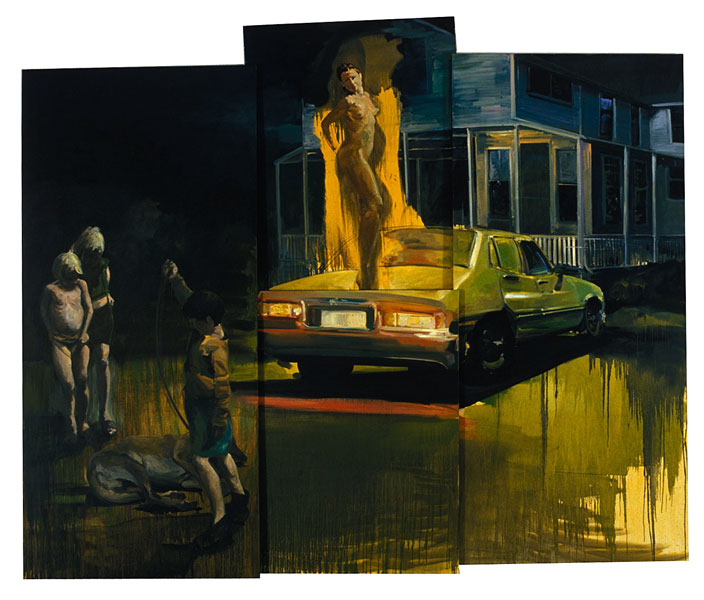
Birth of Love (2nd Version) — Eric Fischl

birth-of-love-2nd-version

“I’ll order a complete man after a desirable pattern” (Moby-Dick)

I do deem it now a most meaning thing, that that old Greek, Prometheus, who made men, they say, should have been a blacksmith, and animated them with fire; for what’s made in fire must properly belong to fire; and so hell’s probable. How the soot flies! This must be the remainder the Greek made the Africans of. Carpenter, when he’s through with that buckle, tell him to forge a pair of steel shoulder-blades; there’s a pedlar aboard with a crushing pack.

Sir?

Hold; while Prometheus is about it, I’ll order a complete man after a desirable pattern. Imprimis, fifty feet high in his socks; then, chest modelled after the Thames Tunnel; then, legs with roots to ’em, to stay in one place; then, arms three feet through the wrist; no heart at all, brass forehead, and about a quarter of an acre of fine brains; and let me see—shall I order eyes to see outwards? No, but put a sky-light on top of his head to illuminate inwards. There, take the order, and away.

From “Ahab and The Carpenter,” Chapter 108 of Melville’s Moby-Dick.


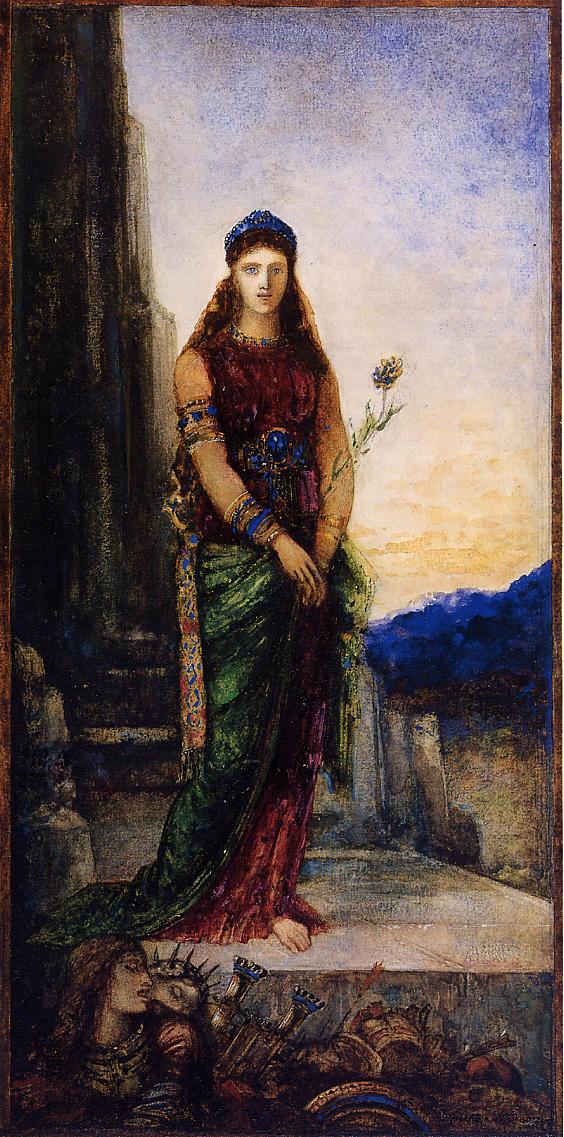
Helen on the Walls of Troy — Gustave Moreau

helen-on-the-walls-of-troy

“Experts” — A.A. Milne

“Experts” by A.A. Milne

The man in front of the fire was telling us a story about his wife and a bottle of claret. He had taken her to the best restaurant in Paris and had introduced her to a bottle of the famous Chateau Whatsitsname, 1320 (or thereabouts), a wine absolutely priceless–although the management, with its customary courtesy, had allowed him to pay a certain amount for it. Not realizing that it was actually the famous Whatsitsname, she had drunk it in the ordinary way, neither holding it up to the light and saying, “Ah, there’s a wine!” nor rolling it round the palate before swallowing. On the next day they went to a commonplace restaurant and drank a local and contemporary vintage at five francs the bottle, of similar colour but very different temperament. When she had finished her glass, she said hesitatingly, “Of course, I don’t know anything about wine, and I dare say I’m quite wrong, but I can’t help feeling that the claret we had last night was better than this.”

The man in front of the fire was rather amused by this, as were most of his audience. For myself, I felt that the lady demanded my admiration rather than my amusement. Without the assistance of the labels, many of us might have decided that it was the five-franc vintage which was the better wine. She didn’t. Indeed, I am inclined to read more into the story than is perhaps there; I believe that she had misunderstood her husband, and had thought that the second bottle was the famous, aged, and priceless Chateau Whatsitsname, and that, in spite of this, she gave it as her opinion that the first wine, cheap and modern though it might be, was the better. Hats off, then, to a brave woman! How many of us would have her courage and her honesty?

But perhaps you who read this are an expert on wine. If so, you are lucky. I am an expert on nothing–nothing, anyhow, that matters. I envy all you experts tremendously. When I see a cigar-expert listening to his cigar before putting it in his mouth I wish that I were as great a man as he. Privately sometimes I have listened to a cigar, but it has told me nothing. The only way I can tell whether it is good or bad is by smoking it. Even then I could not tell you (without the assistance of the band) whether it was a Sancho Panza or a Guoco Piano. I could only tell you whether I liked it or not, a question of no importance whatever.

Lately I have been trying to become a furniture-expert, but it is a disheartening business. I have a book called Chats on Old Furniture–a terrible title to have to ask for in a shop, but I asked boldly. Perhaps the word “chat” does not make other people feel as unhappy as it makes me. But even after reading this book I am not really an expert. I know now that it is no good listening to a Chippendale chair to see if it is really Chippendale; one must stroke it in order to find out whether it is a “genuine antique” or only a modern reproduction; but it is obvious that years of stroking would be necessary before an article of furniture would be properly responsive. Is it worth while wasting these years of one’s life? Indeed, is it worth while (I ask nervously) bothering whether a chair or a table is antique or modern so long as it is both useful and beautiful?

Well, let me tell you what happened to us yesterday. We found a dresser which appealed to us considerably, and we stood in front of it, looking at it. We decided that except for a little curley-wiggle at the top it was the jolliest dresser we had seen, “That’s a fine old dresser,” said the shopman, coming up at that moment, and he smacked it encouragingly. “A really fine old dresser, that.” We agreed. “Except for those curley-wiggles,” I added, pointing to them with my umbrella. “If we could take those off.” He looked at me reproachfully. “You wouldn’t take those off—-” he said. “Why, that’s what tells you that it’s a Welsh dresser of 1720.” We didn’t buy that dresser. We decided that the size or the price was all wrong. But I wonder now, supposing we had bought it, whether we should have had the pluck to remove the curley-wiggles (and let people mistake it for an English dresser of 1920) in order that, so abbreviated, it might have been more beautiful.

For furniture is not beautiful merely because it is old. It is absurd to suppose that everything made in 1720–or 1620 or 1520–was made beautifully, as it would be absurd to say that everything made in 1920 was beautiful. No doubt there will always be people who will regard the passing of time as sufficient justification for any article of furniture; I could wish that they were equally tolerant among the arts as among the crafts, so that in 2120 this very article which I write now could be referred to with awe as a genuine 1920; but all that the passage of time can really do for your dresser is to give a more beautiful surface and tone to the wood. This, surely, is a matter which you can judge for yourself without being an expert. If your dresser looks old you have got from it all that age can give you; if it looks beautiful you have got from it all that a craftsman of any period can give you; why worry, then, as to whether or not it is a “genuine antique”? The expert may tell you that it is a fake, but the fact that he has suddenly said so has not made your dining-room less beautiful. Or if it is less beautiful, it is only because an “expert” is now in it. Hurry him out.
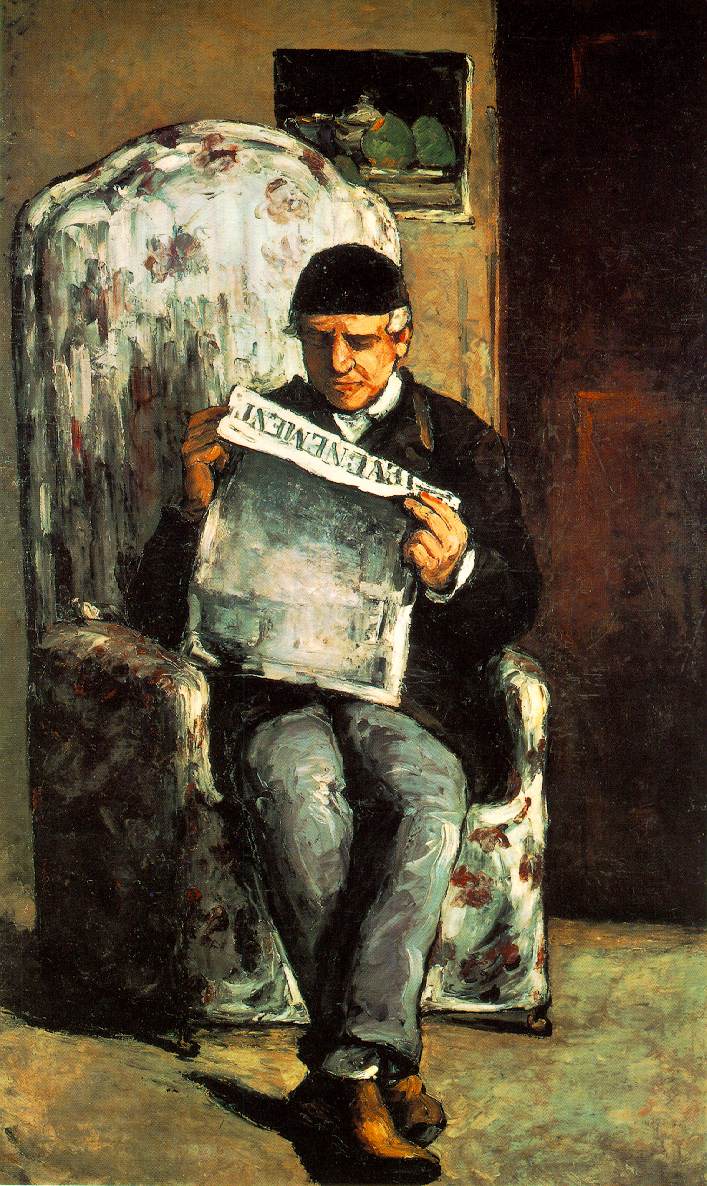
The Artist’s Father Reading His Newspaper — Paul Cézanne

the-artist-s-father-reading-his-newspaper-1866

Watch Room 666, A Wim Wenders Documentary Featuring Godard, Herzog, Spielberg, and More

https://vimeo.com/16992326

Roseland New York City — Portishead (Full Film)