Zazie in the Metro — Louis Malle (Full Film)

Untitled — Zdzisław Beksiński

Diagram from the Anatomy of the Horse — George Stubbs

“Charity” — Thomas Bernhard

20130504-100435.jpg

“The Jockey,” A Short Story by Carson McCullers

“The Jockey” by Carson McCullers

The jockey came to the doorway of the dining room, then after a moment stepped to one side and stood motionless, with his back to the wall. The room was crowded, as this was the third day of the season and all the hotels in the town were full. In the dining room bouquets of August roses scattered their petals on the white table linen and from the adjoining bar came a warm, drunken wash of voices. The jockey waited with his back to the wall and scrutinized the room with pinched, crêpy eyes. He examined the room until at last his eyes reached a table in a corner diagonally across from him, at which three men were sitting. As he watched, the jockey raised his chin and tilted his head back to one side, his dwarfed body grew rigid, and his hands stiffened so that the fingers curled inward like gray claws. Tense against the wall of the dining room, he watched and waited in this way.

He was wearing a suit of green Chinese silk that evening, tailored precisely and the size of a costume outfit for a child. The shirt was yellow, the tie striped with pastel colors. He had no hat with him and wore his hair brushed down in a stiff, wet bang on his forehead. His face was drawn, ageless, and gray. There were shadowed hollows at his temples and his mouth was set in a wiry smile. After a time he was aware that he had been seen by one of the three men he had been watching. But the jockey did not nod; he only raised his chin still higher and hooked the thumb of his tense hand in the pocket of his coat.

The three men at the corner table were a trainer, a bookie, and a rich man. The trainer was Sylvester — a large, loosely built fellow with a flushed nose and slow blue eyes. The bookie was Simmons. The rich man was the owner of a horse named Seltzer, which the jockey had ridden that afternoon. The three of them drank whiskey with soda, and a white-coated waiter had just brought on the main course of the dinner. Continue reading ““The Jockey,” A Short Story by Carson McCullers”

Mortal Lock (Book Acquired, 5.02.2013)

20130502-141624.jpg

Mortal Lock by Andrew Vachss seems like a good choice for anyone who digs short, punchy crime noir stories. There’s also a screenplay in here. Random House’s blurb:

A hit man stalks his mark at a race track. A sociopath crosses every moral boundary to become a published author. An ex-mercenary obsessively defends his “perimeter” from a dangerous interloper. A man for hire grudgingly accepts help from a teenage girl to track an online predator. In a dystopian future, young people struggle for survival underground, forming themselves into vicious gangs with only the graffiti of the “last journalists” accepted as truth. Andrew Vachss collects twenty tight, powerful stories—all from the past decade of his career, including some now published for the first time—along with an original screenplay. Together, they form Mortal Lock, a searing portrait of the criminal underworld, with both its depravity and humanity on display.


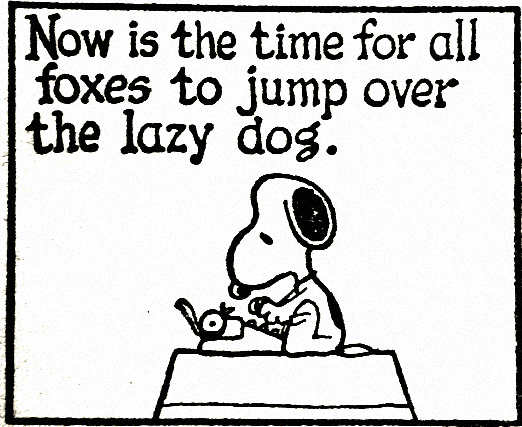
Snoopy, What Time Is It Now?

snoopy

Staffa, Fingal’s Cave — William Turner

“The Happy Prince” — Oscar Wilde

“The Happy Prince” by Oscar Wilde

High above the city, on a tall column, stood the statue of the Happy Prince.  He was gilded all over with thin leaves of fine gold, for eyes he had two bright sapphires, and a large red ruby glowed on his sword-hilt.

He was very much admired indeed.  “He is as beautiful as a weathercock,” remarked one of the Town Councillors who wished to gain a reputation for having artistic tastes; “only not quite so useful,” he added, fearing lest people should think him unpractical, which he really was not.

“Why can’t you be like the Happy Prince?” asked a sensible mother of her little boy who was crying for the moon.  “The Happy Prince never dreams of crying for anything.”

“I am glad there is some one in the world who is quite happy,” muttered a disappointed man as he gazed at the wonderful statue.

“He looks just like an angel,” said the Charity Children as they came out of the cathedral in their bright scarlet cloaks and their clean white pinafores.

“How do you know?” said the Mathematical Master, “you have never seen one.”

“Ah! but we have, in our dreams,” answered the children; and the Mathematical Master frowned and looked very severe, for he did not approve of children dreaming.

One night there flew over the city a little Swallow.  His friends had gone away to Egypt six weeks before, but he had stayed behind, for he was in love with the most beautiful Reed.  He had met her early in the spring as he was flying down the river after a big yellow moth, and had been so attracted by her slender waist that he had stopped to talk to her.

“Shall I love you?” said the Swallow, who liked to come to the point at once, and the Reed made him a low bow.  So he flew round and round her, touching the water with his wings, and making silver ripples.  This was his courtship, and it lasted all through the summer.

“It is a ridiculous attachment,” twittered the other Swallows; “she has no money, and far too many relations”; and indeed the river was quite full of Reeds.  Then, when the autumn came they all flew away.

After they had gone he felt lonely, and began to tire of his lady-love.  “She has no conversation,” he said, “and I am afraid that she is a coquette, for she is always flirting with the wind.”  And certainly, whenever the wind blew, the Reed made the most graceful curtseys.  “I admit that she is domestic,” he continued, “but I love travelling, and my wife, consequently, should love travelling also.”

“Will you come away with me?” he said finally to her; but the Reed shook her head, she was so attached to her home.

“You have been trifling with me,” he cried.  “I am off to the Pyramids.  Good-bye!” and he flew away.

All day long he flew, and at night-time he arrived at the city.  “Where shall I put up?” he said; “I hope the town has made preparations.”

Then he saw the statue on the tall column. Continue reading ““The Happy Prince” — Oscar Wilde”

Julie Manet, Reading in a Chaise Lounge — Berthe Morisot