A great disorderly Tangle of Lines vanishing into the Mnemonick Deep (Pynchon’s Mason & Dixon)

Facts are but the Play-things of lawyers,— Tops and Hoops, forever a-spin. . . . Alas, the Historian may indulge no such idle Rotating. History is not Chronology, for that is left to lawyers,— nor is it Remembrance, for Remembrance belongs to the People. History can as little pretend to the Veracity of the one, as claim the Power of the other,— her Practitioners, to survive, must soon learn the arts of the quidnunc, spy, and Taproom Wit,— that there may ever continue more than one life-line back into a Past we risk, each day, losing our forebears in forever,— not a Chain of single Links, for one broken Link could lose us All,— rather, a great disorderly Tangle of Lines, long and short, weak and strong, vanishing into the Mnemonick Deep, with only their Destination in common.

— The Revd Wicks Cherrycoke, Christ and History

From Thomas Pynchon’s novel Mason & Dixon.

Can Not Prevent It, but There Is No Need to Prevent It — Ryohei Hase

28_01

William Faulkner explains the genesis of The Sound and the Fury

Unidentified participant: This is a question about writing in general. I think maybe you just answered it, but they say until Hawthorne came along that there were two ways to construct a story: either start with the characters and then a plot, or start with a plot and make up your characters, and they say that Hawthorne started with the idea and invented both. And I wonder, I know there’s no one formula to producing a story, but I just wonder where you start most often and what you feel is most important, what pattern you [have worked out] to use?

William Faulkner: Three methods you just stated, all will work but—but none—neither or none are more important than the others, and no one can say just what method the story demands. Apparently there’s something inside the man or the woman that must be—be told, must be written. It could be an anecdote. It could be a character. It could be an idea, but I don’t think you could say which system to—or which pattern to assume in order to—to create a story or a book.

Unidentified participant: You have no favorite pattern? It just depends on the individual—?

William Faulkner: That’s right, that’s right. It could be an anecdote. The Sound and the Fury came out of an anecdote, a picture of a—a little girl, the muddy seat of her drawers when she climbed the tree to look in a parlor window, and that’s—the book came from that.

Unidentified participant: Mr. Faulkner

William Faulkner: Sir.

Unidentified participant: In The Sound and the Fury, the first three sections of that book are narrated by one of the—of the four Compson children, and in view of the fact that Caddy figures so prominently, is there any particular reason why you didn’t have a section with—giving her views or impressions of what went on?

William Faulkner: That’s a good question. That—the explanation of that whole book is in that. It began with the—the picture of the—the little girl’s muddy drawers, climbing that tree to look in the parlor window with her brothers that didn’t have the courage to climb the tree waiting to see what she saw. and I tried first to tell it with one brother, and that wasn’t enough. That was Section One. I tried with another brother, and that wasn’t enough. That was Section Two. I tried the third brother, because Caddy was still to me too beautiful and too moving to—to reduce her to telling what was going on, that it would be more—more passionate to see her through somebody else’s eyes, I thought. And that failed, and I tried myself, the fourth section, to tell what happened, and I still failed. [audience laughter] So—

Unidentified participant: Mr. Faulkner, when you wrote this, did you have it thought out beforehand, the whole sequences, or did they sort of evolve as you wrote it?

William Faulkner: It evolved as I wrote it. It began with the picture, as I said, of—of the little girl climbing the tree to tell her brothers what was going on in the room where the grandmother’s funeral was taking place, and the rest grew from that.

Via/audio.

Young Woman Reading a Letter — Jean Raoux

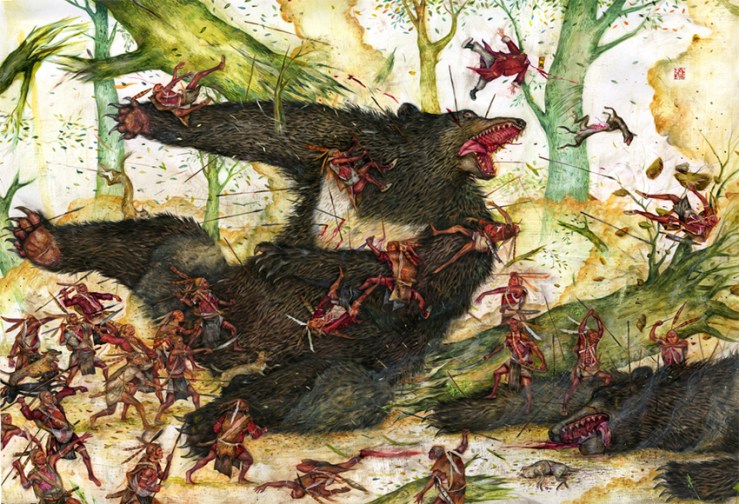
Asiatic Black Bears — Mu Pan

twb

Submarine Sandwich — PES

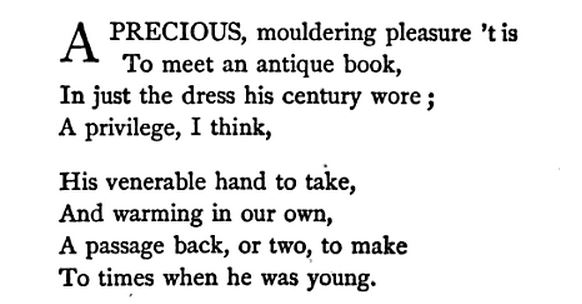
Precious (Emily Dickinson)

a

Zap! (Cowboy Henk)

zap

Chained Prisoner — Francisco Goya

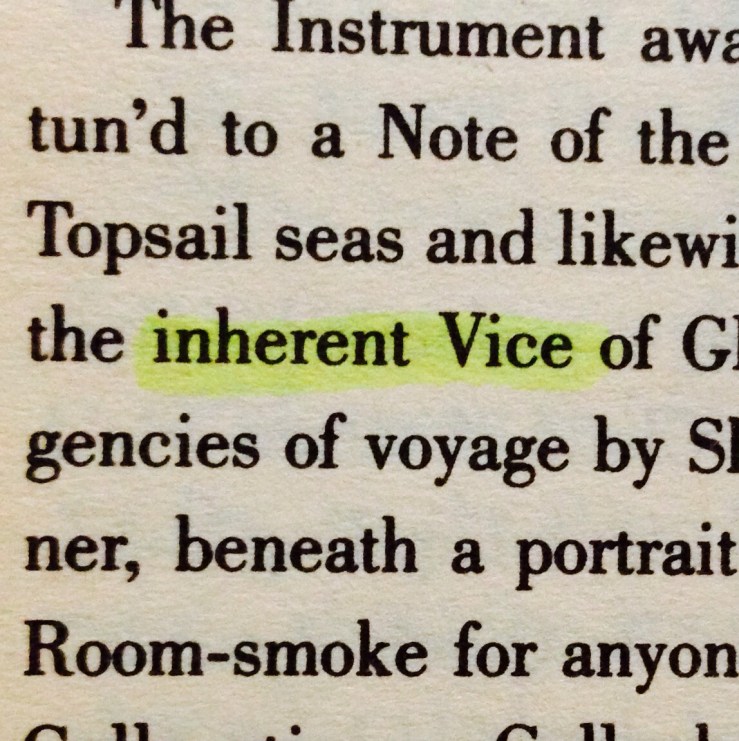
Inherent Vice (Thomas Pynchon’s Mason & Dixon)

IMG_4191

From page 272, chapter 27 of Thomas Pynchon’s novel Mason & Dixon. The phrase “against the day” appeared in chapter 13, on page 125. Perhaps I should be on the lookout for the phrase “bleeding edge.”

Untitled (In Hoc Signo Vinces) — Zdislav Beksinski

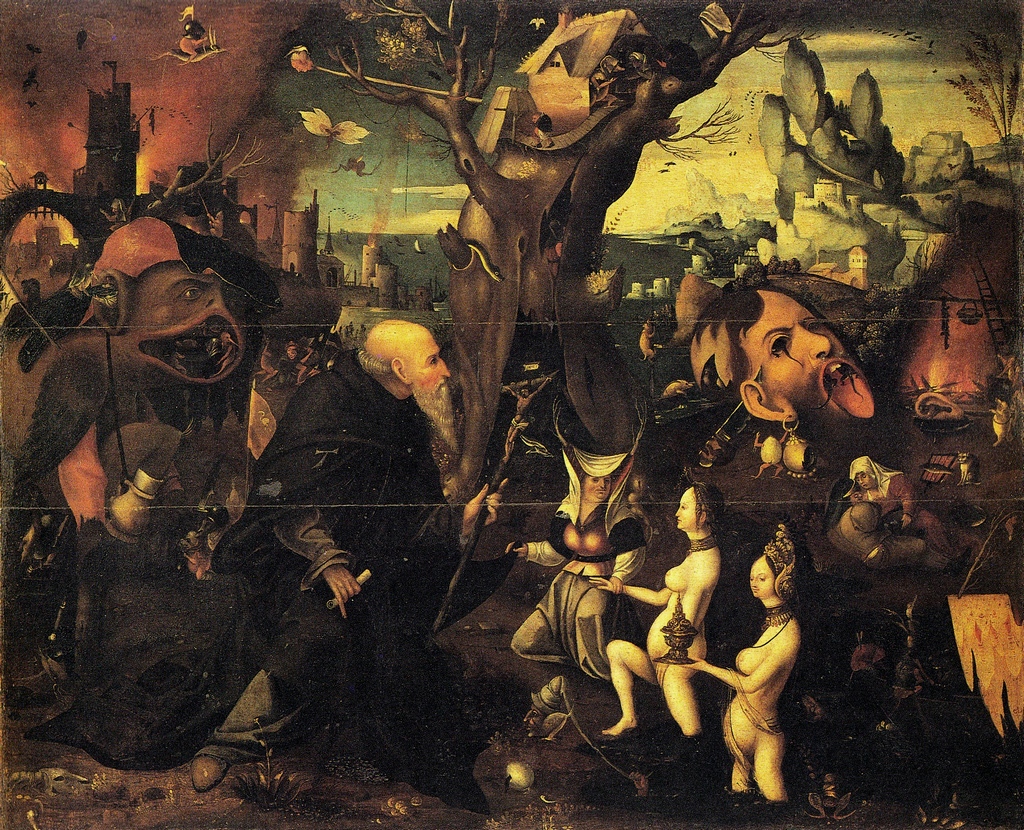
The Temptation of St. Anthony — Herri met de Blas

11505OP2103AU18440

A clip from Paul Thomas Anderson’s film Inherent Vice

India in Woodstock — Amanda Charchian

40

Via; more.

Thomas Pynchon’s Mason & Dixon (Second Riff: The Pygmies’ Discovery of Great Britain)

A. Okay. So I finished the first section of Mason & Dixon a few days ago. I’m now at the part where our titular heroes are smoking weed and eating snacks with George Washington. I can’t possibly handle all the material I’ve read so far—even in a riff (here’s the first riff for anyone inclined)—so instead I’ll annotate a few passages from Ch. 19, one of my favorite episodes so far.

B. Setting and context: 1762. “The George,” a pub in Gloucestershire (Mason’s home county). The patrons at the tavern are heatedly discussing the eleven days that went “missing” when the British moved from the Julian calendar to the Gregorian calendar.

One (satirical) source for this controversy comes from William Hogarth’s 1755 painting An Election Entertainment; in the detail below, you can read (barely) the slogan  “Give us our Eleven Days” on the black banner under the man’s foot.

a

A bit more context, via History Today:

In 1750 England and her empire, including the American colonies, still adhered to the old Julian calendar, which was now eleven days ahead of the Gregorian calendar, introduced in 1582 by Pope Gregory XIII and in use in most of Europe.

Attempts in the sixteenth and seventeenth centuries to adopt the new calendar had broken on the rock of the Church of England, which denounced it as popish. The prime mover in changing the situation was George Parker, second Earl of Macclesfield, a keen astronomer and a Fellow of the Royal Society. He was assisted in his calculations by his friend James Bradley…

I emphasized Bradley—Mason’s mentor—and Macclesfield as they are minor characters in this episode.

Basically, the pub patrons demand that Mason explain what happened to the missing eleven days.

C. Okay—so this whole episode, this discussion of time and space clearly helps underline the big themes of Mason & Dixon: How to measure the intangible, the invisible—how to pin down the metaphysical to the physical—how to know and how to not know. (Hence all the paranoia). Continue reading “Thomas Pynchon’s Mason & Dixon (Second Riff: The Pygmies’ Discovery of Great Britain)”

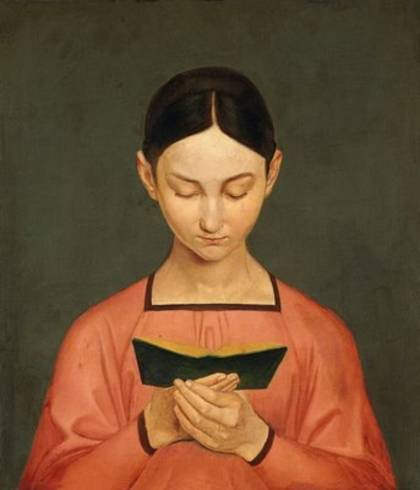
Young Girl Reading — Gustav Adolph Hennig

gustavv-adolph-henning-jene-fille-lisant-1828.1299571148.thumbnail

No.

B4XpDGqIcAA-tFK (2)

Via: