Pandora’s Box — Tsukioka Yoshitoshi

126136948989078917ltsdxp

Leaving School — Honore Daumier

Gubbish (Philip K. Dick)

They gubbled and gubbled. He put his hands to his ears, but the product crept up through his nose. Then he saw the place. It was where he wore out. They threw him away there, and gubbish lay in heaps up to his waist; gubbish filled the air.

“What is your name?”

“Steiner, Manfred.”

“Age.”

“Eighty­three.”

“Vaccinated against smallpox?”

“Yes.”

“Any venereal diseases?”

“Well, a little clap, that’s all.”

“V.D. clinic for this man.”

“Sir, my teeth. They’re in the bag, along with my eyes.”

“Your eyes, oh yes. Give this man his teeth and eyes before you take him to the V.D. clinic. How about your ears, Steiner?”

“Got ’em on, sir. Thank you, sir.”

They tied his hands with gauze to the sides of the bed because he tried to pull out the catheter. He lay facing the window, seeing through the dusty, cracked glass.

Outside, a bug on tall legs picked through the heaps. It ate, and then something squashed it and went on, leaving it squashed with its dead teeth sunk into what it had wanted to eat. Finally its dead teeth got up and crawled out of its mouth in different directions.

He lay there for a hundred and twenty­three years and then his artificial liver gave out and he fainted and died. By that time they had removed both his arms and legs up to the pelvis because those parts of him had decayed.

He didn’t use them anyhow. And without arms he didn’t try to pull the catheter out, and that pleased them.

I been at AM­WEB for a long time, he said. Maybe you can get me a transistor radio so I can tune in Friendly Fred’s Breakfast Club; I like to hear the tunes, they play a lot of the old­time favorites.

Something outside gives me hay fever. Must be those yellow flowering weeds, why do they let them get so tall?

I once saw a ballgame.

For two days he lay on the floor, in a big puddle, and then the landlady found him and called for the truck to bring him here. He snored all the way, it woke him up. When they tried to give him grapefruit juice he could only work one arm, the other never worked again ever. He wished he could still make those leather belts, they were fun and took lots of time. Sometimes he sold them to people who came by on the weekend.

“Do you know who I am, Manfred?”

“No.”

“I’m Arnie Kott. Why don’t you laugh or smile sometimes, Manfred? Don’t you like to run around and play?”

As he spoke Mr. Kott gubbled from both his eyes.

“Obviously he doesn’t, Arnie, but that’s not what concerns us here anyhow.”

“What do you see, Manfred? Let us in on what you see. All those people, are they going to live there, is that it? Is that right, Manfred? Can you see lots of people living there?”

He put his hands over his face, and the gubble stopped.

“I don’t see why this kid never laughs.”

Gubble, gubble.

Another passage from Philip K. Dick’s novel Martian Time-Slip.

I find the passage’s rhetorical construction remarkable—the “he” whose consciousness we dip into here, briefly, is Manfred Steiner, an “autistic” child with precognitive abilities. The narrative here takes us into the (a?) future (maybe?) for a few sentences, before pivoting back into the novel’s “present” (1994!) with the verbal intrusion of Kott. This little episode ends a chapter, and the next begins with close attention to Kott’s perception of Manfred. I’ve provided some context here, but I think the little passage also stands on its own as a strange flight into breakdown.


Girl Reading on a Divan — Ceri Richards

H0046-L00842366

Spirits will hover over the ashes (Wittgenstein)

Capture

From Culture and Value.

The Cigarette — Fernand Khnopff

Vision of a Knight — Raphael

And then the hallucination happened (Philip K. Dick)

And then the hallucination, if it was that, happened. He saw the personnel manager in a new light. The man was dead.

He saw, through the man’s skin, his skeleton. It had been wired together, the bones connected with fine copper wire. The organs, which had withered away, were replaced by artificial components, kidney, heart, lungs­—­everything was made of plastic and stainless steel, all working in unison but entirely without authentic life. The man’s voice issued from a tape, through an amplifier and speaker system.

Possibly at some time in the past the man had been real and alive, but that was over, and the stealthy replacement had taken place, inch by inch, progressing insidiously from one organ to the next, and the entire structure was there to deceive others. To deceive him, Jack Bohlen, in fact. He was alone in this office; there was no personnel manager. No one spoke to him, and when he himself talked, no one heard; it was entirely a lifeless, mechanical room in which he stood.

He was not sure what to do; he tried not to stare too hard at the manlike structure before him. He tried to talk calmly, naturally, about his job and even his personal problems. The structure was probing; it wanted to learn something from him. Naturally, he told it as little as possible. And all the time, as he gazed down at the carpet, he saw its pipes and valves and working parts functioning away; he could not keep from seeing.

All he wanted to do was get away as soon as possible. He began to sweat; he was dripping with sweat and trembling, and his heart pounded louder and louder.

“Bohlen,” the structure said, “are you sick?”

“Yes,” he said. “Can I go back down to my bench now?” He turned and started toward the door.

“Just a moment,” the structure said from behind him.

That was when panic overtook him, and he ran; he pulled the door open and ran out into the hall.

An hour or so later he found himself wandering along an unfamiliar street in Burlingame. He did not remember the intervening time and he did not know how he had gotten where he was. His legs ached. Evidently he had walked, mile after mile.

His head was much clearer. I’m schizophrenic, he said to himself. I know it. Everyone knows the Symptoms; it’s catatonic excitement with paranoid coloring: the mental health people drill it into us, even into the school kids. I’m another one of those. That was what the personnel manager was probing.

I need medical help.

From Philip K. Dick’s 1964 novel Martian Time-Slip, which I’m really digging.

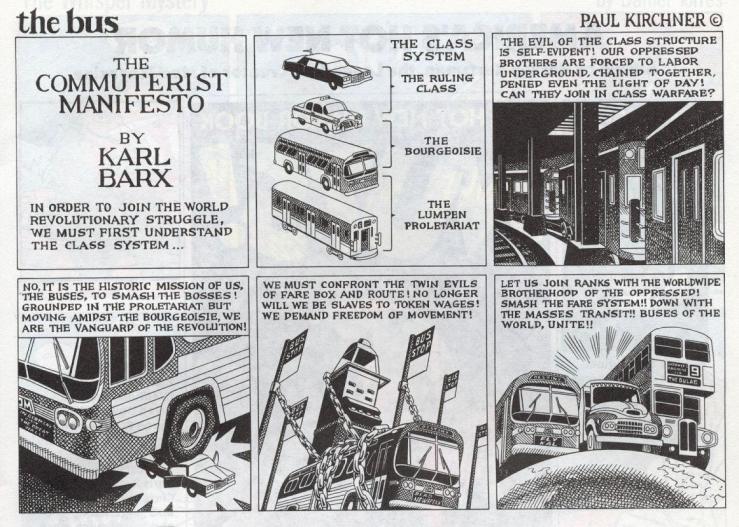
The Bus — Paul Kirchner

JHk83wH - Imgur

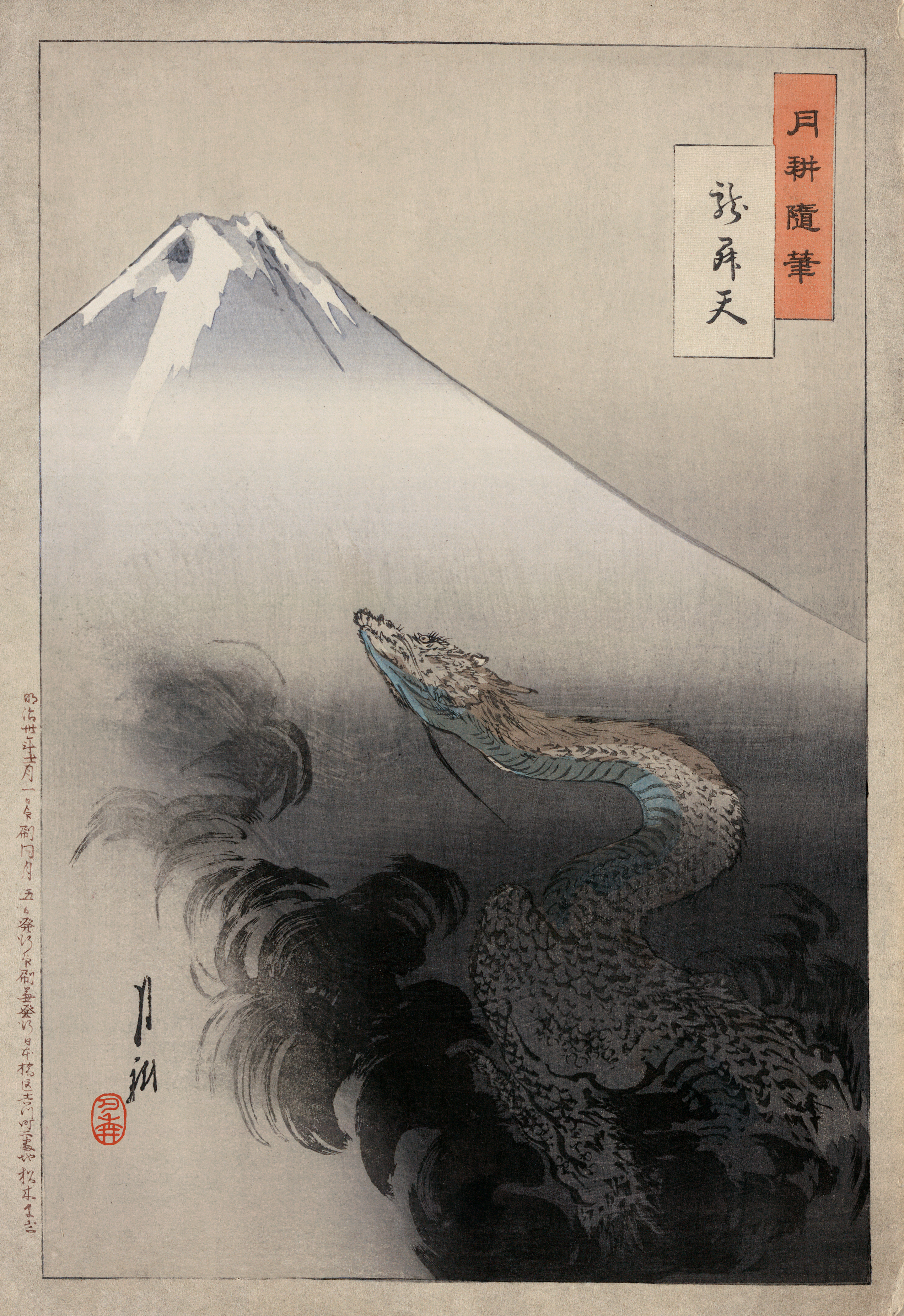
Dragon Rising up to Heaven — Ogata Gekkō

Jupiter — Hans Thoma

Read a 1967 Thomas Bernhard story, new in English translation

Douglas Robertson continues his project of translating Thomas Bernhard into English and sharing it at his blog, The Philosophical Worldview Artist, with his latest offering, a 1967 short story called “The Weatherproof Cape.” The tale was originally published in Midland in Stilfs in 1971; its composition and publication put it roughly contemporary with Bernhard’s second novel GargoylesNotice the typically Bernhardian opening (pre-elliptical) clause, with its parenthetical (and suspicious) “verbatim.” Here’s the first sentence of the story (I’m counting “sentence” as ending in a period).


“The Weatherproof Cape”

by

Thomas Bernhard

English translation by Douglas Robertson


From the Innsbruck lawyer Enderer, our guardian, we received  the following (verbatim) account…for twenty years, mainly in the Saggengasse and mainly at around midday, I have been crossing paths with this person without knowing who this person is; complementarily, for twenty years, mainly in the Saggengasse and mainly at around midday, this man has been crossing paths with me, without knowing who I am…moreover, the man hails from the Saggengasse, albeit from the upper Saggengasse, whereas I hail from the lower Saggengasse; both of us grew up in the Saggengasse and in point of fact, I think, I have always seen this person without knowing that he hails from the Saggengasse and without knowing who he is; complementarily this person has known nothing about me…now it occurs to me that there is something I should have noticed about this person, that I should have noticed his weatherproof cape…we cross paths with a person for years, decades, without knowing who this person is and if we ought to notice anything about the person, we notice nothing about the person, and we could cross paths with such a person over the course of an entire life without noticing anything about the person… suddenly we notice something about this person with whom we have been crossing paths for two decades, we notice something, be it his weatherproof cape, be it something else entirely; suddenly I noticed this person’s weatherproof cape and in connection with this I noticed that the man lived in the Saggengasse and was partial to taking walks along the Sill…a week ago this person accosted me in the Herrengasse and this man went up with me into my office; as we were climbing the stairs it became clear to me that “you have been seeing this person for two full decades, always the same person, always the same aging individual in the Saggengasse, at around midday in this weatherproof cape, in this quite ordinary but quite definitely worn-out weatherproof cape”; still, as we were climbing the stairs it was not yet clear to me why the weatherproof cape in particular was arousing my attention; suddenly, at close proximity, the weatherproof cape was arousing my undivided attention…but it really is quite an ordinary weatherproof cape, I thought; there are tens of thousands of such weatherproof capes in these mountains, there are tens of thousands of such weatherproof capes; tens of thousands of such weatherproof capes are worn by the Tyrolians…no matter who these people are, no matter what they do, when they come here they wear all these weatherproof capes, some of them gray, some of them green; because they wear all these weatherproof capes, the numerous loden factories in the valleys keep flourishing; these weatherproof capes are exported to every corner of the world, but there is something quite distinctive about the weatherproof cape of my new client: its buttonholes are trimmed in kidskin!  I have seen these kidskin-trimmed buttonholes only once before in my life, namely on the weatherproof cape of my uncle, who drowned eight years ago in the lower Sill…this man is wearing exactly the same weatherproof cape as my drowned uncle: that is what I am thinking as I walk up to my office with the man…suddenly I recall that when they pulled my Uncle Worringer out of the Sill, opinion had been divided whether his drowning had been an act of desperation or an accident, but I am certain that it was with so-called suicidal intent that Worringer threw himself into the Sill; for me there can be no doubt about it; Worringer killed himself; everything in his life and ultimately everything in his business life pointed to suicide…by the time they were looking for the drowned man upstream of the glass factory he had already been washed up on to the riverbank downstream of Pradl; the newspapers devoted entire pages to the incident; our entire family was hauled into public view by the press; the phrases a ruined business, ruined timber, a defunct saw-works, and finally economic and corporate ruin haunted the journalists’ sensation-mongering minds…the funeral in Wilten was one of the biggest there has ever been; I remember thousands of people in attendance, writes Enderer…it’s remarkable, I say to the man with whom I am climbing the stairs leading to my office, that I can’t get your weatherproof cape out of my head; several times the thought of your weatherproof cape has popped into my head…your weatherproof cape, believe it or not…I could not help thinking but did not say, there is the most intimate connection between your weatherproof cape and my uncle’s; who knows whether the man knows what I am talking about, I thought and I invite the man to step into the office, step inside! I say, because the man is hesitating, next I am inside the office and taking off my coat and the man is coming in…it looks as though the man was waiting for me in the front doorway of the building; today I am twenty minutes behind schedule, I think, and then: what does this man want?  I am irritated by his taciturnity and his weatherproof cape in alternation; as soon as we were both inside the office, I was more clearly able to see, better able to see, after I had turned the light on, that the buttonholes of the man’s weatherproof cape were trimmed with kidskin, with black kidskin, and I discerned that my new client’s weatherproof cape had been tailored exactly like the weatherproof cape of my Uncle Worringer, tailored in the simplest manner.

Read the rest of “The Weatherproof Cape.”

J. G. Ballard discusses Empire of the Sun (and other stuff) in a 1984 interview

Freedom of Speech — Dave MacDowell

jsbAWBQ

Nabokov’s Strong Opinions (Book acquired, 7.30.2015–and an Iris Murdoch book I should’ve acquired)

image

I picked up a hardback copy of Strong Opinions a few weeks back. I was browsing Nabokov titles as I was coming to the end of Pale Fire. I’ve shared some excerpts from this collection of interviews (&c.) and will likely share more.

I only know the specific date because I tweeted a pic of an Irish Murdoch novel I should’ve picked up while I was there.

Achilles Searching for the Shade of Patrocles — Henri Fuseli

ogBVOszmWQY

One of the functions of all my novels is to prove that the novel in general does not exist (Nabokov)

image

From a 1968 interview with Nicholas Graham. Reproduced in Strong Opinions.