Fafner Kills Fasolt — Arthur Rackham

Ezra Pound wondered which should be sovereign, the verb or the noun (William H. Gass)

It is too easy—the name game—in this case.

Christened “Pound, Ezra Loomis.” If used as a verb, “pound” means to beat. If used as a noun, “pound” signifies a unit of weight, a measure of money, pressure of air, or physical force. From time to time, apropos poetry, Pound wondered which should be sovereign, the verb or the noun, and concluded, if his practice may be entered as evidence, that the verb was most noticed when knocked off the sentence like a phallus from a kouros—“Spiretop alevel the well curb”—and when effects were hammered back into their causes with naillike hyphens—“Seal sport in the spray-whited circles of cliff-wash”—hence into a compaction like a headache … splitting.

As location, a pound sequesters sick animals and strays. “Places of confinement for lawbreakers” is the definition that immediately precedes Pound’s name in The American Heritage Dictionary, after which we encounter the listing for “pound of flesh” and read of “a debt harshly insisted upon.” Certainly a pound is a large bite by any standard, yet it resembles, in being Shylock’s payment, the neschek of the Jews: money for the rent of money; not a gnaw but, in the way it feels coming due, not a nibble either. It is a tax on use, this thinning of the dime, as if money would otherwise be free of entropy; although to put the bite on someone has come to mean to beg for a loan, possibly as a return of favor, where the request is clearly not intended to invite the interest of the loan’s own teeth. So one meaning of “pound” has a relative called “blood money.” It suggests racial forfeiture.

On the other hand, the pound of flesh we subtract from the flank of a steer may increase our girth and relieve many a primordial anxiety. We call it “putting our money to work.” Wear and repair, profit or loss, depends upon your point of view, the angle of the bank and the direction of the bounce. Our poet depended without protest, for much of his life, upon funds supplied by the family of his wife.

The first few paragraphs of William H. Gass’s essay “Ezra Pound.” Collected in Finding a Form.

The Sphinx Defeated — Gustave Moreau

Instant Relief Therapy — Michael Sowa

“Staley Fleming’s Hallucination,” a very short story by Ambrose Bierce

“Staley Fleming’s Hallucination”

by

Ambrose Bierce


Of two men who were talking one was a physician.

“I sent for you, Doctor,” said the other, “but I don’t think you can do me any good.  May be you can recommend a specialist in psychopathy.  I fancy I’m a bit loony.”

“You look all right,” the physician said.

“You shall judge – I have hallucinations.  I wake every night and see in my room, intently watching me, a big black Newfoundland dog with a white forefoot.”

“You say you wake; are you sure about that?  ‘Hallucinations’ are sometimes only dreams.”

“Oh, I wake, all right.  Sometimes I lie still a long time, looking at the dog as earnestly as the dog looks at me – I always leave the light going.  When I can’t endure it any longer I sit up in bed – and nothing is there!”

“‘M, ‘m – what is the beast’s expression?”

“It seems to me sinister.  Of course I know that, except in art, an animal’s face in repose has always the same expression.  But this is not a real animal.  Newfoundland dogs are pretty mild looking, you know; what’s the matter with this one?”

“Really, my diagnosis would have no value: I am not going to treat the dog.”

The physician laughed at his own pleasantry, but narrowly watched his patient from the corner of his eye.  Presently he said: “Fleming, your description of the beast fits the dog of the late Atwell Barton.”

Fleming half-rose from his chair, sat again and made a visible attempt at indifference.  “I remember Barton,” he said; “I believe he was – it was reported that – wasn’t there something suspicious in his death?”

Looking squarely now into the eyes of his patient, the physician said: “Three years ago the body of your old enemy, Atwell Barton, was found in the woods near his house and yours.  He had been stabbed to death.  There have been no arrests; there was no clew.  Some of us had ‘theories.’  I had one.  Have you?”

“I?  Why, bless your soul, what could I know about it?  You remember that I left for Europe almost immediately afterward – a considerable time afterward.  In the few weeks since my return you could not expect me to construct a ‘theory.’  In fact, I have not given the matter a thought.  What about his dog?”

“It was first to find the body.  It died of starvation on his grave.”

We do not know the inexorable law underlying coincidences.  Staley Fleming did not, or he would perhaps not have sprung to his feet as the night wind brought in through the open window the long wailing howl of a distant dog.  He strode several times across the room in the steadfast gaze of the physician; then, abruptly confronting him, almost shouted: “What has all this to do with my trouble, Dr. Halderman?  You forget why you were sent for.”

Rising, the physician laid his hand upon his patient’s arm and said, gently: “Pardon me.  I cannot diagnose your disorder off-hand – to-morrow, perhaps.  Please go to bed, leaving your door unlocked; I will pass the night here with your books.  Can you call me without rising?”

“Yes, there is an electric bell.”

“Good.  If anything disturbs you push the button without sitting up.  Good night.”

Comfortably installed in an armchair the man of medicine stared into the glowing coals and thought deeply and long, but apparently to little purpose, for he frequently rose and opening a door leading to the staircase, listened intently; then resumed his seat.  Presently, however, he fell asleep, and when he woke it was past midnight.  He stirred the failing fire, lifted a book from the table at his side and looked at the title.  It was Denneker’s “Meditations.”  He opened it at random and began to read:

“Forasmuch as it is ordained of God that all flesh hath spirit and thereby taketh on spiritual powers, so, also, the spirit hath powers of the flesh, even when it is gone out of the flesh and liveth as a thing apart, as many a violence performed by wraith and lemure sheweth.  And there be who say that man is not single in this, but the beasts have the like evil inducement, and – ”

The reading was interrupted by a shaking of the house, as by the fall of a heavy object.  The reader flung down the book, rushed from the room and mounted the stairs to Fleming’s bed-chamber.  He tried the door, but contrary to his instructions it was locked.  He set his shoulder against it with such force that it gave way.  On the floor near the disordered bed, in his night clothes, lay Fleming gasping away his life.

The physician raised the dying man’s head from the floor and observed a wound in the throat.  “I should have thought of this,” he said, believing it suicide.

When the man was dead an examination disclosed the unmistakable marks of an animal’s fangs deeply sunken into the jugular vein.

But there was no animal.
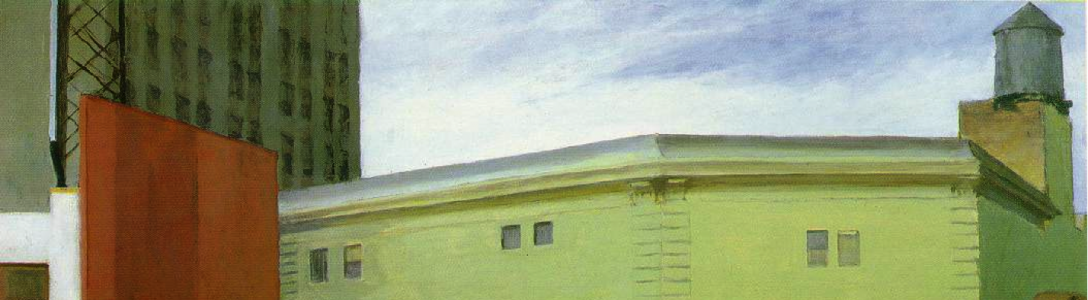
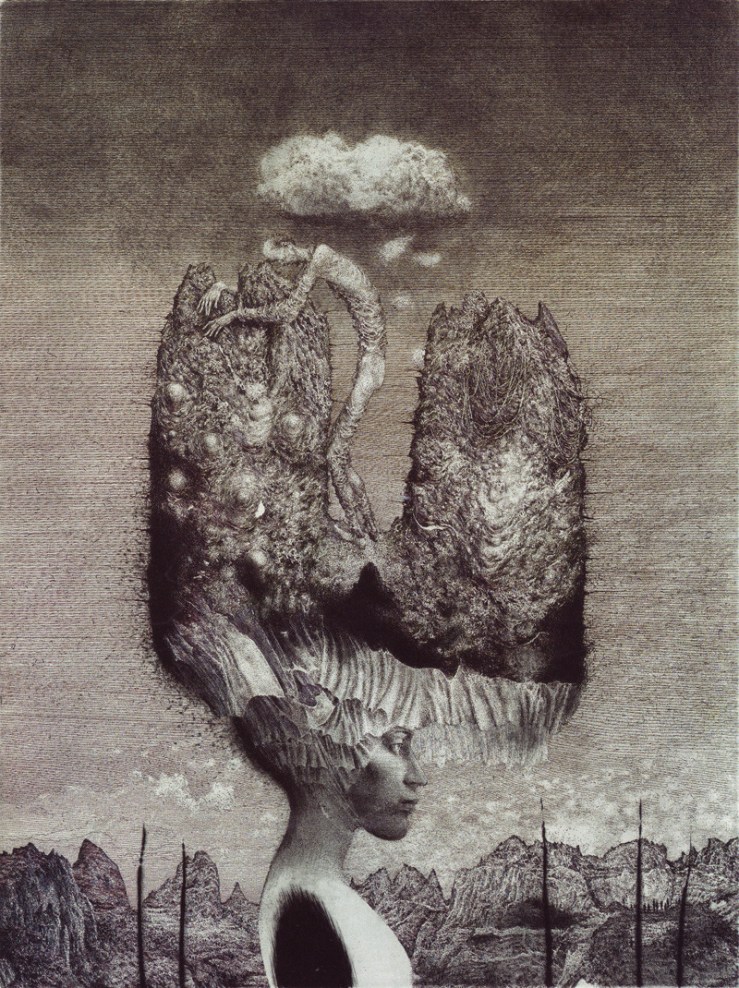
Woman with a Hat — Albín Brunovský

05brunovsky_905

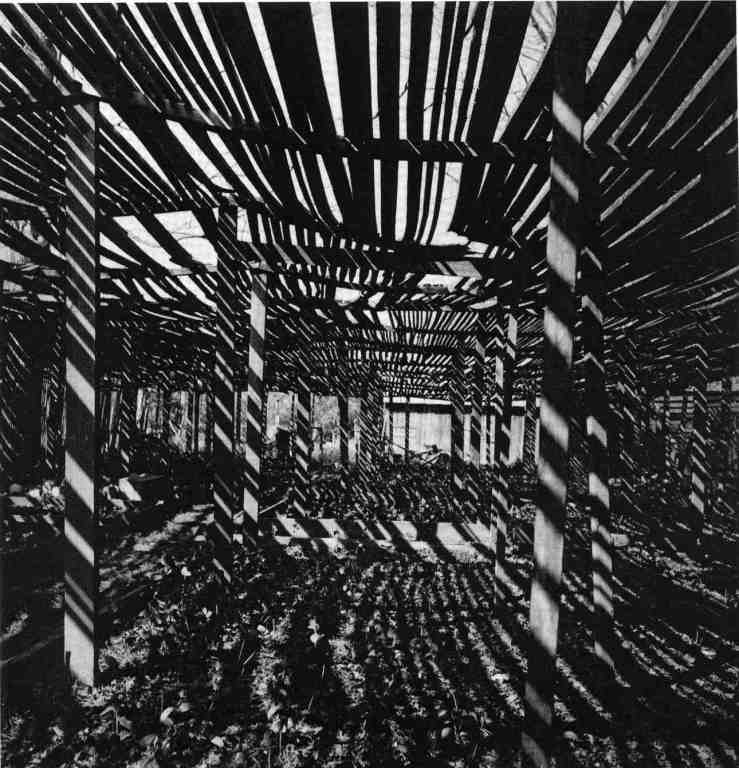
Camellia House — Eudora Welty

img-1

Three Books

IMG_0547

Mumbo Jumbo by Ishmael Reed. 1978 mass market paperback by Bard Books, a division of Avon Books. No designer or illustrator credited. I picked this copy up after giving away the edition I read this summer. An amazing novel.
IMG_0548

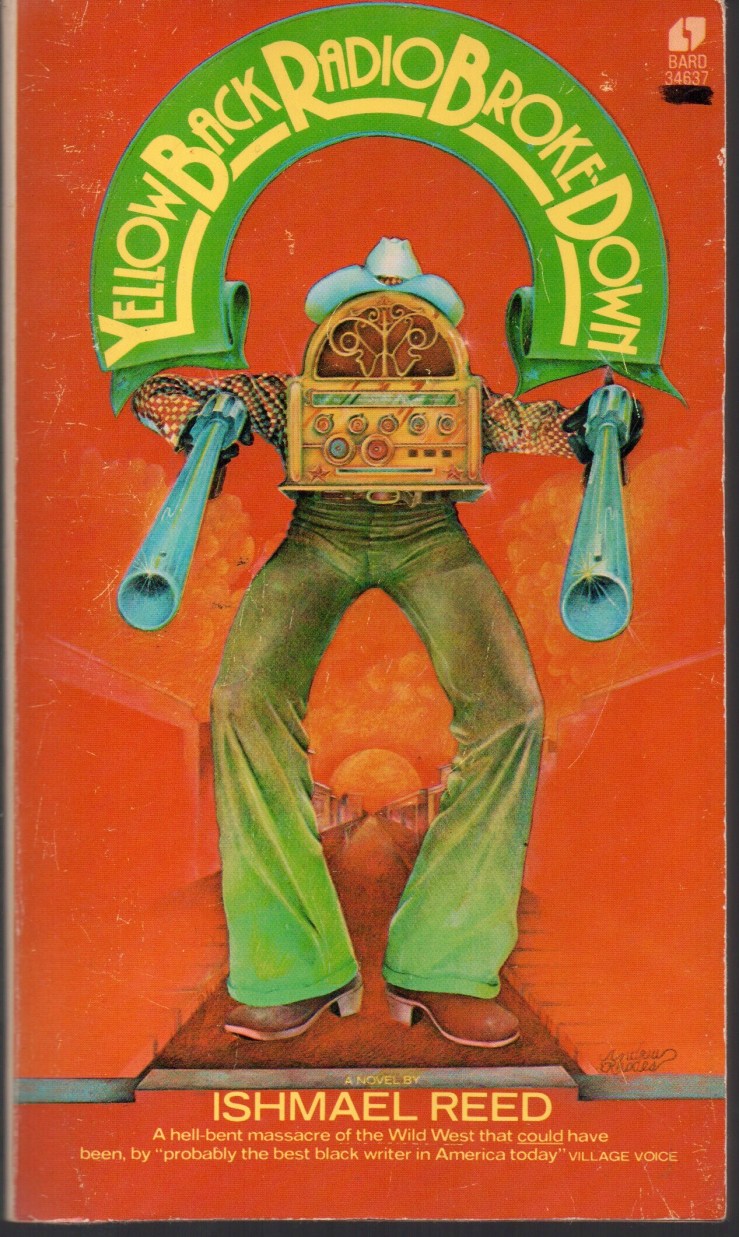
Yellow Back Radio Broke-Down by Ishmael Reed. 1977 mass market paperback by Bard Books, a division of Avon Books. No designer or illustrator credited—but the cover illustration seems to be signed “Andrew Rhodes.” Haven’t read this one yet.IMG_0549The Free-Lance Pallbearers by Ishmael Reed. 1969 mass market paperback by Bantam Books. No designer or illustrator credited. I finished this last week—a slim, strange, dazzling work.
Big Landscape with Cow — Balthus

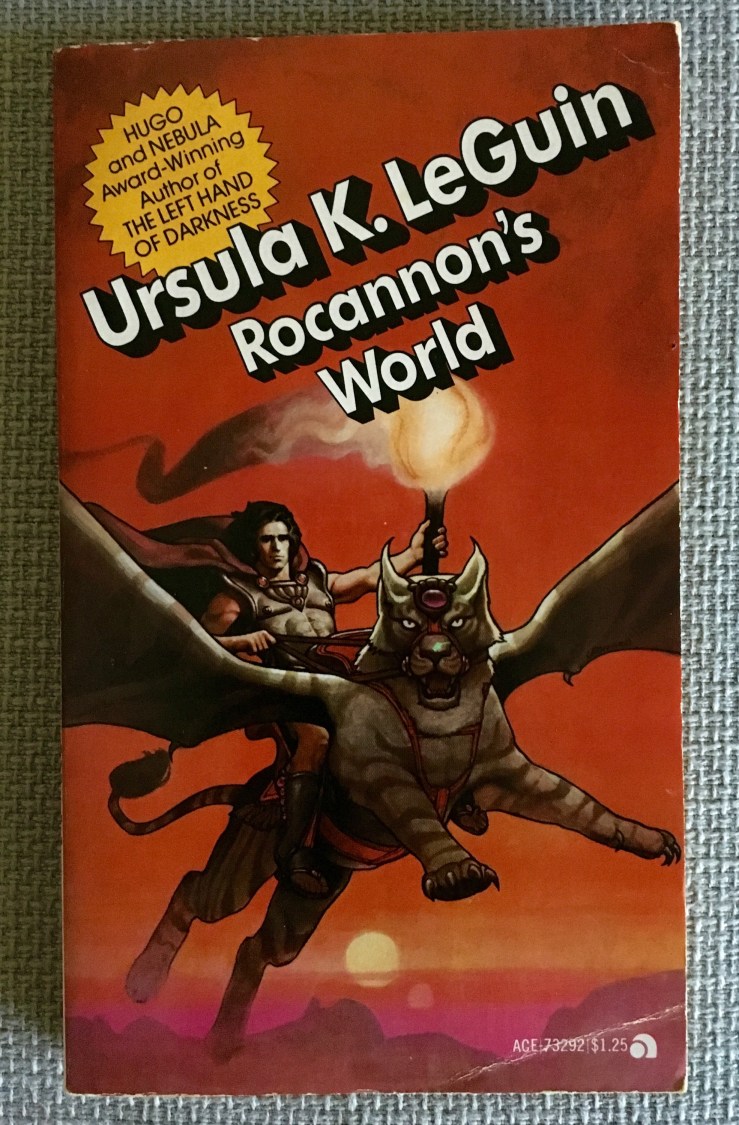
Ursula K. Le Guin’s novel Rocannon’s World (Book acquired, 11.07.2015)

IMG_0544

I just picked up Ursula K. Le Guin’s first novel Rocannon’s World on novelist Adam Novy’s recommendation. (Have you read Novy’s novel The Avian Gospels? It’s great).
IMG_0546

Who Shall Deliver Me? — Fernand Khnopff

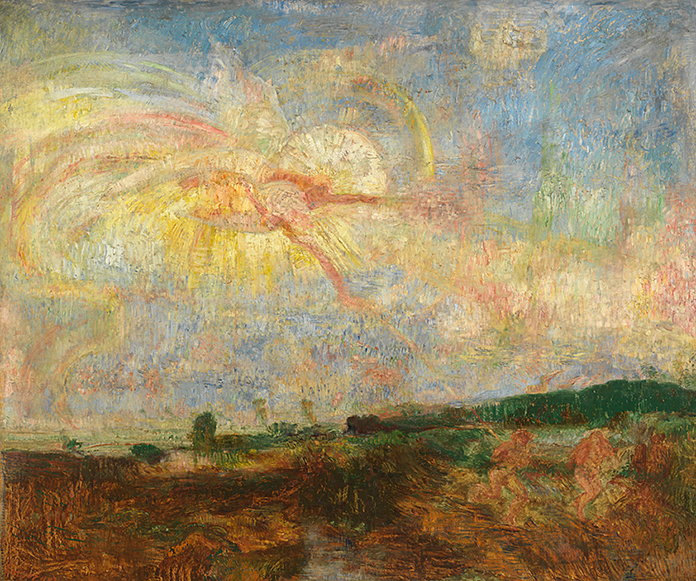
Adam and Eve Expelled from Paradise — James Ensor

ensor

Like 60 seconds of that film adaptation of JG Ballard’s High-Rise

The Wolf of Agubbio — Luc-Olivier Merson

How could one tell where the American dream ended and the Faustian nightmare began

But why, one is driven to ask, why has the tale of terror so special an appeal to Americans? Surely its success must be derived in part from the failure of love in our fiction; the death of love left a vacuum at the affective heart of the American novel into which there rushed the love of death. The triumph of the genteel sentimental incapacitated even our most talented writers, left them incapable of dealing with the relations of men and women as subtly and convincingly as the prose writers in the great novelistic tradition of France. Our novelists, deprived of the subject that sustained Stendhal or Constant, Flaubert or Proust, that seemed indeed to them the subject of the novel, turned to fables of loneliness and terror.

Moreover, in the United States, certain special guilts awaited projection in the gothic form. A dream of innocence had sent Europeans across the ocean to build a new society immune to the compounded evil of the past from which no one else in Europe could ever feel himself free. But the slaughter of the Indians, who would not yield their lands to the carriers of utopia, and the abominations of the slave trade, in which the black man, rum, and money were inextricably entwined in a knot of guilt, provided new evidence that evil did not remain with the world that had been left behind—but stayed alive in the human heart, which had come the long way to America only to confront the horrifying image of itself. Finally, there was the myth of Faust and of the diabolic bargain, which, though not yet isolated from gothic themes of lesser importance (that isolation was to be the word of American writers!), came quite soon to seem identical with the American myth itself.

How could one tell where the American dream ended and the Faustian nightmare began; they held in common the hope of breaking through all limits and restraints, of reaching a place of total freedom where one could with impunity deny the Fall, live as if innocence rather than guilt were the birthright of all men. In Huck’s blithe assertion, “All right, I’ll go to Hell,” is betrayed a significant undermeaning of the Faustian amor fati, at least in its “boyish” American form: the secret belief that damnation is not all it is cracked up to be.

From Leslie Fiedler’s Love and Death in the American Novel (1960).

Children Playing with Masks — Andrea Mantegna

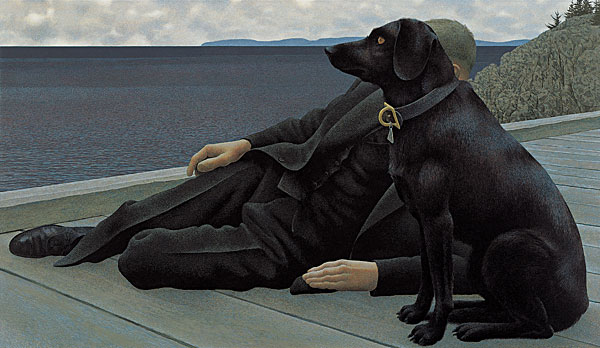
Dog and Priest — Alex Colville

alex_colville_1978_Dog_and_Priest