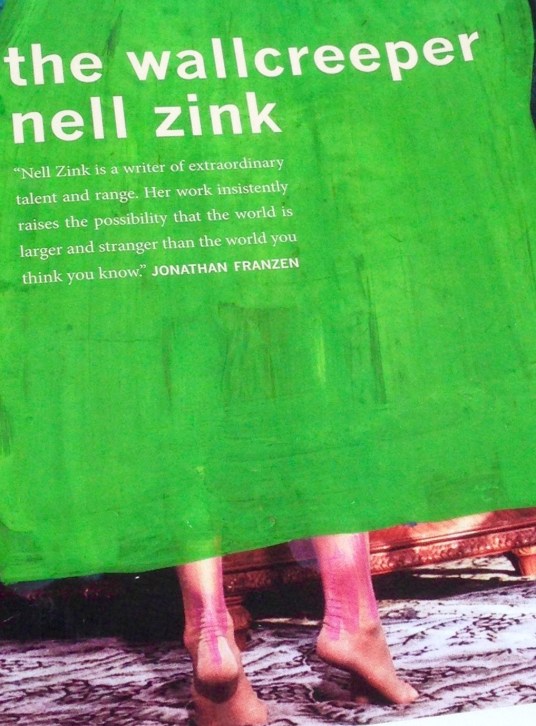
A review of Nell Zink’s extraordinary novel The Wallcreeper

image

The short review is, “Nell Zink’s début novel The Wallcreeper is extraordinary.”

But this argument is insufficient, unsupported, you, dear reader, may protest. Why should you spend your hard-earned time reading The Wallcreeper, eh? (I read the book in four sittings. I was late to Sunday dinner for finishing the thing). To invert one of the better book short book reviews I’ve ever read: Every sentence made me want to read the next sentence. Is that not a good enough reason to read The Wallcreeper? Maybe you want to read some of those sentences. Here’s the first one:

I was looking at the map when Stephen swerved, hit the rock, and occasioned the miscarriage.

Or a page or two later when our heroine/narrator Tiffany describes how she met Stephen:

Our first meeting prevented a crime. He saw me standing in front of the open gate of the vault.

(Don’t worry about that crime). Oh, and, on that first meeting with Stephen:

It was one of those moments where you think: We will definitely fuck. It might take a while, though, because Stephen looked as respectable as I did.

And here’s a simile from Tiffany, just because I love the line and can wedge it in here:

After the cranes had landed, the geese passed overhead in so many Vs that they merged into Xs and covered the entire sky like a fishnet stocking.

It occurs to me now that I’m probably doing this wrong, right? I should be summarizing the book a bit, no? I’m not particularly interested in that—the plot is the sentences—I mean, yeah, there’s a plot, about Tiffany and Stephen in Berne and later Berlin—and some other places too—and the different lovers they take and the various projects they undertake—music, language acquisition, ecoterrorism—and lots of birdwatching.

Maybe I should lazily just reblurb Keith Gessen’s blurb:

Who is Nell Zink? She claims to be an expatriate living in northeast Germany. Maybe she is; maybe she isn’t. I don’t know. I do know that this first novel arrives with a voice that is fully formed: mature, hilarious, terrifyingly intelligent, and wicked. The novel is about a bird-loving American couple that moves to Europe and becomes, basically, eco-terrorists. This is strange, and interesting, but in between is some writing about marriage, love, fidelity, Europe, and saving the earth that is as funny and as grown-up as anything I’ve read in years. And there are some jokes in here that a young Don DeLillo would kill to have written. I hope he doesn’t kill Nell Zink

The DeLillo comparison is apt, but Zink’s novel is funnier than anything DeLillo’s done in ages. Maybe that’s not fair. “Funny” seems like a weak word, really, for Zink and her narrator Tiffany (and Stephen)—all the words I would use to describe what Zink’s doing here seem pale and imprecise. I mean wittysmartintelligent, devastatingconfounding. Extraordinary, right, that was the word I used above, yes? (He looks the word up in an online dictionary, somehow at 36 and a lifelong native English speaker unsure what it actually means). A placeholder like strange would work, except some of y’all take that word as a pejorative. Eccentric or quirky imply, I think, a rhetorical imprecision wholly absent from the novel. The Wallcreeper is a precise book. The book is very good. It is an interesting book. (What awful sentences those were! But true).

Can you know a book through the words the reviewer uses to describe it though? (No). Can you really know a character through the words she launches your way, anyway? In The Wallcreeper, Tiffany doesn’t really know herself, or Stephen, and the narrative is in some ways her kinda sorta finding out about herself (and Stephen, and other stuff), in a non-urgent manner. Or maybe very urgent, I don’t know—she and Stephen are in a constant state of crisis, sort of, or epiphany-making—

Our marriage had begun in the most daunting way imaginable. We had barely known each other, and then we had those accidents and that jarring disconnect between causes (empty-headed young people liking each other, wallcreepers) and effects (pain, death).

A wallcreeper is a small bird with crimson wings, by the way.

The titular wallcreeper, also by the way, is the thing that makes Stephen swerve in that opening sentence I shared for you above. The book is full of swerves, dips, dives, turns—each sentence swerves into the next, artfully, gracefully, precisely. Tiffany’s consciousness, or the language that Zink uses to represent Tiffany’s consciousness, swerves:

We walked down into the lower garden and sat on a bench. He looked into the pond and remarked favorably on the lack of goldfish. I thought of all the spawn-guzzling carp I had admired in the past and felt abashed. I shrank at the vulgarity of raptures over beauty, nature’s most irrelevant and unnecessary quality.

Beautiful!

But where was I? I think swerves was the metaphor I was batting about a bit—well, I suppose I could go on, suggest that all that swerving swerves up to Something More, that the novel swerves (swells? no, not swells) to an ending shot-through with mythical undertones (which our narrator punctures)—I mean to say that, yes, okay, the novel is a wonderful witty aesthetic read—each sentence made me want to read the next sentence—but readers who require More Than That will also get it. Or maybe not. The Wallcreeper, like all extraordinary novels, is Not For Everyone. The Wallcreeper was/is for me though, and I hope it will also be for you too.

The Wallcreeper is available directly from publisher The Dorothy Project and finer bookshops.
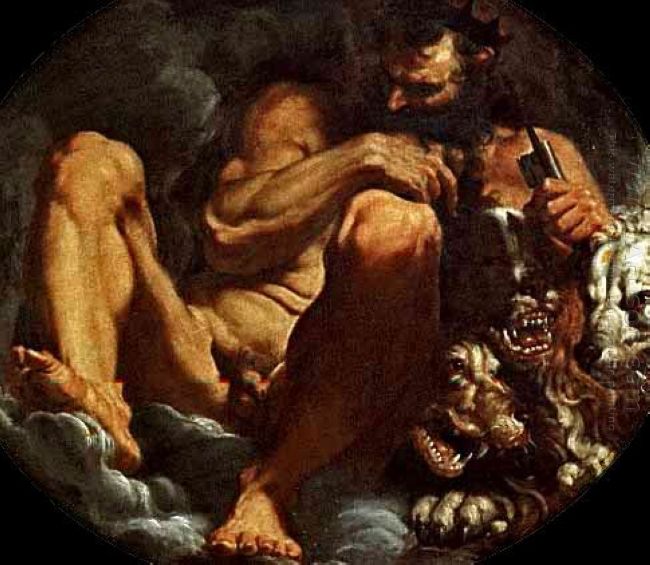
Pluto — Agostino Carracci

ARTS601676

The Fourteenth of July at Etretat — Felix Vallotton

Leocadia — Francisco Goya

Dazzling/Clever — Norton Juster

09

From The Dot and the Line, 1963, by Norton Juster. More/via The Visual Telling of Stories.

Girl at the Window — Ferdinand Hodler

Nathaniel Hawthorne’s journal entry, July 13th, 1838

July 13th.–A show of wax-figures, consisting almost wholly of murderers and their victims,–Gibbs and Hansley, the pirates, and the Dutch girl whom Gibbs murdered. Gibbs and Hansley were admirably done, as natural as life; and many people who had known Gibbs would not, according to the showman, be convinced that this wax-figure was not his skin stuffed. The two pirates were represented with halters round their necks, just ready to be turned off; and the sheriff stood behind them, with his watch, waiting for the moment. The clothes, halter, and Gibbs’s hair were authentic. E. K. Avery and Cornell,–the former a figure in black, leaning on the back of a chair, in the attitude of a clergyman about to pray; an ugly devil, said to be a good likeness. Ellen Jewett and R. P. Robinson, she dressed richly, in extreme fashion, and very pretty; he awkward and stiff, it being difficult to stuff a figure to look like a gentleman. The showman seemed very proud of Ellen Jewett, and spoke of her somewhat as if this wax-figure were a real creation. Strong and Mrs. Whipple, who together murdered the husband of the latter. Lastly the Siamese twins. The showman is careful to call his exhibition the “Statuary.” He walks to and fro before the figures, talking of the history of the persons, the moral lessons to be drawn therefrom, and especially of the excellence of the wax-work. He has for sale printed histories of the personages. He is a friendly, easy-mannered sort of a half-genteel character, whose talk has been moulded by the persons who most frequent such a show; an air of superiority of information, a moral instructor, with a great deal of real knowledge of the world. He invites his departing guests to call again and bring their friends, desiring to know whether they are pleased; telling that he had a thousand people on the 4th of July, and that they were all perfectly satisfied. He talks with the female visitors, remarking on Ellen Jewett’s person and dress to them, he having “spared no expense in dressing her; and all the ladies say that a dress never set better, and he thinks he never knew a handsomer female.” He goes to and fro, snuffing the candles, and now and then holding one to the face of a favorite figure. Ever and anon, hearing steps upon the staircase, he goes to admit a new visitor. The visitors,–a half-bumpkin, half country-squire-like man, who has something of a knowing air, and yet looks and listens with a good deal of simplicity and faith, smiling between whiles; a mechanic of the town; several decent-looking girls and women, who eye Ellen herself with more interest than the other figures,–women having much curiosity about such ladies; a gentlemanly sort of person, who looks somewhat ashamed of himself for being there, and glances at me knowingly, as if to intimate that he was conscious of being out of place; a boy or two, and myself, who examine wax faces and faces of flesh with equal interest. A political or other satire might be made by describing a show of wax-figures of the prominent public men; and by the remarks of the showman and the spectators, their characters and public standing might be expressed. And the incident of Judge Tyler as related by E—- might be introduced.

A series of strange, mysterious, dreadful events to occur, wholly destructive of a person’s happiness. He to impute them to various persons and causes, but ultimately finds that he is himself the sole agent. Moral, that our welfare depends on ourselves.

The strange incident in the court of Charles IX. of France: he and five other maskers being attired in coats of linen covered with pitch and bestuck with flax to represent hairy savages. They entered the hall dancing, the five being fastened together, and the king in front. By accident the five were set on fire with a torch. Two were burned to death on the spot, two afterwards died; one fled to the buttery, and jumped into a vessel of water. It might be represented as the fate of a squad of dissolute men.

A perception, for a moment, of one’s eventual and moral self, as if it were another person,–the observant faculty being separated, and looking intently at the qualities of the character. There is a surprise when this happens,–this getting out of one’s self,–and then the observer sees how queer a fellow he is.

From Nathaniel Hawthorne’s American Note-Books.

The Chemist — Franz Sedlacek

Chemist-Der-Chemiker-by-Franz-Sedlacek-1932

Girl with Tilted Head — Egon Schiele

tumblr_m03b8aIfJI1qa3849o1_540

“A Human World” — Charlotte Perkins Gilman

“A Human World”

by

Charlotte Perkins Gilman

(from Our Androcentric Culutre; or, The Man Made World)


In the change from the dominance of one sex to the equal power of two, to what may we look forward? What effect upon civilization is to be expected from the equality of womanhood in the human race?

To put the most natural question first—what will men lose by it? Many men are genuinely concerned about this; fearing some new position of subservience and disrespect. Others laugh at the very idea of change in their position, relying as always on the heavier fist. So long as fighting was the determining process, the best fighter must needs win; but in the rearrangement of processes which marks our age, superior physical strength does not make the poorer wealthy, nor even the soldier a general.

The major processes of life to-day are quite within the powers of women; women are fulfilling their new relations more and more successfully; gathering new strength, new knowledge, new ideals. The change is upon us; what will it do to men?

No harm.

As we are a monogamous race, there will be no such drastic and cruel selection among competing males as would eliminate the vast majority as unfit. Even though some be considered unfit for fatherhood, all human life remains open to them. Perhaps the most important feature of this change comes in right here; along this old line of sex-selection, replacing that power in the right hands, and using it for the good of the race.

The woman, free at last, intelligent, recognizing her real place and responsibility in life as a human being, will be not less, but more, efficient as a mother. She will understand that, in the line of physical evolution, motherhood is the highest process; and that her work, as a contribution to an improved race, must always involve this great function. She will see that right parentage is the purpose of the whole scheme of sex-relationship, and act accordingly.

In our time, his human faculties being sufficiently developed, civilized man can look over and around his sex limitations, and begin to see what are the true purposes and methods of human life. Continue reading ““A Human World” — Charlotte Perkins Gilman”

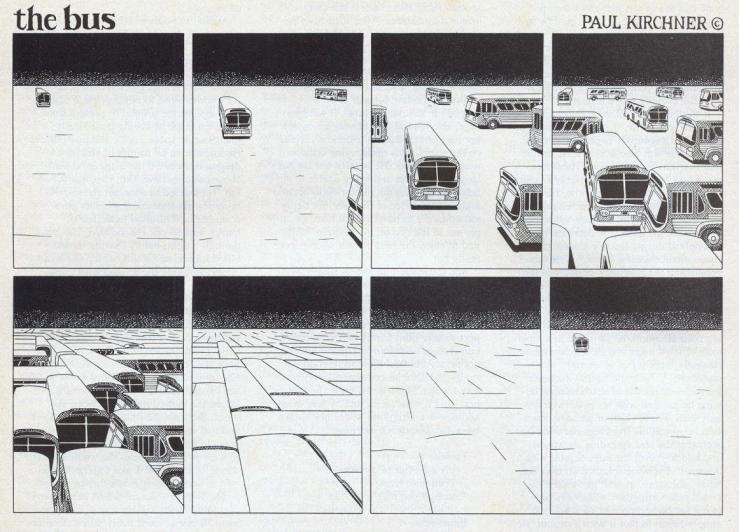
The Bus — Paul Kirchner

WQlfiuH - Imgur

Chicago — Harry Callahan

callahan_chicago_1951-web

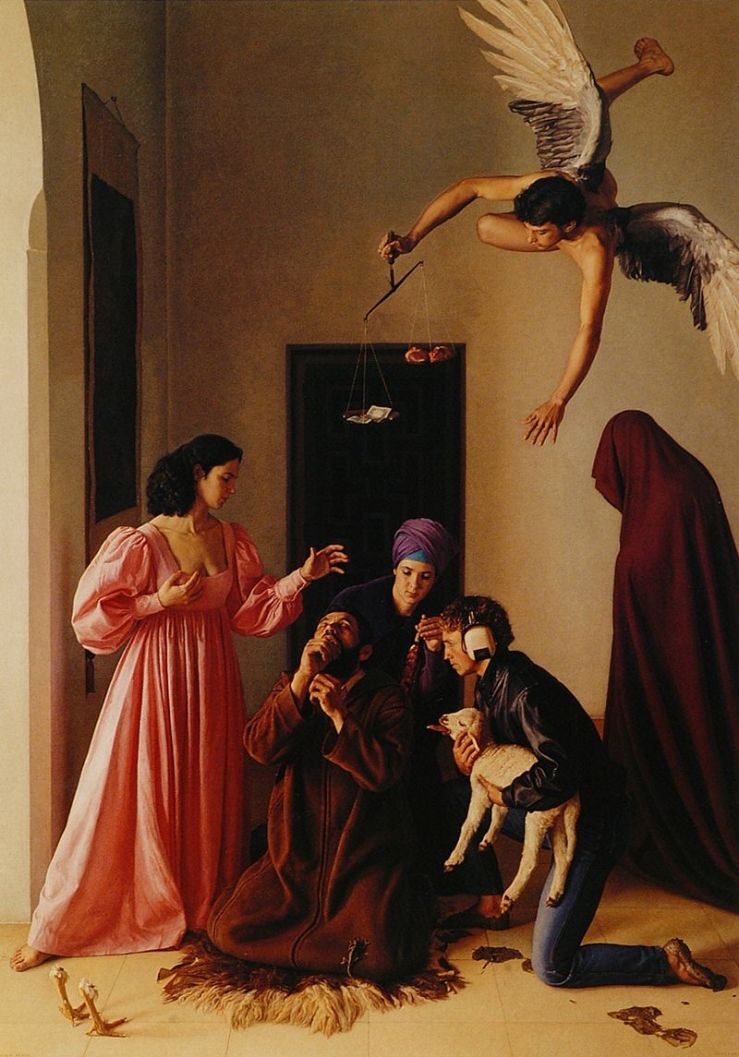
Temptation of St. Anthony — Claudio Bravo

cb

Selections from One-Star Amazon Reviews of J.R.R. Tolkien’s The Hobbit

[Editorial note: The following citations come from one-star Amazon reviews J.R.R. Tolkien’s novel The Hobbit (a book I’ve always loved)I’ve preserved the reviewers’ original punctuation and spelling. More one-star Amazon reviews.].

Dwarves.

The Hobbit stinks.

It is just so boreing.

“DEATH TO HOBBITS!”

This is such a horrible book.

Gandalf the wizard is a bogus

Swoar, lil’ fools wack for REALL.

And what’s this thing about hairy feet?

Crying because the story will NOT END!

my mom liked it (what’s wrong with her? )

Spend your money on Harry Potter instead.

I dought we will ever finish this horrible book.

No offense, but the suspense was not at all amusing

I know for a fact that there are several of Hobbit fans.

Bilbo is a Hobbit who seems not to do much in the story.

it was as if a ten year old coul’ve made up these characters.

forget about all the other reviews. they just think bilbo the bimbo is hot.

This is a dangerous book and is an extremely bad influence on adolescents.

Not only that, it is also more boring than having tea with nan and the relatives.

There is no action and Bilbo Baggins is the biggest a$$ in a fantasy novel ever.

This is a prime example of what happens when Star Trek and Star Wars dorks pick up a book.

No originality whatsoever is involved and the pages make me wish I was not even in existence.

After reading literary masterpieces by Robert Jordan, and Aurther C. Clark, books like these seem pointless.

The book is about a young hobit that goes on an adventurer to get rid of a ring that if you w where it you turn e ebook

One more things on the dwarves. They are useless characters and this story makes me want to vomit.

This book is a story of your everyday savior (supposedly Bilbo) having adventures and slaying a dragon.

The ending of the story is horrible and it seems that Tolkien wasted his POOR and SENSELESS usage of his brain.

They also don’t fit the spirit of dwarves, but then again after time they evolved into the grumpy alchoholics fantasy tends to portray them as.

I sit there reading every single word of it, but I think about something else. I read “Bilbo blah blah blah,” but think “Oh what am I gonna do today after school?”

Bilbo is not exactly the character which you would find addicted to. He stammers and is basically a coward.

This yogurt tastes awful! This is the worst yogurt I have ever tasted!

And like all stories, there are monsters and strange happenings.

What was I drinking when I decided to read this piece of junk?

:-( Boo! :-( Boo! :-( Boo! :-( Boo! :-( Boo!:-(

I despise and loathe this series tremendously.

I’m just glad this guy’s dead. :)

Bilbo reminds me of a pig.

“DIE HOBBITS, DIE!”

Idiotic and Irritating.

to many characters!

this is some butt

Agghhh!

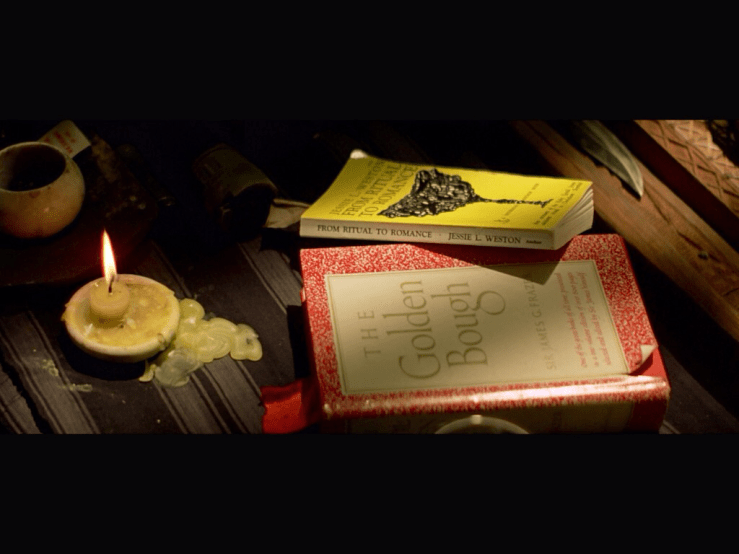
Colonel Walter E. Kurtz’s bedside reading

IMG_0280

From Apocalypse Now (1979); dir. Francis Ford Coppola with cinematography by Vittorio Storaro.

Imaginary Rock City — Eugene Berman

H0027-L15658157