The Syllabus (Book acquired, 5.14.2015)

IMG_6422

The Syllabus is the third Festschrift from Verbivoracious Press. Their blurb:

A monument to our insatiable verbivoracity, The Syllabus is an act of humble genuflection before the authors responsible for those texts which have transported us to the peak of readerly nirvana and back. The texts featured, chosen in a rapturous frenzy by editors and contributors alike, represent a broad sweep of the most important exploratory fiction written in the last hundred years (and beyond). Featuring 100 texts from (fewer than) 100 contributors, The Syllabus is a form of religious creed, and should be read primarily as a holy manual from which the reader draws inspiration and hope, helping to shape their intellectual and moral life with greater awareness, and lead them towards those works that offer deep spiritual succour while surviving on a merciless and unkind planet. Readers of this festschrift should expect nothing less than an incontrovertible conversion from reader to insatiable verbivore in 226 pages.

I’m one of those contributors—I have a piece in there on Flann O’Brien’s At Swim-Two Birds.

The trailer for that David Foster Wallace movie

Look, I’m trying not to be a hater. I am (trying). And a lot of film critics who I generally respect the opinions of have said the film is good or even great. I’ve already ranted my No about this whole thing, and I know that a trailer is not the same as a movie, and I know that I didn’t like the book so why should I like the film—but—ugh. No. No. No.

Inherent Vice Film Poster — Steve Chorney

Inherent-Vice-Poster-comp-Small

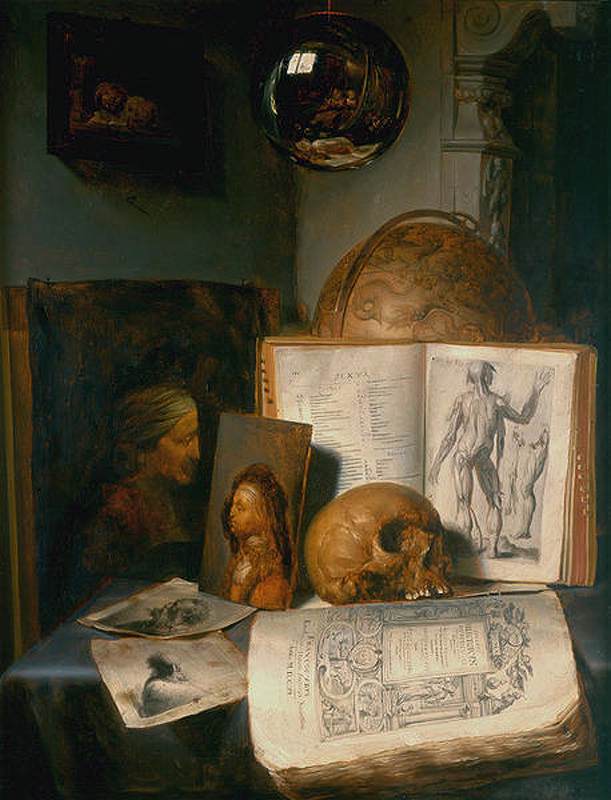
Still Life with Skull — Simon Luttichuys

tumblr_lw1s6eQ95s1qa18sao1_1280

Amanda and Her Cousin Amy — Mary Ellen Mark

001-mary-ellen-mark-theredlist

RIP Mary Ellen Mark, 1940-2015

I first saw her work in a 1991 issue of Rolling Stone. (I had a subscription then). You can see the same photos I saw in that issue on her site. This photograph, this one above, reminded me of the cover of Dinsoaur Jr.’s album Green Mind. That photograph is by Joseph Szabo though. I remember cutting the pics out of Rolling Stone and pasting them in a collage that afterward hung in my bedroom for years, until I grew up and went to college and threw so much away. The photos were accompanied by an essay by the filmmaker Louis Malle, who wrote of Mark:

It is Mary Ellen Mark’s triumph to combine successfully two different approaches to photography. Like Cartier-Bresson and the best photojournalists, she knows how to find the perfect angle, the exact fraction of a second that will tell the story in one shot. On the other hand, her choice of subjects, her taste for the singular, her visual imagination, make one think of Diane Arbus and other poet-photographers. But what makes Mary Ellen unique is her compassion. She never puts down the people she photographs. She is moved by them; she shares their sufferings, their difficulties, their contradictions. Even when she portrays a Klansman at an Aryan Nations Congress, she does not ridicule him or pass judgment. The setting, the composition, emphasize the pathetic isolation of people who are parochial remnants of the past, left behind by history on this country road, guerrillas of a war long over.

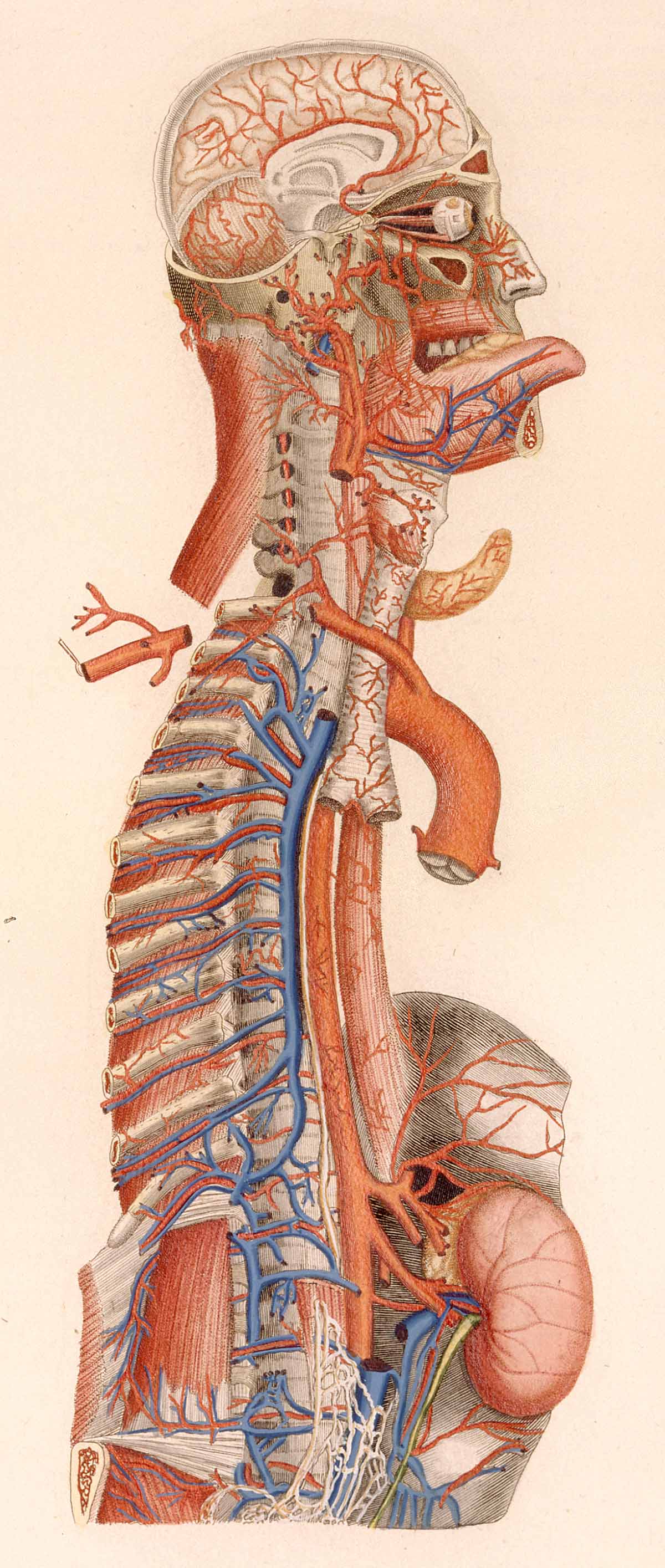
Universal Anatomy — Antonio Serantoni

II-C-16

RIP Tanith Lee

Tanith-Lee-006

RIP Tanith Lee, 1947-2015

Publisher Tor has reported Tanith Lee’s death. She was the author of nearly 100 books in various genres, including fantasy, sci-fi, and horror. I probably read a dozen of those books between the ages of ten and thirteen, but the one I most remember is her first novel, The Dragon Hoard, which I still have a copy of somewhere, nestled neatly by tattered copies of The Once and Future KingThe Halfmen of O, and The Hobbit.

I don’t remember the plot of The Dragon Hoard so much as I remember the kind librarian who suggested it to me (I asked for “Something with dragons”). I also remember my reaction to the author’s first name: “Tanith” sounded like the name of a fantasy character. I know I first read the book viat the library but at some point I must’ve conned my mother into buying it for me. I know I read whatever other book’s our little local library held by her. I’m pretty sure I wasn’t conscious of any of the feminist themes in her work, but I’d like to think they seeped in somehow.

I found the pic for this post–it’s Lee’s PR pic–at an appreciation of Tanith Lee by Alison Flood published at The Guardian. I’m glad that it was published when Lee was alive.

Miss Grace — Clarence White

Barbecue — Eric Fischl

The Victory of Virtue — Andrea Mantegna

“Decoration Day” — Sarah Orne Jewett

“Decoration Day” by Sarah Orne Jewett

I.

A week before the thirtieth of May, three friends—John Stover and Henry Merrill and Asa Brown—happened to meet on Saturday evening at Barton’s store at the Plains. They were ready to enjoy this idle hour after a busy week. After long easterly rains, the sun had at last come out bright and clear, and all the Barlow farmers had been planting. There was even a good deal of ploughing left to be done, the season was so backward.

The three middle-aged men were old friends. They had been school-fellows, and when they were hardly out of their boyhood the war came on, and they enlisted in the same company, on the same day, and happened to march away elbow to elbow. Then came the great experience of a great war, and the years that followed their return from the South had come to each almost alike. These men might have been members of the same rustic household, they knew each other’s history so well.

They were sitting on a low wooden bench at the left of the store door as you went in. People were coming and going on their Saturday night errands,—the post-office was in Barton’s store,—but the friends talked on eagerly, without being interrupted, except by an occasional nod of recognition. They appeared to take no notice at all of the neighbors whom they saw oftenest. It was a most beautiful evening; the two great elms were almost half in leaf over the blacksmith’s shop which stood across the wide road. Farther along were two small old-fashioned houses and the old white church, with its pretty belfry of four arched sides and a tiny dome at the top. The large cockerel on the vane was pointing a little south of west, and there was still light enough to make it shine bravely against the deep blue eastern sky. On the western side of the road, near the store, were the parsonage and the storekeeper’s modern house, which had a French roof and some attempt at decoration, which the long-established Barlow people called gingerbread-work, and regarded with mingled pride and disdain. These buildings made the tiny village called Barlow Plains. They stood in the middle of a long narrow strip of level ground. They were islanded by green fields and pastures. There were hills beyond; the mountains themselves seemed very near. Scattered about on the hill slopes were farmhouses, which stood so far apart, with their clusters of out-buildings, that each looked lonely, and the pine woods above seemed to besiege them all. It was lighter on the uplands than it was in the valley, where the three men sat on their bench, with their backs to the store and the western sky.

“Well, here we be ‘most into June, an’ I ‘ain’t got a bush-bean above ground,” lamented Henry Merrill.

“Your land’s always late, ain’t it? But you always catch up with the rest on us,” Asa Brown consoled him. “I’ve often observed that your land, though early planted, was late to sprout. I view it there’s a good week’s difference betwixt me an’ Stover an’ your folks, but come first o’ July we all even up.”

“‘Tis just so,” said John Stover, taking his pipe out of his mouth, as if he had a good deal more to say, and then replacing it, as if he had changed his mind.

“Made it extry hard having that long wet spell. Can’t none on us take no day off this season,” said Asa Brown; but nobody thought it worth his while to respond to such evident truth.

“Next Saturday’ll be the thirtieth o’ May—that’s Decoration Day, ain’t it?—come round again. Lord! how the years slip by after you git to be forty-five an’ along there!” said Asa again. “I s’pose some o’ our folks’ll go over to Alton to see the procession, same’s usual. I’ve got to git one o’ them small flags to stick on our Joel’s grave, an’ Mis’ Dexter always counts on havin’ some for Harrison’s lot. I calculate to get ’em somehow. I must make time to ride over, but I don’t know where the time’s comin’ from out o’ next week. I wish the women folks would tend to them things. There’s the spot where Eb Munson an’ John Tighe lays in the poor-farm lot, an’ I did mean certain to buy flags for ’em last year an’ year before, but I went an’ forgot it. I’d like to have folks that rode by notice ’em for once, if they was town paupers. Eb Munson was as darin’ a man as ever stepped out to tuck o’ drum.” Continue reading ““Decoration Day” — Sarah Orne Jewett”

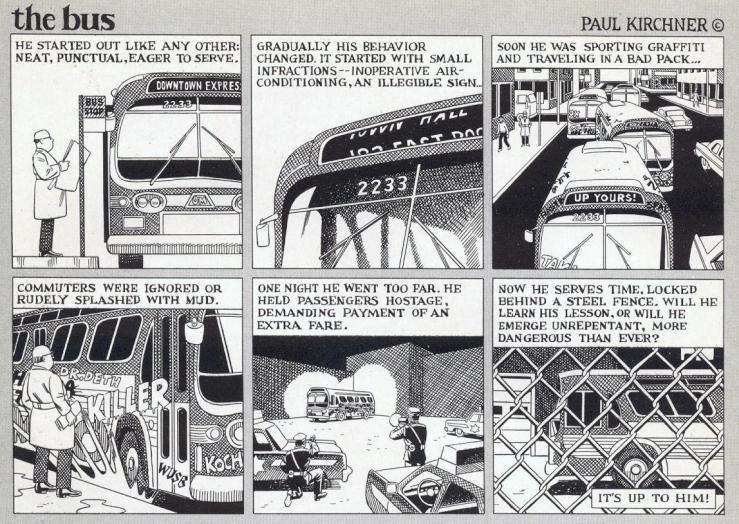
The Bus — Paul Kirchner

bTo3ozM - Imgur

“The Turnip” — The Brothers Grimm

“The Turnip”

by

The Brothers Grimm

English translation by Edgar Taylor and Marion Edwardes

There were two brothers who were both soldiers; the one was rich and the other poor. The poor man thought he would try to better himself; so, pulling off his red coat, he became a gardener, and dug his ground well, and sowed turnips.

When the seed came up, there was one plant bigger than all the rest; and it kept getting larger and larger, and seemed as if it would never cease growing; so that it might have been called the prince of turnips for there never was such a one seen before, and never will again. At last it was so big that it filled a cart, and two oxen could hardly draw it; and the gardener knew not what in the world to do with it, nor whether it would be a blessing or a curse to him. One day he said to himself, ‘What shall I do with it? if I sell it, it will bring no more than another; and for eating, the little turnips are better than this; the best thing perhaps is to carry it and give it to the king as a mark of respect.’ Continue reading ““The Turnip” — The Brothers Grimm”

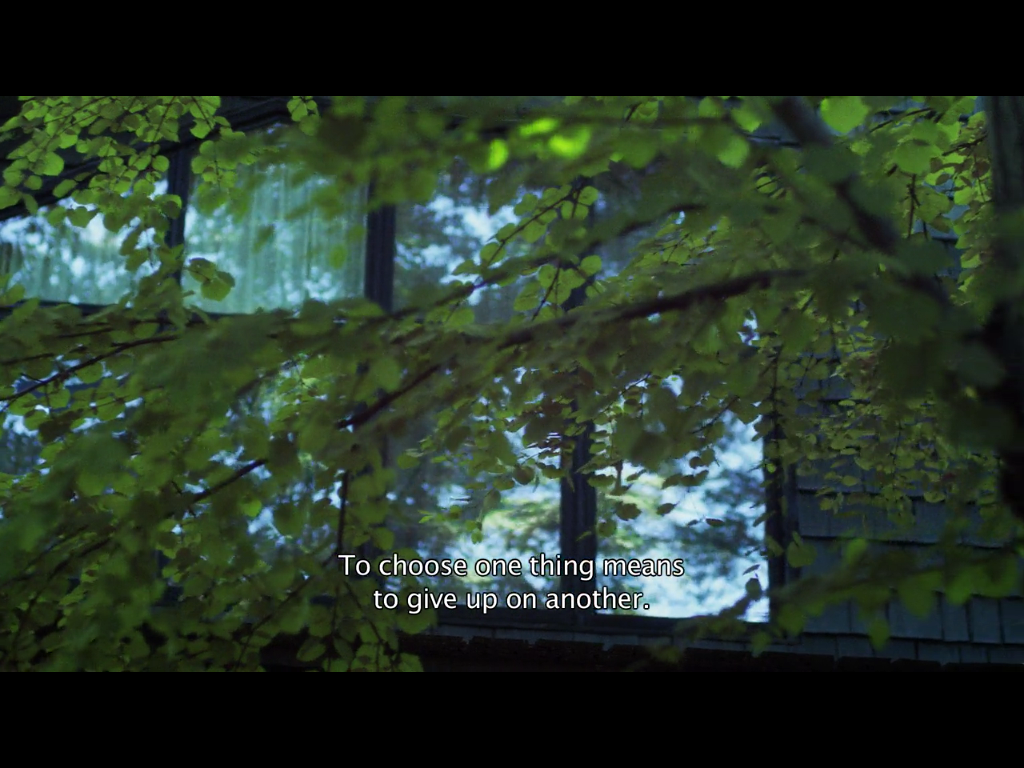
Problems begin the moment we’re born (Hayao Miyazaki)

 From The Kingdom of Dreams and Madness. The speaker is Hayao Miyazaki.

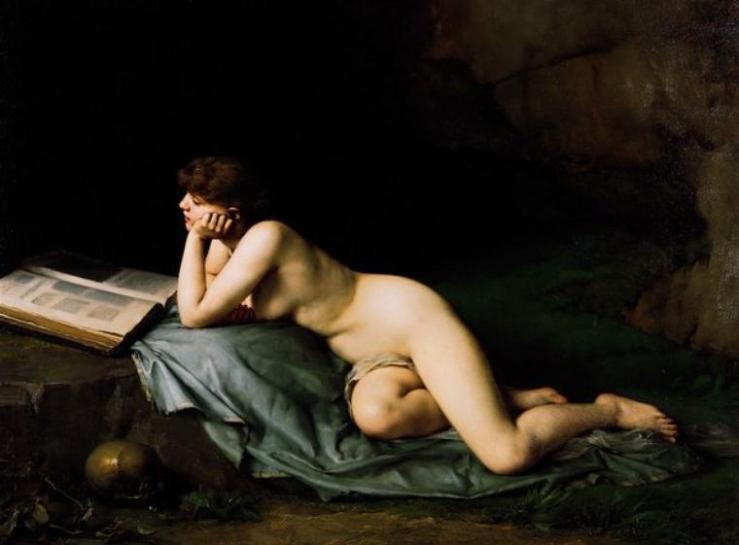
Mary Magdalene of the Desert — Emmanuel Benner

download

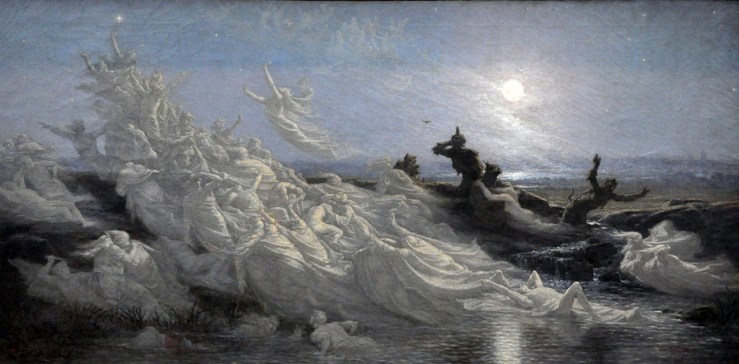
The Vapors of the Night — Jean-Édouard Dargent

Jean-Édouard Dargent