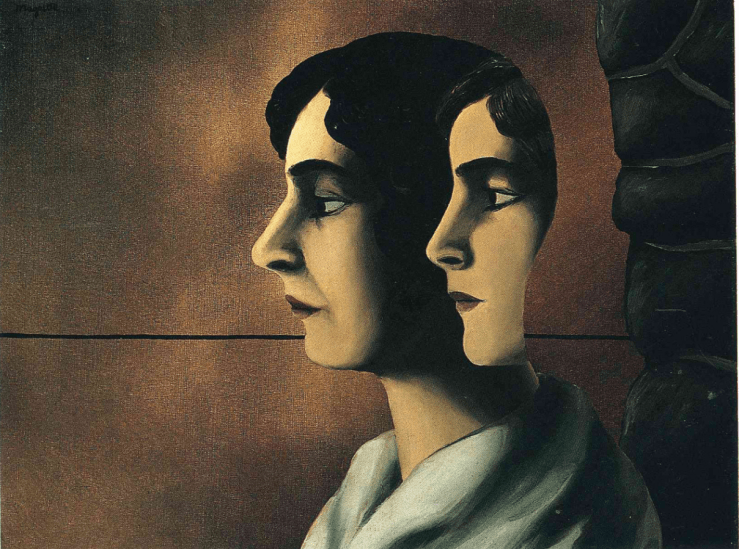
Faraway Looks — Rene Magritte

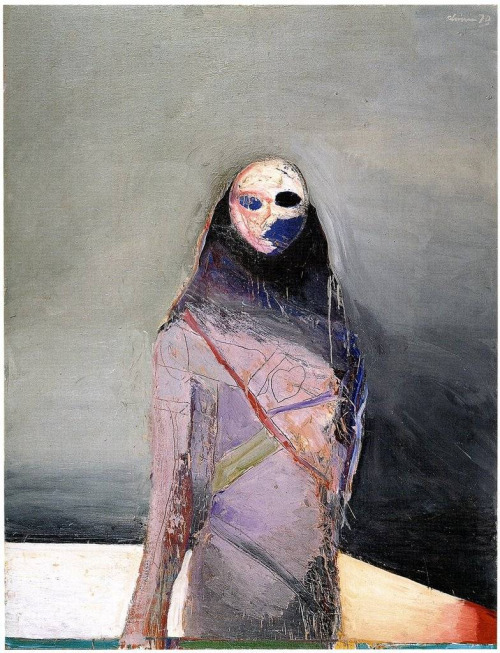
Standing Figure — Nathan Oliveira

Sixteen books I wish I’d written more about in 2016

img_4440

I read a lot of great books this year but had a hard time writing full reviews for all of them. These are some of the ones I liked the most.

Woodcutters, Thomas Bernhard

I finished Woodcutters just the other night, reading most of it in three sittings. (Actually, I was lying down. And it was very late at night, each time. I couldn’t pick the book up during daylight hours). Anyway, I finished Bernhard’s novel just the other night, so maybe I’ll muster something on it, but for now: I think this may be my favorite Bernhard novel so far! I can only think of a handful of writers so masterful at mimicking the operations of consciousness, of replicating consciousness (and conscience) reflecting on consciousness. (I even had to stop and do a too-hasty read of Ibsen’s play The Wild Duck, a plot point of Woodcutters). What happens in Woodcutters? A man sits in a chair remembering things. It’s fucking amazing.

White Mythology, W.D. Clarke

White Mythology is comprised of two novellas, Skinner Boxed and Love’s Alchemy. The first and longer novella, Skinner Boxed, takes place over a few days in the life of a psychiatrist; it’s a zany zagging yarn, crowded with MacGuffins and red herrings (a missing wife, a bastard son, a new anti-depressant drug, etc.). Oh, and it’s a Christmas story! Did I mention that? (Skinner Boxed takes its epigram from A Christmas Carol…and another from Gravity’s Rainbow). Love’s Alchemy is a kind of time-arrangement, or locale-arrangement—a story in pieces that the reader has to assemble. I enjoyed White Mythology (especially Skinner Boxed, which, typing this out, I realize I’d like to read again).

The Dick Gibson Show, Stanley Elkin

The Franchiser, Stanley Elkin

Somehow I’d made it to 2016 without reading Elkin. I read these two back-to-back. The best parts of The Dick Gibson show are as good as anything any of those other big postmodern dudes have written. (Okay. If not as good, nearly as good). I didn’t review The Dick Gibson Show because Elkin basically did it for me in his Paris Review interview. The Franchiser is a comic tragedy—or do I mean tragic comedy? It does all that inversion stuff: high-low/low-high. A novel of things and colors, both mythic and predictive, The Franchiser feels simultaneously ahead of its time and yet still very much bound to the 1970s, when it was first published.

Bear, Marian Engel

This slim novel is somehow simultaneously lucid and surreal, conventional and bizarre, romantic and ironic, heady and dry. And wet. A bibliographer travels to a remote island in Ontario to index an old library. I’m going to read this one again.

(Oh, the bibliographer has a sexual relationship with a bear. Like, a real bear. Not a metaphorical bear. A real one).

Collected Stories, William Faulkner

I didn’t read them all because I’m not a greedy pig. I read a lot of them though. Lord.

There Is a Tree More Ancient Than Eden, Leon Forrest

I will read Leon Forrest’s There Is a Tree More Ancient Than Eden again in the first quarter of 2017 and I will write a proper Thing on it. I read it in a two-day blur, drinking up the sentences greedily, perhaps not (no, strike that perhaps) comprehending the plot so much as sucking up a feeling, a place, a mood, a vibe. But there’s so much history reverberating behind the novel’s lens. Like I said (wrote): I need to read it again, which will kinda sorta be like reading it for the first time. Which is a thing one might say of any great novel.

The Weight of Things, Marianne Fritz

I read this really early in the year and I only remember the impression of reading it—not the plot itself, but the language—I remember horror, cruelty, pain. And this is why I need to write about the books I read.

The Inheritors, William Golding

A colleague told me to read Golding’s account of telepathic Neanderthals and their eventual encounter with predatory Homo sapiens. I’ll admit that I’d unfairly written off Golding as YA stuff, but the evocation of a prelingual (and postlingual) consciousness is fascinating here. It’s also a ripping quest narrative starring the Holy Fool Lok, who laughs in terror and joy. What stands out most in my memory, beyond the premise, is Golding’s concrete prose. I’m glad my colleague told me to read The Inheritors.

The Transmigration of Bodies, Yuri Herrera

I read Herrera’s The Transmigration of Bodies in a blurry weekend (sensing a pattern here) and enjoyed it very much: Grimy neon noir poured into mythological contours. Lovely.

The Leopard, Giuseppe di Lampedusa

This was the best novel I read in 2016 that I’d never read before. So good that I reread it immediately (the only two books I can recall doing that with in recent memory areBlood Meridian and Gravity’s Rainbow). It was even better the second time.  The Leopard is the story of Prince Fabrizio of Sicily who witnesses — and takes part in — the end of the old order era during the Italian reunification. Fiery and lascivious but also intellectual and stoic, Fabrizio the Leopard is the most engrossing character I read this year. Di Lampedusa’s novel takes us through his mind, through his age—places he himself isn’t fully cognizant of at times. I can’t recommend this novel enough: History, religion, death, sex. Sense and psyche, pleasure and loss, crammed with rich, dripping set pieces: dances and dinners and games of pleasure (light sadomasochism!) in summer estates. But its plots and poisons and pieces are not the main reason for The Leopard—read it for the language, the sentences, the sumptuous words. Its final devastating images are still soaked and sunken into my addled brains.

The Absolute Gravedigger, Vítězslav Nezval

I wedged these poems into the end of my third proper trip through Gravity’s Rainbow; I was also dipping into Rilke’s Duino Elegies and the Rider-Waite tarot. It’s all crammed together in a surreal web in my memory: shimmering horror, broken badlands, entropy and degradation—but life.

Cow Country, Adrian Jones Pearson

Cow Country (not pictured above because I listened to the audiobook) is a bizarre, disjointed satire of community colleges in particular and educational administration in general. (And: a satire on our slavish sensibilities of time ). It’s also a wonderful send-up of dialectical methodology—or rather the dialectical impulse to, like, resolve things. And by things, I mean Jones Pearson (or is it AJP? Or Adrian Ruggles Pearson? Or A.J. Perry? Or—nevermind)—Our Author (whoever) breaks down the way that all of our breakdowns breakdown under any real scrutiny.

Hilda and the Stone Forest, Luke Pearson

I read all of the Hilda books this year with my kids. And I read them by myself. And my kids read them by themselves. More than once. Hilda and the Stone Forest is the best one yet—richer, denser, funnier, and more devastating than anything Pearson’s done yet. The Stone Forest is stuffed with miniature epics and minor gags, and the central story of Hilda and her mother in the titular stone forest is somehow both bleak and heartwarming. Great stuff.

Gravity’s Rainbow, Thomas Pynchon

I actually wrote a lot about Gravity’s Rainbow (probably a major reason I didn’t write more about other stuff)—but I still wish I’d written more. I will write more. I’ve been listening to the audiobook for my fourth trip through.

Marketa Lazarova, Vladislav Vančura

Strange, violent, funny, and ultimately devastating, this Marketa Lazarova is a medieval tale of family loyalty, kidnapping, and love. Nothing I can do here would be a substitute for Vančura’s vivid, surreal voice—a voice that guides the story cynically, ironically, but also energetically, buoyantly. One of the best things I read all year.
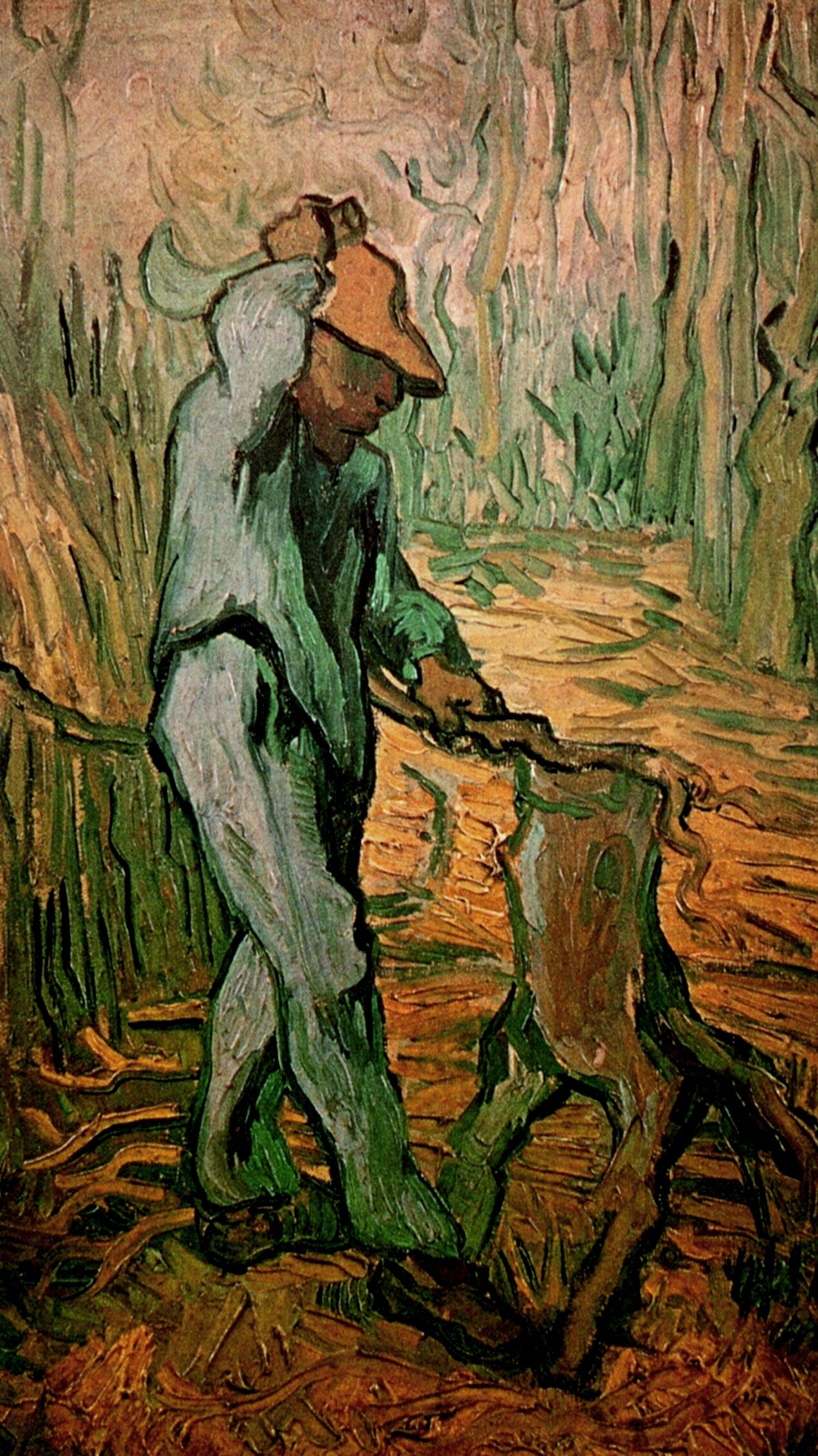
The Woodcutter (After Millet) — Vincent van Gogh

Fantasies of power are a necessary precondition of the exercise of power (Thomas Disch)

Sf is rife with fantasies of powerless individuals, of ambiguous antecedents, rising to positions of commanding importance. Often they become world saviors. The appeal of such fantasies is doubtless greater to one whose prevailing sense of himself is of being undervalued and meanly employed; who believes his essential worth is hidden under the bushel of a life that somehow hasn’t worked out as planned; whose most rooted conviction is that he is capable of more, though as to the nature of this unrealized potential he may not be too precise.

Another prominent feature of sf that is surely related to the naive character of its audience is its close resemblance, often bordering on identity, with myth, legend, and fairy tales. Throughout the twentieth century a large part of the American urban lower classes, from which the sf audience was drawn, were recent immigrants from what is commonly called the Old Country – that is to say, from the place where folk tales were still a living tradition. Indeed, except for the stories of their religions, this was likely to have been the only literary tradition familiar to these immigrants. Thus few of the first sf readers were more than a generation away from the oral tradition at its most traditional. Think of that sense of wonder that is the touchstone of the early pulp stories: could it not be, in essence, an analogue of the sense of wonder all country mice experience at their first view of a modern metropolis? Doubtless, the twentieth century has had some surprises even for sophisticated city mice, but it is part of their code not to let on to this. Surely they will not erect wonder, novelty, and the massive suspension of disbelief into first principles of their aesthetics. Sophisticates require the whole complex apparatus developed by two centuries of realistic novelists in order just to begin enjoying a made-up story. But for a naive audience, as for children, it is enough to say, “once there was a city made all of gold,” and that city rises up in all its simple splendor before their inner eye.

A less beguiling feature we may expect to find in a lower-class literature is resentment. Resentment, because it has its source in repressed anger, usually is expressed in indirect forms. Thus, the chief advantage of the ruling classes, their wealth and the power it provides, is dealt with in most science fiction by simply denying its importance. Power results from personal virtue or the magic of machines. It is rather the personal characteristics of the wealthy that become the focus of the readers’ resentment – their cultivated accents, their soft hands, their preposterous or just plain incomprehensible ideas, which they refuse to discuss except by their own ornate rules in their own tiresome language. Most maddeningly, they hold the unanswerable and utterly unfair conviction that because they’ve had the good luck to be better educated they are therefore smarter. In a world full of doltish university graduates, this assumption of superiority is in the highest degree exasperating to any moderately intelligent machinist or clerk. But what is to be done? To attempt to catch up could be the work of a lifetime, and at the end of it one has only succeeded in becoming a poor copy of what one originally despised – an effete intellectual snob.

Happily, or unhappily, there is an alternative. Deny outright the wisdom of the world and be initiated to a secret wisdom. Become a true believer – it matters not the faith, so long as it is at variance with theirs. All millennialist religions have their origins in this need for creating a counterculture. As religion loses its unique authority, almost any bizarre set of beliefs can become the focus of a sense of Election. Whatever the belief, the rationale for it is the same: the so-called authorities are a pack of fools and frauds with minds closed to any but their own ideas. Just because they’ve published books doesn’t mean a thing. There are other books that are in complete opposition. Beginning with such arguments, and armed with the right book, one may find one’s way to almost any conclusion one might take a fancy to: hollow earths, Dean drives, the descent of mankind from interstellar visitors. For the more energetic true believer there are vaster systems of belief, such as Scientology. I select these examples from the myriad available because each historically has been a first cousin of science fiction. And for this good reason: that sf is a virtual treasury of ways of standing the conventional wisdom on its head. Only sophisticates will make a fine distinction between playing with ideas and adopting them. For a naive reader the imaginative excitement engendered by a new notion easily crystallizes into faith.

As this begins to sound like an indictment of sf and its readers, I should like to point out that these class-associated features of sf should not be considered as faults. They are essentially neutral and may be employed to good or ill effect, according to the gifts and goodwill of any given writer. Fantasies of power are a necessary precondition of the exercise of power — by anyone. One cannot do what one hasn’t first imagined doing. The upper classes possess a great initial advantage in discovering while still young that the world is in essential agreement with their fantasies of power. Princes have a great resource of self-confidence in knowing that someday they’ll be kings. Self-help books, from Samuel Smiles through Dale Carnegie, all agree on the crucial importance of hyping yourself into a state of self-confidence. Without that, there is little chance of competing against the toffs who got their gleaming teeth and firm handshakes, as it were, by inheritance. As a device for schooling the mind in what it feels like to be a real go-ahead winner, a few novels by Edgar Rice Burroughs could be quite as effective as an equivalent dosage of Positive Thinking. To denigrate the power fantasies of sf is very like laughing at cripples because they use crutches. A crutch that serves its purpose is to be admired.

As to the kinship between sf and fairy tales and legends, I should not think it would be necessary to make apology. What more fertile soil could any fiction sink its roots into, after all? If individual artists have not always been equal to their materials, that is their loss. It is our gain as readers that often, even so, their botched tales retain the power to astonish us. Even in a cheap frankfurter pork tastes good.

Finally, as to resentment, who shall say that there are not, often enough, good grounds for it? Anger and defiance may he healthier, manlier modes of expression, but when the way to these is barred, we must make do somehow. “Cinderella” and “The Ugly Duckling” are fantasies inspired by resentment, and they possess an undeniable, even archetypal, power. When we are compelled to recognize that our allegiance is owing to powers, whether parents or presidents, whose character is flawed or corrupt, what shall we feel in acquiescing to those powers (as we all do, sometimes) unless resentment? The lower classes may feel their oppression more keenly because it is more immediate and pervasive, but resentment to some degree is part of the human condition.

However (and alas), this does not end the matter. Resentment may be universal, but it is also universally dangerous, for the political program of the resentful inevitably savors of totalitarianism and a spirit of revenge. Once they attain to political power the know-nothings can have a sweet triumph over the know-it-alls by ‘declaring’ that the earth is flat, or Einstein a heretic. The books of one’s enemies can be burned or re-edited.

From Thomas Disch’s essay “The Embarrassments of Science Fiction.”

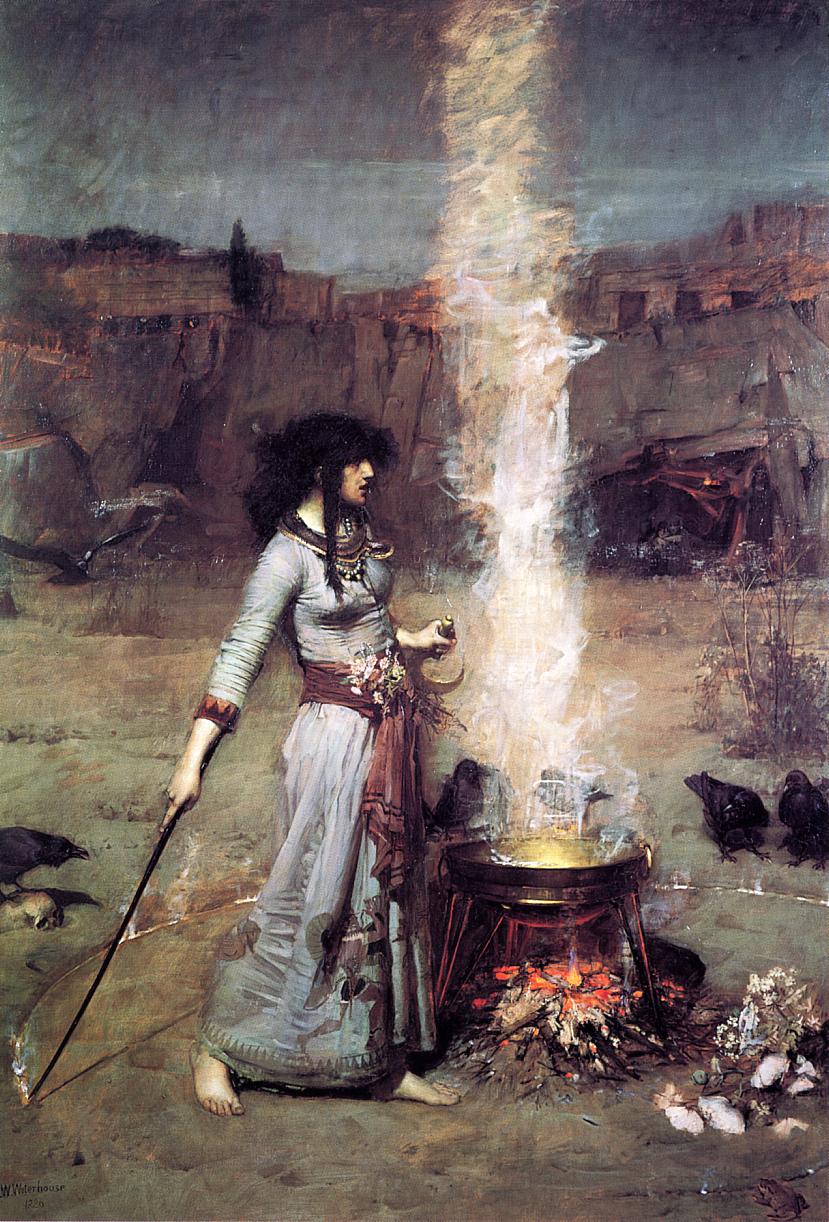
The Magic Circle — John William Waterhouse

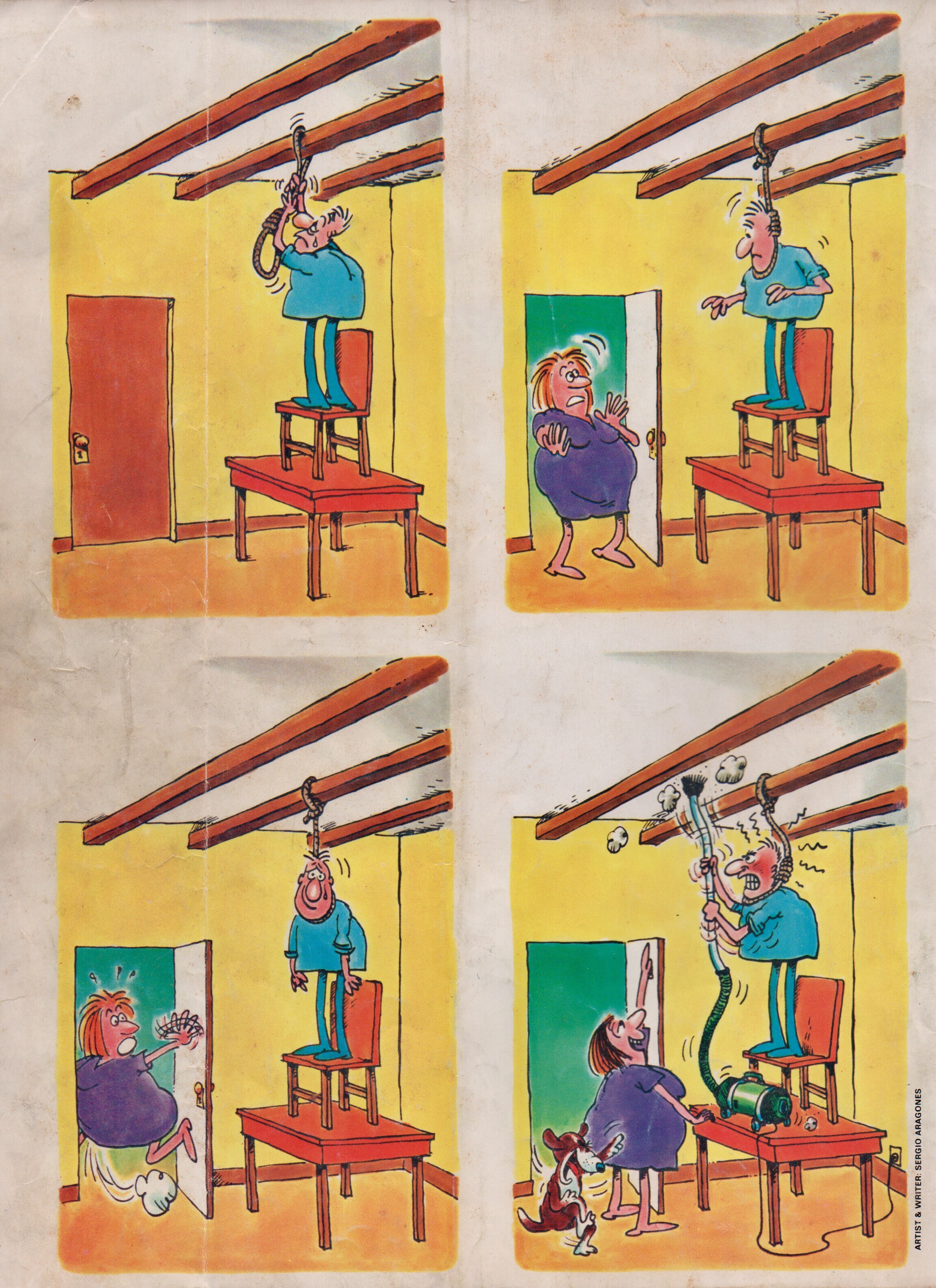
Sunday Comics

img_4435

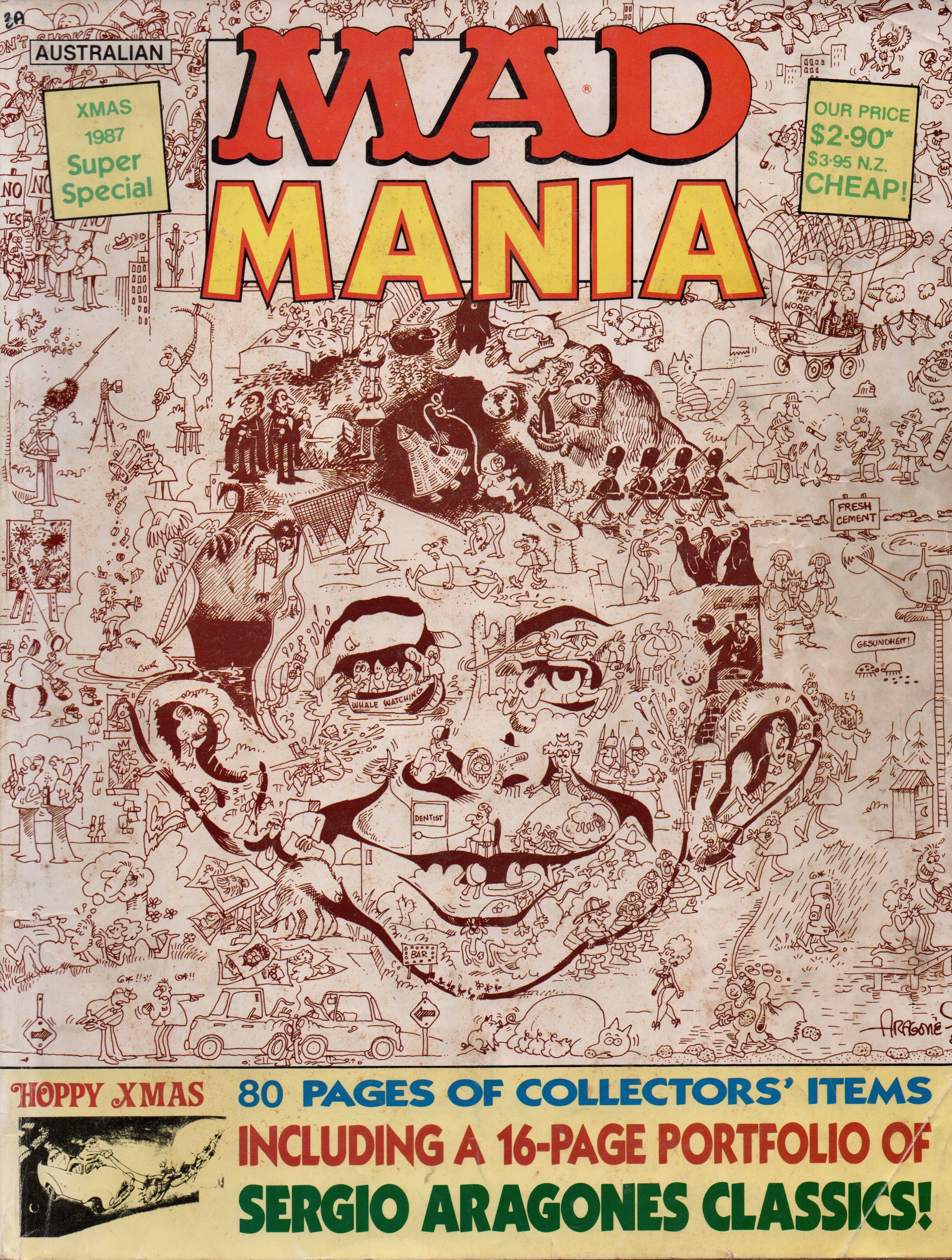
A morbid Sergio Aragones strip from the back cover of the 1987 Xmas Super Special of Mad Magazine (Australian edition). Here’s the front cover, also by Aragones:img_4436

7am Sunday Morning — Kerry James Marshal

Where am I going to get a human skull? (From Bob Dylan’s Nobel Prize speech)

I was out on the road when I received this surprising news, and it took me more than a few minutes to properly process it. I began to think about William Shakespeare, the great literary figure. I would reckon he thought of himself as a dramatist. The thought that he was writing literature couldn’t have entered his head. His words were written for the stage. Meant to be spoken not read. When he was writing Hamlet, I’m sure he was thinking about a lot of different things: “Who’re the right actors for these roles?” “How should this be staged?” “Do I really want to set this in Denmark?” His creative vision and ambitions were no doubt at the forefront of his mind, but there were also more mundane matters to consider and deal with. “Is the financing in place?” “Are there enough good seats for my patrons?” “Where am I going to get a human skull?” I would bet that the farthest thing from Shakespeare’s mind was the question “Is this literature?”

Read all of Bob Dylan’s Nobel Prize acceptance speech.

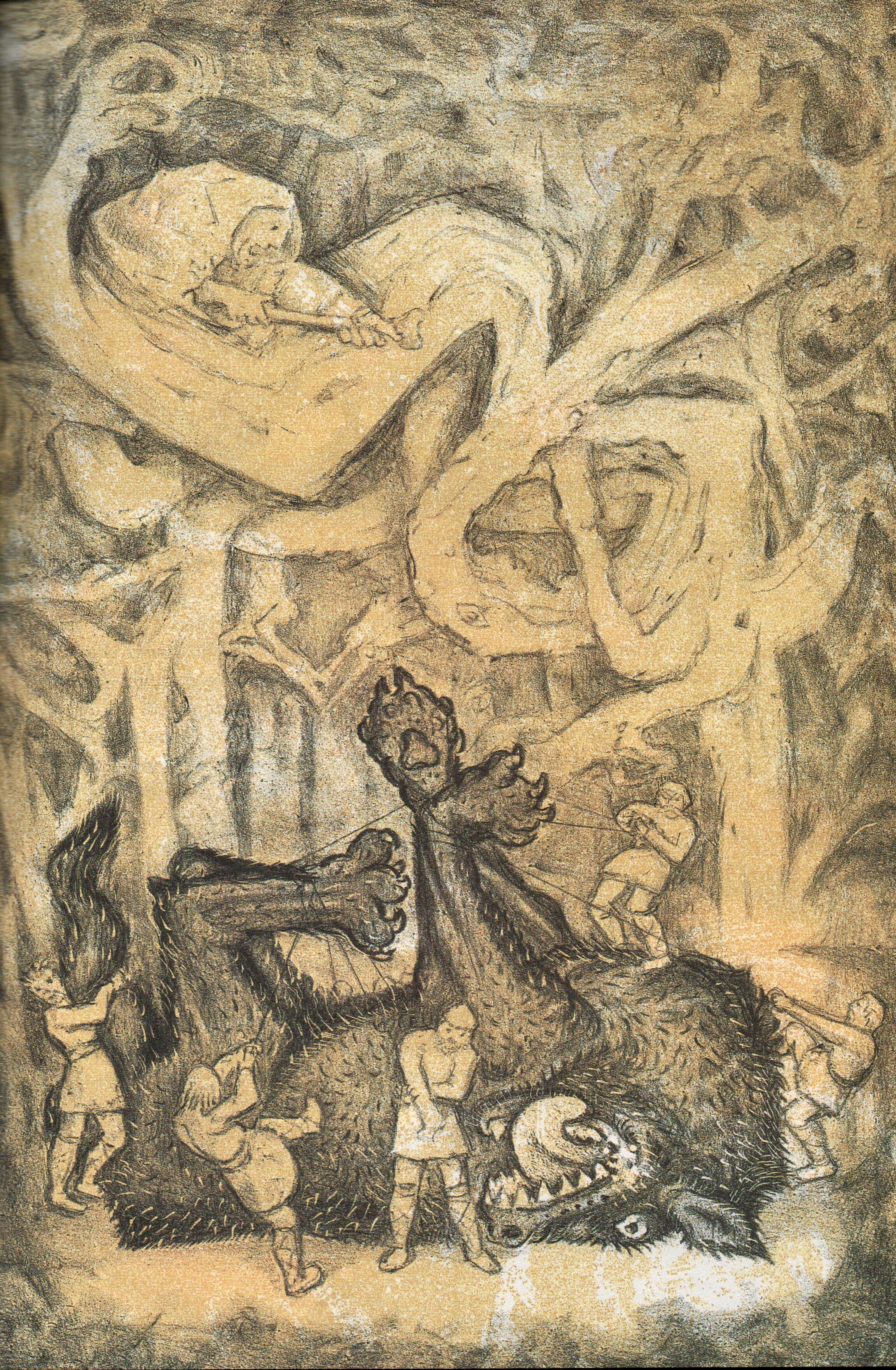
Fenris Bound — Ingri and Edgar Parin d’Aulaire

img_4428

From Ingri and Edgar Parin d’Aulaire’s Book of Norse Myths. Published by NYRB. My son and I have enjoyed the hell out of it.

Perpetually postponed to the future (Alan Watts)

…we have an absolutely extraordinary attitude in our culture and in various other cultures—high civilizations—to the new member of human society.  Instead of saying, “Thank you,” to children, “How do you do? Welcome to the human race; we are playing a game, and we are playing by the following rules… We want to tell you what the rules are so that you’ll know your way around, and when you’ve understood what rules we’re playing by, when you get older you may be able to invent better ones.”

But instead of that we still retain an attitude to the child that he is on probation; he’s not really a human being, he’s a candidate for humanity. …we have a whole system of preparation of the child for life, which always is preparation and never actually gets there…. as a result of this problem being insoluble, it is perpetually postponed to the future so that one lives—one is educated—to live in the future, and one is not ever educated to live today.

Alan Watts.

Read a full transcript here.

Coronation of Sesostris — Cy Twombly

Strips #313, #314, #315 — Samplerman

Pynchon invests his work with mythological associations on a vast scale

…Pynchon…invests his work with mythological associations on a vast scale, in a manner both deliberate and mocking, utilizing both central myths of Western civilization and popular culture myths. Orphic myths, manifested in various descents into the underworld, jostle against Faustian legend, which calls for trips up the Brocken, the Walpurgisnacht mountain, and these in turn are juxtaposed with fairytales like Hansel and Gretel, children’s stories like Alice in Wonderland or the Wizard of Oz, and archetypical figures from movies, such as Dracula, King Kong, and Jack Slade. In addition, there are allusions to classical, kabbalistic, and Christian contexts. By far the most significant are references to Norse and Teutonic myth. Swirling in the background of the novel are the trappings of Northern epic: runes, the Northern Lights (the flickering light given off by the Valkyries), dwarves, the titans Etzel and Utgarthaloki, and rainbows (the bridge to the abode of the gods), The distillation of meat and the novels first scene. Two of the principal figures are Blicero, or “white,” and his former love, the Herero Enzian, or “blue,” a name Blicero borrowed from Rilke; the body of the Norse goddess of death, Hela, is half white, half blue.

From Joseph W. Slade’s long essay “Living on the Interface: Preterition in Gravity’s Rainbow.” The essay is part of Slade’s 1974 book Thomas Pynchon, part of Warner Paperback Library’s “Writers for the 70’s” series.

Jim O’Rourke’s lovely loop-driven half-hour cover of Tracy Chapman’s “Fast Car”

(Thanks, Ben).

Pharmacist — Viktor Vasnetsov