Pride and Prejudice and Zombies — Jane Austen and Seth Grahame-Smith

pride-zombies

The blurb on the back of Pride and Prejudice and Zombies brazenly declares that Seth Grahame-Smith’s addition of zombie-fighting action to Austen’s classic “transforms a masterpiece of world literature into something you’d actually want to read.” Perhaps the blurb’s brag is just a bit of cheeky fun; after all, Austen’s staid survey of manners and mores is a perennial favorite, coming in second to only The Lord of the Rings in a recent BBC poll of British readers, as well as topping a similar poll in Australia. Clearly, people not only want to read it, they actually do, and in large numbers each year. There’s even been enough interest in it for a not-that-bad movie update just a few years ago. So it’s hardly as if Pride and Prejudice is a corpse in need of resuscitation. This begs the question: What nuances and comments does Grahame-Smith have to add? Not much, we’re afraid.

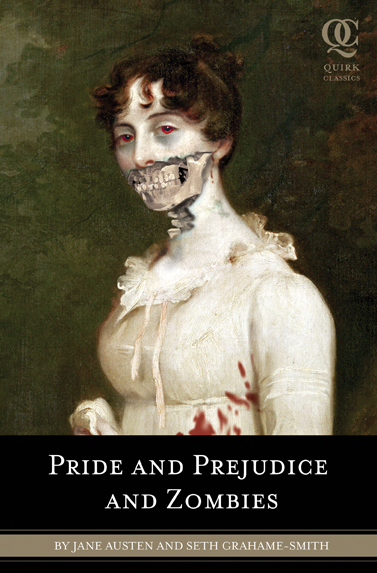
The most interesting aspect of Pride and Prejudice and Zombies is its concept, a promise for weird laughs and sick kicks neatly summed up in its fantastically morbid cover. Grahame-Smith doesn’t so much re-imagine Pride, but simply stuff a murderous host of zombies into Austen’s romance. These “unmentionables,” as the polite Regency society folks call them, wage a war on good stolid Englishmen. Fortunately Mr. Bennet has trained his daughters, led by feisty Elizabeth, in the ways of the ninja. Between matchmaking, letter-writing, polite dances, and furtive glances at Mr. Darcy, the Bennet sisters slice up zombies left and right with their katanas. The press-release for Pride and Prejudice and Zombies claims that the book retains 85% of Austen’s original, and no major plot points are changed or missing. Instead, the reader is subjected to seemingly purposeless bouts of zombie fighting after every scene. Of course, to decry these fights as purposeless seems silly; after all, when you pick up a book called Pride and Prejudice and Zombies, you expect zombies, don’t you?

Grahame-Smith’s premise sounds like great good fun in theory, but it turns out that adding zombies and ninjas to a classic beloved romance is neither terribly engaging or interesting. We love zombies at Biblioklept, but the most effective zombie tales–28 Days Later, Night of the Living Dead, Dawn of the Dead–work beyond horror and serve also as a form of social commentary or even satire. Grahame-Smith seems to miss, or even ignore, any opportunity to comment on, criticize, or otherwise inform the novel he’s cannibalizing. Instead, his additions convey the energy, wit, and sophistication of a one-note SNL sketch. The premise gets old fast, and it becomes increasingly confusing who this novel is for. It’s unlikely to appeal to most Austen fans, as it provides no real comment on her methods, plotting, or characterization, and as far as a zombies-and-ninjas riff goes, it’s pretty standard fare. Ultimately, it seems like more of a conversation piece than something you’d actually read for enjoyment, a little coffee table book that might evoke some interest. Flick through the amusing illustrations, chuckle, and move on.

Pride and Prejudice and Zombies is available soon from Quirk Books.

Beer and Book Pairing: Shandies + García Márquez’s Chronicle of a Death Foretold

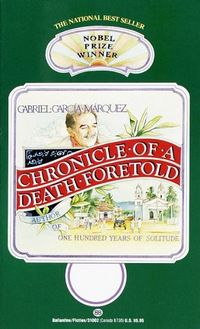
While the special pleasures of drinking a beer have undergone something of a renaissance in the past ten years in America, what with all the awesome microbreweries popping up left and right, there remains among many a staunch and unjustified prejudice against the world’s oldest liquor. In short, wine is still the go-to beverage for fine dining, and for many, the mark of sophistication and refinement. And while we certainly don’t begrudge a glass of pinot or chardonnay, why all the prejudice? Beer goes great with food–especially fine food–and also with books. In order to make headway against overcoming beer’s unjust vulgar reputation with some folks, we proudly present a new ongoing series of beer-book pairings, hopefully lending a little weight to our favorite beverage’s literary caché. It’s Spring Break Week at Biblioklept International Headquarters, and what better way to celebrate the season than with our crisp homemade shandies paired with Gabriel García Márquez’ s Chronicle of a Death Foretold.

Shandies are made simply by mixing beer with ginger ale, ginger beer, or, preferably, lemonade. Our recipe for shandies is pretty basic. We recommend starting with a lager–Tecate, Red Stripe, or even Corona will do fine (we’re featuring Red Stripe at the BIH this week). You can certainly use an ale, but ales tend to have richer, sharper, and more complex flavors, and they tend to be not as smooth as lagers. (We suppose you could make shandies with a porter or stout or a lambic ale, but this seems kinda sorta reprehensible). Next, you’ll need either an imperial pint glass (20 oz.) or an American pint glass (16 oz.). Pour your lager into the glass, then add your lemonade in desired ratio (we prefer to fill an imperial pint glass, creating roughly a 3 to 2 ratio of beer to lemonade. Oh yeah, we’re lazy and use store bought lemonade (Minute Maid sugar free), but we’ve made our own in the past. Making your own lemonade is easy, and if you don’t know how to do it you probably are too dimwitted to be reading these words right now). Final step: stir, drink, enjoy.

chronicle

We’ve chosen shandies for their crisp lightness. They’re the perfect early afternoon drink, cool and refreshing, preferably enjoyed on porches or hammocks (we don’t really recommend them for indoors or at night). We’ve paired them with a fresh little jewel of a book, Gabriel García Márquez’ s Chronicle of a Death Foretold. Chronicle is a murder/love story with about a million little twists, the biggest twist being that there is no twist: we know from the first sentences exactly what will happen. Still, García Márquez’ s kaleidescopic reconstruction of the day of the murder is thoroughly engrossing, bewildering, and un-put-downable. The book’s rhetoric is hardly as morbid as its subject matter–it’s great hammock/beach reading, and its crisp lightness belies its complex flavors. Like a shandy, it slowly, subtly intoxicates you. It’s also pretty short, about 130 pages, and despite its infinite digressions, its the sort of book that you read in just one or two sittings.

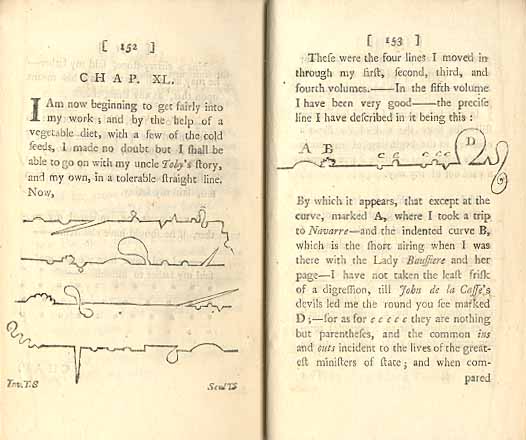
Of course, maybe you’ve read Chronicle but you’re still dying to drink some shandies on your porch with a good book, and you want Biblioklept to give you a literary excuse. Well, here’s another option: take a shot at another book of infinite digressions, Laurence Sterne’s 1759 (anti-)novel The Life and Opinions of Tristram Shandy, Gentleman. The fun of pairing a shandy with Shandy will be doubled in Sterne’s love of wordplay in the text. And sure, there’s no way you’ll finish it, but it’s not that sort of book anyway–it doesn’t finish its self! Pick it up at random, flip around, marvel at its weirdness, at the very idea that the first post-modern novel could somehow come before the modern novel. Then get up, make another shandy, and pick up again elsewhere. Fun stuff.

shandy
Shandy charts the course of his narrative thus far

Une Semaine de Bonté — Max Ernst

semaine

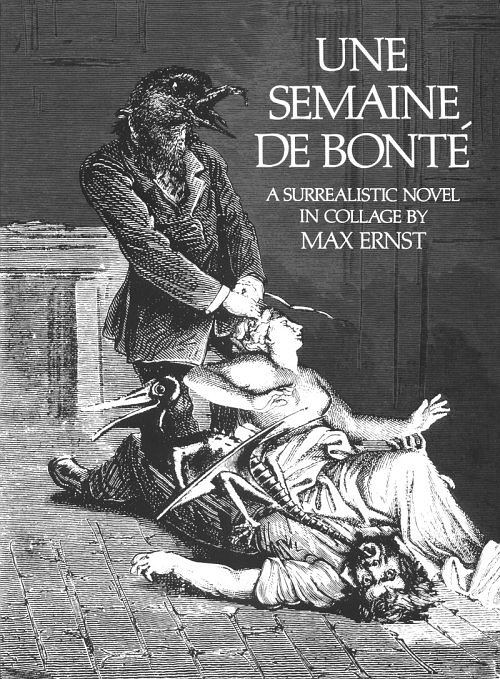
Max Ernst’s graphic novel, Une Semaine de Bonté, is one of the coolest books I own. Comprised of concise collages utilizing black and white images from periodicals and catalogs, Ernst’s narrative is both engrossing and disturbing. Full of birds and breasts and beasts, Semaine plays out like a weird, violent, funny mindfuck, its repeated scenes of submission and domination ironizing its title (A Week of Kindness). Great stuff. There’s a decent enough chunk of the book available for preview at Google Books.

When Skateboards Will Be Free — Saïd Sayrafiezadeh

skateboardsSaïd Sayrafiezadeh’s memoir When Skateboards Will Be Free recounts the author’s youth as the son of two diehard socialists, Party members who are far more devoted to the impending Revolution than their family. Sayrafiezadeh’s father, an Iranian intellectual, leaves the family before the boy can even speak, and throughout the book he remains a paradoxical touchstone, a living emblem of Sayrafiezadeh’s alienation. Sayrafiezadeh is raised by his Jewish-American mother, first in New York City, then in Pittsburgh, always in poverty. His mother Martha is such a committed socialist that she willfully chooses a life of poverty for both herself and her young son. Sayrafiezadeh writes:

…my mother actively, consciously, chose not only for us to be poor but for us to remain poor, and the two of us suffered greatly for it. Because to suffer and to suffer greatly was the point. It was the fulfillment of ourselves. My mother was no doubt emboldened by the philosophy that ther was honor in wretchedness, virtue in misery, nobility in hardship.

The passage above is one of the rare reflective moments in this memoir; most of the time, Sayrafiezadeh’s strategy is to relate his youth in simple, immediate terms. We see Sayrafiezadeh and his mother move from squalid apartment to squalid apartment,  we experience the boredom that a young boy would feel at Socialist party meetings, we feel the strange alienation Sayrafiezadeh experiences at school–an alienation that does not emanate from his parents’ political stance alone, but also in his ethnic identity. To be in  middle school is hard; to be in middle school as a person of Iranian descent during the 1979 hostage crisis is really hard. Sayrafiezadeh always follows the “show don’t tell” dictum of good writing, and, as a result, his description of the suffering he experiences as a young person–poverty, confusion, and alienation–never seems contrived or out of place. Indeed, these are feelings common for any kid, here magnified exponentially. Ultimately, however, it is not so much sympathy that the reader experiences but anger, a specific, concentrated anger at Sayrafiezadeh’s selfish parents coupled with a more muted sense that pure adherence to any ideology can be emotionally destructive.

The book moves episodically between a chronological telling of Sayrafiezadeh’s life and the narration of a grown-up Sayrafiezadeh still navigating his strange identity in contemporary New York. This grown-up Sayrafiezadeh is hardly a screw-up, but he is clearly marked by the ideology his parents have attempted to imprint upon him. In one clever passage, an adult Sayrafiezadeh ponders over tissue box holders–ephemeral, essentially unnecessary items, products born of capitalism’s need to manufacture desire–and buys a ridiculously overpriced one with a certain relish. The scene plays as a muted “fuck you” to his parents, but is perhaps unnecessary in this regard, as the whole of When Skateboards Will Be Free paints Sayrafiezadeh’s mother and father as neglectful figures. Sayrafiezadeh’s father not only abandons the family, but is largely absent from his son’s life in any regard. He’s late–often months late–to special birthday dinners and any scene where the two interact shows that they do not know each other. While Sayrafiezadeh’s mother manages to eke out a living for the two of them, it is also repeatedly clear that her ideological choice to live in poverty has hurt her son beyond mere embarrassment. Sayrafiezadeh is the emblematic latchkey kid, left to himself for long stretches of time–even whole weekends–at a very young age, as his mother attends her Socialist meetings. In one grim episode, a very yong Sayrafiezadeh is sexually molested by a “comrade” of the Socialist party who has generously volunteered to babysit. This is just one extreme example of the underlying irony of the memoir, an irony that Sayrafiezadeh does not specifically name: his parents, in the name of a political philosophy that espouses the value of caring for one’s fellow man, have failed to adequately care for him.

Written in a brisk, lucid style with simple dialogue, When Skateboards Will Be Free effectively compresses a young life into three hundred pages that can be read over three or four afternoons. We’re not exactly big fans of the memoir around Biblioklept, but Sayrafiezadeh’s effort eschews many of the genre’s hallmarks (sensationalism, overly-reflective post-event analysis) in favor of a style that allows his readers to draw their own conclusions. This isn’t to suggest that Sayrafiezadeh doesn’t lead his readers to some definitive ends, but rather that his writerly approach is less overt manipulation than the stuff of most memoir. While Skateboards isn’t exactly essential reading, those who can’t get enough memoir in their reading diet will surely appreciate its vitality and generous honesty.

When Skateboards Will Be Free is available in hardcover March 24, 2009 from Random House.


Bodies — Susie Orbach

bodies-front-2

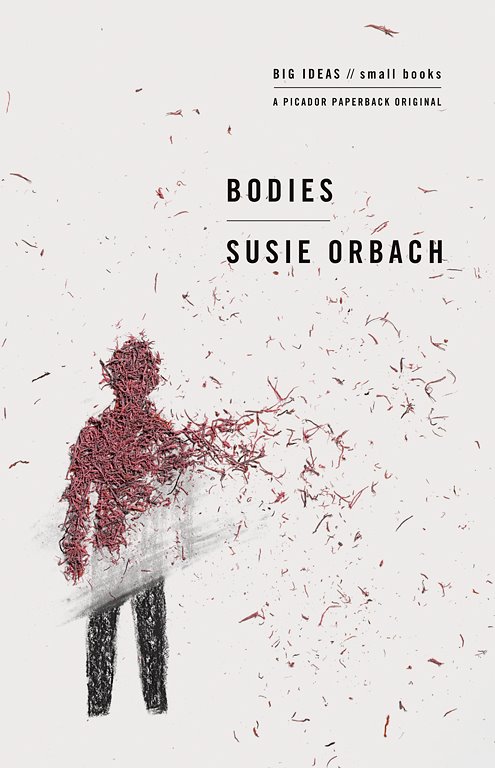
In Bodies, feminist psychoanalyst Susie Orbach explores contemporary body issues within a global culture, arguing that bodies are “not in any sense matter of fact, the simple outcome of DNA,” but rather are the products of social and cultural construction. Orbach writes that her work aims “to bolster our resilience in the face of unprecedented attack and to bring sustainability to our bodies so that we can live with and from them more peaceably.” This goal is, of course, no simple task, as the course of Bodies demonstrates.

As a psychoanalyst, Orbach of course takes many cues from Freud, but in her introduction she clearly states the need to move beyond Freud’s theories (it’s all in your head) to an understanding of “the impact of contemporary social practices” — predominantly, in her book, the influence of a media-saturated, image-fueled Western culture on the rest of the world. At stake, Orbach claims, “is a transgenerational transmission of anxious embodiment.” In layman’s terms: we imprint our own desires and fears and hangups about the body–feelings generated in large part from our culture–onto our children.

To explore these problems, Orbach–like Freud–presents a series of fascinating case studies, including a man who elects to have his legs amputated in order to paradoxically feel “whole,” transgendered persons, and abused and neglected children. Orbach is particularly concerned with the drive toward “choice” — the concept that one might actively “choose” how one’s body is shaped, and, as such, she repeatedly engages the discourses of elective plastic surgery, modern weight-loss dieting, and eating disorders. Orbach confronts the reality that many of our “choices” are actually the products of “the new visual grammar” of mass media, the iteration of Photoshopped and airbrushed bodies that bombard our senses hundreds, thousands of times daily. She extends this problem beyond the West, to show the ways in which mass culture affects the psyche of the rest of the world’s denizens.

von-hagens_bodyworlds
from Bodyworlds -- Gunther Von Hagen

For Orbach, a future of genetic alteration toward the perfecting of a culturally-constructed ideal is a horrible nightmare. Instead, she argues, our “sturggle is to recorporalise our bodies so that they become a place we live from rather than an aspiration always needing to be achieved.” In order to achieve this, Orbach avers that we “urgently need to curtail the commercial exploitation of the body and the diminution of body variety, so that we and our children can enjoy our bodies, our appetites, our physicality and our sexuality.” Orbach’s solution returns to her concept of “transgenerational transmission” — namely, parents need to understand their children’s needs for caring adult responses, and the myriad ways in which these responses will inform the child’s attitude about his or her own body.

In the U.S., Bodies has been published as part of Picador’s BIG IDEAS // small books series and it’s a perfect fit for the series: an engaging and relevant philosophical text rooted in a central academic argument, but written in a style that will appeal to a popular audience without dumbing down anything. Like the two books of the series we reviewed last year, Steven Lukes’s Moral Relativism and Slavoj Žižek’s Violence, we might not agree with everything the author has written here, but we cannot deny that this is an enthralling and important discussion. Highly recommended.

Bodies is now available from Picador books.

The Sound and the Fury — William Faulkner

tsatfwf

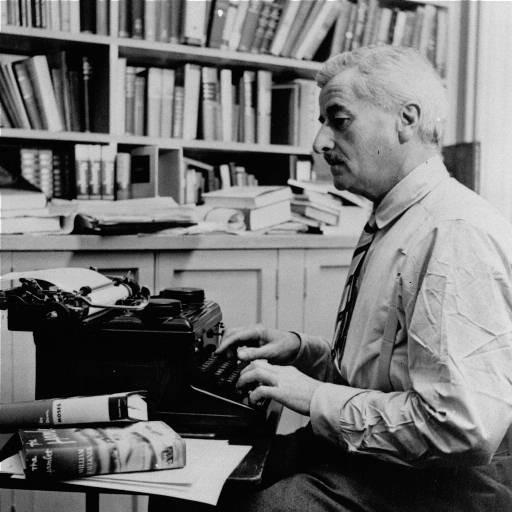
I don’t really know if there’s anything new I can say about Faulkner’s The Sound and the Fury in a blog post, and I’m not in the practice of writing term papers here, and you wouldn’t want to read one anyway. I’ll cop out and be vague but honest: the book was astounding and exhausting. I’ve read a number of Faulkner novels now, and The Sound and the Fury was easily my favorite. I’d attempted it a few times before, only to be thwarted by an inability to commit to the sustained concentration required to comprehend Faulkner’s stream-of-consciousness technique. The first section of the book, told from the perspective of Benjy, the seminal Faulknerian idiot man-child, is particulalry daunting, especially if you have no prior knowledge of the story of the Compson family, and I don’t think I would’ve made it through this reading if I didn’t arleady know the major themes and the trajectory of the plot. I’m actually kinda sorta shocked that the book was published at all, and I really wonder about its earliest audiences–how much context did they have? What guided them through the verbal detritus of the book’s first half?

I suppose that at the time of its publication in 1929, literary audiences were at least somewhat familiar–if not wholly intrigued by–the stream-of-consciousness technique pioneered in books like James Joyce’s Ulysses and Virginia Woolf’s Mrs. Dalloway. I read both of those books years before The Sound and the Fury, and I would make a subjective argument that they are quite a bit easier to enter into in terms of linearity and plot structure. Also, reading TSatF, I couldn’t help but feel the subtle resonance of Ulysses, particular in the constant use of omission. One of the things that makes Ulysses challenging is that Leopold Bloom frequently elides specific referents–we often get a “him” or a “he” or a “she” or an “it” without immediate context. Often, that context comes much, much later in the novel, with the net result that at times Bloom’s stream of consciousness is awfully ambiguous. Other times, Bloom seems unable to even think the words that would name the tragedies of his life (his dead son, his unfaithful wife, his outsider status in Dublin). Similarly, Faulkner’s Compsons are unable to directly name their own tragedies of promiscuity, suicide, alcoholism, madness, and financial decline. The effect is disarming and immediate, and while it can be very engaging, I can see how many readers would be alienated to the point that they can’t finish the book. I think there are a few simple solutions to the intrinsic problems of reading The Sound and the Fury, and at the risk of looking like a didactic asshole, I’ll share:

1) Read a brief plot summary first. I took a graduate seminar on Faulkner from which I gleaned the basic plot points and themes. (Ironically, the seminar assumed that any English major in grad school would have a working knowledge of the book, and instead focused on lesser-read volumes like Intruder in the Dust). Knowing the background of the Compson family did not ruin reading the book for me, nor did it replace an actual reading of Faulkner’s language–it simply gave me enough of a frame of reference not to throw up my hands in despair.

2) Read quickly and in long sittings. This is not a book that you can pick up and read a few pages of each night. Each chapter has a distinctive rhythm, and it takes a few pages to get into the pace and perspective of the chapter. I read the book in about eight sittings. I also found TSatF impossible to read at night before I was about to go to bed.

3) Don’t worry about getting everything in the first reading. Not possible. Enjoy the language, its strangeness. Marvel at Faulkner’s attempts–both successful and unsuccessful–to transcend time, space, and place. If you’re not enjoying it, why bother reading it?

Most of these suggestions could be applied to Ulysses as well. I brought up the possible influence of Joyce on Faulkner and I was interested enough to do a little research. The following text is from pages 208-209 of A William Faulkner Encyclopedia by Robert Hamblin and Charles Peek, and I think it neatly summarizes the issue:

When asked about the influence of Joyce on his own writing during the early years of his fame, following the publication of The Sound and the Fury and As I Lay Dying, Faulkner tended to be understandably evasive. In a 1932 interview with Henry Nash Smith, for example, Faulkner claimed, in fact, that he had never read Ulysses, invoking instead a vague aural source for his knowledge of Joycean methods: ” ‘ You know,’ he smiled, ‘sometimes I think there must be a sort of pollen of ideas floating in the air, which fertilizes similarly minds here and there which have not had direct contact. I had heard of Joyce, of course,’ he went on. ‘Some one told me about what he was doing, and it is possible that I was influenced by what I heard’ ” (LIG 30). In a moment of irony that may not have been lost on the interviewer, Faulkner reached over to his table and handed Smith a 1924 edition of the book. . . By 1947, Faulkner hardly needed to be so coy, telling an English class at the University of Mississippi that Joyce was “the father of modern literature” (1974 FAB 1230). By 1957, Faulkner’s pronouncements on Joyce had become fully classical: “James Joyce was one of the great men of my time. He was electrocuted by the divine fire” (LIG 280).

“Electrocuted by the divine fire” . . . very nice.

A Few Thoughts On DFW’s “Wiggle Room”

The New Critics’ biggest contribution to literary criticism was the dictum that analysis was to be applied strictly to the text itself, without the muddying impurities of biography or any other outside knowledge influencing the reader. A context-free reading is pretty hard to come by, though, isn’t it? School syllabi are arranged around era or genre, or both; our teachers preface each novel or poem or story or essay with a nod to its relevance; a friend hands us a book because it’s “good.” We furtively flip through Tropic of Capricorn, knowing its rep; we look down our noses at abstinence vampire novels. In short, it’s hard to get to that pure reading the New Critics favor. Still, I’ve always thought it’s a pretty good strategy to put aside biographical/author psychology, and just stick to a good close reading of the text. Today, reading David Foster Wallace’s “Wiggle Room,” I was completely unable to do that.The context of Wallace’s recentish suicide hung over each page, each sentence. It was a distraction that led to a (necessary) rereading, a distraction that colored the reading–and then the rereading. A strange little voice popped into Wallace’s dense narration that kept whispering, “posthumous, unfinished novel.” But now that I’ve complicated and contextualized and complained, perhaps I should simply comment a bit on the story now.

In dense, thick sentences, Wallace relates a work morning for Lane Dean, an IRS rote examiner who detests his Sisyphean job. Like many cubicle-dwellers, Lane spends much of his day trying not to look at the clock. He also tries to use an inspirational photo of his son sparingly, so that the effect might be more intense. However, the boredom on this particular day overwhelms Lane and he “had the sensation of a great type of hole or emptiness falling through him and continuing to fall and never hitting the floor. Never before in his life up to now had he once thought of suicide.” Trying to truck through it is no good: “Lane Dean summoned all his will and bore down and did three returns in a row, and began imagining different high places to jump off of.” These thoughts of suicide are mixed with a strange humor. As Lane’s depression becomes frantic, Wallace writes, “Unbidden came ways to kill himself with Jell-O.” As Lane becomes more and more anxious, it becomes apparent that–paradoxically–his boredom literally excites him. He gets all worked up about it, about the thought of having to devote a whole lifetime to such meaningless, boring work. The scene culminates in an horrific image:

When he started to see the baby’s photo face melting and lengthening and growing a long cleft jaw and aging years in just seconds and finally caving in from old age and falling away from the grinning yellow skull underneath, he knew he was half asleep and dreaming but did not know his own face was in his hands until he heard a human voice and opened his eyes but couldn’t see who it went with and then smelled the pinkie’s rubber right under his nose.

The “human voice” that wakes up Lane is a strange cyclopean figure, an older man who delivers a weird lecture on the origins of the word “bore.” The scene is pure Wallacian, filled with plenty of erudite references and jostling with a love for etymology. It literally zaps life-force back into the text, and punctuates Lane’s boring day–which Wallace has so expertly made the reader suffer as well–with some strange, frightening fun. Wallace’s narration makes clear that the appearance of this strange man is not simply Lane going crazy from his boredom–Lane clearly cannot understand half of what the man refers to. Instead, we are given this nugget: “The phantom of the hallucination of repetitive concentration held for too long a time, like saying a word over and over until it kind of melted and got foreign.” After philosophical reflection on why the need for a word for a condition like boredom might have arisen, the episode ends with the phantom leaving and Lane looking up to see that “no time had passed at all, again.”

The emphasis on the ways a person’s soul might be bored into, how one might become bored, and what that might mean, proliferates the short text, and perhaps evokes some of the themes we’ll find in the whole of The Pale King. As the quotes I pulled suggest, the idea that boredom might feed a suicidal impulse resonates strongly in light of Wallace’s unfortunate death. But there I go again, letting context color my analysis. But if we’re only left fragments, isn’t it natural to want to pull them together, to frame them–to give them order–context? Its hard to say and probably not worth guessing if Lane Dean and the phantom will be major parts of The Pale King or not, but as the text progressed, I found myself more and more interested. Apparently, The Pale King will be published with notes and outlines–some bits of context–perhaps giving readers a clue as to how the text was meant to progress. Who knows. A lot of readers felt that Infinite Jest didn’t have a proper ending (not me, though). While I think that the “Wiggle Room” episode stands well on its own, I’d certainly be happy to read more about the phantom. Still, Infinite Jest was larded with lots of little vignettes that added to the whole, but it’s important to point out that there was a whole to be added to–not just a series of vignettes. I’m really hoping that, even unfinished, Wallace has left us something of substance and depth, something that narrativizes–contextualizes–its themes into a meaningful work of art.

The Ten-Cent Plague — David Hajdu

10centplague

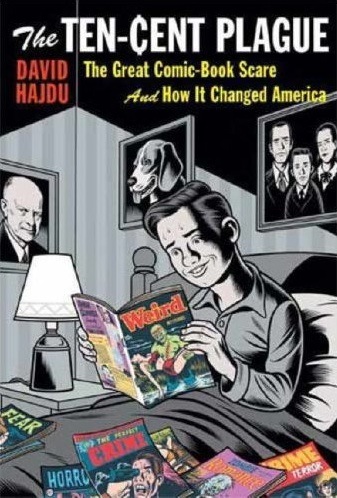
David Hajdu’s The Ten-Cent Plague serves as a fascinating cultural history of Cold War-era America. Hajdu’s book, subtitled “The Great Comic-Book Scare and How It Changed America,” illustrates the strange paradoxes at work in the post-WWII zeitgeist. Under the veneer of the conformity and suburban affluence of the Eisenhower years, a counter-cultural movement was finding its voice in the unlikely medium of comic books. Hajdu traces the history of the comic from its beginnings at the turn of the twentieth century through the end of the 1950s. Working in part from Gilbert Seldes‘s thesis that comics exemplified a type of “critical democratization” of art (along with “the movies, ragtime, vaudeville [and] popular song”) that “challenged aesthetic elitism,” Hajdu explains how such a maligned medium became a conduit for social change.

Although Hajdu covers the early strips like “Katzenjammer Kids” and “The Yellow Kid,” tracks the rise of Walt Disney and the pulp beginnings of Will Eisner, and explores the rise of seminal superheroes like Superman, the majority of the book is devoted to the national panic that arose from the massive popularity of crime and horror comics in the 1950s. Many of these comics were published by Bill Gaines’s EC comics. Bill Gaines became a crusader against the false morality of the Comics Code Authority (ironic side note: Gaines actually created the CCA as an attempt to bypass censorial influence, a maneuver that backfired) and its champions like Frederic Wertham whose pseudopsychological tome Seduction of the Innocent led to Congressional hearings on comic books, of all things. Hajdu explores not only the underlying civil rights battle on this censorship front, but also the themes of civil rights to which these comics were ultimately sensitive. Hajdu makes a persuasive case for comics as the foment of the anti-establishment youth culture of the 1960s–a beginning many cultural historians choose to identify exclusively with rock and roll and television. The epilogue of the book neatly dovetails this theme, moving from the establishment of Stan Lee’s Marvel Comics, a group that would feature outsiders and misfits of every stripe and color, to the bizarre and outlandish comix of Robert Crumb, who attests that “Mad was probably the biggest influence of all” on both himself and most of the other underground comix artists. So even though Gaines–the erstwhile hero of Hajdu’s narrative–has to give up EC–his legacy influenced not only the mainstream heroism of Marvel, but also forever affected the underground current of the counter-culture.

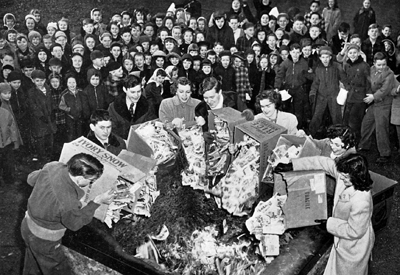
Comics on fire at St. Patrick's Academy in Binghamton, New York, 1949

Hajdu’s writing is both erudite and populist, well-researched with a thorough bibliography and index but also highly narrativized, the sort of nonfiction that reads at a tidy clip. In short, the book works on two levels, both as a scholarly undertaking, ready for handsome quoting in any MA’s term paper for Graphic Narratives, but also as simply a good beach read for those fascinated–or astounded–by the paranoia of America’s McCarthyian past. If you’ve read Michael Chabon’s The Amazing Adventures of Kavalier & Clay, you may know a bit of this history, and The Ten-Cent Plague would be an entertaining way to learn more. Most die-hard comics fans will know the background here, but will surely want Hajdu’s book to get the full story. An entertaining, often funny, and even sometimes enraging narrative. Recommended.

The Ten-Cent Plague is now available in paperback from Picador Books.

The Sunset Limited — Cormac McCarthy

thesunsetlimited

Cormac McCarthy’s The Sunset Limited is a lean, spare dialectic between two characters named simply “Black” and “White.” Black, a recovering addict who found Jesus in prison, saves White, an aging professor, who attempts to kill himself by jumping in front of a commuter train, the Sunset Limited. Black keeps White in his apartment, probing the older man’s justification for suicide. White makes it very clear that he intends to finish the job the moment he can leave Black’s apartment, leading Black to stall the professor through argument and storytelling. As such, Black sustains most of the book’s driving questions about morality, redemption, and love for one’s fellows, until near the end, when White unleashes a tirade of nihilism. As the story charges to its climactic conclusion, it becomes clear that it is not just White’s soul at stake, but also Black’s own spirituality.

The cover of The Sunset Limited attests that the book is “A Novel in Dramatic Form,” a conceit that may divide many of McCarthy’s admirers. The language here is precise and visceral, loaded with meaningful ideas yet also utterly concrete. McCarthy’s grasp of colloquial diction shines through these two voices, carrying the story forward in a hurtling momentum with minimal stage directions. Still, some readers may feel cheated out of McCarthy’s rich prose in this bare story (they need only to pick up Blood Meridian or The Road or All the Pretty Horses, of course). I found the story engaging, poignant, dark, and often surprisingly funny, and I read it in one taut sitting. The Sunset Limited is not the starting place for those interested in McCarthy, but fans who’ve yet to read it will probably enjoy it quite a bit. I’m already anticipating a second reading. Highly recommended.

William Faulkner, As I Lay Dying, The Perils of Assigned Reading, and A Call for Second Chances

WKD WILLIAM FAULKNER

Not quite two years ago, I wrote some pretty awful things about William Faulkner on this blog. In a review of his first published novel Sancutary, I argued, quite ineffectually, that, “Faulkner as an American Great is nothing but a scam.” Elsewhere, I proffered this ignorant nugget:

“…it seems that a few critics–notably Malcolm Cowley and Cleanth Brooks–decided either that a. Faulkner is really great and/or b. America needs a new master of literary fiction, and it might as well be Faulkner. It seems amazing to me that these two critics conned a whole generation into believing that someone whose books were so unbelievably poorly written was actually, like, a totally awesome and important writer.”

Ouch. At the time I wrote that rant, I was still in grad school, which is to say I was still being assigned reading by well-intentioned professors. I was also laboring under a cruel miscalculation, the mistaken belief that I had actually read most of Faulkner’s great works–As I Lay Dying, The Sound and the Fury, and Absalom, Absalom!–in my high school and undergraduate courses–where said books were assigned reading. The truth, I realize now, is that while Faulkner’s strange, dense, elliptical prose might have passed under my eyes, I completely failed to read his books when I was a young man. It wasn’t until last spring, when I read one of Faulkner’s last novels, Go Down, Moses, that I came to understand the genius of his writing, which is to say I came to learn to read his voices in a non-academic, non-studied fashion, intuitively and rhythmically. Go Down, Moses is strange and sad and funny and truly an achievement, a book that works as a sort of time machine, an attempt to undo or recover the racial and familial (in Faulkner, these are the same) divides of the past.

So. Skip ahead a year.

After reading Bolaño’s stunning 2666, I strategically read Cormac McCarthy’s Child of God, knowing that I’d need a voice at least equal to Bolaño’s in order to not get totally bummed out and sort of paralyzed with that “What do I read next?” feeling. The strategy worked, but of course I needed a follow up book. So I picked up As I Lay Dying, the story of a poor rural family who labor to return their dead matriarch to her family’s home town for burial. I’d “read” the book in high school; I remembered the plot, but I could not in any way comment on it. This time, with the freedom to choose to read it–and perhaps, older, better equipped–I truly entered the book, entered into each of the character’s heads, their eyes, their voices. I “got” it.

as-i-lay-dying

I read As I Lay Dying in essentially three or four long sittings, sustained by Faulkner’s incomparable, engrossing language. I realize now that as a high school student, and then again as an undergrad, I resisted the book, attempted to impose my own consciousness into the narrative in order to “understand” the plot, rather than letting the book happen to me–which I believe is how one must read Faulkner. I was amazed how quickly I read the book once I attuned myself to Faulkner’s rhythm, and I was equally amazed at how conflicted and confused I felt about the story. I can’t recall a novel whose characters I’ve ever felt so hateful and sympathetic toward at the same time. Great, great book.

Anyway. The point of this post is to say, “Hey, I was wrong, mistaken, terribly wrong about Faulkner when I said he wasn’t a Great American Writer.” I suppose I’m also implicitly arguing that the necessary evil of assigned reading can sometimes be less necessary and more evil: How many kids are we turning away from the really great stuff forever by forcing it upon them when they are too young, too unequipped to appreciate it? The other side of this logic, of course, is to point out that often assigned reading can turn us on to great writers forever; this was the case for me, with most of what I read in high school. Still, as an English teacher I do worry that in assigning and then dissecting literature–under the pretense of explaining it and appreciating it and learning from it–we always run the risk of killing it, draining it of the very vitality that was the rationale for reading it in the first place. Of course, there’s a simple, simple antidote to reconciling yourself to all those books you hated in high school, those books you were supposed to love and be moved by and learn important and meaningful lessons from–you can read them again for the first time. The worst that could happen is a confirmation of your own prejudice; far more likely, in assigning your own reading, you’ll find something truly great and meaningful.

Sum — David Eagleman

sum

In his new book Sum, neuroscientist David Eagleman proposes forty visions of what an afterlife might be. Each of the tales is a short thought-experiment written in the second-person, a rhetorical device that literally engages the reader — the “you” — in the text. Eagleman’s background as a scientist is evident in many of these short tales. In “Giantess,” for example, he asks us to ponder the whole of the universe as a woman with whom we cannot communicate because of our infinitesimal scale in relation to her. In “Conservation,” Eagleman imagines all of time and space and what we know of it as the traces of a single little quark. Elsewhere, technology informs Eagleman’s depictions of the afterlife, as in “Impulse,” where the minutest of human interactions are compared to a massive computer program; in “Great Expectations” a company offers customers the experience of uploading their digitized souls to their own pre-programmed heavens–the customers are devastated when the upload fails and all that they get is regular old heaven. A bummed-out God wrings his hands, saying, “Your fantasies have cursed your realities…The Company offered you no evidence that it would work; why did you believe them?” Still, in this tale, God goes “to bed at night” knowing that “one of His best gifts — the ability to have faith in an unseen hereafter — has backfired.”

Many of Eagleman’s little stories evoke these moods of sad dissatisfaction and disappointment, repeatedly asking the reader to question their own values. And, as the god of “Great Expectations” shows, it’s not just the everyday folk who get their expectations crushed, but often the deities themselves. Take the god of “Mary,” for example. His favorite book is Frankenstein–he loves the end, where Victor Frankenstein flees his own creation. This is a god who can’t help his creation and chooses to run away from it. Particularly sad is “Descent of Species,” wherein the dead get to choose whatever they like to be. The “you” in this tale unfortunately chooses a horse, believing you’ll enjoy freedom–however, as “you” morph into a horse, so does your consciousness, and you realize that “you cannot revel in the simplicity unless you remember the alternatives.”

Not all of the stories in Sum are bummers (and even the downers are thought-provoking)–many play out like jokes or riddles. In the afterlife of “Quantum,” “everything exists in all possible states at once, even states that are mutually exclusive.” When simultaneously “bowling and not bowling” becomes too much for “you,” an angel helps you out by letting you spend some time “in a closed room, one-on-one with your lover.” You find yourself “simultaneously engaged in her conversation and thinking about something else; she both gives herself to you and does not giver herself to you; you find her objectionable and you deeply love her; she worships you and wonders what she might have missed with someone else.” Finally, you thank the angel, saying, “This I’m used to.”

As “Quantum” shows, most of the tales in Sum are ultimately not so much about a metaphysical afterlife as they are about what we value in this world–what are our expectations, desires, hopes, and dreams–and why do we expect, desire, hope, and dream these things? Eagleman is an astute observer of the human condition with a keen insight into our strange animal psychologies. I found his tales about identity to be the most affecting of the lot, like in “Mirrors,” where Eagleman points out that we are “much better at seeing the truth about others than” we are at “seeing ourselves,” and we therefore rely on others to hold up “mirrors” of our selves in order to know our selves. In “Prism,” Eagleman imagines an afterlife where you exist at every age in your life, only to find out that “you” at seventeen really is not “you” at seventy–your “compound identity” was hardly as unified as you’d imagined; rather, it “was like a bundle of sticks from different trees.” If these lines evoke a whiff of the postmodern philosopher, don’t be surprised. While Pantheon lists the book as “Fiction” it seems it would be just as at home in the Philosophy section.

I enjoyed Sum very much, blowing through its 110 pages in just two sittings, and then re-reading several of the tales again–they’re meant to be re-read, I believe. The cover boasts a glowing bit of praise from Philp Pullman, author of the “His Dark Materials” trilogy (a Biblioklept favorite). Fans of Pullman’s trilogy will find many of the same ideas played with in Sum, only handled in quite a different (but no less inventive) manner. This is the kind of science fiction we love. Highly recommended.

Sum is available 2.10.09 from Pantheon Books.

Coraline

coraline-poster

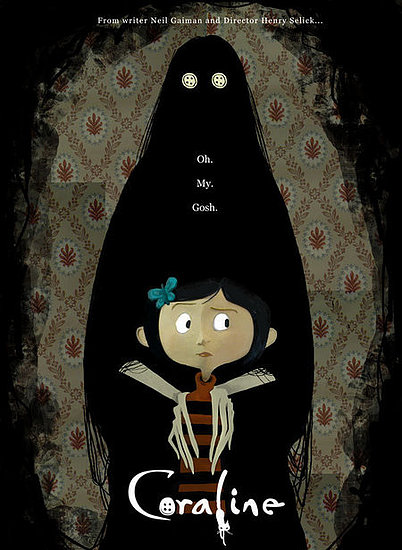
Even if Coraline didn’t have an engaging plot, well-developed characters an audience can really care about, and an especially singular sense of setting, rhythm, and movement, it would still be worth seeing in the theater for its astounding 3D visuals. Director Henry Selick (The Nightmare Before Christmas), working from Neil Gaiman‘s short novel of the same name, has created an endearing, imaginative, and often disturbing fairytale in meticulous stop-motion animation, dramatically enhanced in 3D. Selick doesn’t rest simply on the film’s amazing optical effects; rather, Coraline‘s plot and characterization are seamlessly, often dreamily (or nightmarishly) crafted through those marvelous visuals. Even when a scene veers into outright spectacle, it is always purposeful, cohesive, and forwards the logic of the plot, the story of young Coraline and her strange adventures in an alternate universe.

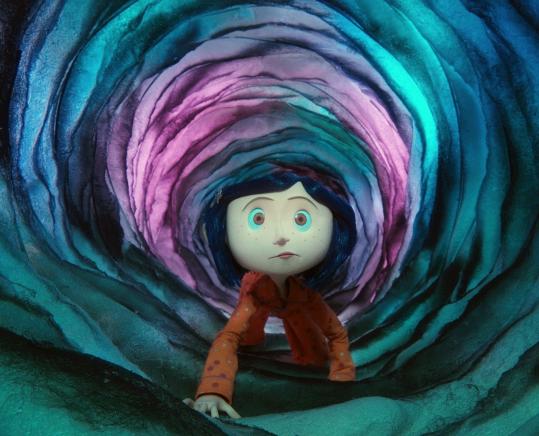
Bored and largely ignored by her parents who have just moved her to a country boarding house, Coraline discovers a tunnel to a world that doubles her own, replete with an “other mother” who cooks all sorts of delicious foods and loves to play games, and an “other father” who dotes on his little girl. This alternate universe also contains more glamorous versions of the boarding house’s other tenants, a circus performer who works with musical mice, and two aging actresses with a predilection for salt water taffy. The alternate world becomes a site of spectacle and wonder for Coraline, as well as the setting for some pretty mind-bending 3D set-pieces for the audience–however, like all fairy tales, Coraline always toes the line between fantasy and nightmare, joy and shocking horror. Savvy audience members will pick up on a sinister thread underlying the early scenes with Coraline’s “other mother,” a creepiness artfully balanced with the notion that this woman represents Coraline’s wish-fulfillment to be loved, adored, and entertained at all times. The reality of this fantasy world soon becomes painfully apparent to Coraline, who must go on a hero’s quest–in her own home–to save her “real” parents.

coraline

Coraline thrills at all the right moments, and at times is downright scary (although the seven year old behind me seemed unafraid; he just kept saying “Awesome!” every five minutes). The plot is rich with allusions to Alice and Wonderland and the Brothers Grimm fairy tales, and, in keeping with these sources, Coraline often exposes its dark side with little or no buffer. From frightening birthing tropes to threats of infanticidal cannibalism, Coraline always purchases its spectacular fantasy with reminders of grim, almost cruel reality. One scene in particular lays this cost literally bare; the aging actresses perform a high-wire trapeze act half-naked, their clumsy, inept bodies overexposed to every kind of peril–including the potential mockery of the audience. In an act of fantastic wish-fulfillment, the old women strip their fat, wrinkled bodies away like the husks of fruit; they emerge young women, their impossible rejuvenation the climax of a fantasy involving an intricate clash of sexuality and death. And yet Coraline repeatedly makes clear the costs of these fantasies, working its way toward a satisfying conclusion that doesn’t attempt to gloss over the erosion, corrosion, and mundane deathliness of life, but rather reconciles how a person might live happily in the “real world.” Very highly recommended.

The Book Lover – Ali Smith

the-book-lover1

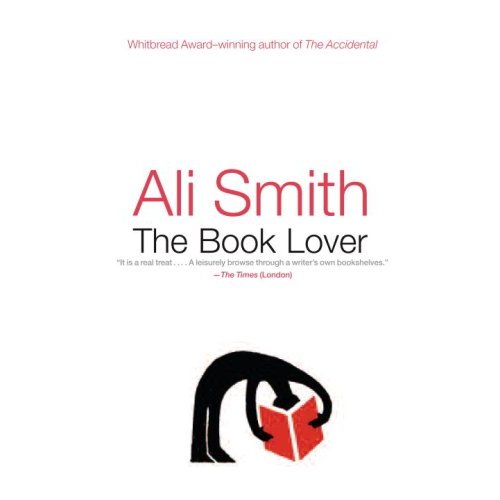
Let’s start with a confession–I haven’t finished reading all of Ali Smith’s anthology The Book Lover yet. Like most collections I own, there’s a fair chance that I won’t read every story, essay, or poem collected here, but chalk that up to the nature of anthologies. With any compilation, there are always going to be those great, transcendental moments where you’re suddenly hipped to a new voice, a new sound, a new vision, or re-introduced to an old friend you hadn’t thought about in quite some time. There will also be those texts that fail to grab you at the first sentence (or, rather, you fail to put the work in), and those texts that are simply a bit too long for the gap you’re presently trying to fill. So far, The Book Lover has been mostly filled with bits of shining revelation, startling wit, and plain old great writing, and I’m not going to spoil the meal by forcing it all down at once.

In collecting some of her favorite voices, Scottish author Ali Smith displays a keen understanding that the literary omnibus is peculiarly open to discontinuous and scattered readings. She prefaces The Book Lover with a quote from Virginia Woolf: “Any method is right, every method is right, that expresses what we wish to express, if we are writers; that brings us closer to the novelist’s intentions if we are readers.” Woolf’s words invite us to read the collection in any manner we wish, and I followed suit, picking it up in spare moments, usually at work, where I rarely get the time to concentrate on anything like a novel for a sustained amount of time. Still, Smith has put a great deal of thought into the arrangement of her sources, grouping them into six sections, GIRLS, DIALOGUES, JOURNEYS, THE WORLD, HISTORIES, and BELIEFS. The pieces in the section sometimes speak to each other directly (Hilda Doolittle’s “The Cinema and the Classics: Beauty” followed by Colette on “Mae West” followed by Lee Miller on “Colette”), but more often than not the pieces respond to each other in an oblique, layering fashion. It’s left to the reader to link William Blake’s “Infant Joy” to a section from Anne Frank’s diary, or connect the dots between Tom Leonard’s hilarious poem “baa baa black sheep” and the strange journalism of Lorna Sage’s “Our Lady of the Accident.” These connections were most interesting to me when re-encountering a text I was utterly familiar with, like the “pear tree” passage from Zora Neale Hurston’s Their Eyes Were Watching God, re-contextualized with something I’d never read, like the selection from Billie Holiday’s autobiography, Lady Sings the Blues (note to self: go get Lady Sings the Blues).

Ultimately, The Book Lover is successful in that it doesn’t attempt to be a “greatest hits” collection; instead, we’re treated to a wide selection of diverse and often dazzling writers. Smith’s project will not only introduce you to writers you haven’t yet read, it will make you want to read their works as well. I will, however, admit to being a little bit jealous: I think I’d love to put my own anthology together. After all, I’m a book lover too. In this sense, The Book Lover inspires its readers to think about the value of their own libraries, the way that the authors that they love speak to each other across time and space. Recommended.

The Book Lover is now available in the US from Anchor Books.

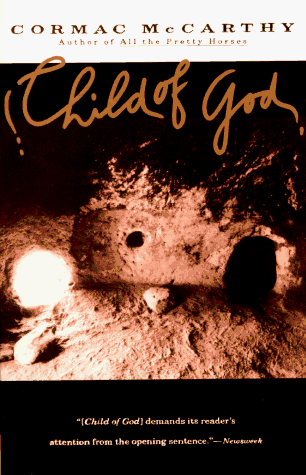
Child of God — Cormac McCarthy

child-of-god

In Greek drama, acts of violence or sex were “ob skena” and had to take place off stage. Thus, the horrific violence of Oedipus gouging out his eyes is not shown, but rather reported by a messenger. We see the same tradition in Shakespeare, of course, as well as the modern novel. And while many writers elide scenes too taboo or offensive to the sensibilities of the general reading public, books like Ulysses, Lolita, and Tropic of Capricorn, demonstrate that novels are often the site of debate over what can and cannot be shown or described or articulated plainly in our culture. Our concept of “the obscene” (the Greek “ob skena” simply translates to “off stage”) demands that certain actions might only be referred to or implied, but not graphically depicted, that the offensive action takes place out of our vision. The great lie or paradox of the obscene then is that in pushing the offensive action off stage, the author necessitates that the audience must envision that very action that was removed, that they must articulate their own understanding or schema or representation of what is taboo. While this strategy can often be quite effective and affecting (think of Tarantino pulling the camera away as Mr. Blonde cuts off the cop’s ear in Reservoir Dogs), in a character-centered novel it can also lead to a larger denial, a larger exclusion. What if one’s whole life was obscene? In his third novel, Child of God, Cormac McCarthy tells the story of a man who has been pushed from life’s stage, who exists in the uncanny and indigent margins of society.

The ersatz protagonist of Child of God, Lester Ballard, is a poor, stooped, abject wretch of a man. The book opens with Ballard losing his house in a humiliating debacle. From there, he wanders the earth, finding an abandoned shack and barely eking out the means to leave. Ballard is an outsider, literally, always looking in at the lives of more normal, more stable people. His voyeurism leads him to creep up to parked cars to spy on the lovers inside. Wanting some connection or sense of love–or perhaps just out of general dejected weirdness–he masturbates against the cars, watching the people inside. His identity as voyeur is magnified in his only apparent skill. Ballard is an ace sharpshooter who carries his rifle almost everywhere he goes, surreptitiously spying on the normal folks through its lethal scope.

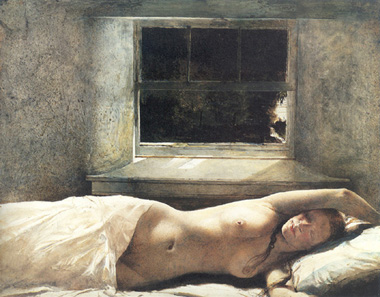
wyeth2

As the book develops in McCarthy’s spare, terse prose, Ballard becomes more and more unhinged. Everywhere he goes he is slighted or outright rejected and cheated by his fellow man. The indignities and affronts against Ballard range from being falsely accused of rape to simply being ignored by his neighbors. At the same time, Ballard is a creep, a loser, and seems largely deserving of this treatment. And yet, as McCarthy points out early in the novel, he is a “child of God, much like yourself perhaps.” This early call to identify with Ballard as a fellow human being is constantly strained by his wildly antisocial behavior, and yet it’s McCarthy’s genius as a writer that anchors the novel in some measure of sympathy for such a wretched anti-hero. When a young girl rejects Ballard’s advances, she taunts him, saying, “You ain’t even a man. You’re just a crazy thing.” In many ways, this is the major question of the novel: Is Ballard a man, or a thing? What makes a person a person, and not simply an object estranged from the human race? To test this question, McCarthy has Ballard plumb almost every conceivable taboo, from murder to arson to necrophilia. However, Ballard isn’t the only one in these Tennessee backwoods who behaves despicably: there’s the father who rapes his daughter, the gangster behavior of the Ku Klux Klan, and the mob justice of the townspeople as a whole. Still, Ballard’s descent into violence and madness–graphically portrayed by McCarthy–is the central action in this compelling novel.

Readers looking for redemptive story arcs or tales of heroism will likely be turned off by Child of God, and squeamish readers will probably not get past the first fifty pages. Those interested in McCarthy’s fiction will find more in common here with the visceral grit of The Road or Blood Meridian than the reflective romanticism of his “Border Trilogy” novels (including crowd pleaser All the Pretty Horses). Child of God is in many ways a response to the Gothicisms of Carson McCullers and William Faulkner, and certainly bears favorable comparison to those writers’ works. And like those writers’ works, McCarthy’s novel has its challengers–just as recently as 2007 an English teacher found himself in quite a bit of trouble for loaning the book to a student. Those who see the book as obscene are perhaps right, in the sense that the word implies “that which must be shown off stage.” However, one of the legal definitions of obscenity necessitates that the work “lacks serious literary, artistic, political or scientific value,” a claim that I do not think can be seriously substantiated against Child of God. Don’t believe me? Read it for yourself.

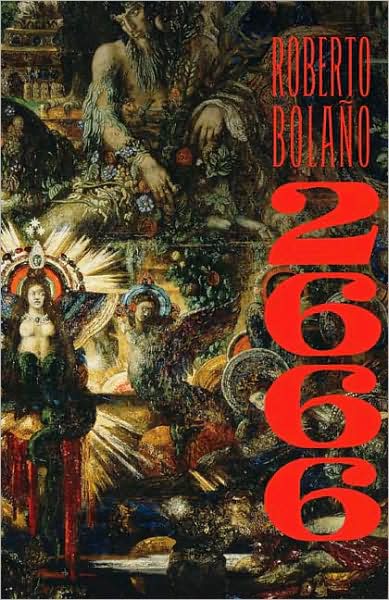
2666 – Roberto Bolaño

2666

Where to start, where to start…

Do I say that the book is good, great, fantastic, a literary achievement? These words don’t seem big enough, or they seem like hackneyed clichés, ugly inadequacies. Here’s a very short review: go get the book and read it. Worried that 900 pages is too long? Don’t worry. They fly by. I read the book in less than a month, usually in forty or fifty page sittings, something I usually don’t make time to do. But hang on, I’m already off to a bad start I admit, there’s no context here, is there? Let me try again.

2666 is Chilean exile Roberto Bolaño’s posthumous magnum opus. The book comprises five sections, each focusing on a separate but often overlapping set of characters and locations. The book is, in my paperback edition (composed of three separate books) 893 pages long. The book is excellent, addictive, full of pain and pathos and humanity. Most of the sentences are very, very long. What is it about, then? There are too many answers to that question, but here goes–

There are two major, intertwined plot threads in 2666, one about a series of gruesome rapes and murders in the fictional city of Santa Teresa, Mexico, and the other concerning an obscure German writer with the improbable name Benno Von Archimboldi. These two threads weave through the labyrinth that is 2666, connecting the many themes and tropes and moods and tones of this massive novel. Bolaño’s styles shift and weave and morph throughout the book, evoking laughter and rage and pity and anticipation and overwhelming sadness. He’s very often philosophical but never abstract, lyrical but grounded, and always entertaining. Bolaño’s command of thousands of different voices is on display here, whether he’s telling the tale of an ex-Black Panther or an exiled Russian sci-fi writer, a Romanian general or a crippled Italian critic. Bolaño’s voices layer upon each other in a strange chorus; often I found myself shocked at how, 300 pages later, a different character in a different place and time will hit on the same note–a comment about semblances and reality, or graveyards, or fate and chance and choice, or mirrors, or dreams and nightmares, or giants, or insane asylums, or aliases and pseudonyms–only this new character will express this note in a new or different tone, adding to the richness and dazzling complexity of the tale. Bolaño’s voices are often framed in a series of tales like Russian nesting dolls, only, where a writer like John Barth might explicitly announce or call attention to this device, Bolaño’s storytelling has a humanistic, natural quality, a quality that provokes and calls attention to the limits of human memory and our collective capabilities to narrativize our lives. But hang on again, I’ve gotten away from plot summary, haven’t I? Do you really need a summary? Yes? Will, “It’s about everything. Life, death, all that shit,” will that not do? Okay. Another attempt, then.
goya-colossus

The first section of 2666, “The Part About The Critics,” tells the story of four critics from four European countries who specialize in Archimboldi; in fact, two of the critics pretty much invent Archimboldi studies. Through their critical endeavors, the obscure, unphotographed writer rises to greater prominence. The four set out to find him, initiating the novel’s detective lit thread. They wind up in Santa Teresa, a city experiencing a seemingly endless slew of murders. In Santa Teresa, they meet a Chilean professor named Amalfitano, who (obviously) features heavily in the next section, “The Part About Amalfitano.” At this point, we start discover more about the unsolved rapes and murders of young women in Santa Teresa, but these crimes linger in the background, the story of Amalfitano, his ex-wife, his daughter, and a geometry book hanging from a clothes line at the fore. Amalfitano’s teenage daughter returns in the third section, “The Part About Fate.” This part of the novel details Oscar Fate, an African-American reporter who travels to Santa Teresa to cover a boxing match only a few days after the death of his mother. “The Part About Fate” builds to a rapid, grotesque, nightmarish climax, where the journalist, alien and impartial visitor, silent observer, becomes implicated in the ugly violence and grim desperation of Santa Teresa. This rhetorical move leads the reader into the longest section of 2666, “The Part About The Crimes,” in which we finally learn about the gruesome murders–hundreds and hundreds of murders–of the young women who work in the factories of Santa Teresa. The final section, “The Part About Archimboldi,” works as a partial bildungsroman, revealing the life story of the man who becomes Benno von Archimboldi. But does “The Part About Archimboldi” wrap up all the riddles, seal the deal, lead us out of the labyrinth and into the light–do we get answers? Let’s see–

Readers enthralled by the murder-mystery aspects of the novel, particularly the throbbing detective beat of “The Part About The Crimes,” may find themselves disappointed by the seemingly ambiguous or inconclusive or open-ended ending(s) of 2666. While the final moments of “The Part About Archimboldi” dramatically tie directly into the “Crimes” and “Fate” sections, they hardly provide the types of conclusive, definitive answers that many readers demand. However, I think that the ending is perfect, and that far from providing no answers, the novel is larded with answers, bursting at the seams with answers, too many answers to swallow and digest in one sitting. Like a promising, strangely familiar turn in the labyrinth, the last page of the book invites the reader back to another, previously visited corridor, a hidden passage perhaps, a thread now charged with new importance. Like Ulysses or Moby-Dick or Infinite Jest before it–and yes, yes, I would class this book with those without batting an eye–2666 is a book that demands multiple readings. Fortunately, despite its grim subject, it’s endlessly entertaining, rich with literally hundreds and hundreds of stories, stories that impel and compel you to read, read, read. But, again like Ulysses or Moby-Dick or Infinite Jest before it, 2666 is not for everyone.
arcimb1

I’ll quote from the only negative review at Amazon right now, by one Mr. Nathan King, who writes, “This is not an enjoyable/pleasurable book to read. . . . this book is a GRUESOME and HORRIFICALLY VIOLENT book. The largest section of the book is basically 300+ pages of autopsy reports. You will read the words “vaginally and anally raped” over and over and over, until it runs through your mind day and night.” King’s review is accurate in several ways, although I fundamentally disagree with his overall assessment, of course. The book’s violence will run through your mind day and night: the book is awfully affecting. One of Bolaño’s missions in the book, it seems, is to continually press on the reader a horrific assemblage of dead, raped, mutilated bodies, bodies found in Dumpsters, trash heaps, ditches, alleys; violated, nameless, unclaimed bodies. While “The Part About The Crimes ” clearly contains most of these horrors, disposable bodies litter the entire book, whether they are Jews to be executed by Nazis in WWII or young men murdered in prison while the wardens watch. Bolaño’s method then is to confront his readers with all these unsolved, perhaps unsolvable crimes, and ask how one can witness to the horrors of life without giving in to despair or madness or suicide. Callous or cynical readers, looking for a simple answer to “Whodunnit?” will miss the multiplicity of answers that Bolaño provides, which might be boiled to: We all did it. We are all responsible for these crimes.

At many points throughout the massive tome Bolaño addresses this central problem, but this passage from “The Part About Amalfitano” sums up one possible solution quite beautifully. Amalfitano, slowly going insane, wondering about existence and movement and sleep and reality, thinks–

Anyway, these ideas or feelings or ramblings had their satisfactions. They turned the pain of others into memories of one’s own. They turned pain, which is natural, enduring, and eternally triumphant, into personal memory, which is human, brief, and eternally elusive. They turned a brutal story of injustice and abuse, an incoherent howl with no beginning or end, into a neatly structured story in which suicide was always held out as a possibility. They turned flight into freedom, even if freedom meant no more than the perpetuation of flight. They turned chaos into order, even if it was at the cost of what is commonly known as sanity.

To systematize, to narrativize then, to try to put order and meaning into one’s life, or the lives around you, to witness to others’ pain by claiming it as your own, these moves then betray one’s ability to accurately, or sanely, perceive the world. It’s this great cost that Bolaño navigates in 2666, and he does so with aplomb and precision and grace.

Have I still not convinced you to read 2666? I could keep going and going, on and on, and I won’t be the only one–Bolaño’s book will be one for posterity, a great work that literary critics (much like the ones he sympathetically parodies and valorizes here) will debate over, ponder over, discuss, write about, love, and be tortured by for ages to come. At the same time, this is not a book that one should feel is only for the “literary élite” (whatever that means)–with its force and vitality and inventiveness, with its rich, detailed dream/nightmare world, 2666 is a book that you, dear reader, should read, must read. Very highly recommended.

Toward A New Zeitgeist

Nothing in all the world is more dangerous than sincere ignorance and conscientious stupidity” — Martin Luther King, Jr.

For the past eight years, inspired by their own dangerous, sincere ignorance and conscientious stupidity, the Bush Gang has perpetuated myriad crimes against humanity and the planet. They didn’t do it alone, of course–the United States is, after all, a Democratic Republic, and its populace–us, we, I mean–stood by like inert zombies after the 9/11 attacks and let Bush and his cronies get away with an illegal war, openly spying on American citizens, detaining prisoners without charging them or giving them legal recourse, and even torturing prisoners. Walt Whitman said that there “is no week nor day nor hour when tyranny may not enter upon this country, if the people lose their roughness and spirit of defiance,” and surely many of us, most of us, were soft and complicit when we should have been rougher and more defiant. Not that many didn’t protest and fight, but the zeitgeist in America this decade was one of hushed zealotry, where the old American values of dissent, protest, and even curiosity were eschewed as the terrain of those awful liberal elitists who might actually, you know, ask questions.

The oughties, or the 2000s, or the noughties, or whatever we’ll call them, really began November 8, 2000, the day after one of the most contested elections in American history. A bad start, really, and many of us will always believe that the neocons stole the election. A year later, after the 9/11 attacks, it became evident that this would be a decade of fear and violence and repression and silence. By the time the neocons were ramping up their illegal war against Iraq–a war that they’d had planned for years before 9/11–many of us felt worn down to cynical little nubs, still in groggy disbelief at what was happening. A 2004 story in The Onion, “Nations Liberals Suffering From Outrage Fatigue,” perfectly captured how I felt, and also signaled that it would be satire and distance and cynicism that would communicate the extraordinarily dangerous ignorance and stupidity of this decade. Getting news of the Bush Gang’s malfeasance from satirical sources like SNL‘s “Weekend Update” or The Daily Show with John Stewart made the cruel realities of this decade somehow more palatable, but at the same time these sources underlined the disengagement that many of us allowed ourselves to fall into, the deep ironic defense reaction against a spirit of the age with which we felt unable to communicate. In short, many of us dropped out; our “Outrage Fatigue” could only last so long. Inertia and cynicism spiked with brief episodes of outrage slowly evolved (or, rather, devolved) into what I would call “The Bush Show,” a long, long cycle of events, each new episode topping the last in terms of its deviousness, ignorance, and stupidity. Am I just railing now, perhaps, recapping what you already know? Sorry.

Here’s my point: Right after the election, I stated in a post I wrote from my gut that the election of Obama shattered my cynical shell, that I felt open and happy and even positive about politics for the first time since I was a kid. I have not and never will lose my skepticism, but, as I pointed out in that post and repeat here, by simply choosing someone so different–and I refer here not to Obama’s dark skin but rather to his knowledge and intellect and openness (in contrast to Bush’s “sincere ignorance and conscientious stupidity”)–by choosing someone like Obama, we have signaled a shift in the spirit of the age. And here is what I propose: Let’s end the decade today, or at 11:59 a.m. tomorrow. Let’s agree that the awful oughties are over, and that a new decade has begun. We don’t have to change any physical documents–calendars, etc.–we just have to all know that a new zeitgeist has been initiated. The New Dark Age of the Bush Years has passed, but we can learn from it as negative example, as an abysmal signal of what not to do ever again.

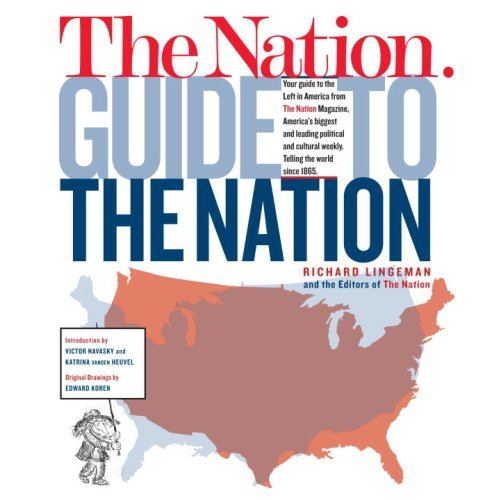
The Nation Guide to the Nation–Richard Lingeman

the-nation-guide

Part travel guide, part almanac, The Nation Guide to the Nation aims to be the go-to resource for progressive liberals around the U.S. The editors of America’s oldest liberal organ, The Nation, have compiled their Guide to help you answer burning questions: Need to find a “100 percent vegetarian restaurant” in Bloomington, Indiana? Interested in checking out “The world’s only unionized, worker-owned peep show co-op” ? Want to “wear a hemp dress at your wedding”? ( “It’s a cool thing to do,” the text assures us). Look no further. Organized into six sections — Cultural, Social, Environmental, Organizations, Media, and Goods and Services — The Nation Guide to the Nation covers everything from fair trade coffee to anarchist film festivals to organic soul food. Interspersed throughout the book are sections labeled the “Left Heritage Trail,” a shot at attempting to institute a sort of “must-see” registry of sites in the history of the progressive left. The “Left Heritage Trail” sections also serve as a (very brief) history of labor, environmental, and Civil Rights movements in the United States. The editors attempt to further expand the scope of the book by adding sections like “25 Greatest Political Films” (a fairly successful list), “A Left Mystery Tour” (do we really need our mystery novels to have a liberal bent?), and “Anthems of the Left” (Ugh. Their (hopelessly out-of-touch) top ten list includes frat boy favorite “Get Up, Stand Up” by Bob Marley and U2’s “Pride (In the Name of Love)”).

The book’s entries are short and informative, providing addresses, numbers, and websites, and in this sense, it’s really quite successful. However, its overall tone veers into a sort-of “How to Be a Liberal for Dummies” territory. It seems that most progressive thinkers already have the resources or networks to discover this stuff on their own, if they don’t already know about it. For example, do we really need help finding progressive radio stations in Berkeley or San Francisco, and is it especially revelatory to note that New York City has some great bookstores? Still, I will concede that there is probably a young kid in Iowa who would be quite turned on to see what else is out there (no offense to Iowa; apparently the Cedar Falls Farmers’ Market is a great place “to chat, hug, cuddle babies” and just generally have a great Saturday). It is really the uninitiated (or, I suppose, the poseur) who will benefit the most from this guide. Hopefully, as our new President takes office, Americans will begin to see that “liberal” is not a dirty word, and that progressive ideas and radical movements have driven most of the positive social changes in this country, from ending slavery to instituting a 40 hour work week to extending suffrage to women. Those uninitiated in–or resistant to–these historical realities would be well-served by checking out The Nation Guide to the Nation.