“Karintha” — Jean Toomer

“Karintha”

by

Jean Toomer

from Cane


Her skin is like dusk on the eastern horizon,

O can’t you see it,

O can’t you see it,

Her skin is like dusk on the eastern horizon

. . . When the sun goes down.

Men had always wanted her, this Karintha, even as a child, Karintha carrying beauty, perfect as dusk when the sun goes down. Old men rode her hobby-horse upon their knees. Young men danced with her at frolics when they should have been dancing with their grown-up girls. God grant us youth, secretly prayed the old men. The younger fellows counted the time to pass before she would be old enough to mate with them. This interest of the male, that wishes to ripen a growing thing too soon, could mean no good to her.

Karintha, at twelve, was a wild flash that told the other folks just what it was to live. At sunset, when there was no wind, and the pinesmoke from over by the saw-mill hugged the earth, and you couldn’t see more than a few feet in front, her sudden darting past you was a bit of vivid color, like a black bird that flashes in the light. With the other children one could hear, some distance away, their feet flopping in the two inch dust. Karintha’s running was a whir. It had the sound of the red dust that sometimes makes a spiral in the road. At dusk, during the hush just after the mill had closed down, and before any of the women had started their supper-getting-ready songs, her voice, Wgh-pitched, shrill, would put one’s ears to itching. But no one ever thought to make her stop because of it. She stoned the cows, and beat her dog, and fought the other children . . . Even the preacher, who caught her at mischief, told himself that she was as innocently lovely as a November cotton-flower. Already, rumors were out about her. Homes in Georgia are most often built on the two-room plan. In one, you cook and eat, in the other is where you sit and sleep, and where love goes on. Karintha had seen or heard, perhaps she had felt her parents loving. One could but imitate one’s parents, for to follow them was the way of God. She played home’ with a small boy who was not afraid to do her bidding. That started the whole thing. Old men could 110 longer ride her hobby-horse upon their knees. But young men counted faster.

Her skin is like dusk,

O can’t you see it,

Her skin is like dusk

When the sun goes down.

Karintha is a woman. She who carries beauty, perfect as dusk when the sun goes down. She has been married many times. Old men remind her that a few years back they rode her hobby-horse upon their knees. Karintha smiles, and indulges them when she is in the mood for it. She has contempt for them. Karintha is a woman. Young men run stills to make her money. Young men gamble to make her money. Young men go to the large cities and run on the road. Young men go away to college. They all want to bring her money. These are the young men who thought that all they had to do was to count time. But Karintha is a woman, and she has had a child. A child fell out of her womb onto a bed of pine-needles in the forest. Pine-needles are smooth and sweet. They are elastic to the feet of rabbits . . . A saw-mill was nearby. Its pyramidal saw-dust pile smouldered. It is a year before one completely burns. Meanwhile, the smoke curls up and hangs in odd wraiths about the forest, curls up, and spreads itself out over the valley. . .  Weeks after Karintha returned home, the smoke was so heavy you tasted it in water. Someone made a song:

Smoke is on the hills. Rise up.

Smoke is on the hills, O rise

And take my soul away to Jesus

Karintha is a woman. Men do not know that the soul of her was a growing thing ripened too soon. They will bring their money; they will die not having found it out . . . Karintha at twenty, carrying beauty, perfect as dusk when the sun goes down. Karintha . . .

Her skin is like dusk on the eastern horizon,

O can’t you see it, O can’t you see it,

Her skin is like dusk on the eastern horizon

. . . When the sun goes down.

Goes down . . .

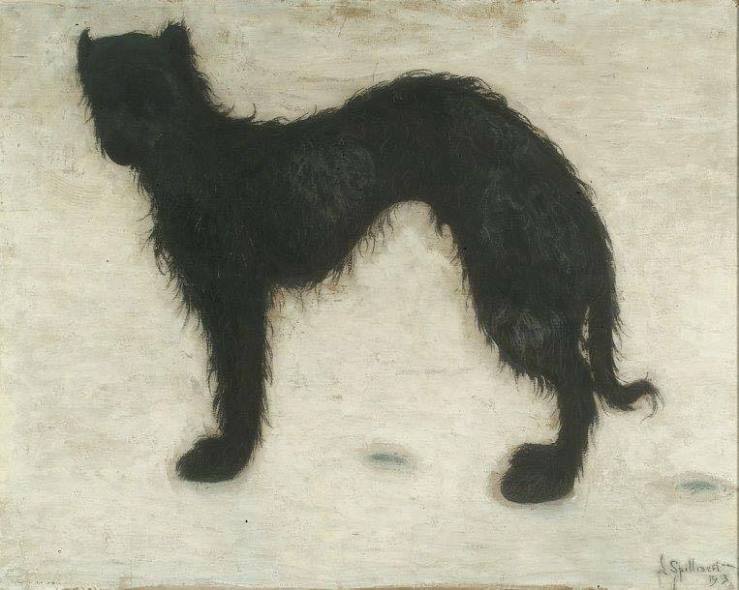
Dog in the Snow — Leon Spilliaert

tumblr_p2eukw6ad81sji0i4o1_1280

Dog in the Snow, by Leon Spilliaert (1881-1946)

The Cost of Careless Looking — Theodoor Galle

cost

Screenshot 2018-02-05 at 8.31.44 PM

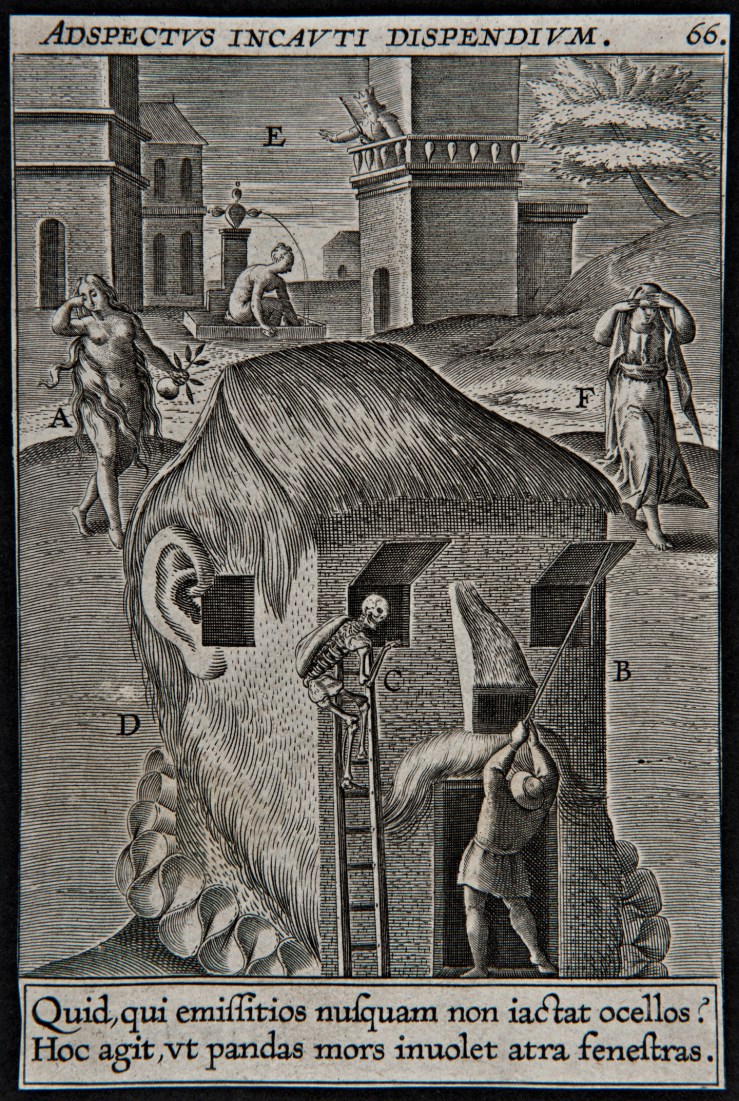
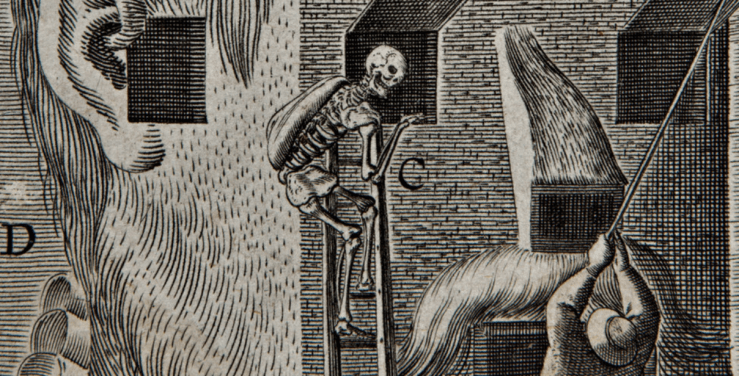
Engraving from Verdicus Christianus (A True Christian), for the chapter Adspectus Incauti Dispendium (The Cost of Careless Looking), 1601, by Theodoor Galle (1671-1733)

Two Girls — Felice Casorati

070-casorati-le2bdue2bbambine2bbd

Screenshot 2018-02-05 at 12.55.40 PM

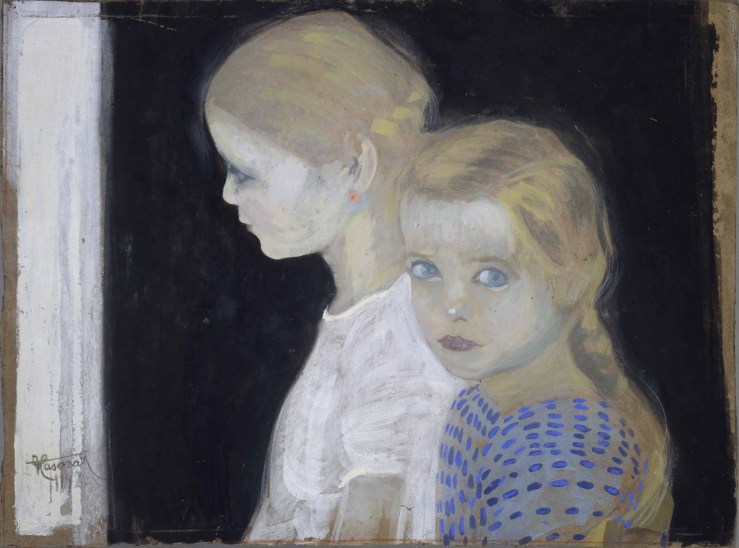
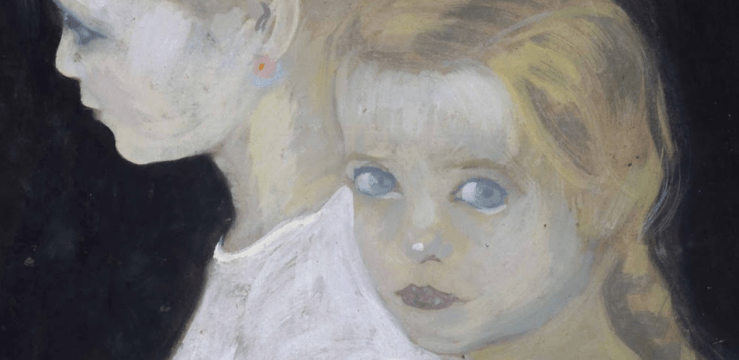
Two Girls, 1912 by Felice Casorati (1883–1963)

Then falter not O book

img_9015

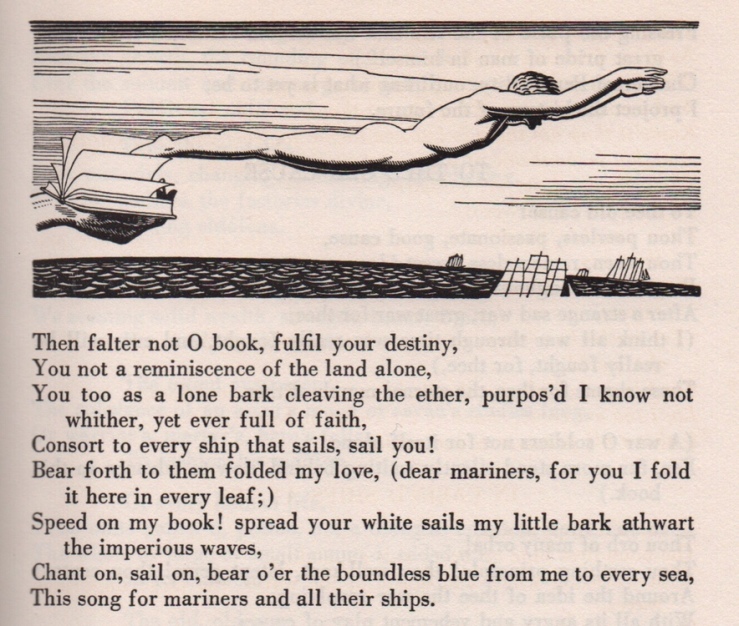
From the Heritage Press edition of Walt Whitman’s Leaves of Grass, illustrated by Rockwell Kent, 1936.

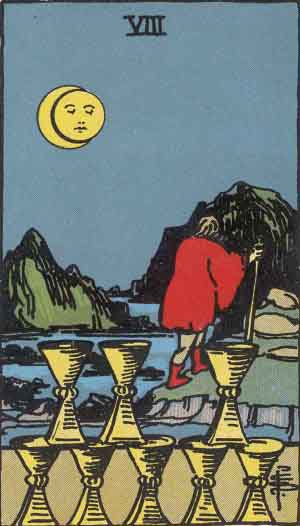
The Significance of the Number 8 in Blood Meridian

cu08

“The Significance of the Number 8 in Blood Meridian is a compelling analysis by William Wickey. Wickey lists numerous examples of the number in McCarthy’s (anti)Western, and touches on the number as a motif connected to gnosticism, tarot, and more.

From the beginning of Wickey’s essay:

The first “major” example of eight occurs in Chapter V when Sproule and the kid stumble across a tree hung with dead babies in a mountain pass after the destruction of Captain White’s war party at the hands of The Comanches.

“The way narrowed through the rocks and by and by they came to a bush that was hung with dead babies. / They stopped side by side reeling in the heat. These small victims, seven, eight of them had holes punched in their under jaws and were hung so by their throats from the broken stobs of mesquite to stare eyeless at the naked sky.” (57)

This grizzly scene sets the tone for subsequent uses of eight in the novel. Every major appearance of eight implies death.

A very similar description follows in the same chapter, describing a group of delirious Mexican soldiers that save Sproule and the kid’s lives by giving them water.

“The refugees stood by the side of the road. The riders looked burnt and haggard coming up out of the sun and they sat their horses as if they had no weight at all. There were seven, eight of them. They wore broadbrimmed hats and leather vests and they carried escopetas across the pommels of the saddles and as they rode past the leader nodded gravely to them from the captain’s horse and touched his hatbrim and they rode on. (63)

Only a few days prior, these eight horses carried the only mounted survivors of the Commanche attack. Their former riders, including the captain, are now dead, presumably at the hands of these Mexican soldiers, having just escaped death at the hands of the Commanches.

Read the whole article.

Walt Whitman’s Leaves of Grass, Illustrated by Rockwell Kent (Book acquired, 3 Feb. 2018)

img_9012

I couldn’t pass up on this illustrated Heritage Press copy of Leaves of Grass. I’m not sure of the exact date of publication, but this nice long post on the book suggests it was likely published in 1950 and designed in the mid-thirties.

img_9011

My daughter and I were browsing the poetry section of our favorite used bookshop—quite randomly actually—and she pulled this volume of Leaves of Grass downward like a lever, pretending it might open a secret passage. It didn’t open a secret passage, but when she pushed it back again, I saw Kent’s name on the spine. I love Kent’s work, and I’m a huge Whitman fan, and my copy of Leaves of Grass is literally falling apart. Plus only $10 and I had plenty of store credit…so…

img_9013

I’ll share some of the illustrations and verses over the next few months—a nice excuse to go through Leaves of Grass again.

img_9019

Head of a Tramp — Laszlo Mednyanszky

head-of-a-tramp-1896

Head of a Tramp, 1896 by Laszlo Mednyanszky (1852-1919)

Thomas S. Klise’s The Last Western (Book acquired, 3 Jan. 2018)

dsogdprvaaettv2

So after maybe one tumbler of scotch too many, I finally broke down and just ordered a copy of Thomas S. Klise’s out-of-print cult novel The Last Western (1974) online. I’d been looking for it in used bookshops for awhile after reading it as a pirate ebook earlier this year. I’ll admit I’m a bit disappointed in the quality of this mass market paperback I paid fifteen U.S. dollars for, but it’s nice to have the novel to check against the ebook (like, if I ever get off my ass to really write about it). The Last Western is a prescient, zany, often sad political/religious thriller set in a kinda-sorta future—a dystopia just a shade off from our own current dystopia. The central figure, Willie, is a multiracial baseball phenom who eventually becomes the Pope. Despite its clean, lucid, straightforward prose style, Klise’s novel definitely has a heavy 70s vibe to it; fans of Vonnegut and Ishmael Reed would likely dig The Last Western. Its later cult fame seems to stem from its resonance with Infinite Jest, a novel that resembles it in several ways (although Wallace said he’d never heard of it). Anyway, I’ve said this before, but I think that some brave indie should reprint The Last Western so folks like me could buy nice new crisp well-bound copies.

Vignette — Kerry James Marshall

14-vignette

Vignette, 2003  by Kerry James Marshall (b. 1955)

“To America” — James Weldon Johnson

a

You lingering sparse leaves of me | Walt Whitman

ww

Loyal Retainer: Final Chapter —  Mu Pan

kong_lee_seamless

Loyal Retainer: Final Chapter, 2018 by Mu Pan (b. 1976)


Civics and selfishness (David Foster Wallace)

Chapter 19 David Foster Wallace’s The Pale King (or, §19, if you prefer the book’s conceit) begins with this paragraph—

‘There’s something very interesting about civics and selfishness, and we get to ride the crest of it. Here in the US, we expect government and law to be our conscience. Our superego, you could say. It has something to do with liberal individualism, and something to do with capitalism, but I don’t understand much of the theoretical aspect—what I see is what I live in. Americans are in a way crazy. We infantilize ourselves. We don’t think of ourselves as citizens—parts of something larger to which we have profound responsibilities. We think of ourselves as citizens when it comes to our rights and privileges, but not our responsibilities. We abdicate our civic responsibilities to the government and expect the government, in effect, to legislate morality. I’m talking mostly about economics and business, because that’s my area.’

‘What do we do to stop the decline?’

I riffed on §19 of The Pale King here and here.

Portrait of Ursula K. Le Guin — Bill Sienkiewicz

duvls2lvwaanjbk

Portrait of Ursula K. Le Guin by Bill Sienkiewicz, via his Twitter

The Nipple I Never Knew — Katherine Kuharic

201520the20nipple20i20never20knew20281024x68129_0

The Nipple I Never Knew, 2015 by Katherine Kuharic (b. 1962)

Minnie Cunningham at the Old Bedford — Walter Richard Sickert

Minnie Cunningham at the Old Bedford 1892 by Walter Richard Sickert 1860-1942

Minnie Cunningham at the Old Bedford, 1892 by Walter Richard Sickert (1860–1942)