Walter M. Miller Jr.’s Gopher Tortoise Stew

Gopher Stew

A book of science fiction recipes should contain a few formulae for things to be cooked in a tin can in the forest after World War III. In the southeast, one such recipe might read simply: Catch, kill, and dress one 10-12 inch gopher, and boil meat until tender, adding any available herbs such as wild garlic and sabal palmetto hearts. The “gopher” of the recipe is not a rodent but a burrowing land tortoise, Gopherus polyphemus, common in this region and long a part of that swampland cuisine lately called “soul food.” In the summer and early fall, gophers are seen migrating across roads and through sandy clearings; when you approach, the animal’s only defense is to pull himself inside his shell and batten down the hatches. Because of the shell, a slow metabolism, and a subterranean abode, the gopher should have a better resistance to radiation than most hard-to-catch game. In the winter, you will find them underground, but dig with caution; the gopher sometimes shares his bole with a south-
eastern diamondback.

Calculate the position of the retracted head and kill either by putting a bullet through the shell just behind this point, or by breaking through the shell with hammer, hatchet, or pointed stone, and inserting a sharp knife to sever the neck. Chop all around the edges of the bottom shell plate, completely severing it from the top shell, insert a machete or long stiff butcher knife between the plate and the belly and slice the plate free. Dump the entrails, not bothering to look into the matter of reptilian giblets unless you’re really starving. By now you are feeling somewhat guilty because the headless beast keeps thrashing and waving its paws as it tries to crawl away: it’s not a mammal, so forget it. Reptilian meat is very persistent. Grasp the paws with a pair of pliers and stretch them out (against their will) while you cut around behind them and free the meat from the shell. A large gopher should yield about a quart of meat, including bone. Scrub the feet thoroughly, but do not attempt to skin or declaw, part of the backwoods charm of this dish is the sight of scaly reptilian feet floating with the onions and carrots in the tomatoey goop. Treat the meat with an ordinary papayin-based tenderizer, liquid or powder, and freeze it until you find another tortoise if one is not enough. (One does not ordinarily hunt the creatures, but encounters then while fishing, hunting, or walking in the woods.) Other types of turtle nay be substituted for gopher.

1 quart tortoise meat chunks
3-4 slices bacon
1. 1b. small peeled onions
4-5 carrots, sliced
4-5 small potatoes, if desired
8-9 pods of okra, sliced
3 large, red, ripe bell peppers (or large jar pimentos)
6 hot red peppers (meat only, discard seeds)
3 cloves garlic
1 small can tomato sauce
half glass of sherry, two bay leaves, several sprigs (or a teaspoon of dry) thyme, oregano, rosemary, salt and pepper

Fry out the bacon, then brown the gopher meat, trying not to let it jump out of the pan if recently killed (it’s less active if frozen). Mince the hot pepper meat, the garlic, one of the onions, and a small carrot, and add to the browning meat, along with the herbs. Add the tomato sauce and a little water, cover lightly, und Sumer until the meat is nearly tender. Add the sherry, herbs, and vegetables; cook until done. Okra is mucilaginous and has some thickening effect, but if there is too much liquid, thicken with a little brown roux or  preferably, with powdered sassafras leaves (or gumbo fillet).

Note: the fire in hot peppers is mostly in the seeds; if you use seeds and all, use only one pepper, not six.


Walter M. Miller’s recipe for “Gopher Stew” is collected in collected in Cooking Out of This World (ed. Anne McCaffrey, 1973).

Ursula K. Le Guin’s Valley Succotash

Líriv Metadí or Valley Succotash

Wash about two cups of small red beans (the Valley metadí is very like the Mexican frijole), and cook till done (a couple of hours) with half an onion, three or four garlic cloves, and a bay leaf.

Simmer about a cup and a half of parched corn until thoroughly cooked, and drain (or in season use fresh corn cut off the cob, uncooked).

Simmer a handful of dried black mushrooms for half an hour or so, and keep them in their cooking broth.

When all these ingredients are done combine them, along with:

the juice and pulp of a lemon, or some preserved tamarind pulp an onion chopped and fried in oil with some finely chopped garlic and a spoonful of cumin seeds

a large, mild green chile of the chile verde type, or a small, hot green chile (but not bell pepper), seeded and chopped fine

three or four tomatoes peeled and chopped coarsely

add, as seasoning, oregano, winter savory, and more lemon to taste

add dried red chile if you want it hot

To thicken the sauce, one dried tomato-paste ball was added; our equivalent would be two or three tablespoons of thick tomato paste. (If fresh tomatoes are not in season, double or triple the quantity of tomato paste.)

All this simmers for about an hour.

Serve with chopped raw onion to garnish, and a sour sauce or chutney made of green tomatoes or tomatillos, flavored with fresh or dry coriander leaf.

This dish, “too heavy for rice,” was accompanied by cornbreads, either of the hoe cake or the tortilla type.

From Ursula Le Guin’s 1985 novel Always Coming Home.

Samuel Beckett’s Assassination Custard

When Samuel Beckett went to Paris in 1930 he discovered his true home, a place of liberation in both the personal and professional sense. He became a member of James Joyce’s inner circle, and was one of the many accoucheurs at the prolonged delivery of Finnegans Wake.

In the early hours of 7 January 1939, Beckett was returning home with friends from a café when he was accosted by a pimp called Prudent. When Beckett repelled the pimp’s advances he stuck a flick knife straight into Beckett’s chest, missing the heart by a mere whisker. His companions roared for help and were assisted by a passing piano student, Suzanne Deschevaux-Dumesnil, and Beckett was rushed to hospital. Joyce insisted on paying for a private room for him, and lent him his favourite reading lamp. Nora made one of her special custard puddings to nourish the invalid. The cool and efficient piano student eventually became Mrs Beckett.

5 egg yolks loz (30g) castor sugar
1 pt (600ml) single cream
2 tbsp brandy
Preheat oven to 160°C (325°F, Gas mark 3).

Grease a shallow ovenproof dish (about 900ml or 1½ pt capacity). Beat the egg yolks and castor sugar together. Heat the cream gently, do not boil, and stir in the brandy. Very gradually add the warmed cream to the egg mixture, beating constantly. Pour into the dish. Place the dish in a baking tin and pour sufficient hot water into the tin to come half-way up the dish. Bake for 45 minutes or until set.
Serves four.

From A Trifle, a Coddle, a Fry: An Irish Literary Cookbook by Veronica Jane O’Mara and Fionnuala O’Reilly.

John Barth’s Chesapeake Bay Recipes

FIVE CHESAPEAKE BAY RECIPES

Oysters Chesapeake
1. Tong oysters.
2. Shuck.
3. Eat.

Softshell Clams Chesapeake
1. Dig softshell clams.
2. Steam.
3. Eat.

Cherrystone Clams Chesapeake
See recipe for Softshell Clams Chesapeake

Blue Crabs Chesapeake
1. Net blue crabs.
2. Steam.
3. Eat.

Champagne Chesapeake
1. Pop champagne.
2. Toast.
3. Drink.

John Barth’s “Five Chesapeake Bay Recipes.”

From The Great American Writers’ Cookbook (ed. Dean Faulkner Wells, 1981).

Ernest Hemingway’s Wild West Hamburger

Ernest Hemingway’s favorite burger:

FROM EXPERIMENTING,

PAPA’S FAVORITE HAMBURGER. There is no reason why a fried hamburger has to turn out gray, greasy, paper-thin and tasteless. You can add all sorts of goodies and flavors to the ground beef — minced mushrooms, cocktail sauce, minced garlic and onion, chopped almonds, a big dollop of piccadilli, or whatever your eye lights on. Papa prefers this combination.

Ingredients —

1 lb. ground lean beef

2 cloves, minced garlic

2 little green onions, finely chopped

1 heaping teaspoon, India relish

2 tablespoons, capers

1 heaping teaspoon, Spice Islands sage

Spice Islands Beau Monde Seasoning — ½ teaspoon

Spice Islands Mei Yen Powder — ½ teaspoon **

1 egg, beaten in a cup with a fork

About one third cup dry red or white wine.

1 tablespoon cooking oil

What to do —

Break up the meat with a fork and scatter the garlic, onion and dry seasonings over it, then mix them into the meat with a fork or your fingers. Let the bowl of meat sit out of the icebox for ten or fifteen minutes while you set the table and make the salad. Add the relish, capers, everything else including wine and let the meat sit, quietly marinating, for another ten minutes if possible. Now make four fat, juicy patties with your hands. The patties should be an inch thick, and soft in texture but not runny. Have the oil in your frying-pan hot but not smoking when you drop in the patties and then turn the heat down and fry the burgers about four minutes. Take the pan off the burner and turn the heat high again. Flip the burgers over, put the pan back on the hot fire, then after one minute, turn the heat down again and cook another three minutes. Both sides of the burgers should be crispy brown and the middle pink and juicy.

More at The Paris Review; image via.

Sunsets to chase | Notes on Ch. 39, the last chapter of Thomas Pynchon’s Shadow Ticket

Notes on Chapters 1-7 | Glows in the dark.

Notes on Chapters 8-14 | Halloween all the time.

Notes on Chapters 15-18 | Ghostly crawl.

Notes on Chapters 19-20 | The needs of cold capitalist reality and those of adjoining ghost worlds come into rude contact.

Notes on Chapters 21-23 | Phantom gearbox.

Notes on Chapters 24-26 | Idiots get respect out here, they’re believed to be in touch with invisible forces.

Notes on Chapters 27-29 | We’re in for some dark ages, kid.

Notes on Chapters 30-32 | Some occult switchwork.

Notes on Chapters 33-34 | The dead ride fast.

Notes on Chapters 35-36 | Ghost city.

Notes on Chapters 37-38 | Our racket happens to be exile.


The last chapter of Shadow Ticket has three movements: one for Bruno, the novel’s erstwhile villain; one for Hicks, its anti-hero finding his way to becoming a hero; and one for Hicks’s young protege Skeet, who’s been sidelined Stateside and not present in the novel’s second, European half.

We begin the finale on the phantom submarine the Vampire Squid, “Somewhere out beyond the western edge of the Old World.” Shadow Ticket will end with the promise of a new edge of the New World.

Bruno Airmont, one-time dairy gangster, believes he’s headed home. The sub encounters a bizarre behemoth, “a statue hundreds of meters high, of a masked woman draped in military gear less ceremonial than suited to action in the field [wearing] an openwork visor of some darkly corroded metal protecting, some say hiding, her identity.” The full description of this statue is beautiful and strange, and culminates with the melancholic note that her visage recalls “somebody we knew once a long time ago.” 

“Statue of Liberty,” guesses Bruno, which, okay. I mean, that’s a reasonable guess I guess.

The image Pynchon conjures of a surreal, armed Lady Liberty recalls the opening of Franz Kafka’s unfinished first novel Amerika, which begins with its hero entering the New York Harbor and encountering “the Statue of Liberty, which he had been observing for some time, as if in a sudden burst of sunlight. The arm with the sword now reached aloft, and about her figure blew the free winds” (trans. Mark Harman).

In the Pynchonverse, “It’s the U.S. but not exactly the one you left. There’s exile and there’s exile” for Bruno: “There is no Statue of Liberty, Bruno, no such thing, not where you’re going.”

Bruno’s episode–and the Vampire Squid’s—ends with a Dickinson dash: “Whatever counter-domain of exile this is they have wandered into, they will be headed not back into any sunrise but west, toward a frontier as yet only suspected, as the days sweep over them—”

The Vampire Squid is another bilocated ghost ship, like the Stupendica on which Hicks voyaged to Europe. In Against the Day, the Stupendica splits into two ships — its shadow double the Emperor Maximilian is off to war. Recall that the Vampire Squid is a reformed U-boat, set out on a “new career of nonbelligerence.” Shadow Ticket might be cynical about redemption, but it also posits second chances — even if those chances take the quester into unknown counter-domains of exile.


Ch. 39’s second movement is a scant few lines. Hicks, exiled to Europe, panics a bit and realizes “that what he thought mattered to him is now foreclosed.” Terike pulls up on her bike, teaches him the Hungarian phrase csókolj meg, and our boy is on another adventure, another romance. It’s a nice conclusion for Hicks — who, it’s worth noting, has not committed a single act of violence in the novel.


The real conclusion of Shadow Ticket is epistolary, a letter to “Hicksie” from his old pal Skeet Wheeler. Skeet’s “On the hop,” staying clear of “Paddy wagons, dogcatcher nets, arrest warrants, the works,” lamenting that there are “Not so many places to hide as there were.” Here again is a theme of Shadow Ticket: there’s only freedom on foot, on the run, on the hop. To escape the net, Skeet plans to head West with Zinnia, the gal who gave him a glow-in-the-dark watch back in Chapter 1: “There’s supposed to be plenty of work out on the Coast.” That would be the West Coast of course.

Skeet offers a wrap-up of the Wisconsin cast of Shadow Ticket, including Against the Day’s hero Lew Basnight, who agrees to give Skeet and “Zin the fare out to California.” Basnight advises the young couple in a mode that’s not so much benediction as it is ominous prophecy, warning of “forks in the road, close shaves, mistakes he wished he didn’t make.”

Basnight warns Skeet of California’s American promises: “Eternal youth, big Hollywood playpen, whatsoever—but someday they’ll lose that innocence. They’ll find out.”

“Maybe they’ll keep finding new ways to be innocent,” rejoins Skeet, to which Basnight replies: “Better if somebody tells you now—innocent and not guilty ain’t always the same.”

Skeet concedes he’s not sure what that riddle means, but figures he’ll solve it in time; for now, he writes to Hicks, it’s “Time to put them street kiddie days behind me.” Time to grow up, or at least to make a motion towards it.

The novel ends with Skeet en route to California via the Santa Fe Chief: “Right now, we’ve got a couple of sunsets to chase.” Like the crew of the Vampire Squid, Skeet and Zin are headed “not back into any sunrise but west, toward a frontier as yet only suspected.” 

And while Pynchon’s conclusion follows a signal trope of US American literature — namely the promise of a new start Out West — I think there’s more here than the urge that Huck expresses at the end of Adventures of Huckleberry Finn, when he promises to “light out for the Territory ahead of the rest” to avoid the “sivilizin'” domesticity represented by Aunt Sally. Skeet’s Westward movement isn’t pure escapism or the fantasy of Manifest Destiny. It isn’t a rejection of domestic responsibility in lieu of a new frontier but rather a utopian dream of “finding new ways to be innocent,” even as he puts those “kiddie days behind.”

Lew Basnight, veteran of Against the Day‘s fantasia/nightmare of nineteenth-century history, provides a tempering wisdom to cool Skeet’s American Dream: “innocent and not guilty ain’t always the same.” Perhaps, like the narrator back in Ch. 35 documenting Hicks and Daphne’s last encounter, Basnight understands that the characters in Shadow Ticket are floating “in the last minutes of a break that will seem so wonderful and peaceable and carefree” before the horrors of WWII. Again, Shadow Ticket is a dance number, a chronological breeze floating between Pynchon’s titans Against the Day and Gravity’s Rainbow.

For me, the ending is sweet and then bittersweet and then bitter and then sweet again. We know Hicks will likely never see Skeet again — but he might. We know that this is probably Pynchon’s last novel — but maybe it isn’t.

And we know that Zoyd Wheeler is the hero of Pynchon’s California novel Vineland, and we know that Skeet’s last name is Wheeler. My presumption is that Skeet and Zinnia are Zoyd’s parents, and I presume it because I like to think that the Pynchonverse, although large and containing multitudes (and bilocations of every stripe) is somehow cozily discrete.

I should probably distill my thoughts on Shadow Ticket into a compact, “proper” review, but I’ve sat with the novel now for two months, reading it twice, and really, really enjoying it. I never expected to get another Pynchon novel; it’s a gift. I loved its goofy Gothicism; I loved its noir-as-red-herring-genre-swap conceit; I loved even its worst puns (even “sofa so good”). I loved that Pynchon loves these characters, even the ones he might not have had the time or energy to fully flesh out — this is a book that, breezy as it reads, feels like a denser, thicker affair. And even if he gives us doom on the horizon in the impending horrors of genocide and atomic death, Pynchon ends with the hopeful image of two kids chasing sunsets. Great stuff.

Sunday Comix

Peanuts daily strip for 8 May 1979 by Charles M. Schulz. Reprinted in The Complete Peanuts: 1979-1980 (Volume Fifteen), Fantagraphics Books, 2011.

Our racket happens to be exile | Notes on Thomas Pynchon’s Shadow Ticket, Ch. 37-38

Notes on Chapters 1-7 | Glows in the dark.

Notes on Chapters 8-14 | Halloween all the time.

Notes on Chapters 15-18 | Ghostly crawl.

Notes on Chapters 19-20 | The needs of cold capitalist reality and those of adjoining ghost worlds come into rude contact.

Notes on Chapters 21-23 | Phantom gearbox.

Notes on Chapters 24-26 | Idiots get respect out here, they’re believed to be in touch with invisible forces.

Notes on Chapters 27-29 | We’re in for some dark ages, kid.

Notes on Chapters 30-32 | Some occult switchwork.

Notes on Chapters 33-34 | The dead ride fast.

Notes on Chapters 35-36 | Ghost city.


Illustration of Vampyroteuthis infernalis from Deutschen Tiefsee-Expedition, 1898-1899 by Carl Chun

Chapter 37: Shadow Ticket continues its wrap-up. Hicks punches another old ticket, not-exactly-solving the mystery of missing Stuffy Keegan (who disappeared way back in Ch. 8 on a U-13 submarine — a submarine that not everyone can see — into the icy depths of Lake Michigan.)

Hicks meets Stuffy at “the old Whitehead factory, where the torpedo as we have come to know it was invented.” The Whitehead Torpedo Works, based in Fiume/Rijeka  invented and developed the self-propelled torpedo in the 1860s. After WWI the company (under different subsidiary names) manufactured motorcycles and then hand grenades — bikes and pineapples, in the parlance of Shadow Ticket. There are a lot of bombs and biwheels in this novel.

The Whitehead Torpedo Works is another of Shadow Ticket’s Gothic spots, “fallen into ruin [and] said to be haunted by the ghosts of submarines long dismantled.” The phantom submarine that Stuffy crews is supernatural, natch, and a totem of the bigger thesis that Pynchon underlines throughout his latest novel: It’s never too late to redeem yourself. A war machine might repurpose itself, friendly ghost, into a rescue ship (or at minimum, a do-no-harm ship).

Whitehead torpedo’s illustrated profile, 1898

Stuffy introduces Hicks to the submarine’s skipper, Ernst Hauffnitz a veteran of the Great War responsible for “no casualty count that I know of, idiot’s luck no doubt.” The idiot, the fool, is blessed in Pynchon’s oeuvre, and in Shadow Ticket especially. And the idiot-who-does-no-harm is especially blessed. Let’s consider Hicks’s past as a strikebreaker, which we learn about back in Ch. 4, in a pivotal encounter when the big gorilla goes to whack a  “truculent little Bolshevik” with a “lead-filled beavertail sap” that would’ve surely killed the poor fella. Hicks’s blackjack disappears — “asported,” in the novel’s paranormal lingo. It sets him on a non-violent path (whether he sees or chooses this path or not).

For skipper Ernst Hauffnitz, doubts about the merits of war — by which I think we should say, doubts about using technology and innovation in the service of violence and undue death — began when “Max Valentiner torpedoed and sank SS Persia in the Mediterranean, killing 343 civilians in direct violation of Chancellery orders to spare passengers and rescue survivors.”

Those doubts increased when post-WWI orders to bring his submarine “to be broken up pursuant to Article 122 of the Trianon dictate led Captain Hauffnitz to suicidal feelings — but he converts that despair into hope, and sets out on a “new career of nonbelligerence.”

That new do-no-harm career includes helping out the Al Capone of Cheez, Bruno Airmont, “Who is about to be taken, as we speak, off on an undersea voyage of uncertain extent.” The International Cheese Syndicate — InChSyn — is after Bruno who’s taken off with their cash and their secrets. The submariners, now in “the search and rescue line” aim to see that “Mr. Airmont is safely relocated where he can neither commit nor incur further harm.”

Captain Hauffnitz continues: “You might consider us an encapsulated volume of pre-Fascist space-time, forever on the move, a patch of Fiume as it once was, immune to time, surviving all these years in the deep refuge of the sea…” On the move is the move of Shadow Ticket, one of its grand themes summed up by Stuffy Keegan back in Ch. 20: “as long as you can stay on the run, that’s the only time you’re really free.”

The episode concludes with reference to theValdivia Expedition of 1898–99, which brought up into the daylight a pitch-black critter known as the Vampire Squid, by whose name, these days, the U-13 has since come to be known.” More Gothic tinges!


We transition to the parting farewells of Bruno and Daphne; Daphne’s secured her father’s passage with a mariner named Drago. Papa Bruno gives his “li’l midnight pumpkin” a parting gift — “Better than money…It’s information” on the machinations of the InChSyn. Their last moments end with Bruno looking down at his watch, a “Rolex Oyster Perpetual he does not seem to recognize, as if thanks to the psychical ambience he’s been in all evening it has just apported onto his wrist.” 

It’s an odd reference, Bruno’s phantom Rolex, but it also fits with the novel’s theme of time as well as the motif of timepieces. Way back in Ch. 1, Skeet Wheeler shows off his new watch to Hicks: “Hamilton, glows in the dark too.” We’ll get a reference to that timepiece in the last paragraphs of the novel.


Bruno doesn’t make it too far on Drago’s escape boat before Hauffnitz’s crew intervenes. He’s on their sub in no time, wondering if he’s imprisoned in his “not uncomfortable cabin” — “Is this the brig I’m in, he wonders. No, submarines don’t have brigs, they are brigs.”

Stuffy starts to explain the situation to Bruno; the Cheez Gangster at first believes that the crew of the Vampire Squid intend to turn him over to the InChSyn. But as we saw earlier in the chapter, their goal is to add to a world of do no harm. 

Stuffy tries to hip Bruno to his new life: “See, there’s a difference between the Al Capone of Cheese and the AC of C in Exile. One sooner or later gets the paving-material overcoat. The other goes where he’ll do no harm. Our racket happens to be exile.”

“Milk belonging to John Albrecht is poured out on Sept. 16, 1933, by insurgent members of the Pure Milk Association seeking to force higher prices.” Chicago Tribune.

The chapter ends with Stuffy hipping Bruno to the 1933 Wisconsin milk strikes:

Seems revolution has broken out in the U.S., beginning in Wisconsin as a strike over the price per hundredweight that dairy farmers were demanding for milk, spreading across the region and soon the nation. Milk shipments hijacked and dumped at trackside, trees felled across roadways and set aflame to stop motor delivery, all-night sentinels, crossroads pickets, roundups, ambushes, bayonet charges, gunfire, casualties military and civilian.

It’s easy to dismiss Pynchon’s evocation of American zaniness as goofy, silly, unserious — but that would require (the very easy threshold of) not actually really reading Pynchon, a writer whose works stand clearly on the side of organized labor as well as on the peace-anarchy dimension of do no harm. The notion of “milk strikes” and a gangster cheese magnate might seem wacky, but Pynchon’s narrator points us towards the wallet, the stomach, the soul. There’s something comforting in the idea of Midwestern dairy workers going hard as a motherfucker and taking collective action to resist exploitation a century ago.

“Men lay out obstacles for milk delivery trucks along the Wisconsin-Illinois state line at Route 41 during the milk strike in January 1934. More than 18,000 farmers were demanding a fair price for their milk.” Chicago Tribune.

Chapter 38: Who should Hicks run into on the Korzo but one-time mob-enforcer Dippy Chazz Foditto, recently deported from the USA but nevertheless “just signed on to a scheme hatched and run by U.S. ruling-class elements who are betting that the island of Sicily will be a strategic factor in the next war.” Dippy will help to establish “a local anti-Fascist guerrilla force, trained, armed, and ready to roll.” Again, we’re ramping up to WW2. Dippy Chazz brings news from the West: Hicks’s old flame April is now married to the head crimeboss Milwaukee, and pregnant to boot. Hicks is exiled: “Take the tip, is all, it’s over for you in M’waukee, Hicks, Chicago too.”

The chapter ends on a sad note, with Hicks, “in the dawn hours of the first day of a post-American life…dials a number without thinking much about it till later, when he remembers it’s a TRIangle exchange number in Chicago, same as Al Capone’s mother has.” We can recall from Ch. 4 that Hicks’s mother Grace abandoned him to run away with an elephant trainer. He has a conversation with a person — his mother? Capone’s? just a person? — that ends with the sad image of trying to find “just a glimpse of something blowing away into the night, something it’s already too late to chase in this windbeaten emptiness taking possession of his heart…”


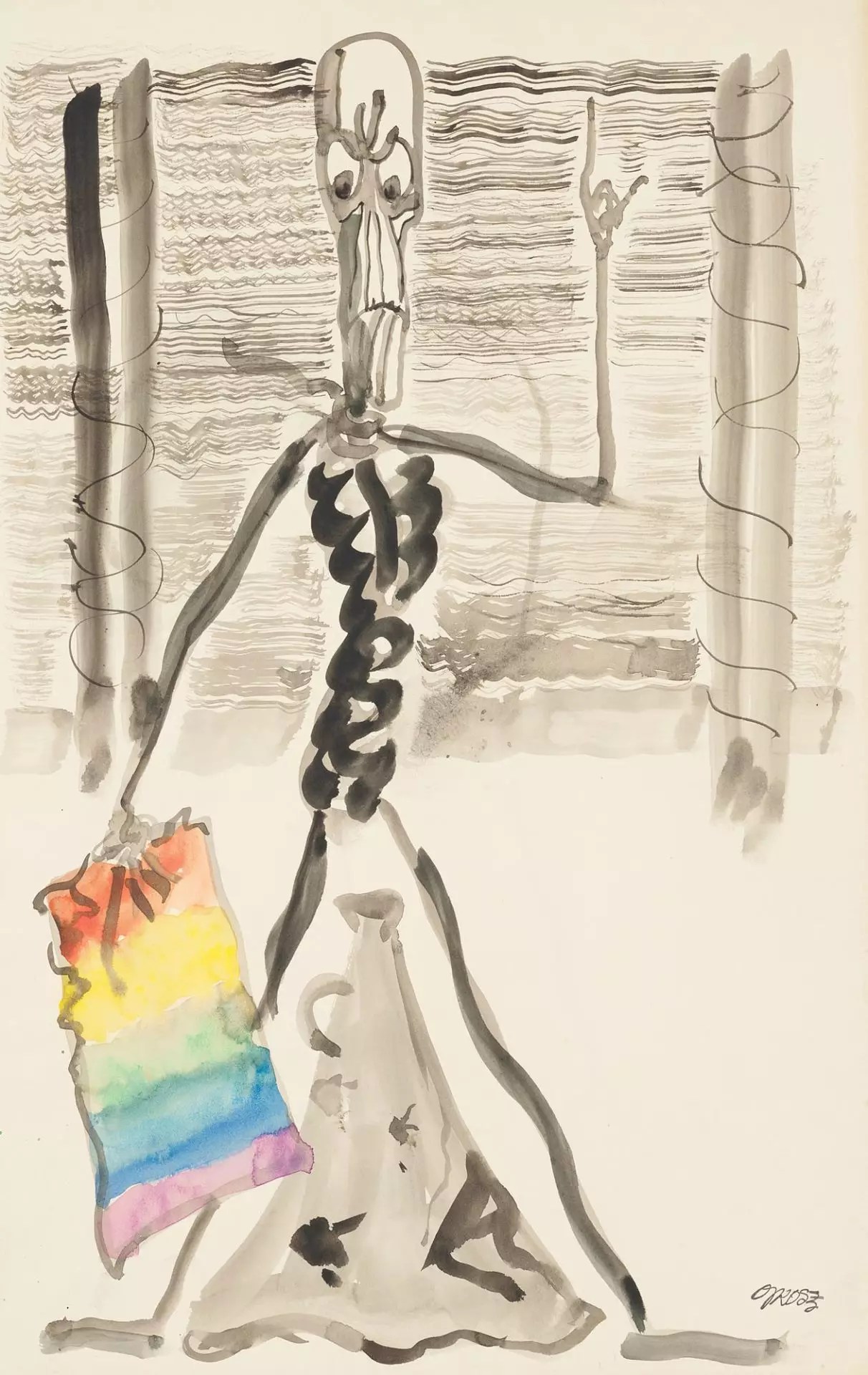
Skeleton Key — Taylor Schultek 

Skeleton Key, 2025 by Taylor Schultek (b. 1990)

Ghost city | Notes on Thomas Pynchon’s Shadow Ticket, Ch. 35-36

Notes on Chapters 1-7 | Glows in the dark.

Notes on Chapters 8-14 | Halloween all the time.

Notes on Chapters 15-18 | Ghostly crawl.

Notes on Chapters 19-20 | The needs of cold capitalist reality and those of adjoining ghost worlds come into rude contact.

Notes on Chapters 21-23 | Phantom gearbox.

Notes on Chapters 24-26 | Idiots get respect out here, they’re believed to be in touch with invisible forces.

Notes on Chapters 27-29 | We’re in for some dark ages, kid.

Notes on Chapters 30-32 | Some occult switchwork.

Notes on Chapters 33-34 | The dead ride fast.


Chapter 35 commences in “Fiume…a tattered ghost city with a sordid history of secret treaties and sellouts, edging its way through what the Fascist Italian regime calls Year Ten, continuing to collapse in on itself, unlikely to be redeemed.” 

There’s a lot there, as in most of Shadow Ticket’s sentences. The Italian fascist poet Gabriele D’Annunzio marched on Fiume in 1919, claiming it post-WWI in defiance of its “Free City” status. Like the Esperanto that runs through Shadow Ticket, utopian ideals won’t last long.

The spectral language invoking an unredeemed ghost city is a theme Pynchon explored throughout Gravity’s Rainbow, the first section of which, in particular, details a preterite, apocalyptic London. I think what’s notable here is again the sense of a pretender’s “utopian intellectualism” — the fascist force’s Anno X — which tries to stabilize a dehumanizing pursuit of power within the context of the humanities. It’s a ghost town, bound for collapse, bad for the soul.

The narrator notes that Fiume was once “a major port of embarkation for the New World, bright and bustling.” What’s more utopian than a capital-en-capital double-you New World? Shadow Ticket is all about movement, particularly west-east movement, with the bilocated east-west corollary (coreality?) built in. Indeed, Pynchon will end the novel a la Huckleberry Finn with Hicks’ protege Skeet Wheeler following Huck’s move to “light out for the Territory.” But I’m jumping ahead. The bigger Thing to note here, I think is that the New World is not so new anymore. Frontiers are going to be stranger, more combustible, going forward.

I’ve focused too much on setting: Our man in Fiume is Daphne Airmont, hunting Papa Cheez. She picks up a pair of Morčić, “earrings representing a black Moor’s head in a fancy white turban,” as well as a new tune, “Daleko m’ê moj Split,” (“My Split Is Far Away from Me” — here, a reference to the singer’s hometown).

A few nights later Daphne is singing this tune “at a sympathetic room in a roadhouse on the Yugoslavian side of the line, where neighborhood musicians like to get together, tonight a C-melody sax, banjo-uke, trombone, piano, an underlying beat from snare brushes and woodblock” — I let the sentence ride out because just because (lots of ukes in Shadow Ticket, yet not a single snood). In the middle of the song, Daphne’s “joined out of somewhere by a clarinet, all too immediately recognizable as who else but Hop Wingdale.” Before the erstwhile couple retreats to more private environs to catch up, Hop “reaches for a highball glass, where he’s been keeping a couple of reeds soaking in slivovitz, drinks what’s there, pours in more.” I agree with Daphne (That’s disgusting!”), but maybe the Drunk Pynchon blog will disagree if they ever get around to “clarinet reeds soaked in slivovitz.”

I can’t help myself: Here’s Pynchon’s mise en scène one-sentence-paragraph for the Daphne-Hop intimate reunion, in which she will find out that he’s actually a spy:

“A busy echoing interior comfortably dim with all-night cigarette and kitchen smoke, young runners who never fall asleep in and out bringing seafood fresh from the Adriatic, a continuous wind outside, down from the high limestone, a theremin of uneasiness, sliding around a narrow band of notes, in which it’s said you may come to hear repeated melodies, themes and variations, which is when you know you’re going bughouse, with only a very short period of grace to try and escape before it no longer matters.”

Pynchon is an underrated prose stylist. The rhythm here might not work for all folks, but it sings to me. There’s obviously a bustling noir quality to the cramped kitchen scene, which Pynchon drapes in mystical paranoia: the Adriatic wind (and “wind” by the by, is a byword in Against the Day, a physical yet invisible force) — the Adriatic wind becomes “a theremin of uneasiness,” a phrase that recalls “the Sombrero of Uneasiness” that makes “a chill creep across Hicks’s scalp” back in Ch. 10, back in Wisconsin, back at the Nazi bowling alley. (There was also a nod to the theremin back in Ch. 24, at the Club Hypotenuse.) The last little bit of the paragraph is a parable for paranoids perhaps — when we “hear repeated melodies, themes and variations,” we know we’re “going bughouse.”

There’s a bit of business at the end of the Daphne-Hop episode that again points to Shadow Ticket’s underinflated bagginess — I’ve pointed out in these riffs that this is a much bigger novel in my imagination, a fat wedge between between Against the Day and Gravity’s Rainbow. The narrator mentions that Daphne’s supposed-one-time-not-really-fiance “G. Rodney Flaunch has recently published How to Lose a Million and a Half and Bounce Back Smiling,” opening a potential skewering of the kind of self-helpery bullshit that grifters continue to grift on as we breathe, this very minute. It’s a blip of a bit, reminding us that Daphne is far from home (as “Daleko m’ê moj Split” has already underscored), and if it’s underdeveloped, well, William Gaddis took Carnegie to task in The Recognitions (and elsewhere).

The wrapping-things-up-too-quickly motif continues as Hicks and Daphne reunite. Daphne’s headed back home; Hicks is not. She lets him off “that Chippewa hook”; no more life debt for Hicks. Our hero asks her to convey a message to April Randazzo, who is not mentioned by name, but rather alluded to as a “grown woman, married, family to raise” — the kiddie stuff is done. It’s time to grow up. The narrator infuses their stilted, terse parting with a flood of emotion:

“What one of them should have been saying was ‘We’re in the last minutes of a break that will seem so wonderful and peaceable and carefree. If anybody’s around to remember. Still trying to keep on with it before it gets too dark…'”

The break is of course the moments between the two big wars, situated as the break between Modernity and what comes after — the atom bomb and all that.

Pynchon’s narrator then domesticates the issue in his hypothetical dialogue: “Stay, or go. Two fates beginning to diverge—back to the U.S., marry, raise a family, assemble a life you can persuade yourself is free from fear, as meanwhile, over here, the other outcome continues to unfold, to roll in dark as the end of time.” Here again is the novel’s theme of bilocation, of imagining two lives; shadow/form.

It gets darker of course, as the Second World War deserves: “Those you could have saved, could’ve shifted at least somehow onto a safer stretch of track, are one by one robbed, beaten, killed, seized and taken away into the nameless, the unrecoverable.” Hicks won’t go back east, back home to the New World. Can he rise to this challenge? Can he divert some souls to a safer stretch of track and earn a crumb of redemption?


Chapter 36 is a mess.

It is a mess because it attempts to tie up loose ends; that is the wrong metaphor, tie up loose ends — in any case a cavalcade of featured players, guest stars, and even extras show up here (in Fiume, natch), to reconfigure in new teams for the coming war. We get Hicks and Terike and Ace Lomax and Porfirio del Vasto and Zoltán von Kiss and Egon Praediger (“nose merrily aglow,” the fucking cokehead).

Anyway, they’re all in Fiume, convening at Bruno Airmont’s villa, which “dates from just after the War, when d’Annunzio’s republic was young and Fiume had a reputation as a party town, fun-seekers converging from all over, whoopee of many persuasions, wide-open to nudists, vegetarians, coke snorters, tricksters, pirates and runners of contraband, orgy-goers, fighters of after-dark hand-grenade duels, astounders of the bourgeoisie…” Pynchon twins this list with new revelers at the villa, now a scene for “night owls, freeloaders, accidental walk-ins, practitioners of esoteric arts, fearers of the dark, compulsive socializers, secret police, jewel thieves, firefly girls, drug dealers, cigarette-factory workers, tobacco smugglers…” Old boy loves lists! (What is a “firefly girl”?)

The noisy, buzzing chapter ends with Hop Wingdale offering Ace Lomax (along with “that Czechoslovakian robot” Zdeněk) a job “Escorting Jews to safety, one at a time or in truckloads.” Ace was once hired muscle — like Hicks, who started his “career” as a strikebreaker. But in Shadow Ticket we see the possibility for his changing sides. Redemption is possible. As the psychic Zoltán von Kiss suggests in  Ch. 22: “even the most hopelessly ill-imagined lamp deserves to belong somewhere, to have been awaited, to enact some return, to stand watch on some table, in some corner, as a place-keeper, a marker, a promise of redemption.” 

This novel believes in the promise of redemption.


Michel Tournier’s Friday (Book acquired, 12 Nov. 2025)

Michel Tournier’s 1967 novel Friday is getting a reprint (Norman Denny’s translation) from NYRB. Their blurb:

Friday is the Friday of Robinson Crusoe, and Michel Tournier’s retelling of Defoe’s tale of solitude and survival turns it on its head. Cast away on a tropical island, the God-fearing Crusoe hasn’t the least doubt what he must do: tame the wilderness and stamp it with the sign of civilization, a fool’s errand to which he devotes years and in which he comes close to succeeding. Then Friday shows up, infuriating him with his “irrepressible, lyrical, and blasphemous” laugh, and a new, more challenging task confronts the island’s self-proclaimed master. But after an unforeseen event destroys all of Crusoe’s work, it is up to Friday to teach him just how ignorant he is and always has been.

Friday was Tournier’s first novel, and it quickly found a wondering and delighted readership. Writing about the book in his autobiography, Tournier asks, “What was Friday to Daniel Defoe? Nothing: an animal, at best a creature waiting to receive his humanity from Robinson Crusoe, who as a European was in sole possession of all knowledge and wisdom.” In Friday, Tournier steps out of the secular world of the Western novel into the sacred precincts of universal mythology. The result is radiant, sensual, funny, and utterly unexpected—a modern masterpiece.

Sunday Comix

The cover for Middle Class Fantasies #1 by Jerry Lane, 1973, Cartoonists Co-op Press.

The Pond — Aron Wiesenfeld 

The Pond, 2023 by Aron Wiesenfeld (b. 1972)

The dead ride fast | Notes on Thomas Pynchon’s Shadow Ticket, Ch. 33-34

Notes on Chapters 1-7 | Glows in the dark.

Notes on Chapters 8-14 | Halloween all the time.

Notes on Chapters 15-18 | Ghostly crawl.

Notes on Chapters 19-20 | The needs of cold capitalist reality and those of adjoining ghost worlds come into rude contact.

Notes on Chapters 21-23 | Phantom gearbox.

Notes on Chapters 24-26 | Idiots get respect out here, they’re believed to be in touch with invisible forces.

Notes on Chapters 27-29 | We’re in for some dark ages, kid.

Notes on Chapters 30-32 | Some occult switchwork


Chapter 33 is the big-budget action sequence of Shadow Ticket, in which the “pocket-size golem Zdeněk” and musician/secret agent Hop Wingdale rescue Ace Lomax from the clutches of the fascist Vladboys in their “Hungaro-Croatian terrorist training camp, located right on the borderline.” (Notably–significantly–Hicks is missing from the rescue team.)

The narrator informs us that the camp is “flexibly all-purpose Fascist, quivering in readiness to be deployed anywhere…briefly innocent as Fascism in its ‘springtime of beauty,’ as the old anthem goes, before it descended into paperwork and brutality…” We tend to think, rightly, that fascism is a rejection of progressive values, but it’s worth remembering that much of what we now think of as Modernism was wrapped up in proto-fascist idealizations of energy and action — consider Filippo Tommaso Marinetti’s Manifesto of Futurism f’r’instance…

The camp where Ace is being held prisoner is a hotbed of action:

“Fascist adventurers have journeyed here from all over, Austrians sporting blue cornflowers and black grouse feathers, secret police, anti-Red goon squads, revolutionary cells, convicts escaped from internal exile and not sure where they are right now or what language they’re supposed to be speaking, colonial stooges in civvies in from as far afield as Indo-China and South America, irredentist aristos from the old Hungarian kingdom adrift in nostalgia, Polish freelancers working on spec for all of the above.” 

I love the force of the sentence. For such a breezy novel, Shadow Ticket is dense. We might take it as a sketch of a much larger, thicker, denser novel.

Well so and anyway–

The deal is that Hop’s band shows up to play this fascist gig; he’s informed that they, the fascist paramilitary Vladboys, “are pretending to invade Fiume, which any number of potential clients want back.” The garrulous entertainment liaison who meets with the band opines that such an invasion would be “all over in a day or two. Anasa supo.”

That last phrase, anasa supo, is Esperanto for duck soup, an American idiom referring to a task easily accomplished. Duck Soup is also of course the title of the 1933 Marx Brothers that centers (oh-so-anarchically) around the tiny nation of Freedonia–a bilocation of Fiume? Here’s a bit of bilocation from Duck Soup:

Hop and his band will play their swing tunes in “ruined limestone amphitheater, once dedicated to bloodletting presented as amusement, back when the Fifth Macedonian Legion were busy here invading and occupying.

The entertainment menu is “A Gay Evening with Vlad Ţepeş,” with riffs including “Vlad’s Vegetarian Chef”…(“Turnip loaf again, remind me to have the chef impaled”) and “Vlad at the Office” (the Count laments that they never call him “Vlad the Spending Reducer.”)

1499 German woodcut depicting Vlad the Impaler dining among his victims: “Here begins a gruesome and terrible history of the wild tyrant, Dracole Wayde. How he had people impaled, roasted, and boiled in a kettle with their heads. How he had people flayed and their skin salted like cabbage. He also had mothers’ children roasted, and they had to eat them themselves.”

Is this “Vlad Ţepeş” just a performer playing a character in the evening’s festivities, vamping on a riff–or is it, like, the Vlad Ţepeş, son of Vlad Dracul, Voivode of Wallachia, born half a century before the events of Shadow Ticket — like, Dracula man Vlad? A few paragraphs later, we are briefly introduced to the thug guarding Ace, “Csongor…a sort common in these parts, an apprentice vampire doomed never to develop past journeyman.” On one hand, the language here, and the general supernatural bent of Shadow Ticket suggests that these are like real (as in mythological) vampires — but the novel’s themes of bilocation also hedge the bet: vampire here could be a metaphor; the Vlad Ţepeş could be merely an actor playing a part.

Pynchon renders the scene in the kind of sexualized language we’d expect from vampire stories: “Vladboys have been building up, sending them out after prey each time in a more dangerous state of arousal. Trivial disputes are apt at any moment to erupt into violence. Local women go more and more in fear of their safety, cover their hair, stay in groups. The weirdly erotic charge accumulates, until vrrrooom! here’s the Vladboys out on another massive prowl…”

The prowl, as we’ve already learned, scores “Ace…an understandably welcome catch, with the Flathead an unexpected bonus, which the boys keep insisting is a Jewish motorcycle.” (The idiot vladboys reasoning? “Harley. David…Son, this is son of David, no?”)

Standing guard over their “welcome catch,” journeyman vampire Csongor takes interest in Ace’s tattoo: “’Die Todten reiten schnell,’ the Vladboy reads from the Gothic lettering there. ‘Something about the dead ride fast.'”

The phrase “Denn die Todten reiten schnell” appears in the opening chapter of Bram Stoker’s Dracula, a phrase recorded in Harker’s journal, which he identifies as the “line from [Gottfried August] Bürger’s ‘Lenore.'”

Illustration for Lenore, 1896 by Frank Kirchbach (1859-1912); engraving by Theodore Knesing (1840-1925).

Csongor wants to know if the dead actually do ride fast. Ace’s answer is philosophical: “Over there, among the dead, time has no meaning anymore, so to get distance per hour you’d have to divide by zero, which even if it was legal would still give you infinite speed.”

But before he can really explain his riff on death-speed paradox though, Ace’s rescuers arrive: “the pocket-size golem Zdeněk [and] Hop Wingdale.” Our mini-golem is a cyborg: “Zdeněk’s left arm turns out to be a modified ZB-26 Czech light machine gun, with the magazine built into his shoulder.” He likens it to “one of many earthly variants of Azrael, the Angel of Death” — yet still spares Csongor.

The chapter ends with our heroic trio escaping the fascist camp, fleeing their captors with the aid of a “pocket-size model” of a “a Bangalore torpedo” that Zdeněk has improvised from “a few sticks of dynamite thoughtfully borrowed last week in Transylvania off of a freelance firefighting crew passing through en route to a Romanian oil-well fire everybody could see from fifty miles away.”

The massive fire Pynchon’s narrator refers to here is, with most everything in Shadow Ticket, an historical event. The “torch of Moreni” burned for almost two and a half years, from September 1929 to November 1932.

The Moreni oil-well fire.

Chapter 34 opens with a sentence that lays out the situation for us: “Daphne looking for Hop has blundered out into a territory she thought she knew, which in fact the political situation has changed to something unrecognizable and poisonous.”

The Weimar days are over; “Hamburg, once the Swing Kid metropol” is now a Nazi hotbed, where “Blues licks have largely given way to major triads.” Conformity reigns; difference is punished. Daphne finds this out the hard way when she “wanders into a beer garden [Hop’s band] the Klezmopolitans once played at, formerly named the Midnight Mouse after a poem by Christian Morgenstern, now converted to a Sturmlokal” — she’s stumbled into a Nazi bar, and immediately finds herself imperiled by the not-so-subtle sexual predations of fascist goons (“Looking for me, Schätzchen?”)

But before our “Cheez Princess…become[s] fondue” she’s by Glow Tripforth del Vasto in her autogyro-cum-deus-ex-machina. They alight to a tavern; on the way Glow complains that because gyros “are forgiving ships…there’s the danger [of] The idiot appealromance on the cheap.” Modern convenience will puncture Gothic adventures of flight. Any idiot can fly.

Glow, headed to “some kind of anarchist sainthood” in Spain, drops Daphne in Fiume, but first delivers another one of several hey-we’re-about-to-be-in-some-bigger-mess-than-we-thought-we-were-going-to-be-in proclamations: “Whatever it is that’s just about to happen, once it’s over we’ll say, oh well, it’s history, should have seen it coming, and right now it’s all I can do to get on with my life.”

Glow adds, “I don’t care to know more than I need to about the mysteries of time…You’re expecting spiritual wisdom from little G. T. del V.? you’ll be waiting a long time, sucker.” 

The dead might ride fast–but they’re still dead.

Mass-market Monday | Murilo Rubião’s The Ex-Magician and Other Stories

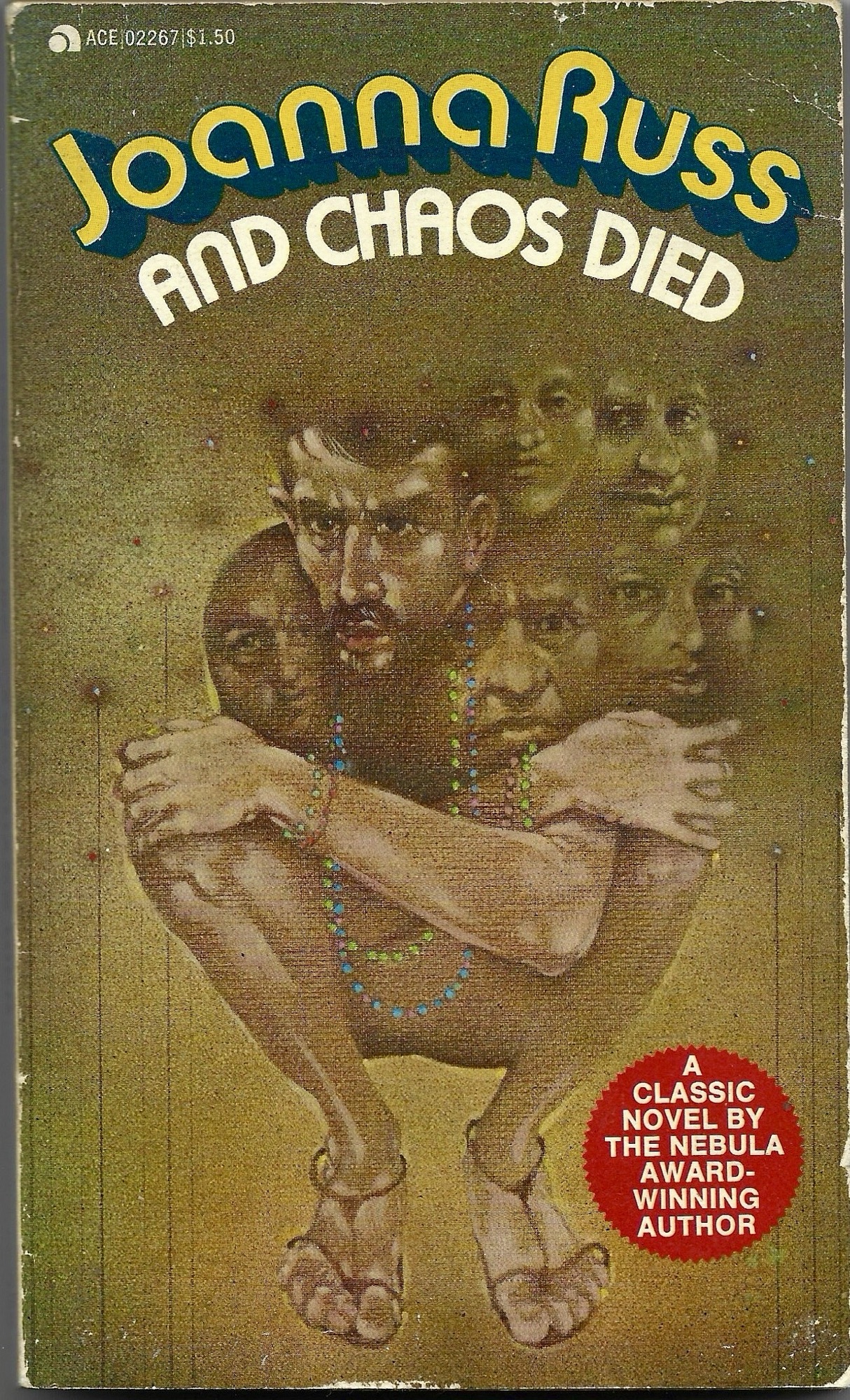
The Ex-Magician and Other Stories, Murilo Rubião, 1979. Translation by Thomas Colchie. Avon-Bard (1984). No cover artist or designer credited. 119 pages.


“Elisa”

by

Murilo Rubião

Translation by Thomas Colchie


I love them that love me; and those that seek me early shall find me.

Proverbs, VIII:17

One afternoon—it was in the early days of April—she arrived at our home. She pushed open the gate quite naturally, which guarded our little front yard, as if she were simply obeying a time-worn habit. From up on the porch, where I was sitting, a needless observation slipped out:

“And what if we had a dog?”

“Dogs don’t frighten me,” she replied wearily.

With a certain difficulty (the suitcase she was carrying must have been quite heavy) she managed to climb the stairs. Before going in, at the front door she turned to me:

“Or men either.”

Surprised by her capacity to divine my thoughts, I made haste to extricate myself from what seemed to be an increasingly embarrassing situation:

“Terrible weather out today. If it goes on like this …”

I cut short the series of absurdities that now occurred to me and tried, rather awkwardly, to avoid her look of reproach.

Then she smiled a little, while I nervously squeezed my hands.

Our strange visitor quickly adjusted to the ways of the house. She seldom went out, and never appeared at the window.

Perhaps at first I hadn’t even noticed her beauty: so lovely, even when the spell was broken, with her half-smile. Tall, her skin so white, but such a pale white, almost transparent, and a gauntness that betrayed a profound degradation. Her eyes were brown, but I don’t wish to talk of them. They never left me.

She soon began to fill out more, to gain some coloring and, in her expression, to display a joyful tranquillity.

She didn’t tell us her name, where she came from, or what terrible events had so shaken her life. In the meantime, we respected her silence on such matters. To us, she was simply herself: someone who needed our care, our affection.

I was able to accept the long silences, the sudden questions. One night, without my expecting it, she asked me:

“Have you ever loved?”

When the answer was in the negative, she made obvious her disappointment. After a while she left the sitting room, without adding a word to what she had spoken. The next morning we discovered her room was empty.

Every afternoon, as dusk was about to fall, I would step out onto the porch, with the feeling that she might show up, any moment, at the corner. My sister Cordelia berated me:

“It’s useless, she won’t be back. If you were only less infatuated, you wouldn’t be having such hopes.”

A year after her flight—again it was April—she appeared at the front gate. Her face was sadder, with deep shadows under the eyes. In my own eyes, so overjoyed to see her, the tears welled up, and in an effort to provide her with a cordial reception I said:

“Careful, now we do have a little dog.”

“But her master is still gentle, isn’t he? Or has he turned fierce during my absence?”

I extended my hands, which she held for a long time. And then, no longer able to suppress my concern, I asked her:

“Where did you go? What have you done all this time?”

“I wandered around and did nothing. Except maybe love a little,” she concluded, shaking her head sadly.

Her life among us returned to its former pace. But I felt uneasy. Cordélia observed me pityingly, implying I should no longer conceal my passion.

I lacked, however, the courage, and so put off my first declaration of love.

Several months later Elisa—yes, she finally told us her name—departed again.

And since I was left knowing her name, I suggested to my sister we should move to a different place. Cordélia, although extremely attached to our house, raised no objection and limited herself to asking:

“And Elisa? How will she be able to find us when she returns?”

I managed, with an effort, to conceal my anxiety, and repeated like an idiot:

“Yes, how will she?”

Sunday Comix

“Ada” by Willie Mendes. The piece is the back cover of Insect Fear #2, March 1970, The Print Mint.

Some occult switchwork | Notes on Thomas Pynchon’s Shadow Ticket, Ch. 30-32

Notes on Chapters 1-7 | Glows in the dark.

Notes on Chapters 8-14 | Halloween all the time.

Notes on Chapters 15-18 | Ghostly crawl.

Notes on Chapters 19-20 | The needs of cold capitalist reality and those of adjoining ghost worlds come into rude contact.

Notes on Chapters 21-23 | Phantom gearbox.

Notes on Chapters 24-26 | Idiots get respect out here, they’re believed to be in touch with invisible forces.

Notes on Chapters 27-29 | We’re in for some dark ages, kid.


Chapter 30 opens in “The Vienna branch of MI3b, daytime, a modest-size office decorated with a movie poster of Lilian Harvey waltzing with Willy Fritsch in Der Kongreß tanzt and an ancient map of the Hapsburg Dual Monarchy.

Der Kongreß tanzt (The Congress Dances) is a 1931 UFA production set in Vienna, 1815 — if you want to go down the rabbit hole, maybe start with this contemporary New York Times review of the film. The Congress Dances was Weimar UFA’s tentpole shot at competing with Hollywood; later the production company would be subsumed by the Nazis. A current throughout Pynchon’s works has been something like, resist the military-industrial-entertainment complex. It’s worth noting the emphasis on dancing here, a motif in Shadow Ticket. Is dancing a form of transcendent resistance? Or is it a narcotizing agent?

The Habsburg Dual Monarchy, formed in 1867 after the Austro-Prussian War, joined two distinct nations under one emperor — a kind of bilocation — leaving ethnic and nationalist tensions unresolved. These divisions weakened the empire, contributing to the instability that helped spark World War I and, after its collapse, left a fragmented Central Europe whose resentments helped set the stage for World War II.

We are in that stage-setting right now, in that fragmented, fragmenting Central Europe, in the office of British Military Intelligence Section 3 where secret agent couple Alf and Pip Quarrender have been called before “Station chief Arvo Thorp.” Thorp informs the Quarrenders that their asset Vassily Midoff is “seeking to join a motorcycle rally in progress at the moment” — the Trans-Trianon 2000 Tour of Hungary Unredeemed that everyone’s set out on — and “that someone must be sent round” to cut off that loose end posthaste. The Quarrenders are upset — “But he was ours, Thorp…Our bloke” — but orders are orders. They do question the rationale of the orders though, wondering if it was simply “too much effort to keep all [Vassily’s] allegiances straight.” Here we have a neat little summary of how some readers may feel sussing motives and plot points from Shadow Ticket. 

Codebreaker Alf gets something proximal to an “answer” when he intercepts an encrypted message floating around various intelligence agencies: Vassily “has apparently been promoted to deputy operations officer of an unacknowledged narkomat, a Blavatskian brotherhood of psychical masters and adepts located someplace out in the wild Far East.” Pynchon further underlines Shadow Ticket’s haunted themes, bringing up Stalin’s “chief crypto genius Gleb Bokii [who] is also running a secret lab specializing in the paranormal.” 

But Alf can’t fully crack the code (natch), receiving “only glimpses behind a cloak of dark intention at something on a scale far beyond trivialities of known politics or history, which one fears if ever correctly deciphered will yield a secret so grave, so countersacramental, that more than one government will go to any lengths to obtain and with luck to suppress it.” In a chilly series of sentences, Alf, pushed by “some invisible power,” continues chipping at the encryption against his better judgment. But the encryption is, well, cryptic, even as it portends a future yet to come (including the ominous not that Stalin, “threatened by supernatural forces [would] probably go after Jews first.”

Alf concludes that Vassily “may have gone mad, he may in fact have crossed a line forbidden or invisible to the likes of us, thrown by some occult switchwork over onto an alternate branch line of history.” The “alternative branch line” again evokes the novel’s themes of bilocation (which I’ve tried to enumerate in previous riffs).

(The bigger Pynchonian bilocation is frequently visible/invisible, in the spiritualist-materialist sense — which perhaps finds a moral corollary in convenient/inconvenient.)

So well and anyway–the Quarrenders track down the Russian Trans-Trianon caravan and locate Vassily, but he manages to escape on a Rio-bound zeppelin painted like a watermelon, to their relief.

Graf Zeppelin over Guanabara Bay, in Rio de Janeiro, Brazil, 25 May 1930

“Hicks, Slide, and Zdeněk come rolling into a parts depot deep in the Transylvanian forest,” at the beginning of Chapter 31. (Slide is an American journalist; Zdeněk is a non-gigantic golem, if you need help keeping track.) They are on the Trans-Trianon 2000 motorcycle route, presumably tracking Hop Wingdale. Or Daphne Airmont. Or Bruno Airmont. Or…?

Here in “actual Transylvania, the vampire motherland itself,” the trio drives through hairpin turns frequented by vengeful spirits, passages cursed by some local shaman, marsh life you wouldn’t want swarming around you after dark…And the bats of course.” According to Zdeněk these vampire bats are the Unbreathing, who go about their business in a silence not even broken by pulsebeats.”

Slide’s brought along his Leica camera to “cover the supernatural angle,”  but the pictures all end up blank: “a vampire’s allergy to silver, an ambivalence as to light itself…” I’ve foregrounded Shadow Ticket’s Gothic motifs and impulses throughout my notes. I don’t really know what I could add to, like, golems and vampires in Transylvania.

A diagram of the internal mechanisms of a Leica I camera

Noting that the Trans-Trianon 2000 motorcycle route allows for “impulses disallowed in normal society” to be acted upon, the narration then gives over to one of my favorite little bits in Shadow Ticket, a self-contained episode of spontaneous pig rescue.” The pig in question is “a Mangalica, a popular breed in Hungary at the moment, curly-coated as a sheep, black upper half, blonde lower. And that face! One of the more lovable pig faces, surrounded by ringlets and curls.”

Mangalica piggy looking cute

Pynchon’s porcophilia is well-documented, with pigs showing favorably throughout his work–particularly in Mason & Dixon and in Gravity’s Rainbow, where Tyrone Slothrop takes on the role (and costume) of Plechazunga, the Pig-Hero, and then later wanders through the Zone with a sweet pig as his companion-guide, while the narrator sings:

“A pig is a jolly companion,
Boar, sow, barrow, or gilt–
A pig is a pal, who’ll boost your morale,
Though mountains may topple and tilt.”

Back to Hicks: wandering the compound one day hears a piano in the distance, recognizes the tune as ‘Star of the County Down,’ a longtime favorite of Irish drinkers he’s known.” It turns out that none other than Pip Quarrender is singing and playing the song — which she identifies as “Dives and Lazarus,” a traditional English folk song that that adapts a riff from the Gospel of Luke. Pips notes that it’s “technically it’s a Christmas carol, though uncomfortable for the average churchgoer given its rather keen element of class hostility.” We have here another bilocation, a song with two separate but real co-existing lives. (Throw in a little class warfare, too.)

Hicks then runs into Terike, who’s concerned that Ace Lomax is missing, on the run from she-knows-not-what (it’s Bruno). The chapter ends with “Zdeněk the golem [locating] Hop Wingdale en route to a Croatian guerrilla training camp near the Hungarian border.” He decides to go check it out.


We’re back to Hop Wingdale and his band in Chapter 32 begins with their tricked-out road-Pullman ominously “moving deeper into Vladboys terrain.” We learn that the “band find themselves growing less enthusiastic about the Trans-Trianon 2000 Tour of Hungary Unredeemed [as] Loose cocaine isn’t always practical on these beat-up roadbeds.” The musicians settle on enormous pills of “cocaine and morphine, known as a speedball.” 

The band pulls in to a “towering wooden cylinder set in a clearing, filled with the snarling of low-displacement bike engines.” Their gig is at a Wall of Death motor cycle stunt show.

Motorcyclist Clara Lee riding the ‘Wall of Death’, Sydney Easter Show, 1938

Pynchon invokes the image of a wall of death late in Gravity’s Rainbow: “somewhere, out beyond the Channel, a barrier difficult as the wall of Death to a novice medium, Leftenant Slothrop, corrupted, given up on, creeps over the face of the Zone.” The metaphor here of course is the wall between the living and the dead.

It turns out that Ace Lomax has been stunt riding on the Wall of Death for tips. Prompted by the band, he sings a Western tune: “Things were so jake, at the O.K. Corral— / Till those Earps and Clantons came along—.” The fantasy here is of an unspoiled West which eventually succumbs to the violence of competing agencies.

Ace recognizes Hop and congratulates his being “still vertical.” He proceeds to tell the musician that Bruno Airmont had tried to get Ace to assassinate Hop, but he decided that wasn’t his gig and hit the road: “By nightfall he’s in Bratislava and slipping unnoticed in among a convoy of Trans-Trianon machinery.” In their discussion about the Wall of Death, Hop brings up motordrome physics: “Somebody said it’s safe long as you keep moving fast enough, something about centrifugal force.” We get here a repetition of one of Shadow Ticket’s major themes, neatly summed up by Stuffy Keegan back in Ch. 20: as long as you can stay on the run, that’s the only time you’re really free.” 

Ace then hits the road. He fails to check in back at the Trans-Trianon base camp, causing Terike’s cryptic road-adventuress face…to drift into disarray. She decides to light out looking for him.

The chapter ends with the narrator telling us that it turns “out that in some walled-in maze of a mountain town Ace has missed a turn…and ends up running on fumes.” He’s pursued by not only wolves but also the fascist Vladboys, “who also run this terrain in packs.” The fascist gang are on what I take to be dirt bikes, faster than Ace’s Harley. The last line, “Ace finds himself in the hands of the Vladboys,” sets up a nice opportunity for a big dramatic climactic rescue scene.