Circle Study #10 — Benny Andrews

Circle Study #10, 1972 by Benny Andrews (1930-2006)

“Queen Elizabeth’s Rhinoplasty,” a surgical microfiction by J. G. Ballard

“Queen Elizabeth’s Rhinoplasty”

by

J. G. Ballard


Many views were expressed as to what would be the ideal shape of the Queen’s nose, and how it could best be obtained. Some of her surgeons favored the profilometer (Straith, 1938), by which Her Majesty’s nose would emerge after operation with a standard height, tip angle, and bridge line. Other surgeons modeled the patient, trying out various patterns of the future nose in the attempt to obtain Her Majesty’s approval for a particular one.

The principle here was rather like that of trying out a new hat.

Unfortunately, human tissues are prone to thicken and behave in a way that is unpredictable. It was felt unwise, therefore, to lay too much emphasis with Her Majesty on exact details. Generalities were discussed, such as whether a straight or a hollowed-out bridge line was to be aimed at, whether her nose was to be retrousse or not, and whether the tip was to be narrowed or left alone.

Preoperative preparation. The Queen’s nostril vibrissae were cut short and her nose packed with cocaine and adrenalin as for a submucous resection of the septum. General anesthesia was preferred, the Queen’s trachea being intubated and the pharynx carefully packed off around the tube.

The incisions. Bilateral vestibular incisions were made through

the lining of the lateral wall, placed between the alar cartilage and the lateral cartilage. These incisions were carried forward over the apex of each of Her Majesty’s nostrils and met centrally at another incision made by transfixing the septum just below the lower border of its cartilage.

The skin covering of the Queen’s nose was freed on a deep subcutaneous plane right up to the glabella and well around to the sides. This was done with a pair of small curved scissors with blunt points. Where the saw cuts were to be made along the posterior margins of the Queen’s nose, an elevator was introduced via the small lateral incisions. A pair of straight scissors carried up on either side of the cartilaginous septum now left this structure standing free and allowed the lateral cartilages to fall away on the sidewall of the nose, being carried in a mucosal flap. The septum was then trimmed along its anterior aspect to complete the reduction of the bridge line.

There were two schools of thought regarding the instrument to be used for the bone section. One favored the use of the osteome; the other preferred the saw. Much was made of the dangers of bone dust, and its part in producing thickening after operation. Joseph’s nasal saws angled differently for left and right sides were good saws for the purpose. In the revision of the nose tip after previous unsatisfactory surgical intervention, asymmetrical alar cartilages presented special problems difficult of solution by the usual intranasal techniques. The so-called “Aying-boat approach was employed, as described by Rethi (quoted May 1951).

The radical operation on the Queen’s nose carried with it a tendency to bleed. Hematoma formation would lead to excessive thickening, and possibly even to infection. Iced compresses during the first forty-eight hours diminished the edema that occurred in the Queen’s eyelids and cheeks. Packs were removed after twenty-four hours. Her Majesty’s nose was interfered with as little as possible during the next few days, the air way being cleaned with a pledget of cotton wool. The splint was removed after seven days and the Queen instructed in the digital pressure required to maintain the position of the nasal bones. A brisk reactionary hemorrhage was controlled by packing.

Her Majesty was warned that some bruising (black eyes) was likely up to three weeks after the operation, and that her social activities would have to be curtailed. The Queen was also informed that she should not attempt to blow her nose until the intranasal incisions were soundly healed (two weeks).

During after-care, Her Majesty found it difficult to understand that her nose was swollen, and that such edema would settle down slowly and irregularly. Her Majesty was warned that her nose should not be operated upon for a further time within six months of the previous operation.

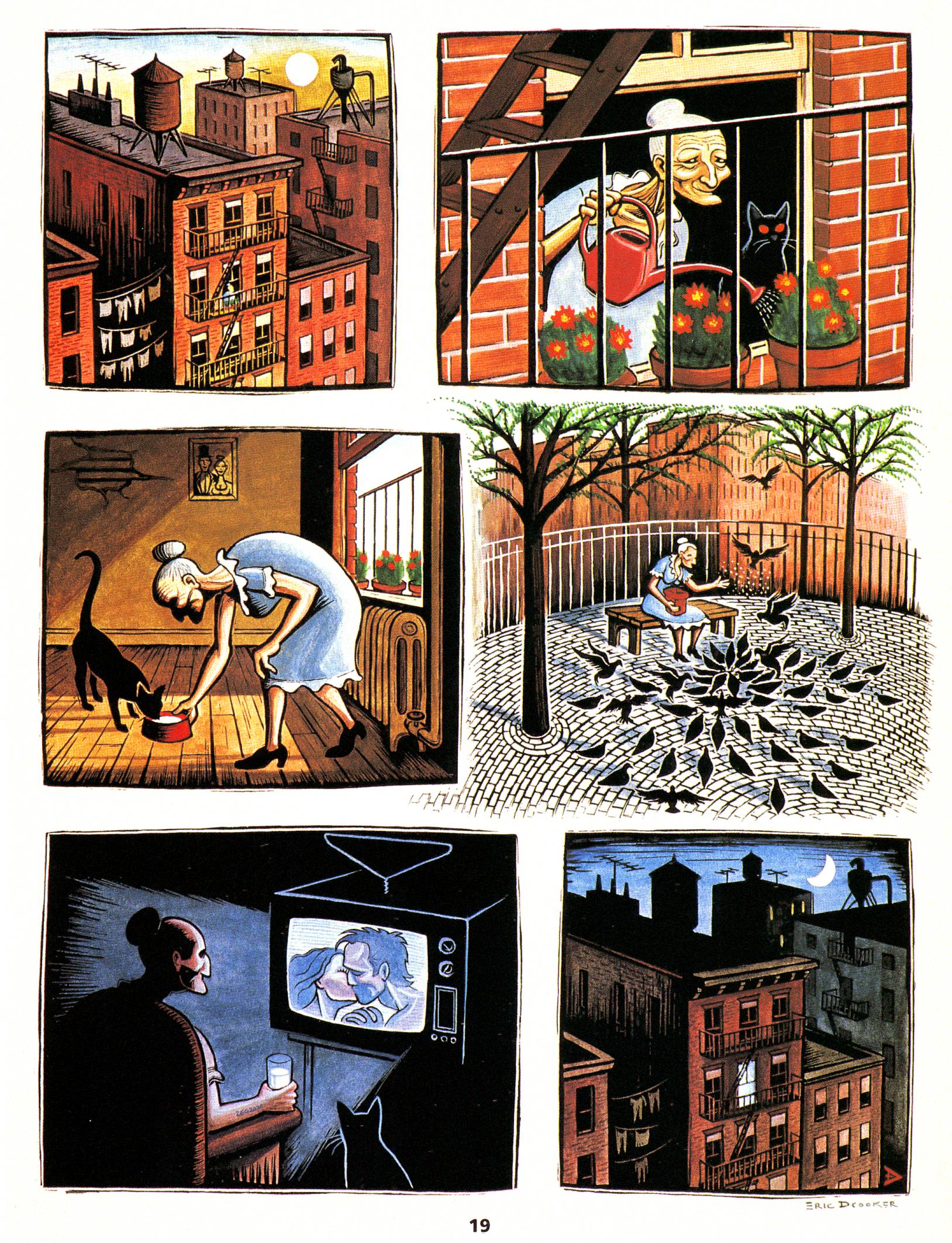
Sunday Comix

A page from Laid Waste by Julia Gfrörer, Fantagraphics Books, 2016.

(Not really a blog about) Pynchon in Public Day, 2026

Unless my math or some established facts are incorrect, Thomas Pynchon turned 89 today.

As far as I can tell, the first time I posted something Pynchon-related on Pynchon’s birthday (May 8, obv), was a portrait by James Jean, back in 2013. The next year I directly recognized the date of his birth in a round-up post, and the year after that I recognized what has been semi-formalized into “Pynchon in Public Day.” And then pretty much every year since then I’ve done something or other. In 2018, I had the gall to rank Pynchon’s novels, even though I hadn’t managed to finish Bleeding Edge at that point. I made a correction in August last year, ranking all the novels to date, and then felt the need to correct a list published at The Guardian later that month.

In Sept. 2025 Paul Thomas Anderson’s film One Battle After Another hit theaters. Based loosely (but tightly enough that anyone who read the novel would recognize it in the film) on Pynchon’s 1990 novel VinelandOne Battle After Another was a hit — at least critically and culturally (it recouped its expenses and earned more than any other PTA film, but still wasn’t a mega-hit I guess — but it did much better than PTA’s adaptation of Inherent Vice, which I also loved, which had a very limited cultural impact). One Battle After Another won a bunch of meaningless awards. I loved it!

A few weeks later, Pynchon’s novel Shadow Ticket, a late career treat, hit shelves. I loved it too! In the meantime, I noticed that my favorite local bookstore (at both of its locations) was stocked with new Pynchon volumes which seemed to sell extraordinarily well. The Pynchon Reddit, once a somewhat quiet space to share analyses and tidbits, expanded like an unbelted belly filled with belches. It now suffers from fan art and dudes who feel the need to cast film versions of the Pynchon books they’ve read so far, and endless “What should I read next?” posts.

This is all pretty fucking great! I like that Pynchon’s audience has expanded, that his books are selling, and that people are reading them. And so well yeah — do we still need a Pynchon in Public Day?

Sure, why the hell not. It was always about fun, I think.

I didn’t do any kind of Pynchon post on 8 May 2025. My best friend of the past three decades died unexpectedly in his sleep on 5 May 2025 and I was a wreck. At what I suppose was his wake (a slow, rolling, evolving open house thing where old friends stayed at our house and drank and laughed and cried), I gave one of my dearest friends a copy of Gravity’s Rainbow because he said he wanted to read it. (I suggested V. to start but he wanted the big boy.) Another friend pointed out that there were like fifteen copies of Moby-Dick in the house and generously unencumbered me of a surplus Norton Critical Edition. (Mike, Dave, I know you don’t read this blog anymore, but have you cracked into those giants?)

I think if I had written something for Pynchon in Public Day last year, it would have been about the anticipation for Shadow Ticket and One Battle After Another. But I ended up writing about those things anyway, and so did a lot of other people.

If I was going to write a blog for Pynchon in Public Day, which I am not doing now, I might try to situate Shadow Ticket into his oeuvre (easy; it fits chronologically between Against the Day and Gravity’s Rainbow; it is also B-tier Pynchon. If I had to rank it I’d put it above Vineland and Inherent Vice, at least today. Ask me tomorrow, who knows).

But this isn’t a blog about Pynchon in Public Day.


“Poem” — Langston Hughes

“Poem”

by

Langston Hughes


I loved my friend.
He went away from me. 
There’s nothing more to say. 
The poem ends, 
Soft as it began,—
I loved my friend. 

Portrait of Man Reading — Malick Sidibé

Portrait of Man Reading, 1977 by Malick Sidibé (1936-2016)

Grace Krilanovich’s Acid Green Velvet (Book acquired, 4 May 2026)

I dug Grace Krilanovich’s “Slutty Teenage Hobo Vampire Junkies” novel The Orange Eats Creeps, calling it good gross stuff in a 2020 review.

Her follow up, Acid Green Velvet, is forthcoming this summer from Two Dollar Radio. Their blurb:

In the late 19th century on the central California coast, two wayward young hoboes — Paulette and Kenneth — threaten to kill a menacing man who wronged them: Paulette’s father, Rodney Eligon.

A handful of years later, the town of Anzar has become the stomping grounds for all manner of cults, eccentrics, earth religions, and communal living. Presiding over the town from the luxe frivolity of their family manor, the Hasleys have ruled Anzar for generations. Their grip on the town is threatened by the rise of the working class, and their union with the itinerant population. Meanwhile, Paulette has taken up residence in the home of Johnny Hasley, a wealthy faux-socialist poseur, hoping to become his wife. Her plans are complicated by boot-prints in the garden signaling the arrival of Kenneth, who carries with him a dark secret that poses a grave threat to both of them.

In Anzar’s cracked mirror, Californian freakiness meets Victorian preoccupations with the domestic, pollution and filth, haunted houses, fringe societies, living death, spiritualism, vampiric women, and class parasites. Acid Green Velvet is a surreal powder keg of nihilism, fathers and their failures, manifest destiny, and American identity, penned in rapturous prose by the fiercest writer of her generation.

Manhattan Landscape with Figures — Sylvia Sleigh

Manhattan Landscape with Figures, 1968 by Sylvia Sleigh (1916 – 2010)

Sunday Comix

Cover for Good Girls #3 by Carol Lay, Fantagraphics Books, 1988.

Read Jack London’s sci-fi fantasy tale “The Red One”


“The Red One”

by

Jack London


There it was!  The abrupt liberation of sound!  As he timed it with his watch, Bassett likened it to the trump of an archangel.  Walls of cities, he meditated, might well fall down before so vast and compelling a summons.  For the thousandth time vainly he tried to analyse the tone-quality of that enormous peal that dominated the land far into the strong-holds of the surrounding tribes.  The mountain gorge which was its source rang to the rising tide of it until it brimmed over and flooded earth and sky and air.  With the wantonness of a sick man’s fancy, he likened it to the mighty cry of some Titan of the Elder World vexed with misery or wrath.  Higher and higher it arose, challenging and demanding in such profounds of volume that it seemed intended for ears beyond the narrow confines of the solar system.  There was in it, too, the clamour of protest in that there were no ears to hear and comprehend its utterance.

—Such the sick man’s fancy.  Still he strove to analyse the sound.  Sonorous as thunder was it, mellow as a golden bell, thin and sweet as a thrummed taut cord of silver—no; it was none of these, nor a blend of these.  There were no words nor semblances in his vocabulary and experience with which to describe the totality of that sound.

Time passed.  Minutes merged into quarters of hours, and quarters of hours into half-hours, and still the sound persisted, ever changing from its initial vocal impulse yet never receiving fresh impulse—fading, dimming, dying as enormously as it had sprung into being.  It became a confusion of troubled mutterings and babblings and colossal whisperings.  Slowly it withdrew, sob by sob, into whatever great bosom had birthed it, until it whimpered deadly whispers of wrath and as equally seductive whispers of delight, striving still to be heard, to convey some cosmic secret, some understanding of infinite import and value.  It dwindled to a ghost of sound that had lost its menace and promise, and became a thing that pulsed on in the sick man’s consciousness for minutes after it had ceased.  When he could hear it no longer, Bassett glanced at his watch.  An hour had elapsed ere that archangel’s trump had subsided into tonal nothingness. Continue reading “Read Jack London’s sci-fi fantasy tale “The Red One””

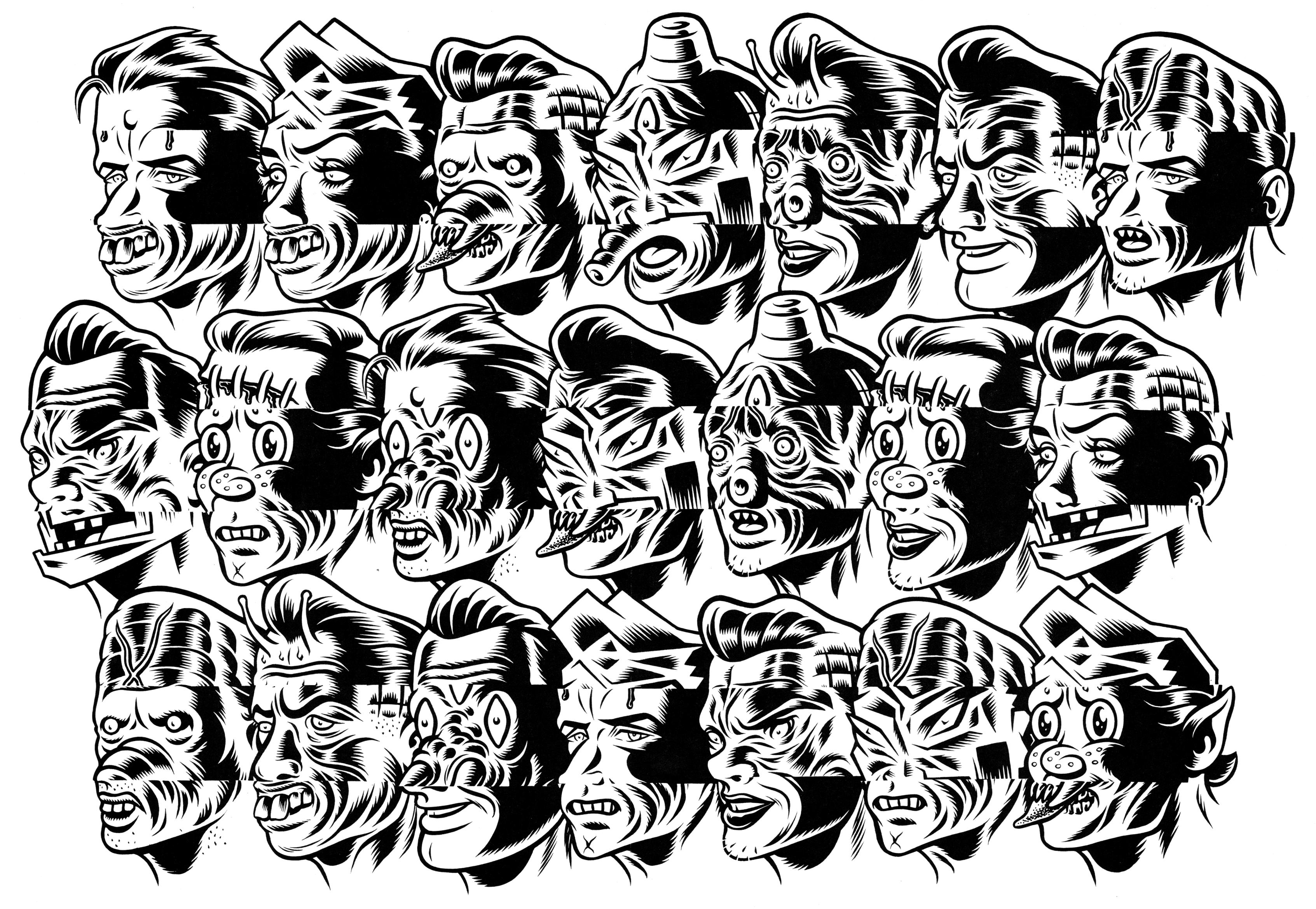
Sunday Comix

“An Old Nursery Rhyme” by Dame Darcy. From Meat Cake #1, 1993, Fantagraphics.

In answer to the question: “Why do you write?” | Robert Coover

In answer to the question: “Why do you write?”

Because art blows life into the lifeless, death into the deathless.

Because art’s life is preferable, in truth, to life’s beautiful terror.

Because, as time does not pass (nothing, as Beckett tells us, passes), it passes the time.

Because death, our mythless master, is somehow amused by epitaphs.

Because epitaphs, well-struck, give death, our voracious master, heartburn.

Because fiction imitates life’s beauty, thereby inventing the beauty life lacks.

Because fiction is the best position, at once exotic and familiar, for fucking the world.

Because fiction, mediating paradox, celebrates it.

Because fiction, mothered by love, loves love as a mother might her unloving child.

Because fiction speaks, hopelessly, beautifully, as the world speaks.

Because God, created in the storyteller’s image, can be destroyed only by His maker.

Because, in its perversity, art harmonizes the disharmonious.

Because, in its profanity, fiction sanctifies life.

Because, in its terrible isolation, writing is a path to brotherhood.

Because in the beginning was the gesture, and in the end to come as well: in between what we have are words.

Because, of all the arts, only fiction can unmake the myths that unman men.

Because of its endearing futility, its outrageous pretensions.

Because the pen, though short, casts a long shadow (upon, it must be said, no surface).

Because the world is re-invented every day and this is how it is done.

Because there is nothing new under the sun except its expression.

Because truth, that elusive joker, hides himself in fictions and must therefore be sought there.

Because writing, in all space’s unimaginable vastness, is still the greatest adventure of all.

And because, alas, what else?

From Delta #28, June 1989; republished in Conjunctions.

I love Beckett. I also like the Three Stooges | Barry Hannah

Beckett liked knockabout drama. Vaudeville acts where somebody just gets pummeled. Trapped, insulted, or kicked. Punch-and-Judy. I love Beckett. I also like the Three Stooges.

Beckett once said, “Nothing is funnier than unhappiness,” and he was thinking about Charlie Chaplin, the genius of unhappiness. And Beckett’s own work is that, too. It’s failure, unhappiness, ignorance. When you’re not involved, other people’s unhappiness seems to be about the funniest damn thing on earth because you think you can solve it, that you are God, that you are above this, and that their unhappiness is just such useless toil and agony. If it’s you, it ceases to be a comedy.

From Barry Hannah’s Paris Review The Art of Fiction interview, Winter 2004

Some books acquired, 17 April 2026

This past Friday, after some spring semester-is-almost-over-time-to-clean-out-the-office-and-take-all-the-plants-home cleaning, I converted some of the review copies, old anthologies, and textbooks in my office I’d crammed into a box into bookstore credit.

I didn’t intend to pick up anything while browsing, but I couldn’t resist a second copy of William Gaddis’s The Recognitions. I’d never come across the 1985 Penguin Books edition before, and it matches nicely with the edition 1985 Penguin reissue of J R that I found on a dollar shelf in Atlanta a few years ago. This 1985 edition of The Recognitions is a bit stiff in the hand; I’m glad I first read it in the ’93 Penguin Classics edition (with the William Gass introduction that everyone should absolutely skip until after they’ve read The Recognitions for the first time).

I also hit an unshelved seam of Alasdair Gray novels, just sitting in a stack on the floor in the sci-fi section, and picked up The Fall of Kelvin Walker, which I’d never heard of, and a third copy of Lanark. I lent the first copy of Lanark I owned and read to someone who never returned it. I have doubles now, but as a wise man proclaimed, “Triples makes it safe. Triples is best.”

Near the Gray novels, also unshelved, was a copy of Literal Madness, which collects three Kathy Acker novels: Kathy Goes to Haiti, My Death My Life by Pier Paolo Pasolini, and Florida. 

It is probably a terrible compulsion to crowd my shelves with duplicates of novels I’ve read several times already. There’s a part of me that imagines I will one day have a small bookselling space with a very specific inventory of titles I will ultimately refuse to part with, and which my children will not-so-reluctantly have to throw away after my demise. I also imagine being able to hand one to a friend, suggest they read it without any anxiety over its return. (If you are reading this, Lanarkklept, the book is now yours, has been for years. I hope you read it.)

Self-Portrait — James Baldwin

Self-Portrait, 1974 by James Baldwin (1924-1987).

First published in the Paris Review as an excerpt from Burt Britton’s Self Portraits.

Read “The Boy Scout,” a very short story by David Ohle

“The Boy Scout”

by

David Ohle


The boy scout guides his wooden pedal car up the dirt road and parks it, in the shade of my turkey oak, without ceremony. The little car has tin-can headlights and a false grille. He approaches the steps and begins to climb, a box of rice cookies under one of his frail arms. It is a mystery how he crossed the bottoms in this handmade vehicle, how he avoided sinking in the soft mud ruts and being stung by the wasps in the sumac along the ditch-bank. Twice the boy scout drops the box of cookies, backsteps to the ground, recovers it, and climbs up again. He knocks gently, the sound is as though his knuckles are made of hard rubber. I open the door and allow him in. He sits on the sofa with yellow eyes and looks at my feet and says nothing. I offer him a bowl of soy soup, which he declines, casting his glances on the floor. His face is ageless and simple, with precocious whiskers on the jaw.

I build an oak fire in the woodstove and he warms his hands against the evening chill setting in. In the firelight I first become aware of the suggestion of a seam running down the front of him, over the nose from the khaki tip of the hat, across the lips and chin, into the neckerchief. He seems in the odd light to have been stitched together out of two unmatched bolts of cloth. His eyes are like coat buttons, the fists like ripe tomatoes. He smells of sodden laundry. Crickets bump against the tower window screens. The stink of pinesap and legustrum. The clack of crows in the sky.

I take a cold chicken wing from the refrigerator and offer it to him. His head pivots, the lips emerge tubelike from the face. He says no. At least he has finally spoken. We don’t want to sit here too long on the brink of conversation, like wax figures behind plexiglas. Coffee? Does he want coffee? Cola? I move around the living room mechanically, under an odd influence from this boy scout, as though he were a planet and I his satellite, he earth and I moon. Threads of black yarn drape his forehead under the scout hat, a mockery of hair. He has a sewn-on eyebrow above one eye and nothing above the other one, and a faded disk of scar on the chin. I talk about the weather and he listens without comment.

I ask him about a point of scout lore, and although his mouth opens and the dry tongue quivers, he says nothing. When he moves, which he seldom does, there is a faintly audible rasp, as though his joints are dry of lubricant. I ask him if I might sample one of his cookies. He indicates no. I have to buy or not buy without tasting. I give him the required amount in National coupons. I eat one of the cookies, which have no taste and little consistency. I remember myself as a boy scout, driving my pedal car intricately through alleyways in the city, eating bruised fruit when I found it at the backs of government markets. In the rear compartment of the pedal car I kept a change of khakis and extra shoes. If night came on me I’d throw out my bag and sleep wherever I was. I’ve seen tumbleweed, or something similar, blowing past the house recently. A wild pig comes every night and snufiles around for any garbage I might throw down. I consider dropping something heavy on him from the roof, breaking the spine, dressing him out, cooking him over a fire pit. The boy scout has been here several days now. I’ve noticed a spider’s thread from his shoulder to the windowsill. Two days ago he began an extended smile which has not yet broken. When the wind occasionally blows outside, the shiplap siding of the house gets to wailing in a high-pitched tone. The wind sock is full to the south, the awnings flapping. The fire in the stove belly has died hours ago, the sun’s last yellow angle is narrowing on the tower walls. The old clock is ticking on the mantel. The evening wears on. I rebuild the fire as the night cools and wear my flannel robe and long johns. Before dawn I see an orange light in the pines, someone walking with a lamp, Morning again.

An icicle has formed where the bathroom faucet dripped. The sun has come up in a haze. The boy scout is sleeping on the sofa.

The wind sock is deflated and the day is warming up toward noon.

By mid-afternoon I am perspiring in the humidity, wiping myself with a handkerchief. The boy scout remains dry and still.

A slow drizzle now, hanging on three days. On the fourth day I see an egg of sun above the tree line. A katydid is dead at the bottom of my teacup. Overnight the weather turns cold again, and the drizzle becomes a wet snow. My mouth is sour, my toothbrush worn down to the plastic. It will be nice to chew salty pork meat, sometime, whenever I can kill the pig. I should raise the awnings before the snow collects and breaks through the rotted canvas.

The wind sock is frozen stiff, pointing south. I see the pig outside, standing in the white. He pisses and leaves a yellow circle on the snow crust. The pedal car is gone, tracks of the wooden wheels leading off down the road. The awnings are frozen and won’t go up.

Mass-market Monday | Claude McKay’s Home to Harlem

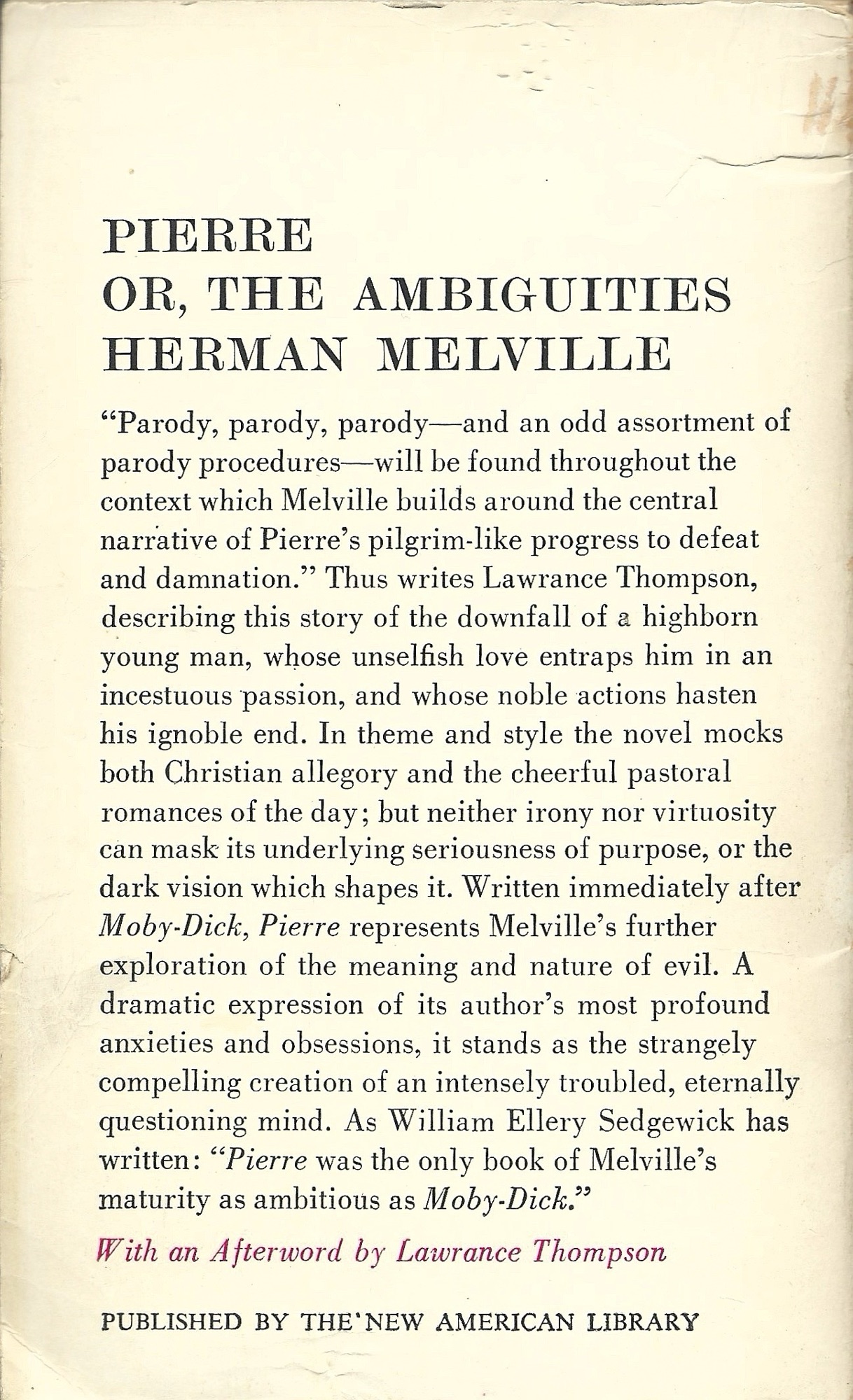
Home to Harlem, Claude McKay, 1928. Pocket Cardinal Editions (1956). No cover artist or designer credited. 180 pages.

The cover art, while unattributed inside the book, is likely the work of Isadore Seltzer. McKay’s first novel is now in the public domain and available online.