
That which is entirely devoid of light is all darkness; as the night is like this and you wish to represent a night subject, represent a great fire, so that the object which is nearest to the fire may be tinged with its colour, since the object which is nearest the fire will participate most in its nature. And as you will make the fire red, all the objects which it illumines must be red also, and those which are farther off from the fire will be dyed to a greater extent by the dark colour of night. The figures which are between you and the fire appear dark from the obscurity of the night, not from the glow of the firelight, and those which are at the side are half dark and half ruddy, and those which are visible beyond the edge of the flames will be altogether lighted up by the red glow against a black background. As to their action, make those which are near shield themselves with their hands and cloaks against the intense heat with averted faces as though about to flee; with regard to those who are farther off, represent them chiefly in the act of raising their hands to their eyes, dazzled by the intense glare.
Author: Biblioklept
Wunderkammer — Santiago Caruso

The Hook and the Haymaker (Book acquired, 2.12.2015)
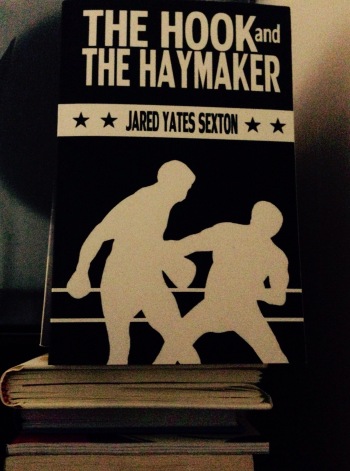
Jared Yates Sexton’s The Hook and the Haymaker is new from Split Lip Press. Dug his last joint, An End to All Things and looking forward to getting into this one. Blurb from his site:
In 2012 Atticus Books released An End To All Things, Jared Yates Sexton’s acclaimed debut collection of stories. Called “invigorating” and “shades of Barry Hannah, Raymond Carver, and Breece D’J Pancake,” it was lauded byThe Portland Book Review as “the beginning of a long literary career.” Here, his next installment of stories, The Hook and The Haymaker, twenty-three award-winning pieces that have appeared in The Southern Humanities Review, Night Train, Verdad, PANK, Midwestern Gothic, among other prominent magazines and publications from around the country.
This book picks up right where Sexton’s debut left off with hard-hitting, gritty glimpses into an America that too-often goes unseen. Set in sweat-saturated sparring rings, the backrooms of gas station speakeasies, and the kitchens of the houses down the street, witness here the untold tales of the losers and the should’ve-beens, the dreamers and the hustlers, all of them just spoiling for their turn at glory or the inevitable one-two punch that puts them down for good.
Eva Cristina — Ernst Fuchs

“Daphne” — Edna St. Vincent Millay
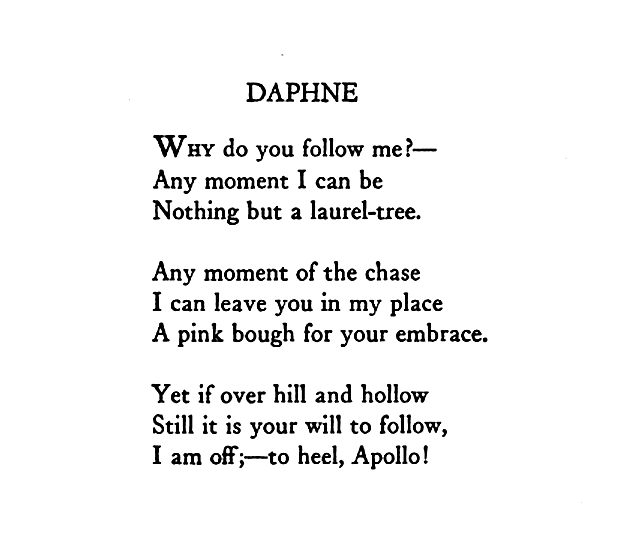
“All art constantly aspires towards the condition of la la la”
Dream — Claude Verlinde

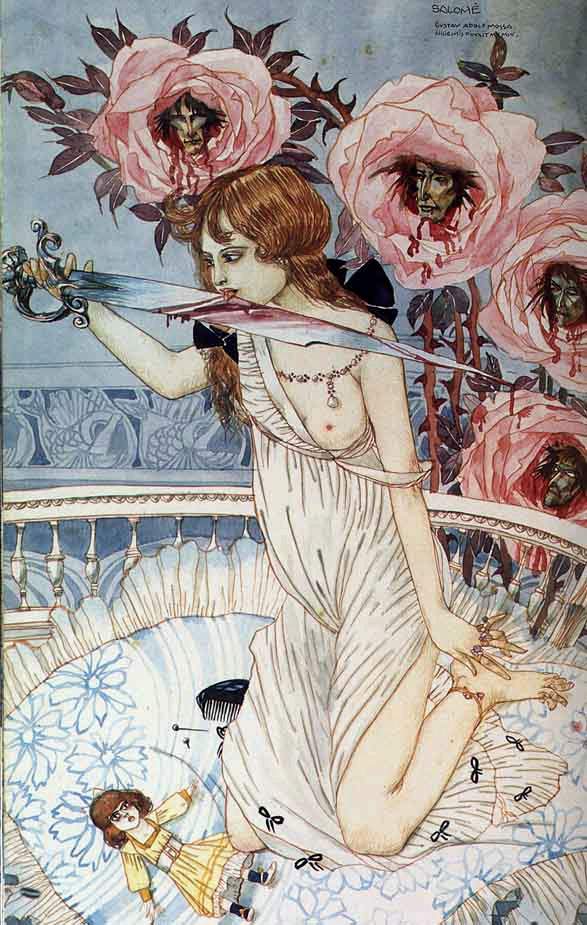
Salome — Gustav-Adolf Mossa
The Star — Alasdair Gray
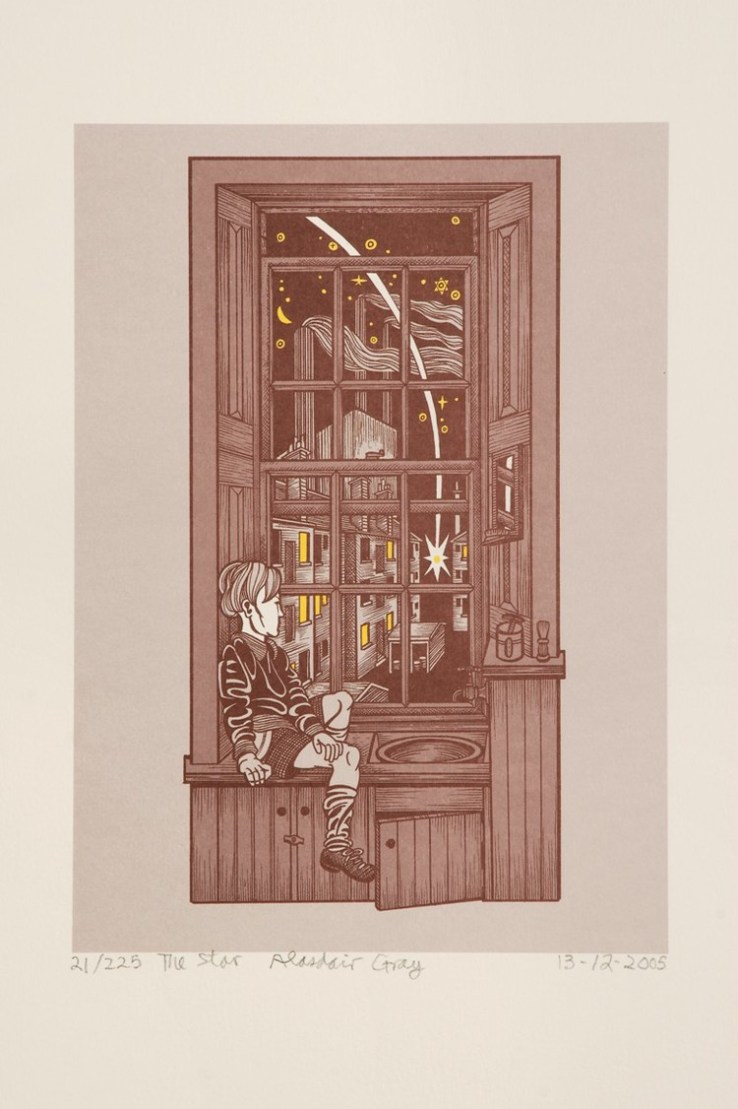
The Star is one of several pieces of art by Alasdair Gray that accompany Rodge Glass’s review of the Scottish novelist’s collection of non-fiction pieces, Of Me & Others. The first paragraph of Glass’s piece:
At the time I finished my biography of the polymath Alasdair Gray, in 2008, my subject was at a curious juncture. Though an artist for six decades, he remained a footnote in his country’s art world. Though the author of the most celebrated Scottish novel in the last hundred years, Lanark, and several others which altered the literary landscape of his home city, Glasgow, beyond recognition (Poor Things, 1982, Janine, Unlikely Stories, Mostly) he was dependent on a small Royal Literary Fund grant and regular scraps from various overdue projects for his living. (Gray is, was, and always will be a Republican. He once turned down a knighthood.) 2007 saw the publication of what he called “my final novel,” labeled as such because he’d quite simply run out of old unpublished manuscripts to pilfer ideas from. The spares drawer was now empty. Meanwhile, no matter how many times he reminded folks that he had stolen it from the Canadian poet Dennis Lee, he was still always credited with the only quote outside the still-new Scottish Parliament building: Work as if you live in the early days of a better nation. In his old age, there was talk of him becoming that most disgraceful of things—an uncontroversial “national treasure,” awaiting death, then platitudes from the great and the good, and then probably—the horror!—a statue. All this was an ominous sign for an artist who had always defined himself in opposition to political power.
Renoir at Work
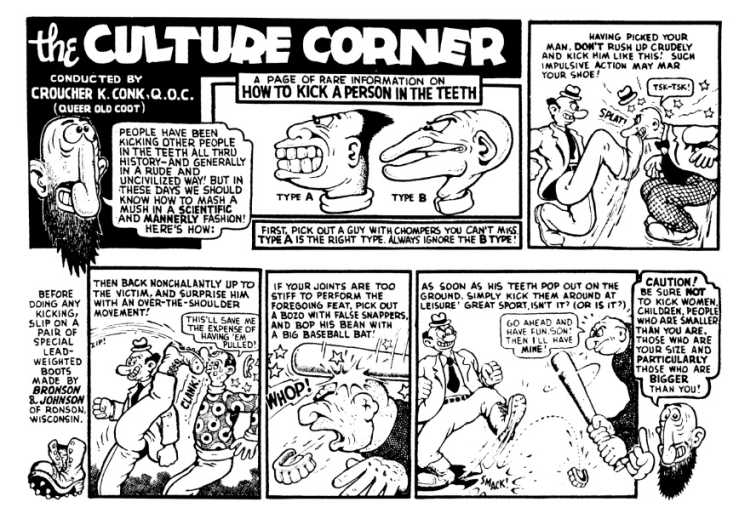
How to Kick a Person in the Teeth — Basil Wolverton
The Milkmaid — Johannes Vermeer

Jim O’Rourke Live in Tokyo in June of 2014
Della — James Jean

“Language” — Ezra Pound
“Language”
by
Ezra Pound
from A Retrospect
Use no superfluous word, no adjective which does not reveal something.
Don’t use such an expression as “dim lands of peace.” It dulls the image. It mixes an abstraction with the concrete. It comes from the writer’s not realizing that the natural object is always the adequate symbol.
Go in fear of abstractions. Do not retell in mediocre verse what has already been done in good prose. Do’t think any intelligent person is going to be decieved when you try to shirk all the difficulties of the unspeakably difficult art of good prose by chopping your composition into line lengths.
What the expert is tired of today the public will be tired of tomorrow.
Don’t imagine that the art of poetry is any simpler than the art of music, or that you can please the expert before you have spent at least as much effort on the art of verse as an average piano teacher spends on the art of music.
Be influenced by as many great artists as you can, but have the decency either to acknowledge the debt outright, or to try to conceal it.
Don’t allow “influence” to mean merely that you mop up the particular decorative vocabulary of some one or two poets whom you happen to admire. A Turkish war correspondent was recently caught red-handed babbling in his despatches of “dove-grey” hills, or else it was “pearl-pale,” I can not remember.
Use either no ornament or good ornament.
Pool Side — Tomer Hanuka

Matt Sumell’s Making Nice (Book acquired some time in January)
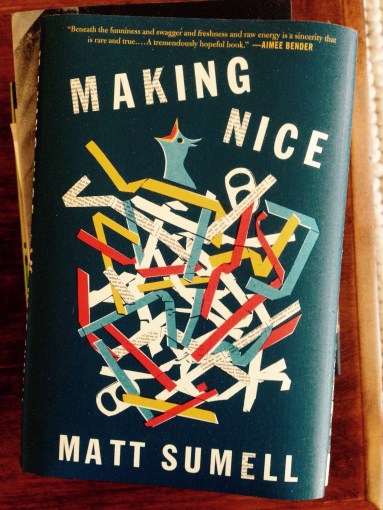
I was hoping to save up a little energy to write a bit about the stories I’ve read in Matt Sumell’s debut collection Making Nice…but I don’t seem to have it. There’s a macho swagger here that will repel a lot of folks but hell I’m a barbarian and I dig what he’s doing, even if it’s been done by a few (many) other folks before (there’s that Carver/Johnson/Lipsyte axis, yes)—it’s funny and savage stuff. Continue reading “Matt Sumell’s Making Nice (Book acquired some time in January)”

