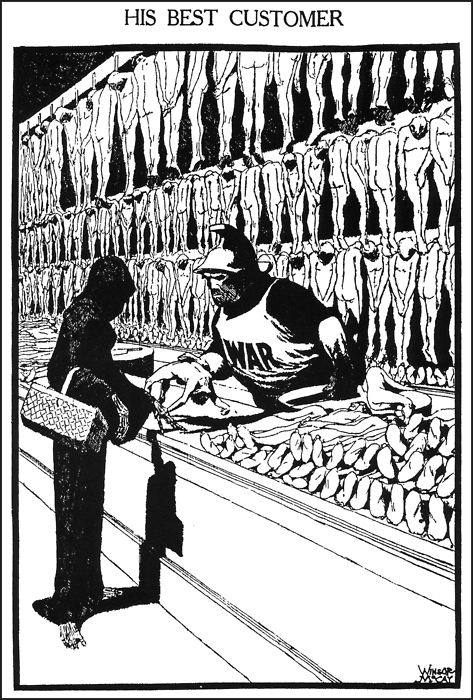
“His Best Customer” — Winsor McCay

mccay

Antonioni Film Poster — Milton Glaser

(Via/more).

Books Acquired, 7.12.2013

20130712-171908.jpg

Hegel’s Happy End — Ged Quinn

(Via/more).

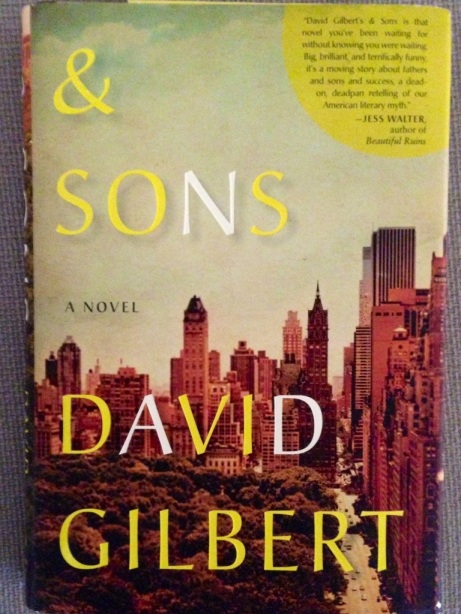
& Sons (Book Acquired, 7.09.2013)

20130709-141542.jpg

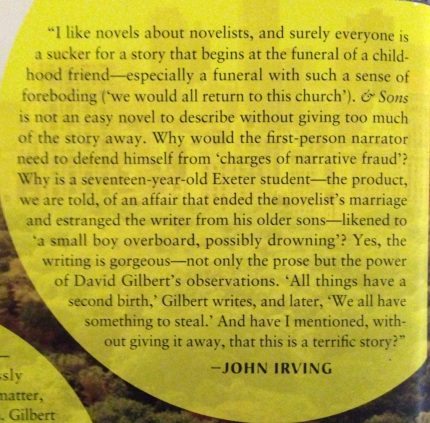
David Gilbert’s & Sons has gotten plenty of advanced praise and been likened to Wonder Boys and The Art of Fielding (which I couldn’t bring myself to waste my time to finish). Here’s John Irving’s blurb:

20130709-141554.jpg

And publisher Random House’s blurb:

The funeral of Charles Henry Topping on Manhattan’s Upper East Side would have been a minor affair (his two-hundred-word obit in The New York Times notwithstanding) but for the presence of one particular mourner: the notoriously reclusive author A. N. Dyer, whose novel Ampersand stands as a classic of American teenage angst. But as Andrew Newbold Dyer delivers the eulogy for his oldest friend, he suffers a breakdown over the life he’s led and the people he’s hurt and the novel that will forever endure as his legacy. He must gather his three sons for the first time in many years—before it’s too late.

So begins a wild, transformative, heartbreaking week, as witnessed by Philip Topping, who, like his late father, finds himself caught up in the swirl of the Dyer family. First there’s son Richard, a struggling screenwriter and father, returning from self-imposed exile in California. In the middle lingers Jamie, settled in Brooklyn after his twenty-year mission of making documentaries about human suffering. And last is Andy, the half brother whose mysterious birth tore the Dyers apart seventeen years ago, now in New York on spring break, determined to lose his virginity before returning to the prestigious New England boarding school that inspired Ampersand. But only when the real purpose of this reunion comes to light do these sons realize just how much is at stake, not only for their father but for themselves and three generations of their family.

In this daring feat of fiction, David Gilbert establishes himself as one of our most original, entertaining, and insightful authors. & Sons is that rarest of treasures: a startlingly imaginative novel about families and how they define us, and the choices we make when faced with our own mortality.


Orson Welles’ Sketchbook: The Early Days

Drawing Room — Balthus

Arabian Nights — Pier Paolo Pasolini (Full Film)

Take Off With Books (Tomi Ungerer Poster)

bookweek

“Openin’ Night” — Shel Silverstein

“Openin’ Night” by Shel Silverstein—

She had the jitters
She had the flu
She showed up late
She missed her cue
She kicked the director
She screamed at the crew
And tripped on a prop
And fell in some goo
And ripped her costume
A place or two
Then she forgot
A line she knew
And went “Meow”
Instead of “Moo”
She heard ‘em giggle
She heard ‘em boo
The programs sailed
The popcorn flew
As she stomped offstage
With a boo-hoo-hoo
The fringe of the curtain
Got caught in her shoe
The set crashed down
The lights did too
Maybe that’s why she didn’t want to do
An interview.

See the Trailer for Spike Lee’s Remake of Oldboy

“Democratic Vistas” — Walt Whitman

“Democratic Vistas” by Walt Whitman

Political democracy, as it exists and practically works in America, with all its threatening evils, supplies a training school for making first-class men. It is life’s gymnasium, not of good only, but of all. We try often, though we fall back often. A brave delight, fit for freedom’s athletes, fills these arenas, and fully satisfies, out of the action in them, irrespective of success. Whatever we do not attain, we at any rate attain the experiences of the fight, the hardening of the strong campaign, and throb with currents of attempt at least. Time is ample. Let the victors come after us. Not for nothing does evil play its part among us. Judging from the main portions of the history of theworld, so far, justice is always in jeopardy, peace walks amid hourly pitfalls, and of slavery, misery, meanness, the craft of tyrants and the credulity of the populace, in some of the protean forms, no voice can at any time say, They are not. The clouds break a little, and the sun shines out-but soon and certain the lowering darkness falls again, as if to last forever. Yet is there an immortal courage and prophecy in every sane soul that cannot, must not, under any circumstances, capitulate. Vive, the attack–the perennial assault! Vive, the unpopular cause–the spirit that audacious]y aims–the never-abandoned efforts, pursued the same amid opposing proofs and precedents.

Once, before the war (alas! I dare not say how many times the mood has come!) I, too, was filled with doubt and gloom. A foreigner, an acute and good man, had impressively said to me, that day-putting in form, indeed, my own observations: “I have traveled much in the United States, and watched their politicians, and listened to the speeches of the candidates, and read the journals, and gone into the public-houses, and heard the unguarded talk of men. And I have found your vaunted America honeycombed from top to toe with infidelism, even to itself and its own program. I have marked the brazen hell-faces of secession and slavery gazing defiantly from all the windows and doorways. I have everywhere found, primarily, thieves and scalliwags arranging the nominations to offices, and sometimes filling the offices themselves. I have found the north just as full of bad stuff as the south. Of the holders of public office in the Nation or the States or their municipalities, I have found that not one in a hundred has been chosen by any spontaneous selection of the outsiders, the people, but all have been nominated and put through by little or large caucuses of the politicians, and have got in by corrupt rings and electioneering, not capacity or desert. I have noticed how the millions of sturdy farmers and mechanics are thus the helpless supple-jacks of comparatively few politicians. And I have noticed, more and more, the alarming spectacle of parties usurping the government, and openly and shamelessly wielding it for party purposes. Continue reading ““Democratic Vistas” — Walt Whitman” →
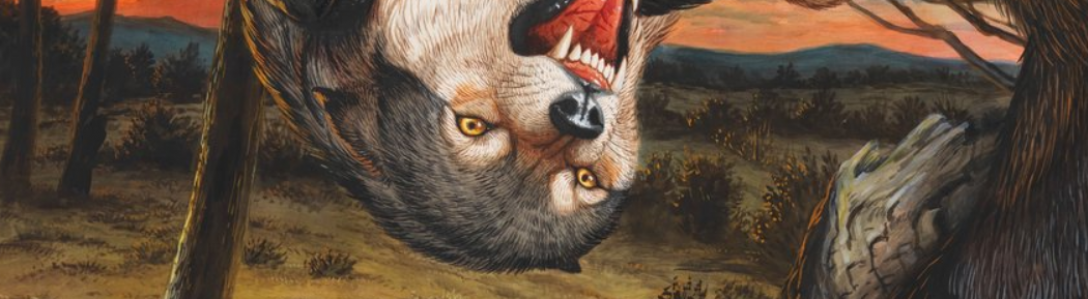
Drawing Room — Balthus

Trailer and Posters for Hayao Miyazaki’s Next Film, The Wind Rises

miya

I don’t know how I missed this—the teaser came out a few weeks ago—but a new Miyazaki is always promising. The Wind Rises is out in Japan in two weeks, out in the rest of the world, who knows when…but I’ve never minded watching his films sans subtitles or dubbing. Read more about The Wind Rises here; read my review of Ponyo, the last Studio Ghibli film that Miyazaki directed.

Kaze-Tachinu-610x859


Eine Kleine Nachtmusik — Dorothea Tanning

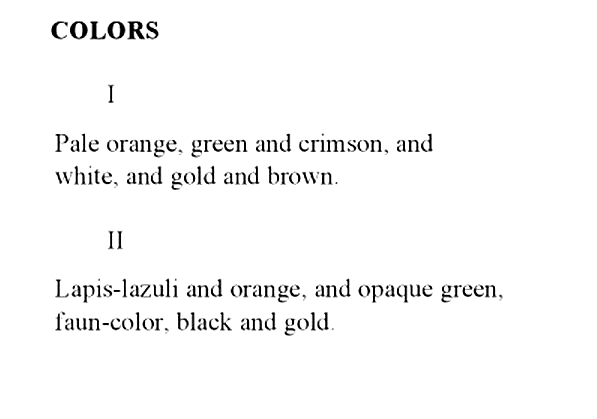
“Colors” — Wallace Stevens

colors

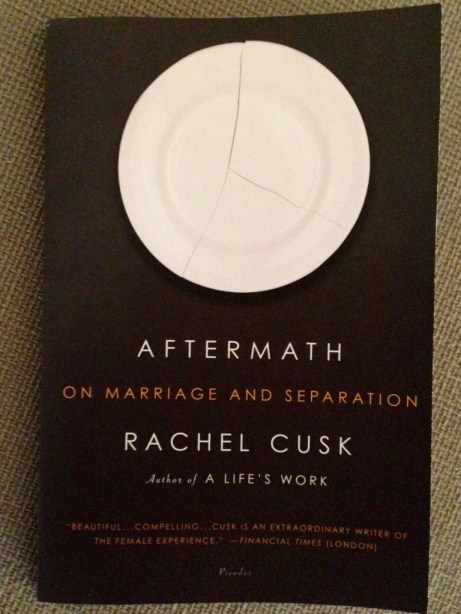
Aftermath (Book Acquired, 7.08.2013)

20130709-141450.jpg

When a review copy of Rachel Cusk’s memoir Aftermath: On Marriage and Separation (new in trade paperback from Picador) showed up the other day, a dim bulb went off—where did I know Cusk’s name? I’m not generally a fan of the memoir, so I doubt I’d read it. And then! Aha! Yes—it was a review of Cusk’s memoir that won Camilla Long this year’s “Hatchet Job of the Year” award.

From Long’s review (originally published in The Sunday Times):

The book is crammed with mad, flowery metaphors and hifalutin creative-writing experiments. There are hectic passages on Greek tragedy and the Christian concept of family, as well as fragments of ghost stories, references to the Anglo-Saxon heptarchy, and heavy Freudian symbolism, including a long description of the removal of a molar, “a large tooth,” she writes portentously, “of great…personal significance”. The final chapter is an out-of-body experience — her situation seen through the eyes of her pill-popping Eastern European au pair. Oddly, I read the whole thing in a Bulgarian accent.

I don’t know, that sounds pretty weird. Kinda intrigues me.