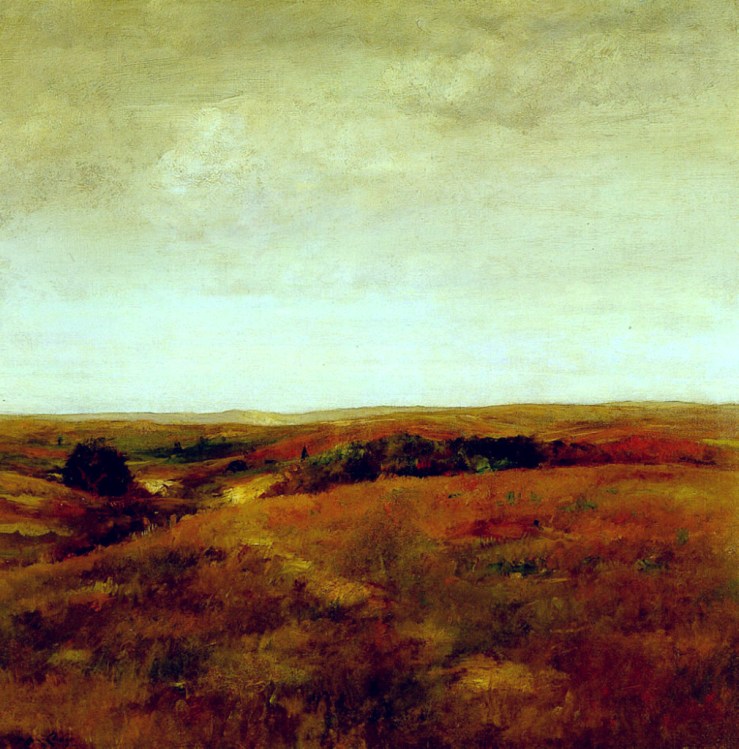
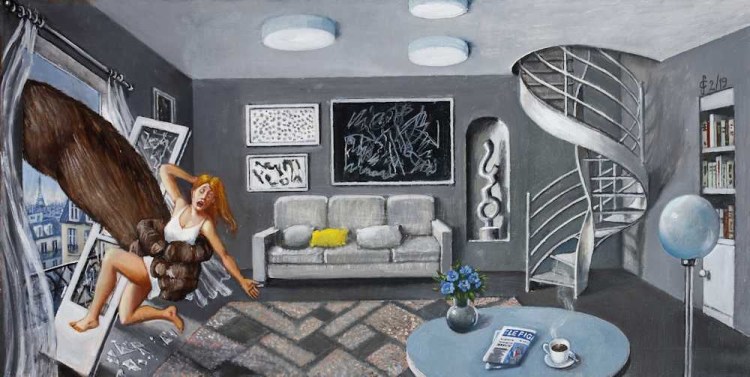
September — Alex Colville

september-1979large

September, 1979 by Alex Colville (1920-2013)

Jim O’Rourke live, 8 Aug. 2021

Vile Vivisectors — James Ensor

Vile Vivisectors, 1925 by James Ensor (1860-1949)

Vasily Grossman’s The People Immortal (Book acquired, 30 Aug. 2022)

A copy of by Vasily Grossman’s 1943 novel The People Immortal arrived at Biblioklept World Headquarters. It’s a new translation by Robert Chandler and Elizabeth Chandler, available next month from NYRB.

(It’s also a reminder to pick up the copy of Grossman’s massive novel Life and Fate that’s been staring me down for years).

NYRB’s blurb:

Vasily Grossman wrote three novels about the Second World War, each offering a distinct take on what a war novel can be, and each extraordinary. A common set of characters links Stalingrad and Life and Fate, but Stalingrad is not only a moving and exciting story of desperate defense and the turning tide of war, but also a monumental memorial for the countless war dead. Life and Fate, by contrast, is a work of moral and political philosophy as well as a novel, and the deep question it explores is whether or not it is possible to behave ethically in the face of overwhelming violence. The People Immortal is something else entirely. Set during the catastrophic first months of the German invasion of the Soviet Union, this is the tale of an army battalion dispatched to slow the advancing enemy at any cost, with encirclement and annihilation its promised end. A rousing story of resistance, The People Immortal is the novel as weapon in hand.

Prego — Eduardo Berliner

Prego, 2020 by Eduardo Berliner (b. 1978)

Nieces — Zoey Frank 

Nieces, 2020 by Zoey Frank (b. 1987)

I never found my audience | Stanley Elkin

Bodies rose to the surface of the seas and began swimming. They were released from faded, colorless flags, stove ships, hidden pilings where they had snagged for years. They came up out of shoals and split sandbars. The drowned and murdered floated up from the bottoms of lakes, their faces and bodies in the same dishabille in which they had died. They seeped out of riverbanks, they surfaced in wells. A rising tide of the dead.

In woods and rain forests they quickened, corpses lost years. They came to in deserts, they waked up on mountains, a treasury of jigsaw death. One could not have suspected their numbers, that so many random had fallen. These were merely the discards, the old boot dead, stochastic as beer can, deposit bottle.

They woke up in battlefields. They gathered themselves where they had exploded. They got up in hospitals, their deaths not yet discovered. They still wore identification bracelets, IVs dangled from their wrists like slack banderillas. They woke up in archeology, cities done in by earthquake, fire, and time.

They climbed out of eaves, out of canyons, geology.

Up out of mine shafts they came, comrades in cave-ins.

They worked their way through holes they had melted in glaciers.

All earth gave up its dead.

They strained against coffin lids, against sealers. Stymied as escape artists they banged encumbrance.

They swarmed, they popped through, the hatched, frantic chicks of death.

A man named Ladlehaus climbed out of his grave like someone backing out a window.

Like elopers they left their burials. They touched their tombs and niches as if they were the old rooms of childhood, brushing them lightly, as if they were dusting. They scrutinized their plots and read their markers like people hunting addresses. They loitered in their graveyards as if they were keeping appointments. Already they missed their deaths. There were complaints. They were cold in just sunlight after the heat of Hell. Those who had donated organs had lost them forever. They could feel the cavities and hollows, the terrible gouged and amputate absentness A woman who had given her eyes away stirred her fingers in her weeping holes.

“So grotesque,” she moaned, “death grotesque as life. All, all grotesque.”

They came down from churchyards on hillsides and in from cemeteries on the outskirts of town. They bestirred themselves in the celebrated tombs and sepulchers of the big-shot dead.

Their bodies shone with gore like wet paint, They sooted the world as if it were carpet. The living and dead were thrown together, and the dead looked away first.

Tribes covered the earth now, families did, clans, races. Mary, squeamish in the press of population, could not bear the stench. It’s morning sickness, she told herself. Joseph couldn’t get over how much things had changed, and Christ flinched when he saw soldiers. Quiz, looking for sanctuary, pulled Flanoy into a Y.M.C.A.

Into the Valley of jehoshaphat they came and along all the coasts of Palestine. They covered the ranges of Samaria and Judea, of Abilene and Gilead, and stood in the Plains of jezreel and Sharon and spread out by Kinnereth’s Sea and the salted waters between Idumea and Moab. And were a million deep all about the tough shores of the ruined Mediterranean circle.

They seemed a kind of vegetation, their burnt skin a smear of sullen growth. Pressed together, Coney Island’d, Woodstock’d, Tivoli Garden’d, jonestownd, they seemed spectators at some game less stadium, vast as the world.

They waited. They did not know what was going to happen. They consulted the religious among them but they didn’t know either.

Then God was there and, strangely, all could see Him. There was not a bad seat in the house. It was short and sweet.

“Because I never found My audience,” God said.

“Because I never found My audience.” He looked at the assembled dead, at the living billions anxious at ground zero.

“You gave me, some of you, your ooh’s and aah’s, the Jew’s hooray and Catholic’s Latin deference-all theology’s pious wow. But I never found My audience.” He looked at Mary, who had feared Him, victim to His blue ribbon force, distrustful still, savoring the ordinary who had been taken out of all that.

“I never found My audience. What had you,” He asked His audience, “to complain of? You had the respect of peers. You had peers.” He looked at Jesus.

“You were no audience. You had all the advantages. You were only God’s clone.” And at Joseph.

“You were a carpenter,” He said.

“You did things with your hands. Why didn’t you admire Me more?” At the damned.

“I gave you pain. Do you appreciate the miracle? To make it up out of thin air, deep, free-fall space, the gifted, driven atoms of remonstrance? Trickier than orange juice or the taste of Brie. Because I never found My audience,” said God and annihilated, Mother Mary and Christ and Lesefario and Flanoy and Quiz in their Y.M.C.A. sea front room in Piraeus and all Hell’s troubled sighed, everything.

From Stanley Elkin’s novel The Living End.

A Girl Reading — Frank Huddlestone Potter

A Girl Reading by Frank Huddlestone Potter (1845-1887)

Believe in me (Peanuts)

The Miracle of the Gaderene Swine — Briton Riviere

The Miracle of the Gaderene Swine, 1883 by Briton Riviere (1840-1920)


26 And they arrived at the country of the Gadarenes, which is over against Galilee.

27 And when he went forth to land, there met him out of the city a certain man, which had devils long time, and ware no clothes, neither abode in any house, but in the tombs.

28 When he saw Jesus, he cried out, and fell down before him, and with a loud voice said, What have I to do with thee, Jesus, thou Son of God most high? I beseech thee, torment me not.

29 (For he had commanded the unclean spirit to come out of the man. For oftentimes it had caught him: and he was kept bound with chains and in fetters; and he brake the bands, and was driven of the devil into the wilderness.)

30 And Jesus asked him, saying, What is thy name? And he said, Legion: because many devils were entered into him.

31 And they besought him that he would not command them to go out into the deep.

32 And there was there an herd of many swine feeding on the mountain: and they besought him that he would suffer them to enter into them. And he suffered them.

33 Then went the devils out of the man, and entered into the swine: and the herd ran violently down a steep place into the lake, and were choked.

Luke 8:26-32, KJV

God gave a gala | Stanley Elkin

God gave a gala, a levee at the Lord’s.

All Heaven turned out.

“Gimme,” He said, that old time religion.” His audience beamed. They cheered, they ate it up. They nudged each other in Paradise.

“What did I tell you?” He demanded over their enthusiasm.

“It’s terrific, isn’t it? I told you it would be terrific. All you ever had to do was play nice. Are you disappointed? Is this Heaven? Is this God’s country? In your wildest dreams-let Me hear it. Good-in your wildest dreams, did you dream such a Treasury, this museum Paradise? Did you dream My thrones and dominions, My angels in fly-over? My seraphim disporting like dolphins, tumbling God’s sky in high Heaven’s high acrobacy? Did you imagine the miracles casual as card tricks, or ever suspect free lunch could taste so good? They should see you now, eh? They should see you now, trembling in rapture like neurological rut. Delicious, correct? Piety a la mode! That’s it, that’s right. Sing hallelujah! Sing Hizzoner’s hosannas, Jehovah’s gee whiz! Well,” God said, .1 that’s enough, that will do.” He looked toward the Holy Family, studying them for a moment.

“Not like the creche, eh?” He said.

“Well is it? Is it?” He demanded of Jesus.

“No,” Christ said softly.

“No,” God said, “not like the creche. just look
at this place- the dancing waters and indirect lighting. I could put gambling in here, off-track betting. Oh, oh, My costume jewelry ways, My game show vision.

Well, it’s the public. You’ve got to give it what it wants. Yes, Jesus?”

“Yes,” Jesus said.

“It just doesn’t look lived in, is that what you think

“Call on someone else,” Christ said.

“Sure,” God said.

“I’m Hero of Heaven. I call on Myself.”

That was when He began His explanations. He revealed the secrets of books, of pictures and music, telling them all manner of things-why marches were more selfish than anthems, lieder less stirring than scat, why landscapes were to be preferred over portraits, how statues of women were superior to statues of men but less impressive than engravings on postage. He explained why dentistry was a purer science than astronomy, biography a higher form than dance. He told them how to choose wines and why solos were more acceptable to Him than duets. He told them the secret causes of inflation-“It’s the markup,” He said-and which was the best color and how many angels could dance on the head of a pin. He explained why English was the first language at Miss Universe pageants and recited highlights from the eighteen-minute gap.

Mary, wondering if she showed yet, was glad Joseph was seated next to her. Determined to look proud, she deliberately took her husband’s hand. So rough, she thought, such stubby fingers. He explained why children suffered and showed them how to do the latest disco steps. He showed them how to square the circle, cautioning afterwards that it would be wrong.

He revealed the name of Kennedy’s assassin and told how to shop for used cars.

From Stanley Elkin’s novel The Living End.

Midnight Monster — Takaya Katsuragawa

Midnight Monster by Takaya Katsuragawa

Tajh by the Waters — Dominic Chambers

Tajh by the Waters, 2020 by Dominic Chambers (b. 1993)

No. II — Cy Twombly

No. II, 1974 by Cy Twombly (1928-2011)

Gwendoline Riley’s First Love and My Phantoms (Books acquired, 16 Aug. 2022)

NYRB is publishing two novels by Gwendoline Riley next month: First Love and My Phantoms. Both novels were previously published in the UK.

Blurb for First Love:

Neve is a writer in her mid-thirties married to an older man, Edwyn. For now they are in a place of relative peace, but their past battles have left scars. As Neve recalls the decisions that led her to this marriage, she tells of other loves and other debts, from her bullying father and her self-involved mother to a musician who played her and a series of lonely flights from place to place.

Drawing the reader into the battleground of her relationship, Neve spins a story of helplessness and hostility, an ongoing conflict in which both husband and wife have played a part. But is this, nonetheless, also a story of love?

And My Phantoms:
Helen Grant is a mystery to her daughter. An extrovert with few friends who has sought intimacy in the wrong places, a twice-divorced mother of two now living alone surrounded by her memories, Helen (known to her acquaintances as “Hen”) has always haunted Bridget.

Now, Bridget is an academic in her forties. She sees Helen once a year, and considers the problem to be contained. As she looks back on their tumultuous relationship—the performances and small deceptions—she tries to reckon with the cruelties inflicted on both sides. But when Helen makes it clear that she wants more, it seems an old struggle will have to be replayed.

From the prize-winning author of First LoveMy Phantoms is a bold, heart-stopping portrayal of a failed familial bond, which brings humor, subtlety, and new life to the difficult terrain of mothers and daughters.

Noise like crumpled pages, noise like burned books, and over 100 other similes from Roberto Bolaño’s novel 2666

    1. black eyes like two deep wells
    2. He seemed less like a child than like a strand of seaweed.
    3. little particles of his own filth floated, tiny bits of skin that traveled like submarines toward an inlet the size of an eye, a calm, dark cove, although there was no calm, and all that existed was movement
    4. watching the fragments of his body drift away in all directions, like space probes launched at random across the universe
    5. a region very like hell
    6. he moved across the surface of the earth like a novice diver along the seafloor
    7. strands that really did look like fingers
    8. The Poles look like chickens, but pluck four feathers and you’ll see they’ve got the skin of swine.
    9. They look like starving dogs but they’re really starving swine, swine that’ll eat anyone, without a second thought, without the slightest remorse.
    10. They’re like swine disguised as Chihuahuas.
    11. A churning gray like pus.
    12. like ghost towns
    13. like blood and rotting meat
    14. moving like a diver
    15. like a night diver
    16. What was it about the boy that made him look like seaweed?
    17. that dark sea, a sea like a pack of wolves
    18. dark waves like forest beasts
    19. the body of young Reiter floating like uprooted seaweed, upward, a brilliant white in the underwater space
    20. sometimes the baby looked like a bag of rubbish left on a pebbly beach
    21. other times like Petrobius maritimus, a marine insect that lives in crevices and rocks and feeds on scraps, or Lipura maritima, another insect, very small and dark slate or gray, its habitat the puddles among rocks
    22. like prophecies
    23. “My son,” said the one-legged man.
      “He looks like a giraffe fish,” said the former pilot, and he laughed.
    24. that weekend was like a month
    25. samurais were like fish in a waterfall but the best samurai in history was a woman
    26. an eternity, like the minutes of those condemned to die
    27. like the minutes of women who’ve just given birth and are condemned to die
    28. like luxurious excrescences or heartbeats
    29. go forth like the keeper of a swarm of bees, except that this beekeeper wasn’t protected by a mesh suit or a helmet and woe betide the bee that tried to sting him, even if only in thought.
    30. like the eyes of a hawk that flies and delights in its flight, but that also maintains a
      watchful gaze
    31. noise like crumpled pages, noise like burned books
    32. cavorted like a mermaid
    33. he watched the sunrise as it washed like a wave over the city, drowning them all
    34. darts along like a squirrel
    35. the village, like a black lump set or encrusted in the darkness
    36. like a box from some scientific research center where glove-wearing German scientists pack away something with the power to destroy the world and Germany too
    37. like seeing a giraffe go off in a pack of wolves, coyotes, and hyenas
    38. the seaweed jungle was like the locks of a dead giant
    39. like sheep or little goats
    40. He saw hills or rocky outcroppings that looked like ships about to sink, prows lifted, like enraged horses, nearly vertical
    41. the towers of the castle like two gray candles on a deserted altar
    42. being here is like being buried alive
    43. like a shadow
    44. more like a horse than a man
    45. like an engraving of a worker or artisan, an innocent passerby suddenly blinded by a ray of moonlight
    46. swaying back and forth, like a little shepherdess gone wild in the vastness of Asia
    47. reality was increasingly vague, more like a dream
    48. d her eyes, a washed-out blue, like the eyes of a blind woman
    49. strolling like philosophers
    50. woods like dark islands in the middle of endless wheat fields
    51. a black fog rose before his eyes, full of granulated dots like a rain of meteors
    52. he fired and walked, like someone strolling and taking photographs, until the
      fort exploded
    53. looking as if they were starving or like pupils at a reform school
    54. the sergeant looked like an ant that gradually grew bigger and bigger
    55. already approaching old age, like the biblical Abraham and Sarah
    56. drank like a condemned woman
    57. more like a strand of seaweed than a human being
    58. the seaweedlike extraterrestrial
    59. like a burning doll
    60. a rending violence, like a claw, but not a claw that did any damage
    61. like a claw that pounces and floats in the middle of the room, like a helium balloon, a selfconscious claw, a claw-beast that wonders what in God’s name it’s doing in this rather untidy room, who that old man is sitting at the table, who that young man is standing with tousled hair, then falls to the floor, deflated, returned once more to nothing.
    62. like something rotting
    63. like an orphan, a self-designated orphan
    64. On the subject of art, a politician with power is like a colossal pheasant, able to crush mountains with little hops, whereas a politician without power is only like a village priest, an ordinary-sized pheasant.
    65. They lived like garbagemen. They were the garbagemen of the jungle
    66. like birds
    67. like a horror painting
    68. other poets shun them like lepers
    69. the sudden appearance of this incredible woman is like a miracle
    70. inspecting the dead like someone who inspects a lot for sale or a farm or a country house
    71. like madmen escaped from an asylum
    72. From a hill he saw a column of German tanks moving east. They looked like the coffins of an extraterrestrial civilization.
    73. feeling something very strange that sometimes seemed like happiness and other times like a guilt as vast as the sky
    74. the bottom of the river was like a gravel road
    75. a vague noise, like the clatter of furniture, as if sick people were moving furniture around
    76. the full moon filtered through the fabric of the tent like boiling coffee through a sock
    77. my name has grown like a malignant tumor and now it turns up on the most unlikely documents
    78. the light sweeping the tent like a bird’s wing or a claw
    79. dreamlike
    80. they seemed less like children than like the skeletons of children, abandoned sketches, pure will and bone
    81. like girls who’ve just woken from a terrible nightmare
    82. like the habitues of racetracks who commit suicide in cheap rented rooms or hotels tucked away on back-streets frequented by gangsters
    83. like a murderer
    84. like a ragpicker’s room
    85. he drank like a Cossack
    86. the killer will open the window of my room and come tiptoeing in like a nurse
      and slit my throat, bleed me dry
    87. I would never manage to create anything like a masterpiece.
    88. He writes like someone taking dictation.
    89. his old man’s neck, like the neck of a turkey or a plucked rooster
    90. his gray temples like a stormy sea
    91. deep eyes that at the slightest tilt of his head seemed at times like two endless tunnels, two abandoned tunnels on the verge of collapse.
    92. a kind of crepuscular lethargy crept from under the doors like poison gas
    93. Mickey, like the mouse
    94. Everything is burning. It looks more like the moon than Normandy.
    95. like the living dead, zombies, cemetery dwellers, soldiers without eyes or mouths, but with penises
    96. like the soldier who was trapped under a pile of corpses and there, beneath the corpses and the snow, he dug a little cave with his regulation shovel, and
      to pass the time he jerked off, more boldly each time, because once the fear and surprise of the first few instants had vanished, all that was left was the fear of death and boredom, and to stave off boredom he began to masturbate, first timidly, as if he were seducing a peasant girl or a little shepherdess, then with increasing determination, until he managed to bring himself off to his full satisfaction, and he went on like that for fifteen days, in his little cave of corpses and snow, rationing his food and indulging his urges, which didn’t make him weaker but rather seemed to retronourish him, as if he had drunk his own semen or as if after going mad he had found a forgotten way back to a new sanity, until the German troops counterattacked and discovered him
    97. not dirty or like shit or urine, nor like rot or worm meat
    98. like Ali Baba’s cave
    99. like a doll’s house, a cabin, a hut, a place that existed on the edge of time and remained fixed in a willed and imaginary childhood, comfortable and unspoiled.
    100. like something out of a fairy tale
    101. Then he began to talk, still pacing, about Europe, Greek mythology, and something
      vaguely like a police investigation
    102. like something out of a PreRaphaelite painting
    103. a little white-chocolate house with beams like slabs of dark chocolate, surrounded by a little garden in which the flowers looked like paper cutouts and a lawn trimmed with mathematical precision
    104. all human beings are obliged to bear until their deaths, like the rock of Sisyphus
    105. throbbed like the ripped-out heart of an Aztec victim
    106. typewriter was like a heart, a giant heart beating in the middle of the fog and chaos
    107. the stain of blood was like a giant rose in full bloom
    108. and the mountains multiplying in the night, all white, like nuns with no worldly ambitions.
    109. a laugh that sounded to Archimboldi like a cascade of ice
    110. she didn’t weigh a thing anymore, it was like climbing up with a bundle of sticks
    111. like a couple of vagabonds
    112. buildings propping each other up like little old Alzheimer’s patients, a jumble of houses and mazelike passageways where distant voices could be heard, worried voices asking questions and offering answers with great dignity
    113. Like the final surroundings of Sisyphus
    114. like a phantom
    115. He smiled like a father
    116. the place looked like a graveyard
    117. the old man in pajamas looked less like a vanished novelist than like a justly forgotten novelist, the typical hard-luck bad French novelist, most likely born at the wrong time
    118. a sweet and chirping voice, like the water of a brook that runs over a bed of flat stones
    119. The essayist looked like a cigarette covered with a handkerchief.
    120. arm in arm like two ex-lovers who no longer have many secrets to tell
    121. a car like a hearse awaited her
    122. the days were like nights and the nights like days
    123. sometimes the days and nights were unlike anything, everything was a continuum of blinding brightness and explosions
    124. Mouths like carrots, with peeling lips, and noses like wet potatoes
    125. like women who haven’t yet begun to menstruate
    126. he preferred someone decent and hardworking, who wouldn’t suck his blood like a
      vampire
    127. Her suffering was like the screech of chalk on a blackboard. As if a boy were dragging a piece of chalk across a blackboard on purpose to make it screech.
    128. like looking for a needle in a haystack
    129. slept like a baby
    130. The sounds she heard were like the sounds of the abyss.

These similes are from “The Part About Archimboldi,” the fifth part of 2666, a novel by Roberto Bolaño, in English translation by Natasha Wimmer.

The Rat-Catcher’s Daughter — Laurence Housman

The Rat-Catcher’s Daughter, c.1904 by Laurence Housman (1861-1959)

Read the story here.