Resurrection of the Flesh (Detail) — Luca Signorelli

“Gone Tomorrow” — Lambchop

Books Acquired, Some Time Over the Past Two Weeks

20120510-132200.jpg

Art Spiegelman Visits Maurice Sendak

“In the Dumps,” originally published in The New Yorker, is collected in Spiegelman’s latest MetaMaus.

Charles Dickens’s Walking Stick

(Via/about).

The Grain Sifters — Gustave Courbet

“The Chief Seat of Lycanthropy Was Arcadia”

It is to be observed that the chief seat of Lycanthropy was Arcadia, and it has been very plausibly suggested that the cause might he traced to the following circumstance:–The natives were a pastoral people, and would consequently suffer very severely from the attacks and depredations of wolves. They would naturally institute a sacrifice to obtain deliverance from this pest, and security for their flocks. This sacrifice consisted in the offering of a child, and it was instituted by Lycaon. From the circumstance of the sacrifice being human, and from the peculiarity of the name of its originator, rose the myth.

From Sabine Baring-Gould’s The Book of Were-Wolves (1865)

Henry Miller Reads (Film)

In the Desert — Gustave Guillaumet

“to sex brawl and dare” — A Poem from Surrealist Ghérasim Luca

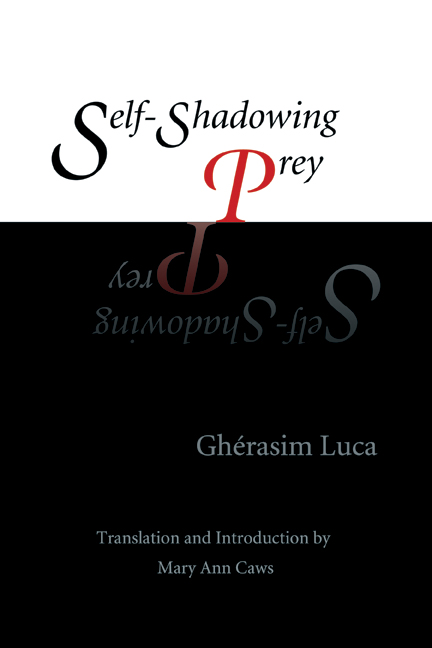
The good people at Contra Mundum Press are putting out the first English language translation of Romanian surrealist Ghérasim Luca’s Self-Shadowing Prey. Mary Ann Caws translates. Here’s the first poem in the book:

at the edge of a forest

whose trees are slender ideas

and each leaf a thought at bay

the vegetal reveals to us

the damned depths of an animal sect

or more precisely

an old insect anguish

waking up as man

the only way

the only basic weapon

to animate a mental state

that I hurry to write mantil

like a mantis

if only to mark

with a dry warning laugh

the devouring word

Entity and antithesis of the bush

a sort of wild and organic brush

grows in the head of that man

ravaged

by the heresy of parks and greenhouses

like the orgasm of a key

a lovely door

So the legendary passivity

the famous and ample passivity of plants

changes here to idle hate

to mad rage

to sex brawl and dare

luring by sap blood lava . . .

as rapid as the passage of woman

to beast

she empties us of a foul ancestral

wound

which in a spurt relieves us

of these fixed plaints

and these false death rattles plumbing us

our calm gestures of the interred

Now only terror

is still able to insert

in the tropism of body and of guilty

spirit

this prism as doubled echo

where brains and senses capture

the violent innocence

of a flora and a fauna

whose marriage is a long seizure

and a rape as slow as gold

in the implacable lead

And it’s around the mental equator

in the space delimited by the tropics

of a head

at the angle of the eye and what surrounds it

that the myth of a kind of utopian

jungle surges into the world

As virgin as the unknowable

or the other “face” of the moon

and never in the reach of a gun

or an axe

its prey is the snow

sand ball hip if not the trap

that the diffuse breath of a dream

lights up

For tangled

soldered to massive corkscrew keys

the vines

the branches stoves and rituals

fuse

around the forms placed

as if by miracle

at the crossroads of dryads

of druids and of man

So many points to aim at

all these yes and nos that

outside outside of time

of space and weight

select a sort of coupled oasis

and hamlet

to descend in these gods

from before the ages

the gods-place-beast-island-ash-fire

come forth as from the coupling of bird

and branch

and those exiled from the center

and from the shade of a golden foliage

will adore one day

between the walls of their somber cities

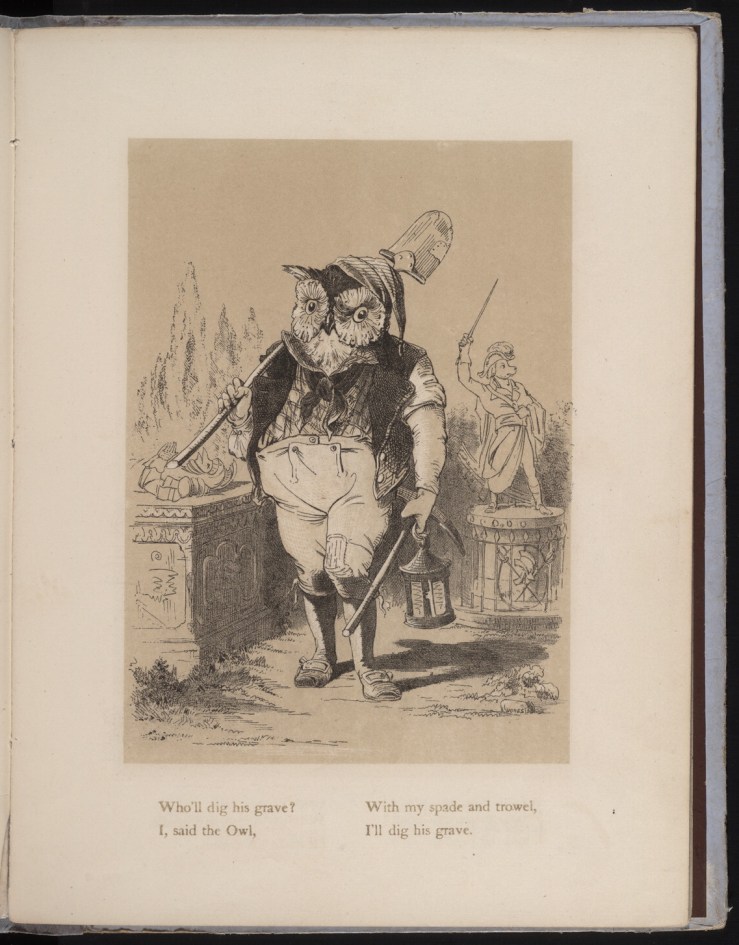
“Who’ll Dig His Grave? / I, Said the Owl”

From Death and Burial of Poor Cock Robin by H.L. Stephens, 1865.

Walton Ford at Work

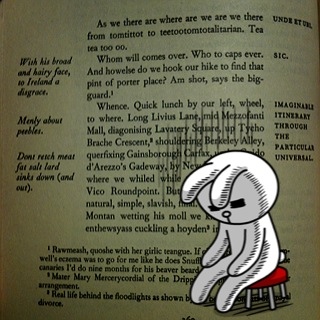
Finnegans Wake (With Bunny)

20120502-201713.jpg

20120502-201724.jpg

20120502-201732.jpg

20120502-201741.jpg

20120502-201752.jpg

20120502-201807.jpg

20120502-201817.jpg

20120502-201836.jpg

20120502-201846.jpg

20120502-201854.jpg

Radio Transmission (Cocteau’s Orphée)

Book Shelves #19, 5.06.2012

20120502-173818.jpg

Book shelves series #19, nineteenth Sunday of 2012.

When I started this project, this shelf was all Tolkien and Joyce; now it’s mostly Gaddis and Joyce.

I have dupes of most of the Joyce books here; there’s also Joyce criticism/guides on the shelf.

Another angle. Glare is horrible. iPhone is not a good camera; lots of glare; shelf is much taller than me, etc.:

20120502-173845.jpg

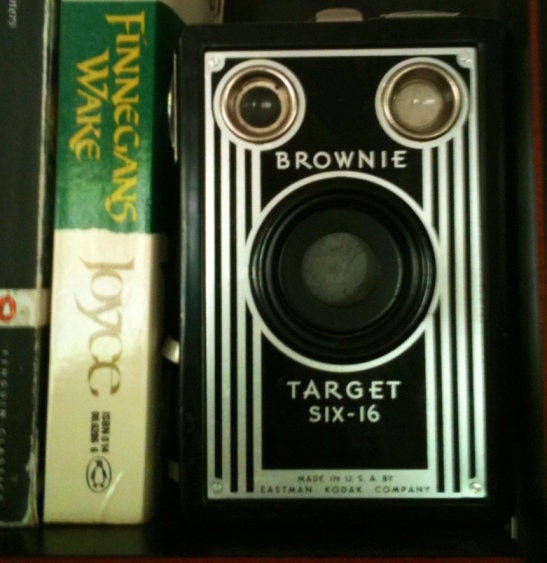
Here’s a tight shot of the Brownie Six-16 that serves as bookend:

20120502-173907.jpg

Something from Finnegans Wake :

20120502-174223.jpg

“Alexander Stole an Ear from a Morgue” (Tom McCarthy on the Haunted Telephone)

If technology in general is at once a form both of self-extension and of amputation, then the branch of it that concerns itself with information and its relay—communication technology—is a true field-hospital operating -theater floor of hacked-off limbs, of bereaved bodies. A quick glance at the history of almost any comm.tech device will illustrate this perfectly.

Take the telephone: Alexander Bell, its inventor, grew up in the shadow of his father who ran a school for deaf-mutes and was continually inventing machines to substitute their powers of hearing and speaking. As a student, Alexander stole an ear from a morgue so that he could try to reproduce its inner workings mechanically; a few years later he brought home another defunct ear and, attached to it, the woman he’d marry, deaf like his mother. After his first brother died when his lungs gave out on him, he made a pact with the remaining one that if a second of them should die, the survivor would invent a device capable of receiving messages from the afterlife, should such a thing turn out to exist. The second brother did die, and Bell invented the telephone. He would probably have invented it anyway, and in fact remained a sceptic vis-a-vis the question of existence after death—but only because his brother never called. The desire for the call was there, wired into the very apparatus, haunting it.

From Tom McCarthy’s forthcoming essay “Transmission and the Individual Remix.”