RIP Lucian Freud

(More, more).

Mad Meg — David Teniers the Younger

Mad Meg — Pieter Brueghel the Elder

“On Leaving Some Friends At An Early Hour” — John Keats

“On Leaving Some Friends At An Early Hour” by John Keats—-

Give me a golden pen, and let me lean
On heaped-up flowers, in regions clear, and far;
Bring me a tablet whiter than a star,
Or hand of hymning angel, when ’tis seen
The silver strings of heavenly harp atween:
And let there glide by many a pearly car
Pink robes, and wavy hair, and diamond jar,
And half-discovered wings, and glances keen.
The while let music wander round my ears,
And as it reaches each delicious ending,
Let me write down a line of glorious tone,
And full of many wonders of the spheres:
For what a height my spirit is contending!
‘Tis not content so soon to be alone.

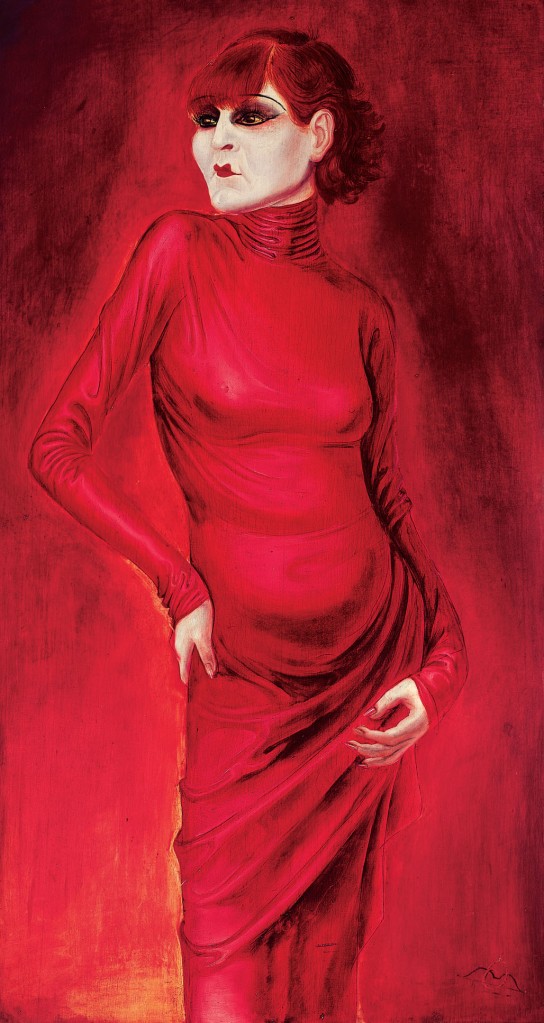
Portrait of Dancer Anita Berber — Otto Dix

Portrait of Dancer Anita Berber -- Otto Dix (1925)

“The Book of Mythologies” — A Scene from Peter Greenaway’s Film Prospero’s Books

Shy Coworker, Dirty Movies

Started Wayne Koestenbaum’s Humiliation (forthcoming from Picador) last night, and it’s excellent—one of the best cultural commentaries I’ve read in years. Abjection, King Lear, Julia Kristeva, Michael Jackson, Liza Minelli, A Star Is Born, fear of writing—great stuff. Full review soon.

“I Have a Very Vivid Child’s View” — A 1967 Interview with J.R.R. Tolkien

Read this marvelous 1967 profile of J.R.R. Tolkien by Philip Norman, in The New York Times. The piece focuses on Tolkien’s impact in America, particularly in the universities and the counterculture. From the piece—

Tolkien wasn’t a hearty child. At the age of 3 he was brought home from Bloemfontein, South Africa, his birthplace, and brought up at Sarehole, near Birmingham. Until he won a scholarship to grammar school his mother taught him. He is particularly attached to the powder horn; it reminds him of being “borrowed” by an African named Isaac, who wanted to show a white baby off in his kraal. “It was typical native psychology but it upset everyone very much, of course. I know he called his son Isaac after himself, Mister Tolkien after my father and Victor-ha! ha!-after Queen Victoria.

“I was nearly bitten by a snake and I was stung by a tarantula, I believe. In my garden. All I can remember is a very hot day, long, dead grass and running. I don’t even remember screaming. I remember being rather horrified at seeing the Archdeacon eat mealies [Indian corn] in the proper fashion.” …Tolkien stuck his fingers in his mouth.

“Quite by accident, I have a very vivid child’s view, which was the result of being taken away from one country and put in another hemisphere-the place where I belonged but which was totally novel and strange. After the barren, arid heat a Christmas tree. But no, it was not an unhappy childhood. It was full of tragedies but it didn’t tot up to an unhappy childhood.”

Jacob’s Ladder — William Blake

Herman Melville’s Lifetime Literary Earnings

The chart below is from The Life and Works of Herman Melville.

Note: This chart does not represent Melville’s entire literary production. It does not list earnings for the magazine articles or for Israel PotterThe Piazza Tales, and The Confidence-Man, for which surviving records are incomplete; nor does it give figures for the volumes of poetry that were published at private expense.

		    UNITED STATES	       UNITED KINGDOM		      TOTALS

		Copies       	            Copies       	        Total       Total
Title		Sold	     Earnings	    Sold	 Earnings (a)   Sales       Earnings
--------------------------------------------------------------------------------------------
Typee		9,598	     1,138.61	    6,722	   708.40	16,320	    1,847.01

Omoo		7,403	     1,719.78	    5,932	   644.00	13,335	    2,363.78

Mardi		2,900	       740.88	    1,000	   970.65	 3,900      1,711.53

Redburn		4,718	       683.57	      750	   484.00	 5,468	    1,167.57

White-Jacket	4,922	       969.44	    1,000	   968.00	 5,922	    1,937.44

Moby-Dick	3,215	       556.37	      500	   703.08	 3,715	    1,259.45

Pierre		1,821	       157.75	      --	      --	 1,821	      157.75
Battle-Pieces	  471	     - 229.71 (b)     --	      --	   471	    - 229.71
	       ------	     --------	   ------	 --------	------	   ---------
TOTALS	       35,048	     5,736.69 	   15,905	 4,478.13       50,953	   10,214.82

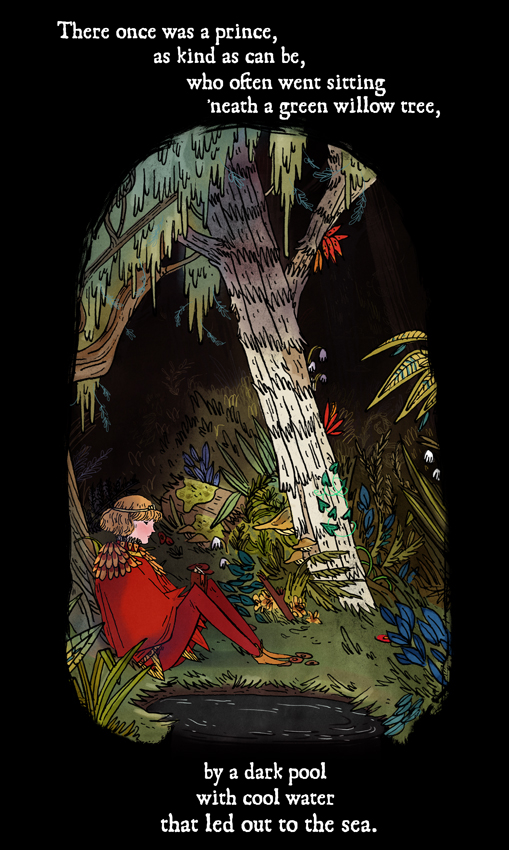
“The Prince and the Sea” — Em Carroll


Read “The Prince and the Sea,” another beautiful, dark webcomic from Em Carroll (she also did the brilliant tale “His Face All Red”).

David Lynch’s Inland Empire Has the Best Closing Credits in the History of Film

I feel like Inland Empire is probably David Lynch’s most overlooked film—it amazes how many genuine Lynch fans, who love stuff like Blue Velvet and Mullholand Drive, have put off seeing the film, usually because of its length, it seems, or the fact that it didn’t get a big Hollywood push, or that Lynch shot it himself on digital video. Anyway, I loved the film (my review), and the cathartic dance sequence at the end (set to one of my all-time favorite jams, Nina Simone’s “Sinner Man”) hopefully might entice one or two readers to give the film a fair shot (although the scene stands on its own, of course).

Edgar Allan Poe Reviews Nathaniel Hawthorne’s Twice-Told Tales

Edgar Allan Poe reviews Nathaniel Hawthorne’s Twice-Told Tales. Originally published in Graham’s Magazine, April, 1842—

We have always regarded the Tale (using this word in its popular acceptation) as affording the best prose opportunity for display of the highest talent. It has peculiar advantages which the novel does not admit. It is, of course, a far finer field than the essay. It has even points of superiority over the poem. An accident has deprived us, this month, of our customary space for review; and thus nipped in the bud a design long cherished of treating this subject in detail; taking Mr. Hawthorne’s volumes as a text. In May we shall endeavor to carry out our intention. At present we are forced to be brief.

With rare exception–in the case of Mr. Irving’s “Tales of a Traveller” and a few other works of a like cast–we have had no American tales of high merit. We have had no skilful compositions–nothing which could bear examination as works of art. Of twattle called tale-writing we have had, perhaps, more than enough. We have had a superabundance of the Rosa-Matilda effusions–gilt-edged paper all couleur de rose: a full allowance of cut-and-thrust blue-blazing melodramaticisms; a nauseating surfeit of low miniature copying of low life, much in the manner, and with about half the merit, of the Dutch herrings and decayed cheeses of Van Tuyssel–of all this,eheu jam satis!

Mr. Hawthorne’s volumes appear to us misnamed in two respects. In the first place they should not have been called “Twice-Told Tales”–for this is a title which will not bear repetition. If in the first collected edition they were twice-told, of course now they are thrice-told.–May we live to hear them told a hundred times! In the second place, these compositions are by no means all “Tales.” The most of them are essays properly so called. It would have been wise in their author to have modified his title, so as to have had reference to all included. This point could have been easily arranged.

But under whatever titular blunders we receive this book, it is most cordially welcome. We have seen no prose composition by any American which can compare with some of these articles in the higher merits, or indeed in the lower; while there is not a single piece which would do dishonor to the best of the British essayists.

“The Rill from the Town Pump” which, through the ad captandum nature of its title, has attracted more of public notice than any one other of Mr. Hawthorne’s compositions, is perhaps, the least meritorious. Among his best, we may briefly mention “The Hollow of the Three Hills;” “The Minister’s Black Veil;” “Wakefield;” “Mr. Higginbotham’s Catastrophe,” “Fancy’s Show-Box;” “Dr. Heidegger’s Experiment;” “David Swan;” “The Wedding Knell;” and “The White Old Maid.” It is remarkable that all these, with one exception, are from the first volume.

The style of Mr. Hawthorne is purity itself. His tone is singularly effective–wild, plaintive, thoughtful, and in full accordance with his themes. We have only to object that there is insufficient diversity in these themes themselves, or rather in their character. His originality both of incident and of reflection is very remarkable; and this trait alone would ensure him at least our warmest regard and commendation. We speak here chiefly of the tales; the essays are not so markedly novel. Upon the whole we look upon him as one of the few men of indisputable genius to whom our country has as yet given birth. As such, it will be our delight to do him honor; and lest,

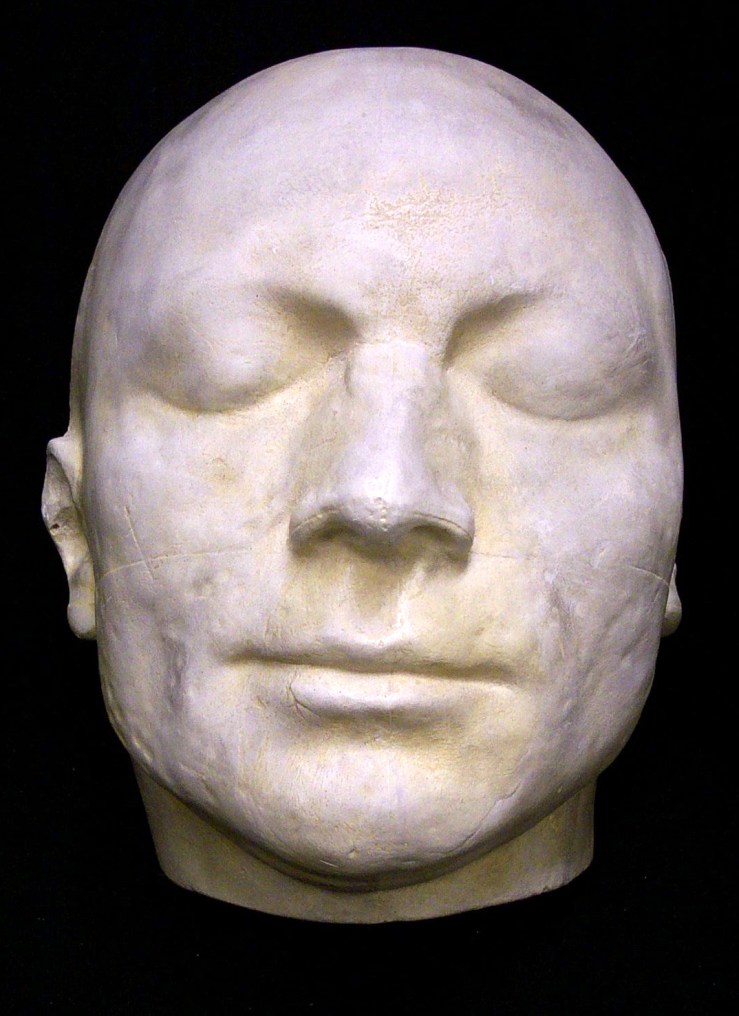
Robespierre’s Death Mask

Darwin — Peter Greenaway

Wall of Treasures — Frans Francken the Younger

Wall of Treasures -- Frans Francken the Younger (1636)

Book Party Faux Pas