Roger Ebert’s Lovely, Sarcastic Tweets about E-books

Great series of tweets today from Roger Ebert about e-books. Here’s what he’s done so far–

Here’s my old e-book “10,000 Jokes, Toasts and Stories,” and written inside “To my boy Roger from Daddy.”

Look at this theater ticket stub I found! I used it in an old e-book, from Stratford-upon-Avon.

Needed: New Yorker cover showing Dr. Johnson in his library, a cup of tea at hand, with shelves and piles of his e-books.

I found this e-book on a top shelf of a used e-book store. Its cover somehow reached out to me.

I love to relax in my library and let my eyes stray over my e-books, each one triggering its own response.

We only met in the first place because she spotted the cover of the e-book I was reading across the aisle on the train.

Great stuff!

“Muggins Here” — David Mitchell

The Guardian has published David Mitchell’s short story “Muggins Here” as part of its summer fiction special (other authors include Hilary Mantel and Roddy Doyle). Here’s an excerpt–

A proper mental Saturday it is, what with New Sue off with her hernia and the Lukes of Hazzard gone AWOL, so Muggins Here’ll have to cover for everyone else’s break. Not New Sue and Beverly are still giving me the silent treatment ’cause I can’t let them take the bank holiday off, but it’s water off a duck’s back by this point. By ten o’clock the queues are looping back, and it’s like all Greenland’s one of those swilling dreams you get with ‘flu. Full of eyes, drilling into me. Philpotts can’t get close enough to fire off a “What are half your team doing without their name-badges, Pearl?” but I need the loo – no chance, not ’til all the breaks are over. This beardy customer’s spitting, “Twenty-three minutes I’ve been in this queue!” I tell him, “It certainly is a busy morning” so in he leans, breath all pilchardy, and says, “Then hire – more – staff!”, like I’m backwards, like Gary used to do sometimes. I ask for his “I Love Greenland” Loyalty Card and while he’s fishing through his wallet I’m working out that I’ve still got three hundred and forty minutes ’til I can go home. Last week I turned forty-five so that’s nineteen years ’til I retire, though now they’re reckoning we’ll have to work ’til seventy. Seventy! Doesn’t bear thinking about, does it? I really really need the loo. When I ask the man, “Cash back?” he gives me this withering, “That’s exactly what landed the economy in the crappers in the first place” and then, “What’s so green about Greenland Supermarkets dishing out fifty plastic bags to every customer?”

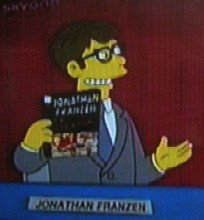
“I Finally Got Tired of Being Angry at Roth” — What Jonathan Franzen’s Been Reading

Time profiles Jonathan Franzen this week (part of the push for his new novel Freedom, out later this month). Franzen also talks about five works that have “inspired him recently.” Here are his comments on those books–

The Charterhouse of Parma by Stendhal

Instead of sitting for years at his writing desk, pulling his hair, Stendhal served with the French diplomatic corps in his favorite country, Italy, and then came home and dictated his novel in less than eight weeks: what a great model for how to be a writer and still have some kind of life! The book is at once deeply cynical and hopelessly romantic, all about politics but also all about love, and just about impossible to put down.

The Greenlanders by Jane Smiley

There’s nothing fancy about the writing in Smiley’s masterpiece, and yet every sentence of its eight hundred pages is clean and necessary. For the two weeks it took me to read it, I didn’t want to be anywhere else but in late-medieval Greenland, following the passions and feuds and farming crises of European settlers trying to survive in the face of ecological doom. It all felt weirdly and plausibly contemporary.
Sabbath’s Theater by Philip Roth

I finally got tired of being angry at Roth for his self-indulgent excesses and weak dialogue and thin female characters and decided to open myself to his genius for invention and his heroic lack of shame. Whole chunks of Sabbath’s Theater can be safely skipped, but the great stuff is truly great: the scene in which Mickey Sabbath panhandles on the New York with a paper coffee cup, for example, or the scene in which Sabbath’s best friend catches him relaxing in the bathtub and fondling his (the friend’s) young daughter’s underpants.

The House of Mirth by Edith Wharton

Wharton’s male characters suffer from some of the deficiencies that Roth’s female characters do, but the heroine of House of Mirth, Lily Bart, is one of the great characters in American literature, a pretty and smart but impecunious New York society woman who can’t quite pull the trigger on marrying for money. Wharton’s love for Lily is equal to the cruelty that Wharton’s story relentlessly inflicts on her; and so we recognize our entire selves in her.

East of Eden by John Steinbeck

A lifelong heavy drinker with his most famous novel well behind him, Steinbeck set out to write a mythic version of his family’s American experience that would embody the whole story of our country’s lost innocence and possible redemption. There are infelicities on almost every page, and the fact that the book succeeds brilliantly anyway is a testament to the power of Steinbeck’s storytelling: to his ferocious will to make sense of his life and his country.
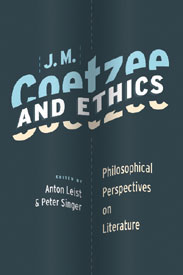
J.M. Coetzee and Ethics — Anton Lesit & Peter Singer

In their introduction to J.M. Coetzee and Ethics, editors Anton Lesit and Peter Singer make the claim that the essays in the new collection “show the folly of Plato’s idea that literature has nothing to contribute to philosophical discussion. Instead they are an invitation to a dialogue that can sharpen the issues that literature raises while making philosophy more imaginative.” Lesit and Singer briefly review the philosophical tradition, from the time of Plato’s call to banish the poets to the current wars between pragmatists and postmodernists, specifically foregrounding the case for Coetzee’s literature as a legitimate source of philosophical inquiry. They identify three specific features of his works — reflectivity, truth seeking, and an exploration of social ethics — that merit critical attention. The essays in the volume address “the psychological and moral phenomenology of personal relationships; the consequences of human suffering, evildoing, and death for human rationality and reason; and the literary methods invoked to open areas of experience beyond the abstract language of philosophers.” The editors also point out that “Unsurprisingly, the ethics of animals looms large in this collection,” a concern that might attract animal ethicists and others interested in animal-human relationships who might not immediately turn to literature for answers (or questions). On the whole, J.M. Coetzee and Ethics, while obviously a specialty volume, strives to appeal to a wider audience, eschewing much of the acadamese that plagues (and obfuscates the arguments of) so many critical volumes. Fans of Coetzee will wish to take note. J.M. Coetzee and Ethics is new in hardback from Columbia University Press.

All My Friends Are Dead — Avery Monsen and Jory John

All My Friends Are Dead by Avery Monsen and Jory John. From Chronicle Books.
The AV Club Interviews Terry Zwigoff about His Movie Crumb

The AV Club interviews director Terry Zwigoff about his movie Crumb (and some other stuff). From the interview–

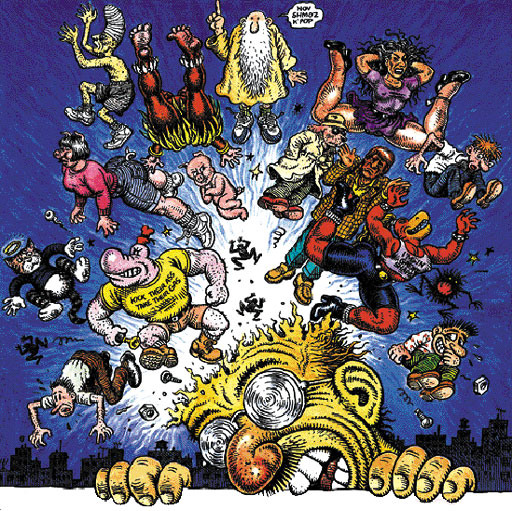
The idea was to do a documentary on the three Crumb brothers. It was never a documentary about Robert Crumb in my head. I had met Charles and Max and liked them both, and I collected artwork from all three brothers. I even spent a night at their parents’ house, and met his father when he was still alive. So it started taking shape in my mind, and it seemed to me like a good idea for a film if Robert would do it. Not so much because I had access to Robert and he was willing to cooperate, but because I felt comfortable knowing that as his friend, I’d been exposed to facts that other people wouldn’t have known. And there were some things Robert never even thought to tell me about, not because he was trying to withhold information from me, but because he couldn’t tell what would be interesting and what wouldn’t. He couldn’t be objective about it.

Here’s a clip from the movie–

The Paris Review Interviews Jonathan Lethem

Spanish-language blog La fortaleza de la soledad has republished The Paris Review’s interview with Jonathan Lethem. Cool interview–Lethem talks about his hippie parents, going to school with Bret Easton Ellis, explains why William Gibson is the new Thomas Pynchon, and discusses his novels at length. From the interview —

I felt I ought to thrive on my fate as an outsider. Being a paperback writer was meant to be part of that. I really, genuinely wanted to be published in shabby pocket-sized editions and be neglected—and then discovered and vindicated when I was fifty. To honor, by doing so, Charles Willeford and Philip K. Dick and Patricia Highsmith and Thomas Disch, these exiles within their own culture. I felt that was the only honorable path.

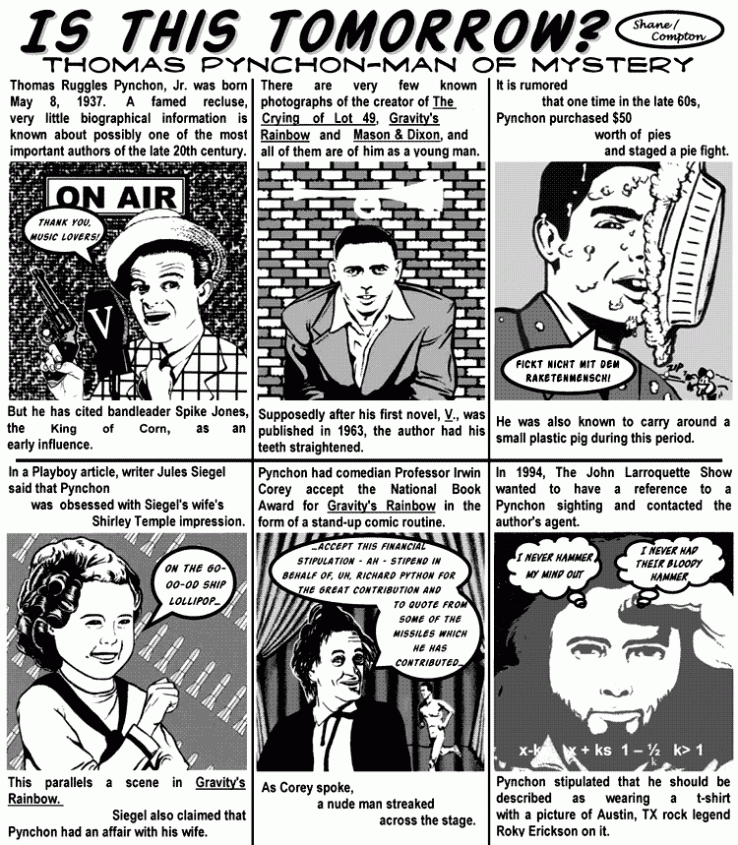
Thomas Pynchon: Man of Mystery

“Thomas Pynchon: Man of Mystery” — Comic by Kelly Shane & Woody Compton, part of their Is This Tomorrow? series.

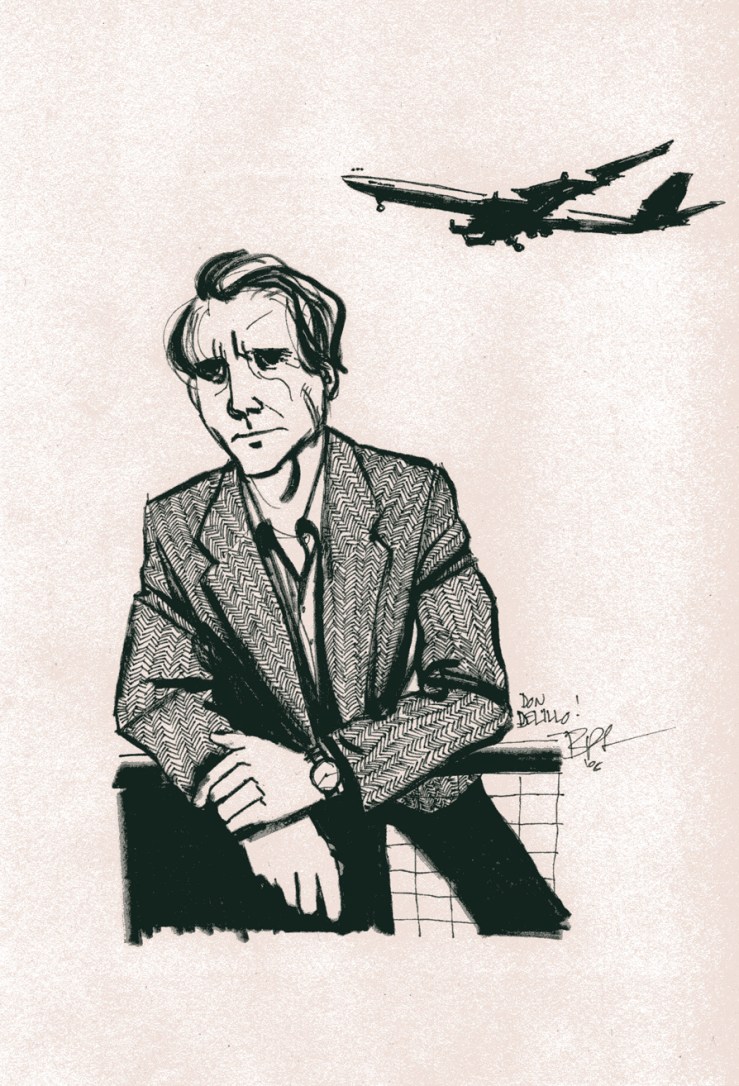
The Guardian Profiles Don DeLillo; Flubs the Name of One of His Novels

Don DeLillo by Brian Wood

The Guardian profiles Don DeLillo. The profile is pretty silly, referring to DeLillo as an “All-American writer,” and mistakenly referring to his 2007 novel Falling Man as The Falling Man (this reminds me of the way that grandparents love to add a definite article to pretty much anything, e.g. “I have to go to the Wal-Marts”).  Here it is —

After Underworld, an 800-page tour de force, DeLillo’s career turned towards the miniature: The Body Artist (2001), Cosmopolis (2003), The Falling Man (2007) are much slighter books, a rallentando that suggests a writer moving inexorably into the minor key of old age. Not that you’d find this in the demeanour of DeLillo.

The writer makes up for the error by using the word “rallentando,” of course.

(Thanks to A Piece of Monologue for directing our attention this way).

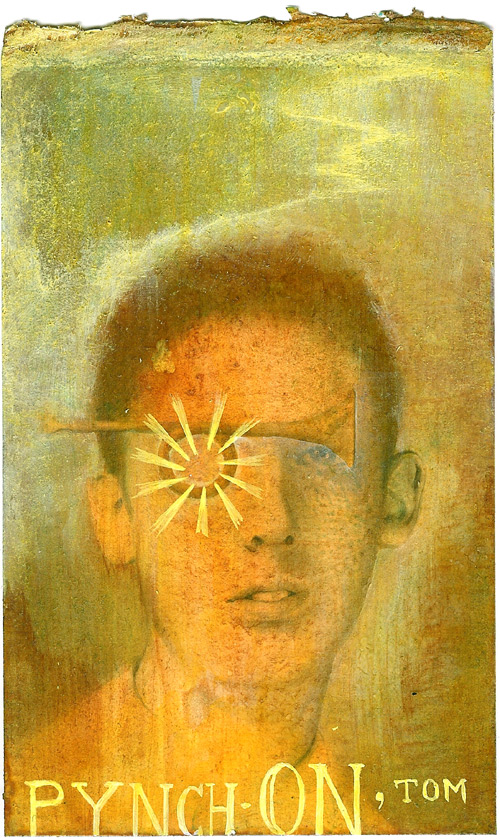
“Thomas Pynchon” — James Jean

James Jean does Thomas Pynchon. (Via Hey Oscar Wilde!).

Drinking Games for Readers

At Jezebel, a list of drinking games for readers. Some witty, some not so witty. Here’s the list:

Thomas Pynchon: Drink every time someone has a stupid name, like “Eigenvalue.”

David Foster Wallace: Drink every time a sentence has three or more conjunctions.

William Faulkner:
Every time a sentence goes on for more than a page, drink the entire bottle. Then make out with your sister.

Joyce Carol Oates: Drink every time there is a home invasion.

Jane Austen: Drink every time someone plays whist, goes riding, or gets married.

J.D. Salinger: Every time there is a symbol of lost innocence, drink a highball. Then spit it all over someone you love.

Emily Bronte: Drink every time you see the word “heath” (Heathcliff counts).

Gabriel García Márquez
: Drink every time someone’s name is “Aureliano.” (Note: this only works for A Hundred Years of Solitude)

Virginia Woolf: First, go buy some flowers. Then, if you have time left over, drink.

Sappho: Drink every time you can’t tell if something is hot or disgusting.

Ernest Hemingway: Drink every time Ernest Hemingway is boring and overrated. Man, I am so wasted right now.

Raymond Chandler: Drink every time someone drinks.

Dashiell Hammett:
Drink every time someone drinks.

Homer:
Drink every time someone drinks gross diluted wine.

Stephenie Meyer: Drink every time someone drinks blood.

Dylan Thomas: Drink until you are in a coma.

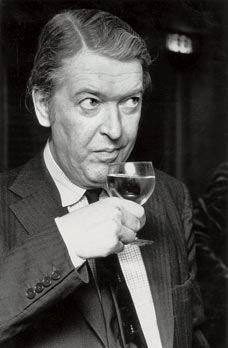
I think you can apply the rules for the Chandler and Hammett games to Bukowski if you wanted. Use Kingsley Amis’s signature cocktail the Lucky Jim if you wish. You might also be interested in David Foster Wallace’s drinking game “Hi Bob.”

Robert Crumb on LSD

In his new interview in the Summer 2010 issue of The Paris Review (excerpt here), Robert Crumb describes how taking LSD for the first time affected his art —

I had been working along in this modern adult cartoon trend, very influenced by the modern, expressionistic, arty quality of work by Jules Feiffer, Ronald Searle, Ralph Steadman. Then, on LSD, I got flung back into this cruder forties style, that suddenly became very powerful to me. It was a kind of grotesque interpretation of this forties thing, Popeye kind of stuff. I started drawing like that again. It was bizarre to people who had known my work before. Even Kurtzman said, What the hell are you doing? You’re regressing!

Here’s R. Crumb on LSD again, from the “Crumb on Crumb” section of his website —

A whole new thing was emerging in my drawings, a sort of harkening back, a calling up for what G. Legman had called the “Horror-Squinky” forces lurking in American comics of the 1940s. I had no control over it, the whole time I was in this fuzzy state of mind; the separation, the barrier betwixt the conscious and the subconscious was broken open somehow. A grotesque kaleidoscope, a tawdry carnival of disassociated images kept sputtering to the surface… especially if I was sitting and staring, which I often did. It was difficult to function in this condition, I was certifiably crazy, I sat staring on the couch at Marty’s apartment, or on long aimless bus rides around Chicago. These jerky animated cartoons in my mind were not beautiful, poetic or spiritual, they were like an out-of-tune player piano that you couldn’t shut off… pretty disturbing… this strange interlude ended as abruptly as it had begun in the next time I took a powerful dose of LSD in April ’66. My mind suddenly cleared. The fuzziness was gone, the fog lifted. It was a great relief… a weird drug, that was. But what the heck — “minds are made to be blown.”

If you want to quit using drugs like cocaine or LSD but are having difficulties affording it, you can try to find the best drug rehab at a discount by doing some research online.

The Paris Review Interviews David Mitchell

The Paris Review interviews David Mitchell in their new issue. An excerpt from their free excerpt:

INTERVIEWER I noticed this sentence in Number9Dream: “The cloud atlas turns its pages over.”

MITCHELL Wow, is that in Number9Dream? Then the phrase was haunting me earlier than I realized. “Cloud Atlas” is the name of a piece of music by the Japanese composer Toshi Ichiyanagi, who was Yoko Ono’s first husband. I bought the CD just because of that track’s beautiful title. It pleases me that Number9Dream is named after a piece of music by Yoko’s more famous husband, though I couldn’t duplicate the pattern indefinitely.

INTERVIEWER The epigraph to Number9Dream is from Don DeLillo: “It is so much simpler to bury reality than it is to dispose of dreams.”

MITCHELL The best line in the book and it’s not even mine.

“Hi Bob,” David Foster Wallace’s Drinking Game

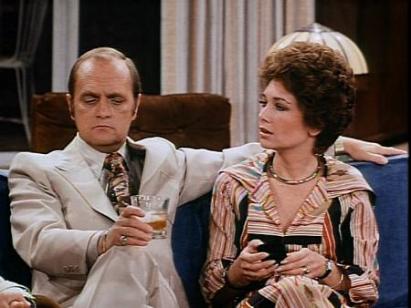
In David Foster Wallace’s first novel The Broom of the System, protagonist Lenore Beadsman’s brother and his friends play a drinking game based on The Bob Newhart Show. Here are the rules–

On television was ”The Bob Newhart Show.” In the big social room with LaVache were three boys who all seemed to look precisely alike. . . . ”Lenore, this is Cat, this is Heat, this is the Breather,” LaVache said from his chair in front of the television. . . .

Heat and the Breather were on a spring-sprung sofa, sharing what was obviously a joint. Cat was on the floor, sitting, a bottle of vodka before him, and he clutched it with his bare toes, staring anxiously at the television screen.

”Hi Bob,” Suzanne Pleshette said to Bob Newhart on the screen. . . . La Vache looked up from his clipboard at Lenore. ”We’re playing Hi Bob. You want to play Hi Bob with us?” He spoke sort of slowly. Lenore made a place to sit on the luggage. ”What’s Hi Bob?” The Breather grinned at her from the sofa, where he now held the bottle of vodka. ”Hi Bob is where, when somebody on ‘The Bob Newhart Show’ says ‘Hi Bob,’ you have to take a drink.”

”And but if Bill Dailey says ‘Hi Bob,’ ” said Cat, tending to the joint with a wet finger, ”that is to say, if the character Howard Borden on the show says ‘Hi Bob,’ it’s death, you have to chug the whole bottle.”

”Hi Bob,” said Bill Dailey on the screen.

This text was originally cited in Caryn James’s 1987 review of The Broom of the System in The New York Times. Here’s our review.

“An Archeology of Literature” — The Guardian Profiles Tom McCarthy

The Guardian published a great profile of Tom McCarthy today. Topics include Freud, the avant-garde, archeology, and his forthcoming novel C. From the article, here’s McCarthy on his book’s setting:

“It’s the great period of emergent technology,” McCarthy explains. “The book is set between 1898 – when Marconi was doing some of his earliest experiments – and 1922, which is the year the BBC was founded, and also the great year of modernism: The Waste Land and Ulysses. I wanted C to be a kind of archaeology of literature. But I think all ‘proper’ literature always has been an archaeology of other literature. The task for contemporary literature is to deal with the legacy of modernism. I’m not trying to be modernist, but to navigate the wreckage of that project.”

The Guardian has also run a review of C. Biblioklept’s review runs tomorrow. It was a struggle to write–it’s always a struggle to review a book you absolutely love. You always end up sounding a bit too breathless.

Rift — James Jean

James Jean’s Rift looks pretty cool. More here.

Kingsley Amis’s Signature Cocktail, the Lucky Jim

In his 1983 book  Everyday Drinking, Kingsley Amis shares the recipe for his signature cocktail, the Lucky Jim — 12 to 15 parts vodka to one part vermouth with two parts cucumber juice. Yikes. More here and here.