Mark Twain at Stormfield, 1909

Sam Lipsyte Reading from His New Novel, The Ask

You can read the first 20 pages of Sam Lipsyte’s The Ask here.

“Try To Leave Out the Parts That Readers Tend To Skip” and Other Rules for Writing Fiction

Inspired by Elmore Leonard’s “Ten Rules for Writing Fiction,” The Guardian published a collection of various authors’ rules for writing fiction earlier this week. The tone of the responses range from serious to playful to didactic to way-too-specific, with the most common–and obvious–rule being simply to “write.” Authors include Geoff Dyer, Margaret Atwood, Neil Gaiman, Jonathan Franzen, and Roddy Doyle. A few of our favorites:

Elmore Leonard:

3. Never use a verb other than “said” to carry dialogue. The line of dialogue belongs to the character; the verb is the writer sticking his nose in. But “said” is far less intrusive than “grumbled”, “gasped”, “cautioned”, “lied”. I once noticed Mary McCarthy ending a line of dialogue with “she asseverated” and had to stop reading and go to the dictionary.

Margaret Atwood:

5. Do back exercises. Pain is distracting.

Roddy Doyle:

4. Do give the work a name as quickly as possible. Own it, and see it. Dickens knew Bleak House was going to be called Bleak House before he started writing it. The rest must have been easy.

Geoff Dyer:

8. Beware of clichés. Not just the ­clichés that Martin Amis is at war with. There are clichés of response as well as expression. There are clichés of observation and of thought – even of conception. Many novels, even quite a few adequately written ones, are ­clichés of form which conform to clichés of expectation.

Jonathan Franzen

1. The reader is a friend, not an adversary, not a spectator.

8. It’s doubtful that anyone with an internet connection at his workplace is writing good fiction.

Richard Ford:

10. Don’t take any shit if you can ­possibly help it.

“Apocalypse Needs A Breather” — China Miéville Riffs on Hillcoat’s Adaptation of The Road

One of Biblioklept’s favorite weirdos, China Miéville takes on a perceived overabundance of apocalypse movies in his article “The End, The End, The End, Etcetera” published in McSweeney’s #33, aka The Panaroma, aka the giant-assed newspaper issue (here’s a quick review: Jeesy Creezy the thing is massive. It’s like a bizarre aesthetic tchtochke that just happens to be overstuffed with all kinds of great writers writing on all kinds of great stuff. I’ve been trying to digest it on Sundays after breakfast with a few coffees but it’s too big. It’s really too much, and it’s also the sort of document that should tell McSweeney’s-haters to fuck off, or at least reveal them as kinda mean-spirited. It’s like a strange, thorough dream, where Stephen King writes your sports section and William Vollman does in-depth national reporting and Chris Ware handles the comics page. Hang on–that’s probably not a legit review. Anyway).

So Miéville basically tells Hollywood to give it a rest with all the apocalypse movies, saying that it’s not that he doesn’t love them, it’s just that there’s such a surplus as of late. “Hollywood has studied at porn’s knee,” he writes, arguing that end-of-the-world flicks like Armegeddon, The Day After Tomorrow, 2012, Wall-E, 9, The Book of Eli and Deep Impact are “sexual fantasies . . . These apocalyptes are clearly scratching various itches.” Miéville dubs the trend in disaster flicks “bukkakalypse,” arguing that these films are “obsessed not only with the world-drenching spurt itself, but with the Face of the Earth wet with its effects, stoically putting up with the soaking.” Charming. +100 internets to any soul daring enough to google “bukkakalypse.”
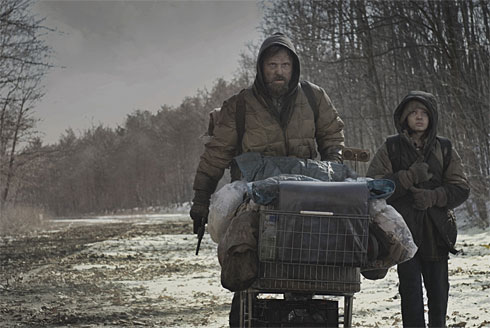
Miéville focuses the thrust of his article on John Hillcoat’s film adaptation of Cormac McCarthy’s novel The Road. His shorthand review kinda sorta captures my own ambivalence about the film: “Is The Road a good film? Sure. Maybe. Whatever. It depends on what you mean by ‘good.'” Miéville suggests that, “For all its portent, The Road displays a preemptive nostalgia perhaps even more pronounced than in its pulpier cousins.” Citing the father and the boy’s use of a consumerist emblem, the shopping cart, to move on and “carry the fire,” Miéville goes on to argue that,

The film, then, is structured around a punning triptych. There’s that good, lost consumption early on [the loss of a consumerist world]. Then, in the absence of commodity, there’s the terrible, Hobbesian predatory consumption of cannibalism, relentlessly stressed as an ultimate evil, rather than the relatively everyday sordidness it would almost certainly become. And refuse to eat each other? What then? Then the final iteration of the term. The father at last doubles up, coughing bronchially, and hawks up blood. In that shopless nightmare, what else is afflicting him but consumption.

Puns! Okay. As a committed Marxist or materialist (or whatever he is), of course Miéville’s gonna read The Road as an allegory of apocalypse as loss of consumerist possibility (he reads the whole Coca-Cola-drinking episode as a version of lost sacrament). Fair analysis, I guess–not one I particularly buy, but without getting into a whole ball of wax over the intentional fallacy and whatnot, I think that Miéville’s criticism that the film (and book) doesn’t recognize the Darwinian endgame of “Hobbesian predatory consumption” as “the relatively everyday sordidness it would almost certainly become” kinda sorta misses the whole point of the narrative. In my own review of the book, I argued that McCarthy’s refusal to give into the infanticide that the novel’s schema overwhelmingly predicated was hard to swallow (“cop out,” I believe, was my term), but it also seems to me that the moral impetus of the novel involves a refusal of cannibalism, an idea that to survive as a human is more than just to survive as a body. But back to film.

I didn’t particularly care for Hillcoat’s version of The Road, even though I wanted to, even though the actors were great, even though it looked great, etc. I don’t know what I didn’t like about it (okay, I thought Nick Cave’s score was both awful and intrusive, but that seems minor here). It just seemed thoroughly unnecessary and ultimately unfun. Miéville again, this time on an end-of-the-world film I can’t help but love:

The “hope” at the end of Mad Max: Beyond the Thunderdome is that the lost tribes have managed to turn on a few lights in Sydney. Such hankering for drab normality doesn’t have to be particularly convincing to do its rhetorical job. Just as well, really, because seriously? After all the splendidly coiffed and colorful shenanigans of Tina Turner’s Bartertown, is living in a partially revived Bondi really an improvement? Couldn’t we take everything in a different direction altogether? Do something new? The aspirational Good Futures of these Bad Futures are always their pasts–our present.

Although Miéville gives The Road the credit it deserves for being one of the rare apocalypse flicks that “evades this pre-post-facto nostalgia,” he also reiterates my own criticism: it’s just not that fun. And the end of the world should be fun. Miéville doesn’t mention films like Zombieland, a forgettable but enjoyable farce that posits apocalypse as freewheelin’ opportunity, or the self-aware (but not too-self-aware) pastiche Doomsday, a film that fuses every hoary apocalypse trope into 90 minutes of escapist, ass-kicking, thoroughly nonsensical fun. Neither film aspires to great art (unlike Hillcoat’s take on The Road), nor do these films aim for the catharsis-via-annihilation of blockbuster fare like Armegeddon. They’re just good fun, which is all I really want from the end of the world.

David Foster Wallace Reads “A Radically Condensed History of Postindustrial Life”

The audiobook of Brief Interviews with Hideous Men came out almost a year after its author, David Foster Wallace killed himself, which kinda sorta makes it strange to hear his voice read some of these tales. Here’s Wallace reading “A Radically Condensed History of Postindustrial Life,” a short short short story. As far as audiobooks goes, this collection is fantastic. There’s a great cast here, and the actors, including Bobby Canavale, Will Forte, Christopher Meloni, John Krasinski (who adapted the book into a film which I’ve, despite having had a pirate copy for several months, been too afraid to watch) intuit Wallace’s work and communicate its humor, pathos, and subtlety. The biggest treat though is hearing Wallace’s voice again.

Dr. Benway Operates

I’d never seen this before. William Burroughs reads–and acts out–one of his infamous Dr. Benway riffs from Naked Lunch. Gross, engrossing, and hilarious.

The Best-Read Presidents

Happy President’s Day! Check out this cool slide show at The Daily Beast of the readingest American Presidents ever. (Is it merely coincidence that our fave, Teddy Roosevelt comes in at #1? We think not! (Also, while we’re indulging in parenthetical asides, amazingly, Dubya did not make the list. Why come?)).

“Fast Anchor’d Eternal O Love!” — Walt Whitman

FAST-ANCHOR’D eternal O love! O woman I love!
O bride! O wife! more resistless than I can tell, the thought of
you!
Then separate, as disembodied or another born,
Ethereal, the last athletic reality, my consolation,
I ascend, I float in the regions of your love O man,
O sharer of my roving life.

Zora Neale Hurston’s Love Spells

Valentine’s Day will be upon us in just a few hours, but it’s not too to late conjure up some last minute romance. In the appendix to her collection of Florida folktales, Mules and Men, author Zora Neale Hurston offers up a host of Hoodoo, including the following love spells:

TO MAKE A MAN COME HOME

Take nine deep red or pink candles. Write his name three times on each candle. Wash the candles with Van-Van. Put the name three times on paper and place under the candles, and call thee name of the party three times as the candle is placed at the hours of seven, nine or eleven.

TO MAKE PEOPLE LOVE YOU

Take nine lumps of starch, nine of sugar, nine teaspoons of steel dust. Wet it all with Jockey Club cologne. Take nine pieces of ribbon, blue, red or yellow. Take a dessertspoonful and put it on a piece of ribbon and tie it in a bag. As each fold is gathered together call his name. As you wrap it with yellow thread call his name till you finish. Make nine bags and place them under a rug, behind an armoire, under a step or over a door. They will love you and give you everything they can get. Distance makes no difference. Your mind is talking to his mind and nothing beats that.

TO BREAK UP A LOVE AFFAIR

Take nine needles, break each needle in three pieces. Write each person’s name three times on paper. Write one name backwards and one forwards and lay the broken needles on the paper. Take five black candles, four red and three green.

Tie a string across the door from it, suspend a large candle upside down, It will hang low on the door; bum one each day for one hour. If you burn your first in the daytime, keep on in the day; if at night, continue at night. A tin plate with paper and needles in it must be Placed to catch wax in.

When the ninth day is finished, go out into the street and get some white or black dog dung. A dog only drops his dung in the street when he is running and barking, and whoever you curse will ran and bark likewise. Put it in a bag with the paper and carrv it to running water, and one of the parties will leave town.

When Lynch Met Lucas

What if David Lynch had directed Return of the Jedi? Oh the possibilities… YouTube user sciezata77 (I’d love to credit her/his real name) has made a really cool little film using only an iPhone and Lynch’s original audio, detailing Lynch’s meeting with George Lucas. Best line: “We went to a restaurant . . . not that I don’t like salad, but that’s all they had, was salad.”

Faulkner Source Material Discovered

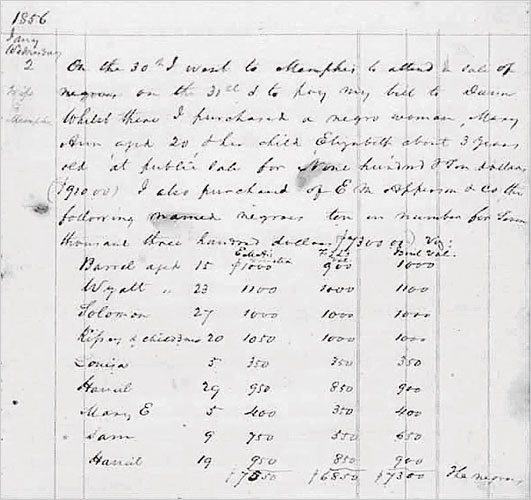
The New York Times reports that “what appears to be the document on which Faulkner modeled that ledger [detailing the genealogy that haunts Go Down, Moses] as well as the source for myriad names, incidents and details that populate his fictionalized Yoknapatawpha County has been discovered.” The article continues:

The original manuscript, a diary from the mid-1800s, was written by Francis Terry Leak, a wealthy plantation owner in Mississippi whose great-grandson Edgar Wiggin Francisco Jr. was a friend of Faulkner’s since childhood. Mr. Francisco’s son, Edgar Wiggin Francisco III, now 79, recalls the writer’s frequent visits to the family homestead in Holly Springs, Miss., throughout the 1930s, saying Faulkner was fascinated with the diary’s several volumes. Mr. Francisco said he saw them in Faulker’s hands and remembers that he “was always taking copious notes.”

History, particularly the strange, paradoxical, and taboo history of the plantation underwrites almost all of Faulkner’s significant fiction, so any historical document that served to inform his writing will be of particular note to enthusiasts and scholars alike.

Aldous Huxley, Deckle Edges, Weird Books, and a Dead McSweeney

Odds n’ ends:

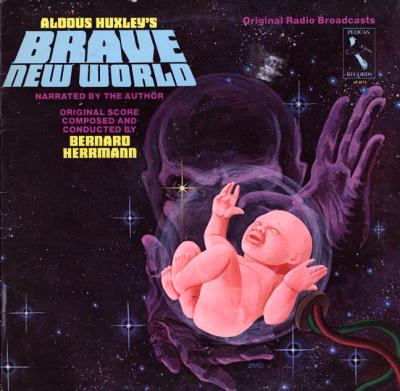
Via Swen’s Weblog — download mp3s of Aldous Huxley narrating Brave New World. Music by Bernard Herrman, who you, of course, will remember from his work with Alfred Hitchcock. That cover alone is more fun than a game of Centrifugal Bumble-puppy.

At The Millions — C. Max Magee waxes aesthetic (and perhaps nostalgic) on deckle-edge pages.

From Abe Books — Spend some time in their Weird Book Room.

The Guardian reports — Timothy McSweeney has died. Apparently, Dave Eggers decided to name his quarterly literary journal after some dude who wrote weird letters to his mom whose maiden name was the same. According to McSweeney’s family, holmes was a painter of some talent: “The canvasses he leaves behind are filled with haunting and beautiful imagery. They are also filled with a palpable desire – to be heard, to connect, to be understood better by others and himself.”

All Known Zora Neale Hurston WPA Recordings

Check out this tidy collection of all known Zora Neale Hurston audio recordings from the 1930s, when the writer put her anthropology degree to work collecting Florida folklore as part of the Works Progress Administration. (We recommend “Tampa” for some good puerile fun (Tampans may be unamused)).

“I Guess My Work All These Years Has Been about Living in Dangerous Times” — Don DeLillo Interviewed on NPR

Driving to work this morning in the dark dolorous haze appropriate to a post-Super Bowl Monday, I was more than a little surprised to catch Steve Innskeep interview Don DeLillo on Morning Edition. If you missed the interview, which focuses on DeLillo’s latest, Point Omega, you can listen to it or download it from Morning Edition‘s site. The usually-taciturn DeLillo is particularly reflective, even generous in this interview. “I guess my work all these years has been about living in dangerous times” he says, “and part of this danger has been what the media reports, and how it changes our perceptions.” It’s also kinda strange to hear his voice, which seems frailer and more awkward than I would have imagined. Very cool interview.

Historic Photos of Florida Ghost Towns

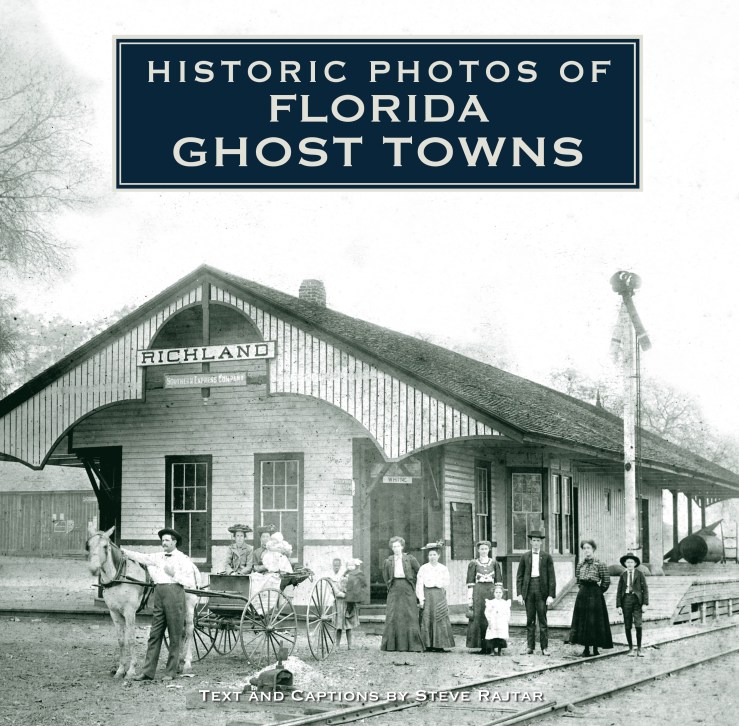
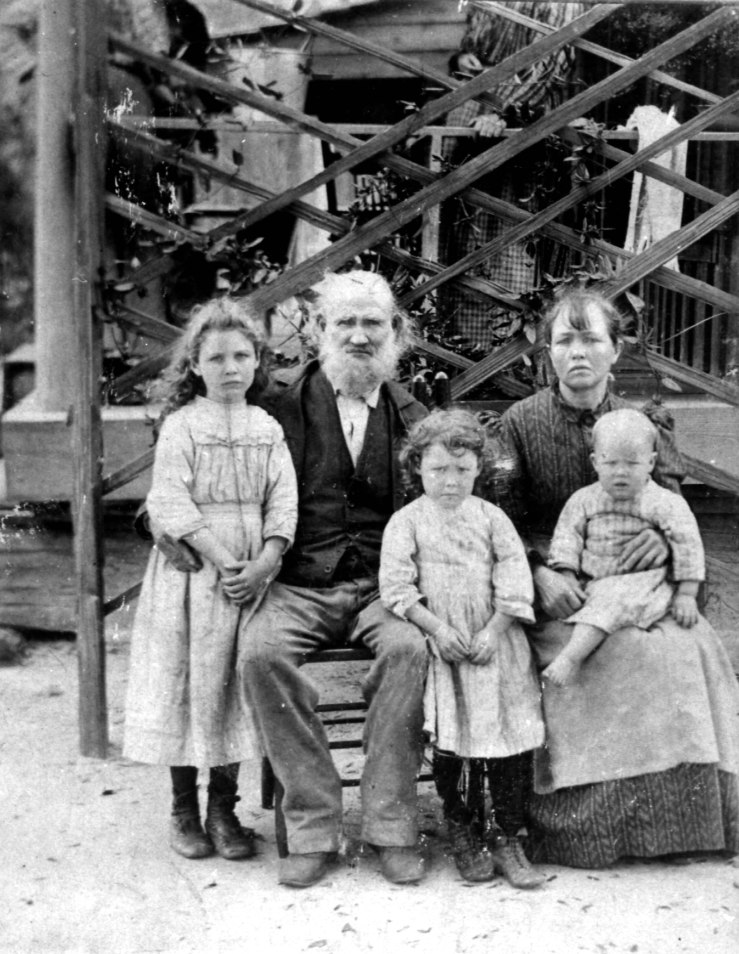
Historic Photos of Florida Ghost Towns, new from Turner Publishing, pairs beautiful black and white archival photos with detailed commentary by Steve Rajtar to offer a counter-narrative to the traditional history of Florida. Florida’s history is often told in terms of exponential growth, focusing on the Sunshine State’s ecological bounty as a reason for immigration and tourism. Ghost Towns takes a look at the many historical sites in Florida that were destroyed, absorbed, or abandoned as the state bounded to modernity. Rajtar and his editors have organized the book around all the different ways that a town might become a ghost town, including economic (company closings, plantation declines, railroad expansion), sociopolitical (absorption, abandonment, government mandates), and natural (fires, floods, hurricanes).

Appropriate for its title, there’s something haunting about many of the images in the book. Like all images from the past, they speak for what no longer exists, but there’s something melancholy here too. Take for example this 1897 image of the Lamb family from the ironically-named plantation township of Hopewell. Their dour expressions communicate a sense of the difficulties of an agrarian life in Florida over a century ago — more Marjorie Kinnan Rawlings than Miami Vice. What happened to these people after their farms collapsed? Where are their descendants today?

Historic Photos of Florida Ghost Towns will be a welcome addition to any Florida history buff’s library, as well as a handsome book for any Floridian’s coffee table. It’s also a worthy document to testify to an an alternate and often overlooked element of Florida history. Florida has a rich, storied past, and Ghost Towns helps to honor that. As the state heads into an uncertain future, the book also might make some of us reappraise our own cities’ chances of withstanding the test of time. Recommended.

David Peace’s Red Riding Film Adaptations Debut in the US

The film adaptations of David Peace‘s Red Riding quartet make their American debut this weekend. The films look pretty cool — kinda like Zodiac. The screen adaptations drop the 1977 segment of Peace’s original quartet, opting instead for the trilogy treatment. You can read Manohla Dargis’s detailed review for The New York Times here and Keith Phipps favorable review at the AV Club here. Trailer:

“If We Do This as a Conversation, It Will Be Easier for Me” — David Foster Wallace

David Foster Wallace’s 2003 interview on German TV station ZDF has been viewable for awhile in its full 84 minute glory, but it’s only just now been uploaded to YouTube in more digestible and manageable 10 minute chunks.