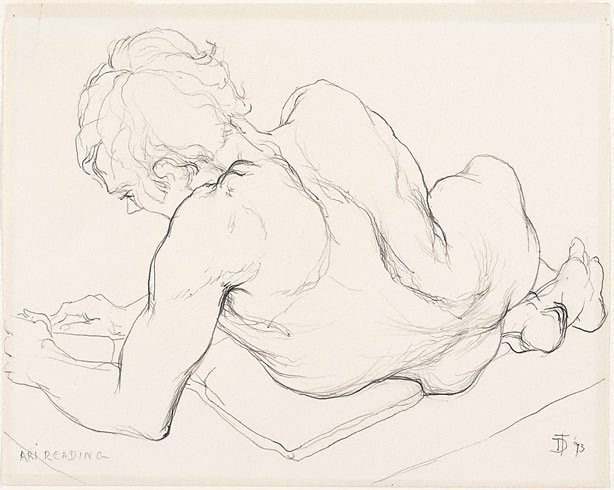
Ari Reading — Dorothy Thornhill

Ari Reading, 1973 by Dorothy Thornhill (1910–1987)

“Libraries Destroyed by Fire” | From William Blades’ The Enemies of Books

“Libraries Destroyed by Fire”

from

William Blades’

The Enemies of Books 


THERE are many of the forces of Nature which tend to injure Books; but among them all not one has been half so destructive as Fire. It would be tedious to write out a bare list only of the numerous libraries and bibliographical treasures which, in one way or another, have been seized by the Fire-king as his own. Chance conflagrations, fanatic incendiarism, judicial bonfires, and even household stoves have, time after time, thinned the treasures as well as the rubbish of past ages, until, probably, not one thousandth part of the books that have been are still extant. This destruction cannot, however, be reckoned as all loss; for had not the “cleansing fires” removed mountains of rubbish from our midst, strong destructive measures would have become a necessity from sheer want of space in which to store so many volumes.

Before the invention of Printing, books were comparatively scarce; and, knowing as we do, how very difficult it is, even after the steam-press has been working for half a century, to make a collection of half a million books, we are forced to receive with great incredulity the accounts in old writers of the wonderful extent of ancient libraries.

The historian Gibbon, very incredulous in many things, accepts without questioning the fables told upon this subject. No doubt the libraries of MSS. collected generation after generation by the Egyptian Ptolemies became, in the course of time, the most extensive ever then known; and were famous throughout the world for the costliness of their ornamentation, and importance of their untold contents. Two of these were at Alexandria, the larger of which was in the quarter called Bruchium. These volumes, like all manuscripts of those early ages, were written on sheets of parchment, having a wooden roller at each end so that the reader needed only to unroll a portion at a time. During Caesar’s Alexandrian War, B.C. 48, the larger collection was consumed by fire and again burnt by the Saracens in A.D. 640. An immense loss was inflicted upon mankind thereby; but when we are told of 700,000, or even 500,000 of such volumes being destroyed we instinctively feel that such numbers must be a great exaggeration. Equally incredulous must we be when we read of half a million volumes being burnt at Carthage some centuries later, and other similar accounts. Continue reading ““Libraries Destroyed by Fire” | From William Blades’ The Enemies of Books”

All hearts are strange

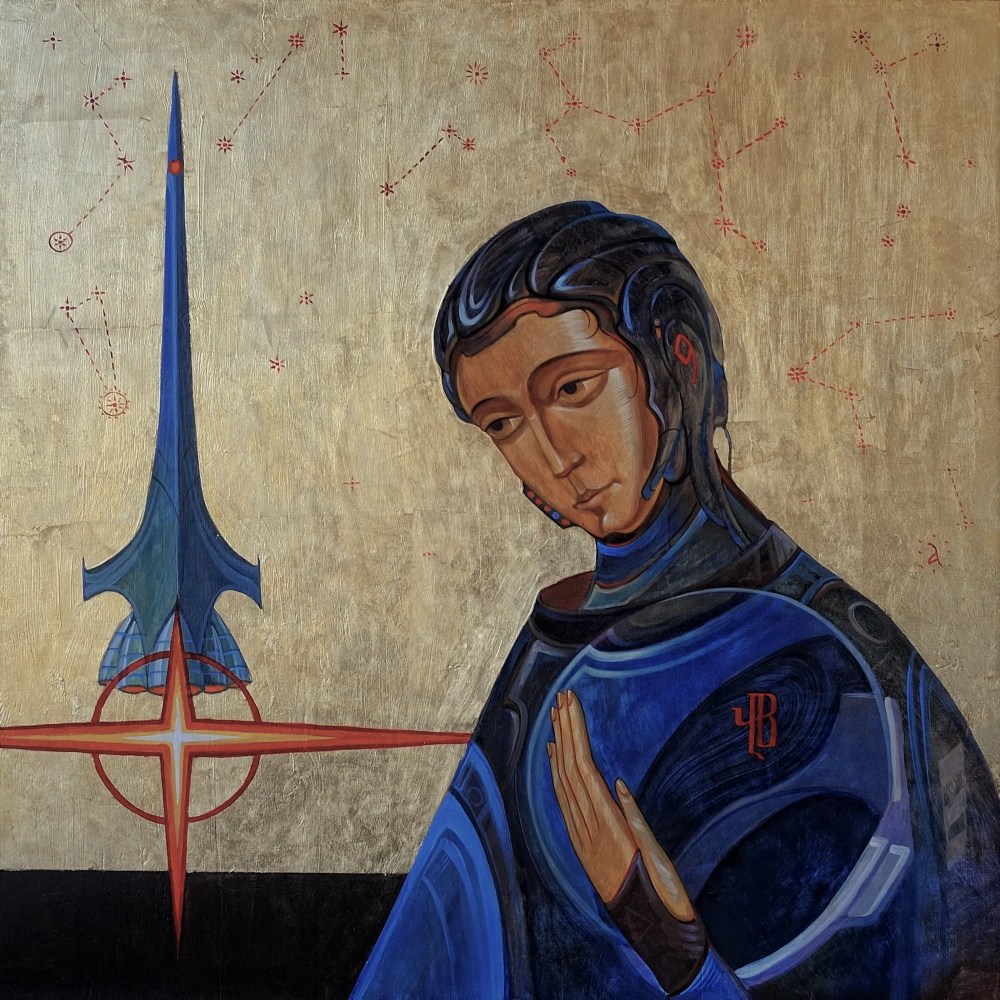
Secrets of the Constellations — Anton Evgenievich Frolov

Secrets of the Constellation, 2021 by Anton Evgenievich Frolov (b. 1982)

TBR anxieties

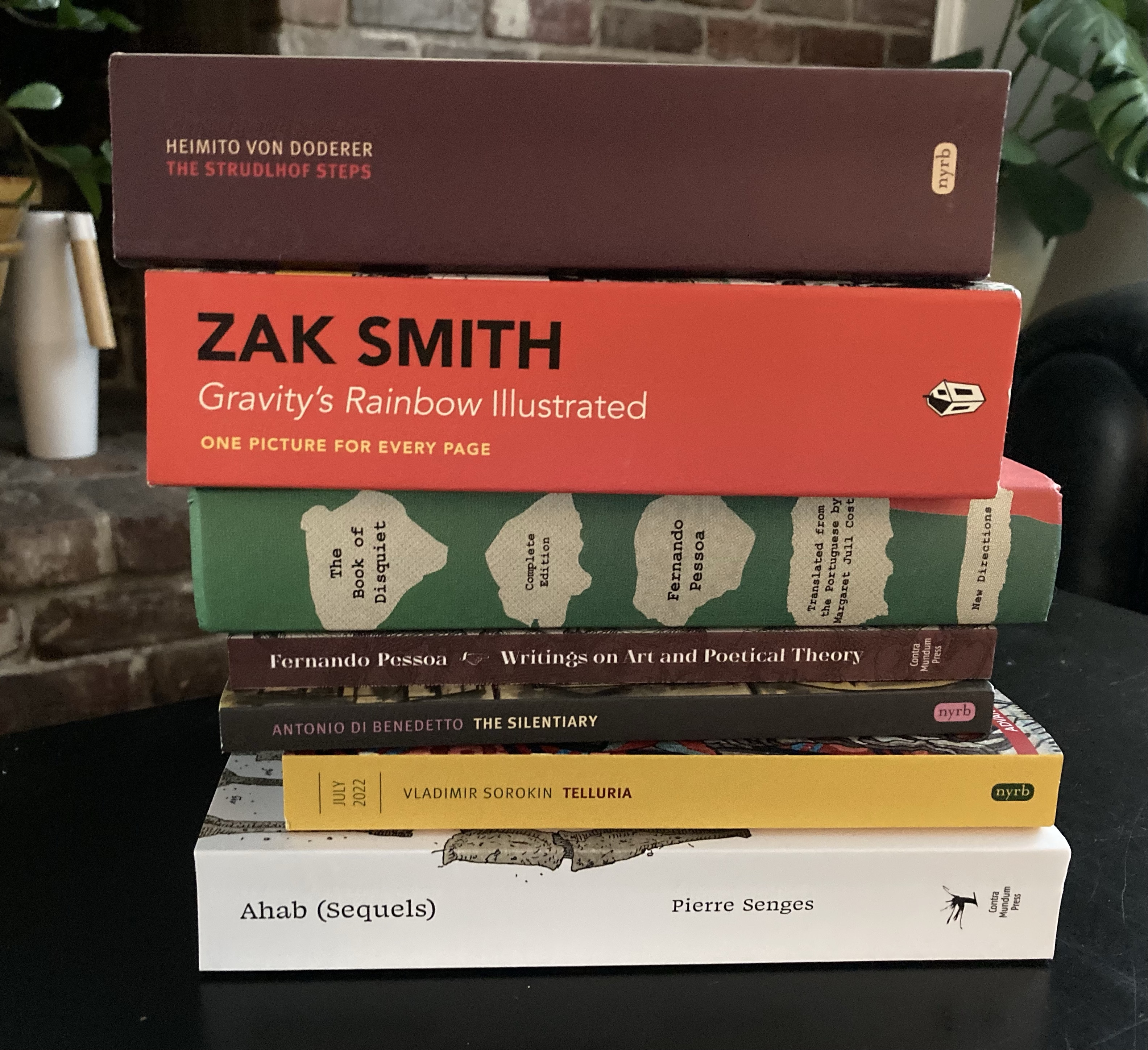
It is not a bad problem to have to have a big ole stack of big boys stacked up, waiting to read, but I nevertheless continue to feel anxiety as the stack grows and I head into a new semester, knowing that my reading for work—student papers of course, but also all the other stuff, the rereads of ringers I can’t give up, the new reads I continue to dedicate myself to incorporating into a syllabus, cursing myself when I’m not sure how to do what I think I want to do with them, etc.—but yeah, it’s the knowing that work-based reading will dominate my eyes and brain, both of which have grown duller, slower, and more easily-wearied over the last two years (and I have, after forty-one years of perfect eyesight, taken up glasses to my face to read finer print), and that I will find myself without the reserves to jump into the big books like I used to (I fall asleep sooner too these days–but also wake up sooner too, and do dedicated some of those early morning minutes to reading).

Heimito von Doderer’s The Strudlhof Steps is (translation by Vincent Kling) is one of a few NYRB titles on my list. I’ve jumped into it a few times and I can tell it’s a big deal—maybe something revelatory to me, a big mash of consciousness like Alfred Döblin’s 1929 novel Berlin Alexanderplatz. But other books keep showing up.

Or, really, I keep picking up other books, like Zak Smith’s Gravity’s Rainbow Illustrated, almost eight hundred pictures to go with Thomas Pynchon’s novel. I’ve paged through it, but the anxiety here is the realization that I want to read Gravity’s Rainbow again, which will make me go insane.

The two by Pessoa cause me anxiety for other reasons. I’m pretty sure I will never finish The Book of Disquiet (in translation by Margaret Jull Costa). It’s smart at times, but it’s not really a novel—the catch is the protagonist’s consciousness. And the protagonist often needs a big kick in the ass. Disquiet will riff out some lovely little missives, and then whine a bit. Not my favorite flavor. And yet I feel like I can’t tangle with Writings on Art and Poetical Theory without engaging Pessoa’s aesthetic firsthand (or, really, mediated through translators and editors).

Pessoa’s Writings is published by Contra Mundum, as is Pierre Senges’ Ahab (Sequels) (translation by Jacob Siefring and Tegan Raleigh). I made a bit of dent of the book, but then took a slimmer volume with me on a vacation to some Smoky Mountains. I read Alan Garner’s novel Red Shift there in two or three days and loved it and failed to write about it here. (I am sometimes astounded that for a few years in very early thirties I somehow wrote about every book I read on this blog.) Maybe spring for Ahab.

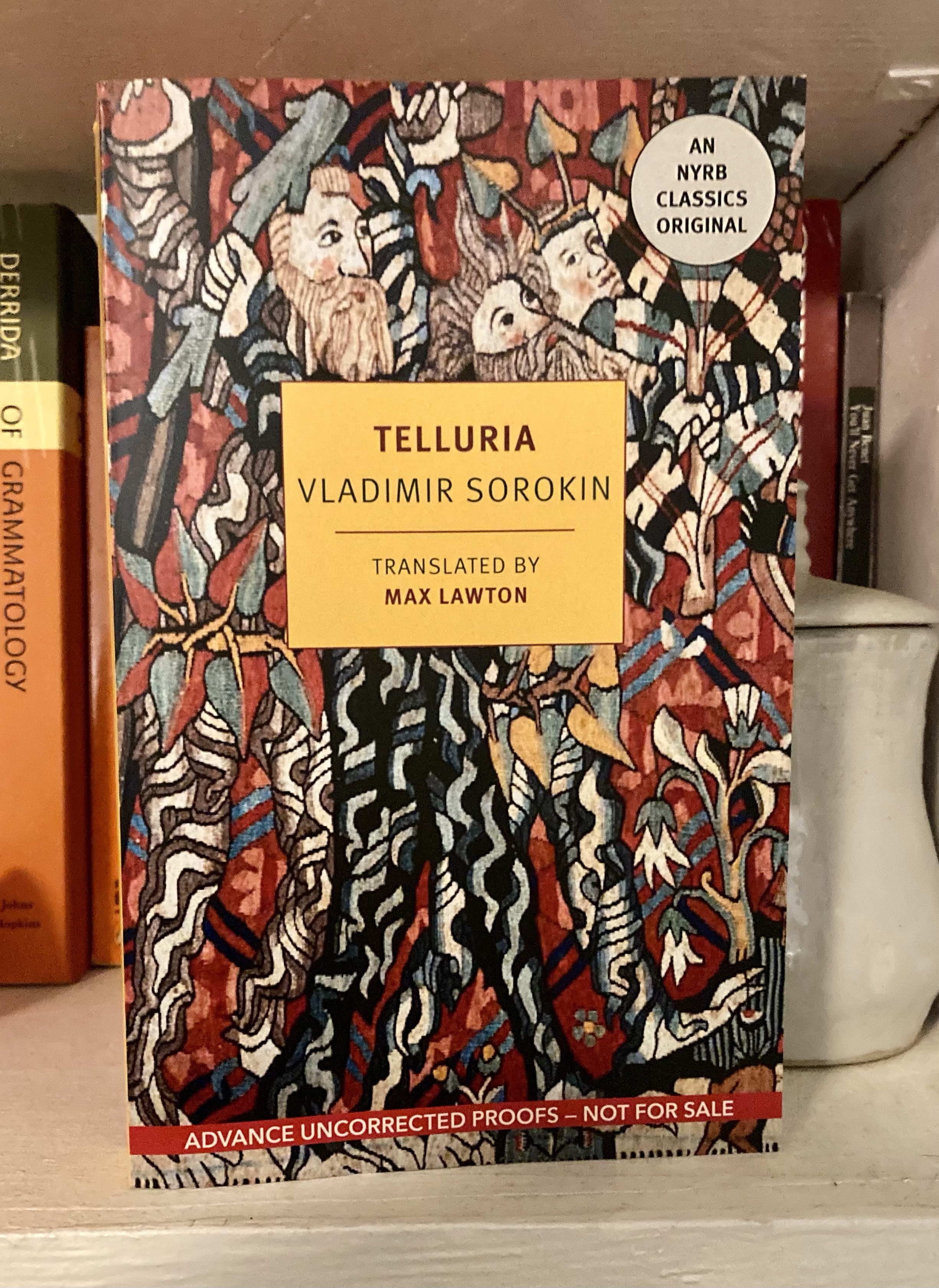
I’m really excited about Vladmir Sorokin’s postapocalyptic novel Telluria (translation by Max Lawton). I’m so excited that I’ve decided not to have anxiety and commit to a proper review by the time it comes out this summer.

Esther Allen’s translation of Antonio di Benedetto’s 1965 novel Zama is one of the best books I’ve read in the past five years, so I was very happy to get Allen’s translation of El silenciero — The Silentiary–a week or two ago. I was so happy that I added the book to a stack of books I was intending to read, rubbed my eyes really hard, let anxiety pulse through me, and read a little more of the Pessoa (which added a different layer of anxiety).

Writing about these anxieties has not purged them, but maybe I have a plan, or an outline here, a promise to myself (but not you, if you’re reading this, I promise you nothing, to be clear). Maybe I’ll dig in, set an early AM alarm to read an extra hour or so. Maybe I’ll even quit acquiring new books for awhile.

(Or not, no, I’ll just lie to myself some more.)
The Cave of Sleep — Pavel Tchelitchew

The Cave of Sleep, 1941 by Pavel Tchelitchew (1898-1957)

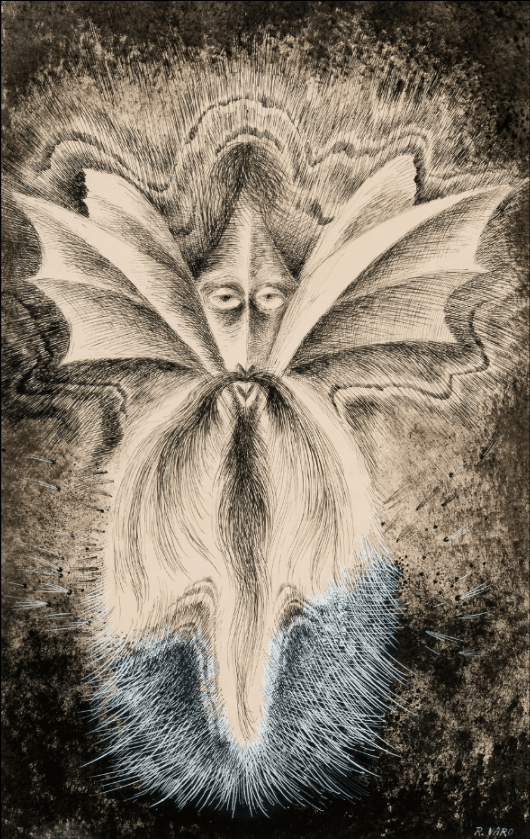
The Enchantress — Remedios Varo

The Enchantress, 1950 by Remedios Varo (1908-1963)

“wishes for sons” — Lucille Clifton

“wishes for sons”

by

Lucille Clifton


i wish them cramps.
i wish them a strange town
and the last tampon.
i wish them no 7-11.

i wish them one week early
and wearing a white skirt.
i wish them one week late.

later i wish them hot flashes
and clots like you
wouldn’t believe. let the
flashes come when they
meet someone special.
let the clots come
when they want to.

let them think they have accepted
arrogance in the universe,
then bring them to gynecologists
not unlike themselves.

Reading by the Moon — Tsukioka Yoshitoshi

Reading by the Moon, 1888 by Tsukioka Yoshitoshi (1839 – 1892)

Approaching spiritual death

A true revolution of values will lay hand on the world order and say of war, “This way of settling differences is not just.” This business of burning human beings with napalm, of filling our nation’s homes with orphans and widows, of injecting poisonous drugs of hate into the veins of peoples normally humane, of sending men home from dark and bloody battlefields physically handicapped and psychologically deranged, cannot be reconciled with wisdom, justice, and love. A nation that continues year after year to spend more money on military defense than on programs of social uplift is approaching spiritual death.

America, the richest and most powerful nation in the world, can well lead the way in this revolution of values. There is nothing except a tragic death wish to prevent us from reordering our priorities so that the pursuit of peace will take precedence over the pursuit of war. There is nothing to keep us from molding a recalcitrant status quo with bruised hands until we have fashioned it into a brotherhood.

From “A Time to Break the Silence,” Martin Luther King Jr., April, 1967. 

Vladimir Sorokin’s Telluria (Book acquired, 13 Jan. 2022)

I read the first few bits of Vladmir Sorokin’s postapocalyptic novel Telluria today. The book is forthcoming from NYRB in translation by Max Lawton. The fantastic blurb captured my interest right away:

Telluria is set in the future, when a devastating holy war between Europe and Islam has succeeded in returning the world to the torpor and disorganization of the Middle Ages. Europe, China, and Russia have all broken up. The people of the world now live in an array of little nations that are like puzzle pieces, each cultivating its own ideology or identity, a neo-feudal world of fads and feuds, in which no one power dominates. What does, however, travel everywhere is the appetite for the special substance tellurium. A spike of tellurium, driven into the brain by an expert hand, offers a transforming experience of bliss; incorrectly administered, it means death.

The fifty chapters of Telluria map out this brave new world from fifty different angles, as Vladimir Sorokin, always a virtuoso of the word, introduces us to, among many other figures, partisans and princes, peasants and party leaders, a new Knights Templar, a harem of phalluses, and a dog-headed poet and philosopher who feasts on carrion from the battlefield. The book is an immense and sumptuous tapestry of the word, carnivalesque and cruel, and Max Lawton, Sorokin’s gifted translator, has captured it in an English that carries the charge of Cormac McCarthy and William Gibson.

Telluria is forthcoming this summer; NYRB plans to publish three more by Sorokin, including Blue Lard, “which included a sex scene between clones of Stalin and Khrushchev [and] led to public demonstrations against the book and to demands that Sorokin be prosecuted as a pornographer.”

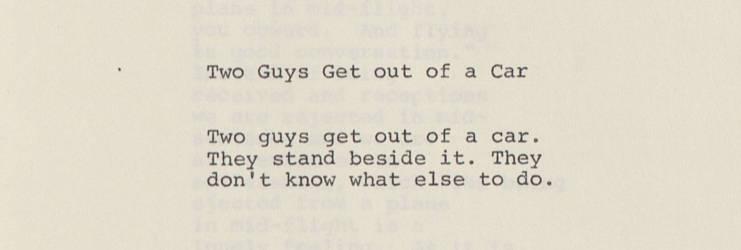
“Two Guys Get out of a Car” — Richard Brautigan

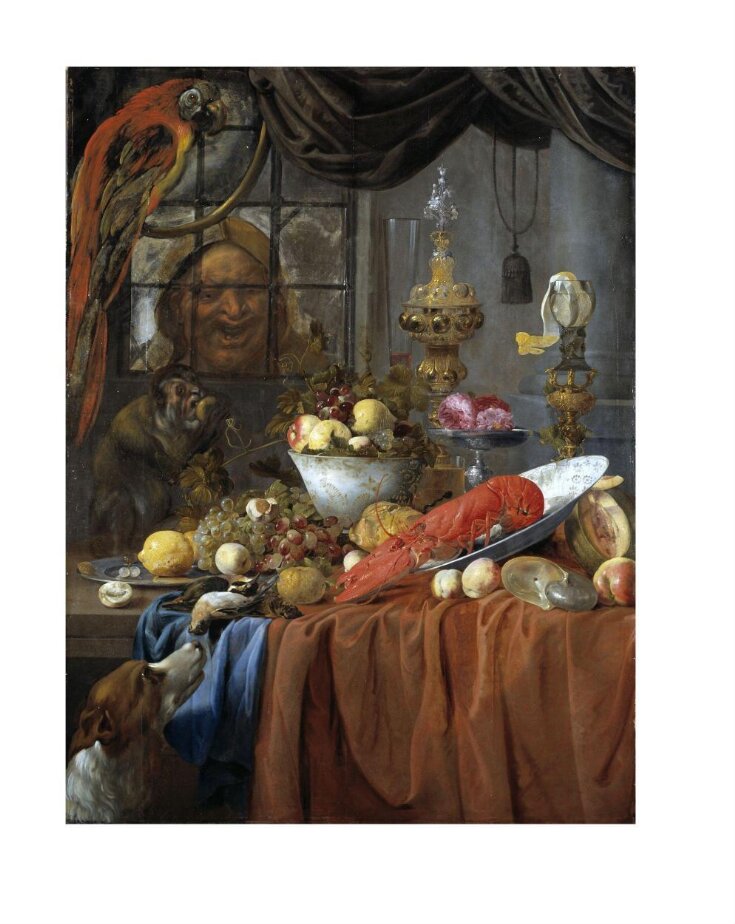
Still Life with Fruit, Lobster and Silver Vessels — Willem van Aelst

Still Life with Fruit, Lobster and Silver Vessels, c. 1660-1670 by Willem van Aelst (1627–1683)

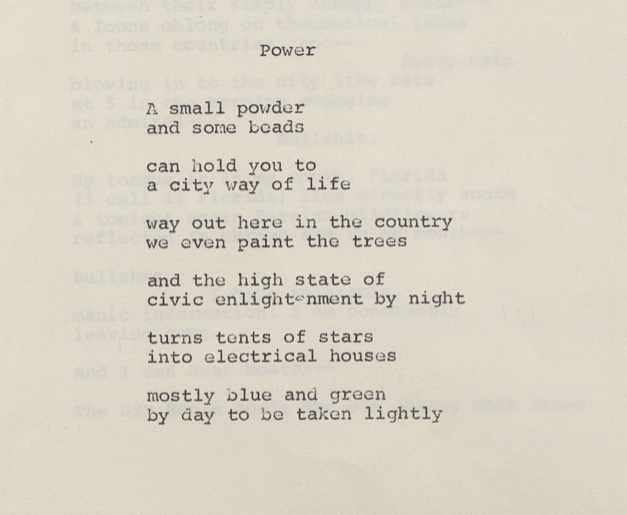
“Power” — Tom Clark

Moon in Alabama — Lynn Chadwick

Moon in Alabama, 1963 by Lynn Chadwick (1914-2003)

Two by Pessoa and Zak Smith’s Gravity’s Rainbow Illustrated (Books acquired last week and late last year)

Last week I finally got into a collection of Fernando Pessoa’s writing called Writings on Art and Poetical Theory. The books contains pieces that Pessoa composed in English, and is out next year from Contra Mundum Press. Their blurb:

Writings on Art and Poetical Theory contains a selection of Fernando Pessoa’s writings (or those of his heteronyms) on art and poetical theory, originally written in English. In Pessoa’s oeuvre one finds not only literary and fictional works but also a multiplicity of theoretical texts on the most diverse subjects concerning artistic movements, literature, and writers.

In this book, we witness Pessoa explore, through various heteronyms, general theories on poetics, the poetries of other heteronyms, the uses and abuses of criticism, and more. Also included are essays on sensationism (an aesthetic movement Pessoa dubs a new species of Weltanschauung), translation, and a brief history of English literature, which is comprised of fragments on Shakespeare, Milton, the British Romantics, Dickens, Wilde, and others, as well as additional material, such as Pessoa’s own poem Antinous.

This edition, prepared by Nuno Ribeiro and Cláudia Souza, allows us to have an overview of Pessoa’s writings on art and poetic theory — most of which are presented here for the first time to English readers —, thus opening the way for future studies on one of the most significant authors of Portuguese modernism.

Dabbling about in Writings reminded me that I’ve never made a stab at Pessoa’s monumental work, The Book of Disquiet. I picked up New Directions’ recent Complete Edition in translation by Margaret Jull Costa. I ended up reading a big chunk of it that night and have dipped into it all week and I’m not sure if I love it or hate it. It’s like the anti-Leaves of Grass, if that makes sense. It also seems like the kind of book to just pick up and read and random, which I’ve been doing since my initial fifty-page jog into it. In a short doses the fragments are lovely, poetic, aphoristic, but in longer dives the language becomes oppressive, the spirit draining and even venomous.

While I was at the bookstore I also spied a copy of Zak Smith’s Gravity’s Rainbow Illustrated. I’d found a used copy at this same story maybe ten years ago and thought twenty bucks was too much for it, and have regretted that decision for years now. Here’s the first page:

“Seven Stages of Man” — Diane Kruchkow