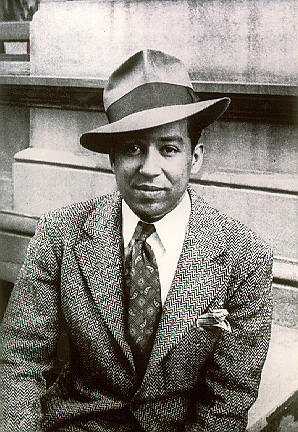
“William S. Burroughs” — Robert Crumb

billrc1

The Believer’s 2009 Reader Survey: (What Some Jokers Thought Were) The Best Books of 2008

200903

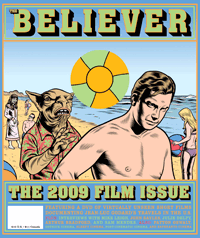
The new issue of The Believer showed up in my overstuffed mailbox today. It’s the film issue, featuring a DVD of short films about Jean-Luc Goddard’s travels in the U.S. My second favorite Jean-Luc! (Seriously, Alphaville is great, but it’s no ST:TNG). The issue also features The Believer‘s annual reader survey. Here are the results, from their website, with our parenthetical thoughts and links.

READER SURVEY RESULTS

  1. 2666—Roberto Bolaño (This seems pretty obvious. Go, read it, now. Not that awards mater, but it also just won the National Book Critics Circle Award for best fiction).
  2. Unlucky Lucky Days—Daniel Grandbois
  3. Lush Life—Richard Price (After hearing a great interview with Price on NPR, I really wanted to read this book–and I really don’t care for detective fiction. And I never got into The Wire. I guess it’s not really genre fiction though. I guess I should read it).
  4. The Lazarus Project—Aleksandar Hemon
  5. Netherland—Joseph O’Neill (Heard lots of good things about this, but neglected to solicit a copy).
  6. Vacation—Deb Olin Unferth (Haven’t read it. Like her short stories in McSweeney’s though).
  7. Unaccustomed Earth—Jhumpa Lahiri (Unsolicited promo copy of the new trade paperback edition showed up in the mail a few days ago. I will try to read it).
  8. Arkansas—John Brandon
  9. A Mercy—Toni Morrison (This topped my best of 2008 list only because I hadn’t read 2666 yet–to be fair, however, they’re both great, totally different books, so no real reason why one should top another).
  10. Indignation—Philip Roth (Jesus. Do people still read Philip Roth. Who knew?) Continue reading “The Believer’s 2009 Reader Survey: (What Some Jokers Thought Were) The Best Books of 2008”

Nancy Baker’s Surreal Arcadian Fantasies

Wildman -- Nancy Baker

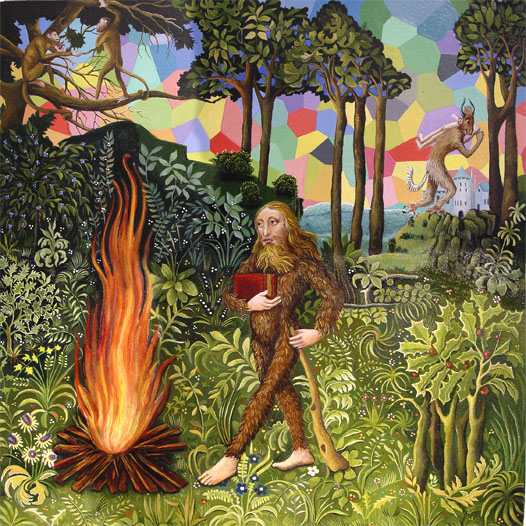
We are just loving the strangely disquieting art of Nancy Baker. Baker’s world–much of it a night world–teems with vibrant birds and manic jesters, spaceships and dissolving flowers. Paintings like Plato’s Revenge and Listening to Reason suggest achronistic landscapes, merging Arcadian fantasy, Renaissance tropes, and retrofuturism, while works such as In and Of Itself (below), Temptation, and Pokey both allude to–and at the same time puncture–the conflation of religious myths, fairy tales, and modern pop narratives that inform our culture.

In and Of Itself
In and Of Itself -- Nancy Baker

We love the playfulness at work in Baker’s paintings, an overt and primal innocence impinged by a looming sinister something. There’s an underlying tension here that everything might, in the briefest of moments, snap into incoherence and chaos. Yet each painting retains a core of displaced meanings, an invitation to the viewer to tell herself a story. Great stuff.

Passages From James Joyce’s Finnegans Wake — Mary Ellen Bute

finnegan

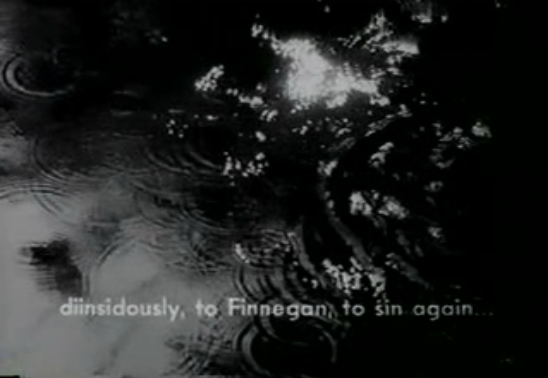
In the mid-sixties, Mary Ellen Bute made a surreal little film that kinda sorta illustrates James Joyce’s most inscrutable novel, Finnegans Wake. Watch the whole thing at UbuWeb Film. And you were going to celebrate St. Patrick’s Day by simply getting stinking drunk…for shame…for shame!

“Saturday’s Child” — Countee Cullen

counteecullen

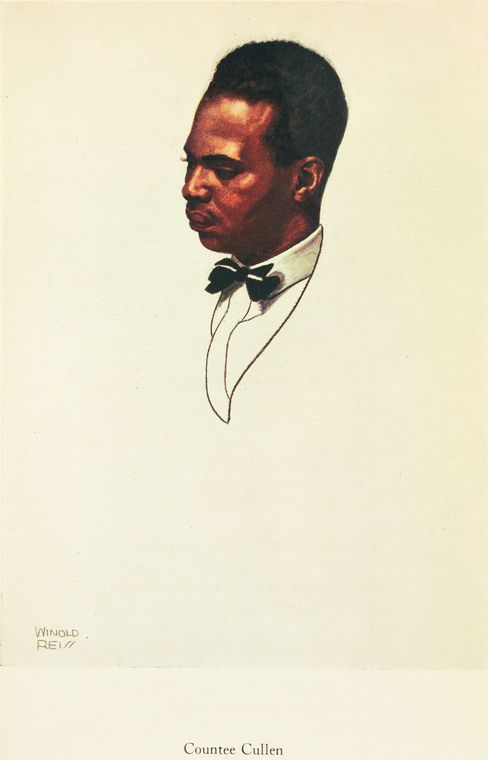
We’d never read this poem until earlier today when a student brought it to our attention. We love all the double-edged wordplay, the caustic tone, and the recontextualization of a Mother Goose classic. Great stuff.

“Saturday’s Child” by Countee Cullen–

Some are teethed on a silver spoon,
With the stars strung for a rattle;
I cut my teeth as the black racoon–
For implements of battle.

Some are swaddled in silk and down,
And heralded by a star;
They swathed my limbs in a sackcloth gown
On a night that was black as tar.

For some, godfather and goddame
The opulent fairies be;
Dame Poverty gave me my name,
And Pain godfathered me.

For I was born on Saturday–
“Bad time for planting a seed,”
Was all my father had to say,
And, “One mouth more to feed.”

Death cut the strings that gave me life,
And handed me to Sorrow,
The only kind of middle wife
My folks could beg or borrow.

Men Are Mortal, Pictures Too

discs-avec-spirales
Discs avec Spriales -- Marcel Duchamp

We picked up a pretty cool book last weekend at the Friends of the Library Sale–Pierre Cabbanne’s Dialogues with Marcel Duchamp. Duchamp is way more straightforward than you would think, and also quite funny. He’s also, as his work would attest, often reflective and philosophical. Here, he waxes heavy on art, beauty, transience, and mediocrity:

I think painting dies, you understand. After forty or fifty years a picture dies, because its freshness disappears. Sculpture also dies. This is my own little hobbyhorse, which no one accepts, but I don’t mind. I think a picture dies after a few years like the man who painted it. Afterward it’s called the history of art. There’s a huge difference between a Monet today, which is black as anything, and a Monet sixty or eighty years ago, when it was brilliant, when it was made. Now it has entered history–it’s accepted as that, and anyway that’s fine, because that has nothing to do with what it is. Men are mortal, pictures too.

The history of art is something very different from aesthetics. For me, the history of art is what remains of an epoch in a museum, but it’s not necessarily the best of that epoch, because the beautiful things have disappeared–the public didn’t want to keep them. But this is philosophy…

So, I guess all those urinals Duchamp made aren’t so fresh today.

Historic Photos of the University of Florida

turner_cover_uoff

Full disclosure: not only am I a proud University of Florida graduate, but so is my wife, both of my parents, and most of my good friends. So, clearly, I am predisposed to a certain amount of interest in Turner Publishing’s Historic Photos of the University of Florida. This large, hardback coffee table book collects 200 black and white archival photos, arranged chronologically with accompanying text and captions by Steve Rajtar. The book spans over 150 years of UF history including the first fifty years when what was to become the University of Florida was still just an unrelated collection of military academies and agricultural institutes. For me, these pre-Gainesville years were the most interesting–I actually didn’t know that much about my alma mater’s history it turns out.

The black and white photos in the collection range from fascinating (turn of the century images of the first Gator football teams; early gatherings of Tomato Clubs) to humdrum (buildings! More buildings!), but all serve to tell the story of the foundation of the Gator Nation. Rajtar’s commentary is both informative and insightful, explicating the background of the photographs presented in the collection. Having lived in lovely Gainesville, I would’ve liked some color photographs to show off both the beautiful campus and the lush terrain, but the black and white does lend an air of consistency–and perhaps austerity–to the book. Although the book ends with a few photos of the past thirty years, the majority of the volume concentrates on the University’s early history–so sorry, no Tebow folks. Still, Historic Photos of the University of Florida is a must for any self-respecting Bull Gator (starving grad students can skip on this one, though).

Semi-related post-script: While you may not have attended the University of Florida, the institution has a great record when it comes to fiction writing. Padgett Powell is the current writer-in-residence (I remember him giving a reading involving some space aliens; this was about a decade ago); Biblioklept faves Chris Adrian and Chirs Bachelder are both proud UF grads (caveat: we can only assume they’re proud (they’re intelligent, why wouldn’t they be proud?)); Harry Crews was writer-in-res pre-Powell–he’s also a grad (in English education, of all things! (sidebar: he also shares The Biblioklept’s birthday (along with Prince, Michael Cera, Paul Gaugin, Gwendolyn Brooks, Nikki Giovanni, Damien Hirst, Bill Hader, and Allen Iverson))). So: plenty of great writers.

Historic Photos of the University of Florida is now available from Turner Publishing.

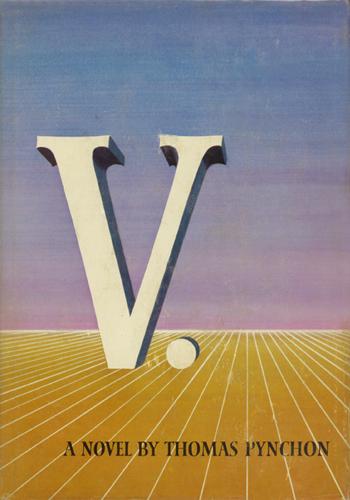
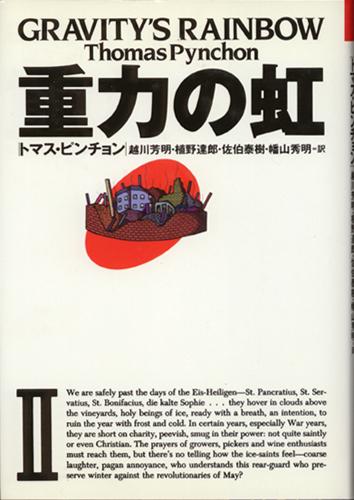
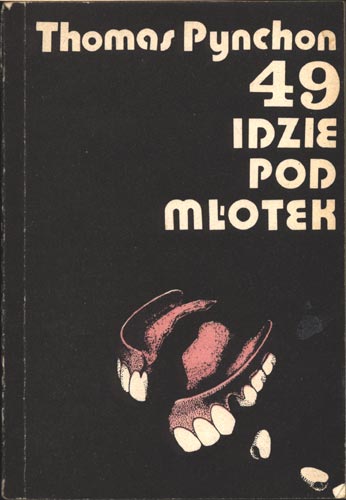
Thomas Pynchon Cover Gallery

Pynchon covers via thomaspynchon.com. The site also has a great collection of Pynchon articles and more, including the classic 1984 essay, “Is It O.K. To Be A Luddite?

v_hb

gr_jp2

lot49_pb_90_pol

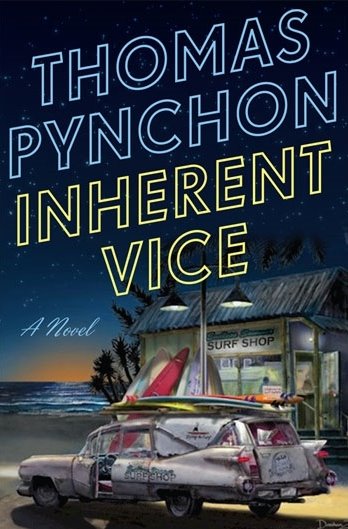
The site doesn’t have any covers for Vineland, Mason & Dixon, or Against the Day yet. Also, they skip over the horrendous cover for Pynchon’s forthcoming novel, Inherent Vice:

inherent-vice

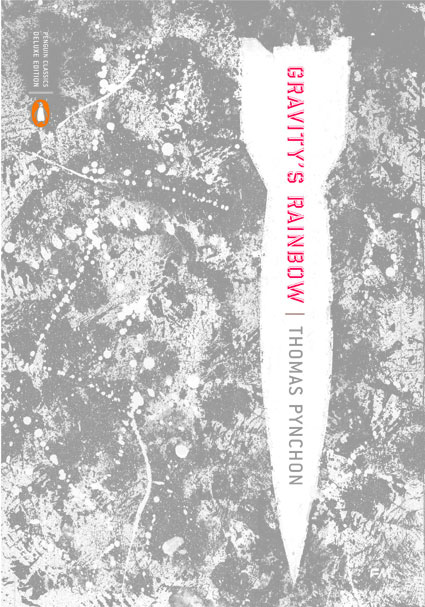
Also omitted: Frank Miller’s cover design for Gravity’s Rainbow:

gravitys-rainbow-722917

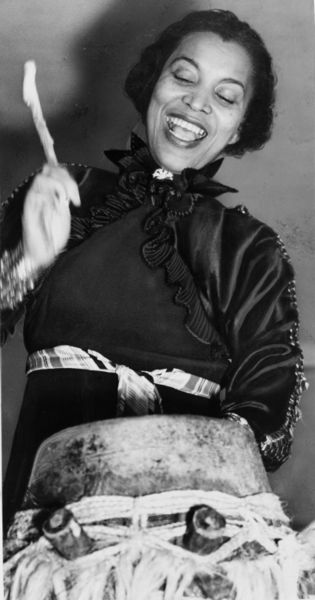
Zora Neale Hurston Sings “You May Go But This Will Bring You Back”

315px-zora_neale_hurston_nywts

Zora Neale Hurston sings folksong “You May Go But This Will Bring You Back,” and then explains how she learns her songs. More info here.

“Wiggle Room” — David Foster Wallace

david_foster_wallace_20080915

According to this morning’s New York Times, David Foster Wallace’s posthumous–and unfinished–novel The Pale King will be published next year by Little, Brown. The New Yorker has published an excerpt called “Wiggle Room.” Here’s the first three sentences, just in case you need your literary appetite whetted:

Lane Dean, Jr., with his green rubber pinkie finger, sat at his Tingle table in his chalk’s row in the rotes group’s wiggle room and did two more returns, then another one, then flexed his buttocks and held to a count of ten and imagined a warm pretty beach with mellow surf, as instructed in orientation the previous month. Then he did two more returns, checked the clock real quick, then two more, then bore down and did three in a row, then flexed and visualized and bore way down and did four without looking up once, except to put the completed files and memos in the two Out trays side by side up in the top tier of trays, where the cart boys could get them when they came by. After just an hour the beach was a winter beach, cold and gray and the dead kelp like the hair of the drowned, and it stayed that way despite all attempts.

The War of the Worlds Cover Gallery

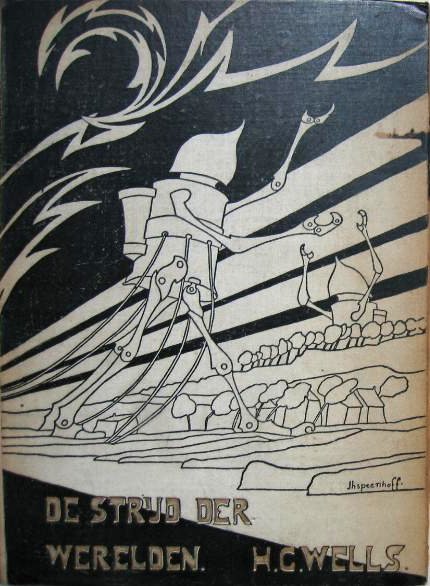
Chez Zeus has a very thorough and thoroughly fun cover gallery for H.G. Wells’s sci-fi classic The War of the Worlds. We’ve picked a few of our favorite covers here, but the full collection is great. For full artist credits and dates, check out Zeus’s complete gallery.

0003

Continue reading “The War of the Worlds Cover Gallery”

Three New Novels: Brothers, Amberville, and The Post-War Dream

The stack of promo copies and galleys at Biblioklept World Headquarters has built to an unmanageable and untenable tower of tasks that we are simply not up to of late. It’s not like we’re not reading, but we do have a day job! While we do request certain new books from publishers, most of what comes into our esteemed hallows is unsolicited, and a lot of it is honestly pretty dull stuff. However, we have a tidy little pile of new books that we’re going to read in full as soon as we can get to them, and it seems only right to share with our Esteemed Readers in a timely manner.

brothers

First up is Chinese author Yu Hua’s titanic Brothers, the engrossing and often ribald story of two step-brothers, Baldy Li and Song Gang. Brothers moves from the quiet village life of the brothers’ native Liu Town, through the Cultural Revolution, and into China’s contemporary economic and technological boom. At over 600 pages, the novel seemed a bit daunting, but we read the first 50 pages at a steady clip. Honestly, Yu Hua had us at the fourth page, when Baldy Li indulges in a bit of nasty voyeurism in a public restroom. Check the pithy wisdom:

Nowadays women’s bare butts aren’t worth much, since they can be found virtually everywhere. But back then things were different. It used to be that women’s bottoms were a considered a rare and precious commodity that you couldn’t trade for gold or silver or pearls. To see one, you had to go peeping in a public toilet . . .

We’re really enjoying Brothers so far, and the book seems destined to break Yu Hua’s funny and poignant voice to a Western audience. Here’s a pretty cool in-depth profile on Yu Hua by the New York Times. Full of weird vignettes, crude humor, and a frank look at a very different culture, we think this will be one of the highlights of 2009. Brothers is now available in hardback from Pantheon Books.
amberville

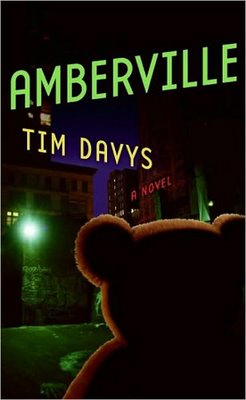
We’re not really big fans of detective noir, but Tim Davys’s Amberville seems to do the genre justice despite its big twist–the characters are all stuffed animals. In Davys’s debut novel, dark secrets from Eric Bear’s past come back to haunt him and challenge his legit prominence as a high-powered ad exec. The first two chapters were okay–Davys certainly has his noir tropes and rhythms down–but we had a hard time getting over the stuffed animal conceit. Still, readers who like their noir twisted–or fans of fantasy may get a kick out of Amberville, available now in hardback from HarperCollins.

postwardreampreview

New in paperback next month from Anchor Books, Mitch Cullin’s novel The Post-War Dream tells the story of two retirees in Arizona. After his wife Debra becomes gravely ill, Hollis finally confronts the trauma of his past, rooted in his experiences as a soldier in the Korean War. We have to admit that the plot description sounded a bit…hmmmm… “not our speed” would be a polite way to put it, we suppose (honestly, the idea of reading about an old married retired couple didn’t sound that interesting), but the first three chapters were very good, a bit strange, and intriguing enough to keep us going. Plus the book is dedicated to Howe Gelb–how weird is that? Those unfamiliar with Cullins might know his novel Tideland from its film adaptation a few years ago by Terry Gilliam. Those unfamiliar with Terry Gilliam have our permission to give up.

Zora Neale Hurston Sings “Uncle Bud”

A salty song about a ribald gentleman by the name of “Uncle Bud,” whose “nuts hangs down like a Georgia bull.” Great stuff. The accompanying video footage was shot by Hurston herself on one of her trips through south Florida, where she collected the folktales and songs of rural blacks. Many of these tales–often called “lies”–are found in Hurston’s Mules and Men, a hybrid work that novelizes these narratives into a cohesive whole, an afternoon spent on a porch telling stories and singing songs. Recommended.

mules

No Poets Don’t Own Words

brion-gysin

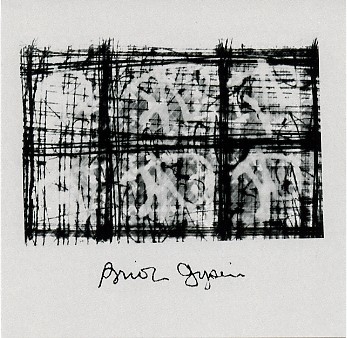
No Poets Don’t Own Words” from Brion Gysin’s Recordings 1960-1981. A very cool record, featuring lots of tape manipulation, cut-ups, poetry, and interviews with Gysin on a variety of subjects including censorship, surrealism, and art. We like it much. Much we like. It. Like much it we.

There’s No Such Thing As Life Without Bloodshed

cormac-mccarthy1

Just finished this 1992 New York Times interview with Cormac McCarthy. I know, I know, hardly new, but still, it’s a rare insight into a reclusive writer–his 2007 interview with Oprah could politely be called awful, and I feel like this older piece is some kind of vindication. My favorite quote:

There’s no such thing as life without bloodshed [. . .] I think the notion that the species can be improved in some way, that everyone could live in harmony, is a really dangerous idea. Those who are afflicted with this notion are the first ones to give up their souls, their freedom. Your desire that it be that way will enslave you and make your life vacuous.

Great interview, even if it is almost 17 years old.

Strange Fruit

In cynical times, it’s far too easy to dismiss the value of the arts. But listen to Billie Holiday’s recording of “Strange Fruit.” When Holiday put Bronx high-school teacher Abel Meeropol‘s lyrics to music, she captured the bizarre pain and insanity of a legacy of lynching in the American South. Meeropol’s morbid lyrics juxtapose a “Pastoral scene of the gallant south” against the gruesome spectacle of a lynching. The “strange and bitter crop” of history–the hanging flesh of dead black men–is preserved forever in this sad and bitter elegy. Art–song and poetry–has a capability to tell an abstract truth in a way that the concrete annals of history cannot achieve.

“Strange Fruit”

Southern trees bear strange fruit,
Blood on the leaves and blood at the root,
Black bodies swinging in the southern breeze,
Strange fruit hanging from the poplar trees.

Pastoral scene of the gallant south,
The bulging eyes and the twisted mouth,
Scent of magnolias, sweet and fresh,
Then the sudden smell of burning flesh.

Here is fruit for the crows to pluck,
For the rain to gather, for the wind to suck,
For the sun to rot, for the trees to drop,
Here is a strange and bitter crop.

Langston Hughes Reads Three Poems

langstonhughes

Renaissance man Langston Hughes reads three of his poems–

The Negro Speaks of Rivers

Ballad of the Gypsy

Mulatto

Also, read one of our favorite Hughes poems, “I, Too, Sing America” (a response, we believe, to Walt Whitman’s “I Hear America Singing” (Elizabeth Alexander’s inauguration poem, “Praise Song for the Day” seems to respond to both of these poems))–

I, too, sing America.

I am the darker brother.
They send me to eat in the kitchen
When company comes,
But I laugh,
And eat well,
And grow strong.

Tomorrow,
I’ll be at the table
When company comes.
Nobody’ll dare
Say to me,
“Eat in the kitchen,”
Then.

Besides,
They’ll see how beautiful I am
And be ashamed–

I, too, am America.