Speech — Luc Tuymans

tuymans_speach

Speech, 2010 by Luc Tuymans (b. 1958)


The Water Protectors — Odd Nerdrum

c0903c86b908

the Water Protectors, 1985 by Odd Nerdrum (b. 1944)


Woman Reading — Eastman Johnson

Woman Reading, by Eastman Johnson

Woman Reading, 1874 by Eastman Johnson (1824-1906)

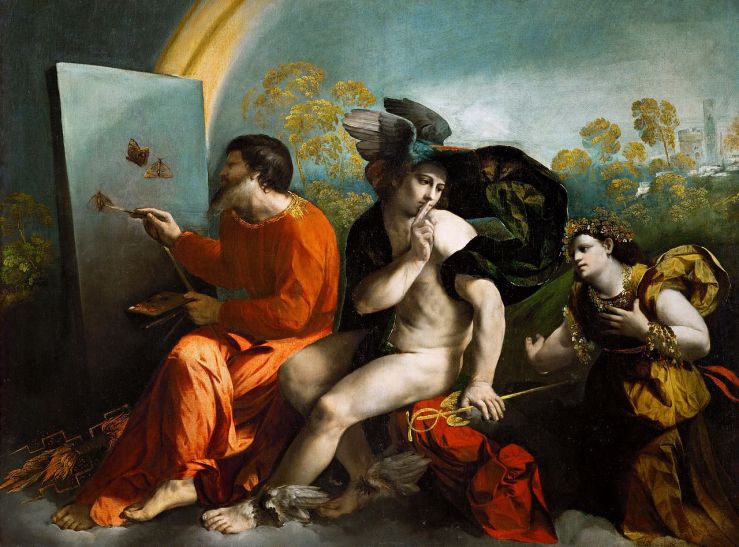
Jupiter, Mercury, and Virtue — Dosso Dossi

jupiter-mercury-and-virtue-1524

Jupiter, Mercury, and Virtue, 1524 by Dosso Dossi (c. 1490-1542)

Blog about Goya’s Straw Man

4d4a8730-40c4-4a3e-a681-ea8787ee9e0f

El pelele is a painting composed between 1791 and 1792 by the Spanish painter Francisco José de Goya y Lucientes (1746–1828).  El pelele is often rendered in English as The Straw Manikin, but Robert Hughes translates it as The Straw Man in his 2003 biography Goya.

I like Hughes’s translation, which carries a perhaps-unnecessary connotation of a certain logical fallacy. Hughes pegs the painting as a genre piece, one of the “bucolic amusements” of Goya’s patrons Charles IV and Maria Luisa, King and Queen of Spain. The Museo Nacional del Prado in Madrid describes the painting like this:

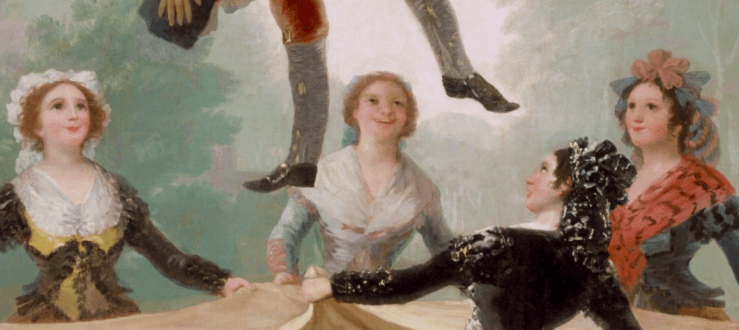
Four young women laugh and play at blanket-tossing a doll or manikin in the air. The latter´s movement is the result of their caprice. Its carnival origins are visible in the use of masks and joking, but the blanket-tossing of a doll is used here by Goya as a clear allegory of women’s domination of men.
Screenshot 2018-04-05 at 10.06.12 PM

Hughes also sees The Straw Man as Goya’s take on “what seemed to him [Goya] the waning of traditional Spanish masculinity,” noting that the motif was repeated throughout Goya’s work (notably in Goya’s etching Disparate femenino).

Screenshot 2018-04-05 at 10.21.11 PM

Hughes perceives a “disenchanted edge” to Goya’s Straw Man. The edge here is what most engages me about the image. To this scene any contemporary viewer—by which I mean any post-postmodern viewer—must bring a certain horrific viewpoint. The free and freeing sky juxtaposes with the wobbly jelly limbs of the empty hero at the core of the painting. His face is a literal mask, a mask itself painted into a mock ebullience of servitude. The manikin is a big nothing painted as a happy something, a doll to be tossed around for amusement. The creeping fun under the whole business is undeniable. What’s key here, at least for me, is Goya’s composition of expression in the manikin’s face. Hughes points out that the figure is a mockery of the French court and all its foppish manners, Goya’s satirical jab at his benefactors’ pretensions — “silly French pigtails and spots of rouge on its cheeks…vacuous to perfection” — but there’s also a strange humanity to the face that I don’t think a contemporary viewer should overlook. The eyes assert themselves to the grayblue Spanish heaven above, even as the body fails to resemble all but the idea of a body—an idea most heavily felt in the body’s own gravity, the force which will return it to be tossed again and again—without hope of transcendence.

Screenshot 2018-04-05 at 10.05.58 PM

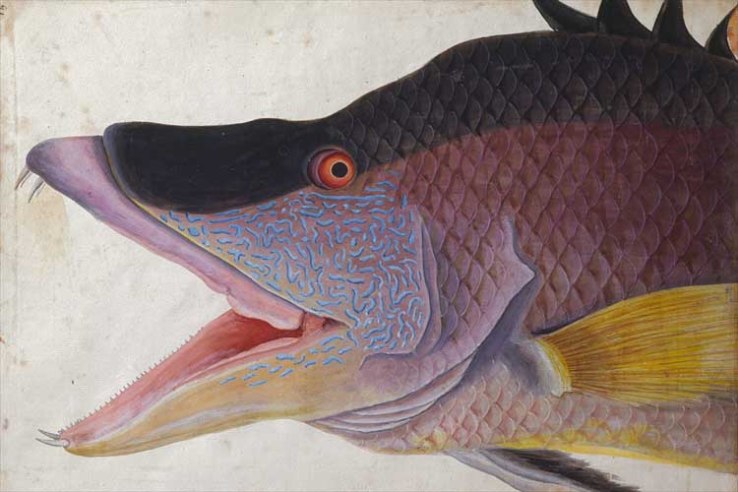
Lachnolaimus Maximus — Mark Catesby

schweinsfisch

Lachnolaimus Maximus, 1725 by Mark Catesby (1682-1749)

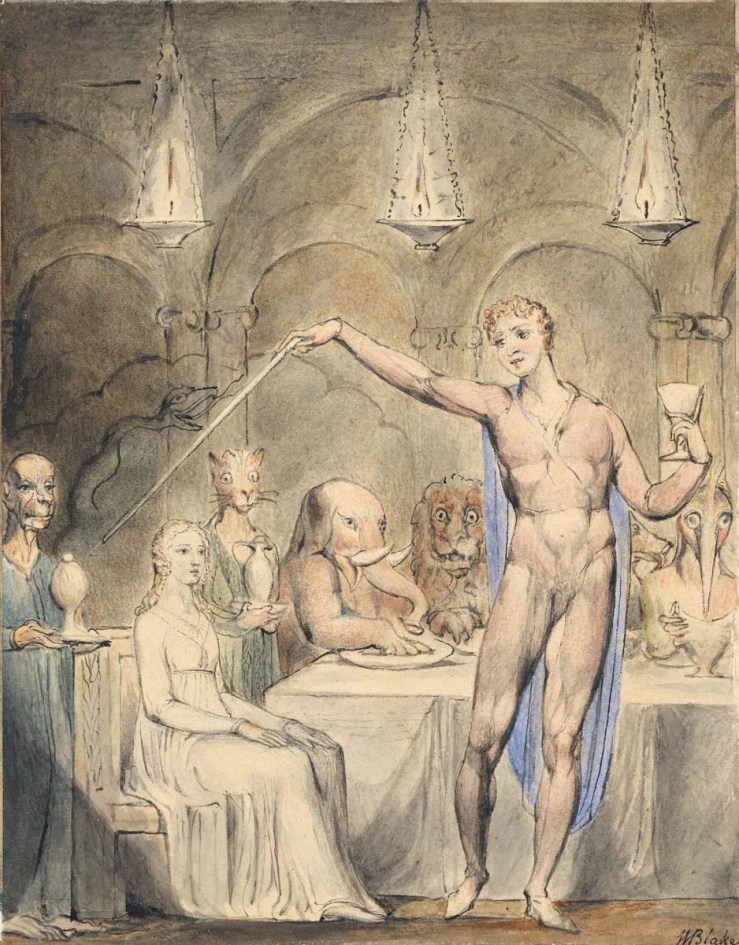
The Magic Banquet — William Blake

469894

The Magic Banquet (Illustration for Milton’s Comus), c. 1815 by  William Blake (1757–1827)

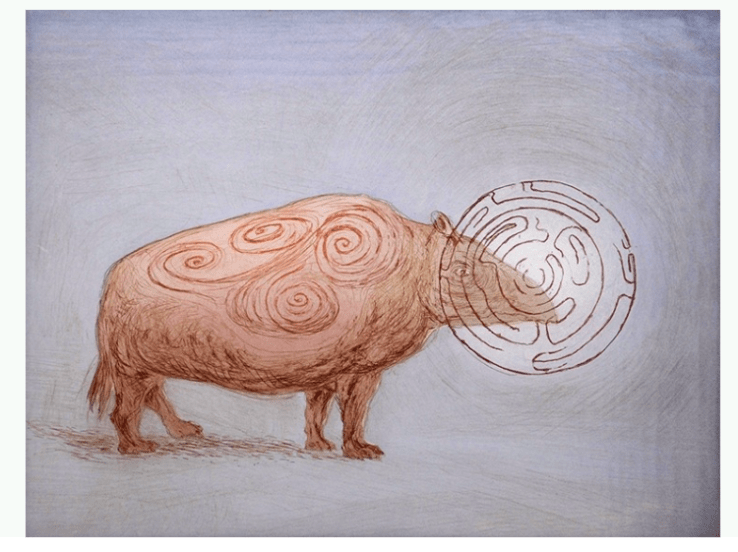
Tapir — Leonora Carrington

Screenshot 2018-04-04 at 8.05.22 PM

Tapir, 1998 by Leonora Carrington (1917–2011)

Envy — James Ensor

Envy 1904 James Ensor

Envy, 1904 by James Ensor (1860-1949)

Death and the Maiden — Dorothea Tanning

Screenshot 2018-04-03 at 3.18.30 PM

Death and the Maiden, 1953 by Dorothea Tanning (1910-2012)

Screenshot 2018-04-03 at 3.19.31 PM

Screenshot 2018-04-03 at 3.19.58 PM

City View — Girolamo Marchesi

bf55f0ed945ff0aca8054c0c6d42cef3

Veduta di Città (City View), 1520 by Girolamo Marchesi (1471-1550)

Five Angora Rabbits — Theo van Hoytema

3db0ff3706524bdc8e56eab5db3c13ff

Bosch Bunny

Field with Two Rabbits — Vincent van Gogh

Dave Cooper’s Mudbite (Book acquired, 28 March 2018)


img_9439

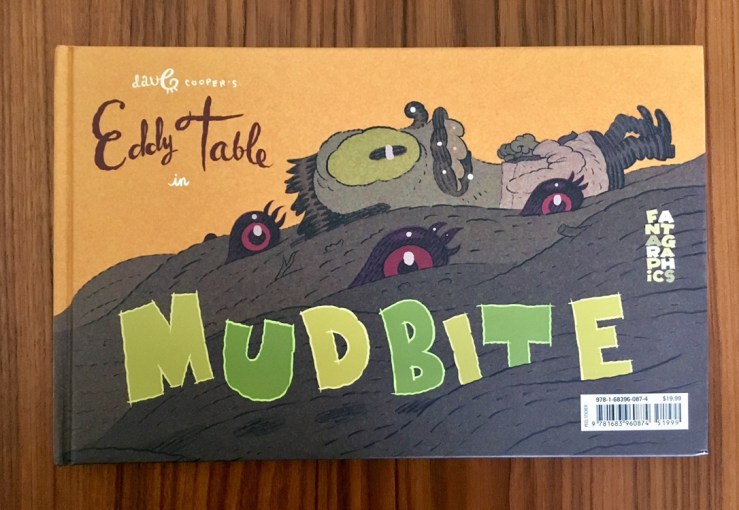
Dave Cooper’s Mudbite is new in glorious full-color hardback from Fantagraphics. Here is the front cover:

img_9437

And here is the other front cover (Mudbite is a tête-bêche):

img_9438

I hope to post a review of Mudbite at The Comics Journal soon, but for now, here’s Fantagraphics’ blurb:

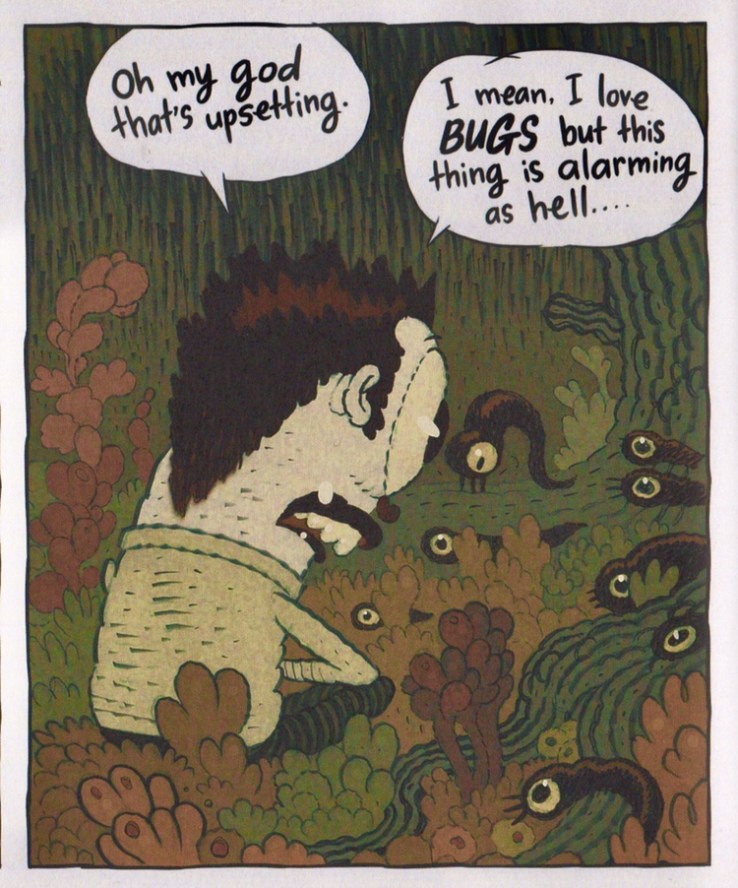
Eddy Table, the star of Mudbite, first appeared the early ’90s in Cooper’s award-winning underground comics series, Weasel. His stories were based on baffling dreams and reveled in a unique sort of logical nonsense. Mudbitecompiles two all-new Eddy Table stories, “Mud River” and “Bug Bite,” in which Eddy returns to his roots, acting as Dave’s alter ego in these dreamlike narratives.

In “Mud River,” Eddy makes a foolish mistake, causing a sweet, innocent Amazon to bonk her head, turning her into a very impressionable automaton. Of course, Eddy can’t resist taking advantage of this unexpected development, even as a river of mud approaches. In “Bug Bite,” Eddy has brought his family on a vacation to Europe, but he’s soon distracted by a series of manifestations of his own obsessions  — voluptuous women, mysterious and collectible “microdevices,”  and a strange, impromptu jam session. When he loses his family entirely, he’s led into a dark, slimy corridor inhabited by shiny black eels. What is their connection to the microdevices? And how will all this impact his family?

Mudbite marks the first new graphic novel by fan favorite Dave Cooper in more than 15 years, marking a welcome return to the medium that he made his name in before focusing on fine art and television, where he has focused most of his creative energy since.

Calvary (Crucifixion) — Ilya Repin

calvary-crucifixion-study-1869

Calvary (Crucifixion), 1869 by Ilya Repin (1844-1930)

Illustration for Frankenstein — Bernie Wrightson

596de571d9ea5a0f6fcb1cc0d4562bea