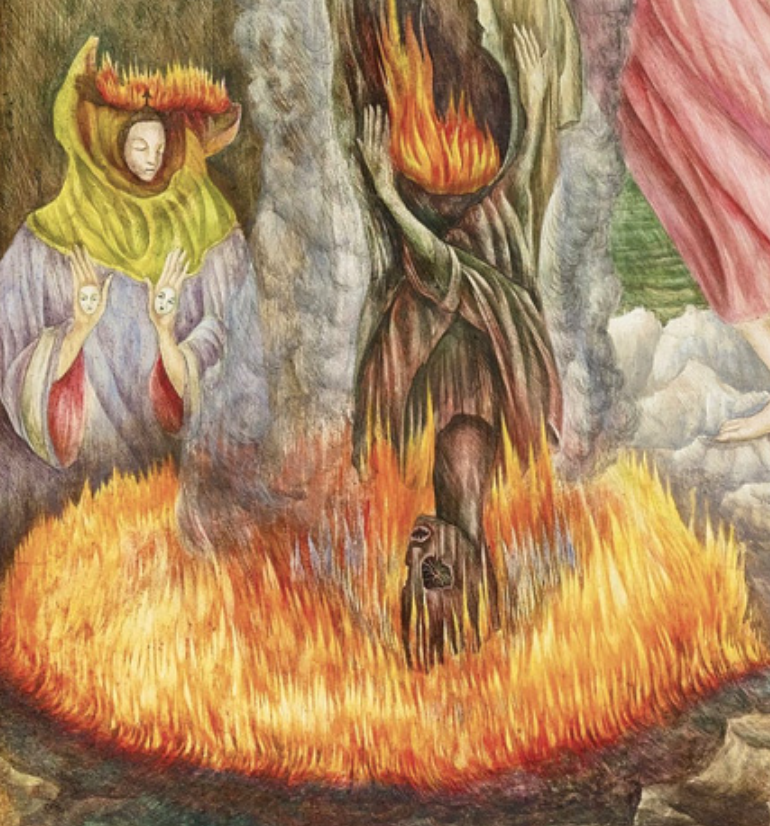
The Pleasures of Dagobert (detail), 1945 by Leonora Carrington (1917–2011)
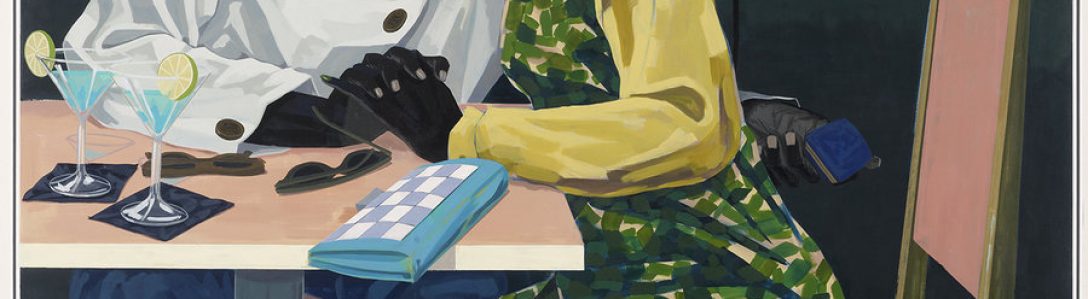
The Pleasures of Dagobert (detail), 1945 by Leonora Carrington (1917–2011)
an archivist
ripple effects
cursed history
perimenopause
estranged friend
small-town Texas
thirst for revenge
Gatsbyish parties
vampire geneticist
pregnant girlfriend
locked-room thriller
globe-trotting romp
magical realist romp
decades of instability
long-held class issues
moment of transition
deep into his own past
teenager goes missing
a torrent of memories
religious-zealot husband
wealthy summer resident
Adirondack summer camp
personal assistant disappears
across Italy, France and Spain
crumbling Victorian mansion
missing father officially dead
the beloved private detective
dreams of becoming a sommelier
turning all of their lives upside down
hellbent on reliving his very dark past
latest in this best-selling mystery series
who can rack up more sexual conquests
a new historical novel with an artistic bent
where sex, power and corruption intersect
young lovers try to forge a future together
the life-changing epiphany of a hydrologist
a fellow émigré with whom he had an affair
stymied by the responsibilities of motherhood
reshaping American science fiction and fantasy
the family fortune has dwindled to almost nothing
more interested in luxury wellness than social justice
a kid full of promise whose life changed one summer night
must reckon with how to build a future for their young twins
a wealthy family grappling with the aftershocks of its patriarch’s kidnapping
must put his retirement plans on hold and find the missing girl
must join forces with one of the unknowable robots
the sisters take it as a sign to change their lives
embarking on a search for his missing brother
expelled from Maine’s Penobscot Reservation
embroiled in some murky business dealings
following a family of Murano glassblowers
the world careens toward global conflict
a narrative that comments on ambition
he crosses paths with two sex workers
idyllic but aging house on Cape Cod
a New England mill town in decline
a gangster who works in nightlife
comfort in a 14th-century poem
her own mother’s ambivalence
crucible of domestic pressure
grappling with the intensities
cult-favorite art house film
industrial dynasty grapples
cookie-cutter McMansion
working-class community
caused a stir on the island
ghosts of a different kind
life’s pivotal moments
lesser-known players
two forbidden lovers
wealthy tourist island
off-grid hunting trip
into the underworld
hyperbaric chamber
family’s revelations
impending baptism
rags-to-riches story
tech-free getaway
murderous youth
home burns down
Maine hometown
dystopian reality
emotional needs
worrisome ways
ultimate fates
tragedy struck
scholar-witch
refugees fled
middle-aged
old-money
epic
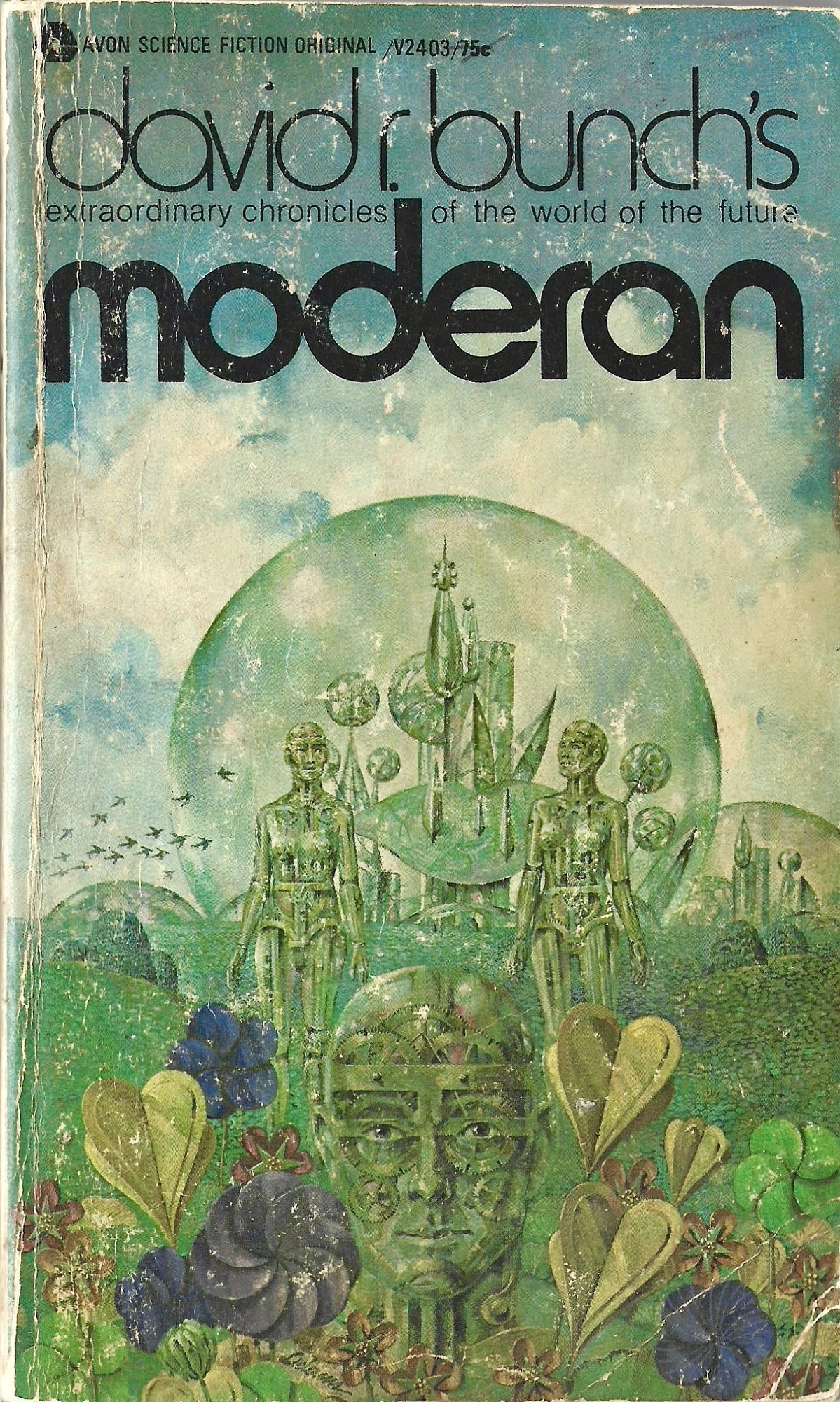

Moderan, David R. Bunch. Avon Books, first edition (1971). No cover artist credited. 240 pages.
The uncredited Boschian cover for this 1971 mass-market paperback edition of Moderan is by Norman Adams. (Adams did a similar cover in 1972 for Jack Williamson’s novel The Humanoids.)
I think copies of this volume were expensive and hard to find previous to NYRB’s 2018 release of a new edition of Moderan (which included eleven new tales). That’s the version I read—although I was happy to snap this old paperback up for three bucks at a used bookstore. I wrote of the novel in my 2018 reading round-up:
Moderan works as a post-nuke dystopian satire on toxic masculinity. The tropes here might seem familiar—cyborgs and dome homes, caste systems and ultraviolence, a world of made and not born ruled by manunkind (to steal from E.E. Cummings)—it’s the way that Bunch conveys this world that is so astounding. Moderan is told in its own idiom; the voice of our narrator Stronghold-10 booms with a bravado that’s ultimately undercut by the authorial irony that lurks under its surface. The book seems equal to the task of satirizing the trajectory of our zeitgeist in a way that some contemporary satirists have failed to.

The Pleasures of Dagobert (detail), 1945 by Leonora Carrington (1917–2011)

Untitled, c. 1955 by Wolfgang Paalen (1905-1959)
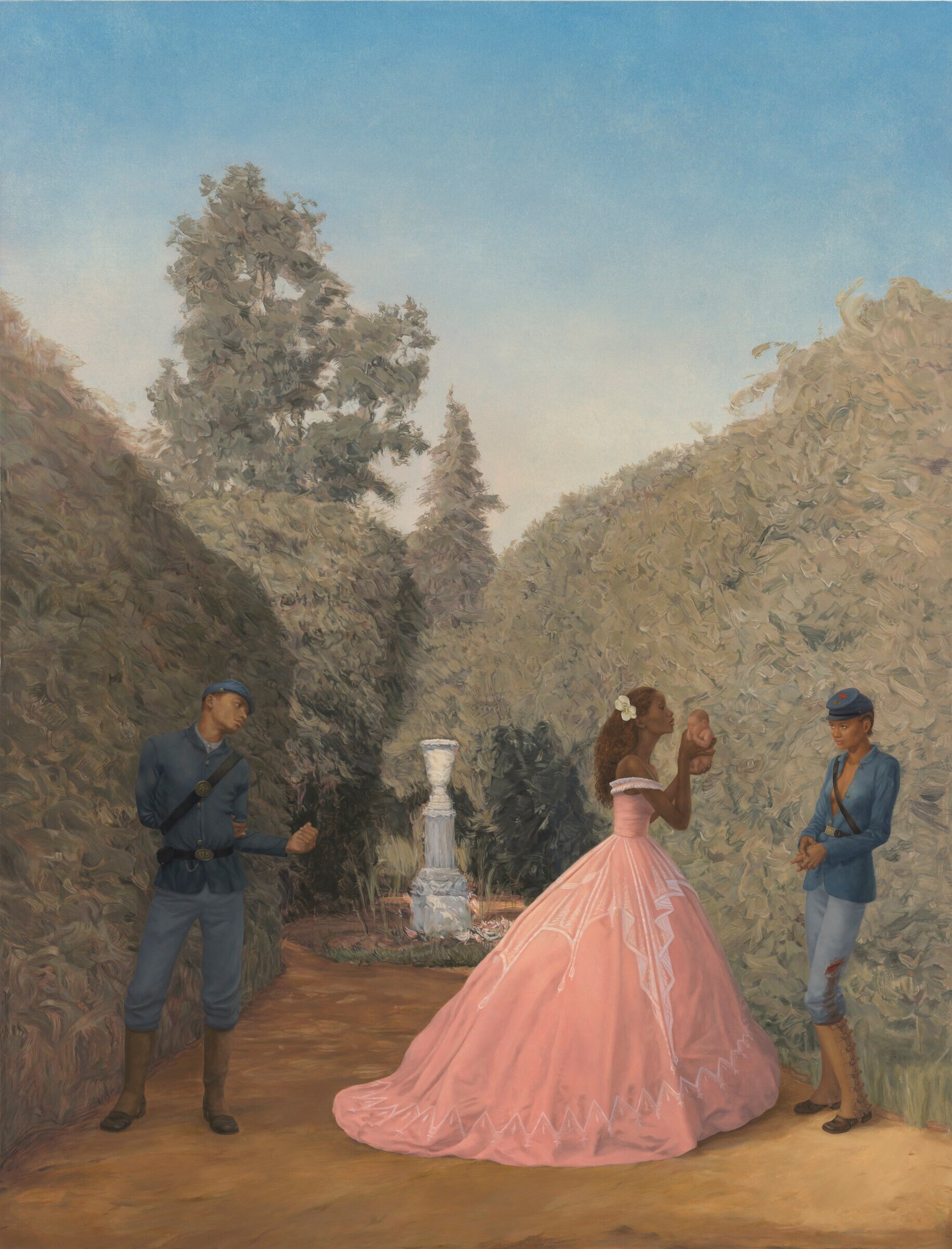
Heaven, 2020 by Hilary Harkness (b. 1971)

Enigmatic Variation II by Enrico Pinardi (1934-2021)


Redburn, Herman Melville. Doubleday Anchor Books (1957). Cover art by Edward Gorey. 301 pages.
Redburn is as good a place as any to start with Melville, I suppose. From Elizabeth Hardwick’s essay “Melville in Love,” which prompted me to finally read Redburn:
Melville’s state of mind is revealed…with a purity of expressiveness in the novel Redburn, one of his most appealing and certainly the most personal of his works. He is said to have more or less disowned the book, more rather than less, since he claimed it was only written for tobacco. Whether this is a serious misjudgment of his own work or a withdrawal, after the fact, from having shown his early experience of life without his notable reserve and distance is, of course, not clear. For a contemporary reader, Redburn, the grief-stricken youth, cast among the vicious, ruined men on the ship, walking the streets of Liverpool in the late 1830s, even meeting with the homosexual hustler Harry Bolton might have more interest than Typee’s breadfruit and coconut island and the nymph, Fayaway. But it is only pertinent to think of Redburn on its own: a novel written after Typee, Omoo, and Mardi in the year 1849, ten years after he left Lansingburgh to go on his first voyage.


Nude Girl, 1910 by Gwen John (1876–1939)
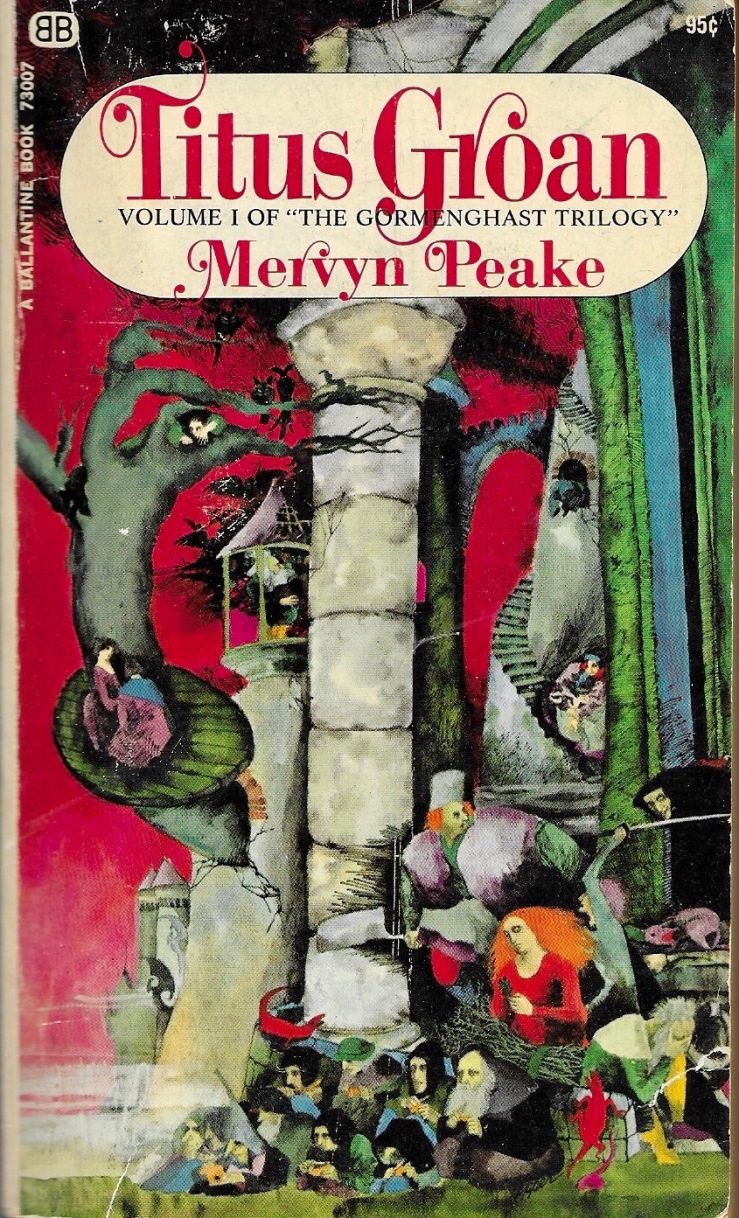
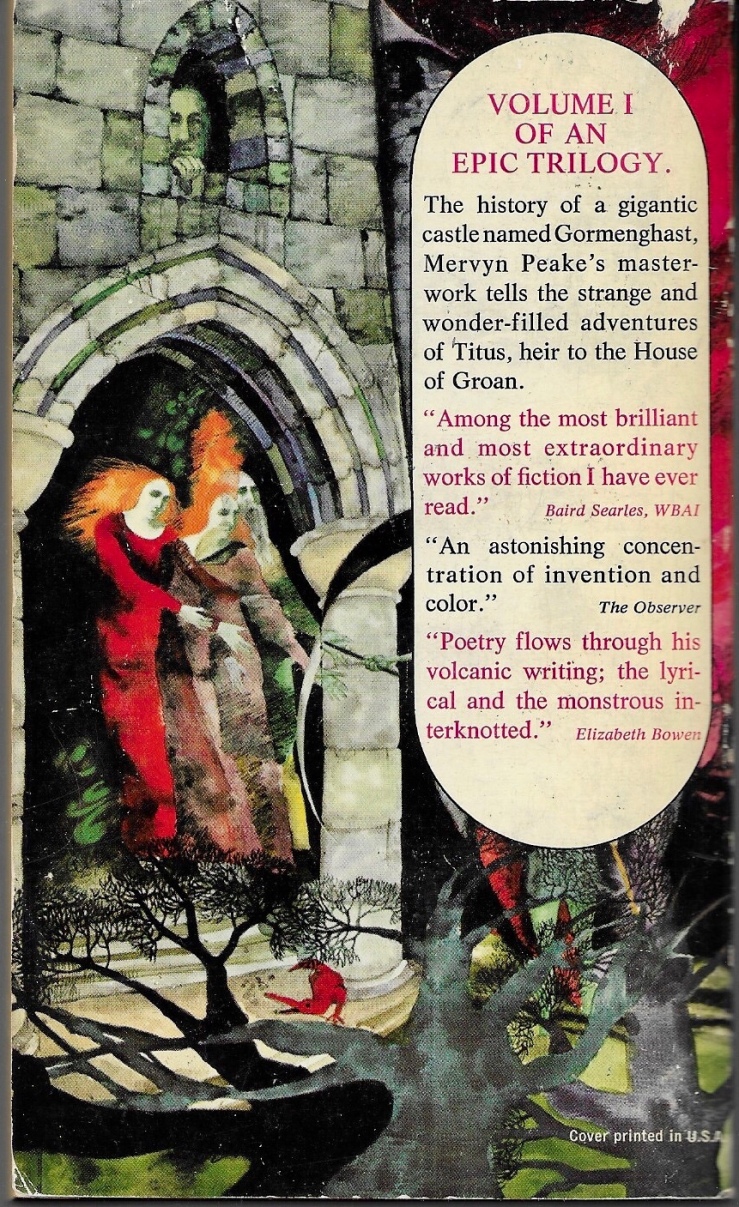
Titus Groan, Mervyn Peake. Ballantine Books (1968). No cover artist credited. 543 pages.
The uncredited cover artist is Bob Pepper, who also provided the covers for Ballantine editions of the other two novels in Peake’s Gormenghast trilogy, Gormenghast and Titus Alone. The covers are actually segments from one painting:
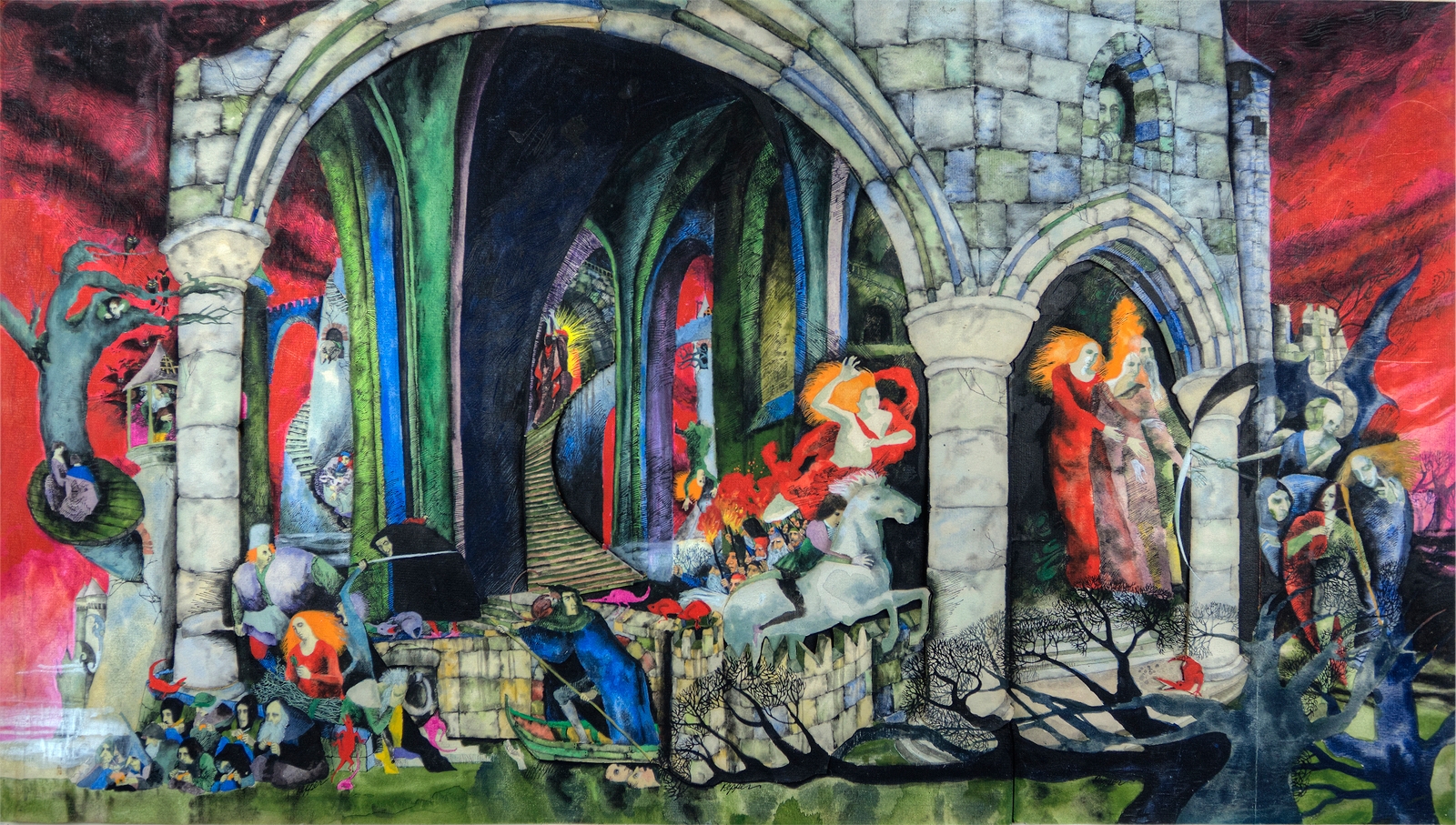
The edition also includes black and white illustrations by Peake (including eight glossy inset pages).
I have no idea how I had never even heard of Mervyn Peake’s Gormenghast trilogy until some point late in 2019. I grew up reading fantasy and yet somehow never encountered these strange, dense books. I consumed them in 2020, pressing extra copies on my son.
From my 2020 reading roundup end-of-year post:
Titus Groan, Mervyn Peake
The first of Mervyn Peake’s strange castle (and then not-castle trilogy (not really a trilogy, really)), Titus Groan is weird wonderful grotesque fun. Inspirited by the Machiavellian antagonist Steerpike, Titus Groan can be read as a critique of the empty rituals that underwrite modern life. It can also be read for pleasure alone.
Gormenghast, Mervyn Peake
Probably the best novel in Peake’s trilogy, Gormenghast is notable for its psychological realism, surreal claustrophobia, and bursts of fantastical imagery. We finally get to know Titus, who is a mute infant in the first novel, and track his insolent war against tradition and Steerpike. The novel’s apocalyptic diluvian climax is amazing.
Titus Alone, Mervyn Peake
A beautiful mess, an episodic, picaresque adventure that breaks all the apparent rules of the first two books. The rulebreaking is fitting though, given that Our Boy Titus (alone!) navigates the world outside of Gormenghast—a world that doesn’t seem to even understand that a Gormenghast exists (!)—Titus Alone is a scattershot epic. Shot-through with a heavy streak of Dickens, Titus Alone never slows down enough for readers to get their bearings. Or to get bored. There’s a melancholy undercurrent to the novel. Does Titus want to get back to his normal—to tradition and the meaningless lore and order that underwrote his castle existence? Or does he want to break quarantine?

Charles Ricketts and Charles Shannon as Medieval Saints, 1920 by Edmund Dulac (1822–1953)
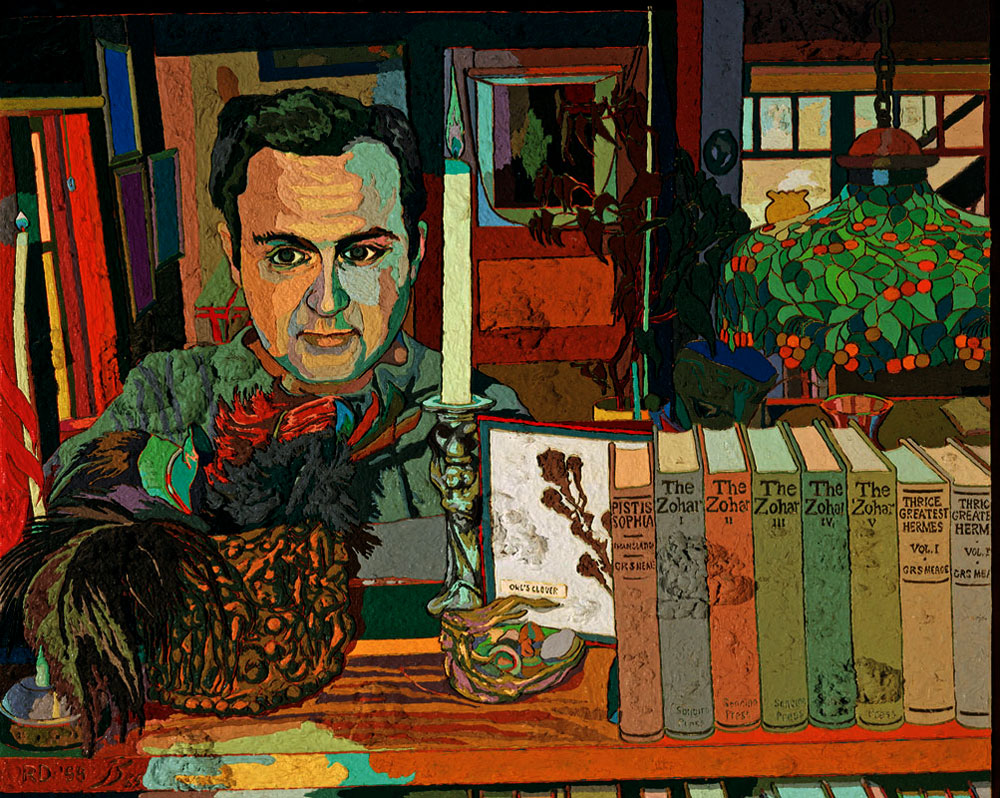
The Enamored Mage (Translation #6), 1965 by Jess (1923-2004)
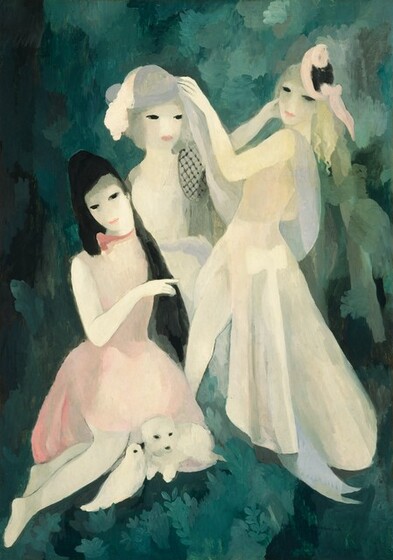
In the Park, 1924 by Marie Laurencin (1883-1956)


One Hundred Years of Solitude, Gabriel García Márquez. Translation by Gregory Rabassa. Avon Bard (1971). No cover artist credited. 383 pages.
I am a huge fan of the Avon Bard Latin American literature series. (I do wish, however, they had done a better job crediting the cover artists.)
I listened to One Hundred Years of Solitude on audiobook (narrated by John Lee) last week while undertaking a largish home project. I had read the novel maybe twelve years ago, after several false starts, and enjoyed the audiobook very much, even if the story was much, much sadder than I’d remembered. I had registered One Hundred Years of Solitude in my memory as rich and mythic, its robust humor tinged with melancholy spiked with sex and violence. That memory is only partially correct—García Márquez’s novel is darker and more pessimistic than my younger-reader-self could acknowledge.
You emerge from this marvelous novel as if from a dream, the mind on fire. A dark, ageless figure at the hearth, part historian, part haruspex, in a voice by turns angelic and maniacal, first lulls to sleep your grip on a manageable reality, then locks you into legend and myth. One Hundred Years of Solitude is not only the story of the Buendia family and the Colombian town of Macondo. It is also a recapitulation of our evolutionary and intellectual experience. Macondo is Latin America in microcosm: local autonomy yielding to state authority; anticlericalism; party politics; the coming of the United Fruit Company; aborted revolutions; the rape of innocence by history. And the Buendias (inventors, artisans, soldiers lovers, mystics) seem doomed to ride biological tragi‐cycle in circles from solitude to magic to poetry to science to politics to violence back again to solitude.
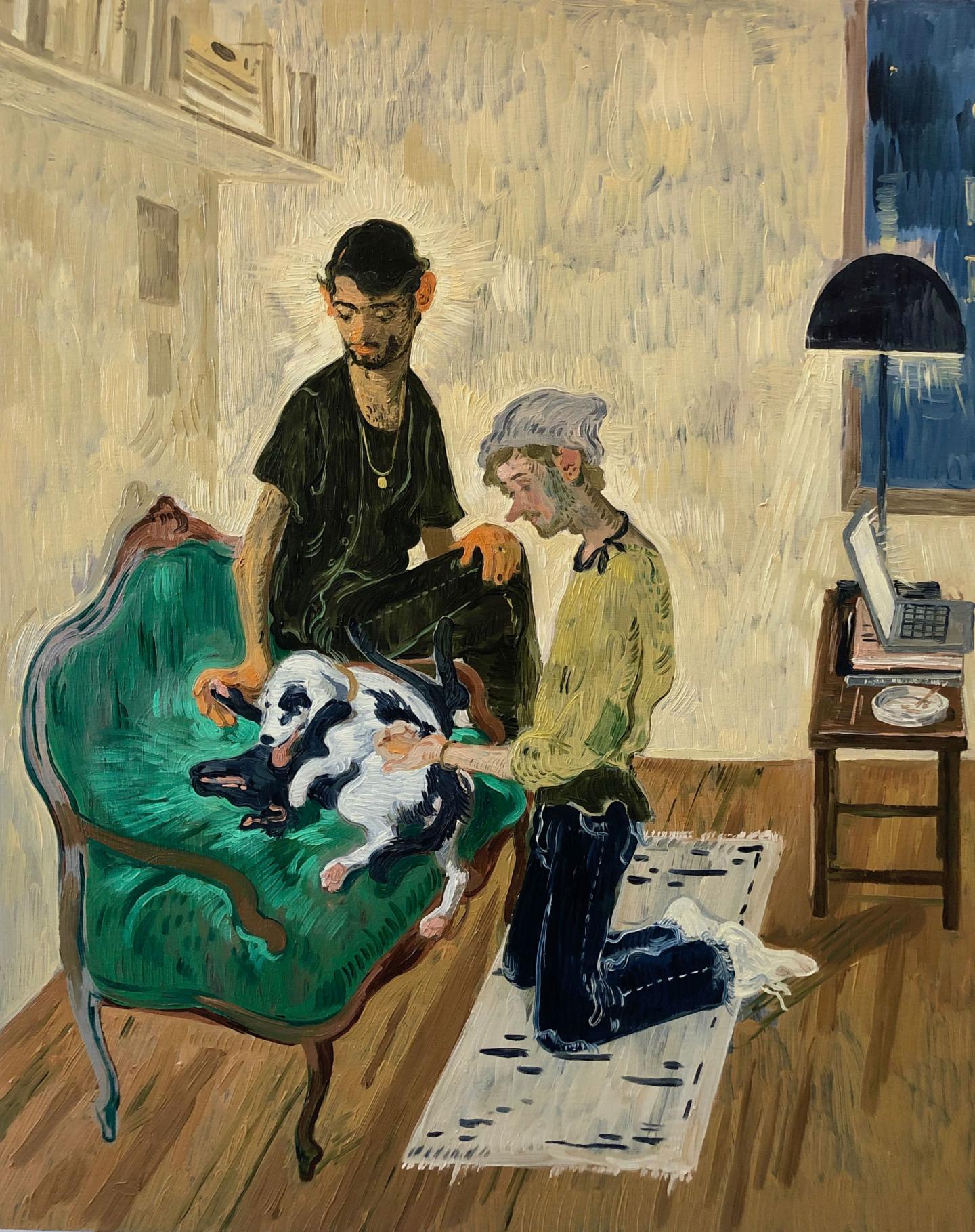
Puppy Play Date, 2019 by Salman Toor (b. 1983)

Tuxedo, 1983 by Jean-Michel Basquiat (1960-1988)
 Biblioklept