What if art is not communicative? | Ursula K. Le Guin

“Editorial. By the President of the Therolinguistics Association”

by

Ursula K. Le Guin

from

“The Author of the Acacia Seeds And Other Extracts from the Journal of the Association of Therolinguistics


What is Language?

This question, central to the science of therolinguistics, has been answered—heuristically—by the very existence of the science. Language is communication. That is the axiom on which all our theory and research rest, and from which all our discoveries derive; and the success of the discoveries testifies to the validity of the axiom. But to the related, yet not identical question, What is Art? we have not yet given a satisfactory answer.

Tolstoy, in the book whose title is that very question, answered it firmly and clearly: Art, too, is communication. This answer has, I believe, been accepted without examination or criticism by therolinguists. For example: Why do therolinguists study only animals?

Why, because plants do not communicate.

Plants do not communicate; that is a fact. Therefore plants have no language; very well; that follows from our basic axiom. Therefore, also, plants have no art. But stay! That does not follow from the basic axiom, but only from the unexamined Tolstoyan corollary.

What if art is not communicative?

Or, what if some art is communicative, and some art is not?

Ourselves animals, active, predators, we look (naturally enough) for an active, predatory, communicative art; and when we find it, we recognise it. The development of this power of recognition and the skills of appreciation is a recent and glorious achievement.

But I submit that, for all the tremendous advances made by therolinguistics during the last decades, we are only at the beginning of our age of discovery. We must not become slaves to our own axioms. We have not yet lifted our eyes to the vaster horizons before us. We have not faced the almost terrifying challenge of the Plant.

If a non-communicative, vegetative art exists, we must rethink the very elements of our science, and learn a whole new set of techniques.

For it is simply not possible to bring the critical and technical skills appropriate to the study of Weasel murder mysteries, or Batrachian erotica, or the tunnel sagas of the earthworm, to bear on the art of the redwood or the zucchini.

This is proved conclusively by the failure—a noble failure—of the efforts of Dr. Srivas, in Calcutta, using time-lapse photography, to produce a lexicon of Sunflower. His attempt was daring, but doomed to failure. For his approach was kinetic—a method appropriate to the communicative arts of the tortoise, the oyster, and the sloth. He saw the extreme slowness of the kinesis of plants, and only that, as the problem to be solved.

But the problem was far greater. The art he sought, if it exists, is a non-communicative art: and probably a non-kinetic one. It is possible that Time, the essential element, matrix, and measure of all known animal art, does not enter into vegetable art at all. The plants may use the meter of eternity. We do not know.

We do not know. All we can guess is that the putative Art of the Plant is entirely different from the Art of the Animal. What it is, we cannot say; we have not yet discovered it. Yet I predict with some certainty that it exists, and that when it is found it will prove to be, not an action, but a reaction: not a communication, but a reception. It will be exactly the opposite of the art we know and recognise. It will be the first passive art known to us.

Can we in fact know it? Can we ever understand it?

It will be immensely difficult. That is clear. But we should not despair. Remember that so late as the mid-twentieth century, most scientists, and many artists, did not believe that Dolphin would ever be comprehensible to the human brain—or worth comprehending! Let another century pass, and we may seem equally laughable. “Do you realise,” the phytolinguist will say to the aesthetic critic, “that they couldn’t even read Eggplant?” And they will smile at our ignorance, as they pick up their rucksacks and hike on up to read the newly deciphered lyrics of the lichen on the north face of Pike’s Peak.

And with them, or after them, may there not come that even bolder adventurer—the first geolinguist, who, ignoring the delicate, transient lyrics of the lichen, will read beneath it the still less communicative, still more passive, wholly atemporal, cold, volcanic poetry of the rocks: each one a word spoken, how long ago, by the earth itself, in the immense solitude, the immenser community, of space.
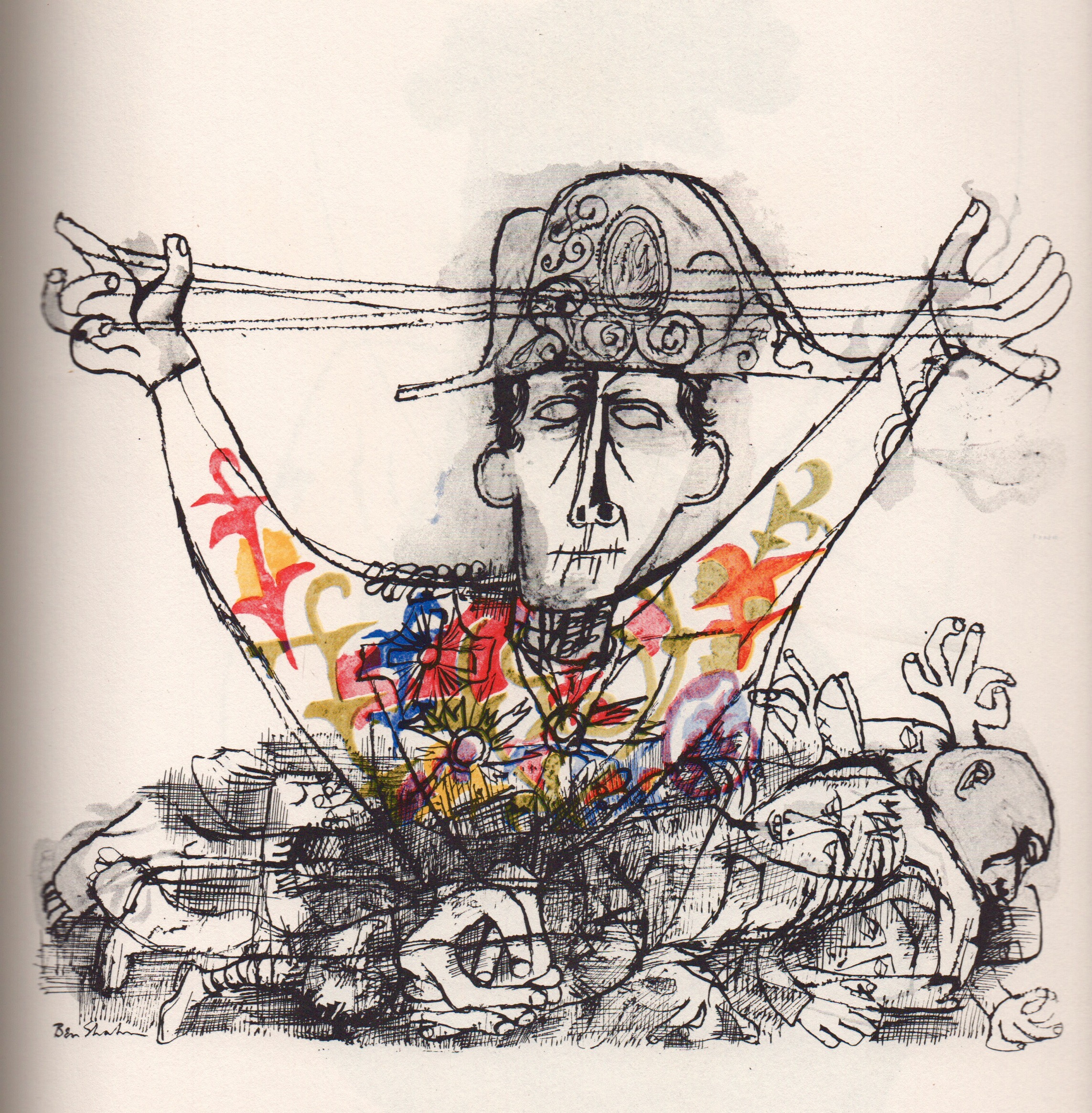
Study for “Goyescas” — Ben Shahn

Study for “Goyescas,” 1956 by Ben Shahn (1898–1969). From Ben Shahn: His Graphic Art, George Braziller, Inc., NY 1957.

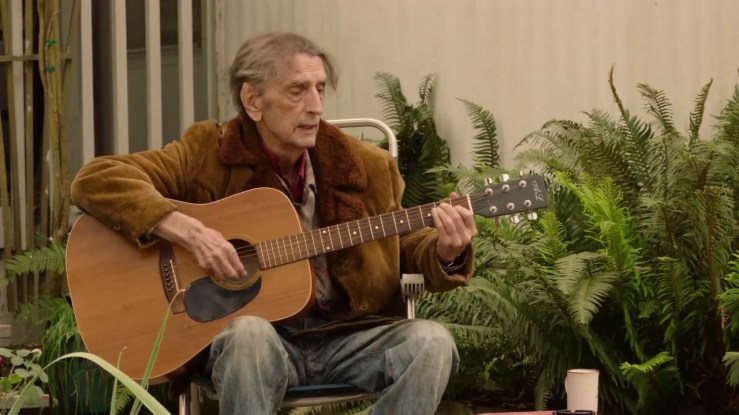
RIP Harry Dean Stanton

maxresdefault1

RIP the great Harry Dean Stanton, 1926-2017

…Kelly’s HeroesTwo-Lane BlacktopPat Garrett & Billy the KidCockfighterRenaldo and ClaraAlienWise BloodEscape from New YorkChristineRepo Man, Paris, TexasRed DawnPretty in PinkThe Last Temptation of ChristWild at HeartFire Walk with MeFear and Loathing in Las VegasThe Straight StoryThe Green MileBig LoveInland EmpireTwin Peaks: The Return, and so many, many more.

Harry Dean Stanton elevated any film he was in, adding strange depth and soul to characters who may have otherwise been flat. Stanton was what people who write about film call a character actor, a subtly bizarre term, really, if you think about it, one that we use to easily distinguish between leading actors—“stars”—and the folks around them who are far more interesting. The greatest character actors are true artists, and Harry Dean Stanton was the greatest character actor. He did play the lead, occasionally though, as in Paris, Texas (dir. Wim Wenders), a cult film that look let me stop here and say, See Paris, Texas already if you haven’t, it’s amazing. And while he’s not exactly the lead in Repo Man (dir. Alex Cox), he’s certainly the weird bouncing gravity that both anchors the film and propels it forward. (I assume that Repo Man is still required cult film viewing for young folks?). It was a joy to see Stanton one last time this year in Twin Peaks: The Return, where his performance of “Red River Valley” was a standout scene in a show full of standout scenes. While I’ll miss seeing him in new films, Stanton’s long list of roles insures that we’ll still be able to wonder into a film or show and excitedly declare, Oh shit! Harry Dean Stanton is in this!

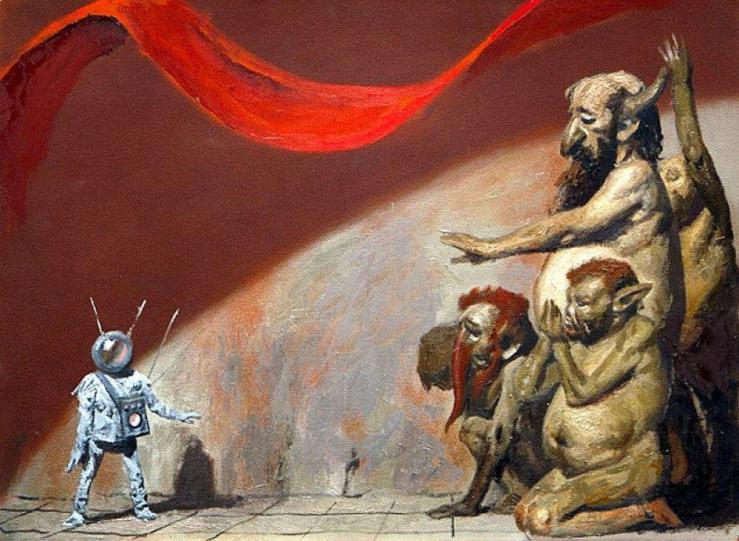
Tyurlikov and Alien — Gely Korzhev

tumblr_okcgh77hxe1un6l79o6_1280

Tyurlikov and Alien, 1981 by Gely Korzhev (1925-2012)

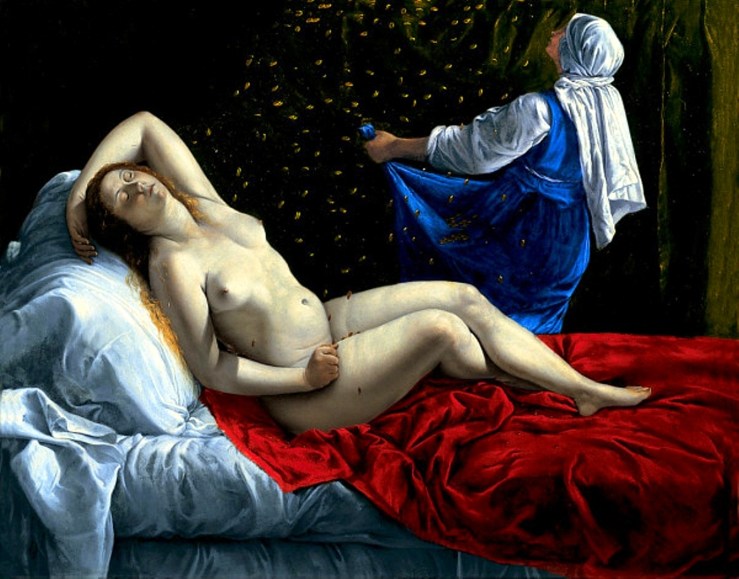
Danae — Artemisia Gentileschi

artemisia_gentileschi_-_danac3ab

Danae, 1612 by Artemisia Gentileschi (1610-1656)

“Pink Turns to Blue” (Live in ’87) –Hüsker Dü

RIP Grant Hart, 1961-2017

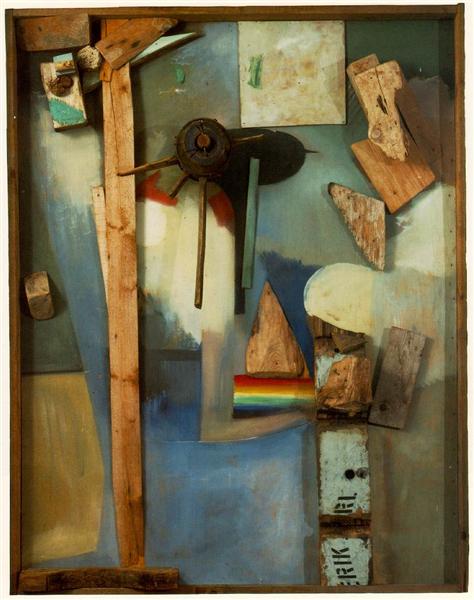
Merzbild mit Regenbogen — Kurt Schwitters

merzpicture-with-rainbow-1939.jpg!Large

Merzbild mit Regenbogen (Merz Picture with Rainbow), c. 1939 by Kurt Schwitters (1887–1948)

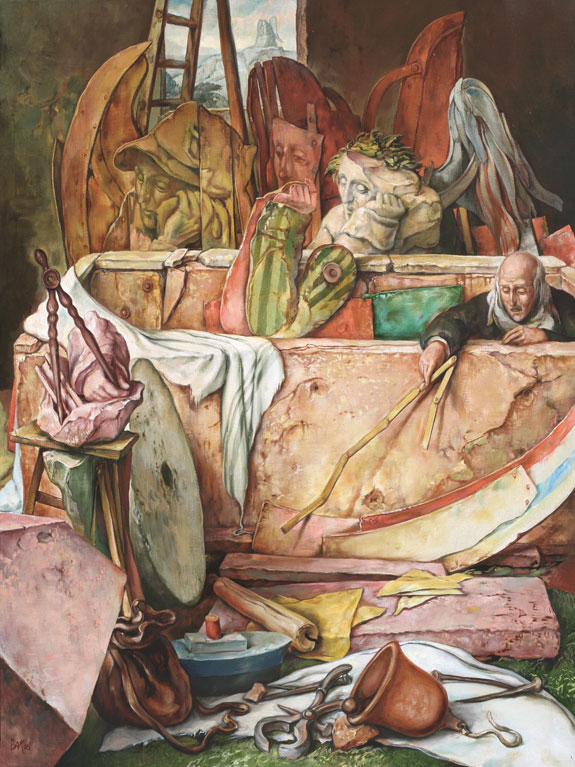
How to Remember — Samuel Bak

bk1134_images

How to Remember, 2006 by Samuel Bak (b. 1933)

Portrait of the Late Mrs Partridge — Leonora Carrington

009987be76eca0a4bf34eca486e34822-partridge-the-late

Portrait of the Late Mrs Partridge, 1947 by Leonora Carrington (1917-2011)

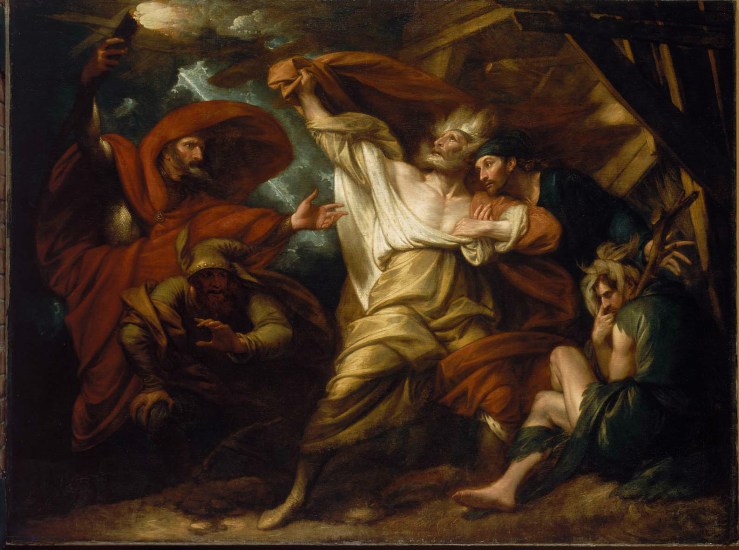
Blow, winds, and crack your cheeks! rage! blow!

Blow, winds, and crack your cheeks! rage! blow!
You cataracts and hurricanoes, spout
Till you have drench’d our steeples, drown’d the cocks!
You sulphurous and thought-executing fires,
Vaunt-couriers to oak-cleaving thunderbolts,
Singe my white head! And thou, all-shaking thunder,
Smite flat the thick rotundity o’ the world!
Crack nature’s moulds, an germens spill at once,
That make ingrateful man!

King Lear, Act 3, Scene 2

lear

King Lear, 1788/1806 by Benjamin West (1738–1820)

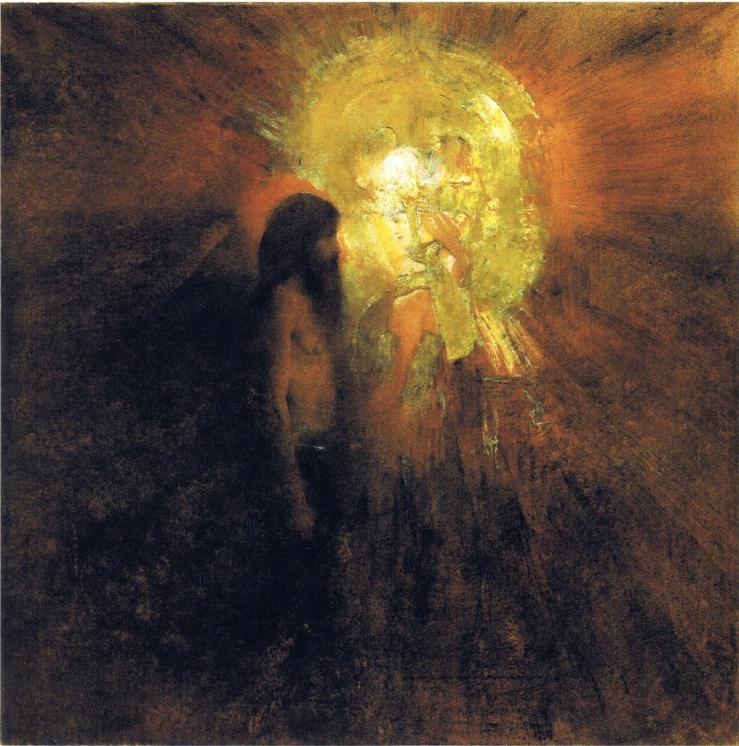
The Temptation of St. Anthony — Fernand Khnopff

kh

The Temptation of St. Anthony, 1883 by Fernand Khnopff (1858–1921)

Griffin — Martin Schongauer

griffin-1485

Griffin, c.1475-85 by Martin Schongauer (c. 1445–1491)

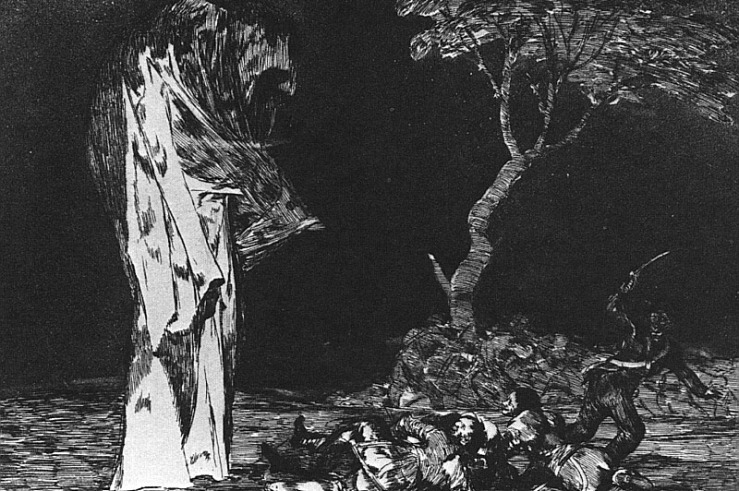
The Madness of Fear — Francisco Goya

the-madness-of-fear

La locura del miedo (The Madness of Fear), 1819-1823 — Francisco Goya

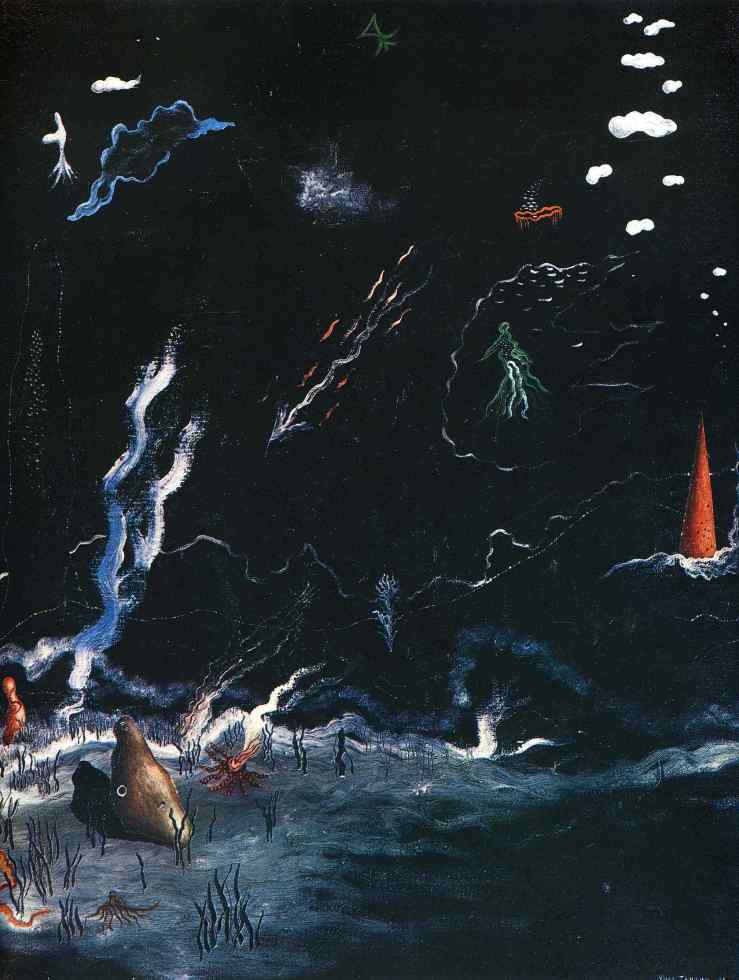
The Storm (Black Landscape) — Yves Tanguy

storm-black-landscape-1926

The Storm (Black Landscape), 1926  — Yves Tanguy (1900-1955)

The Hurricane — Germaine Richier

The Hurricane 1955, published 1961 by Germaine Richier 1902-1959

The Hurricane, 1955 by Germaine Richier (1902-1959)

RIP Holger Czukay

holger-czukay-770x470

RIP Holger Czukay, 1938-2017

Yesterday, Rolling Stone and other sources reported the death of musician Holger Czukay.

Czukay is probably most famous as the throbbing heart of Can, but he also recorded many solo albums and was a frequent collaborator with other artists across many genres.

It’s hard to find another run of albums as perfect as Can’s output in the early 1970s—Tago MagoEge Bamyasi, and Future Days are flawless in my book.

These albums have brought me good times and good grooves for decades now. I’ll always be especially thankful to Czukay for one particular moment in my life—I was 19, relaxing in a bathtub, blaring Monster Movie on my stereo—a particular bass frequency rumbled a bar of soap and sent it smoothly sliding into the water. The moment was somehow epiphanic for me, illustrating a relationship between time, space, and matter. And music.


The Temptation of St. Anthony — Otto Dix

Otto Dix (1891-1969), 'La tentazione di sant'Antonio II', 1940

The Temptation of St. Anthony, 1940 by Otto Dix (1891-1969)