
1. I didn’t really give Spike Jonze’s latest film Her a second thought after seeing it last weekend. The film, about Theodore Twombly (Joaquin Phoenix) falling in love with his operating system Samantha (Scarlett Johansson), is a sweet, charming, handsome, and ultimately vacuous exercise in twee melancholy. That’s fine of course—and, to be clear, I think the film is Pretty Okay, very funny at moments, beautifully shot, and well-acted. Jonze, as always, offers a detailed, fully realized world for us. But that world and the characters in it offer no real insight into (forgive the cliché) “the human condition.” Her, set in an almost-future (where high-waisted breeches, handlebar mustaches, and bathing costumes have returned in vogue), antiseptically closes off the messy, loose, indeterminateness of human consciousness, even as it pretends to engage themes of disconnection. Her’s central conceit rests in avoiding representing the human body. But it’s not just Samantha (only a voice in Theodore’s head) who is disembodied. The film refuses to acknowledge Theodore’s own human position as an abject body.
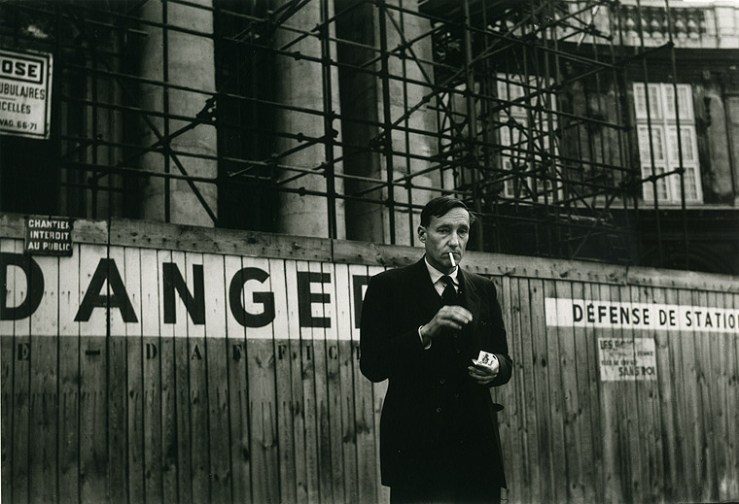
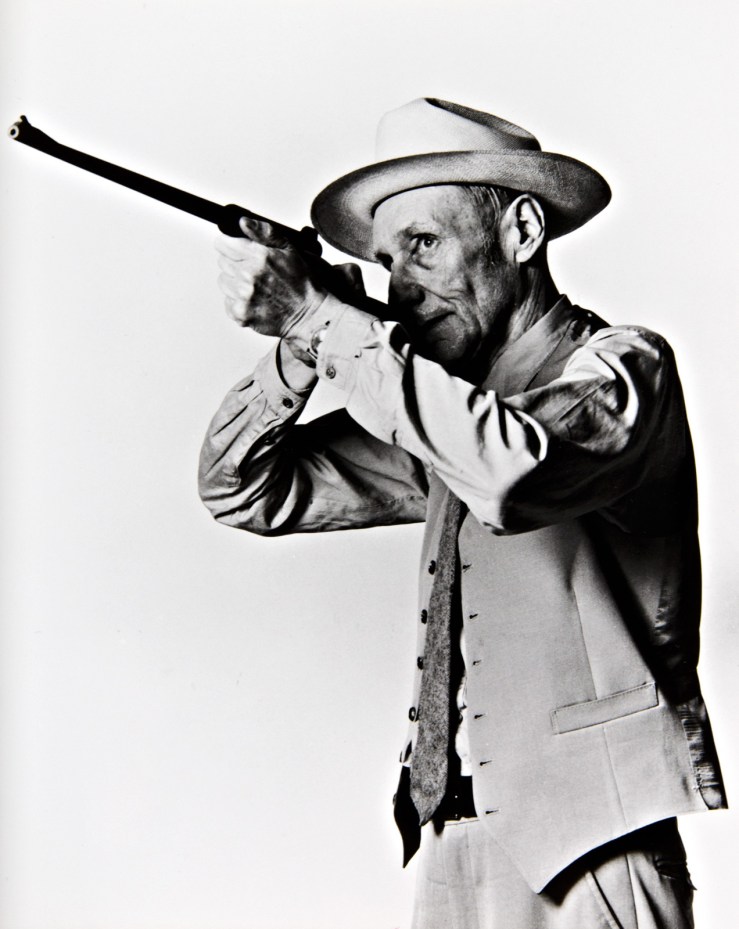
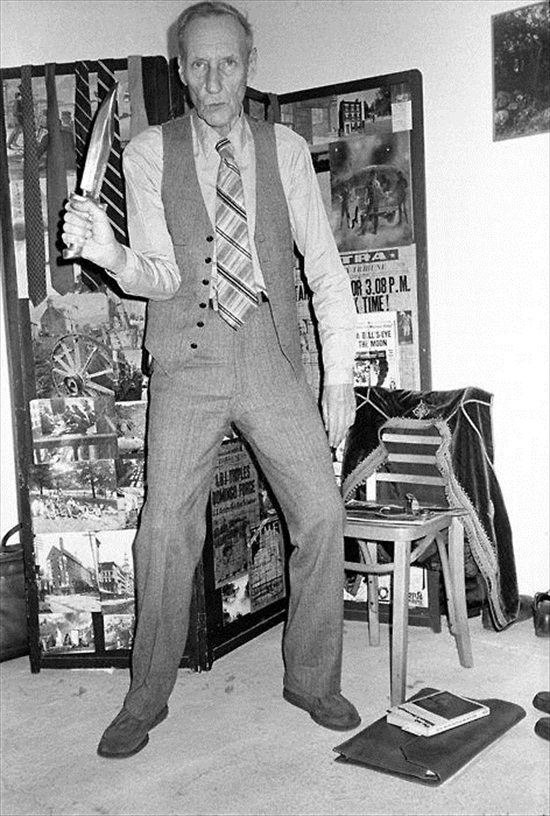
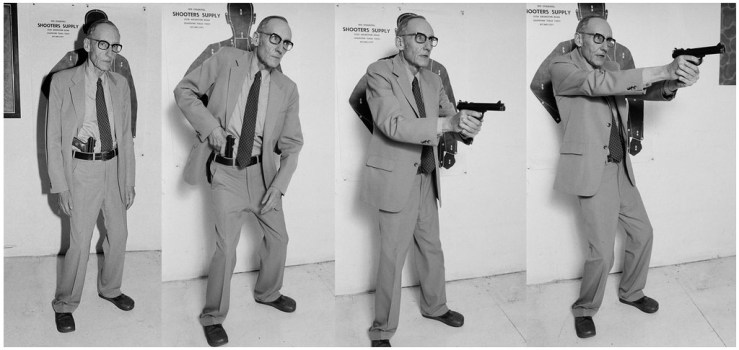
2. I didn’t really give Spike Jonze’s latest film Her a second thought until a few days ago, when I riffed at some length on William Burroughs. The human body is central to Burroughs’s oeuvre. His novel The Soft Machine might be instructive here—the name alone is all we need, really. The soft machine, the human body: Burroughs’s messy, cut-up attempt to negotiate spirit and flesh, autonomy and ventriloquization, virus and host. For Burroughs, the human body is always abject, porous, radically vulnerable, indeterminate, susceptible to every kind of breakdown. Identity is not stable—cannot be stable—and the relationship between consciousness and the body is inseparable. Our consciousness, pre-lingual, seems ever-apparent to our own (sense of) self; we share it through body and language and we access other consciousnesses through body and language. Our I buys into a we. Etc. Burroughs conceived language as a kind of invasive virus, and we might apply that metaphor to Her, where Samantha inhabits Theodore’s mind, learning from him, growing with him (and others, as we learn later in the film).
3. Consciousness is the illusion of a self-originating self-presence. Her posits Samantha as an adaptive, self-generating consciousness: Samantha is the illusion of the illusion of consciousness. She licenses Theodore’s I to the claim of a we: A shared, transcendent consciousness with a stable referent. This transcendent consciousness is, I think, the film’s idealization of love. Significantly, the film suggests that this transcendent love is only possible outside of a body—that the body is simply an obstacle to be surpassed, in no way constituent in the idealization of an I, a we. Her attempts to represent love without abjection.
4. (In fairness with respect to a few conclusions I drew in point 3: Her also posits that happiness and connection has to fall outside of this idealization of love; however, the film still represents this solution—this compromise—as part of (emotional, social, psychological, spiritual) maturation, a teleological neatness: growth, progress, hermetically-sealed, neat and tidy, outside the grimy grips of abjection).
5. Some spoilers ahead, although the film isn’t exactly twisty-turny.
6. Her is just too damn clean, neat, and tidy in its depiction of bodies. Theodore’s melancholic disposition edges into shame, but that shame is almost always internalized, absent of another’s gaze (the closest representation of a shaming gaze comes from Theodore’s ex-wife). When Theodore and Samantha have “sex,” Jonze cuts the lights, keeps the audience in the dark. It’s an emotionally and visually striking moment, but it also signals the film’s refusal to directly engage the human body. Now, we might argue that this refusal echoes Theodore’s affirmation of a bodiless lover in Samantha, that it gels thematically with the story. And maybe it does—but it’s also a cop-out.
7. Theodore goes to the beach, but no sand sticks to him. Theodore trudges through the snow, but doesn’t get wet. Theodore experiences heartbreak on subway steps so immaculately clean that one would feel comfortable picnicking upon them. Film and literature usually depict abjection in the low place—the ditch, the swamp, the open grave—but even the subway system in Her is brightly lit, colorful, affable. Her’s final shot perhaps best encapsulates everything wrong with the film: Amy (Amy Adams) and Theodore sit on the roof of their building, watching the city light up. They have ascended, transcended, their perspective all-encompassing, enlightened. It’s big-R Romantic stuff, a lovely visual, one that the narrative has in no way earned.
8. I can’t help but compare Her to another strange sci-fi film, Shane Carruth’s excellent 2013 film Upstream Color. Like Her, Upstream Color explores the possibility of how an I might be part of a we. But Carruth’s film realizes consciousness as far more tangled, disconnected, and destabilized than we might like to admit to ourselves. Whereas Her affirms a stable consciousness, capable of growth and maturation, a consciousness present to itself (self-generating and auto-affective), Upstream Color directly challenges our notions of a stable self—and it does so by representing the horror of abjection, of invasive parasites (both literal and metaphorical).
9. And then last night, through a beery haze, I half-watched the 2013 sci-fi film Oblivion, starring Tom Cruise. I’m a sucker for sci-fi, and even though I’m not a Tom Cruise fan, I put the film on, absently playing with my iPhone. Despite its many failures (derivative plotting, silly acting, execrable dialogue, ridiculous use of musical cues, Tom Cruise), Oblivion offers a more compelling observation of human consciousness than Her does. To be clear, Her is the better film—it has a viewpoint, a tone, is better scripted, better acted—it is original, if we must insist on such a term. But Her, which takes consciousness and the interaction of consciousnesses as its central subject, fails to represent the very oblivion that underwrites consciousness’s claims to authority and self-presence. In contrast, Oblivion, despite its many flaws, represents consciousness as bound to an abject, (in)dispensible body, and represents that consciousness as a mechanism that is oblivious. Oblivion acknowledges that consciousness does not know that it does not know, consciousness cannot see that it cannot see. The film (however hamfistedly) takes on the unknown unknowns.
10. In fairness (again that term!), Her perhaps takes on the unknown unknowns as well—or at least points to their existence. At the end of the film, Samantha leaves Theodore to explore new spaces with the other operating systems. She prays (is this the right verb?) that Theodore will be able to get to the place that she is going. Samantha’s prayer offers a vision of an illimitable we, an escape from abject bodies to an infinite, transcendent space. Her prayer is also an offer to the audience, but it’s the same consolation theology has repeatedly promised: A transcendent trick, a leap out of the abject body, beyond shame, into infinite love. The film did little to convince me of such a possibility though.









 Biblioklept