Blog about the etymology of the word “blog”

The Oxford English Dictionary defines blog as

A frequently updated website, typically run by a single person and consisting of personal observations arranged in chronological order, excerpts from other sources, hyperlinks to other sites, etc.; an online journal or diary;

—and then notes that the term blog is in more common use than its etymon, or parent word, weblog. 

The earliest quotation the OED gives in association with the etymon weblog is from 1993: 

comp.infosystems.www (Usenet newsgroup) 10 Nov. (title of posting   Announcing getsites 1.5, a Web log analyzer.

This example though does not really point to the source of blog; rather, it’s an example of the OED’s first definition of weblog:

Usually as two words. A file containing a detailed record of each request received by a web server, frequently recording data that allows a variety of different aspects of the web traffic reaching that server to be analysed.

This definition differs from the second definition the OED gives for weblog, which is synonymous with the definition for blog above.

A quotation given by the OED under the entry for blog from 1999 points (somewhat humorously) to the sundering of web and blog into a new word:

[1999   http://www.bradlands.com (blog) 23 May (O.E.D. Archive)    Cam points out lemonyellow.com and PeterMe decides the proper way to say ‘weblog’ is ‘wee’- blog’ (Tee-hee!).]

The OED attributes the PeterMe blog (by Peter Merholz) with a more direct citation for the word blog, dating from 1999:

For those keeping score on blog commentary from outside the blog community.

(A 1999 entry cited from the Edinburgh Scotsman cites the word with an apostrophe: ‘blog).

Blog as a verb, as well as blogger and blogging all get citations going back to 1999.

The Online Etymology Dictionary gives the following entry for blog:

1998, short for weblog (which is attested from 1994, though not in the sense “online journal”), from (World Wide)Web (n.) + log (n.2). Joe Bloggs (c. 1969) was British slang for “any hypothetical person” (compare U.S. equivalent Joe Blow); earlier blog meant “a servant boy” in one of the college houses (c. 1860, see Partridge, who describes this use as a “perversion of bloke“), and, as a verb, “to defeat” in schoolboy slang. The Blogger online publishing service was launched in 1999.

Weblog is of course a portmanteau of web and log, both of which are abstract and concrete, new and very old. In The Origins of English Words: A Discursive Dictionary of Indo-European Roots, Joseph T. Shipley gives the root of web as uebh:

uebh(s): weave, move back and forth; objects woven or the like, as a honeycomb. Pers, baft: woven cotton cloth. Gk huphe: web. hypha: threadlike part of fungus

Shipley gives over a dozen other examples that generate from uebh including hymnhymenvespawaspweaverwoofwafflewave, and gopher. 

Shipley’s root for log is presumably leg I (he doesn’t list log in his Index of English Words). Shipley gives his definition of leg I:

leg I: gather, set in order, consider, choose; then read, speak. Gk, logos, logion, horologe, horology, lexicon.

Shipley gives leg I as the source of many words, but helpful to our etymology of blog are intellect, illegitimate, select, legend, sacrilege, sortilege, collect, and cull.

The entry for leg II is of course beneath the entry for leg I. Shipley points to this as the root of (among others) lax, laxative, delay, relay, languid, languish, lash, lush, profuse, leach, leak and lack. Any of these will fit into a proper etymology of blog too, I suppose.

Blog about Goya’s Straw Man

4d4a8730-40c4-4a3e-a681-ea8787ee9e0f

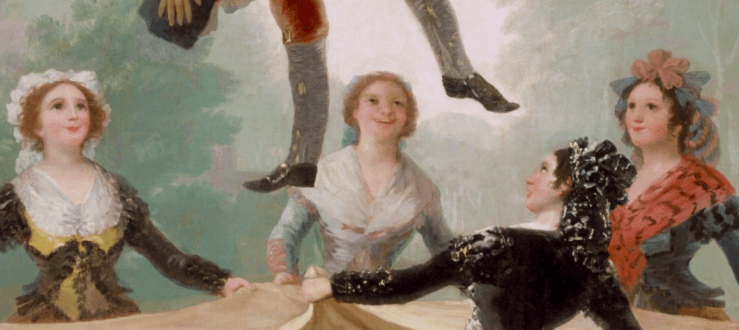
El pelele is a painting composed between 1791 and 1792 by the Spanish painter Francisco José de Goya y Lucientes (1746–1828).  El pelele is often rendered in English as The Straw Manikin, but Robert Hughes translates it as The Straw Man in his 2003 biography Goya.

I like Hughes’s translation, which carries a perhaps-unnecessary connotation of a certain logical fallacy. Hughes pegs the painting as a genre piece, one of the “bucolic amusements” of Goya’s patrons Charles IV and Maria Luisa, King and Queen of Spain. The Museo Nacional del Prado in Madrid describes the painting like this:

Four young women laugh and play at blanket-tossing a doll or manikin in the air. The latter´s movement is the result of their caprice. Its carnival origins are visible in the use of masks and joking, but the blanket-tossing of a doll is used here by Goya as a clear allegory of women’s domination of men.

Screenshot 2018-04-05 at 10.06.12 PM

Hughes also sees The Straw Man as Goya’s take on “what seemed to him [Goya] the waning of traditional Spanish masculinity,” noting that the motif was repeated throughout Goya’s work (notably in Goya’s etching Disparate femenino).

Screenshot 2018-04-05 at 10.21.11 PM

Hughes perceives a “disenchanted edge” to Goya’s Straw Man. The edge here is what most engages me about the image. To this scene any contemporary viewer—by which I mean any post-postmodern viewer—must bring a certain horrific viewpoint. The free and freeing sky juxtaposes with the wobbly jelly limbs of the empty hero at the core of the painting. His face is a literal mask, a mask itself painted into a mock ebullience of servitude. The manikin is a big nothing painted as a happy something, a doll to be tossed around for amusement. The creeping fun under the whole business is undeniable. What’s key here, at least for me, is Goya’s composition of expression in the manikin’s face. Hughes points out that the figure is a mockery of the French court and all its foppish manners, Goya’s satirical jab at his benefactors’ pretensions — “silly French pigtails and spots of rouge on its cheeks…vacuous to perfection” — but there’s also a strange humanity to the face that I don’t think a contemporary viewer should overlook. The eyes assert themselves to the grayblue Spanish heaven above, even as the body fails to resemble all but the idea of a body—an idea most heavily felt in the body’s own gravity, the force which will return it to be tossed again and again—without hope of transcendence.

Screenshot 2018-04-05 at 10.05.58 PM

Blog about a particular Gordon Lish sentence

A new literary magazine called Egress debuts in the UK this month and in the US next month. I have read an advance copy and it is Very Good. Egress features, for lack of a better term (although there are better terms; I’m just being lazy) experimental short fiction. It might be better just to list some of the authors featured in the inaugural issue: Diane Williams, Christine Schutt, David Hayden, Sam Lipsyte, Evan Lavender-Smith, and Gordon Lish (there are more).

There are two shorties by Lish in the collection. Both are Very Good and Very Funny. One of them, “Jawbone,” is about a narrator killing two bugs.

Have I spoiled Lish’s “Jawbone” by revealing its intricate plot (i.e., the murder (murders?) of a pair of (possibly copulating) bugs)? No, not really—for the story is really about language itself (which like so a lot of Lish’s fictions are ultimately about, yes?)

There’s a sentence in “Jawbone” that I could not leave alone. I kept reading it and rereading it, and then read it aloud almost rapturously:

Like lucky thing for the local citizenry someone on your side was there in there on duty on the nightbeat last night in the crapper last night.

The line is simultaneously gorgeous and ugly, elegant and clunky, elevated and base, smooth and harsh. The alliteration is at once sumptuous and unbearable–ells and kays fray into esses and zees; tittering alveolar touches stutter throughout the thirty-six syllables. The repetitions clip along, cleverer in the end than they at first seem: “was there in there on duty on the nightbeat” builds with a force that shuttles into not one but two “last nights,” a bit of redundant fun. Should a sentence of 27 words contain so many prepositions? I guess this one should. I would go on about the hyperbolic brilliance of the line but maybe that’s pinning it down a bit too much, which is not what one should really do with such a clean upstanding decent ugly sentence. (“Crapper”!).

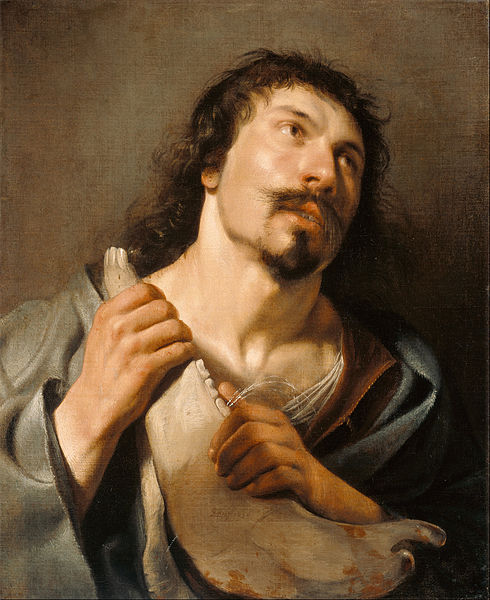
Let’s close by connecting Lish’s ironic hyperbolic sentence to what I take to be the namesake of his short vengeful tale, an episode in the book of Judges. After tying together 300 fox tails and lighting them on fire, the great (and eventually-blinded) hero Samson kills a bunch of Philistines (Philistines!) with the jawbone of an ass. He then gets thirsty and God Provides Some Water from yon jawbone. Here is Judges 15:16, King James Version on this matter: “And Samson said, With the jawbone of an ass, heaps upon heaps, with the jaw of an ass have I slain a thousand men.

490px-salomon_de_bray_28dutch_-_samson_with_the_jawbone_-_google_art_project
Samson with the Jawbone, 1636 by Salomon de Bray (1597 – 1664)

And here—I mean, I hope I’m not being too tacky in revealing the last line but, Lish, but—

Well, fuck, bugs – I mean, what can anyone really do?

Blog about starting Nathaniel Hawthorne’s novel The Blithedale Romance

img_9465

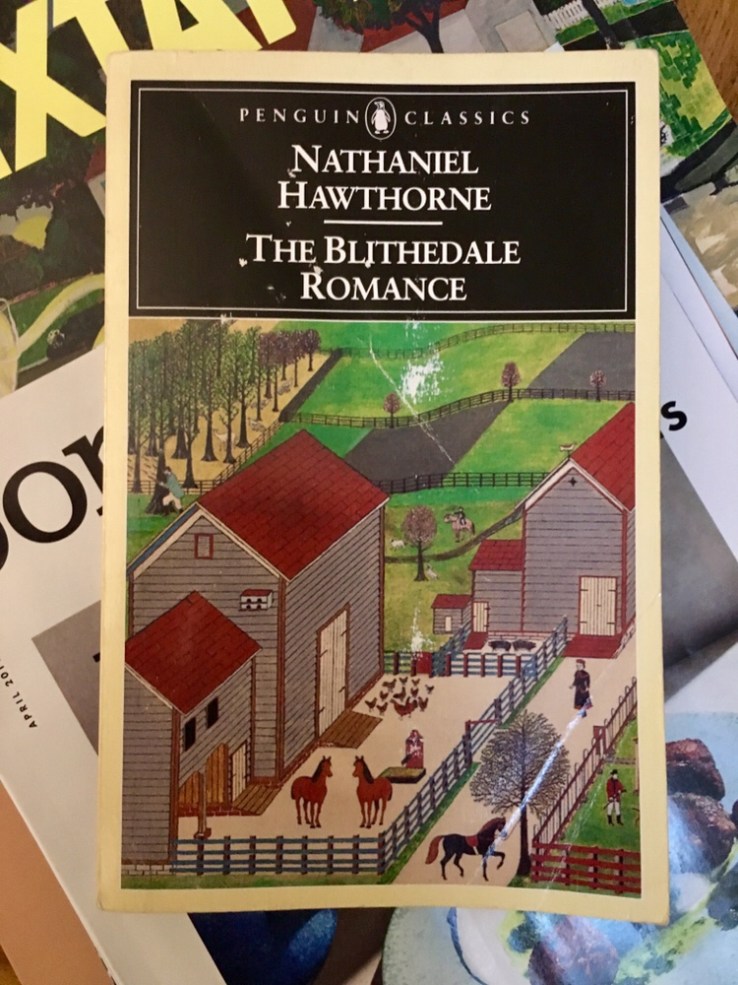
I started a reread of Nathaniel Hawthorne’s 1852 novel The Blithedale Romance this afternoon, prompted by Iris Murdoch’s novel The Bell and its utopian commune setting. I don’t think I’ve read Blithedale in a dozen or so years; the copy I’m reading is from grad school. The margins brim with every sort of nonsense, every damn adjective circled, etc.

My son, seven, picked up the novel and remarked that he didn’t know that I read romances. I tried to explain Romance here; failed. Then my daughter read the blurb. I asked her what she thought and she said the she liked the betrayal part but wasn’t sure about the rest. I flipped it over and read the blurb, which I’m not sure I’d read before. The blurb is all about sex, which seems about right.

The Blithedale Romance is Hawthorne’s horniest novel. Here is a passage from just three chapters in, where protagonist Miles Coverdale conjures some delight in imagining his lively host Zenobia au naturale (right after damning domestic work altogether)—

“What a pity,” I remarked, “that the kitchen, and the housework generally, cannot be left out of our system altogether! It is odd enough that the kind of labor which falls to the lot of women is just that which chiefly distinguishes artificial life—the life of degenerated mortals—from the life of Paradise. Eve had no dinner-pot, and no clothes to mend, and no washing-day.”

“I am afraid,” said Zenobia, with mirth gleaming out of her eyes, “we shall find some difficulty in adopting the paradisiacal system for at least a month to come. Look at that snowdrift sweeping past the window! Are there any figs ripe, do you think? Have the pineapples been gathered to-day? Would you like a bread-fruit, or a cocoanut? Shall I run out and pluck you some roses? No, no, Mr. Coverdale; the only flower hereabouts is the one in my hair, which I got out of a greenhouse this morning. As for the garb of Eden,” added she, shivering playfully, “I shall not assume it till after May-day!”

Assuredly Zenobia could not have intended it,—the fault must have been entirely in my imagination. But these last words, together with something in her manner, irresistibly brought up a picture of that fine, perfectly developed figure, in Eve’s earliest garment. I almost fancied myself actually beholding it!

Ah Hawthorne! The “fault must have been entirely in my imagination,” Miles muses. That last line — “I almost fancied myself actually beholding it!” — doesn’t appear in the Gutenberg version of The Blithedale Romance I linked to above (and here too, I guess). The editors of my Penguin Classics edition note that the line was probably deleted from the original manuscript “due to Sophia Hawthorne’s prudishness.” But the line—and really, here, I mean that that adverb almost—tells us so much about our unreliable narrator, Miles Coverdale. To almost fancy beholding an imaginative vision is to have absolutely imaginatively beheld the vision, and then applied a second consciousness to the whole affair—a witness to the sinful vision, a witness who reports to one’s own awkward soul.

Coverdale is the Hawthorne-figure, or rather an ironized version of Hawthorne, who recalls his memories of his time on real-life Brook Farm, an experimental utopian community founded by Unitarian preacher George Ripley and his wife Sophia in the mid-1850s. Hawthorne brings his pessimistic bent to the whole business (failed business), but shows us this perspective though Coverdale’s Romantic, even nostalgic optimism—an optimism clouded by experience:

The better life! Possibly, it would hardly look so now; it is enough if it looked so then. The greatest obstacle to being heroic is the doubt whether one may not be going to prove one’s self a fool; the truest heroism is to resist the doubt; and the profoundest wisdom to know when it ought to be resisted, and when to be obeyed.

Yet, after all, let us acknowledge it wiser, if not more sagacious, to follow out one’s daydream to its natural consummation, although, if the vision have been worth the having, it is certain never to be consummated otherwise than by a failure. And what of that?

So the sex of sexy Blithedale, even in its first chapters, is to be “consummated…by a failure.” But if I recall, there’s a lot of blithely lively fun in getting to that failure, and I’m enjoying Hawthorne’s often-ironic but always deeply-felt sentences, sentences that dwell on the ways in which we imagine and then try to create (and perhaps fail to create) the better life.

Blog about Iris Murdoch’s novel The Bell

img_9112

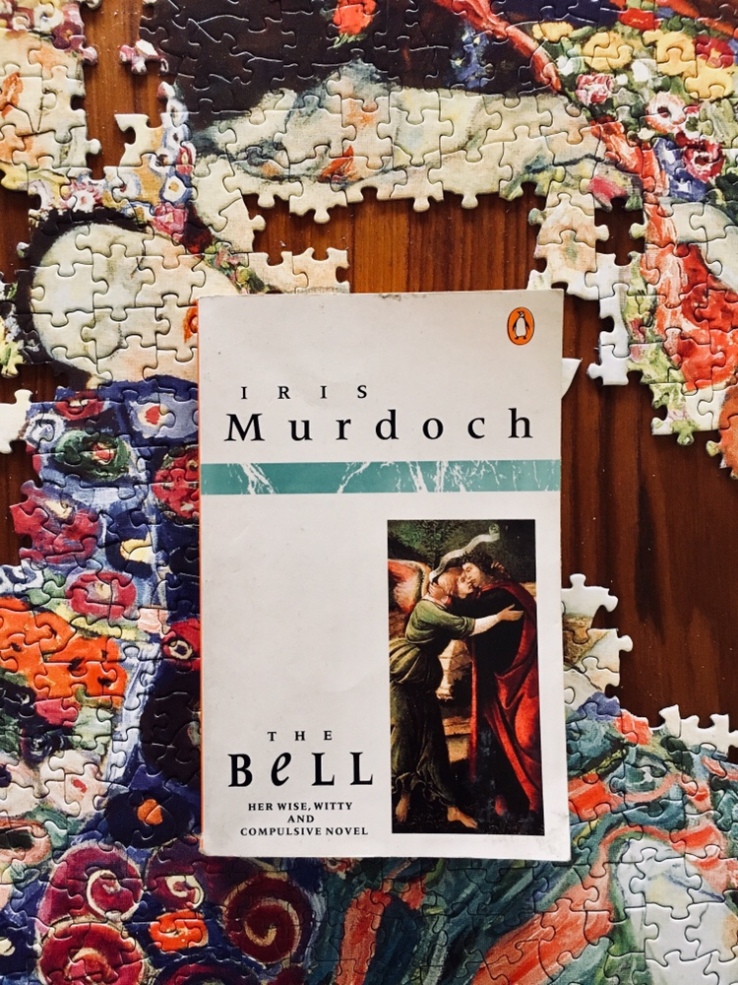
I have just finished Iris Murdoch’s 1958 novel The Bell. This is the first novel I have read by Murdoch and I now want to read more novels by Murdoch, which I suppose is the best praise I can offer the novel.

The Bell is set primarily in Imber House, a large old mansion in the English countryside. Imber House adjoins a Benedictine abbey; this nunnery is essentially closed off to the outside world. The residents of Imber House form a “brotherhood,” a laity of would-be acolytes who strive to find spiritual meaning in the commercial and often venal world of the postwar era. Various conflicts between these characters drive the plot of The Bell.

One of these conflicts, especially notable for a novel published in 1958, involves Michael, the leader of the Imber House community. A former schoolmaster who dreamed of joining the clergy, Michael lost his job in a small scandal for “seducing” one of his students, Nick, a teenage boy at the time. Over a decade later, circumstance brings Nick to Imber House, where his twin sister Katherine is staying. Katherine plans to join Imber Abbey; in the meantime, her family hopes that the religious solitude at Imber House will help Nick recover from his alcoholism. The conflict between Michael and Nick becomes further charged when the youngest member of Imber House, a teenager named Toby, befriends both of them.

I could go on about Michael and Nick and Toby and Katherine and etc., but the real star of The Bell is Dora Greenfield, a wonderfully complicatedly simple unassuming unpretentious flighty former art student who has recently left her demanding husband Paul. Through Murdoch’s precise free indirect style, we get to inhabit Dora’s constantly vacillating mind. Like many people, Dora does not know what she is going to do, and even when she thinks through a plan, she often ends up doing the opposite of what she had intended to do. There is a hilarious passage in the novel’s first chapter when Dora goes through a lengthy imaginative exercise about giving up her train seat to an elderly woman. Dora’s thought experiment ends like this:

She decided not to give up her seat.

She got up and said to the standing lady ‘Do sit down here, please. I’m not going very far, and I’d much rather stand anyway.’

The blank space between those sentences highlights a radical gap between contemplation and action.

The train-seat passage is one of many humorous episodes in The Bell, but Murdoch’s humor is underwritten by a deeper menacing anxiety, which can be neatly summed up in the novel’s opening sentences:

Dora Greenfield left her husband because she was afraid of him. She decided six months later to return to him for the same reason.

Those opening lines basically summarize the big thematic plot of The Bell—the conflict between controlling and ultimately abusive Paul and his much younger wife. (“She married him a little for his money,” Murdoch writes just a few paragraphs in, wedging the detail between more positive aspects of Paul’s character–the “a little” is just genius there, the slightest omission from Dora’s consciousness slipping into the third-person narrator for the briefest of moments). The opening lines of The Bell also showcase Murdoch’s rhetorical powers. Her comic precision here reverberates with a hazardous undertone.

Will Dora really return to her husband? Or will she become her own person—whatever that means? The Bell satisfies these questions with complex answers. The novel has every opportunity to veer toward pat conclusions. Murdoch fills her novel with images that suggest a conventional tragic conclusions, and then surpasses these conventions, turning them into something else. A death by drowning might be foreshadowed, but someone will learn to swim; an epiphany achieved in an art museum might not meet its achievement outside of aesthetic response; the Blakean contraries of innocence and experience might be synthesized into a new, original viewpoint. There’s something real about The Bell—it offers a realism that points outside of its own literary contours. The English novelist A.S. Byatt puts it far better than I can in her essay “Shakespearean Plot in the Novels of Irish Murdoch”:

 …The Bell seems to me arguably Miss Murdoch‘s most successful attempt at realism, emotional and social—the tones of voice of the members of the religious community are beautifully caught, the sexual, aesthetic and religious passions and confusions of the three main characters, Dora, Michael, and, to a lesser extent, Toby, are delicately analysed with the combination of intellectual grasp and sensuous immediacy of George Eliot.

Byatt’s comparison to Eliot reminds me that I had intended to read Middlemarch some time this year—but to be fair to myself, I put The Bell on the same list. I won’t be reading Middlemarch next though; The Bell, with its story of a would-be utopian community, strongly reminded me of Nathaniel Hawthorne’s The Blithedale Romance, which I haven’t read in ages. And after I read that, I’d like to read another one by Iris Murdoch. Any recommendations?

Blog about Blog about

img_9457

For a few years now I’ve tallied the absence of words I write myself on this website, this blog, with a kind of apprehensive anxiety I don’t know how to name, let alone measure.

I used the word write in the sentence above, but the word I suppose I want, the right verb, or righter verb I want, is the blogging verb post. See, I write things—posts, riffs, bits of riffs, rants—and then I delete these things, or let them languish in a drafts folder for whatever small eternity they might be afforded. I write a bit and then decide that the world doesn’t need my (half-assed) opinion or impression or interpretation or whatever on, say—

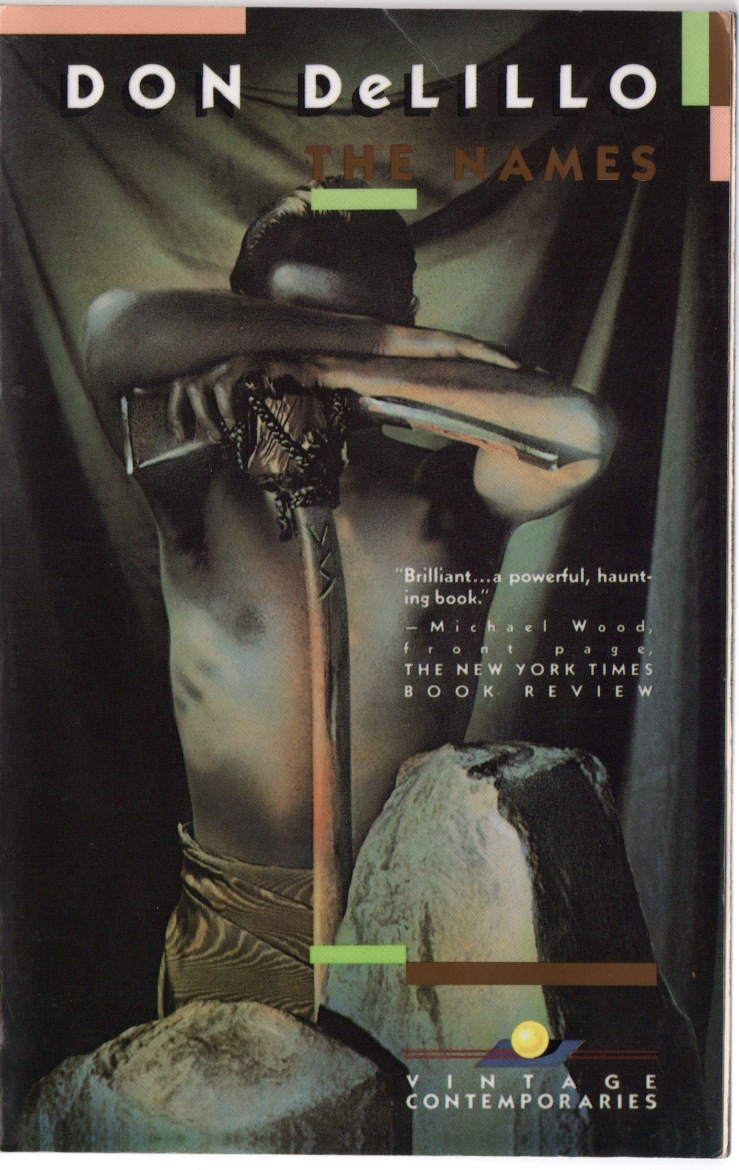
—Don DeLillo’s novel The Names (his real 9/11 novel), or the aesthetics of breakfast in Claire-Louise Bennett’s story-novel-thing Pond, or the cinematography in Sofia Coppola’s reinterpretation of The Beguiling, or my inability to get through the first 100 pages of William H. Gass’s The Tunnel, or Transcendentalism in the Predator films, or finally reading Eudora Welty’s short story “The Death of a Traveling Salesman” and being utterly stunned by its strangeness, or having to suspend all my cynicism and ironic impulses to find a spark of joy in Ava DuVernay’s film A Wrinkle in Time, or the small connections I note between Iris Murdoch’s The Bell and Nathaniel Hawthorne’s The Blithedale Romance, or watching Hayao Miyazaki’s film Ponyo in the theater with my children, or my strange joy in the “steamed hams” microgenre, or etc.—

—so, I guess what I’m saying is—

I’m going to try to blog on this stupid blog more, in a freer way, without the pretense of applying any kind of strong critical acumen to what I’m blogging about. For years I thought of this blog as a sketchpad. Then I started taking the reviews I wrote more seriously, then too seriously. This blog has been an excuse for me to learn about things—a kind of mixtape of quotes and art and etc.—but the more I’ve learned the more I realize that I really know almost nothing about literature and art, and that I usually cannot say what I mean to say (about how I think and feel about what I do know and don’t know about literature art) clearly, so I should do better to pass over in silence (etc.). But this silence mutates into an applied anxiety; it hangs like a big non-attempt in the shallow back of my mind—this silence is its own kind of pretension, or cowardice even, if I’m feeling cruel towards myself.

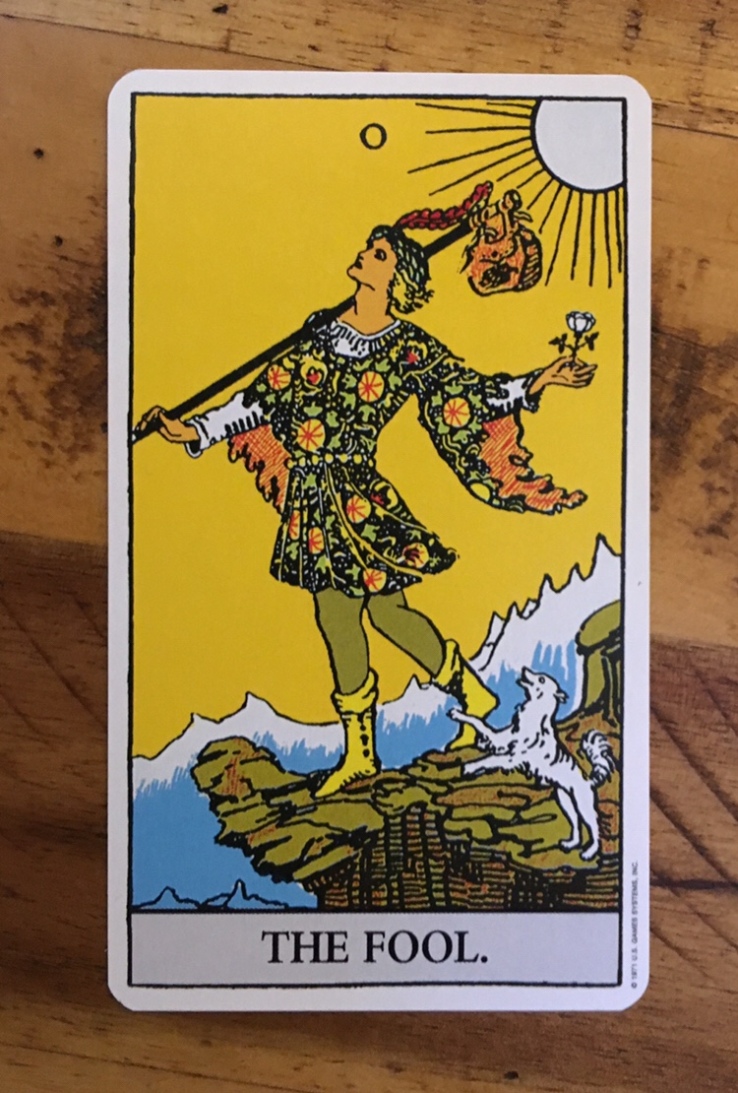
So like let’s try a Thing on this blog. What if I try to, like, just blog about something every day this month? I could title each post “Blog about X” (let X stand for any old thing—a Gordon Lish sentence that I kept tripping over, or a ditty on light in certain George Frederic Watts, or maybe my recipe for caramelized onions and peppers). How many days are in April? 30 I think? I’ll look it up later. I guess I’ll try to commit to post 30 of these things and see how that feels, although it might feel terrible and I might even let myself fall way short of that goal. This particular Easter Sunday/April Fool’s Day seems like a good day to start a bad project though—an earnest hope for fresh newness as a sort of fool’s errand. So I’ll be the fool.