Reading Comics — Nathan Fox

nathan fox

“Read a Book, Ugly.”


Poster by Cole Closser for Foxing.

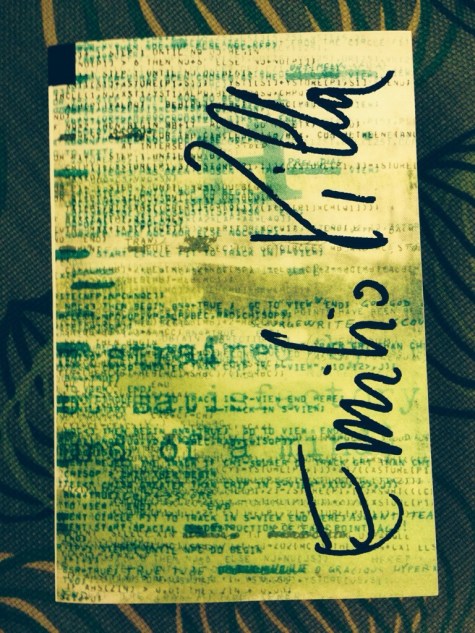
The Selected Poetry of Emilio Villa (Book Acquired, 6.27.2014)

20140707-150232-54152226.jpg

I had never heard of Emilio Villa until the kind people at Contra Mundum forwarded me some digital excerpts from their new collection, The Selected Poetry of Emilio Villa. Those excerpts were fascinating, but they don’t—can’t—capture how big and strange and beautiful the finished book is.
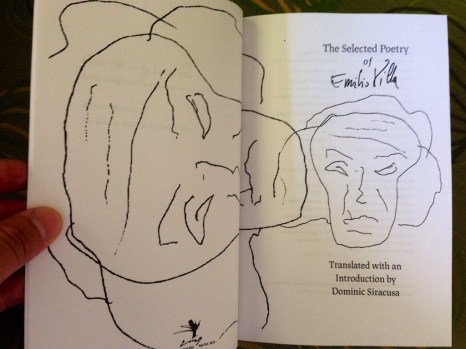
20140707-150237-54157430.jpg

Dominic Siracusa translates; he also provides a lengthy introduction, an essay that primes the reader to better understand Villa, a “a biblicist who composed experimental verse in over ten different languages.”
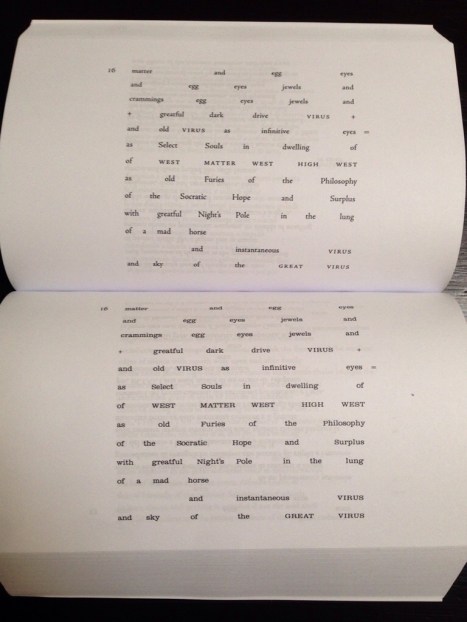
20140708-101510-36910695.jpg

The variety of languages Villa composed in is complicated by his experimental techniques including fragmentation, the blending and splitting of morphemes, his use of graphemes, and other corruptions and disruptions.
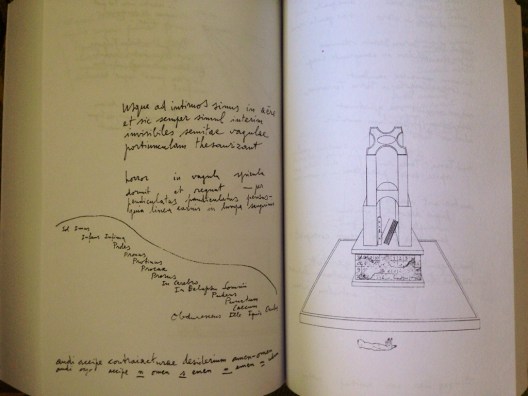
20140707-150235-54155513.jpg

Villa’s poetry seems simultaneously to be a rich linguistic ooze, generative and messy, blending through myth and time, but also a refinement, a collection of criticism even. The book is really damn puzzling in a really fun way.
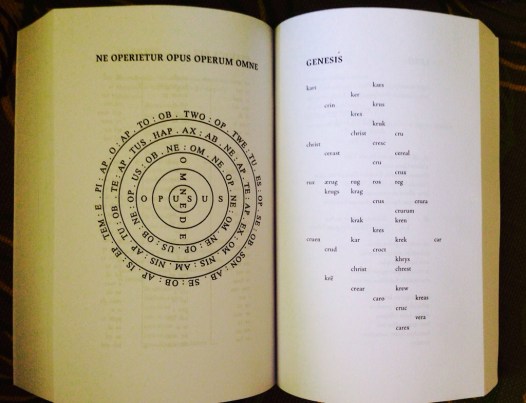
20140707-150233-54153921.jpg

More to come, for now, the lengthy jacket copy:

While Emilio Villa (1914–2003) was referred to as Zeus because of his greatness and Rabelais because of his mental voracity, for decades his work remained in oblivion, only recently surfacing to reveal him to be one of the most formidable figures of the Italian Novecento, if not of world culture. His marginalization was in part self-inflicted, due to his sibylline nature if not to his great erudition, which gave rise to a poetics so unconventional that few knew what to make of it: a biblicist who composed experimental verse in over ten different languages, including tongues from Milanese dialect and Italian to French, Portuguese, ancient Greek, and even Sumerian and Akkadian. As Andrea Zanzotto declared, “From the very beginning, Villa was so advanced that, even today, his initial writings or graphemes appear ahead of the times and even the future, suspended between a polymorphous sixth sense and pure non-sense.”

In merging his background as a scholar, translator, and philologist of ancient languages with his conception of poetics, Villa creates the sensation that, when reading his work, we are coming into contact with language at its origins, spoken as if for the first time, with endless possibilities. Whether penning verse, translating Homer’s Odyssey, or writing on contemporary or primordial art, Villa engages in a paleoization of the present and a modernization of the past, wherein history is abolished and interpretation suspended, leaving room only for the purely generative linguistic act, one as potent today as it was eons ago.

This volume of Villa’s multilingual poetry ranges across his entire writing life and also includes selections from his translation of the Bible, his writings on ancient and modern art, and his visual poetry. Presented in English for the very first time, The Selected Poetry of Emilio Villa also contains material that is rare even to Italian readers. In adhering to the original notion of poetry as making, Villa acts as the poet-faber in tandem with his readers, creating une niche dans un niche for them to enter and create within, as if language itself were an eternal and infinite void in which creation remains an ever possible and continuously new event.
The Library in the Palais Dumba — Rudolf von Alt

Miruna, A Tale (Book Acquired, 6.24.2014)

20140707-150427-54267363.jpg

I had hoped to read Bogdan Suceavă’s Miruna, A Tale (translated from the Romanian by Alistair Ian Blyth and new from Twisted Spoon Press) over the July 4th weekend—it was the only physical book I took with me out of town—but alas swimming and sun and sand and booze and food and fireworks &c. blocked me.

Very cool little book—and beautiful. (My iPhone pic does no justice to the simple, gorgeous design).

Publisher’s blurb; more to come:

A village in the Carpathian Mountains, one of the last outposts of pre-modernity, an elderly man, sensing his time is short, tells his young grandchildren tales that weave a family saga covering the real history from the 1870s to the time of the telling. One of the children, now grown, is the re-teller of these tales, while the other, Miruna, perhaps has the gift of second sight. Incorporating elements of fantasy common to the storytelling traditions of the Balkans, historical characters mix with imaginary beings in a landscape that recreates the world of an isolated village bearing an unusual name : Evil Vale. Ancestors are talked about as if ancient heroes, and the novel shifts focus between telling about their lives and the storyteller’s own experiences through the prism of the village during both world wars. As past tragedies are presented in a way that the grandchildren might picture and remember them, the novel has been called a kind of meta-fairy tale, a story about the lost tradition of oral storytelling itself, the conveyance of a family history from one generation to the next via the spoken word. With the death of the grandfather, the children realize that confronted with the ubiquitous hand of modernity, which the village has managed to frustrate over a succession of regimes, a whole world of stories and the entire memory of a family and of its idiosyncratic way of life in the village might have been irrevocably lost.

Criticise with taste for a criterion, and not tongue (Faulkner)

Live and let live; criticise with taste for a criterion, and not tongue. The English review criticises the book, the American the author. The American critic foists upon the reading public a distorted buffoon within whose shadow the titles of sundry uncut volumes vaguely lurk. Surely, if there are two professions in which there should be no professional jealousy, they are prostitution and literature.

As it is, competition becomes cutthroat. The writer cannot begin to compete with the critic, he is too busy writing and also he is organically unfitted for the contest. And if he had time and were properly armed, it would be unfair. The critic, once he becomes a habit with his readers, is considered infallible by them; and his contact with them is direct enough to allow him always the last word. And with the American the last word carries weight, is culminative. Probably because it gives him a chance to talk some himself.

From “On Criticism,” a 1925 essay by William Faulkner. Republished in Essays, Speeches & Public Letters.

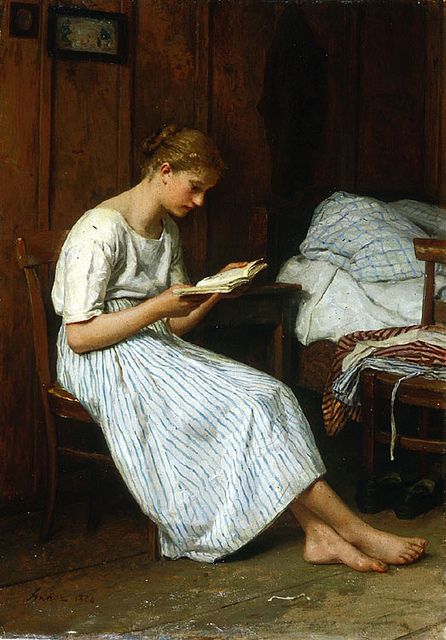
A Gotthelf Reader — Albert Anker

readergot

The BFG — Quentin Blake

20140706-210704-76024020.jpg

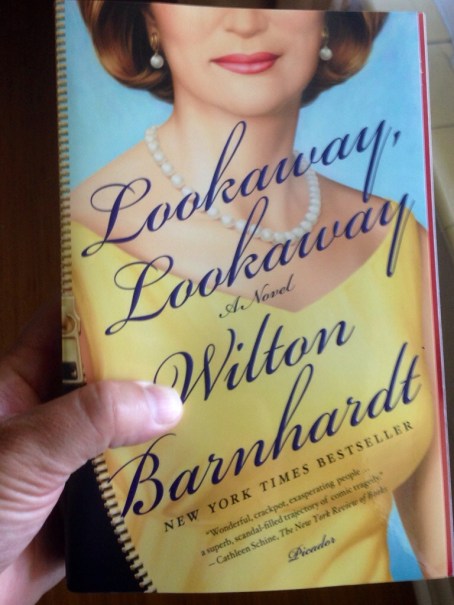
Lookaway, Lookaway (Book Acquired, 6.25.2014)

20140628-161810-58690223.jpg

Wilton Barnhardt’s Lookaway, Lookaway is now available in trade paperback from Picador. Their blurb:

Steely and formidable, Jerene Jarvis Johnston sits near the apex of society in contemporary Charlotte, North Carolina, where old Southern money and older family skeletons meet the new wealth of bankers, land speculators, and social climbers. Jerene and her Civil War reenactor husband, Duke, have four adult children—sexually reckless real estate broker Annie; earnest minister Bo; gay-but-don’t-tell-anyone Joshua; and naive, impressionable college freshman Jerilyn. Jerene’s brother, Gaston, is an infamously dissolute novelist and gossip who knows her secrets and Duke’s; while her sister, Dillard, is a reclusive prisoner of her own unfortunate choices. When a scandal threatens the Johnston family’s status and dwindling finances, Jerene swings into action…and she will stop at nothing to keep what she has and preserve her legacy. Wilton Barnhardt’sLookaway, Lookaway is a headlong, hilarious narrative of a family coming apart on the edge of the old South and the new, and an unforgettable woman striving to hold it together.


On the Beach — Edouard Manet

Why we like tragedies (Alasdair Gray)

A story can always end happily by stopping at a cheerful moment. Of course in nature the only end is death, but death hardly ever happens when people are at their best. That is why we like tragedies. They show men ending energetically with their wits about them and deserving to do it.

From Alasdair Gray’s novel Lanark

“Sticks” — George Saunders

“Sticks” by George Saunders. (Collected in Tenth of December):

Every year Thanksgiving night we flocked out behind Dad as he dragged the Santa suit to the road and draped it over a kind of crucifix he’d built out of metal pole in the yard. Super Bowl week the pole was dressed in a jersey and Rod’s helmet and Rod had to clear it with Dad if he wanted to take the helmet off. On Fourth of July the pole was Uncle Sam, on Veterans Day a soldier, on Halloween a ghost. The pole was Dad’s one concession to glee. We were allowed a single Crayola from the box at a time. One Christmas Eve he shrieked at Kimmie for wasting an apple slice. He hovered over us as we poured ketchup, saying, Good enough good enough good enough. Birthday parties consisted of cupcakes, no ice cream. The first time I brought a date over she said, What’s with your dad and that pole? and I sat there blinking.

We left home, married, had children of our own, found the seeds of meanness blooming also within us. Dad began dressing the pole with more complexity and less discernible logic. He draped some kind of fur over it on Groundhog Day and lugged out a floodlight to ensure a shadow. When an earthquake struck Chile he laid the pole on its side and spray-painted a rift in the earth. Mom died and he dressed the pole as Death and hung from the crossbar photos of Mom as a baby. We’d stop by and find odd talismans from his youth arranged around the base: army medals, theater tickets, old sweatshirts, tubes of Mom’s makeup. One autumn he painted the pole bright yellow. He covered it with cotton swabs that winter for warmth and provided offspring by hammering in six crossed sticks around the yard. He ran lengths of string between the pole and the sticks, and taped to the string letters of apology, admissions of error, pleas for understanding, all written in a frantic hand on index cards. He painted a sign saying LOVE and hung it from the pole and another that said FORGIVE? and then he died in the hall with the radio on and we sold the house to a young couple who yanked out the pole and left it by the road on garbage day.

Beach Scene with Pink Hat — Eric Fischl

Very few people who are supposedly interested in writing are interested in writing well (Flannery O’Connor)

But there is a wide spread curiosity about writers and how they work, and when a writer talks on this subject, there are always misconceptions and mental rubble for him to clear away before he can even begin to see what he wants to talk about. I am not, of course, as innocent as I look. I know well enough that very few people who are supposedly interested in writing are interested in writing well. They’re interested in publishing something, and if possible in making a “killing.” They are interested in seeing their names at the top of something printed, it matters not what. And they seem to feel that this can be accomplished by learning certain things about working habits and about markets and about what subjects are currently acceptable.

From “The Nature and Aim of Fiction” by Flannery O’Connor. Collected in Mystery and Manners.

The Inattentive Reader — Henri Matisse